seamus dubhghaill

Promoting Irish Culture and History from Little Rock, Arkansas, USA


Leave a comment

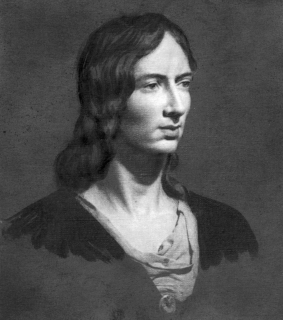
Birth of Emily Brontë, Novelist & Poet

emily-bronte

Emily Brontë, English novelist and poet who produces but one novel, Wuthering Heights (1847), is born on July 30, 1818, in Thornton, West Riding of Yorkshire, England. She is perhaps the greatest of the three Brontë sisters, but the record of her life is extremely meager, for she is silent and reserved and leaves no correspondence of interest, and her single novel darkens rather than solves the mystery of her spiritual existence.

Her father, Patrick Brontë (1777–1861), an Irishman, holds a number of curacies. Hartshead, Yorkshire, is the birthplace of his elder daughters, Maria and Elizabeth, who died young. Nearby Thornton is the birthplace of Emily and her siblings Charlotte, Patrick Branwell, and Anne. In 1820 Patrick Brontë becomes rector of Haworth, remaining there for the rest of his life.

After the death of their mother in 1821, the children are left very much to themselves in the bleak moorland rectory. The children are educated, during their early life, at home, except for a single year that Charlotte and Emily spend at the Cowan Bridge School at Cowan Bridge in Lancashire. In 1835, when Charlotte secures a teaching position at Miss Wooler’s school at Roe Head, Emily accompanies her as a pupil but suffers from homesickness and remains only three months. In 1838 Emily spends six exhausting months as a teacher at Law Hill School, near Halifax, and then resigns.

In an effort to keep the family together at home, Charlotte plans to keep a school for girls at Haworth. In February 1842 she and Emily go to Brussels to learn foreign languages and school management at the Héger Pensionnat. Although Emily pines for home and for the wild moorlands, it seems that in Brussels she is better appreciated than Charlotte. Her passionate nature is more easily understood than Charlotte’s decorous temperament. In October, however, when her aunt dies, Emily returns permanently to Haworth.

In 1845 Charlotte comes across some poems by Emily, and this leads to the discovery that all three sisters have written verse. A year later they publish jointly a volume of verse, Poems by Currer, Ellis and Acton Bell, the initials of these pseudonyms being those of the sisters. It contains 21 of Emily’s poems, and a consensus of later criticism has accepted the fact that Emily’s verse alone reveals true poetic genius. The venture costs the sisters about £50 in all, and only two copies are sold.

By midsummer of 1847 Emily’s Wuthering Heights and Anne’s Agnes Grey have been accepted for joint publication by J. Cautley Newby of London, but publication of the three volumes is delayed until the appearance of their sister Charlotte’s Jane Eyre, which is immediately and hugely successful. Wuthering Heights, when published in December 1847, does not fare well. Critics are hostile, calling it too savage, too animal-like, and clumsy in construction. Only later does it come to be considered one of the finest novels in the English language.

Soon after the publication of her novel, Emily’s health begins to fail rapidly. She had been ill for some time, but now her breathing becomes difficult, and she suffers great pain. She dies of tuberculosis on December 19, 1848, in Haworth. She is buried at St. Michael and All Angels’ Church in Haworth.


Leave a comment

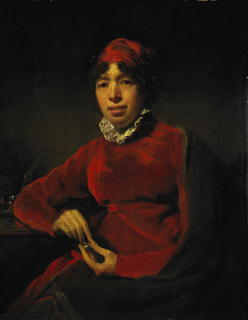
Birth of Elizabeth Hamilton, Poet & Novelist

LEAD Technologies Inc. V1.01

Elizabeth Hamilton, essayist, poet, satirist and novelist, is born in Belfast on July 25, 1756, though the date is often given as 1758.

Hamilton is born to Charles Hamilton (d.1759), a Scottish merchant, and his wife Katherine Mackay (d.1767). She lives most of her life in Scotland, moving there in 1762 to live with a Mrs. Marshall, her paternal aunt, near Stirling and spending much of her later life in Edinburgh.

Hamilton’s first literary efforts are directed in supporting her brother Charles in his orientalist and linguistic studies. After his death in 1792 she continues to publish orientalist scholarship, as well as historical, educationalist and theoretical works. She writes The Cottagers of Glenburnie (1808), a tale which has much popularity in the day, and perhaps has some effect in the improvement of certain aspects of humble domestic life in Scotland. She also writes the anti-Jacobin novel Memoirs of Modern Philosophers (1800), and the satirical Translation of the Letters of a Hindoo Rajah in 1796, a work in the tradition of Montesquieu and Oliver Goldsmith. Her most important pedagogical works are Letters on Education (1801), Letters on the Elementary Principles of Education (1801), Letters addressed to the Daughter of a Nobleman, on the Formation of Religious and Moral Principle (1806), and Hints addressed to the Patrons and Directors of Schools (1815).

Elizabeth Hamilton dies in Harrogate, North Yorkshire, England on July 23, 1816, following a short illness.

(Pictured: Portrait of Elizabeth Hamilton, 1812, by Sir Henry Raeburn)


Leave a comment

Birth of Jimmy Kennedy, Songwriter & Lyricist

jimmy-kennedy-1

James Kennedy, songwriter and lyricist, is born on July 20, 1902, near Omagh, County Tyrone in what is now Northern Ireland. He puts words to existing music such as “The Teddy Bears’ Picnic” and “My Prayer” and co-writes with composers Michael Carr, Wilhelm Grosz and Nat Simon, among others. In a career spanning more than fifty years, he writes some 2,000 songs, of which over 200 become worldwide hits and about 50 are all-time popular music classics.

Kennedy’s father, Joseph Hamilton Kennedy, is a policeman in the Royal Irish Constabulary (RIC). While growing up in the village of Coagh, Kennedy writes several songs and poems. He is inspired by local surroundings — the view of the Ballinderry River, the local Springhill House and the plentiful chestnut trees on his family’s property, as evidenced in his poem Chestnut Trees. He later moves to Portstewart, a seaside resort in County Londonderry.

Kennedy graduates from Trinity College, Dublin, before teaching in England. He is accepted into the Colonial Service, as a civil servant, in 1927.

While awaiting a Colonial Service posting to the colony of Nigeria, Kennedy embarks on a career in songwriting. His first success comes in 1930 with “The Barmaid’s Song”, sung by Gracie Fields. Fellow lyricist Harry Castling introduces him to Bert Feldman, a music publisher based in London‘s “Tin Pan Alley“, for whom he starts to work. In the early 1930s he writes a number of successful songs, including “Oh, Donna Clara” (1930), “My Song Goes Round the World” (1931), and “The Teddy Bears’ Picnic” (1933), in which he provides new lyrics to John Walter Bratton‘s tune from 1907.

In 1934, Feldman turns down Kennedy’s song “Isle of Capri“, but it becomes a major hit for a new publisher, Peter Maurice. He writes several more successful songs for Maurice, including “Red Sails in the Sunset” (1935), inspired by beautiful summer evenings in Portstewart, Northern Ireland, “Harbour Lights” (1937) and “South of the Border” (1939), inspired by a holiday picture postcard he receives from Tijuana, Mexico and written with composer Michael Carr. He and Carr also collaborate on several West End shows in the 1930s, including London Rhapsody (1937). “My Prayer,” with original music by Georges Boulanger, has English lyrics penned by Kennedy in 1939. It is originally written by Boulanger with the title “Avant de Mourir” in 1926.

During the early stages of World War II, while serving in the British Army‘s Royal Artillery, where he rises to the rank of Captain, Kennedy writes the wartime hit, “We’re Going to Hang out the Washing on the Siegfried Line.” His hits also include “Cokey Cokey” (1945), and the English lyrics to “Lili Marlene.” After the end of the war, his songs include “Apple Blossom Wedding” (1947), “Istanbul (Not Constantinople)” (1953), and “Love Is Like a Violin” (1960). In the 1960s he writes the song “The Banks of the Erne'”, for recording by his friend from the war years, Theo Hyde, also known as Ray Warren.

Kennedy is a patron of the Castlebar Song Contest from 1973 until his death in 1984 and his association with the event adds great prestige to the contest.

Kennedy wins two Ivor Novello Awards for his contribution to music and receives an honorary degree from the New University of Ulster. He is awarded the OBE in 1983 and, in 1997, is posthumously inducted into the Songwriter’s Hall of Fame.

Jimmy Kennedy dies in Cheltenham on April 6, 1984, at the age of 81. He is interred in Taunton, Somerset.


Leave a comment

Birth of Seumas O’Sullivan, Poet & Editor

seamus-o-sullivan

Seumas O’Sullivan, Irish poet and editor of The Dublin Magazine born James Sullivan Starkey, is born in Dublin on July 17, 1879.

O’Sullivan spends his adult life in the Dublin suburb of Rathgar. In 1926 he marries the artist Estella Solomons, sister of Bethel Solomons. Her parents are opposed to the marriage as Seumas is not Jewish.

O’Sullivan’s books include Twilight People (1905), Verses Sacred and Profane (1908), The Earth Lover (1909), Selected Lyrics (1910), Collected Poems (1912), Requiem (1917), Common Adventures (1926), The Lamplighter (1929), Personal Talk (1936), Poems (1938), Collected Poems (1940), and Dublin Poems (1946). Terence de Vere White praises him as “a true poet,” and is critical of William Butler Yeats for leaving him out of his anthology of Irish poets, which he thinks a particularly strange decision since Yeats and O’Sullivan are friends, although they quarrel from time to time. In 1936 a version of a play by Irish playwright Teresa Deevy called The King of Spain’s Daughter is included in The Dublin Magazine which is edited by Seumas O’Sullivan.

O’Sullivan and B.J. Brimmer Company are accredited within the ‘Acknowledgments’ of People and Music by Thomasine C. McGehee, published via Allyn & Bacon within the Junior High School Series and edited by James M. Glass, 1929 and 1931 respectively, for both the frontispiece In Mercer Street and the excerpt from Ballad of a Fiddler on page 93.

O’Sullivan has a great admiration for Patrick Kavanagh, and in the 1940s he is one of the very few Irish editors who is prepared to publish his poetry.

O’Sullivan’s father, William Starkey (1836-1918), a physician, is also a poet and a friend of George Sigerson.

O’Sullivan is a friend of most of the leading literary figures in Dublin, including William Butler Yeats, James Stephens and George William Russell. His “at homes” on Sunday afternoons are a leading feature of Dublin literary life, as are Russell’s Sunday evenings and Yeats’s Monday evenings. He is inclined to be quarrelsome due to his heavy drinking and on one occasion he insults James Stephens publicly at a literary dinner. Even the kind-hearted Russell admits that “Seumas drinks too much.” Yeats’ verdict is that “the trouble with Seumas is that when he’s not drunk, he’s sober.”

Seumas O’Sullivan dies on March 24, 1958.

(Pictured: Portrait of Seumas O’Sullivan by Estella Frances Solomons)


Leave a comment

Birth of James Owen Hannay, Clergyman & Novelist

Generated by IIPImage

James Owen Hannay, Irish clergyman and prolific novelist who writes under the pen name of George A. Birmingham, is born on July 16, 1865, in Belfast. Today the house where he is born is a part of the administration building of Queen’s University Belfast.

Hannay receives his education in England. He enters Temple Grove School near the River Thames at the age of nine, and later studies at a public school called Haileybury School. He then returns to Ireland to enter the Divinity School of Trinity College Dublin. He is ordained in 1889 as a Church of Ireland (Anglican) minister and starts working as a curate for Delgany, County Wicklow, a seaside town south of Dublin.

To make up for a deficiency in their living Hannay writes a short story and sends it to a London publisher. It is accepted for publication, and he receives a check of £10. On his wife’s advice, he gives up writing fiction and commits himself to the study of Christian theology with her. This bears fruit with the publications of The Spirit and Origin of Christian Monasticism (1903) and The Wisdom of the Desert (1904).

Hannay then serves as rector of Holy Trinity Church in Westport, County Mayo. It is here that he makes his debut as a novelist. His early writings raise the ire of nationalist Catholics, and he withdraws from the Gaelic League in the wake of ongoing protests about the tour of his successful play General John Regan.

Hannay becomes rector of Kildare parish from 1918 to 1920, and after serving as chaplain to the Lord Lieutenant of Ireland, he joins the British ambassadorial team in Budapest in 1922. He returns to officiate at Mells, Somerset from 1924 to 1934, after which he is appointed vicar of Holy Trinity Church in the London suburb of Kensington where he serves from 1934 until his death in London on February 2, 1950.

Hannay enjoys sailing and is taught the rudiments by his father and grandfather in Belfast. When he is based in Westport, the financial success of his writing enables him to purchase a boat, a Dublin Bay Water Wag. In recognition of Hannay, the Water Wag Club of Dun Laoghaire returns to Westport and Clew Bay in 2016. In the frontispiece of his book The Inviolable Sanctuary Hannay includes a picture of the Water Wag.


Leave a comment

Birth of John Kells Ingram, Economist & Poet

CREATOR: gd-jpeg v1.0 (using IJG JPEG v62), quality = 90

John Kells Ingram, economist and poet who starts his career as a mathematician, is born into an Ulster Scots family on July 7, 1823, at the Rectory of Templecarne (Aghnahoo), just south of Pettigo, County Donegal. He has been co-credited, along with John William Stubbs, with introducing the geometric concept of inversive geometry.

Ingram enters Trinity College, Dublin on October 13, 1837. He is elected a Scholar of Trinity College in 1840, graduates with a BA in mathematics in 1842, and is awarded an MA in 1850. In 1852 he becomes a professor of oratory at Trinity and writes extensively on Shakespeare. He shows considerable promise in both mathematics and classics and achieves early popularity as a poet. He has a distinguished career at Trinity, spanning over fifty-five years, as a student, fellow and professor, successively of Oratory, English Literature, Jurisprudence and Greek, subsequently becoming the College Librarian and ultimately its Vice Provost.

One evening in March 1843 Ingram writes a poem for which he is best remembered, a political ballad called “The Memory of the Dead” in honour of the Irish Rebellion of 1798 led by the Society of United Irishmen. The poem is published anonymously on April 1, 1843, in Thomas Davis‘s The Nation newspaper although its authorship is an open secret in Dublin. It is set to music for voice and piano in 1845 by John Edward Pigot and becomes a popular Irish nationalist anthem. It is one of the best-known of Irish Republican songs and is often played by the piper at Republican funerals.

In 1847 Ingram helps to found the Statistical and Social Inquiry Society of Ireland. His early economic writings deal mainly with the Poor Law, which in theory is supposed to provide relief for the poor but in reality, does little to alleviate the distress in Ireland. Strongly influenced by the French sociologist Auguste Comte, he rejects the more isolated approach of classical economics which builds on the assumption that people try to do the best they can. Instead, he seeks to develop a unified theory of economics along the lines of Comtean positivist philosophy, which seeks ways for economic policies to contribute to the good of society. His writings on this topic include the essay “Present Position and Prospects of Political Economy” (1878) and A History of Political Economy (1888).

John Kells Ingram dies on May 1, 1907, in his home at 38 Upper Mount Street, Dublin, where he had lived since 1884. He is buried in Mount Jerome Cemetery.


Leave a comment

Birth of Forrest Reid, Novelist & Critic

forrest-reid

Forrest Reid, novelist, literary critic and translator, is born in Belfast on June 24, 1875. He is, along with Hugh Walpole and J. M. Barrie, a leading pre-war novelist of boyhood. He is still acclaimed as the greatest of Ulster novelists and is recognised with the award of the 1944 James Tait Black Memorial Prize for his novel Young Tom.

Reid is the youngest son of a Protestant family of twelve, six of whom survive. His mother, his father’s second wife, comes from an aristocratic Shropshire family. Although proud of this ancestry, he finds the strict Protestant ethics of his immediate family constricting. He is educated at the Royal Belfast Academical Institution, after which he is initially apprenticed into the Belfast tea-trade before going to Christ’s College, Cambridge, where he reads medieval and modern languages, and is influenced by the novelist E. M. Forster. His first book, The Kingdom of Twilight, is published in 1904. Following graduation in 1908, he returns to Belfast to pursue a writing career.

As well as his fiction, Reid also translates poems from the Greek Anthology. His study of the work of W. B. Yeats, W. B. Yeats: A Critical Study, has been acclaimed as one of the best critical studies of that poet. He also writes the definitive work on the English woodcut artists of the 1860s, Illustrators of the Sixties (1928). His collection of original illustrations from that time is housed in the Ashmolean Museum, Oxford.

Reid is a close friend of Walter de la Mare, whom he first meets in 1913, and about whose fiction he publishes a perceptive book in 1929. He is also an influence on novelist Stephen Gilbert and has good connections to the Bloomsbury Group of writers. He is a founding member of the Imperial Art League (later the Artists League of Great Britain) and is also a close friend of Arthur Greeves, the artist known to be C. S. Lewis‘s best friend. Greeves paints several portraits of Reid, now all in the possession of the Royal Belfast Academical Institution.

Reid publishes articles in many magazines, including Uladh, The Westminster Review and the Ulster Review, and he reviews books for The Manchester Guardian. Apostate, an autobiography, is published in 1926, and its sequel, Private Road, is published in 1940. He is a founder member of the Irish Academy of Letters.

Forrest Reid dies on January 4, 1947, in Warrenpoint, County Down, Northern Ireland.

Though Reid’s books are not necessarily well known today, he has been labelled “the first Ulster novelist of European stature,” and comparisons have been drawn between his own coming of age novel of Protestant Belfast, Following Darkness (1912), and James Joyce‘s seminal novel of growing up in Catholic Dublin, A Portrait of the Artist as a Young Man (1914). Reid’s fiction, which often uses submerged narratives to explore male beauty and love, can be placed within the historical context of the emergence of a more explicit expression of homosexuality in English literature in the 20th century.

A ‘Forrest Reid Collection’ is held at the University of Exeter, consisting of first editions of all Reid’s works and books about him. Many of his original manuscripts are in the archives of the Belfast Central Library. In 2008, Queen’s University Belfast catalogues a large collection of Forrest Reid documentary material including many letters from E. M. Forster.

In 1952 Forster travels to Belfast to unveil a plaque commemorating Forrest Reid’s life at 13 Ormiston Crescent.


Leave a comment

Birth of Author Violet Florence Martin

violet-florence-martin

Violet Florence Martin, Irish author, is born at Ross House in Connemara, County Galway on June 11, 1862. She is the co-author of a series of novels with her cousin Edith Somerville under the pen name of Martin Ross in the late nineteenth and early twentieth centuries.

Martin is the youngest of sixteen children of James Martin of Ross (1804–1872). The Martin family, a branch of the Martyn family – one of the Tribes of Galway – had settled at Ross by the early seventeenth century, having previously inhabited the town of Galway for some three hundred years. Her father is a Protestant, his grandfather having converted from the Catholic faith in order to retain the family estates under the Penal Laws. Nevertheless, each child of the family is secretly ‘baptised’ by the family servants.

Martin is a kinswoman of Richard Martin and her contemporary, Edward Martyn, two other notable members of the tribe. Her older brother, Robert Jasper Martin, is a noted songwriter and a well-regarded member of the Tory party in London. She shares a great-grandmother with the writer Maria Edgeworth, whose use of Irish vernacular speech she follows in her work.

Martin’s father manages to save both his estate and his tenants during the Great Famine boasting that not one of his people died during the disaster, but at the cost of bankruptcy. Following his death in 1872, the family moves to Dublin and only returns to Ross in 1888 following revelations of financial fraud of the estate by their agent.

Martin and Edith Somerville are second cousins. They originally meet on January 17, 1886, at Castletownshend, after which they become lifelong companions and literary partners. They come to share a home in Drishane, County Cork. In 1889, Violet adopts the pseudonym Martin Ross, which comprises her surname and the name of her ancestral home. Thus, the authors are called Somerville and Ross. Their works include The Real Charlotte (1889), Some Reminiscences of an Irish R.M. and In the Vine Country.

Martin is a convinced Irish Unionist, in opposition to Somerville’s open nationalism. Both she and her brother Robert are well-regarded members of the literary circle in Irish unionism. However, unlike her brother, Martin is a convinced suffragette, becoming vice-president of the Munster Women’s Franchise League. While on friendly terms with the leading members of the Gaelic literary revival such as W.B. Yeats and Lady Gregory, she objects to their romantic version of Irish peasantry. She is on good terms with Edward Martyn, partner of Gregory and Yeats – and her kinsman – and shares his love of the Irish language and culture.

Martin is seriously injured in a riding accident in November 1898, from which she never fully recovers. This is a contributing factor to her death in Drishane, County Cork, on December 21, 1915. Edith Somerville continues to write under their joint literary names, claiming that they are still in contact. The two women leave thousands of letters and 116 volumes of diaries, detailing their lives, much of them yet unpublished. Edith dies at Castletownshend in October 1949, aged 91, and is buried alongside Violet Florence Martin at Saint Barrahane’s Church, Castletownsend, County Cork.


Leave a comment

Death of Anglican Priest & Author Patrick Brontë

File source: http://commons.wikimedia.org/wiki/File:Patrickbronte.jpg

Patrick Brontë, Irish Anglican priest and author who spends most of his adult life in England, dies in Haworth, Yorkshire, England on June 7, 1861. He is the father of the writers Charlotte, Emily, Anne and Branwell Brontë.

Brontë is the first of ten children born to Hugh Brunty, a farm labourer, and Alice McClory, in Drumballyroney, County Down. At one point in his adult life, he formally changes the spelling of his name from Brunty to Brontë.

Brontë has several apprenticeships until he becomes a teacher in 1798. He moves to England in 1802 to study theology at St. John’s College, Cambridge, and receives his BA degree in 1806. He is then appointed curate at Wethersfield, Essex, where he is ordained a deacon of the Church of England in 1806, and into the priesthood in 1807.

In 1809, Brontë becomes assistant curate at Wellington, Shropshire, and in 1810 his first published poem, Winter Evening Thoughts, appears in a local newspaper, followed in 1811 by a collection of moral verses, Cottage Poems. He moves to the West Riding of Yorkshire in 1811 as assistant curate at Hartshead, where he serves until 1815. In the meantime he is appointed a school examiner at a Wesleyan academy, Woodhouse Grove School, near Guiseley. In 1815 he moves again on becoming perpetual curate of Thornton. At Guiseley, Brontë meets Maria Branwell, whom he marries on December 29, 1812.

Brontë is offered the perpetual curacy of St. Michael and All Angels’ Church, Haworth in June 1819, and he takes the family there in April 1820. His sister-in-law Elizabeth Branwell, who had lived with the family at Thornton in 1815, joins the household in 1821 to help to look after the children and to care for Maria Brontë, who is suffering the final stages of uterine cancer. She decides to move permanently to Haworth to act as housekeeper.

After several attempts to seek a new spouse, Brontë comes to terms with widowhood at the age of 47, and spends his time visiting the sick and the poor, giving sermons, communion, and extreme unction, leaving his children alone with their aunt and a maid, Tabitha Aykroyd (Tabby), who tirelessly recounts local legends in her Yorkshire dialect while preparing the meals.

Brontë is responsible for the building of a Sunday school in Haworth, which he opens in 1832. He remains active in local causes into his old age, and between 1849 and 1850 organises action to procure a clean water supply for the village, which is eventually achieved in 1856.

In August 1846, Brontë travels to Manchester, accompanied by Charlotte, to undergo surgery on his eyes. On August 28 he is operated upon, without anaesthetic, to remove cataracts. Surgeons do not yet know how to use stitches to hold the incision in the eye together and as a consequence the patient is required to lie quietly in a darkened room for weeks after the operation. Charlotte uses her time in Manchester to begin writing Jane Eyre, the book which is to make her famous.

Following the death of his last surviving child, Charlotte, nine months after her marriage, he co-operates with Elizabeth Gaskell on the biography of his daughter. He is also responsible for the posthumous publication of Charlotte’s first novel, The Professor, in 1857. Charlotte’s husband, Arthur Bell Nicholls, who had been Brontë’s curate, stays in the household until he returns to Ireland after Brontë’s death, at the age of 84, on June 7, 1861. Brontë outlives not only his wife (by 40 years) but all six of his children.


Leave a comment

Death of Novelist Arthur Henry Ward

arthur-henry-ward

Arthur Henry “Sarsfield” Ward, prolific English novelist better known as Sax Rohmer, dies on June 1, 1959. He is best remembered for his series of novels featuring the master criminal Dr. Fu Manchu.

Born in Birmingham to a working class family on February 15, 1883, Ward initially pursues a career as a civil servant before concentrating on writing full-time. He works as a poet, songwriter and comedy sketch writer for music hall performers before creating the Sax Rohmer persona and pursuing a career writing fiction.

Like his contemporaries Algernon Blackwood and Arthur Machen, Ward claims membership to one of the factions of the qabbalistic Hermetic Order of the Golden Dawn. He also claims ties to the Rosicrucians, but the validity of his claims has been questioned. His doctor and family friend Dr R. Watson Councell may have been his only legitimate connection to such organisations.

Ward’s first published work comes in 1903, when the short story “The Mysterious Mummy” is sold to Pearson’s Weekly. His main literary influences are Edgar Allan Poe, Arthur Conan Doyle and M. P. Shiel.

Ward gradually transitions from writing for music hall performers to concentrating on short stories and serials for magazine publication. In 1909 he marries Rose Elizabeth Knox. He publishes his first book Pause! anonymously in 1910.

After penning Little Tich in 1911 as ghostwriter for the famous music hall entertainer of the same name, Ward issues the first Fu Manchu novel, The Mystery of Dr. Fu-Manchu, serialised from October 1912 to June 1913. It is an immediate success. The Fu Manchu stories, together with his more conventional detective series characters — Paul Harley, Gaston Max, Red Kerry, Morris Klaw and the Crime Magnet — make him one of the most successful and well-paid authors of the 1920s and 1930s. In the 28 years from 1931 to 1959, he adds no fewer than 10 new books to the Fu Manchu series.

Other works by Ward include The Orchard of Tears (1918), The Quest of the Sacred Slipper (1919), Tales of Chinatown (1922) and Brood of the Witch-Queen as well as numerous short stories.

Ward’s work is banned in Nazi Germany, causing him to complain that he could not understand such censorship, stating “my stories are not inimical to Nazi ideals.”

After World War II, Ward and his wife move to New York, only returning to London shortly before his death. He dies on June 1, 1959 at the age of 76, due to an outbreak of Influenza A virus subtype H2N2.