seamus dubhghaill

Promoting Irish Culture and History from Little Rock, Arkansas, USA


Leave a comment

Death of Francis Jack Needham, 1st Earl of Kilmorey

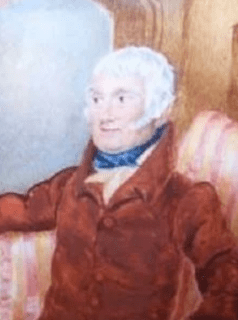
Francis Jack Needham, 1st Earl of Kilmorey, Anglo-Irish soldier and Member of Parliament, dies on November 21, 1832, at Shavington Hall, Shropshire, England.

Needham is born April 15, 1748, in County Down, third and youngest son of John Needham, 10th Viscount Kilmorey, and his wife Anne, daughter of John Hurleston of Newton, Cheshire, and widow of Geoffrey Shakerley of Cheshire. He enters the British Army as a cornet in the 18th Dragoons in 1762, exchanging into the 1st Dragoons in 1763. In 1773, he is promoted to lieutenant and, exchanging into the 17th Dragoons, is made captain in 1774. He serves throughout the American Revolutionary War and is engaged in the blockade of Boston and the New Jersey and Yorktown campaigns. Exchanging into the 76th Foot as a major, he is taken prisoner at the Siege of Yorktown, and at the peace of 1783 is placed on half-pay.

Returning to England, Needham purchases a majority in the 80th Foot and then in February 1783 a lieutenant-colonelcy in the 104th Foot. In April 1783, he exchanges into the 1st Foot Guards. Promoted to full colonel in 1793, he is appointed aide-de-camp to King George III and in 1794 serves with Francis Rawdon-Hastings, 2nd Earl of Moira, on the expedition to the Netherlands. He also serves with General Sir John Doyle in the expedition to Quiberon Bay and the Isle Dieu (1795). In February 1795, he is appointed third major of the 1st Foot Guards and promoted to major general, taking an appointment on the home staff in April 1795.

Needham then holds a staff appointment in Ireland, and during the Irish Rebellion of 1798 commands the crown forces at the Battle of Arklow on June 9, 1798. He places his approximately 1,600 troops in strong positions at the eastern and western ends of the town, where they can sweep the Arklow Rock Road and the Coolgreany Road with fire if the rebels approach along them. Ultimately, this is what the United Irish force, estimated at 5,000–9,000 strong, does, repeatedly attacking Needham’s right flank, which is in fact his strongest position. Estimates of the United Irish dead range from 200 to 1,000, and the failure of the attack ensures that the rebels lose the military initiative. He is also present at the Battle of Vinegar Hill on June 21, 1798, but his force arrives late, leaving a gap in the British line through which many rebels escape. This is later christened “Needham’s gap,” earning him the nickname of “the late General Needham” among his fellow officers.

Promoted to lieutenant-general in 1802, Needham is made colonel of the 5th Royal Veteran Battalion in 1804, entering House of Commons as MP for Newry in 1806. He is made full general in 1812, and, following the death of his two older brothers, succeeds as 12th Viscount Kilmorey in November 1818, resigning his parliamentary seat. On January 12, 1822, he is created 1st Earl of Kilmorey (Queen’s County) and Viscount Newry and Mourne. He dies on November 21, 1832, at the family seat, Shavington Hall, Shropshire, and is buried in St. Peter’s Church, Adderley.

Needham marries Anne Fisher, daughter of Thomas Fisher of Acton, Middlesex, on February 20, 1787. They have two sons, Francis Jack Needham, who succeeds as 2nd Earl, and the Hon. Francis Henry William Needham, lieutenant-colonel in the Grenadier Guards, and seven daughters. There are Needham letters in the Public Record Office (PRO), Kew, and in the Rebellion Papers in the National Archives of Ireland in Dublin.


Leave a comment

Birth of Maurice Dease, First WWI Victoria Cross Recipient

Maurice James Dease VC, British Army officer during World War I, is born on September 28, 1889, in Gaulstown, Coole, County Westmeath. He is one of the first British officer battle casualties of the war and the first posthumous recipient of the Victoria Cross in the war.

Dease is born to Edmund Fitzlaurence and Katherine Murray Dease. He is educated at Stonyhurst College and the Army Department of Wimbledon College before attending the Royal Military College, Sandhurst. He is 24 years old, and a lieutenant in the 4th Battalion, the Royal Fusiliers, and is awarded the Victoria Cross for his actions on August 23, 1914, at Mons, Belgium.

Nimy Bridge is being defended by a single company of the 4th Royal Fusiliers and a machine gun section with Dease in command. The gunfire is intense and the casualties very heavy, but the lieutenant continues to fire in spite of his wounds, until he is hit for the fifth time and is carried away.

Dease wins the first Victoria Cross to be awarded in the Great War and he receives it on the first day of the first significant British encounter in that war.

When Lieutenant Dease has been mortally wounded, Private Sidney Godley offers to defend the Railway Bridge while the rest of the section retreats and is also awarded the Victoria Cross. He is taken prisoner of war.

Dease is buried at St. Symphorien Military Cemetery, two kilometres east of Mons, Belgium. He is remembered with a plaque under the Nimy Railway Bridge, Mons and in Westminster Cathedral. His name is on the wayside cross in Woodchester, Stroud, Gloucestershire, on a cross at Exton, Rutland and on a plaque installed in St. Martin’s Church, Culmullen, County Meath. His Victoria Cross is displayed at the Royal Fusiliers Museum in the Tower of London. Victoria Cross holders are honoured with commemorative paving stones. and Dease’s stone is the first to be unveiled on August 23, 2014, at Glasnevin Cemetery, Dublin.

Dease is portrayed in the BBC Three series Our World War (2014) by Dominic Thorburn.


Leave a comment

Birth of Peter Lacy, Irish-born Officer in the Imperial Russian Army

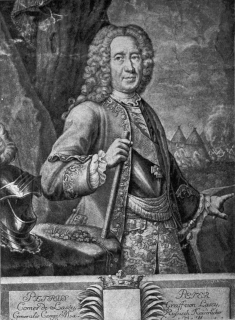
Peter Lacy, Irish-born soldier who later serves in the Imperial Russian Army, is born Pierce Edmond de Lacy into a noble Irish family on September 26, 1678, in Killeedy near Limerick, County Limerick. Considered one of the most successful Russian Imperial commanders before Pyotr Rumyantsev and Alexander Suvorov, in a military career that spans half a century, he claims to have participated in 31 campaigns, 18 battles, and 18 sieges.

At the age of 13, during the Williamite War in Ireland, Lacy is attached to the Jacobite defence of Limerick against the Williamites with the rank of Lieutenant. The Flight of the Wild Geese follows, with him, his father and his brother joining the Irish Brigade in France. After his relatives lose their lives fighting for Louis XIV in Italy, he is induced to seek his fortune elsewhere. After two years of service in the Austrian army, he follows his commander, Charles Eugène de Croÿ, into the Russian service.

Lacy’s first taste of land battle in Russia is the disastrous defeat at Narva, in which he commands a unit of musketeers, holding the rank of poruchik. During the Great Northern War he is seriously wounded on two occasions, also gaining the rank of colonel in 1706. In the same year, Peter the Great gives him command of the Polotskii regiment and three new regiments raising him to colonel status. The following year he leads his brigade at Poltava and in the ensuing battle he greatly distinguishes himself. In the 1708 battle of Rumna, he attacks and captures the headquarters of Charles XII of Sweden. He gains fame at this stage by advising the Czar that musketeers should wait until they were within a few yards of the enemy before opening fire. Prior to this, the Russians were known for uncoordinated fire. From this point begins his fame as a soldier. His next active service, still under Prince Anikita Repnin, is the siege of Riga. He is reputedly the first Russian officer to enter the capital of Livland and he is appointed the first Russian chatelain of Riga Castle in the aftermath.

In 1719, Major General Fyodor Apraksin‘s fleet lands Lacy with 5,000 infantry and 370 cavalry near Umeå in Sweden, where they proceed to devastate a dozen iron foundries and a number of mills. Two years later he leads a similar action against Sundsvall. Soon promoted to General, he enters the Military Collegium, as the Russian Ministry of Defense was then known, in 1723. Three years later, he succeeds Repnin in command of the Russian forces quartered in Livland, and in 1729 he is appointed Governor of Riga. These positions bring him in contact with the Duchess of Courland, who before long ascends the Russian throne as Empress Anna. During her reign, Lacy’s capacity for supreme command is never doubted.

Lacy is one of the first recipients of the Order of Saint Alexander Nevsky when it is established, furthermore, he is given command of all infantries in Saint Petersburg, Ingria and Novgorod. By 1728 he is ranked third of only six full generals in the Russian Army and the only foreigner. As a foreigner, his salary is 3,600 Roubles a year, 15% higher than Russian generals. Higher salaries for foreign-born generals are seen in other ranks too. His signature, even on documents in Cyrillic script, always appear in English and Latin script which suggests he never gains proficiency in the Russian language.

When Catherine is Empress, Lacy is given responsibility for removing Maurice de Saxe from Courland. Saxe had managed to gain support and was even mentioned as marrying Anna, Duchess of Courland.

Having saved her from marriage to Saxe, Anna is very familiar with Lacy, and he becomes one of her most trusted generals. The War of the Polish Succession again calls him into the field. In 1733, he and Burkhard Christoph von Münnich expel the Polish king, Stanisław I, from Warsaw to Danzig, which is besieged by them in 1734. Thereupon the Irishman is commanded to march toward the Rhine and join his 13,500-strong contingent with the forces of Eugene of Savoy. To that end, his corps advances into Germany and, meeting the Austrians on August 16, returns to winter quarters in Moravia with exemplary discipline. In 1734, he commands Russian forces at the Siege of Danzig in which French and Polish forces are defeated. Lacy leads the Russians in two other decisive battles of the conflict, Wisiczin and Busawitza. In the latter battle, he is outnumbered ten to one but nevertheless prevails. For this victory, he is awarded Order of the White Eagle. After Busawitza Lacy is ordered to reinforce the Austrians at Mannheim. however, when he reaches Mannheim peace has been declared. He is received by Emperor Charles and Viennese society. On his return from Vienna, he is met by a courier from Saint Petersburg who delivers to him his patent honouring him as Field Marshal.

With the patent of Field Marshal is the news that Russia is at war with Turkey and Lacy is ordered at once to capture Azov Fortress. This he does despite being wounded in the fray. His rival, Burkhard Christoph von Münnich, had been campaigning in the Crimea with little success. Thus, after taking Azov, Lacy is ordered to capture Crimea. He bridges the Sea of Azov at a narrow point near Perekop. Within four days, aided by favourable winds and tides, his entire army crosses it and begins marching on Arabat. The Russians meet the Khan’s much larger Crimean army and rout them in two battles, on June 12 and 14. In 1738, his corps again land in Crimea and take the fortress of Chufut-Kale near the Khan’s capital, Bakhchisaray. For his success in Poland and Crimea he is awarded the Order of St. Andrew.

As soon as peace has been restored, Lacy is reinstated as the Governor of Livland, while Emperor Charles VI confers on him the title of an imperial count. His indifference to politics prevents his downfall following Anna’s death, when other foreign commanders, most notably von Münnich, fall into disgrace and are expelled from active service.

In December 1741, Elizabeth seizes power. Lacy is roused from bed in the early hours of the morning in a test of his loyalty. He is not aware if the men sent to him are from Elizabeth or Grand Duchess Anna. He is asked what party he is of, Anne or Elizabeth, and he answers, “Of the party of the reigning Empress.” A period of unrest follows, and he is called upon to restore order. Most of what is known as the German Faction falls out of favour at this stage. The restoration of order in Saint Petersburg is largely down to the prompt actions of Lacy.

When the Russo-Swedish War breaks out in 1741, the government of Anna Leopoldovna appoints Lacy Commander-in-Chief as the most experienced among Russian generals. He quickly strikes against Finland and wins his last brilliant victory at Lappeenranta in August 1741. His force, however, is poorly supplied and he is forced to withdraw to Saint Petersburg. The following year he rallies his forces and proceeds to capture Hamina, Porvoo and Hämeenlinna, by August encircling more than 17,000 Swedes near Helsinki and effectively bringing the hostilities to an end.

The war over, Lacy withdraws to Riga and resumes the command of the Russian forces stationed in Livland. He administers what is now northern Latvia and southern Estonia until his death on his private estate in Riga on April 30, 1751. His son, Franz Moritz von Lacy, enters the Austrian service in 1743 and becomes one of the most successful imperial commanders of the 18th century and also a Count of the Holy Roman Empire. His nephew, George Browne, is also a general in the Russian army.


Leave a comment

Death of James Joseph Quinlan, Irish-Born Union Army Officer

James Joseph Quinlan, Union Army officer during the American Civil War and Medal of Honor winner, dies in Queens, New York, on August 29, 1906.

Quinlan is born in Clonmel, County Tipperary on September 13, 1833.

Quinlan is appointed as Major of the 88th New York Infantry in December 1861. He becomes the regiment’s Lieutenant Colonel in October 1862 and is discharged in February 1863.

Quinlan receives America’s highest military decoration, the Medal of Honor, on February 18, 1891, for his actions at the Battle of Savage’s Station in Henrico County, Virginia, the fourth of the Seven Days Battles (Peninsula Campaign). His citation states he “led his regiment on the enemy’s battery, silenced the guns, held the position against overwhelming numbers, and covered the retreat of the Second Army Corps.”

James Joseph Quinlan dies on August 29, 1906, in Queens, New York and is buried at Calvary Cemetery, Woodside, Queens County, New York City.


3 Comments

Birth of Frederick Hugh Crawford, Loyalist & British Army Officer

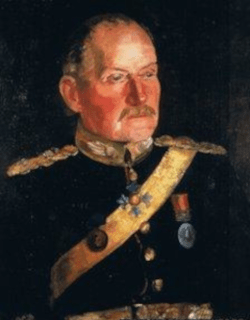
Colonel Frederick Hugh Crawford, CBE, JP, an officer in the British Army, is born in Belfast on August 21, 1861. A staunch Ulster loyalist, he is one of the lesser-known figures in Ulster Unionist history but one who is hugely influential because of his involvement in what is known as the Larne gun-running incident, when he is responsible for smuggling over 25,000 guns and ammunition into the North on the night of April 24, 1914. This makes him a hero for Northern Ireland‘s unionists.

Crawford is born into a “solid Methodist” family of Ulster Scots roots. He attends Methodist College Belfast and University College London (UCL). While Crawford is a determined Ulster loyalist, his great-grandfather was Alexander Crawford, a United Irishman arrested in March 1797 for “high treason,” and sent to Kilmainham Gaol, sharing a cell with prominent United Irishman Henry Joy McCracken.

According to the 1911 census for Ireland, Crawford is living in Marlborough Park, Belfast, with his wife of 15 years, Helen, and four of their five children: Helen Nannie, Marjorie Doreen, Ethel Bethea and Malcolm Adair Alexander. His other child, Stuart Wright Knox, is recorded as a pupil at Ballycloghan National School, Belfast. Stuart would become a lieutenant colonel in the British Army, before being invalided in 1944. Malcolm, after being a member of the Colonial Police, joins the Royal Ulster Constabulary (RUC), advancing to District Inspector. In 1931, Malcolm becomes a Justice of the Peace for Singapore.

Crawford works as an engineer for White Star Line in the 1880s, before returning from Australia in 1892. In 1894, he enlists with the Mid-Ulster Artillery regiment of the British Army, before being transferred to the Donegal Artillery, with which he serves during the Boer Wars, earning himself the rank of major.

In 1898, Crawford is appointed governor of Campbell College, Belfast. Two of his children, Stuart Wright Knox and Malcolm Adair Alexander, both attend Campbell College.

In 1911, Crawford becomes a member of the Ulster Unionist Council. On September 28, 1912, he is in charge of the 2,500 well-dressed stewards and marshals that escort Sir Edward Carson and the Ulster Unionist leadership from the Ulster Hall in central Belfast to the nearby City Hall on Donegall Square for the signing of the Ulster Covenant, which he allegedly signs in his own blood. With the formation of the Ulster Volunteers in 1913, he is made their Director of Ordnance.

During World War I Crawford is an officer commanding the Royal Army Service Corps and is awarded the Royal Humane Society‘s bronze medal for saving life. He also becomes a justice of the peace for Belfast.

With regard to Irish Home Rule, Crawford is strongly partisan and backs armed resistance to it, being contemptuous of those who use political bluffing. His advocation of armed resistance is evident when he remarks, at a meeting of the Ulster Unionist Council, that his heart “rejoiced” when he heard talk of looking into using physical force. At another meeting he even goes as far as asking some attendees to step into another room where he has fixed bayonets, rifles and cartridges laid out.

In 1910, the Ulster Unionist Council plans for the creation of an army to oppose Home Rule and approaches Crawford to act as their agent in securing weapons and ammunition. He tries several times to smuggle arms into Ulster, however, vigilant customs officials seize many of them at the docks. Despite this, the meticulously planned and audacious Larne gun-running of April 1914, devised and carried out by Crawford, is successful in bringing in enough arms to equip the Ulster Volunteer Force.

By the 1920s Crawford remains as stoic in his beliefs, remarking in a letter in 1920 that “I am ashamed to call myself an Irishman. Thank God I am not one. I am an Ulsterman, a very different breed.” In March 1920, he begins to reorganize the UVF and in May 1920 he appeals to Carson and James Craig for official government recognition. He states, “We in Ulster will not be able to hold our men in hand much longer…we will have the Protestants…killing a lot of the well-known Sinn Féin leaders and hanging half a dozen priests.” In 1921, he attempts to create an organisation intended to be a “Detective Reserve,” but called the “Ulster Brotherhood,” the aims of which are to uphold the Protestant religion and political and religious freedom, as well as use all means to “destroy and wipe out the Sinn Féin conspiracy of murder, assassination and outrage.” This organisation only lasts for a few months after failing to gain acceptance from the political authorities.

In 1921, Crawford is included in the Royal Honours List and appointed a CBE. In 1934, he writes his memoirs, titled Guns for Ulster.

Crawford dies on November 5, 1952, and is buried in the City Cemetery, Falls Road, Belfast. Upon news of his death, he is described by the then Prime Minister of Northern Ireland, Sir Basil Brooke, as being “as a fearless fighter in the historic fight to keep Ulster British.”


Leave a comment

Dedication of the Fusiliers’ Arch in Dublin

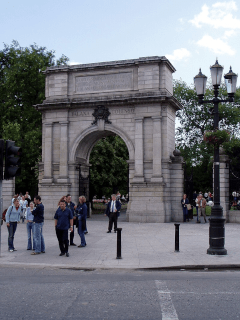
The Fusiliers’ Arch, a monument which forms part of the Grafton Street entrance to St. Stephen’s Green in Dublin, is dedicated on August 19, 1907, to the officers, non-commissioned officers and enlisted men of the Royal Dublin Fusiliers who fought and died for “King and country” in the Second Boer War (1899–1902).

Funded by public subscription, the arch is designed by John Howard Pentland and built by Henry Laverty and Sons. Thomas Drew consults on the design and construction.

The proportions of the structure are said to be modelled on the Arch of Titus in Rome. It is approximately 8.5 m (28 ft.) wide and 10 m (33 ft.) high. The internal dimensions of the arch are 5.6 m high and approximately 3.7 m wide (18 by 12 ft.). The main structure of the arch is granite, with the inscriptions carried out in limestone and a bronze adornment on the front of the arch.

The arch is commissioned to commemorate the four battalions (two regular and two militia) of the Royal Dublin Fusiliers that served in the Second Boer War. The names of 222 dead are inscribed on the underside of the arch.

The construction of the arch coincides with a time of political and social change in Ireland, and the colonial and imperial background to the dedication are anathema to a burgeoning nationalist movement – who label the structure “Traitor’s Gate.” Though damaged in a crossfire between the Irish Citizen Army and British forces during the 1916 Easter Rising, the arch remains “one of the few colonialist monuments in Dublin not blown up” in Ireland’s post-independence history.

Engraved on the western face of the monument is the Latin text, Fortissimis suis militibus hoc monumentum Eblana dedicavit MCMVII, “To its strongest soldiers, Dublin dedicates this monument, 1907.” (Eblana is a name that appears on Ptolemy‘s 2nd century AD map of Ireland, traditionally taken as a Latin name for Dublin, although it more likely refers to a site further north, around Loughshinny.) Six battlefields are inscribed on the arch:


Leave a comment

Birth of William Corbet, Anglo-Irish Soldier

William Corbet, an Anglo-Irish soldier in the service of France, is born in Ballythomas, County Cork, on August 17, 1779. In September 1798, he accompanies James Napper Tandy in an aborted French mission to Ireland in support of the United Irish insurrection. After two years of incarceration, he escapes from Ireland and serves in the campaigns of Napoleon reaching the rank of colonel. In 1831, under the July Monarchy, he is employed in the Morea expedition to Greece. He returns to France in 1837, retiring with the rank of Major-General.

Corbet is born into a branch of the Corbet family, an Anglo-Irish Protestant family. In 1798, as a member of the Society of United Irishmen, he is expelled from Trinity College Dublin with Robert Emmet and others for treasonable activities and goes instead to Paris. In September of the same year, he joins a French military force under James Napper Tandy with the rank of Captain and sails from Dunkirk with arms and ammunition for Ireland. The expedition has to turn back following the defeat of General Jean Joseph Amable Humbert and arriving in Hamburg they are handed over to the British authorities and taken to Ireland, where they are imprisoned in Kilmainham Gaol.

Corbet escapes in 1803 and returns to France. He is appointed professor of English at the military college of Saint-Cyr. Later that year he becomes a captain in the Irish Legion. Following the death of his brother Thomas (who was also in the Legion) in a duel with another officer, he is transferred to the 70th Regiment of the line, where he serves in André Masséna‘s expedition to Portugal, and distinguishes himself in the retreat from Torres Vedras and the Battle of Sabugal. After the Battle of Salamanca, he is appointed chef de bataillon of the 47th regiment and serves until 1813 when he is summoned to Germany to join the staff of Marshal Auguste de Marmont. He serves at the battles of Lützen, Bautzen, Dresden and others and is made a commander of the Legion of Honour. In December 1814, he is naturalised as a French citizen. In 1815, after the abdication of Napoleon, he is promoted to colonel and chief of staff to General Louis-Marie-Celeste d’Aumont at Caen.

In the period of the Bourbon Restoration in France, Corbet’s friendship with the opposition leader, General Maximilien Sébastien Foy, places him under some suspicion, but in 1828 he is selected by Marshal Nicolas Joseph Maison to accompany him on an expedition against Ibrahim Pasha in Morea, Greece. After serving as governor of Navarino, Messenia, and Nafplio, he relieves Argos from the attack of Theodoros Kolocotronis, who is then acting in the interest of Russia and Count Ioannis Kapodistrias, and defeats him.

In 1837, Corbet returns to France where, with the rank of Major-General, he is commander in the region of Calvados. He dies at Saint-Denis on August 12, 1842.

The Irish novelist Maria Edgeworth bases the main theme of her novel Ormond on Corbet’s 1803 escape from Kilmainham Gaol.


Leave a comment

Death of “Mick” Mannock, British-Irish Flying Ace

Edward Corringham “Mick” Mannock VC, DSO & Two Bars, MC & Bar, a British-Irish flying ace who serves in the Royal Flying Corps (RFC) and Royal Air Force (RAF) during World War I, is killed on July 26, 1918, when his plane crashes behind German lines. He is a pioneer of fighter aircraft tactics in aerial warfare. At the time of his death, he has amassed 61 aerial victories, making him the fifth highest scoring pilot of the war. He is among the most decorated men in the British Armed Forces. He is honoured with the Military Cross (MC) twice, is one of the rare three-time recipients of the Distinguished Service Order (DSO) and is posthumously awarded the Victoria Cross (VC).

Mannock was born on May 24, 1887, to an English father, Edward Mannock, and an Irish mother, Julia Sullivan. His father serves in the British Army and in 1893, deeply in debt and exasperated with civilian life, he re-enlists, and the family moves to Meerut, India when he is five years old. In his early years, he is sickly and develops several ailments. Soon after arriving in Asia, he contracts malaria, narrowly avoiding death. Upon his return to England, he becomes a fervent supporter of Irish nationalism and the Irish Home Rule movement but becomes a member of the Independent Labour Party (ILP).

In 1914, Mannock is working as a telephone engineer in Turkey. After the Ottoman Empire‘s entry into the war on the side of the Central Powers he is interned. Poorly fed and cared for, his health rapidly declines in prison. Dysentery racks his intestines, and he is confined to a small cell. Turkish authorities repatriate him to Britain believing him to be unfit for war service. He recovers and joins the Royal Engineers (RE) and then the Royal Army Medical Corps (RAMC). He moves services again and in 1916 joins Royal Flying Corps (RFC). After completing his training, he is assigned to No. 40 Squadron RFC. He goes into combat on the Western Front, participating in three separate combat tours. After a slow start he begins to prove himself as an exceptional pilot, scoring his first victory on May 7, 1917.

By February 1918, Mannock has achieved sixteen victories and is appointed a Flight Commander in No. 74 Squadron. He amasses thirty-six more victories from April 12 — June 17, 1918. After returning from leave he is appointed commanding officer of No. 85 Squadron in July 1918, and scores nine more victories that month.

On July 26, Major Mannock offers to help a new arrival, Lt. Donald C. Inglis from New Zealand, obtain his first victory. After shooting down an enemy LVG two-seater behind the German front-line, Mannock is believed to have dived to the crash site to view the wreckage, seemingly breaking one of the unwritten rules of fellow pilots about the hazards of flying low into ground fire. In consequence, while crossing the trenches the fighters are met with a massive volley of ground fire. The engine of his aircraft is hit and immediately catches fire, and shortly thereafter the plane crashes behind German lines. His body is believed to have been found, though this is unproven, about 250 yards (250m) from the wreck of his plane, perhaps thrown, perhaps jumped. The body shows no gunshot wounds although he had vowed to shoot himself if shot down in flames.

The exact cause of Mannock’s death remains uncertain. A year later, after intensive lobbying by Ira Jones and many of his former comrades, he is awarded the Victoria Cross (VC).

Mannock’s body is not subsequently recovered by the Commonwealth War Graves Commission (CWGC), so officially he has no known grave. His name is commemorated on the Arras Flying Services Memorial to the missing at the Faubourg d’Amiens CWGC Cemetery in Arras, France. There is also a memorial plaque in his honour in Canterbury Cathedral.

Mannock’s name is listed on the Wellingborough War Memorial with the other fallen men from the town and the local Air Training Corps (ATC) unit bears his name – 378 (Mannock) Squadron. Additionally, Mannock Road, a residential street in Wellingborough, is named after him.

On June 24, 1988, a plaque is unveiled at 183 Mill Road, Wellingborough, by top scoring World War II British fighter pilot Air Vice-Marshal Johnnie Johnson. Mannock had lived at that address prior to the war after being befriended by the Eyles family.


Leave a comment

Kidnapping of Brig. Gen. Cuthbert Henry Tindall Lucas by the IRA

Major General Cuthbert Henry Tindall Lucas, CB, CMG, DSO, DL, British Army officer, is captured by the Irish Republican Army (IRA) on June 26, 1920, during the Irish War of Independence. He also commands the 4th Infantry Division during the final months of World War I and serves in the Second Boer War.

Lucas is born in Hitchin, Hertfordshire, England, on March 1, 1879. He later attends Marlborough College and the Royal Military College, Sandhurst.

Lucas is commissioned as a second lieutenant into 2nd Battalion, the Royal Berkshire Regiment, on May 7, 1898. He serves with the battalion in South Africa during the Second Boer War from 1899 to 1902, taking part in operations in the Orange Free State from February to July 1900, in Transvaal from July to November 1900, and later in Cape Colony south of the Orange River. He is promoted to lieutenant on August 1, 1900, while in South Africa. After the end of the war in June 1902, he and the rest of the 2nd battalion is sent to Egypt, where they arrive on the SS Dominion in November 1902. He later serves in the Egyptian Army and Sudan Civil Service.

Lucas serves in World War I with the British Expeditionary Force (BEF) and fights at Gallipoli in 1915 where he is promoted to command the 87th Brigade of the 29th Division. He leads the brigade during the Battle of the Somme and into 1917 before becoming Commandant of the Machine Gun Corps training centre in 1918. He is appointed General Officer Commanding (GOC) 4th Infantry Division in October 1918 during the closing stages of the war.

On June 30, 1919, Lucas is appointed a deputy lieutenant of Hertfordshire. He is made Commander of 17th Infantry Brigade in Ireland, and of Fermoy Barracks, on October 30, 1919. On June 26, 1920, during the Irish War of Independence, he is captured by the IRA while he is fishing on the Munster Blackwater near Fermoy along with Colonels Tyrell and Danford. After Danford is wounded during an unsuccessful attempt to escape from a moving car the same day, the volunteers free Tyrell to attend to Danford’s wounds. Both Colonels are subsequently taken to a military hospital at Fermoy.

Lucas is subsequently held in West Limerick and East Clare.

A letter from his wife, announcing the birth of their child, and addressed simply “to the IRA”, is delivered to him and his captors allow a subsequent exchange of letters between the couple. His letters home remain in the possession of his descendants and are shown on an episode of the BBC Television programme Antiques Roadshow.

The IRA moves Lucas to East Limerick from where he escapes four weeks later. It is believed his captors purposely relax the guard to allow him to escape rather than be faced with the possibility of executing him. While being transferred from Pallas Royal Irish Constabulary (RIC) barracks to Tipperary military barracks in a routine army patrol they are ambushed, and Lucas receives a slight injury.

Lucas becomes Assistant Adjutant General at Aldershot Command in 1924 and serves with the staff at General Headquarters, British Army of the Rhine from 1927 before he retires to Stevenage in 1932. He dies on April 7, 1956, and is buried in Graveley, Hertfordshire. His wife, Joan Holdsworth, whom he marries in October 1917, dies on September 6, 1979, and is also buried in Graveley, Hertfordshire.

In 2014, Barbara Scully, a granddaughter of George Power, one of the IRA volunteers involved, publishes his recollections to his family of the kidnap in The Irish Times. This brings a friendly reply from Lucas’ granddaughter, Ruth Wheeler, in which she states that Lucas risked a court-martial for stating that during his kidnap and time in captivity he was treated as “a gentleman by gentlemen” and was held by “delightful people.”

Ireland’s Defence Forces have published online Bureau of Military History witness statements by the IRA volunteers involved in the kidnap, as well as those who guarded General Lucas while he was held as a prisoner of war.

In 2020 Lucas’s granddaughter, Ruth Wheeler, and other members of the Lucas family publish online the letters he wrote and received while in captivity. Limerick Councillor Emmett O’Brien and other local people in March 2019 announce an intent to re-enact the capture, imprisonment, and release of Lucas on the anniversary in 2020.

(Pictured: Cuthbert Henry Tindall Lucas, bromide print by Walter Stoneman, 1919, National Portrait Gallery)


Leave a comment

The Occupation and Burning of the Custom House

The Custom House in Dublin is occupied and then burned in an operation by the Irish Republican Army (IRA) on May 25, 1921, during the Irish War of Independence. At the time, the Custom House is the headquarters of the Local Government Board for Ireland, an agency of the British administration in Ireland, against which the IRA is fighting in the name of the self-proclaimed Irish Republic. The operation, involving over 100 IRA volunteers, is a propaganda coup for the republicans but a military disaster for the IRA in the Irish capital. A force of British Auxiliaries quickly arrives, and a gun battle erupts. Five IRA volunteers, John Doyle, Edward Dorins, Daniel Head, Captain Patrick and Lieutenant Stephen O’Reilly, are killed, along with three civilians. Approximately 80 volunteers are captured.

The operation is the largest action in Dublin by rebels since the Easter Rising of April 1916.

The Irish War of Independence is a guerrilla campaign by the IRA in support of the Irish Republic. The conflict enters its bloodiest phase in the first six months of 1921. In Dublin, a total of 309 people are killed in the conflict and several hundred more wounded.

Dublin is garrisoned by over 10,000 British troops and 1,600 police including 400 men of the Royal Irish Constabulary (RIC) Auxiliary Division. Most IRA actions in the city consist either of assassinations of selected police, military or administration figures by the Squad, or ambushes on British forces by one of the four Active Service Units (ASU) of the IRA’s Dublin Brigade, together comprising about 100 men. These are usually rapid and fleeting attacks using grenades and handguns, followed by a quick getaway. There are strict orders given to IRA units to avoid prolonged engagements with the better-armed British forces.

However, this policy is reversed after a meeting of the Ministry of Dáil Éireann in May 1921 where the President of the Republic, Éamon de Valera, calls for a spectacular public show of force by the IRA, to reinforce the idea that it is an army representing an Irish government. For this reason, it is decided to attack and burn the Custom House, which, although an important government building, is not defended by the British military. Michael Collins is against the attack but is overruled.

Michael O’Kelly, Lieutenant E Company, 2nd Battalion, Dublin Brigade, recalls plans to “deliver a smashing blow to England.” Two large scale operations – to capture Beggars Bush Barracks, or to destroy the Customs House are initially considered. The Custom House is eventually chosen. IRA member Vincent Byrne says that the operation is “one of many under review.”

In the early afternoon of May 25, 1921, roughly 120 non-uniformed IRA Volunteers begin to gather around the Custom House in groups of two or three. Three quarter of those involved belonged to the 2nd Battalion of the Dublin Brigade under Tom Ennis. Only a minority of them are experienced guerrilla fighters and they are armed only with pistols and a limited amount of ammunition. At 1:00 p.m., they rush the Custom House and overpower the police guard. A lorry pulls up outside the building with tins of petrol and bales of cotton, which are then sprinkled throughout the building. The IRA Volunteers herd all the staff into the main hall. The caretaker of the building, Francis Davis, is shot dead when he tries to call the police.

However, at about 1:10 p.m., a watching policeman notifies British forces and 60 Auxiliaries in three lorries and an armored car quickly arrive on the scene. IRA Volunteers from the 1st, 3rd and 4th battalions are positioned outside the building to stop the enemy from approaching.

Four Auxiliaries are wounded in a gun battle with one of these IRA protection teams outside the building. Other Auxiliaries fire into the building with rifles and Lewis machine guns, exchanging fire with the IRA fighters inside. A number of IRA Volunteers and civilians are killed or wounded by the Auxiliaries. As fighting rages outside, IRA Volunteers inside the building are ordered to set it alight.

The ammunition of the IRA Volunteers quickly runs out and the firefight ends within 30 minutes. Some Volunteers are shot as they try to run away. Tom Ennis, in command of the operation, escapes but is hit twice in the leg. Many others are arrested along with civilians as they come out of the now burning Custom House with their hands up. The Fire Brigade, which had been delayed from responding by other IRA companies in the city, arrives too late to put out the fire.

British military forces composed of units from the Wiltshire Regiment arrive and take over the operation from the Auxiliaries at this point. A total of 111 people are arrested, of whom 70–80 are IRA volunteers.

The Custom House burns for five days and is all but completely destroyed by the fire. With it are destroyed many centuries of local government records. The Irish Bulletin, official gazette of the Irish Republic, reports:

“A detachment of the Dublin Brigade of the Irish Army was ordered to carry out the destruction of the Custom House in accordance with a decision arrived at after due deliberation of the ministry of Dáil Éireann. We in common with the rest of the nation regret the destruction of historical buildings. But the lives of four million people are a more cherished charge than any architectural masterpiece. The Custom House was the seat of an alien tyranny.”

From the republican point of view, the operation is successful for its propaganda value, but it is a heavy blow in terms of the numbers lost, both killed and arrested. Following the operation, the Dublin Brigade and The Squad are amalgamated into the Dublin Guard. However, the operation does not totally impede the IRA’s campaign in Dublin. The Dublin Brigade carries out 107 attacks in the city in May and 93 in June, showing a decline but not a dramatic one.

The memoir of Harry Colley, Adjutant of the Dublin IRA, estimates the numbers in the five Dublin battalions at 1,400 in early 1921.

The armed conflict is brought to an end on July 11, 1921, and negotiations are opened which produces the Anglo-Irish Treaty in December of that year. The Custom House is re-built after the end of the war.

Irish local government records from the 1600s had been brought from rural parts of Ireland to the Custom House for safekeeping, and these are lost in the blaze. At the time, The New York Times subtitles their report on the fire as “Priceless Records Lost.” Some genealogists still lament the loss of these historical records.

(Pictured: The Custom House in flames, taken on May 25, 1921)