seamus dubhghaill

Promoting Irish Culture and History from Little Rock, Arkansas, USA


Leave a comment

Birth of Steve Morrow, Professional Footballer & Manager

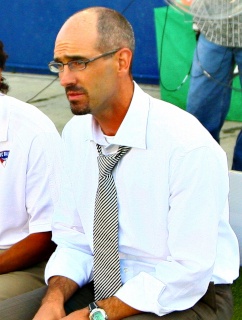
Stephen Joseph Morrow, Northern Irish former professional footballer and manager, is born on July 2, 1970, in Belfast, Northern Ireland.

Morrow makes his full international debut for Northern Ireland in May 1990 against Uruguay. He goes on to win 39 caps for his country from then until 1999.

Morrow becomes a semi-regular with Arsenal in 1992–93. He plays most of his matches in midfield, replacing the injured Paul Davis as Arsenal reaches the League Cup and FA Cup finals. He starts the League Cup final against Sheffield Wednesday. After falling behind to a John Harkes goal, Arsenal equalises through Paul Merson, and then Merson sets up Morrow to score the winner, which is also his first for the club. In the celebrations after the match, Arsenal skipper Tony Adams attempts to pick up Morrow and parade him on his shoulders, but Adams slips, and Morrow awkwardly hits the ground. He breaks his arm and has to be rushed to hospital.

As a result, Morrow misses the rest of that season, including the 1993 FA Cup Final, where Arsenal completes the Cup Double. Before the final kicks off, he receives his League Cup winners’ medal.

Morrow is fit enough by the start of the next season but plays only 13 matches, compared to 25 the previous season. One of those is the scene of an Arsenal triumph, the club’s 1994 European Cup Winners’ Cup Final win over Parma. In an Arsenal midfield depleted of John Jensen and David Hillier, he makes his first appearance in the competition that season partnering 20-year-old Ian Selley in central midfield as Arsenal beats Parma 1–0 with an Alan Smith goal.

Morrow nearly leaves the club in March 1994, following an approach from the Premier League‘s bottom club Swindon Town, but the transfer falls through and he signs a new contract with Arsenal, where he spends three more years.

Morrow goes on to play over 20 matches the following season, including a second Cup Winners’ Cup final, which Arsenal loses to Real Zaragoza. He scores his second Arsenal goal in the League Cup once again against Sheffield Wednesday, and scores his first Arsenal league goal in a 3–1 defeat at Blackburn Rovers, who win the Premier League that season. However, he never finds favour under new Arsenal boss Bruce Rioch, who only gives the Irishman five matches in 1995–96.

After the arrival of Arsène Wenger in 1996, Morrow is told he is surplus to requirements at Highbury, and he is loaned to Queens Park Rangers (QPR) in March 1997, the deal being made permanent that summer. He plays 85 games for Arsenal in total, scoring three goals.

At QPR, Morrow is initially a regular, but the club struggles, going from contenders for promotion to the Premiership to facing relegation to the Football League Second Division. Injuries to his shoulder ligaments ruled him out for most of the 1999–2000 season, and he loses his place in the side. He later has a loan spell at Peterborough United, but it does not become permanent, and he is released on a free transfer in the summer of 2001.

Struggling to find a club in the United Kingdom, Morrow moves to the United States to play for Major League Soccer (MLS) side Dallas Burn. He spends two seasons at Dallas, who rename themselves FC Dallas in 2004, before retiring because of a persistent neck injury.

On February 3, 2004, Morrow is named as an assistant coach to FC Dallas but resigns in late May due to personal reasons. However, he returns to the club on January 27, 2005, under coach Colin Clarke. When Clarke is fired on November 7, 2006, Morrow is named interim head coach. On December 11, 2006, FC Dallas removes the ‘interim’ from his title. He is fired as coach on May 20, 2008.

On September 12, 2008, Morrow returns to Arsenal as International Partnerships – Performance Supervisor, managing Arsenal’s international partnerships, which includes the Colorado Rapids of Major League Soccer in the United States, BEC Tero of Thailand and Hoàng Anh Gia Lai of Vietnam, and assisting Arsenal’s academies in countries such as Egypt and Ghana. From 2014, he works as Arsenal’s head of youth development. He leaves Arsenal in 2019 following a coaching staff shake up.

On May 7, 2021, Morrow is appointed The FA’s head of player selection and talent strategy working across England men’s teams.


Leave a comment

Death of Brigadier General Robert Nugent of the U.S. Army

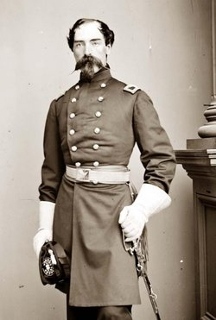
Brigadier General Robert Nugent, Irish-born American United States Army officer during the American Civil War and the Indian Wars, dies at the age of 76 in Brooklyn, New York on June 20, 1901.

Born in Kilkeel, County Down on June 27, 1824, Nugent serves with the 69th New York Infantry Regiment, from its days as a militia unit and into its incorporation into the Union Army at the start of the war and is one of its senior officers at the First Battle of Bull Run.

When the unit is originally mustered out of service, the 90-day enlistment terms having expired, Nugent accepts a commission as a captain in the regular army. He is immediately assigned to the 13th Infantry Regiment whose commanding officer, General William Tecumseh Sherman, personally requests. Taking a leave of absence to return to New York, he assists Thomas Francis Meagher in organizing the Irish Brigade. The newly reformed 69th Infantry Regiment is the first unit assigned to the Irish Brigade and, with Nugent as its colonel, he leads the “Fighting 69th” at the Battles of Seven Pines, Gaines’ Mill, Savage’s Station, White Oak Swamp, Glendale, and Malvern Hill.

Nugent is wounded, shot in the stomach, at the Battle of Fredericksburg and is eventually forced to resign his command. He is appointed acting assistant provost marshal for the southern district of New York, which includes New York City and Long Island, by the U.S. Department of War. An Irishman and Democrat, his appointment is thought to assure the Irish American population that conscription efforts would be carried out fairly. The Irish-American, a popular Irish language newspaper, writes that the selection is a “wise and deservedly popular one.” He does encounter resistance from city officials wanting him to remain uninvolved, however by mid-June he reports to his superior officer and provost marshal general Colonel James Fry that conscription efforts are “nearing completion without serious incident.”

Understanding the seriousness of the situation, Nugent attempts to keep the draft selections quiet and in isolated parts of the city. In Manhattan however, lotteries are placed in the heart of Irish tenement and shanty neighborhoods where the draft is most opposed.

In the ensuing New York City draft riots, Nugent takes command of troops and attempts to defend the city against the rioters. Despite issuing the cancellation of the draft, the riots continue for almost a week. His home on West 86th Street is looted and burned by the rioters during that time, his wife and children barely escaping from their home. Upon breaking into his house, furniture is destroyed, and paintings of Nugent and Meagher are slashed, although Brigadier General Michael Corcoran‘s is left untouched.

On October 28, Nugent is relieved of his post and succeeded by General William Hayes. Returning to active duty, he assumes command of the Irish Brigade in November 1864, shortly after the death of Corcoran, and is present at the Battle of Spotsylvania Court House, the Siege of Petersburg and the Appomattox campaign. As its last commanding officer, he and the Irish Brigade also march in the victory parade held in Washington, D.C. following Robert E. Lee‘s surrender at Appomattox Court House.

Nugent is brevetted Brigadier General for distinguished leadership of the 69th Regiment on March 13, 1865. The veterans of the Irish Brigade are honorably discharged and mustered out three months later. Nugent, however, remains in the regular U.S. Army for the next twenty years, a formidable “Indian fighter” during the America Indian Wars with the 13th and 24th Infantry Regiments. In 1879, he retires at the rank of major and resides in New York where he is involved in the Grand Army of the Republic, the War Veterans’ Association of the 7th Regiment and an honorary member of The Old Guard.

Nugent becomes ill in his old age, complications arising from his wounds suffered at Fredericksburg, and remains bedridden for two months before his death at his McDonough Street home in Brooklyn on June 20, 1901. In accordance with his last wishes, he is buried at Cypress Hills National Cemetery, located in the Cypress Hills neighborhood of Brooklyn.


Leave a comment

The Holy Cross Dispute

The Holy Cross dispute begins on June 19, 2001, and continues into 2002 in the Ardoyne area of north Belfast. During the 30-year conflict known as the Troubles, Ardoyne becomes segregated – Ulster Protestants and Irish Catholics living in separate areas. This leaves Holy Cross, a Catholic primary school for girls, in the middle of a Protestant area. During the last week of school in June 2001 before the summer break, Protestant loyalists begin picketing the school, claiming that Catholics are regularly attacking their homes and denying them access to facilities.

On Tuesday, June 19, Royal Ulster Constabulary (RUC) officers have to protect children and parents entering the school after they are attacked by loyalist stone throwers. Police describe the attack as “vicious.” Following the incident, a blockade of the school develops, with loyalists standing across the road and RUC officers keeping the children and their parents away.

The following day, the school is forced to close when loyalists block the entrance. During the evening, up to 600 loyalists and nationalists clash with each other and with the police. Shots are also fired at the police and over 100 petrol bombs are thrown. During the riots the police fire a number of the new ‘L21 A1’ plastic baton rounds for the first time. Thirty-nine RUC officers are injured. Nine shots in total are fired – six from loyalists and three from republicans. The trouble comes after an explosion at the rear of Catholic homes next to a peace line. Both loyalist and nationalist politicians blame each other for the violence. This is the first of many large riots to take place in Belfast within more than a year.

The morning blockade continues on Thursday, June 21. About 60 of the school’s 230 pupils enter the school through the grounds of another school. Senior Sinn Féin member Gerry Kelly says, “It’s like something out of Alabama in the 1960s.” Three Protestant families leave their homes in Ardoyne Avenue, saying they are afraid of a nationalist attack. During the evening and night there are serious disturbances in the area around the school. Loyalists fire ten shots and throw six blast bombs and 46 petrol bombs at police lines. Two Catholic homes are attacked with pipe bombs, and a child is thrown against a wall by one of the blasts. Twenty-four RUC officers are hurt.

On Friday, June 22, a number of schoolchildren again have to enter the school through the grounds of another school. This is the last day of school before the summer break.

Talks between the protesters and the schoolchildren’s parents take place over the summer, but no agreement is reached. On August 20, a paint bomb is thrown at the home of a Protestant man in Hesketh Park, smashing a window and causing paint damage to furniture. The man had taken part in the loyalist protest.

The picket resumes on September 3, when the new school term begins. For weeks, hundreds of loyalist protesters try to stop the schoolchildren and their parents from walking to school through their area. Hundreds of riot police, backed up by the British Army, escort the children and parents through the protest each day. Some protesters shout sectarian abuse and throw stones, bricks, fireworks, blast bombs and urine-filled balloons at the schoolchildren, their parents and the police. Death threats are made against the parents and school staff by the Red Hand Defenders, a loyalist paramilitary group. The protest is condemned by both Catholics and Protestants, including politicians. Some likened the protest to child abuse and compare the protesters to North American white supremacists in the 1950s. During this time, the protest sparks bouts of fierce rioting between Catholics and Protestants in Ardoyne, and loyalist attacks on police. On November 23, the loyalists end the protest after being promised tighter security for their area and a redevelopment scheme. The security forces remain outside the school for several months.

In January 2002, a scuffle between a Protestant and a Catholic outside the school sparks a large-scale riot in the area and attacks on other schools in north Belfast. The picket is not resumed, and the situation remains mostly quiet. The following year, the BBC airs a documentary-drama about the protests.


Leave a comment

Birth of Willie John McBride, Rugby Union Footballer

William James McBride, former rugby union footballer better known as Willie John McBride, is born at Toomebridge, County Antrim, Northern Ireland on June 6, 1940. He plays as a lock for Ireland and the British and Irish Lions. He plays 63 tests for Ireland including eleven as captain, and tours with the Lions five times, a record that gives him 17 Lions test caps. He also captains the most successful ever Lions side, which tours South Africa in 1974.

Owing to his father’s death when he is four years old, McBride spends most of his spare time helping out on his family farm. Because of this he does not start playing rugby until he is seventeen. He is educated at Ballymena Academy and plays for the school’s First XV. After he leaves he joins Ballymena R.F.C.

In 1962 McBride is selected to play for Ireland. His first Test on February 10, 1962 is against England at Twickenham Stadium. Later that year he is selected to tour South Africa with the British and Irish Lions.

McBride continues to play for Ireland throughout the 1960s and plays for Ireland when they first defeat South Africa in 1965, and when Ireland defeats Australia in Sydney, the first time a Home Nations team had defeated a major southern hemisphere team in their own country. He is again selected for the Lions in 1966, this time touring New Zealand and Australia. He tours South Africa with the Lions again in 1968.

McBride is selected to play for the Lions in their 1971 tour of New Zealand. Despite being criticized by some as being “over the hill,” he is made pack leader and helps the Lions to a test series win over New Zealand, their first and last series win over New Zealand. He receives an MBE in 1971 for services to rugby football.

McBride’s leadership qualities lead to his appointment as captain of the British and Irish Lions in their 1974 tour to South Africa. The test series is won 3–0, with one match drawn, the first Lions series ever won in South Africa. It is one of the most controversial and physical test match series ever played. At the time there are only substitutions if a doctor agrees that a player is physically unable to continue and there are no video cameras and sideline officials to keep the punching, kicking and head butting to a minimum. If the South Africans are to resort to foul play then the Lions decide “to get their retaliation in first.” The signal for this is to call “99,” which is a signal for the Lions to clobber their nearest rival players.

In 1975 as his international career is ending McBride plays his last game for Ireland at Lansdowne Road. The game is against France, and near the end of the match he scores his first test try for Ireland. It is the crowning moment of a great playing career. His last international game is against Wales on March 15, 1975. After retiring from playing the game, McBride coaches the Irish team and is manager of the 1983 Lions tour to New Zealand. Despite the test results being mainly poor, team camaraderie is high and some good wins are recorded in other games.

In 1997 McBride is an inaugural inductee into the International Rugby Hall of Fame. He has been asked to present test jerseys and give motivational speeches to Lions players prior to matches. In 2004 he is named in Rugby World magazine as “Rugby Personality of the Century.” He is a major supporter of the Wooden Spoon Society.

McBride is awarded a CBE in the 2019 New Year Honours list for services to Rugby Union.


2 Comments

Irish Republican Patsy O’Hara Dies on Hunger Strike

Patsy O’Hara, Irish republican hunger striker and member of the Irish National Liberation Army (INLA), dies on hunger strike in the H Blocks of Long Kesh Prison at 11:29 PM on May 21, 1981. Earlier in the day, at 2:11 AM, he is preceded in death by his friend and fellow hunger-striker, Raymond McCreesh.

O’Hara is born on July 11, 1957, in Bishop Street, Derry, County Londonderry, Northern Ireland.

O’Hara joins Na Fianna Éireann in 1970 and, in 1971, his brother Sean is interned in Long Kesh Prison. In late 1971, at the age of 14, he is shot and wounded by a soldier while manning a barricade. Due to his injuries, he is unable to attend the civil rights march on Bloody Sunday but watches it go by him in the Brandywell Stadium, and the events of the day have a lasting effect on him.

In October 1974, O’Hara is interned in Long Kesh Prison, and upon his release in April 1975 he joins the Irish Republican Socialist Party (IRSP) and INLA. He is arrested in Derry in June 1975 and held on remand for six months. In September 1976, he is arrested again and once more held on remand for four months.

On May 10, 1978, O’Hara is arrested on O’Connell Street in Dublin under section 30 of the Offences Against the State Act and is released eighteen hours later. He returns to Derry in January 1979 and is active in the INLA. On May 14, 1979, he is arrested and is convicted of possessing a hand grenade. He is sentenced to eight years in prison in January 1980.

O’Hara becomes Officer Commanding of the INLA prisoners at the beginning of the first hunger strike in 1980, and he joins the 1981 strike on March 22.

On Thursday, May 21, 1981, at 11:29 PM, Patsy O’Hara dies at the age of 23 after 61 days on hunger strike. In accordance with his wishes, his parents do not get him the medical intervention needed to save his life. His corpse is found to be mysteriously disfigured prior to its departure from prison and before the funeral, including signs of his face being beaten, a broken nose, and cigarette burns on his body.

O’Hara’s mother, Peggy O’Hara, is a candidate in the 2007 Northern Ireland Assembly election in the Foyle constituency. She is not elected, but she is one of the more successful dissident republican candidates opposed to the new policy of the Sinn Féin leadership of working with the Police Service of Northern Ireland (PSNI) and wins 1,789 votes. On the eve of the election, over 330 former republican prisoners write a letter to the Derry Journal endorsing her campaign.


Leave a comment

Death of Elisha Scott, Northern Irish Goalkeeper

Elisha Scott, Northern Irish football goalkeeper, dies in Belfast on May 16, 1959. He plays for Liverpool from 1912 to 1934 and still holds the record as their longest-serving player.

Scott is born in Belfast on August 24, 1893. He plays for Linfield and Broadway United before Liverpool manager Tom Watson signs him on September 1, 1912, following a recommendation from Scott’s older brother Billy Scott. Liverpool only gets the opportunity to sign Scott when Everton decides that the 19-year-old is too young.

Scott is reported as signed by Crewe Alexandra in August 1913, presumably under some sort of loan arrangement. He succeeds Thomas Charles Allison as deputy for the first-choice keeper, Arthur Box, and plays for them in the early part of the 1913-14 season.

Scott finally makes his Liverpool debut on January 1, 1913, at St. James’ Park. The team plays Newcastle United to a 0–0 draw.

During the early days of his career, Scott is understudy to Kenny Campbell and only appears occasionally. World War I interrupts his career for four years. He finally gets a chance of a run in the Liverpool goal at the end of the season. His goalkeeping position is set in stone when Campbell is allowed to leave in April 1920. He establishes himself as Liverpool’s number one. He is a major part of the back-to-back Championship winning teams of 1922 and 1923, missing just three games of the first title and none in the second.

Numerous stories about Scott exist in Liverpool folklore. One such story relates to a 1924 game, after Scott has just made a phenomenal save at Ewood Park against Blackburn Rovers. A man appearing from the crowd goes over to Scott and kisses him. He is part of one of the legendary rivalries of the day along with Everton’s Dixie Dean. The two of them are the main topic of discussion when the day of the Merseyside derby is approaching. Everton declares that Dean will score while Liverpool disagrees, saying Scott will not let a single shot past. A famous story, possibly apocryphal, associated with the two men is that of how they once encountered each other in Belfast city centre the day before an Ireland versus England game. Dean, famed for his remarkable heading ability, touches his hat and nods to Scott as they are about to pass. Scott responds by diving as if to try to save an imaginary header, much to the initial shock and then delight of the locals who witness it while a mildly shocked Dean smiles and quietly continues on his walk.

Towards the end of the decade, Scott loses his starting position to another Liverpool goalkeeper, Arthur Riley, but he never gives up the battle for the position of goalkeeper. However, at the beginning of the 1930s it becomes more and more difficult for Scott to get into the line-up. Eventually he asks if he can return to his homeland when his old team Belfast Celtic offers him a player-manager role in 1934. Liverpool consents. He plays the last of his 467 appearances at Chelsea on February 21, 1934, where Chelsea defeats Liverpool 2–0.

Upon Liverpool’s final home match of the season Scott heads to the director’s box to give his adoring fans a farewell speech. He plays his final game for the Belfast club in 1936 at the age of 42. In his time as manager of the Celtics, he wins ten Irish League titles, six Irish Cups, three City Cups, eight Gold Cups and five County Antrim Shields.

Scott dies in Belfast on May 16, 1959, and is buried in Belfast City Cemetery.


Leave a comment

Birth of Basil Kelly, Northern Irish Barrister, Judge & Politician

Sir John William Basil Kelly, Northern Irish barrister, judge and politician, is born in County Monaghan on May 10, 1920. He rises from poverty to become the last Attorney General of Northern Ireland and then one of the province’s most respected High Court judges. For 22 years he successfully conducts many of the most serious terrorist trials.

A farmer’s son, Kelly is raised amid the horror of the Irish Civil War. The family is burned out when he is five and, penniless, goes north to take a worker’s house near the Harland & Wolff shipyard in Belfast. Even though they are Protestant the Kellys are met with a cold welcome. To counter that, his mother starts a bakery while he and his father sell the hot rolls to the area pubs.

Kelly initially attends a shipyard workers’ school, sometimes without shoes, and then goes on to Methodist College Belfast, where only boys prepared to work hard are welcome. His mother, who had taught him to play the piano by marking out the keyboard on the kitchen table, is so cross when she hears that he has been playing football in the street that she tells the headmaster that he does not have enough homework.

On a visit to an elder sister at Trinity College, Dublin, Kelly is so impressed by her smoking and her painted nails that he decides to follow her to the university, where he reads legal science. After being called to the Bar of Northern Ireland in 1944, he has the usual slow start, traveling up to 100 miles to earn a five-guinea fee. However, aided by a photographic memory and the patronage of Catholic solicitors, he gradually builds up a large practice, concentrating on crime and workers’ compensation while earning a reputation as the finest cross-examiner in the province.

Kelly first makes a mark by his successful defence of an aircraftman accused of killing a judge’s daughter. The man is found guilty but insane, though the complications involved bring it back to court 20 years later. After appointment as Queen’s Counsel in 1958 he skillfully conducts two cases which go to the House of Lords. One involves the liability of a drunken psychopath, the other the question of automatism where a person, acting like a sleepwalker, does not know what he is doing.

In the hope of speeding his way to the Bench, Kelly is elected to the House of Commons of Northern Ireland as Ulster Unionist Party (UUP) member for Mid Down in 1964. His capacity for hard work leads to his being appointed Attorney General four years later.

In March 1972, the entire Government of Northern Ireland resigns, and the Parliament of Northern Ireland is prorogued. As a result, Kelly ceases to be Attorney General. The office of Attorney General for Northern Ireland is transferred to the Attorney General for England and Wales, and he is the last person to serve as Stormont’s Attorney General.

In 1973, Kelly is appointed as a judge of the High Court of Northern Ireland, and then as a Lord Justice of Appeal of Northern Ireland in 1984, when he is also knighted and appointed to the Privy Council of the United Kingdom. On the bench he proves a model of fairness and courtesy with a mastery of facts, but his role often puts him in danger.

A Provisional Irish Republican Army (IRA) gang once targets him with a bomb-laden milk van, intending to drive it through his gates. But the police are alerted and immediately take him to Stormont, where he lives for the next two months.

For a year Kelly presides alone over a non-jury Diplock court, protected by armed police and wearing a bulletproof vest before writing his judgment under Special Air Service (SAS) guard in England. He convicts dozens of people on “supergrass” evidence, though there are subsequently doubts about the informant and some of his judgments are overturned.

One of the accused, Kevin Mulgrew, is sentenced to 963 years in prison, with Kelly telling him, “I do not expect that any words of mine will ever raise in you a twinge of remorse.” While the IRA grumbles about the jail terms he dispenses, and he is often portrayed as an unthinking legal hardliner by Sinn Féin, he is a more subtle figure and is often merciful towards those caught up in events or those whom he considers too young for prison.

Kelly retires in 1995 and moves to England, where he dies at the age of 88 at his home in Berkshire on December 5, 2008, following a short illness. He is survived by his wife, Pamela Colmer.

(From: “Basil Kelly,” Independent.ie (www.independent.ie), January 4, 2009)


2 Comments

The Loughgall Ambush

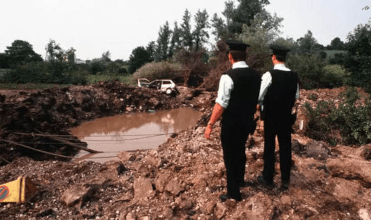
The Loughgall ambush takes place on May 8, 1987 in the village of Loughgall, County Armagh, Northern Ireland. An eight-man unit of the Provisional Irish Republican Army (IRA) launch an attack on the Royal Ulster Constabulary (RUC) base in the village.

The IRA’s East Tyrone Brigade is active mainly in eastern County Tyrone and neighbouring parts of County Armagh. By the mid-1980s it had become one of the IRA’s most aggressive formations. The British security forces receive intelligence of the IRA’s plan weeks prior to the attack and learn the target at least 10 days before the attack. It has been alleged that the security forces had a double agent inside the IRA unit, and that he was killed by the British Army‘s Special Air Service (SAS) during the ambush. Other sources claim that the security forces had instead learned of the ambush through other surveillance methods.

Three local RUC officers work at the station, which is only open part-time, from 9:00 AM to 11:00 AM, and from 5:00 PM to 7:00 PM daily.The IRA’s attack involves two teams. One team is to drive a digger with a bomb in its bucket through the base’s perimeter fence and light the fuse. At the same time, another team is to arrive in a van and open fire on the base, with the intent of killing the three RUC officers as they come off duty.

The IRA unit arrives in Loughgall from the northeast shortly after 7:00 PM, when the station is scheduled to close for the night. They are armed and wearing bulletproof vests, boilersuits, gloves and balaclavas. The digger drives past the police station, turns around and drives back again with the Toyota van carrying the main IRA assault party doing the same. Not seeing any activity in the station, members of the IRA unit feel that something is amiss and debate whether to continue, but decide to go ahead with the attack. Tony Gormley and Gerard O’Callaghan get out of the van and join Declan Arthurs on the digger. At about 7:15 PM Arthurs drives the digger towards the station with the front bucket containing 300–400 lbs. of Semtex inside an oil drum, partially hidden by rubble and wired to two 40-second fuses. The other five members of the unit follow in the van with Eugene Kelly driving, unit commander Patrick Kelly in the passenger seat, with unit commander Jim Lynagh, Pádraig McKearney, and Seamus Donnelly in the back seat.

The digger crashes through the light security fence and the fuses are lit. The van stops a short distance ahead and, according to the British security forces, three of the team jump out and fire on the building with automatic weapons. At the same time, the bomb detonates, the blast destroying the digger and badly damaging the building.

Within seconds the SAS opens fire on the IRA attackers from the station and from hidden positions outside. All eight IRA members are killed in the hail of gunfire, each with multiple wounds to their bodies. Declan Arthurs is shot in a lane-way opposite Loughgall F.C. premises. Three of the IRA members are shot at close range as they lay either dead or wounded on the ground. Three other IRA members in the scout cars escape from the scene, managing to pass through British Army and RUC checkpoints set up after the ambush had been sprung. The two RUC Headquarters Mobile Support Unit (HMSU) officers are injured in the explosion and an SAS soldier receives a facial injury from glass after a window is broken by gunfire.

Two civilians, brothers Anthony and Oliver Hughes, traveling in a car that happens to drive into the scene of the ambush while it is underway are also fired upon by the British forces. Oliver is wearing overalls similar to those being worn by the IRA unit. About 130 yards from the police station, British soldiers open fire on their car from behind, killing Anthony and badly wounding Oliver. The villagers had not been told of the operation and no attempt had been made to evacuate anyone or to seal off the ambush zone, as this might have alerted the IRA.

The security forces recover eight IRA firearms from the scene. The RUC links the weapons to seven known murders and twelve attempted murders in the Mid-Ulster region. On of the weapons, a Ruger Security-Six, had been stolen from Reserve RUC officer William Clement, killed two years earlier in the IRA attack on Ballygawley RUC base. It is found that another of the guns had been used in the murder of Harold Henry, a builder employed by the British Army and RUC in facilities construction in Northern Ireland.

(Pictured: Mural commemorating the IRA members killed in the ambush)


Leave a comment

Birth of Roma Downey, Actress, Producer & Author

Roma Downey, actress, producer, and author, is born in the Bogside district of Derry, County Londonderry, Northern Ireland, on May 6, 1960.

Downey attends Thornhill College, a Catholic girls school. Her mother, Maureen O’Reilly Downey, a homemaker with an interest in the performing arts, dies of a heart attack at age 48 when Downey is 10 years old. Her father, Patrick Downey, is a schoolteacher by training but works as a mortgage broker. He dies when Downey is 20. Originally, she plans to be a painter and earns a Bachelor of Arts at Brighton College of Art. She studies BA(Hons) Expressive Arts at Brighton Polytechnic, which later becomes the University of Brighton. Based at the Falmer campus she combines Art and Drama for her degree.

Downey joins the Abbey Players in Dublin and tours the United States in a production of The Playboy of the Western World. She moves to New York after an agent, whom she met during the tour of The Playboy of the Western World, suggests she has potential for success there. She takes a job as a coat checker at an Upper West Side restaurant before getting cast in Broadway shows. The production leads to a nomination during the Broadway run for the Helen Hayes Award for Best Actress in 1991. She also stars on Broadway in The Circle with Rex Harrison and also at the Roundabout Theater and The Public Theater in New York City.

For nine seasons Downey plays Monica, the tender-hearted angel and employee of Tess (played by Della Reese), on the CBS television series Touched by an Angel (1994-2003), for which she earns multiple Emmy and Golden Globe Best Actress nominations. She plays the leading role of Jacqueline Kennedy Onassis in the miniseries A Woman Named Jackie for NBC.

Downey stars in and is executive producer for a number of hit television movies for the CBS network. She is an ambassador for Operation Smile, a nonprofit medical service organization. On August 11, 2016, she is honored for her work as an actress and producer with a star on the Hollywood Walk of Fame. In her acceptance speech, she dedicates her star to the people of Derry and anyone who ever “walked Hollywood Boulevard with a dream in their hearts.”

As President of Lightworkers Media, the family and faith division of MGM, Downey and her husband, Mark Burnett, produce the Emmy-nominated miniseries The Bible for History channel, which airs in 2013 and is watched by over 100 million people in the United States. She also stars in the miniseries in the role of Mary, mother of Jesus. They also executive-produce the feature films Son of God (2014), Little Boy (2015), Woodlawn (2015), and Ben-Hur (2016) starring Jack Huston, Toby Kebbell and Morgan Freeman.

Variety recognizes Downey and Burnett as “Trailblazers” and lists Downey as one of Variety’s “100 Most Powerful Women in Hollywood.” The Hollywood Reporter includes the couple in their “Most Influential People of 2013” and Downey as one of the “100 Women in Entertainment Power” in 2014. She is honored on Variety‘s “Women of Impact in 2014.” Downey and Burnett also produce The Dovekeepers (2015) based on the bestselling book by Alice Hoffman for CBS and A.D. The Bible Continues (2015) for NBC, Women of the Bible for Lifetime, and Answered Prayers (2015) for TLC. Downey is the executive producer of the documentary “Faithkeepers” about the persecution of Christians in the Middle East.

Downey is the author of two books, Love Is a Family (2001) and Box of Butterflies: Discovering the Unexpected Blessing All Around Us (2018).


Leave a comment

Birth of Charles Williams, Journalist & War Correspondent

Charles Frederick Williams, Scottish Irish writer, journalist, and war correspondent, is born in Coleraine, County Londonderry on May 4, 1838.

Williams is descended on his father’s side from the yeomen of Worcestershire who grew their orchards and tilled their land in the parishes of Tenbury and Mamble. His mother’s side descended from Scottish settlers who planted Ulster in 1610. He is educated at Belfast Academy in Belfast and at a Greenwich private school. Later on, he goes to the southern United States for health purposes and takes part in a filibustering expedition to Nicaragua, where he sees some hard fighting and reportedly earns the reputation of a blockade runner. He is separated from his party and is lost in the forest for six days. Fevered, he discovers a small boat and manages to return to the nearest British settlement. He serves in the London Irish Rifles with the rank of Sergeant.

Williams returns to England in 1859, where he becomes a volunteer, and a leader writer for the London Evening Herald. In October 1859, he begins a connection with The Standard which lasts until 1884. From 1860 until 1863, he works as a first editor for the Evening Standard and from 1882 until 1884, as editor of The Evening News.

Williams is best known for being a war correspondent. For The Standard, he is at the headquarters of the Armée de la Loire, a French army, during the Franco-Prussian War in 1870. He is also one of the first correspondents in Strasbourg, where the French forces are defeated. In the summer and autumn of 1877, he is a correspondent to Ahmed Muhtar Pasha who commands the Turkish forces in Armenia during the Russo-Turkish War (1877-78). He remains constantly at the Turkish front, and his letters are the only continuous series that reaches England. In 1878, he publishes this series in a revised and extended form as The Armenian Campaign: A Diary of the Campaign on 1877, in Armenia and Koordistan, which is a large and accurate record of the war, even though it is pro-Turkish. From Armenia, he follows Muhtar Pasha to European Turkey and describes his defence of the lines of Constantinople against the Imperial Russian Army. He is with General Mikhail Skobelev at the headquarters of the Imperial Russian Army when the Treaty of San Stefano is signed in March 1878.

At the end of 1878, Williams is in Afghanistan reporting the war, and in 1879 publishes the Notes on the Operations in Lower Afghanistan, 1878–9, with Special Reference to Transport.

In the autumn of 1884, representing the Central News Agency of London, Williams joins the Nile Expedition, a British mission to relieve Major-General Charles George Gordon in Khartoum, Sudan. His is the first dispatch to tell of the loss of Gordon. While in Sudan, he quarrels with Henry H. S. Pearse of The Daily News, who later unsuccessfully sues him. After leaving The Standard in 1884, he works with the Morning Advertiser but later works with the Daily Chronicle as a war correspondent. He is the only British correspondent to be with the Bulgarian Land Forces under Prince Alexander of Battenberg during the Serbo-Bulgarian War in November 1885. In the Greco-Turkish War of 1897, he is attached to the Greek forces in Thessaly. His last war reporting is on Herbert Kitchener‘s Sudanese campaign of 1898.

In 1887, Williams meets with United States General of the Army, General Philip Sheridan in Washington, D.C. to update the general on European affairs and the prospects of upcoming conflicts.

Williams tries to run as a Conservative Party candidate for the House of Commons representative of Leeds West, a borough in Leeds, West Yorkshire, during the 1885 United Kingdom general election. He fails to win the seat against Liberal candidate Herbert Gladstone. He serves as the Chairman of the London district of the Institute of Journalists from 1893 to 1894. He founds the London Press Club where he also serves as its President from 1896 to 1897.

Williams dies in Brixton, London on February 9, 1904, and is buried in Nunhead Cemetery in London. His funeral is well attended by the press as well as members of the military including Field Marshal Sir Evelyn Wood.

(Pictured: Portrait of Charles Frederick Williams, London President, The Institute of Journalists, from The Illustrated London News, September 30, 1893 issue)