Born John Gerard Smyth, upon joining the Norbertine Roman Catholic religious order in 1945, he changes his name to Brendan. The Norbertines, also known as the “Premonstratensians,” are aware of Smyth’s crimes as early as the late 1970s, yet they do not report him to either the Garda Síochána or the Royal Ulster Constabulary (RUC). He is moved from parish to parish and between dioceses and countries whenever allegations are made. In some cases, the order does not inform the diocesan bishop that Smyth has a history of sexual abuse and should be kept away from children. He abuses children in parishes in Rhode Island and North Dakota and at one time works in Boston and is suspected of similar actions while on pastoral work in Wales and Italy. Norbertine Father Bruno Mulvihill makes several attempts to alert church authorities about the abuse committed by Smyth.
Smyth’s first conviction follows the reporting to police of his abuse of four siblings in Belfast’s Falls Road. After his arrest in 1991, he flees to the Republic of Ireland, where he spends the next three years on the run, staying mostly at Kilnacrott Abbey. This leads to the collapse of the Fianna Fáil–Labour Party coalition government in December 1994 when the poor handling of an extradition request from the RUC by the Irish Attorney General‘s office leads to a further delay of Smyth’s trial. An award-winning UTVCounterpoint programme on the scandal by journalist Chris Moore, followed by a book, accuses the head of the Norbertines and the Archbishop of Armagh of mishandling the case, and the Norbertines of negligence and a failure to tell others of Smyth’s crimes, enabling him to sexually abuse large numbers of children for 40 years.
Smyth dies in prison of a heart attack at the age of 70 on August 22, 1997, after collapsing in the exercise yard, one month into a 12-year prison sentence. The Norbertines hold his funeral before dawn and cover his grave with concrete to deter vandalism. He is buried in Kilnacrott Abbey, which is later put up for sale with 44 acres of land, including the grave.
On October 27, 2005, the title “Reverend” is removed from his gravestone following a campaign by one of Smyth’s victims.
Reviewers of the case differ as to whether there is a deliberate plot to conceal Smyth’s behaviour, incompetence by his superiors at Kilnacrott Abbey, or some combination of factors. Cahal Daly, both as Bishop of Down and Connor, a diocese where some of the abuse takes place, and later as Cardinal Archbishop of Armagh, is recorded as having been privately furious at the Norbertine “incompetence.” Smyth’s activities are investigated by the Northern Ireland Historical Institutional Abuse Inquiry, finding that: “…despite knowing his history of abusing children, the Norbertine religious order moved Smyth to different dioceses where he abused more children…”
In 2010, Daly’s successor as Roman Catholic Archbishop of Armagh, Cardinal Seán Brady, faces “huge pressure to resign” after he admits that in 1975, he witnessed two teenage boys sign oaths of silence after testifying in a Church inquiry against Smyth. Survivor groups see this as evidence of collusion, but Brady says he “did not have the authority” to turn Smyth in. On March 17, 2010, the Deputy First Minister of Northern Ireland, Martin McGuinness, calls for Brady to resign.
In 2013, some of Smyth’s alleged Rhode Island victims between 1965 and 1968, both male and female, call for the Diocese of Providence to investigate Smyth. As of 2019, he is among those listed by the Diocese of Providence as being “credibly accused” of committing sex abuse.
Module 6 of the 2014-2016 Northern Ireland Historical Institutional Abuse Inquiry is dedicated to Smyth’s crimes in Northern Ireland.
A two-part dramatisation of the Smyth case, Brendan Smyth: Betrayal of Trust, is broadcast by the BBC on March 13, 2011, with Ian Beattie in the title role and Richard Dormer as Chris Moore.
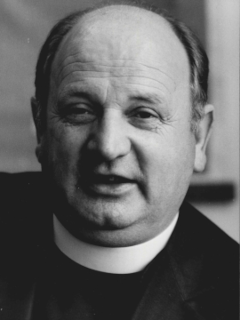
(Pictured: Father Brendan Smyth, Our Lady of Mercy, East Greenwich, Rhode Island, USA, c. 1965)
Talbot is born on May 2, 1856, at 13 Aldborough Court, Dublin, the second eldest of twelve children of Charles and Elizabeth Talbot, a poor family in the North Strand area. He is baptized in St. Mary’s Pro-Cathedral on May 5. His father and all but the oldest of his brothers is heavy drinkers. In 1868, he leaves school at the age of twelve and goes to work in a wine merchant’s store. He very soon begins “sampling their wares,” and is considered a hopeless alcoholic by age thirteen. He then goes to the Port & Docks Board where he works in the whiskey stores. He frequents pubs in the city with his brothers and friends, spending most or all of his wages and running up debts. When his wages are spent, he borrows and scrounges for money. He pawns his clothes and boots to get money for alcohol. On one occasion, he steals a fiddle from a street entertainer and sells it to buy drink.
One evening in 1884, 28-year-old Talbot, who is penniless and out of credit, waits outside a pub in the hope that somebody will invite him in for a drink. After several friends had passed him without offering to treat him, he goes home in disgust and announces to his mother that he is going to “take the pledge” (renounce drink). He goes to Holy Cross College, Clonliffe, where he takes the pledge for three months. At the end of the three months, he takes the pledge for six months, then for life.
Having drunk excessively for 16 years, Talbot maintains sobriety for the following forty years of his life. There is evidence that his first seven years after taking the pledge are especially difficult. He finds strength in prayer, begins to attend daily Mass, and reads religious books and pamphlets. He repays all his debts scrupulously. Having searched for the fiddler whose instrument he had stolen, and having failed to find him, he gives the money to the church to have Mass said for him.
Even when his drinking is at its worst, Talbot is a hard worker. When he joins Pembertons, the building contractors, as a hod-carrier, his work-rate is such that he is put first on the line of hodmen to set the pace. Later, in Martin’s timber yard, he takes on the meanest and hardest jobs. He is respectful to his bosses but not obsequious, and on occasion stands up for a fellow worker. On September 22, 1911, he joins the builder’s labourers branch of the Irish Transport and General Workers Union (ITGWU). When the Dublin Lockout of 1913 leads to sympathy strikes throughout the city, the men of Martin’s, including Talbot, come out. At first, he refuses his strike pay, saying that he had not earned it. Later he accepts it but asks that it be shared out among the other strikers. After his death a rumour is put about that he was a strike-breaker in 1913, but all the evidence contradicts this.
From being an indifferent Catholic in his drinking days, Talbot becomes increasingly devout. He lives a life of prayer, fasting, and service, trying to model himself on the sixth century Irish monks. He is guided for most of his life by Michael Hickey, Professor of Philosophy at Holy Cross College. Under Hickey’s guidance his reading becomes wider. He laboriously reads scripture, the lives of saints, the Confessions of Saint Augustine, and the writings of Francis de Sales and others. When he finds a part difficult to understand, he asks a priest to clarify it.
Hickey also gives Talbot a light chain, much like a clock chain, to wear as a form of penance. He becomes a Third Order Franciscan in 1890 and is a member of several other associations and sodalities. He is a generous man. Although poor himself, he gives unstintingly to neighbours and fellow workers, to charitable institutions and the Church. He eats very little. After his mother’s death in 1915, he lives in a small flat with very little furniture. He sleeps on a plank bed with a piece of timber for a pillow. He rises at 5:00 a.m. every day so as to attend Mass before work. At work, whenever he has spare time, he finds a quiet place to pray. He spends most of every evening on his knees. On Sundays he attends several Masses. He walks quickly, with his head down, so that he appears to be hurrying from one Mass to another.
Talbot is on his way to Mass on Trinity Sunday, June 7, 1925, when he collapses and dies of heart failure on Granby Lane in Dublin. Nobody at the scene is able to identify him. His body is taken to Jervis Street Hospital, where he is undressed, revealing the extent of his austerities. A chain had been wound around his waist, with more chains around an arm and a leg, and cords around the other arm and leg. The chains found on his body at death are not some extreme penitential regimes but a symbol of his devotion to Mary, Mother of God, that he wished to give himself to her totally as a slave. His story quickly filters through the community, and there are many spectators when his funeral takes place at Glasnevin Cemetery on June 11, 1925. In 1972, his remains are removed to a tomb in Our Lady of Lourdes Church in Seán McDermott Street, Dublin, in the area where he spent his life.
There is a small plaque in Granby Lane at the site of Talbot’s death. Prior to the current plaque on the Eastern side of the lane, a small brass cross was inlaid in a stone wall on the Western side of the lane.
O’Connell had rejected a suggestion from “friends of emancipation,” and from the English Roman Catholic bishop, John Milner, that the fear of Catholic advancement might be allayed if the Crown were accorded the same right exercised by continental monarchs: a veto on the confirmation of Catholic bishops. O’Connell insists that Irish Catholics would rather “remain forever without emancipation” than allow the government “to interfere” with the appointment of their senior clergy. Instead, he relies on their confidence in the independence of the priesthood from Ascendancy landowners and magistrates to build his Catholic Association into a mass political movement. On the basis of a “Catholic rent” of a penny a month (typically paid through the local priest), the Association mobilises not only the Catholic middle class, but also poorer tenant farmers and tradesmen. Their investment enables O’Connell to mount “monster” rallies that stay the hands of authorities and embolden larger enfranchised tenants to vote for pro-emancipation candidates in defiance of their landlords.
O’Connell’s campaign reaches its climax when he himself stands for parliament. In July 1828, he defeats a nominee for a position in the British cabinet, William Vesey-FitzGerald, in a County Clare by-election, 2057 votes to 982. This makes a direct issue of the parliamentary Oath of Supremacy by which, as a Catholic, he will be denied his seat in the Commons.
As Lord Lieutenant of Ireland, Wellington’s brother, Richard Wellesley, had attempted to placate Catholic opinion, notably by dismissal of the long-serving Attorney-General for Ireland, William Saurin, whose rigid Ascendancy views and policy made him bitterly unpopular, and by applying a policy of prohibitions and coercion against not only the Catholic Ribbonmen but also the Protestant Orangemen. But now both Wellington and his Home Secretary, Robert Peel, are convinced that unless concessions are made, a confrontation is inevitable. Peel concludes, “though emancipation was a great danger, civil strife was a greater danger.” Fearing insurrection in Ireland, he drafts the Relief Bill and guides it through the House of Commons. To overcome the vehement opposition of both the King and of the House of Lords, Wellington threatens to resign, potentially opening the way for a new Whig majority with designs not only for Catholic emancipation but also for parliamentary reform. The King initially accepts Wellington’s resignation and the King’s brother, Ernest Augustus, Duke of Cumberland, attempts to put together a government united against Catholic emancipation. Though such a government would have considerable support in the House of Lords, it would have little support in the Commons and Ernest abandons his attempt. The King recalls Wellington. The bill passes the Lords and becomes law.
The key, defining, provision of the Acts is its repeal of “certain oaths and certain declarations, commonly called the declarations against transubstantiation and the invocation of saints and the sacrifice of the mass, as practised in the Church of Rome,” which had been required “as qualifications for sitting and voting in parliament and for the enjoyment of certain offices, franchises, and civil rights.” For the Oath of Supremacy, the act substitutes a pledge to bear “true allegiance” to the King, to recognise the Hanoverian succession, to reject any claim to “temporal or civil jurisdiction” within the United Kingdom by “the Pope of Rome” or “any other foreign prince … or potentate,” and to “abjure any intention to subvert the present [Anglican] church establishment.”
This last abjuration in the new Oath of Allegiance is underscored by a provision forbidding the assumption by the Roman Church of episcopal titles, derived from “any city, town or place,” already used by the United Church of England and Ireland. (With other sectarian impositions of the Act, such as restrictions on admittance to Catholic religious orders and on Catholic-church processions, this is repealed with the Roman Catholic Relief Act 1926.)
The one major security required to pass the Act is the Parliamentary Elections (Ireland) Act 1829. Receiving its royal assent on the same day as the relief bill, the act disenfranchises Ireland’s forty-shilling freeholders, by raising the property threshold for the county vote to the British ten-pound standard. As a result, “emancipation” is accompanied by a more than five-fold decrease in the Irish electorate, from 216,000 voters to just 37,000. That the majority of the tenant farmers who had voted for O’Connell in the Clare by-election are disenfranchised as a result of his apparent victory at Westminster is not made immediately apparent, as O’Connell is permitted in July 1829 to stand unopposed for the Clare seat that his refusal to take the Oath of Supremacy had denied him the year before.
In 1985, J. C. D. Clark depicts England before 1828 as a nation in which the vast majority of the people still believed in the divine right of kings, and the legitimacy of a hereditary nobility, and in the rights and privileges of the Anglican Church. In Clark’s interpretation, the system remained virtually intact until it suddenly collapsed in 1828, because Catholic emancipation undermined its central symbolic prop, the Anglican supremacy. He argues that the consequences were enormous: “The shattering of a whole social order. … What was lost at that point … was not merely a constitutional arrangement, but the intellectual ascendancy of a worldview, the cultural hegemony of the old elite.”
Clark’s interpretation has been widely debated in the scholarly literature, and almost every historian who has examined the issue has highlighted the substantial amount of continuity before and after the period of 1828 through 1832.
Eric J. Evans in 1996 emphasises that the political importance of emancipation was that it split the anti-reformers beyond repair and diminished their ability to block future reform laws, especially the great Reform Act of 1832. Paradoxically, Wellington’s success in forcing through emancipation led many Ultra-Tories to demand reform of Parliament after seeing that the votes of the rotten boroughs had given the government its majority. Thus, it was an ultra-Tory, George Spencer-Churchill, Marquess of Blandford, who in February 1830 introduced the first major reform bill, calling for the transfer of rotten borough seats to the counties and large towns, the disfranchisement of non-resident voters, the preventing of Crown officeholders from sitting in Parliament, the payment of a salary to MPs, and the general franchise for men who owned property. The ultras believed that a widely based electorate could be relied upon to rally around anti-Catholicism.
In Ireland, emancipation is generally regarded as having come too late to influence the Catholic-majority view of the union. After a delay of thirty years, an opportunity to integrate Catholics through their re-emerging propertied and professional classes as a minority within the United Kingdom may have passed. In 1830, O’Connell invites Protestants to join in a campaign to repeal the Act of Union and restore the Kingdom of Ireland under the Constitution of 1782. At the same, the terms under which he is able to secure the final measure of relief may have weakened his repeal campaign.
George Ensor, a leading Protestant member of the Catholic Association in Ulster, protests that while “relief” bought at the price of “casting” forty-shilling freeholders, both Catholic and Protestant, “into the abyss,” might allow a few Catholic barristers to attain a higher grade in their profession, and a few Catholic gentlemen to be returned to Parliament, the “indifference” demonstrated to parliamentary reform will prove “disastrous” for the country.
Seeking, perhaps, to rationalise the sacrifice of his freeholders, O’Connell writes privately in March 1829 that the new ten-pound franchise might actually “give more power to Catholics by concentrating it in more reliable and less democratically dangerous hands.” The Young IrelanderJohn Mitchel believes that the intent is to detach propertied Catholics from the increasingly agitated rural masses.
In a pattern that had been intensifying from the 1820s as landlords clear land to meet the growing livestock demand from England, tenants have been banding together to oppose evictions and to attack tithe and process servers.
Connell is ordained priest by Archbishop John Charles McQuaid on May 19, 1951. He takes up a teaching post at the Department of Metaphysics at the University College Dublin. He is appointed Professor of General Metaphysics in 1972 and in 1983 becomes the Dean of the Faculty of Philosophy and Sociology. The College’s Department of Metaphysics is abolished after his departure.
Connell is appointed Archbishop of Dublin by the Holy See in early 1988. He is consecrated at St. Mary’s Pro-Cathedral, Dublin on March 6, 1988. He is created Cardinal-Priest by Pope John Paul II at the Consistory in Rome on February 21, 2001, with the TitulusS. Silvestri in Capite. Archbishops of Armagh, who hold the higher title of Primate of All Ireland, are more frequently appointed Cardinal than Archbishops of Dublin. The last Archbishop of Dublin to have been a cardinal is Cardinal Edward MacCabe, who was appointed in 1882. A large Irish contingent from Church and State, along with family and friends of the Cardinal, attend the installation which for the first time takes place at the front of the entrance to St. Peter’s Basilica.
On April 26, 2004, Connell retires as archbishop, handing the diocese to the coadjutor bishop, Diarmuid Martin. All bishops submit their resignation to the Pope on their 75th birthday. Connell’s is accepted shortly after his 78th birthday.
It is Connell’s failure, when Archbishop of Dublin in 1988–2004, to address adequately the abuse scandals in Dublin that lead the Vatican to assign Archbishop Martin as his replacement in the country’s largest diocese. The Murphy Report finds that Connell had handled the affair “badly” as he was “slow to recognise the seriousness of the situation.” It does praise him for making the archdiocesan records available to the authorities in 2002 and for his 1995 actions in giving the authorities the names of 17 priests who had been accused of abuse, although it says the list is incomplete as complaints were made against at least 28 priests in the archdiocese.
From 1988 Connell also continues to insure his archdiocese against liability from complainants, while claiming to the Murphy Commission that the archdiocese is “on a learning curve” in regard to child abuse. He arranges for compensation payments to be made from a “Stewardship Trust” that is kept secret from the archdiocese’s parishioners until 2003. In 1996 he refuses to help a victim of Paul McGennis and does not pass on what he knows about McGennis to her, or to the police. He apologises for this in 2002.
Desmond Connell dies in Dublin at the age of 90 on February 21, 2017, exactly sixteen years after his creation as Cardinal.
Eamonn Casey, Irish Catholicprelate who serves as bishop of Galway and Kilmacduagh from 1976 until his resignation 1992, returns to Ireland on February 5, 2006, following fourteen years in exile. He fled Ireland after he admitted to fathering his son, Peter.
Casey holds this position until 1976, when he is appointed Bishop of Galway and Kilmacduagh and apostolic administrator of Kilfenora. While in Galway, he is seen as a progressive. It is a significant change in a diocese that had been led for nearly forty years by the very conservative Michael Browne, bishop from 1937 to 1976. He is highly influential in the Irish Catholic hierarchy and a friend and colleague of another highly prominent Irish priest, Father Michael Cleary.
In 1992 it is reported that, despite the vow of chastity undertaken by Catholic clergy, Casey has a sexual relationship in the early 1970s with American woman Annie Murphy. When Murphy becomes pregnant, he is determined that the child should be given up for adoption in order to avoid any scandal for himself or the Catholic church. By contrast, Murphy is determined to accept responsibility for her child, and she returns to the United States with their son, Peter, who is born in 1974 in Dublin. He makes covert payments for the boy’s maintenance, fraudulently made from diocesan funds and channeled through intermediaries. In order to continue the cover up of his affair with Murphy and his fraudulent activities, he refuses to develop a relationship with his son, or acknowledge him. Murphy is very disappointed by this, and in the early 1990s contacts The Irish Times to tell the truth about Casey’s hypocrisy and deception. Having been exposed, he reluctantly admits that he had “sinned” and wronged the boy, his mother and “God, his church and the clergy and people of the dioceses of Galway and Kerry,” and his embezzlement of church funds. He is forced to resign as bishop and flees the country under a cloud of scandal. He is succeeded by his secretary, James McLoughlin, who serves in the post until his own retirement on July 3, 2005.
Murphy publishes a book, Forbidden Fruit, in 1993 revealing the truth of their relationship and the son she bore by Casey, exposing the institutional level of hypocrisy, moral corruption and misogyny within the Irish Catholic Church.
Casey is ordered by the Vatican to leave Ireland and become a missionary alongside members of the Missionary Society of St. James in a rural parish in Ecuador, whose language, Spanish, he does not speak. During this time, he travels long distances to reach the widely scattered members of his parish but does not travel to meet his own son. After his missionary position is completed, he takes a position in the parish of St. Pauls, Haywards Heath, West Sussex, England.
In 2005, Casey is investigated in conjunction with the sexual abuse scandal in Galway, Kilmacduagh and Kilfenora diocese, and cleared of any wrongdoing. In 2019, it emerges that he had faced at least three accusations of sexual abuse before his death, with two High Court cases being settled. The Kerry diocese confirms that it had received allegations against him, that Gardaí and health authorities had been informed and that the person concerned was offered support by the diocese.
Casey returns to Ireland on February 5, 2006, with his reputation in tatters, and is not permitted to say Mass in public.
In August 2011, Casey, in poor health, is admitted to a nursing home in County Clare. He dies on March 13, 2017, a month before his 90th birthday. He is interred in Galway cathedral’s crypt.
Casey is the subject of Martin Egan’s song “Casey,” sung by Christy Moore. He is also the subject of The Saw Doctors‘ song “Howya Julia.”
Browne is an important and outspoken member of the Irish hierarchy. His time as Bishop has been described by the historian James S. Donnelly Jr. as “far-reaching and … controversial,” while the historian of Irish CatholicismJohn Henry Whyte claims that Browne’s “readiness to put forward his views bluntly is welcome at least to the historian.”
On August 6, 1937, at the relatively young age of 41, Browne is appointed Bishop of Galway and Kilmacduagh by Pope Pius XI, receiving his episcopal consecration from Archbishop Thomas Gilmartin on the following August 10. He supports TaoiseachÉamon de Valera‘s defence of arrests and police searches for cached Irish Republican Army (IRA) arms, declaring, “Any Irishman who assists any foreign power to attack the legitimate authority of his own land is guilty of the most terrible crime against God’s law, and there can be no excuse for that crime – not even the pretext of solving partition or of securing unity.”
In 1939, Browne is selected by Éamon de Valera to chair the Commission on Vocational Organisation.
Browne is attentive to the state of public morality in the diocese, and James S. Donnelly Jr. has noted his role in directing episcopal and clerical censorship of newsagents and county librarians. He is also concerned about public intoxication and other misconduct at the Galway Races, controversies over dancing and the commercial dance halls, as well as immodesty in dress and the closely related issue of so-called “mixed bathing” in Galway and Salthill.
In 1957, in response to a growing tension between Catholics and Protestants at Fethard-on-Sea, including the Fethard-on-Sea boycott, Browne says, “non-Catholics do not protest against the crime of conspiring to steal the children of a Catholic father, but they try to make political capital when a Catholic people make a peaceful and moderate protest.”
The most enduring monument or physical legacy of Browne’s time as Bishop is the Cathedral of Our Lady Assumed into Heaven and St Nicholas, commonly known as Galway Cathedral, which is dedicated in 1965 by CardinalRichard James Cushing of Boston, Massachusetts. The site of the old jail had come into the possession of the diocese in 1941 and Browne leads the campaign to construct a new Cathedral. This includes a 1957 audience with Pope Pius XII where the plans are approved.
Browne attends the Second Vatican Council from 1962 to 1965 and retires in 1976. He dies four years later, at the age of 84, on February 24, 1980.
Browne is parodied in Breandán Ó hÉithir`s novel Lig Sinn i gCathu, which fictionalises late 1940s Galway as “Baile an Chaisil” and Browne as “An tEaspag Ó Maoláin.”
The Irish cabinet minister Noël Browne (no known relation) in his 1986 memoir Against the Tide describes the physical attributes of his episcopal namesake:
“The bishop had a round soft baby face with shimmering clear cornflower-blue eyes, but his mouth was small and mean. Around his great neck was an elegant glinting gold episcopal chain with a simple pectoral gold cross. He wore a ruby ring on his plump finger and wore a slightly ridiculous tiny scullcap on his noble head. The well-filled semi-circular scarlet silk cummerbund and sash neatly divided the lordly prince into two.”
At the Lambeth Conference in 1988, Neill proposes all the approved resolutions in respect of Women in the Episcopate and is chairman of the Church of Ireland General Synod Committee on Ordination of Women (1988–91). He serves on many central committees of the Church of Ireland covering issues such as liturgical reform, education, communications, ministry, Christian unity and synodical structures.
Neill serves as President of the Council of Churches for Britain and Ireland (1990-94) and as President of Churches Together in Britain and Ireland (1999-2002) and is co-founder and chairman of the Church of Ireland/Methodist Church Joint Theological Working Party.
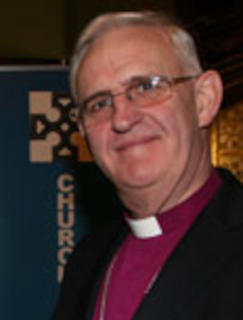
On August 29, 2002, the Church of Ireland announces that the Right Reverend John Neill, Bishop of Cashel and Ossory, is to succeed the Most Reverend Dr. Walton Empey as Archbishop of Dublin. The announcement is made at a meeting of the Church of Ireland Episcopal Electoral College in Christ Church Cathedral, Dublin.
Neill and his wife Betty have three sons, The Reverend Canon Stephen Neill, Rector of Celbridge, Andrew Neill, a member of Garda Síochána, and Peter Neill, a photographer.
For twelve years, from 1964 to 1976, O’Brien teaches at St. Finbarr’s Seminary, Farranferris, where he is also the hurling trainer for the school team. He is “at the helm as Farranferris wins Dr. Harty Cups in 1969, 1971, 1972, 1973 and 1974, adding All-Irelands in 1972 and 1974.”
A twelve-year stint as chaplain at the Naval Base of Haulbowline follows before O’Brien returns to parish ministry, again in Blackrock. In 1985, he starts a lengthy stay in Carrigaline where he serves as curate, administrator and finally parish priest of Carrigaline, before retiring from active ministry in 2003.
Duff is born in Dublin on June 7, 1889, at 97 Phibsboro Road, the eldest of seven children of John Duff and his wife, Susan Letitia (née Freehill). The wealthy family lives in the city at St. Patrick’s Road, Drumcondra. He attends Blackrock College.
In 1908, Duff enters the Civil Service and is assigned to the Irish Land Commission. In 1913, he joins the Society of Saint Vincent de Paul and is exposed to the real poverty of Dublin. Many who live in tenement squalor are forced to attend soup kitchens for sustenance, and abject poverty, alcoholism, and prostitution are rife in parts of Dublin. He joins and soon rises through the ranks to President of the St. Patrick’s Conference at St. Nicholas of Myra Parish. Having concern for people he sees as materially and spiritually deprived, he gets the idea to picket Protestant soup kitchens as he considers they are giving aid in the form of food and free accommodation at hostels in return for not attending Catholic services. He sets up rival Catholic soup kitchens and, with his friend, Sergeant Major Joe Gabbett, discourages Catholics from patronizing Protestant soup kitchens. They succeeded in closing down two of them over the years.
Duff publishes his first pamphlet, Can we be Saints?, in 1916. In it, he expresses the conviction that all, without exception, are called to be saints, and that through Christian faith, all have the means necessary.
Duff briefly acts as private secretary to Michael Collins, the chairman of the Provisional Government and the commander-in-chief of the National Army. In 1924, he is transferred to the Department of Finance.
On September 7, 1921, Duff is a part of a meeting alongside Fr. Michael Toher and fifteen women which becomes the nucleus of what would become the Legion of Mary. The Legion of Mary is created to organise lay Catholics to perform voluntary work. He models the organisation on Roman legions. Some of the first causes the Legion pursues is to become involved with homelessness and prostitution in Dublin. In 1922, he defies the wishes of the Archbishop of Dublin and the widespread Crypto-Calvinism, or Jansenism, within the Catholic Church in Ireland, which had created an intense hostility towards both prostitutes and other allegedly “fallen women.” Similarly, to St. Vitalis of Gaza before him, he begins an outreach to the prostitutes living in often brutal and inhuman conditions in the “kip houses” of “the Monto,” as Dublin’s red-light district, one of the largest in Europe at the time, is then called. Although middle-class Dubliners dismissively view these women as “whores,” the impoverished but devoutly Catholic residents of the Monto tenements refer to local prostitutes as “unfortunate girls,” and understand that they often turn to prostitution as a last resort. As part of his work, Duff establishes the Sancta Maria hostel, a safe house for former prostitutes who had run away from their “kip keepers.” Following the Irish War of Independence and Irish Civil War, he also persuades the first Catholic Commissioner of the Dublin Metropolitan Police, former Irish Army General W. R. E. Murphy, to launch a crackdown and, even though prostitution in the Republic of Ireland, rooted in human trafficking, still exists, the closure of the Monto’s last “Kip-Houses” is announced on March 12, 1925.
In 1927, Duff establishes the Morning Star hostel for homeless men, followed shortly by the Regina Coeli hostel for homeless women in 1930. Unlike the Magdalen Asylums, the Regina Coeli hostel reflects his view that unwed mothers should be taught how to be able to provide for and raise their children. This defies the norm of the era which holds that the children of unwed mothers should be saved from the stigma of their illegitimacy by being put up for adoption as quickly as possible.
While Duff enjoys the support of W. T. Cosgrave, Ireland’s head of government, and in May 1931 is granted an audience with Pope Pius XI, his efforts are opposed internally in the Dublin diocese. The Archbishop of Dublin Edward Joseph Byrne and his successor John Charles McQuaid seek to censor him because of his involvement with prostitutes. McQuaid also does not approve of his ecumenical efforts. In the 1930s and 1940s Duff creates the Mercier Society, a study group designed to bring together Catholics and Protestants, as well as the Pillar of Fire, a group designed to promote dialogue with Ireland’s Jewish community. In communication with Irish social dissidents Seán Ó Faoláin and Peadar O’Donnell, he suggests he is far more censored than even they are.
Duff does have some supporters amongst the Catholic hierarchy though. With the backing of Cardinal Joseph MacRory and Francis Bourne of Westminster, the Legion is able to expand rapidly and internationally. In 1928 the Legion establishes its first presidium in Scotland. In 1932 he is able to use the occasion of the Eucharistic Congress of Dublin to introduce the concept of the Legion of Mary to several visiting bishops, leading to further international growth.
Duff retires from the Civil Service in 1934 to devote all of his time to the Legion of Mary.
In July 1940, an overseas club for Afro-Asian students in Dublin is created. At that time Ireland is a popular destination for students from Asia and Africa because of its recent anti-imperial, anti-colonial history. Duff personally funds the purchase of a building for the club using funds from an inheritance. The club lasts until 1976 and facilitate many notable students, including Jaja Wachuku.
For the rest of his life, and with the help of many others, Duff guides the Legion’s worldwide extension. Today, the Legion of Mary has an estimated four million active members and 10 million auxiliary members in close to 200 countries in almost every diocese in the Catholic Church.
In 1965, Pope Paul VI invites Duff to attend the Second Vatican Council as a lay observer. When he is introduced to the assembly by the Archbishop of Liverpool, John Heenan, he receives a standing ovation.
Duff dies in Dublin at the age of 91 on November 7, 1980, and is interred at Glasnevin Cemetery. In July 1996, the cause of his beatification is introduced by Cardinal Desmond Connell.
Twysden is born in Kent, in the South East England region, on September 7, 1713, the third son of Sir William Twysden, 5th Baronet of Roydon Hall, East Peckham, Kent, by his wife (and distant cousin) Jane Twisden.
By his second wife, Twysden has two children: Mary, who dies in infancy, and a posthumous daughter named Frances (1753–1821). Frances, later Countess of Jersey, is one of the many mistresses of King George IV when he is Prince of Wales.
Twysden dies on November 2, 1752, at home in Jermyn Street, St. James’s, London. However, according to ecclesiastical historian and author Henry Cotton, he dies at Roydon Hall, East Peckham, his father’s country house. He is buried in the south chancel of St. Michael’s Church, East Peckham, under a plain stone with no inscription.
A story grows up that, having been made bankrupt, Twysden is shot while attempting to rob a stagecoach. The location of his alleged attempted career as a highwayman is either Hounslow Heath (west of London) or Wrotham Heath in Kent.
(Pictured: The Cathedral of St Eunan, Raphoe, the episcopal seat of the pre-Reformation and Church of Ireland bishops of Raphoe)





 seamus dubhghaill