Hoban is an Irish Catholic raised on an estate belonging to the Earl of Desart in Cuffesgrange, near Callan, County Kilkenny. He works there as a wheelwright and carpenter until his early twenties, when he is given an “advanced student” place in the Dublin Society‘s Drawing School on Lower Grafton Street. He studies under Thomas Ivory. He excels in his studies and receives the prestigious Duke of Leinster‘s medal from the Dublin Society for drawings of “Brackets, Stairs, and Roofs” in 1780. Later, Hoban finds a position as an apprentice to Ivory, from 1779 to 1785.
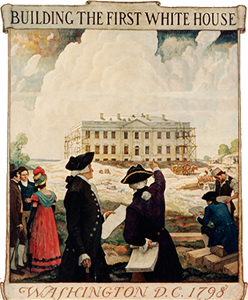
Hoban is in South Carolina by April 1787, where he designs numerous buildings including the Charleston County Courthouse. President George Washington admires Hoban’s work on his Southern Tour and summons the architect to Philadelphia, the temporary national capital, in June 1792.
In July 1792, Hoban is named winner of the design competition for the White House. His initial design seems to have had a 3-story facade, nine bays across, much like the Charleston courthouse. Under Washington’s influence, Hoban amends this to a 2-story facade, eleven bays across, and, at Washington’s insistence, the whole presidential mansion is faced with stone. It is unclear whether any of Hoban’s surviving drawings are actually from the competition.
In 1800, President John Adams becomes the first president to reside in the executive mansion, which soon becomes known as the “White House” because its white-gray Virginiafreestone contrasts strikingly with the red brick of nearby buildings.
Patrick Magee stays in the hotel under the pseudonym Roy Walsh during the weekend of September 14-17, 1984. During his stay, he plants the bomb under the bath in his room, number 629. The device, described as a “small bomb by IRA standards,” is fitted with a long-delay timer made from videocassette recorder components and a Memo Park Timer safety device. The device may have avoided detection by sniffer dogs due to it being wrapped in cling film to mask the smell of the explosive.
The bomb detonates at approximately 2:54 AM (BST) on October 12. The midsection of the building collapses into the basement, leaving a gaping hole in the hotel’s facade. Firemen say that many lives are likely saved because the well-built Victorian hotel remained standing. Margaret Thatcher is still awake at the time, working on her conference speech for the next day in her suite. The blast badly damages her bathroom but leaves her sitting room and bedroom unscathed. Both she and her husband escape injury. She changes her clothes and is led out through the wreckage along with her husband and her friend and aide Cynthia Crawford and driven to Brighton police station.
At about 4:00 AM, as Thatcher leaves the police station, she gives an impromptu interview to the BBC‘s John Cole, saying that the conference would go on as scheduled. Alistair McAlpine persuades Marks & Spencer to open early at 8:00 AM so those who have lost their clothes in the bombing can purchase replacements. Thatcher goes from the conference to visit the injured at the Royal Sussex County Hospital.
Five people are killed, none of whom are government ministers. But a Conservative MP, Sir Anthony Berry, is killed, along with Eric Taylor, North-West Area Chairman of the Conservative Party, Lady Jeanne Shattock, wife of Sir Gordon Shattock, Western Area Chairman of the Conservative Party, Lady Muriel Maclean, wife of Sir Donald Maclean, President of the Scottish Conservatives, and Roberta Wakeham, wife of Parliamentary Treasury Secretary John Wakeham. Donald and Muriel Maclean are in the room in which the bomb explodes, but Mr. Maclean survives.
Several more, including Walter Clegg, whose bedroom is directly above the blast, and Margaret Tebbit, the wife of Norman Tebbit, who is then President of the Board of Trade, are left permanently disabled. Thirty-four people are taken to the hospital and recover from their injuries. When hospital staff asks Norman Tebbit, who is less seriously injured than his wife, whether he is allergic to anything, he is said to answer “bombs.”
Irish author John Banville beats higher profile favorites to become the surprise winner of Britain‘s prestigious Booker Prize for fiction on October 11, 2005. His 14th novel, The Sea, is described by the judges as “a masterly study of grief, memory, and love recollected.”
Banville wins the Booker Prize in 2005 after having been on the short list in 1989. His later work is contending with novels by Kazuo Ishiguro, Julian Barnes, Ali Smith, Sebastian Barry and Zadie Smith. The judge’s vote is split between Banville and Ishiguro, and Chairman of Judges John Sutherland casts the winning vote in favour of Banville.
Earlier in the year Sutherland had written approvingly of Ian McEwan‘s novel Saturday. Banville strongly criticizes the work in The New York Review of Books. Banville later admits that, upon reading Sutherland’s letter in response to his review, he had thought, “Well, I can kiss the Booker goodbye. I have not been the most popular person in London literary circles over the past half-year. And I think it was very large of Sutherland to cast the winning vote in my favour.”
Banville is noted for having written a letter in 1981 to The Guardian requesting that the Booker Prize, for which he is “runner-up to the shortlist of contenders”, be given to him so that he can use the money to buy every copy of the longlisted books in Ireland and donate them to libraries, “thus ensuring that the books not only are bought but also read — surely a unique occurrence.”
When his The Book of Evidence is shortlisted for the 1989 Booker Prize, Banville says a friend, whom he describes as “a gentleman of the turf,” instructed him “to bet on the other five short listees, saying it was a sure thing, since if I won the prize I would have the prize-money, and if I lost one of the others would win…But the thing baffled me and I never placed the bets. I doubt I’ll be visiting Ladbrokes any time soon.”
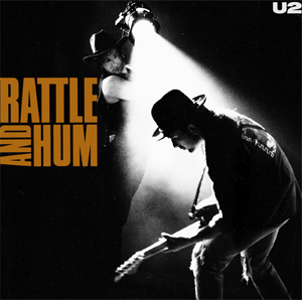
Although Rattle and Hum is intended to represent the band paying tribute to rock legends, some critics accuse U2 of trying to place themselves amongst the ranks of these artists. Critical reception to both the album and the film is mixed. One Rolling Stone editor speaks of the album’s “excitement”, another describes it as “misguided and bombastic.” The film grosses just $8.6 million, but the album is a commercial success, reaching number one in several countries and selling 14 million copies. Lead single “Desire” becomes the band’s first U.K. number-one song while reaching number three in the United States.
At the end of 1988, Rattle and Hum is voted the 21st-best album of the year in the Pazz & Jop, an annual poll of American critics published by The Village Voice. In other critics’ lists of the year’s top albums, it is ranked number one by HUMO, second by the Los Angeles Times and Hot Press, 17th by OOR, 23rd by New Musical Express (NME), and 47th by Sounds.
Lifetime sales for the album have surpassed 14 million copies.
The stadtholder dies suddenly, however, and the States are now embarrassed by Cromwell taking the idea too seriously. The English propose the joint conquest of all remaining Spanish and Portuguese possessions. England would take America and the Dutch would take Africa and Asia. But the Dutch have just ended their war with Spain and already taken over most Portuguese colonies in Asia, so they see little advantage in this grandiose scheme and propose a free trade agreement as an alternative to a full political union. This again is unacceptable to the British, who would be unable to compete on such a level playing field, and is seen by them as a deliberate affront.
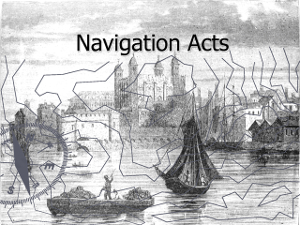
The Act bans foreign ships from transporting goods from outside Europe to England or its colonies, and bans third-party countries’ ships from transporting goods from a country elsewhere in Europe to England. These rules specifically target the Dutch, who control much of Europe’s international trade and even much of England’s coastal shipping. It excludes the Dutch from essentially all trade with England, as the Dutch economy is competitive with, not complementary to the English, and the two countries therefore exchange few commodities. This Anglo-Dutch trade, however, constitutes only a small fraction of total Dutch trade flows.
The Act is often mentioned as a major cause of the First Anglo-Dutch War, though it is only part of a larger British policy to engage in war after the negotiations have failed. The English naval victories in 1653 (the Battle of Portland, the Battle of the Gabbard and the Battle of Scheveningen) show the supremacy of the Commonwealth navy in home waters. However, farther afield the Dutch predominate and are able to close down English commerce in the Baltic and the Mediterranean. Both countries hold each other in a stifling embrace.
The Treaty of Westminster (1654) ends the impasse. The Dutch fail to have the Act repealed or amended, but it seems to have had relatively little influence on their trade. The Act offers England only limited solace. It cannot limit the deterioration of England’s overseas trading position, except in the cases where England herself is the principal consumer, such as the Canary Islands wine trade and the trade in Puglian olive oil. In the trade with the West Indies, the Dutch keep up a flourishing “smuggling” trade, thanks to the preference of English planters for Dutch import goods and the better deal the Dutch offer in the sugar trade. The Dutch colony of New Netherland offers a loophole through intercolonial trade wide enough to drive a shipload of Virginia tobacco through.
The 1651 Act, like other laws of the Commonwealth period, is declared void on the Restoration of Charles II of England, having been passed by “usurping powers.” Parliament therefore passes new legislation. This is generally referred to as the “Navigation Acts,” and, with some amendments, remains in force for nearly two centuries.
Gavin Friday, born Fionán Martin Hanvey, Irish singer and songwriter, composer, actor and painter, is born in Dublin on October 8, 1959.
Friday grows up in Ballygall, a neighbourhood located on Dublin’s Northside between Finglas and Glasnevin where he went to school. When he is fourteen years old and living on Cedarwood Road, he meets Bono and Guggi at a party to which he has not been invited. Bono says, “We caught him trying to steal something of the house. Classic teenage stuff… but we became friends.”
Friday is a founding member of the post-punk group Virgin Prunes and has recorded several solo albums and soundtracks. In 1986, after the demise of The Virgin Prunes, he devotes himself to painting for a while, sharing a studio with Bono, Guggi and Charlie Whisker. This results in the exhibition Four Artists – Many Wednesdays (1988) at Dublin’s Hendricks Gallery. Friday, Guggi and Whisker show paintings, while Bono opts to exhibit photos taken in Ethiopia. Friday’s part of the show is entitled I didn’t come up the Liffey in a bubble, an expression often used by his father.
His main collaborator between 1987 and 2005 is multi-instrumentalist, Maurice Seezer. They sign to Island Records in 1988 and release three albums together, before parting with the company in 1996. After that Friday and Seezer compose the score for the Jim Sheridan films The Boxer and In America which is nominated for Best Original Film Score in the 2004 Ivor Novello Awards.
Friday has maintained a close friendship with U2‘s Bono since childhood, and they collaborate on the soundtrack for the Jim Sheridan’s film In the Name of the Father, including the title track, “Billy Boola” and “You Made Me the Thief of Your Heart”, which is sung by Sinéad O’Connor and nominated for a Golden Globe Award for Best Original Song. In 2003 they write “Time Enough for Tears,” the original theme tune for Sheridan’s film In America, as sung by Andrea Corr. The song is nominated for a Golden Globe Award for Best Original Song.
In 2009 Friday and Macken work on Bryars’ fourth studio album. On April 6, 2010, Rubyworks Records announces the signing of Gavin Friday and that a new album is on its way. The new CD is titled catholic and is released in Ireland on Good Friday, April 22, 2011.
Gillespie is educated locally and in Derry. She studies music at the Royal University of Ireland in Dublin, graduating in 1902, and becomes a teacher. As a student she meets the poet and literary critic James Cousins. They are married in 1903. The pair explore socialism, vegetarianism, and parapsychology together. In 1906, after attending a National Conference of Women (NCW) meeting in Manchester, Cousins joins the Irish branch of the NCW. In 1907 she and her husband attend the London convention of the Theosophical Society, and she makes contact with suffragettes, vegetarians, anti-vivisectionists, and occultists in London.
Cousins co-founds the Irish Women’s Franchise League with Hanna Sheehy-Skeffington in 1908, serving as its first treasurer. In 1910 she is one of six Dublin women attending the Parliament of Women, which attempt to march to the House of Commons to hand a resolution to the Prime Minister. After 119 women marching to the House of Commons have been arrested, fifty requiring medical treatment, the women decide to break the windows of the houses of Cabinet Ministers. Cousins is arrested and sentenced to a month in Holloway Prison.
In 1913, she and her husband move to Liverpool, where James Cousins works in a vegetarian food factory. In 1915 they move to India. James Cousins initially works for New India, the newspaper founded by Annie Besant. After Besant is forced to dismiss him for an article praising the 1916 Easter Rising, she appoints him Vice-Principal of the new Besant Theosophical College, where Margaret teaches English.
In 1916, Cousins becomes the first non-Indian member of the SNDT Women’s University at Poona. In 1917, Cousins co-founds the Women’s Indian Association (WIA) with Annie Besant and Dorothy Jinarajadasa. She edits the WIA’s journal, Stri Dharma. In 1919 Cousins becomes the first Head of the National Girls’ School at Mangalore. She is credited with composing the tune for the Indian national anthem Jana Gana Mana in February 1919, during Rabindranath Tagore’s visit to Besant Theosophical College. In 1922, she becomes the first woman magistrate in India. In 1927, she co-founds the All India Women’s Conference, serving as its President in 1936.
In 1932, she is arrested and jailed for speaking against the Emergency Measures. By the late 1930s she feels conscious of the need to give way to indigenous Indian feminists:
“I longed to be in the struggle, but I had the feeling that direct participation by me was no longer required, or even desired by the leaders of India womanhood who were now coming to the front.”
A stroke leaves Cousins paralysed from 1944 onwards. She receives financial support from the Madras government, and later Jawaharlal Nehru, in recognition of her services to India. She dies on March 11, 1954. Her manuscripts are dispersed in various collections across the world.
In the late 1960s, a civil rights campaign develops in Northern Ireland. Adams is an active supporter and joins the Northern Ireland Civil Rights Association in 1967. However, the civil rights movement is met with violence from loyalist counterdemonstrations and the Royal Ulster Constabulary. In August 1969, Northern Ireland cities like Belfast and Derry erupt in major rioting.
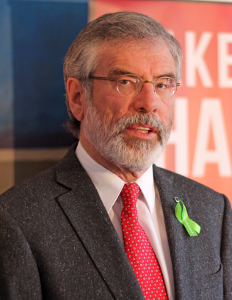
Adams has been the president of Sinn Féin since 1983. Since that time the party has become the third-largest party in the Republic of Ireland, the second-largest political party in Northern Ireland and the largest Irish nationalist party in that region. In 1984, Adams is seriously wounded in an assassination attempt by several gunmen from the Ulster Defence Association (UDA), including John Gregg. From the late 1980s onwards, Adams is an important figure in the Northern Ireland peace process, initially following contact by the then-Social Democratic and Labour Party (SDLP) leader John Hume and then subsequently with the Irish and British governments.
In 1986, Sinn Féin, under Adams, changes its traditional policy of abstentionism towards the Oireachtas, the parliament of the Republic of Ireland, and later takes seats in the power-sharing Northern Ireland Assembly. In 2005, the Provisional Irish Republican Army (IRA) states that its armed campaign is over and that it is exclusively committed to democratic politics.
In September 2017, Adams says Sinn Féin will begin a “planned process of generational change” after its November ardfheis and will allow his name to go forward for a one-year term as Uachtaran Shinn Fein (President Sinn Fein).
The bomb in the Horse and Groom pub detonates at 8:30 PM. It kills Paul Craig, a 22-year-old plasterer, two members of the Scots Guards and two members of the Women’s Royal Army Corps. The Seven Stars pub is evacuated after the first blast, and thus there are no serious injuries when the second bomb explodes at 9:00 PM.
These attacks are the first in a year-long campaign by an IRA Active Service Unit who are eventually captured after the Balcombe Street siege. A similar bomb to those used in Guildford, with the addition of shrapnel, is thrown into the Kings Arms pub in Woolwich on November 7, 1974. Gunner Richard Dunne and Alan Horsley, a salesclerk, die in that explosion. On August 27, 1975, the same IRA unit detonates a bomb in Surrey at the Caterham Arms pub which injures over 30 people. Surrey police say it is “a carbon copy of the Guildford bombs.”
In December 1974 the police arrest Gerry Conlon, Paul Hill, Patrick Armstrong and Carole Richardson, later known as the Guildford Four. The Guildford Four are falsely convicted of the bombings in October 1975 after the Metropolitan Police use the Prevention of Terrorism Acts to force false confessions. All four are sentenced to life in prison.
The Guildford Four are held in prison for fifteen years, although Gerry Conlon dies near the end of his third year of imprisonment. All the convictions are overturned years later in the appeal courts after it is proved the Guildford Four’s convictions had been based on confessions obtained by torture, while evidence specifically clearing the Four is not reported by the police.
On the afternoon of October 3, the Diamantis is torpedoed by U-35 and sinks 40 miles west of the Scilly Islands. Because the lifeboats are not suited for use in the bad weather, Lott decides to take all crew members aboard and lands them the next day at Dingle.
The realities of World War II reach the shores of the Dingle Peninsula as a crowd of local people are amazed when they see a German submarine coming within 10 yards of the shore at Ventry. What they do not know at the time is that they are witnessing a most humane and unwarlike act by the German captain on board the submarine.
Twenty-eight Greek sailors from the Diamantis are landed at Ventry, two at a time in a small lifeboat. The submarine pulls away, none of the German crew having set foot on neutral Irish soil. The Greeks are brought to a local farmhouse owned by Thomas Cleary and his mother Joan.
In 1984, Werner Lott makes a nostalgic first trip to Dingle and even meets Jimmy Fenton of Ballymore, one of the locals who had witnessed the drama of that night.
“I was about 11 at the time and I remember we had just come home from school when the excitement began. I had to run about a quarter of a mile to the harbour when I spotted the sub. I think the first person there was a local customs man called Browne.”
After all this time the German captain hears how grateful the Greeks are to him. “Their English was bad but they kept saying ‘German gut man’,” says Fenton.
In a major interview, Captain Lott, who is reared in an African colony where his father is one of the first white doctors, describes how he came so close to Dingle shore during World War II, how he was shortly afterwards taken prisoner himself and how a life long friendship with Lord Louis Mountbatten began.



 The
The 



 seamus dubhghaill