seamus dubhghaill

Promoting Irish Culture and History from Little Rock, Arkansas, USA


Leave a comment

Death of Confederate General Joseph Finegan

Joseph Finegan, Irish-born American businessman and brigadier general for the Confederate States Army during the American Civil War, dies on October 29, 1885, in Rutledge, Florida.

Finegan is born November 17, 1814, at Clones, County Monaghan. He comes to Florida in the 1830s, first establishing a sawmill at Jacksonville and later a law practice at Fernandina Beach. At the latter place, he becomes the business partner of David Levy Yulee and begins construction of the Florida Railroad to speed transportation of goods and people from the new state’s east coast to the Gulf of Mexico.

By the outbreak of the American Civil War, Finegan has built his family a forty-room mansion in Fernandina Beach at the site of the modern Atlantic Elementary School. At Florida’s secession convention, Finegan represents Nassau County alongside James Graham Cooper.

In April 1862, Finegan assumes command of Middle and East Florida from Brigadier General James H. Trapier. Soon thereafter, he suffers some embarrassment surrounding the wreck of the blockade runner Kate at Mosquito Inlet. Her cargo of rifles, ammunition, medical supplies, blankets, and shoes is plundered by civilians. Eventually, most of the rifles are found, but the other supplies are never recovered.

In 1863, Finegan complains of the large quantity of rum making its way from the West Indies into Florida. Smugglers are buying it in Cuba for a mere seventeen cents per gallon, only to sell it in the blockaded state for twenty-five dollars per gallon. He urges Governor John Milton to confiscate the “vile article” and destroy it before it can impact army and civilian morals.

In February 1864, General P.G.T. Beauregard begins rushing reinforcements to Finegan after Confederate officials become aware of a build-up of Federal troops in the occupied city of Jacksonville. As Florida is a vital supply route and source of beef to the other southern states, they cannot allow it to fall completely into Union hands.

On February 20, 1864, Finegan stops a Federal advance from Jacksonville under General Truman Seymour that is intent upon capturing the state capitol at Tallahassee. Their two armies clash at the Battle of Olustee, where Finegan’s men defeat the Union Army and force them to flee back beyond the St. Johns River. Critics have faulted Finegan for failing to exploit his victory by pursuing his retreating enemy, contenting himself by salvaging their arms and ammunition from the battlefield. However, his victory is one rare bright spot in an otherwise gloomy year for the dying Confederacy.

Finegan is relieved of his command over the state troops and replaced by Major General James Patton Anderson. This change in command is necessary as Finegan is ordered to lead the “Florida Brigade” in the Army of Northern Virginia, where he serves effectively until near the end of the war.

Finegan returns to Fernandina Beach after the war to discover his mansion has been seized by the Freedmen’s Bureau for use as an orphanage and school for black children. It took some legal wrangling, but he is eventually able to recover the property. The untimely death of his son Rutledge on April 4, 1871, precipitates a move to Savannah, Georgia. There, Finegan feels at home with the large Irish population and works as a cotton broker.

It is while living in Savannah that Finegan marries his second wife, the widow Lucy C. Alexander, a Tennessee belle. They eventually settle on a large orange grove in Orange County, Florida. Finegan dies on October 29, 1885, at Rutledge, Florida. According to The Florida Times-Union, his death is the result of “severe cold, inducing chills, to which he succumbed after brief illness.” He is buried at the Old City Cemetery in Jacksonville.

Leave a comment

Poisoning of James Butler, 9th Earl of Ormond

James Butler, 9th Earl of Ormond, is poisoned in London on October 28, 1546. He is the son of Piers Butler, 8th Earl of Ormond, and Margaret Fitzgerald, Countess of Ormond. In 1535 he is created Viscount Thurles, and is confirmed by Act of Parliament on November 6, 1541, in the Earldom of Ormond, as 9th Earl with the pre-eminence of the original earls.

About 1520 Butler joins the household of Cardinal Thomas Wolsey, who praises him as a young gentleman “both wise and discreet.” In early 1522, it is proposed by King Henry VIII that he marry his cousin Anne Boleyn, who is the great-granddaughter of Thomas Butler, 7th Earl of Ormond. This is to resolve a dispute her father Thomas Boleyn, 1st Earl of Wiltshire has with James’ father over the Ormond inheritance and title. Wolsey himself supports the proposal. The marriage negotiation, comes to a halt for unknown reasons. Butler subsequently marries Lady Joan Fitzgerald in December 1532. Lady Joan is the daughter and heiress of the other great Munster landholder, the James FitzGerald, 10th Earl of Desmond and his wife Amy O’Brien. Their marriage produces seven sons.

During the early 1540s Butler gradually restores the Butler dynasty to their former position of influence, leading to antagonism from the quarrelsome Lord Deputy of Ireland, Sir Anthony St. Leger. St. Leger gives Butler command of the Irish forces in the Anglo-Scottish War of 1544. On the face of it this is an honour, but allies of Butler accuse St. Leger of deliberately sending him into danger. Butler himself demands an inquiry into claims that St. Leger had planned his murder, and the matter is thought to merit a Privy Council investigation. The Council finds in favour of St. Leger and he and Butler are ordered to work together amicably. Key Government allies of Butler like John Alan and Walter Cowley are removed from office, and Butler is struggling to maintain his standing when he is poisoned.

On October 17, 1546, James goes to London with many of his household. They are invited to dine at Ely Place in Holborn. He is poisoned along with his steward, James Whyte, and sixteen of his household. He dies nine days later, on October 28, leaving Joan a widow in her thirties.

It is surprising, in view of Butler’s high social standing, that no proper investigation into his death is carried out. Who is behind the poisoning remains a mystery. His host at the dinner, John Dudley, 1st Duke of Northumberland, though he could be notably ruthless, seems to have no motive for the crime, as he is not known to have had any quarrel with Butler. A recent historian remarks that it would be an extraordinary coincidence if St. Leger had no part in the sudden and convenient removal of his main Irish opponent.


Leave a comment

New Departure

Fenians propose a “New Departure,” an alliance with the Parnellites, on October 27, 1878. The term New Departure is used to describe several initiatives in the late 19th century by which Irish republicans, who are committed to independence from Britain by physical force, attempt to find a common ground for co-operation with groups committed to Irish Home Rule by constitutional means. The term refers to the fact that Fenians are to some extent departing from their orthodox doctrine of noninvolvement with constitutional politics, especially the British parliament.

In January 1877, James Joseph O’Kelly, a journalist with the New York Herald persuades John Devoy to meet with Irish parliamentarians. In January 1878, Devoy meets with Charles Stewart Parnell in Dublin. In March the exiled senior Irish Republican Brotherhood member John O’Leary and Supreme Council secretary John O’Connor meet secretly in London with MPs Charles Stewart Parnell, Frank Hugh O’Donnell, William Henry O’Sullivan and O’Kelly. The meeting is sought by Parnell or by William Carroll of Clan na Gael to consider co-operation between the IRB and Parnell. Parnell apparently merely listens and does not commit himself.

John O’Connor and Dr. Mark Ryan, both members of the IRB’s Supreme Council, believe O’Connor Power has some hand in the new departure. John O’Connor suspects that Michael Davitt of the IRB has been influenced by O’Connor Power, and that the new departure proposals conceal some sinister scheme of Power’s devising, assumptions that Davitt hotly rejects. The precedent for constitutional agitation set by Power is not lost on orthodox Fenians such as Dr. Ryan, who sees behind the new departure the nefarious influence of the member for Mayo.

In late 1878 Michael Davitt makes a fund-raising political lecture tour of the United States, promoted by William Carroll and John Devoy of Clan na Gael. On October 13 in Brooklyn, New York, Davitt first presents, in a lecture titled “Ireland in parliament from a nationalist’s point of view,” a doctrine that Irish republicans cannot prevent Irishmen voting or being elected to the British parliament, but they can influence who is sent to that parliament. He states that the Home Rule League, especially Isaac Butt and John O’Connor Power, are failing to prevent Ireland from being “imperialised” or “West Britainised.” Davitt however believes that Parnell and Joseph Biggar are acceptable Irish MPs, and Irish republicans should ensure that more such strong nationalists are voted in. John Devoy follows and points out that if Irish republicans are to gain the support of Britain’s potential enemies, such as Russia, they need to provide far stronger opposition to Britain both inside and outside parliament. He points out that Russia has not yet seen the Irish as providing any such meaningful opposition, in fact to Russia they appear loyal to Britain. Hence it is necessary to replace representatives in all Irish public bodies with suitable committed nationalists. Both Davitt and Devoy at this meeting stress that resolution of the Irish land question by transfer of ownership to the farmers themselves is integral to Irish demands on Britain.

On October 27, 1878, Devoy, without first consulting Davitt, summarises these ideas in what he terms a “new departure” in the New York Herald, and it is reported in Ireland on November 11. He also states that Irish participation in the British parliament is to be temporary, and that at a suitable time Irish nationalist MPs will withdraw to Dublin and form an independent Irish legislature. Davitt is at first worried that perceived connections to the Fenians will threaten Parnell in parliament, but Devoy convinces him that Parnell will not be affected. IRB leaders John O’Leary and Charles Kickham reject the overture to constitutionalists and Parnell gives no comment. He does however adopt the militant rhetoric of land ownership to be transferred to the Irish farmers themselves in various public speeches in Ireland. Hence the stage is set for the successful collaboration in 1879 over the Land War.

(Pictured: John Devoy)


Leave a comment

Birth of Brigadier General James Lawlor Kiernan

James Lawlor Kiernan, Irish-born Brigadier General in the American Civil War, is born in Mountbellew, County Galway, on October 26, 1837.

Kiernan’s father is a retired British navy surgeon. Kiernan attends Trinity College, Dublin, before emigrating to the United States around 1854. He studies medicine at New York University and practices law in New York until 1861. Upon the outbreak of American Civil War in 1861 he joins the 69th New York State Infantry Regiment as Assistant Surgeon and serves as such through the First Battle of Bull Run. When the 69th returns to Manhattan, he moves west and becomes the surgeon of the 6th Missouri Volunteer Infantry.

After the Battle of Pea Ridge, Kiernan insists on joining the fighting ranks, and in that capacity is seemingly appointed a Major in the 6th Missouri Volunteer Infantry. In May 1863 at Port Gibson, Mississippi, he is wounded in the left lung and left on the battlefield for dead. Recovered and imprisoned, he effects an escape back to Union forces and resigns his commission. On August 1, 1863, he is commissioned a Brigadier General of the United States Volunteers by President Abraham Lincoln, commanding a post at Miliken’s Bend on the Mississippi River. However, ill-health as a result of his battlefield wounds forces him to resign on February 3, 1864.

In May 1865 Kiernan gains a U.S. consular post at Chinkiang, China. He manages to make the trip there, but his health does not allow him to perform the duties. He returns to New York where he becomes an examining physician for the Bureau of Pensions, a position he holds until his death.

James Lawlor Kiernan dies on November 26, 1869. The official cause of death is “congestion of the lungs.” Perhaps he is killed by that Confederate ball that wounded him six years earlier. He is buried in Green-Wood Cemetery in Brooklyn, New York.


Leave a comment

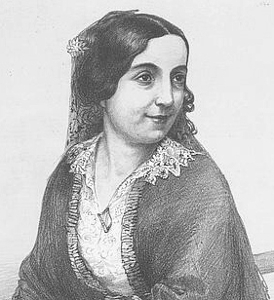
Birth of Soprano Catherine Hayes

Catherine Hayes, world-famous Irish soprano of the Victorian era, is born in Limerick, County Limerick, on October 25, 1818. According to London‘s Daily Express, “Hayes was the ‘Madonna‘ of her day; she was the 19th-century operatic equivalent of the world’s most famous pop star.”

Hayes is born into abject poverty. After five years of vocal study in Paris and Milan she makes her debut at the Italian Opera in Marseilles, in Vincenzo Bellini‘s I Puritani in May 1845, followed by performances of Gaetano Donizetti‘s Lucia di Lammermoor and Gioachino Rossini‘s Mosé in Egitto.

Her debut at La Scala in Milan quickly followed in 1845 with phenomenal success. Shortly thereafter the young Giuseppe Verdi becomes interested in her for one of his new operas. Her great success continues in Vienna, as well as in Venice, Florence, Genoa, Rome and other cities in Italy, where she becomes the most sought after Lucia di Lammermoor.

Early in 1849, Hayes accepts a contract to sing at the Royal Opera House, Covent Garden, London where she makes her debut in Linda di Chamounix in April. In June 1849, she receives an invitation to sing at Buckingham Palace for Queen Victoria and 500 guests. After an evening of Italian music, when the Queen requests an encore, Hayes with a smile sings the beautiful Irish rebel songKathleen Mavourneen.”

During Ireland’s Great Famine in November 1849, her emotional return to her native country results in rave notices for her performance in Lucia di Lammermoor and other operas and concerts in Dublin, Limerick and Cork. Her success is now almost complete.

In 1851 Hayes goes to the United States, where Jenny Lind is creating such a wave of success. Hayes gives concerts in New York City, Boston, Toronto, Philadelphia, Washington, D.C., Charleston, Savannah and New Orleans and forty-five other places including the river towns along the Mississippi River, with equal success. She meets presidents, statesmen and business leaders along the way. She is also destined to meet her future lover and husband in America, Jenny Lind’s former manager. Her travels take her to the “gold rush” in the San Francisco area in the 1850s, where her presence creates a furor, singing for the miners and the elite of San Francisco. The great showman P.T. Barnum sponsors her tour.

She sings in opera and concerts in Peru and Chile, then travels to Hawaii where she gives a concert before continuing on to Australia. Hayes is the first great European opera star to visit Australia. She is mentioned in most Australian history books about early culture in the young colony.  She also travels to Calcutta, India where she performs for the British Military and then on to Singapore and Batavia (Java) before returning to Australia for more opera and concerts.

Hayes returns to England in August 1856, after an absence of five years.  On October 8, 1857, at St. George’s, Hanover Square, she marries William Avery Bushnell. He soon falls into ill-health and dies at Biarritz, France, on July 2, 1858. After her husband’s death she takes part in concerts in London and the country towns.

Catherine Hayes dies in the house of a friend, Henry Lee, at Roccles, Upper Sydenham, Kent, on August 11, 1861, and is buried in Kensal Green Cemetery.


Leave a comment

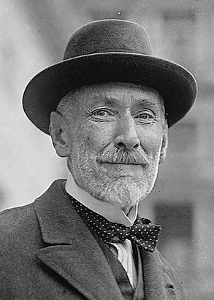
Birth of Sir Horace Curzon Plunkett

Sir Horace Curzon Plunkett, Anglo-Irish agricultural reformer, pioneer of agricultural cooperatives, Unionist Member of Parliament (MP), supporter of Home Rule, Irish Senator and author, is born on October 24, 1854.

Plunkett is the third son of Admiral the 16th Baron of Dunsany, of Dunsany Castle, Dunsany, near Dunshaughlin, County Meath, and the Honourable Anne Constance Dutton, daughter of John Dutton, 2nd Baron Sherborne. He is educated at Eton College and University College, Oxford, of which he becomes an honorary fellow in 1909.

Threatened by lung trouble in 1879, Plunkett goes to the United States and spends ten years as a cattle rancher in the Bighorn Mountains of Wyoming. He returns to Ireland in 1889 and devotes himself to the agricultural cooperative movement, first organizing creameries and then, in 1894, the Irish Agricultural Organisation Society, a forerunner of similar societies in England, Wales, and Scotland. A moderate Unionist member of Parliament for South County Dublin from 1892 to 1900, he becomes vice president (1899–1907) of the new Department of Agriculture and Technical Instruction for Ireland, which he has been instrumental in creating.

Plunkett’s later experience convinces him of the need for the independence of an Ireland without partition inside the Commonwealth, and he fights strongly for this goal, as chairman of the Irish Convention (1917–18) and, in 1919, as founder of the Irish Dominion League and of the Plunkett Foundation for Cooperative Studies, an agricultural research and information centre. He is appointed to the first Senate of the Irish Free State (1922–23). His house in Dublin is bombed and burned during in the Irish Civil War and he lives in England thereafter. In 1924 the Plunkett Foundation also moves to England. In 1924 he presides over a conference in London on agricultural co-operation in the British Commonwealth and in 1925 he visits South Africa to help the movement there.

Plunkett is made a Fellow of the Royal Society in 1902 and Knight Commander of the Royal Victorian Order in 1903. His writings include Ireland in the New Century (1904) and The Rural Life Problem of the United States (1910).

Sir Horace Plunkett dies at Weybridge, Surrey, England on March 26, 1932.


Leave a comment

Charles Haughey Acquitted of Conspiring in the Arms Crisis

Charles Haughey, former Minister for Finance, and three others including former Minister for Agriculture Neil Blaney, are acquitted on October 23, 1970, of charges that they had conspired to illegally import arms and ammunition into Ireland for the Irish Republican Army (IRA), an incident known as the Arms Crisis.

The Garda Special Branch informs the Minister for Justice Micheál Ó Móráin and Taoiseach Jack Lynch that a plot to import arms exists and includes government members, however Lynch takes no action until the Special Branch makes opposition leader Liam Cosgrave aware of the plot. Cosgrave tells Lynch he is aware of the plot and will announce it in the Dáil the next day if he does not act. Lynch subsequently requests that Haughey and Blaney resign from the Cabinet. Both men refuse, saying they had done nothing illegal. Lynch then asks President Éamon de Valera to terminate their appointments as members of the government, a request that de Valera is required to grant by convention. Haughey and Blaney are subsequently tried in court along with Captain James Kelly, a former intelligence captain in the Irish Army, and Albert Luykx, a former Flemish Nationalist and businessman, who allegedly used his contacts to buy the arms.

The verdict, reached by jury after two hours and 10 minutes of deliberation, leads to political repercussions for the Government of Taoiseach Jack Lynch. Lynch had dismissed the Haughey from his Cabinet post the previous May on the allegation of illegal gunrunning.

Witnesses declare during the 14‐day trial that the arms, imported from the Continental Europe, were ultimately destined for the Roman Catholic minority in Northern Ireland. However, the defense contends that the arms had been brought in with the knowledge and approval of the current Minister for Agriculture, Jim Gibbons, who was serving as Minister for Defence at the time.

The jury rules that the prosecution had failed to prove its case.  Haughey is carried from the High Court after the acquittal, as are the three other defendants.

Although cleared of wrongdoing, it appears as if Haughey’s political career is finished. Blaney eventually resigns from Fianna Fáil but Haughey remains. He spends his years on the backbenches building support within the grassroots of the party. During this time, he remains loyal to the party and serves the leader but after the debacle of the Arms Crisis neither man trusts the other.

(Pictured: Charles Haughey with Neil Blaney at the 1970 at the Arms Trial)


Leave a comment

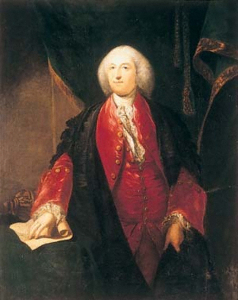
John Ponsonby Re-elected Speaker of the Irish House of Commons

John Ponsonby, Irish politician styled The Honourable from 1724, is unanimously re-elected Speaker of the Irish House of Commons on October 22, 1761.

Ponsonby is born on March 29, 1713, the second son of Brabazon Ponsonby, 1st Earl of Bessborough. In 1739, he enters the Irish House of Commons for Newtownards, becoming its speaker in 1756. He also serves as First Commissioner of the Revenue and he becomes a member of the Privy Council of Ireland in 1746. In 1761, he is elected for Kilkenny County and Armagh Borough, and sits for the first. In 1768, he stands also for Gowran and Newtownards, and in 1776 for Carlow Borough, but chooses each time Kilkenny County, which he represents until 1783. Subsequently Ponsonby is again returned for Newtownards and sits for this constituency until his death in 1787.

Belonging to one of the great families which at this time monopolizes the government of Ireland, Ponsonby is one of the principal “undertakers,” men who control the whole of the king’s business in Ireland, and he retains the chief authority until George Townshend, 1st Marquess Townshend, becomes lord-lieutenant in 1767. A struggle for supremacy follows between the Ponsonby faction and the party dependent on Townshend, one result of this being that Ponsonby resigns the speakership in 1771.

In 1743, Ponsonby marries Lady Elizabeth Cavendish, daughter of William Cavendish, 3rd Duke of Devonshire, a connection which is of great importance to the Ponsonbys. His older brother, William Ponsonby, 2nd Earl of Bessborough, had married the Duke’s eldest daughter in 1739. His sons, William Ponsonby, 1st Baron Ponsonby of Imokilly, and George Ponsonby, are also politicians of distinction. His daughter Catherine marries Richard Boyle, 2nd Earl of Shannon, and is mother to Henry Boyle, 3rd Earl of Shannon.

John Ponsonby dies on August 16, 1787.


Leave a comment

Final Arrival of the Concorde in Ireland

The supersonic aircraft Concorde arrives at Belfast International Airport, Aldergrove on October 21, 2003, on a farewell tour during its final week before being taken out of service.

In a final week of farewell flights around the United Kingdom, a British Airways Concorde visits Birmingham on October 20, Belfast on October 21, Manchester on October 22, Cardiff on October 23, and Edinburgh on October 24. Each day the aircraft makes a return flight out and back into Heathrow Airport to the cities concerned, often overflying those cities at low altitude. Over 650 competition winners and 350 special guests are carried.

On the evening of October 23, 2003, Queen Elizabeth II consents to the illumination of Windsor Castle as Concorde’s final west-bound commercial flight departs London and flies overhead. This is an honour normally reserved for major state events and visiting dignitaries.

British Airways retires its aircraft the next day, October 24. G-BOAG leaves New York City to a fanfare similar to her Air France predecessor’s, while two more made roundtrips, G-BOAF over the Bay of Biscay, carrying VIP guests including many former Concorde pilots, and G-BOAE to Edinburgh. The three aircraft then circle over London, having received special permission to fly at low altitude, before landing in sequence at Heathrow.

The two round-trip Concordes land at 4:01 and 4:03 PM BST, followed at 4:05 by the one from New York. All three aircraft then spend 45 minutes taxiing around the airport before finally disembarking the last supersonic fare-paying passengers. The pilot of the New York to London flight is Mike Bannister.

All of British Airway’s Concordes have been grounded, have lost their airworthiness certificates and have been drained of hydraulic fluid. Ex-chief Concorde pilot and manager of the fleet, Jock Lowe, estimates it would cost £10-15 million to make G-BOAF airworthy again. British Airways maintains ownership of the Concordes and has stated that their Concordes will not be flown again.


Leave a comment

Birth of Eoin O’Duffy, Political Activist & Police Commissioner

Eoin O’Duffy, Irish political activist, soldier, police commissioner and organizer of the infamous Blueshirts, is born in Castleblayney, County Monaghan, on October 20, 1892.

O’Duffy does an apprenticeship as an engineer in Wexford before working as an engineer and architect in Monaghan. In 1919 he becomes an auctioneer. He is a leading member of the Gaelic Athletic Association in Ulster in the 1910s. In 1912 he is appointed secretary of the Ulster provincial council. He is also a member of Harps’ Gaelic Football Club.

O’Duffy joins the Irish Republican Army (IRA) in 1917 and is the leader of the Monaghan Brigade of the IRA during the Irish War of Independence and in this capacity becomes Chief of Staff of the IRA in 1922. He is one of the Irish activists who along with Michael Collins accepts the Anglo-Irish Treaty and fights as a general in the Irish Civil War on the pro-Treaty side.

Professionally, O’Duffy becomes the second Commissioner of the Garda Síochána, the police force of the new Irish Free State, after the Civic Guard Mutiny and the subsequent resignation of Michael Staines. He holds this post until 1933, when he is dismissed by Éamon de Valera. In his political life O’Duffy is an early member of Sinn Féin, founded by Arthur Griffith. He is elected as a Teachta Dála (TD) for his home county of Monaghan during the 1921 election.

After a split in 1923 he becomes associated with Cumann na nGaedheal and becomes head of a veteran’s group then known as the Army Comrades Association. O’Duffy changes its name to “National Guard” and begins to stage fascist-style rallies and adopts a fascist salute. Its members begin to wear blue uniform shirts and become known as the Blueshirts. When government opposition groups form Fine Gael in September 1933, he becomes its first president, reaching the apex of his political power.

Subsequently, the government bans O’Duffy’s National Guard, as well as the group he creates to replace it, the Young Ireland Association, which he in turn replaces with the League of Youth, but their blue shirts indicate its continued fascist ideology. Fine Gael’s other leaders soon tire of his inflammatory rhetoric and the frequent violent behavior of the Blueshirts but are still surprised when their opposition causes him to resign his party leadership in September 1934. He is then ousted as leader of the Blueshirts as well but does retain a small loyal following.

An anti-communist, O’Duffy is attracted to the various authoritarian nationalist movements on the Continent. In 1936, he raises the Irish Brigade to fight for Francisco Franco during the Spanish Civil War as an act of Catholic solidarity and is inspired by Benito Mussolini‘s Italy to found the National Corporate Party. He offers to Nazi Germany the prospect of raising an Irish Brigade to fight in Operation Barbarossa during World War II on the Eastern Front against the Soviet Union, but this is not taken up.

Eoin O’Duffy takes no further part in Irish politics and dies in Dublin on November 30, 1944. In spite of his later politics, he is given a state funeral for his earlier contributions to the Irish government. He is buried in Dublin’s Glasnevin Cemetery.