seamus dubhghaill

Promoting Irish Culture and History from Little Rock, Arkansas, USA


Leave a comment

Birth of Robert Gibbings, Wood Engraver & Sculptor

LEAD Technologies Inc. V1.01

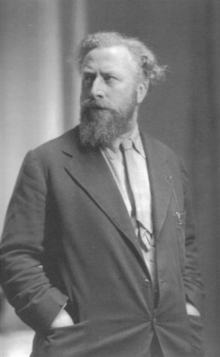
Robert John Gibbings, Irish artist and author most noted for his work as a wood engraver and sculptor, and for his books on travel and natural history, is born into a middle-class family in Cork, County Cork on March 23, 1889. Along with Noel Rooke he is one of the founder members of the Society of Wood Engravers in 1920 and is a major influence in the revival of wood engraving in the twentieth century.

Gibbings’ father, the Reverend Edward Gibbings, is a Church of Ireland minister. His mother, Caroline, is the daughter of Robert Day, Fellow of the Royal Society of Antiquaries of Ireland and president of The Cork Historical and Archaeological Society. He grows up in the town of Kinsale where his father is the rector of St. Multose Church.

Gibbings studies medicine for three years at University College Cork before deciding to persuade his parents to allow him to take up art. He studies under the painter Harry Scully in Cork and later at the Slade School of Fine Art and the Central School of Art and Design.

During World War I Gibbings serves in the Royal Munster Fusiliers and is wounded at Gallipoli before eventually being invalided out of the army in 1918. He then resumes his studies in London.

Gibbings is very much at the centre of developments in wood engraving. He is a founder member and leading light of the Society of Wood Engravers, which he sets up with Noel Rooke in 1920. In 1922 he contributes two wood engravings, “Clear Waters” and “Hamrun,” to Contemporary English Woodcuts, an anthology of wood engravings produced by Thomas Balston, a director at Gerald Duckworth & Company and an enthusiast for the new style of wood engravings. In 1923 he receives a commission for a set of wood engravings for The Lives of Gallant Ladies for the Golden Cockerel Press, his most important commission to date at 100 guineas.

Gibbings is working on the wood engravings The Lives of Gallant Ladies when Hal Taylor, the owner of the press, becomes very ill with tuberculosis and has to put it up for sale. He seeks a loan from a friend, Hubert Pike, a director of Bentley Motors, to buy the press. He takes over in February 1924 and owns and runs the press until 1933.

Gibbings illustrates numerous books on travel and natural history, including Charles Darwin’s The Voyage of the Beagle, and writes a series of bestselling river books, notably Sweet Thames Run Softly. He does a huge amount to popularise the subject of natural history, travelling extensively through Polynesia, Bermuda and the Red Sea to gather inspiration for his work.

Gibbings is the first man to draw underwater, the illustrations filling his Penguin classic Blue Angels and Whales. He is one of the first natural history presenters on the BBC.

In September 1955 Gibbings and his wife, Patience, purchase Footbridge Cottage, a tiny beehive of a cottage in Gibbings’s words, in Long Wittenham on the banks of the River Thames. Life there suits him, and he has a period of tranquility that he had not known previously. They live there until he dies of cancer in an Oxford hospital on January 19, 1958. He is buried in the churchyard at Long Wittenham. The grave is marked by a simple headstone featuring his device of a crossed quill and graver, carved by Michael Black, a young sculptor who is a friend of Gibbings.


Leave a comment

Death of Samuel Beckett, Playwright & Poet

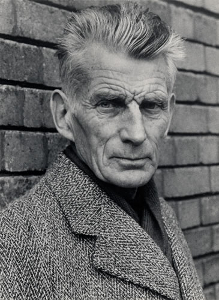
Samuel Barclay Beckett, avant-garde novelist, playwright, theatre director, and poet, dies in ParisFrance on December 22, 1989.

Beckett is born on Good Friday, April 13, 1906, in FoxrockDublin. His father, William Frank Beckett, works in the construction business and his mother, Maria Jones Roe, is a nurse. Beckett attends Earlsfort House School in Dublin and then, at age 14, he goes to Portora Royal School, the same school attended by Oscar Wilde. He receives his bachelor’s degree from Trinity College, Dublin in 1927. In his youth he periodically experiences severe depression keeping him in bed until mid-day. This experience later influences his writing.

In 1928, Beckett finds a welcome home in Paris where he meets and becomes a devoted student of James Joyce. In 1931, he embarks on a restless sojourn through Great Britain, France and Germany. He writes poems and stories and does odd jobs to support himself. On his journey, he comes across many individuals who inspire some of his most interesting characters.

In 1937, Beckett settles in Paris. Shortly thereafter, he is stabbed by a pimp after refusing his solicitations. While recovering in the hospital, he meets Suzanne Dechevaux-Dumesnuil, a piano student in Paris. The two become life-long companions and eventually marry. After meeting with his attacker, Beckett drops the charges, partly to avoid the publicity.

During World War II, Beckett’s Irish citizenship allows him to remain in Paris as a citizen of a neutral country. He fights in the resistance movement until 1942 when members of his group are arrested by the Gestapo. He and Suzanne flee to the unoccupied zone until the end of the war.

After the war, Beckett is awarded the Croix de Guerre for bravery during his time in the French resistance. He settles in Paris and begins his most prolific period as a writer. In five years, he writes EleutheriaWaiting for GodotEndgame, the novels MolloyMalone DiesThe Unnamable, and Mercier et Camier, two books of short stories, and a book of criticism.

Beckett’s first publication, Molloy, enjoys modest sales, but more importantly praise from French critics. Soon, Waiting for Godot, achieves quick success at the small Theatre de Babylone putting Beckett in the international spotlight. The play runs for 400 performances and enjoys critical praise.

Beckett writes in both French and English, but his most well-known works, written between World War II and the 1960s, are written in French. Early on he realizes his writing has to be subjective and come from his own thoughts and experiences. His works are filled with allusions to other writers such as Dante AlighieriRené Descartes, and James Joyce. Beckett’s plays are not written along traditional lines with conventional plot and time and place references. Instead, he focuses on essential elements of the human condition in dark humorous ways. This style of writing has been called “Theater of the Absurd” by Martin Esslin, referring to poet Albert Camus’ concept of “the absurd.” The plays focus on human despair and the will to survive in a hopeless world that offers no help in understanding.

The 1960s are a period of change for Beckett. He finds great success with his plays across the world. Invitations come to attend rehearsals and performances which lead to a career as a theater director. In 1961, he secretly marries Suzanne Dechevaux-Dumesnuil who takes care of his business affairs. A commission from the BBC in 1956 leads to offers to write for radio and cinema through the 1960s.

Beckett continues to write throughout the 1970s and 1980s, mostly in a small house outside Paris. There he can give total dedication to his art of evading publicity. In 1969, he is awarded the Nobel Prize in Literature, though he declines accepting it personally to avoid making a speech at the ceremonies. However, he should not be considered a recluse. He often times meets with other artists, scholars and admirers to talk about his work.

By the late 1980s, Beckett is in failing health and is moved to a small nursing home. His wife Suzanne dies on July 17, 1989. His life is confined to a small room where he receives visitors and writes. Suffering from emphysema and possibly Parkinson’s disease, he dies on December 22, 1989.


Leave a comment

Birth of Alistair Cooke, Journalist & Broadcaster

alistair-cooke

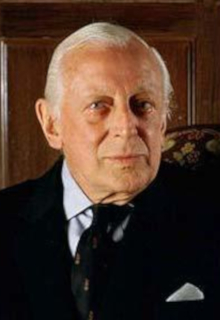
Alistair Cooke, British journalist, television personality, and broadcaster, who describes himself as a “Lancastrian Irishman,” is born in Salford, Lancashire, England on November 20, 1908. He is best known for his lively and insightful interpretations of American history and culture.

The son of Samuel Cooke, a Wesleyan Methodist lay preacher, and Mary Elizabeth (Byrne) from County Sligo, He is educated at Blackpool Grammar School, Blackpool and wins a scholarship to Jesus College, Cambridge, where he gains an honours degree in English. Later he wins a Commonwealth Fund fellowship to study in the United States, first at Yale University (1932–33), then at Harvard University (1933–34). His cross-country travels during the summers of these years have a profound influence on his professional life.

Following a brief period as a scriptwriter in Hollywood, Cooke returns to England to become a film critic for the British Broadcasting Corporation (BBC) and later serves as London correspondent for the National Broadcasting Company (NBC) of the United States. In 1937 he returns to the United States, settles in New York City, and becomes an American citizen in 1941.

From the late 1930s, Cooke reports and comments on American affairs for BBC Radio and several major British newspapers. His weekly 15-minute program, Letter from America, broadcast from 1946 to 2004, is one of the longest-running series on radio. The texts of many broadcasts are collected in One Man’s America (1952) and Talk About America (1968). From 1956 to 1961 he hosts and narrates the weekly television “magazine” Omnibus, which wins numerous broadcasting awards.

Cooke’s interpretation of the American experience culminates in his BBC-produced television series America: A Personal History of the United States (1972–1973). In thirteen installments, filmed on location throughout the United States, he surveys some 500 years of American history in an eclectic and personal but highly coherent narrative. Alistair Cooke’s America (1973), the book based on the award-winning program, is a best-seller in the United States. From the 1970s to the early 1990s, as host of Masterpiece Theatre, he serves as an interpreter of British culture through the presentation of BBC dramatic television programming to American audiences.

Cooke’s other works include the critical biography Douglas Fairbanks: The Making of a Screen Actor (1940), Generation on Trial: The USA v. Alger Hiss (1950), based on his coverage of a celebrated Congressional investigation, The Vintage Mencken (1955), The Patient Has the Floor (1986), America Observed (1988), Memories of the Great and the Good (2000) and, with Robert Cameron, The Americans (1977).

On March 2, 2004, at the age of 95, following advice from his doctors, Cooke announces his retirement from Letter from America—after 58 years, the longest-running speech radio show in the world.

Alistair Cooke dies at midnight on March 30, 2004 at his home in New York City. He had been ill with heart disease, but dies of lung cancer, which had spread to his bones. He is cremated and his ashes are clandestinely scattered by his family in New York’s Central Park.


Leave a comment

Birth of Micheál Mac Liammóir, Actor, Writer & Poet

CREATOR: gd-jpeg v1.0 (using IJG JPEG v80), quality = 80

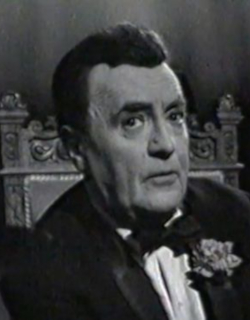
Micheál Mac Liammóir, British-born Irish actor, playwright, impresario, writer, poet and painter, is born Alfred Willmore on October 25, 1899. He is born to a Protestant family living in the Kensal Green district of London. He co-founds the Gate Theatre with his partner Hilton Edwards and is one of the most recognizable figures in the arts in twentieth-century Ireland.

As Alfred Willmore, he is one of the leading child actors on the English stage, in the company of Noël Coward. He appears for several seasons in Peter Pan. He studies painting at London’s Slade School of Fine Art, continuing to paint throughout his lifetime. In the 1920s he travels all over Europe. He is captivated by Irish culture and learns the Irish language which he speaks and writes fluently. He changes his name to an Irish version, presenting himself in Ireland as a descendant of Irish Catholics from Cork. Later in his life, he writes three autobiographies in Irish and translates them into English.

While acting in Ireland with the touring company of his brother-in-law Anew MacMaster, Mac Liammóir meets the man who becomes his partner and lover, Hilton Edwards. Their first meeting takes place in the Athenaeum, Enniscorthy, County Wexford. Deciding to remain in Dublin, where they live at Harcourt Terrace, the pair assists with the inaugural production of Galway‘s Irish language theatre, An Taibhdhearc. The play is Mac Liammóir’s version of the mythical story Diarmuid agus Gráinne, in which Mac Liammóir plays the lead role as Diarmuid.

Mac Liammóir and Edwards then throw themselves into their own venture, co-founding the Gate Theatre in Dublin in 1928. The Gate becomes a showcase for modern plays and design. Mac Liammóir’s set and costume designs are key elements of the Gate’s success. His many notable acting roles include Robert Emmet/The Speaker in Denis Johnston‘s The Old Lady Says “No!” and the title role in Hamlet.

In 1948, Mac Liammóir appears in the NBC television production of Great Catherine with Gertrude Lawrence. In 1951, during a break in the making of Othello, he produces Orson Welles‘s ghost-story Return to Glennascaul which is directed by Hilton Edwards. He plays Iago in Welles’s film version of Othello (1951). The following year, he goes on to play ‘Poor Tom’ in another Welles project, the TV film of King Lear (1953) for CBS.

Mac Liammóir writes and performs a one-man show, The Importance of Being Oscar, based on the life and work of Oscar Wilde. The Telefís Éireann production wins him a Jacob’s Award in December 1964. It is later filmed by the BBC with Mac Liammóir reprising the role.

Mac Liammóir narrates the 1963 film Tom Jones and is the Irish storyteller in 30 Is a Dangerous Age, Cynthia (1968) which stars Dudley Moore.

In 1969 Mac Liammóir has a supporting role in John Huston‘s The Kremlin Letter. In 1970 he performs the role of narrator on the cult album Peace on Earth by the Northern Irish showband, The Freshmen and in 1971 he plays an elocution teacher in Curtis Harrington‘s What’s the Matter with Helen?.

Mac Liammóir claims when talking to Irish playwright Mary Manning, to have had a homosexual relationship with General Eoin O’Duffy, former Garda Síochána Commissioner and head of the paramilitary Blueshirts in Ireland, during the 1930s. The claim is revealed publicly by RTÉ in a documentary, The Odd Couple, broadcast in 1999. However, Mac Liammóir’s claims have not been substantiated.

Mac Liammóir’s life and artistic development are the subject of a major study by Tom Madden, The Making of an Artist. Edwards and Mac Liammóir are the subject of a biography, titled The Boys by Christopher Fitz-Simon.

Micheál Mac Liammóir dies at the age of 78 on March 6, 1978. Edwards and Mac Liammóir are buried alongside each other at St. Fintan’s Cemetery, Sutton, Dublin.


Leave a comment

Hume & Trimble Receive 1998 Nobel Peace Prize

hume-trimble-noble-prize-1998

The 1998 Nobel Peace Prize is awarded on October 16, 1998, to John Hume and David Trimble, leaders of the largest Roman Catholic and Protestant political parties in Northern Ireland, for their efforts to bring peace to the long-polarized British province. The two men share the prize money of $960,000.

Hume, 61, the Catholic head of the Social Democratic and Labor Party, is cited by the Nobel Committee in Oslo for having been the “clearest and most consistent of Northern Ireland’s political leaders in his work for a peaceful solution.”

Trimble, 54, the Protestant leader of the Ulster Unionist Party, is honored for having demonstrated “great political courage when, at a critical stage in the process, he advocated solutions which led to the peace agreement.”

The leader of a third prominent party, Gerry Adams of Sinn Féin, the political wing of the Irish Republican Army (IRA), is not named as a prize winner. While it does not honor Adams, the committee says it wishes to “emphasize the importance of the positive contributions to the peace process made by other Northern Irish leaders.” Nor are several other figures mentioned as possibilities, including former Senator George Mitchell, who led the talks, British Prime Minister Tony Blair and Irish Taoiseach Bertie Ahern, United States President Bill Clinton, and Mo Mowlam, the British Government’s Secretary of State for Northern Ireland.

The accord, signed on April 10 and known as the Good Friday Agreement, gives the 1.7 million residents of Northern Ireland a respite from the sectarian violence that has claimed more than 3,200 lives in the previous 30 years. It also opens the possibility of lasting stability for the first time since the establishment of Northern Ireland with partition from Ireland in 1921.

Forging concessions from fiercely antagonistic populations, the accord seeks to balance the Protestant majority’s wish to remain part of Britain with Catholic desires to strengthen ties to the Republic of Ireland to the south. The committee, seeing in Northern Ireland’s two warring groups a dispute with notable similarities to violent tribal confrontations elsewhere, expresses the hope that the accord will serve “to inspire peaceful solutions to other religious, ethnic and national conflicts around the world.”

Adams, in New York on a fund-raising trip for Sinn Féin, welcomes the Oslo announcement and particularly praises Hume, who is widely seen as having helped persuade the IRA to adopt a cease-fire and having eased Sinn Féin’s entry into the talks. “Indeed, there would be no peace process but for his courage and vision,” Adams says, adding, “No one deserves this accolade more.” He also wishes Trimble well and says the prize imposes on everyone the responsibility to “push ahead through the speedy implementation of the agreement.”

In the unforgiving politics of Northern Ireland, the Unionist dissidents and members of other Protestant parties who do not join in the peace talks attack both Trimble and Hume. Ian Paisley Jr., son of the head of the Democratic Unionist Party, calls the Nobel Committee’s decision a “farce” and says of the winners, “These people have not delivered peace, and they are not peacemakers.”

Trimble says he is “slightly uncomfortable” with the award because so many other people have been involved beside him in reaching the settlement and much remains to be done to put it in place. “We know that while we have the makings of peace, it is not wholly secure yet,” he tells the BBC from Denver, where he is on an 11-city North American tour to spur foreign investment in Ulster. “I hope it does not turn out to be premature.”

Hume receives word of the prize at his home in Londonderry and terms it “an expression of the total endorsement of the work of very many people.” He adds, “This isn’t just an award to David Trimble and myself. It is an award to all the people in Northern Ireland.”

In Washington, D.C., President Clinton says “how very pleased” he is, “personally and as President, that the Nobel Prize Committee has rewarded the courage and the people of Northern Ireland by giving the Nobel Peace Prize to John Hume and to David Trimble.” He adds “a special word of thanks” to George Mitchell, who issues a statement praising Hume and Trimble as “fully deserving of this honor.”

The peace talks began in the summer of 1996. They eventually draw the participation of 8 of the 10 Northern Irish parties, with many of the men around the table convicted murderers and bombers who had emerged from prison with a commitment to peaceful resolution to what for nearly a century have been referred to wearily as “the Troubles.” The paramilitary groups had also made the tactical decision that violence would not secure their goals; a shared conviction that gives these talks a chance for success that past fitful attempts at settlement lacked.

The peace talks move in a desultory manner until Blair takes office in May 1997 and highlights the cause of peace in Northern Ireland as an early commitment. At his and Ahern’s urging, the IRA declares a cease-fire in July, and by September Sinn Féin is permitted to join the talks.

Blair also gives Trimble and Adams unprecedented access to 10 Downing Street, and the Ulster Protestants report that they obtained from Clinton the most sympathetic hearing they ever had from an American President, allaying their longtime suspicions of Washington’s bias in favor of the Catholic minority.

(From: “2 Ulster Peacemakers Win the Nobel Prize,” The New York Times, Warren Hoge, October 17, 1998)


Leave a comment

Magee College Opens in Derry, County Londonderry

magee-college-1870

Magee College opens on October 10, 1865, as a Presbyterian Christian arts and theological college in Derry, County Londonderry, Northern Ireland. Since 1953, it has had no religious affiliation and provides a broad range of undergraduate and postgraduate academic degree programmes in disciplines ranging from business, law, social work, creative arts & technologies, cinematic arts, design, computer science and computer games to psychology and nursing.

The Magee Campus gains its name from Martha Magee, the widow of a Presbyterian minister, who, in 1845, bequeathed £20,000 to the Presbyterian Church in Ireland to found a college for theology and the arts. It opens in 1865 primarily as a theological college but accepts students from all denominations to study a variety of subjects. It is a college of the Royal University of Ireland from 1880 and later becomes associated with Trinity College, Dublin when the Royal University is dissolved in 1909 and replaced by the National University of Ireland.

During World War II, the college is taken over by the Admiralty for Royal NavyRoyal Navy operational use, becoming with Ebrington Barracks (HMS Ferret), a major facility in the Battle of the Atlantic. A 2013 BBC report describes a secret major control bunker, later buried beneath the lawns of the college. From 1941 this bunker, part of Base One Europe, together with similar bunkers in Derby House, Liverpool and Whitehall is used to control one million Allied personnel and fight the Nazi U-boat threat.

In 1953, Magee Theological College separates from the remainder of the college, eventually moving to Belfast in a 1978 merger that forms Union Theological College. Also in 1953, Magee College breaks its ties with Dublin and becomes Magee University College. It is hoped by groups led by the University for Derry Committee that this university college would become Northern Ireland’s second university after Queen’s University Belfast. However, in the 1960s, following the recommendations in The Lockwood Report by Sir John Lockwood, Master of Birkbeck College, London and former Vice-Chancellor of the University of London, the Parliament of Northern Ireland makes a controversial decision to pass it over in favour of a new university in Coleraine. Instead it is incorporated into the two-campus New University of Ulster in 1969. The next fourteen years see the college halve in size, while development focuses on the main Coleraine campus.

In 1984, the New University merges with the Ulster Polytechnic, and Magee becomes the early focus of development of a new four-campus university, the University of Ulster. Student and faculty numbers recover and grow rapidly over the next ten to fifteen years, accompanied by numerous construction projects. Magee grows from just 273 students in 1984 to over 4,000 undergraduates in 2012. In 2012, the University continues to lobby the Northern Ireland Executive for an additional 1,000 full-time undergraduate places, leading to 6,000 students at Magee in 2017.

On September 14, 2013, Magee hosts, for the first time on the island of Ireland, the 23rd International Loebner Prize Contest in Artificial Intelligence based on the Turing test proposed by the renowned British computer scientist Alan Turing in 1950. Turing also works on cracking the Enigma machine code at Bletchley Park which is instrumental in the Battle of the Atlantic.

In October 2014 the University of Ulster is rebranded as Ulster University.

(Pictured: Magee College, c. 1870)


Leave a comment

Birth of Louis MacNeice, Poet & Playwright

louis-macneice

Louis MacNeice, British poet and playwright, is born in Belfast on September 12, 1907. He is a member, along with Wystan Hugh Auden, Cecil Day-Lewis, and Stephen Spender, of a group whose low-keyed, unpoetic, socially committed, and topical verse is the “new poetry” of the 1930s. His body of work is widely appreciated by the public during his lifetime, due in part to his relaxed but socially and emotionally aware style.

MacNeice is the youngest son of John Frederick MacNeice and Elizabeth Margaret (“Lily”) MacNeice. His father, a Protestant minister, goes go on to become a bishop of the Anglican Church of Ireland. The family moves to Carrickfergus, County Antrim, soon after MacNeice’s birth. His mother dies of tuberculosis in December 1914. In 1917, his father remarries to Georgina Greer and his sister Elizabeth is sent to board at a preparatory school at Sherborne, England. MacNeice joins her at Sherborne Preparatory School later in the year.

After studying at the University of Oxford (1926–30), MacNeice becomes a lecturer in classics at the University of Birmingham (1930–36) and later in the Department of Greek at the Bedford College for Women, London (1936–40). In 1941 he begins to write and produce radio plays for the British Broadcasting Corporation. Foremost among his fine radio verse plays is the dramatic fantasy The Dark Tower (1947), with music by Benjamin Britten.

MacNeice’s first book of poetry, Blind Fireworks, appears in 1929, followed by more than a dozen other volumes, such as Poems (1935), Autumn Journal (1939), Collected Poems, 1925–1948 (1949), and, posthumously, The Burning Perch (1963). An intellectual honesty, Celtic exuberance, and sardonic humour characterize his poetry, which combines a charming natural lyricism with the mundane patterns of colloquial speech. His most characteristic mood is that of the slightly detached, wryly observant, ironic and witty commentator. Among MacNeice’s prose works are Letters from Iceland (with W.H. Auden, 1937) and The Poetry of W.B. Yeats (1941). He is also a skilled translator, particularly of Horace and Aeschylus (The Agamemnon of Aeschylus, 1936).

By the early 1960s, MacNeice is “living on alcohol,” and eating very little, but still writing. In August 1963 he goes caving in Yorkshire to gather sound effects for his final radio play, Persons from Porlock. Caught in a storm on the moors, he does not change out of his wet clothes until he is home in Hertfordshire. Bronchitis evolves into viral pneumonia and he is admitted to hospital in London on August, 27. He dies there on September 3, 1963 at the age of 55. He is buried in Carrowdore churchyard in County Down, alongside his mother.

MacNeice’s final book of poems, The Burning Perch, is published a few days after his funeral. His life-long friend from Oxford, W.H. Auden, who gives a reading at MacNeice’s memorial service, describes the poems of his last two years as “among his very best.”


Leave a comment

Death of Leslie Montgomery, Playwright & Writer

lynn-doyle-ballygullion

Leslie Alexander Montgomery, playwright, humorist, and writer who writes under the pen name “Lynn Doyle,” dies in Dublin on August 18, 1961. He adopts the pseudonym for his writing, using a homophone of “linseed oil.” Supposedly, he chooses the name after seeing a large tin of linseed oil in a paint shop, initially signing “Lynn C. Doyle” but later dropping the “C.”

Born in Downpatrick, County Down on October 5, 1873, Montgomery is educated at Dundalk in County Louth. He commences work as a bank clerk at the age of 16, and remains with the Northern Banking Company, working in locations such as Keady and Cushendall before a transfer to the quaint seaside town of Skerries in County Armagh. There he becomes branch manager until his retirement in 1934.

Aside from this rather strait-laced, white-collar career, however, Montgomery fosters a life-time passion for writing in various forms and genres, and his contribution to Ulster literature in the early part of the 20th century should not be underestimated.

Montgomery is part of the Ulster Literary Theatre movement founded by Bulmer Hobson and David Parkhill in 1902, and early works include Love and Land, a play that is produced at the Little Theatre in London and represents Montgomery’s first critical success.

Other works during this decade include The Summons and The Lilac Ribbon. By the beginning of the 1920s, Montgomery is a leading northern playwright. He is best known, however for the Ballygullion series, twenty books which fondly caricature Northern Irish village life. The first in the series is published in 1908 and the last in 1957.

Montgomery writes the first book, which would lend its title to the rest of the series, in Dublin. This is followed by other works every few years such as Mr. Wildridge of the Bank, Lobster Salad, Dear Ducks, Me and Mr. Murphy and Rosabelle and Other Stories.

Written in the dialect of the east Ulster region, the stories celebrate an imaginary townland area in the Slieve Gullion region of County Down. They reflect Montgomery’s early years there and in Dundalk. The books also reveal a lot about contemporary Ulster life.

The versatile writer also produces poetry during the 1930s. Ballygullion Ballads, published in 1936 is illustrated by the famous Belfast artist William Conor, as are several of the later editions of his books.

In 1936, Montgomery has the somewhat dubious honour of being the first Irish writer to be appointed to the Censorship Board. He resigns within two years of accepting the job, however, claiming that it is “so terribly easy to read only the marked passages, so hard to wade through the whole book afterwards.”

Following his retirement from the Northern Banking Company, he gains further notoriety as a lecturer, and also regularly broadcasts his stories for the fledgling BBC in Belfast. Indeed, his most productive period as a writer is in his 1960s, during which time he writes his autobiography, An Ulster Childhood, in 1954.

Montgomery dies in Dublin on August 18, 1961, but his legacy is preserved in the Lynn Doyle Collection at Belfast Central Library, which consists of a series of archival boxes which were purchased by the library. The collection is extensive, and includes broadcasts and lecture transcripts, manuscripts, essays, short stories, poetry, personal correspondence, photographs, land leases and legal documents.


Leave a comment

Birth of Gay Byrne, Radio & Television Presenter

CREATOR: gd-jpeg v1.0 (using IJG JPEG v80), quality = 90

Gabriel Mary “Gay” Byrne, veteran Irish presenter of radio and television for several decades and affectionately known as Uncle Gay, Gaybo or Uncle Gaybo, is born in Rialto, Dublin on August 5, 1934. His most known role is as the first host of The Late Late Show over a 37-year period spanning 1962 until 1999.

Byrne attends Rialto National School and a number of other schools for short periods. Subsequently, he is educated by the Irish Christian Brothers at Synge Street CBS.

When he is young, Byrne is inspired by the broadcaster Eamonn Andrews, who has a successful career on British television. In 1958 he moves over to broadcasting when he becomes a presenter on Radio Éireann. He also works with Granada Television and the BBC in England. At Granada, Byrne becomes the first person to introduce the Beatles on television when they make their small screen debut on local news programme People and Places. In 1961, Telefís Éireann, later Radio Telefís Éireann and now Raidió Teilifís Éireann, is established. Byrne works exclusively for the new Irish service after 1969. He introduced many popular programmes, with his most popular and successful programme being The Late Late Show.

On July 5, 1962, the first episode of The Late Late Show is aired on Irish television. Originally the show is scheduled as an eight-week summer filler. The programme, which is still broadcast, has become the world’s second longest running chat show. The show has much to do in shaping the new Ireland that emerges from the 1960s. Byrne presents his last edition of The Late Late Show on May 21, 1999, where he is presented with a Harley-Davidson motorcycle by Bono and Larry Mullen, Jr. Pat Kenny succeeds him as presenter in September 1999.

From 1973 until 1998, Byrne also presents The Gay Byrne Hour, later The Gay Byrne Show when it expands to two hours, on RTÉ Radio 1 each weekday morning.

Byrne does not completely retire in 1999 and continues to feature occasionally on radio and television after leaving The Late Late Show and The Gay Byrne Show, presenting several other programmes, including Who Wants to Be a Millionaire?, The Meaning of Life and For One Night Only on RTÉ One and Sunday Serenade/Sunday with Gay Byrne on RTÉ lyric fm. He launches Joe Duffy‘s autobiography Just Joe in Harry’s Bar in October 2011.

In 1988, Byrne is presented an honorary doctorate in literature from Trinity College, Dublin. In 2006 he is elected Chairman of Ireland’s Road Safety Authority, a public body given the task of improving road safety in the Republic of Ireland. Since retiring he has become the “Elder Lemon of Irish broadcasting.”

On a November 21, 2016 live radio broadcast Byrne reveals that he is to begin treatment for prostate cancer and that the cancer may have also spread to his lower back. He tells listeners he will be taking a break of just one week before returning to work, however, he continues to recover from treatment and he has not yet been back on air.


Leave a comment

Death of Joe Heaney, Traditional Irish Singer

joe-heaney

Joe Heaney, traditional Irish singer also known as Joe Éinniú or Seosamh Ó hÉanaí, dies in Seattle, Washington on May 1, 1984. He spends most of his adult life abroad, living in England, Scotland and New York City, in the course of which he records hundreds of songs.

Heaney is born Carna, a remote village in the Irish-speaking district of Connemara, County Galway, along the west coast of Ireland on October 15, 1919. He starts singing at the age of five, but his shyness keeps him from singing in public until he is 20. He learns English at school in Carna. When he is 16 years old, he wins a scholarship to attend school in Dublin. While there he wins first and second prizes at a national singing competition. Most of his repertoire, estimated to exceed 500 songs, is learned while growing up in Carna.

In 1949, Heaney goes to London where he works on building sites and becomes involved in the folk-music scene. He records for the Topic Records and Gael Linn Records labels. He is married for six years until his wife dies of tuberculosis.

Heaney is recorded by Pádraic Ó Raghallaigh for Raidió Teilifís Éireann, and by Peter Kennedy for the BBC in 1959. The BBC recordings are assembled on a BBC LP, not commercially issued, as BBC LP 22570.

Heaney comes to the United States in 1965 at the invitation of the Newport Folk Festival. After singing at Newport, he decides to move to America and settles in New York City. From 1982 until 1984, Heaney is an artist-in-residence at the University of Washington in Seattle after previously having taught at Wesleyan University in Middletown, Connecticut.

Joe Heaney dies of emphysema in Seattle on May 1, 1984. The Joe Heaney Collection of the University of Washington Ethnomusicology Archives is established after his death. The Féile Chomórtha Joe Éinniú (Joe Heaney Commemorative Festival) is held every year in Carna. An Irish-language biography of him has been written by Liam Mac Con Iomaire, and a biography that discusses his work in the larger context of Ireland and the United States was published in 2011 by Sean Williams and Lillis Ó Laoire.