seamus dubhghaill

Promoting Irish Culture and History from Little Rock, Arkansas, USA


Leave a comment

Birth of Pat “Beag” McGeown, Provisional IRA Volunteer

Pat “Beag” McGeown, a volunteer in the Provisional Irish Republican Army (IRA) who takes part in the 1981 Irish hunger strike, is born in the Beechmount area of BelfastNorthern Ireland, on on September 3, 1956.

McGeown joins the IRA’s youth wing, Fianna Éireann, in 1970. He is first arrested at the age of 14, and in 1973 he is again arrested and interned in Long Kesh Detention Centre until 1974. In November 1975, he is arrested and charged with possession of explosives, bombing the Europa Hotel, and IRA membership. At his trial in 1976 he is convicted and receives a five-year sentence for IRA membership and two concurrent fifteen-year sentences for the bombing and possession of explosives, and is imprisoned at Long Kesh with Special Category Status.

In March 1978, McGeown attempts to escape along with Brendan McFarlane and Larry Marley. The three have wire cutters and dress as prison officers, complete with wooden guns. The escape is unsuccessful, and results in McGeown receiving an additional six-month sentence and the loss of his Special Category Status.

McGeown is transferred into the Long Kesh Detention Centre’s H-Blocks where he joins the blanket protest and dirty protest, attempting to secure the return of Special Category Status for convicted paramilitary prisoners. He describes the conditions inside the prison during the dirty protest in a 1985 interview:

“There were times when you would vomit. There were times when you were so run down that you would lie for days and not do anything with the maggots crawling all over you. The rain would be coming in the window and you would be lying there with the maggots all over the place.“

In late 1980, the protest escalates and seven prisoners take part in a fifty-three-day hunger strike, aimed at restoring political status by securing what are known as the “Five Demands:”

  1. The right not to wear a prison uniform.
  2. The right not to do prison work.
  3. The right of free association with other prisoners, and to organise educational and recreational pursuits.
  4. The right to one visit, one letter and one parcel per week.
  5. Full restoration of remission lost through the protest.

The strike ends before any prisoners die and without political status being secured. A second hunger strike begins on March 1, 1981, led by Bobby Sands, the IRA’s former Officer Commanding (OC) in the prison. McGeown joins the strike on July 9, after Sands and four other prisoners have starved themselves to death. Following the deaths of five other prisoners, his family authorises medical intervention to save his life after he lapses into a coma on August 20, the 42nd day of his hunger strike.

McGeown is released from prison in 1985, resuming his active role in the IRA’s campaign and also working for Sinn Féin, the republican movement’s political wing. In 1988, he is charged with organising the Corporals killings, an incident where two plain-clothes British Army soldiers are killed by the IRA. At an early stage of the trial his solicitorPat Finucane, argues there is insufficient evidence against McGeown, and the charges are dropped in November 1988. McGeown and Finucane are photographed together outside Crumlin Road Courthouse, a contributing factor to Finucane being killed by the Ulster Defence Association (UDA) in February 1989. Despite suffering from heart disease as a result of his participation in the hunger strike, McGeown is a member of Sinn Féin’s Ard Chomhairle and is active in its Prisoner of War Department. In 1993, he is elected to Belfast City Council.

McGeown is found dead in his home on October 1, 1996, after suffering a heart attack. Sinn Féin chairman Mitchel McLaughlin says his death is “a great loss to Sinn Féin and the republican struggle.” McGeown is buried in the republican plot at Belfast’s Milltown Cemetery. His death is often referred to as the “11th hunger striker.” In 1998, the Pat McGeown Community Endeavour Award is launched by Sinn Féin president Gerry Adams, with Adams describing McGeown as “a modest man with a quiet, but total dedication to equality and raising the standard of life for all the people of the city.” A plaque in memory of McGeown is unveiled outside the Sinn Féin headquarters on the Falls Road on November 24, 2001, and a memorial plot on Beechmount Avenue is dedicated to the memory of McGeown, Kieran Nugent and Alec Comerford on March 3, 2002.


Leave a comment

Death of Irish Tenor Frank Patterson

Frank Patterson, internationally renowned Irish tenor following in the tradition of singers such as Count John McCormack and Josef Locke, dies in New York City on June 10, 2000. He is known as “Ireland’s Golden Tenor.”

Patterson is born on October 5, 1938, in Clonmel, County Tipperary. As a boy Patterson performs with his local parish choir and is involved in maintaining the annual tradition of singing with the “Wrenboys.” He sings in the local St. Mary’s Choral Society and at a production of The Pirates of Penzance performed with both his parents. His interests extend beyond music and as a boy he represents Marlfield GAA hurling club, plays tennis at Hillview and golf at the Mountain Road course. He quits school at an early stage to work in the printing business of his mother’s family. He moves to Dublin in 1961 to enroll at the National Academy of Theatre and Allied Arts where he studies acting while at the same time receiving vocal training from Hans Waldemar Rosen. In 1964, he enters the Feis Ceoil, a nationwide music competition, in which he wins several sections including oratorio, lieder and the German Gold Cup.

Patterson gives classical recitals around Ireland and wins scholarships to study in London, Paris and in the Netherlands. While in Paris, he signs a contract with Philips Records and releases his first record, My Dear Native Land. He works with conductors and some of the most prestigious orchestras in Europe including the London Symphony Orchestra and Orchestre de Paris. He also gains a reputation as a singer of Handel, Mozart, and Bach oratorios and German, Italian and French song. He has a long-running programme on RTÉ titled For Your Pleasure.

In the early 1980s Patterson moves to the United States, making his home in rural Westchester County, New York. A resurgence of interest in Irish culture encourages him to turn towards a more traditional Irish repertoire. He adds hymns, ballads, and traditional as well as more popular tunes to his catalogue. In March 1988, he is featured host in a Saint Patrick’s Day celebration of music and dance at New York City’s famous Radio City Music Hall. He also gives an outdoor performance before an audience of 60,000 on the steps of the United States Capitol in Washington, D.C. with the National Symphony Orchestra.

Patterson is equally at home in more intimate settings. His singing in the role of the Evangelist in Bach’s St. John Passion is given fine reviews. Further recordings follow, of Beethoven arrangements, Irish songs, Berlioz songs, Purcell songs and others, all on the Philips label.

Patterson performs sold-out concerts from London’s Royal Albert Hall to New York’s Carnegie Hall, and with his family he presents two concerts at the White House, for presidents Ronald Reagan in 1982 and Bill Clinton in 1995. He records over thirty albums in six languages, wins silver, gold and platinum discs and is the first Irish singer to host his own show in Radio City Music Hall in New York.

Rising to greater prominence with the new popularity of Celtic music in the 1990s, Patterson sees many of his past recordings reissued for American audiences, and in 1998 he stars in the PBS special Ireland in Song. His last album outsells Pavarotti.

In recognition of his musical achievements, he is awarded an honorary doctorate from Salve Regina University in Newport, Rhode Island in 1990, an honorary doctorate in fine arts from Manhattan College in 1996 and the Gold Medal of the Éire Society of Boston in 1998.

In 1999, Patterson learns he has a brain tumor. He has several operations in the following year and his condition appears to stabilise. He is diagnosed with a recurrence of his illness on May 7, 2000. He briefly recuperates and resumes performing. His last performance is on June 4, 2000, at Regis College in the Boston suburb of Weston, Massachusetts. Shortly thereafter he is admitted to the Memorial Sloan Kettering Cancer Center in New York where he lapses into a coma and dies on June 10, 2000, at the age of 61.

At his death accolades and tributes came from, among others, President of Ireland Mary McAleese, Taoiseach Bertie Ahern and Opposition leader John Bruton who said he had “the purest voice of his generation.”


Leave a comment

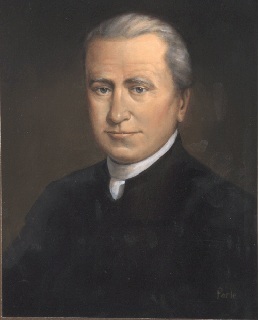
Death of Edmund Ignatius Rice, Missionary & Educationalist

Edmund Ignatius Rice, Catholic missionary and educationalist, dies on August 29, 1844, at Mount Sion, Waterford, County Waterford, after living in a near-comatose state for more than two years.

Rice is born on June 1, 1766, at Westcourt, Callan, County Kilkenny, the fourth of seven sons of Robert Rice, a farmer, and his wife, Margaret Tierney. His education begins at a local hedge school. He subsequently transfers to a school in Kilkenny before being apprenticed in 1779 to his uncle, a prosperous merchant at Waterford. He amasses a fortune in the lucrative provisioning trade of the city, and in 1785 he marries Mary Elliott, the daughter of a local tanner. Their only child, Mary, has intellectual disabilities and Rice suffers additional heartbreak with the death of his wife in 1789 following an accident, possibly by a fever that set in afterwards.

The death of his wife clearly affects Rice’s life. While he continues in trade and is an active member of the Catholic committee in the city, his priorities are radically changed. From this point he becomes increasingly involved in pious and charitable pursuits. He assists in the foundation of the Trinitarian Orphan Society in 1793 and the Society for the Relief of Distressed Roomkeepers in 1794. He joins religious confraternities and devotes considerable attention to the plight of prisoners. His endeavours become more focused in 1797 when, in response to a controversial pastoral of Bishop Thomas Hussey of Waterford and Lismore, he embraces the cause of Catholic education. In 1802, he establishes a religious community of laymen who set out to do for the neglected poor boys of Waterford what Nano Nagle had done for poor girls in Cork. His community is the genesis of both the Presentation Brothers and the Irish Congregation of Christian Brothers. Rice’s “monks” follow a variation of the Presentation rule, and his school curriculum is a pragmatic combination of best practice of the time overlaid by an uncompromisingly Catholic emphasis. By the time of his death in 1844, the Christian Brothers run forty-three schools, including six in England.

Rice is pivotal in the revival of Irish Catholicism following the severe dislocation of the penal era. Among the urban poor the Brothers make a landmark contribution in widening the social base of the institutional church. Through their teaching and catechetical instruction, they introduce the poor to the new forms of devotion which become the hallmark of nineteenth-century Catholicism. This effort brings a previously marginalised class within the ranks of the institutional church, which in time becomes the backbone of the emerging Catholic Ireland. The Brothers also play a determined role in the Catholic response to the proselytising efforts of the protestant Second Reformation in the country. Rice’s Brothers assist in the moulding of a distinctively Catholic urban working class, by promoting literacy alongside piety and instilling in their pupils the middle-class virtues of personal discipline, hard work, and sobriety.

Rice collaborates closely with other Catholic leaders of his age. His congregation is central to the success of Theobald Mathew‘s temperance movement. In 1828, at the height of the emancipation campaign, he invites Daniel O’Connell to lay the foundation stone of the Brothers’ model school at North Richmond Street, Dublin. This “monster meeting” attracts an attendance of 100,000, before which O’Connell hails Rice as the “patriarch of the monks of the west.” During the Repeal campaign, too, the Brothers frequently host the Liberator. Reflecting on their efforts, O’Connell declares that “education to be suited to this country must be Catholic and Irish in its tone, having as its motto Faith and Fatherland.”

Rice’s uncompromising adherence to these principles is not without difficulty. It leads to a predictably acrimonious relationship with the secular national board and his eventual withdrawal of the Brothers’ schools from the system in 1836. Rejection of the national board imposes serious financial burdens on the Christian Brothers which are relieved only by the bounties provided by the Intermediate Education Act (1878). Withdrawal also serves to alienate many friends and benefactors, including Daniel Murray, Archbishop of Dublin, who is a commissioner of national education. But the bishops gradually adopt Rice’s stance. After 1838 they become increasingly hostile to the national board, and the Brothers’ schools, with their acclaimed textbooks, are recognised as a bulwark against non-denominational education. For similar reasons, the Brothers become closely associated with Irish nationalism. In 1892, the MP William O’Brien observes that “the Christian Brothers system was regarded in Ireland as the really national system.”

The 1830s bring a rapid deterioration in Rice’s health. Financial difficulties frustrate his plans, and the plight of the three Dublin foundations is particularly acute. Rice resigns as superior general of his congregation in 1838, but fraught relations with his successor, Br. Michael Paul Riordan, blights his later years.

From this time on, Rice spends an increasing proportion of his time at Mount Sion and the adjoining school, showing a continued interest in the pupils and their teachers. He also takes a short walk each day on the slope of Mount Sion, but his increasingly painful arthritis leads the community superior, Joseph Murphy, to purchase a wheelchair for his benefit. At Christmas time in 1841, his health takes a turn for the worse and even though expectations of his imminent death do not turn out to be justified, he is increasingly confined to his room.

After living in a near-comatose state for more than two years and in the constant care of a nurse since May 1842, Rice dies on August 29, 1844, at Mount Sion, Waterford, where his remains lie in a casket to this day. Large crowds fill the streets around his house in Dublin to honour him. He is beatified by Pope John Paul II in 1996.

(From: “Rice, Edmund Ignatius” by Dáire Keogh, Dictionary of Irish Biography, http://www.dib.ie, October 2009)


Leave a comment

Birth of Terence MacSwiney, Playwright, Author & Lord Mayor of Cork

This image has an empty alt attribute; its file name is terence-macswiney.jpg

Terence James MacSwiney, Irish playwright, author, politician and Sinn Féin Lord Mayor of Cork during the Irish War of Independence, is born at 23 North Main Street, Cork, County Cork, on March 28, 1879.

MacSwiney is one of eight children of John and Mary MacSwiney. His father had volunteered in 1868 to fight as a papal guard against Giuseppe Garibaldi, had been a schoolteacher in London and later opened a tobacco factory in Cork. Following the failure of this business, John MacSwiney emigrates to Australia in 1885, leaving the children in the care of their mother and his eldest daughter.

MacSwiney is educated by the Christian Brothers at the North Monastery school in Cork but leaves at fifteen to help support the family. He becomes an accountancy clerk but continues his studies and matriculates successfully. He continues in full-time employment while he studies at the Royal University (now University College Cork), graduating with a degree in Mental and Moral Science in 1907.

In 1901 MacSwiney helps to found the Celtic Literary Society, and in 1908 he founds the Cork Dramatic Society with Daniel Corkery and writes a number of plays for them. His first play, The Last Warriors of Coole, is produced in 1910. His fifth play, The Revolutionist (1915), takes the political stand made by a single man as its theme.

Described as a sensitive poet-intellectual, MacSwiney’s writings in the newspaper Irish Freedom bring him to the attention of the Irish Republican Brotherhood. He is one of the founders of the Cork Brigade of the Irish Volunteers in 1913 and is President of the Cork branch of Sinn Féin. He founds a newspaper, Fianna Fáil, in 1914, but it is suppressed after only eleven issues. In April 1916, he is intended to be second in command of the Easter Rising in counties Cork and Kerry but stands down his forces on the order of Eoin MacNeill.

Following the rising, MacSwiney is imprisoned by the British Government under the Defence of the Realm Act 1914 in Reading and Wakefield Gaols until December 1916. In February 1917 he is deported from Ireland and imprisoned in Shrewsbury and Bromyard internment camps until his release in June 1917. It is during his exile in Bromyard that he marries Muriel Murphy of the Cork distillery-owning family. In November 1917, he is arrested in Cork for wearing an Irish Republican Army (IRA) uniform, and inspired by the example of Thomas Ashe, goes on a hunger strike for three days prior to his release.

In the 1918 Irish general election, MacSwiney is returned unopposed to the first Dáil Éireann as Sinn Féin representative for Mid Cork, succeeding the Nationalist MP D. D. Sheehan. After the murder of his friend Tomás Mac Curtain, the Lord Mayor of Cork, on March 20, 1920, he is elected as Lord Mayor. On August 12, 1920, he is arrested in Cork for possession of “seditous articles and documents,” and also possession of a cipher key. He is summarily tried by a court on August 16 and sentenced to two years’ imprisonment at Brixton Prison in England.

In prison MacSwiney immediately starts a hunger strike in protest of his internment and the fact that he was tried by a military court. Eleven other Irish Republican prisoners in Cork Jail go on hunger strike at the same time. On August 26, the British Government states that “the release of the Lord Mayor would have disastrous results in Ireland and would probably lead to a mutiny of both military and police in south of Ireland.”

MacSwiney’s hunger strike gains world attention. The British Government is threatened with a boycott of British goods by Americans, while four countries in South America appeal to Pope Benedict XV to intervene. Protests are held in Germany and France as well. An Australian member of Parliament, Hugh Mahon, is expelled from the Parliament of Australia for “seditious and disloyal utterances at a public meeting,” after protesting against the actions of the British Government. Two weeks later, the Spanish Catalan organization Autonomous Center of Employees of Commerce and Industry (CADCI) sends a petition to British Prime Minister David Lloyd George calling for his release and the newspaper of the organization, Acció (Acción in Spanish), begins a campaign for MacSwiney.

Food is often placed near MacSwiney to persuade him to give up the hunger strike. Attempts at force-feeding are undertaken in the final days of his strike. On October 20, 1920, he slips into a coma and dies in London’s Brixton Prison on October 25, after 73 days on hunger strike. His body lay in St. George’s Cathedral, Southwark in London where 30,000 people file past it. Fearing large-scale demonstrations in Dublin, the authorities divert his coffin directly to Cork, and his funeral in the Cathedral of St. Mary and St. Anne on October 31 attracts huge crowds. He is buried in the Republican plot in St. Finbarr’s Cemetery in Cork. Arthur Griffith delivers the graveside oration. His death brings him and the Irish Republican campaign to international attention.


Leave a comment

Birth of Blessed Edmund Ignatius Rice

Blessed Edmund Ignatius Rice, educator, philanthropist, and the founder of the Congregation of Christian Brothers, is born in Westcourt, Callan, County Kilkenny on June 1, 1762.

Rice is born into a Catholic family and is one of nine children. It comes as a surprise that a Catholic family can be prosperous in these days but they have a lease of a good-sized farm and are industrious people. In view of his future work in education it is fortunate that he receives a very good education himself, first at a local hedge school and then at a private secondary school in Kilkenny.

Rice is apprenticed to his uncle, Michael Rice, in Waterford at the age of 17. Waterford is then the second largest port in Ireland with an expanding trade with England, France and Spain and has very special trading links across the Atlantic with Newfoundland. His uncle is involved in providing food and services for the crews and passengers of the ships trading in and out of the port of Waterford. His uncle becomes a very prosperous businessman, and his business expands even more after it is handed over to his nephew. His great wealth is later to be used in transforming the lives of countless young boys.

At the age of 25 Rice marries Mary Elliot and is left a widower two years later when she dies after falling from a horse. He is left with a handicapped daughter, Mary. He calls in his stepsister Joan Murphy to help him care for his daughter so he can develop the business he inherited from his uncle.

In 1802, having properly cared for his daughter, Rice begins a night school for the uneducated boys from the quays of Waterford. His deep desire is to found a religious order of men who will educate these poor boys so that they can live with dignity and high self-esteem. But his volunteer assistants cannot stick with it. Neither can the paid teachers he later employs. Just when his spirits are lowest, and he looks to be a failure to all his business colleagues, two men from his native Callan join him not only to educate these unruly boys but also to join him in his plan to found a religious order. To do such a thing is contrary to the law. Nevertheless, Rice and his growing number of companions proceed. In 1808 seven of them take religious vows under Bishop Power of Waterford. They are called Presentation Brothers. This is the first congregation of men to be founded in Ireland and one of the few ever founded in a Church by a layman. Rice has in the meantime built a substantial school out of his own money, but it is already proving too small for the many boys who flock to him for an education.

Gradually an extraordinary transformation takes place in the “quay kids” of Waterford. Rice and his Brothers educate them, clothe and feed them. Other Bishops in Ireland supply him with men whom he prepares for religious life and teaching. In this way the Presentation Brothers spread throughout Ireland. However, the groups in separate dioceses are not under his control but that of the bishop. This creates problems when Brothers need to be transferred. Rice seeks and ultimately obtains approval from Pope Pius VII for his Brothers to be made into a pontifical congregation with Rice as Superior General. He is then able to move Brothers to wherever they are most needed. From this time on they are called Christian Brothers. By 1825 there are 30 Christian Brothers working in 12 towns and cities and educating 5,500 boys, free of charge. Many of these boys are also being clothed and fed.

Rice’s life is steeped in a spirituality that is strong and practical. He is forever caring for the poor in the wretched circumstances of their lives, for he believes there is a great need “to give to the poor in handfuls.” Many people, both men and women, from many cultures, young and old are helped and given hope and purpose and a new footing in life. He and his Brothers even card for the inmates of the jails of Waterford. He is privileged to comfort and accompany many a condemned man to the gallows. The poor never forget his love for them and see him as “a man raised up by God.”

Rice endures many and severe trials and in 1829 it seems the Christian Brothers are going to be suppressed by the law of the land. They face extinction but this does not happen. An even worse trial comes to him personally when some of his own Brothers try to undermine his work. Fortunately, they are unsuccessful. He gave his Brothers as their motto a text from the Book of Job that means so much to him in his life: “The Lord has given, and the Lord has taken away; blessed be the name of the Lord forever.”

In 1838, at the age of 76, Rice retires from leadership of the congregation and returns to Waterford. After living in a near-comatose state for more than two years, he dies at Mount Sion, Waterford on August 29, 1844, where his remains lie in a casket to this day.

Rice is declared to be Blessed Edmund Rice by Pope John Paul II in Rome on October 6, 1996. His Feast Day in the Catholic Church is 5 May.

(From: “Blessed Edmund Ignatius Rice,” Diocese of Waterford & Lismore, http://www.waterfordlismore.ie)


Leave a comment

Death of Terence MacSwiney, Playwright & Politician

Terence James MacSwiney, Irish playwright, author, politician and Sinn Féin Lord Mayor of Cork during the Irish War of Independence, dies in London‘s Brixton Prison on October 25, 1920, after 73 days on hunger strike. His death brings him and the Irish Republican campaign to international attention.

MacSwiney is born at 23 North Main Street, Cork, County Cork, one of eight children of John and Mary MacSwiney. Following the failure of this business, John MacSwiney emigrates to Australia in 1885 leaving the children in the care of their mother and his eldest daughter.

MacSwiney is educated by the Christian Brothers at the North Monastery school in Cork but leaves at fifteen to help support the family. He becomes an accountancy clerk but continues his studies and matriculates successfully. He continues in full-time employment while he studies at the Royal University (now University College Cork), graduating with a degree in Mental and Moral Science in 1907.

In 1901 MacSwiney helps to found the Celtic Literary Society, and in 1908 he founds the Cork Dramatic Society with Daniel Corkery and writes a number of plays for them. His first play, The Last Warriors of Coole, is produced in 1910. His fifth play, The Revolutionist (1915), takes the political stand made by a single man as its theme.

Described as a sensitive poet-intellectual, MacSwiney’s writings in the newspaper Irish Freedom bring him to the attention of the Irish Republican Brotherhood. He is one of the founders of the Cork Brigade of the Irish Volunteers in 1913 and is President of the Cork branch of Sinn Féin. He founds a newspaper, Fianna Fáil, in 1914, but it is suppressed after only 11 issues. In April 1916, he is intended to be second in command of the Easter Rising in Cork and Kerry but stands down his forces on the order of Eoin MacNeill.

Following the rising, MacSwiney is imprisoned by the British Government under the Defence of the Realm Act 1914 in Reading and Wakefield Gaols until December 1916. In February 1917 he is deported from Ireland and imprisoned in Shrewsbury and Bromyard internment camps until his release in June 1917. It is during his exile in Bromyard that he marries Muriel Murphy of the Cork distillery-owning family. In November 1917, he is arrested in Cork for wearing an Irish Republican Army (IRA) uniform, and inspired by the example of Thomas Ashe, goes on a hunger strike for three days prior to his release.

In the 1918 Irish general election, MacSwiney is returned unopposed to the first Dáil Éireann as Sinn Féin representative for Mid Cork, succeeding the Nationalist MP D. D. Sheehan. After the murder of his friend Tomás Mac Curtain, the Lord Mayor of Cork on March 20, 1920, he is elected as Lord Mayor. On August 12, 1920, he is arrested in Cork for possession of “seditous articles and documents,” and also possession of a cipher key. He is summarily tried by a court on August 16 and sentenced to two years’ imprisonment at Brixton Prison in England.

In prison MacSwiney immediately starts a hunger strike in protest of his internment and the fact that he was tried by a military court. Eleven other Irish Republican prisoners in Cork Jail go on hunger strike at the same time. On August 26, the British Government states that “the release of the Lord Mayor would have disastrous results in Ireland and would probably lead to a mutiny of both military and police in south of Ireland.”

MacSwiney’s hunger strike gains world attention. The British Government is threatened with a boycott of British goods by Americans, while four countries in South America appeal to Pope Benedict XV to intervene. Protests are held in Germany and France as well. An Australian member of Parliament, Hugh Mahon, is expelled from the Parliament of Australia for “seditious and disloyal utterances at a public meeting,” after protesting against the actions of the British Government. Two weeks later, the Spanish Catalan organization Autonomous Center of Employees of Commerce and Industry (CADCI) sends a petition to British Prime Minister David Lloyd George calling for his release and the newspaper of the organization, Acció (Acción in Spanish), begins a campaign for MacSwiney.

Food is often placed near MacSwiney to persuade him to give up the hunger strike. Attempts at force-feeding are undertaken in the final days of his strike. On October 20, 1920, he slips into a coma and dies five days later after 73 days on hunger strike. His body lay in St. George’s Cathedral, Southwark in London where 30,000 people file past it. Fearing large-scale demonstrations in Dublin, the authorities divert his coffin directly to Cork, and his funeral in the Cathedral of St. Mary and St. Anne on October 31 attracts huge crowds. He is buried in the Republican plot in St. Finbarr’s Cemetery in Cork. Arthur Griffith delivers the graveside oration.


Leave a comment

Birth of Irish Tenor Frank Patterson

Frank Patterson, internationally renowned Irish tenor following in the tradition of singers such as Count John McCormack and Josef Locke, is born on October 5, 1938, in Clonmel, County Tipperary. He is known as “Ireland’s Golden Tenor.”

As a boy Patterson performs with his local parish choir and is involved in maintaining the annual tradition of singing with the “Wrenboys.” He sings in the local St. Mary’s Choral Society and at a production of The Pirates of Penzance performed with both his parents. His interests extend beyond music and as a boy he represents Marlfield GAA hurling club, plays tennis at Hillview and golf at the Mountain Road course. He quits school at an early stage to work in the printing business of his mother’s family. He moves to Dublin in 1961 to enroll at the National Academy of Theatre and Allied Arts where he studies acting while at the same time receiving vocal training from Hans Waldemar Rosen. In 1964, he enters the Feis Ceoil, a nationwide music competition, in which he wins several sections including oratorio, lieder and the German Gold Cup.

Patterson gives classical recitals around Ireland and wins scholarships to study in London, Paris and in the Netherlands. While in Paris, he signs a contract with Philips Records and releases his first record, My Dear Native Land. He works with conductors and some of the most prestigious orchestras in Europe including the London Symphony Orchestra and Orchestre de Paris. He also gains a reputation as a singer of Handel, Mozart, and Bach oratorios and German, Italian and French song. He has a long-running programme on RTÉ titled For Your Pleasure.

In the early 1980s Patterson moves to the United States, making his home in rural Westchester County, New York. A resurgence of interest in Irish culture encourages him to turn towards a more traditional Irish repertoire. He adds hymns, ballads, and traditional as well as more popular tunes to his catalogue. In March 1988 he is featured host in a St. Patrick’s Day celebration of music and dance at New York City‘s famous Radio City Music Hall. He also gives an outdoor performance before an audience of 60,000 on the steps of the United States Capitol in Washington, D.C. with the National Symphony Orchestra.

Patterson is equally at home in more intimate settings. His singing in the role of the Evangelist in Bach’s St. John Passion is given fine reviews. Further recordings follow, of Beethoven arrangements, Irish songs, Berlioz songs, Purcell songs and others, all on the Philips label.

Patterson performs sold-out concerts from London’s Royal Albert Hall to New York’s Carnegie Hall, and with his family he presents two concerts at the White House, for presidents Ronald Reagan in 1982 and Bill Clinton in 1995. He records over thirty albums in six languages, wins silver, gold and platinum discs and is the first Irish singer to host his own show in Radio City Music Hall in New York.

Rising to greater prominence with the new popularity of Celtic music in the 1990s, Patterson sees many of his past recordings reissued for American audiences, and in 1998 he stars in the PBS special Ireland in Song. His last album outsells Pavarotti.

In recognition of his musical achievements, he is awarded an honorary doctorate from Salve Regina University in Newport, Rhode Island in 1990, an honorary doctorate in fine arts from Manhattan College in 1996 and the Gold Medal of the Éire Society of Boston in 1998.

In 1999, Patterson learns he has a brain tumour. He has several operations in the following year and his condition appears to stabilise. He is diagnosed with a recurrence of his illness on May 7, 2000. He briefly recuperates and resumes performing. His last performance is on June 4, 2000, at Regis College in the Boston suburb of Weston, Massachusetts. Shortly thereafter he is admitted to the Memorial Sloan Kettering Cancer Center in New York where he lapses into a coma and dies on June 10, 2000, at the age of 61.

At his death accolades and tributes came from, among others, President of Ireland Mary McAleese, Taoiseach Bertie Ahern and Opposition leader John Bruton who said he had “the purest voice of his generation.”


Leave a comment

Death of Thomas Blood, Anglo-Irish Officer

thomas-blood

Colonel Thomas Blood, Anglo-Irish officer and self-styled colonel best known for his attempt to steal the Crown Jewels of England and Scotland from the Tower of London in 1671, dies at his home in Bowling Alley, Westminster on August 24, 1680. He is also known for his attempt to kidnap and, later, to kill, his enemy, James Butler, 1st Duke of Ormond.

Sources suggest that Blood is born in County Clare in 1618, the son of a successful land-owning blacksmith of English descent. He is partly raised at Sarney, near Dunboyne, County Meath. He receives his education in Lancashire, England. At the age of 20, he marries Maria Holcroft, the daughter of John Holcroft, a gentleman from Golborne, Lancashire, and returns to Ireland.

At the outbreak of the First English Civil War in 1642, Blood returns to England and initially takes up arms with the Royalist forces loyal to Charles I. As the conflict progresses, he switches sides and becomes a lieutenant in Oliver Cromwell‘s Roundheads. Following the Restoration of King Charles II to the Crowns of the Three Kingdoms in 1660, Blood flees with his family to Ireland.

As part of the expression of discontent, Blood conspires to storm Dublin Castle, usurp the government, and kidnap James Butler, 1st Duke of Ormonde and Lord Lieutenant of Ireland, for ransom. On the eve of the attempt, the plot is foiled. Blood manages to escape to the United Dutch Provinces in the Low Country although a few of his collaborators are captured and executed.

In 1670, despite his status as a wanted man, Blood returns to England. On the night of December 6, 1670, he and his accomplices attack Ormonde while he travels St. James’s Street. Ormonde is dragged from his coach and taken on horseback along Piccadilly with the intention of hanging him at Tyburn. The gang pins a paper to Ormonde’s chest spelling out their reasons for his capture and murder. Ormonde succeeds in freeing himself and escapes. Due to the secrecy of the plot, Blood is not suspected of the crime.

Blood does not lie low for long, and within six months he makes his notorious attempt to steal the Crown Jewels. After weeks of deception, on May 9, 1671, he convinces Talbot Edwards, the newly appointed Master of the Jewel House, to show the jewels to him, his supposed nephew, and two of his friends while they wait for a dinner that Mrs. Edwards is providing. The jewel keeper’s apartment is in Martin Tower above a basement where the jewels are kept behind a metal grille. Reports suggest that Blood’s accomplices carried canes that concealed rapier blades, daggers, and pocket pistols. They enter the Jewel House, leaving one of the men to supposedly stand watch outside while the others joined Edwards and Blood. The door is closed, and a cloak is thrown over Edwards, who is struck with a mallet, knocked to the floor, bound, gagged and stabbed to subdue him.

As Blood and his gang flee to their horses waiting at St. Catherine’s Gate, they fire on the warders who attempt to stop them, wounding one. As they run along the Tower wharf it is said they join the calls for alarm to confuse the guards until they are chased down by Captain Beckman, brother-in-law of the younger Edwards. Although Blood shoots at him, he misses and is captured before reaching the Iron Gate. The Jewels are recovered although several stones are missing, and others are loose.

Following his capture, Blood refuses to answer to anyone but the King and is consequently taken to the palace in chains, where he is questioned by King Charles, Prince Rupert and others. To the disgust of Ormonde, Blood is not only pardoned but also given land in Ireland worth £500 a year. The reasons for the King’s pardon are unknown although speculation abounds.

In 1679 Blood falls into dispute with the Duke of Buckingham, his former patron, and Buckingham sues him for £10,000, for insulting remarks Blood had made about his character. In the proceedings that follow, Blood is convicted by the King’s Bench in 1680 and granted bail, although he never pays the damages.

Blood is released from prison in July 1680 but falls into a coma by August 22. He dies on August 24 at his home in Bowling Alley, Westminster. His body is buried in the churchyard of St. Margaret’s Church (now Christchurch Gardens) near St. James’s Park. It is believed that his body was exhumed by the authorities for confirmation as, such was his reputation for trickery, it is suspected he might have faked his death and funeral to avoid paying his debt to Buckingham.


Leave a comment

Birth of Irish Nationalist Bobby Sands

Robert Gerard Sands, commonly known as Bobby Sands, Irish nationalist and member of the Provisional Irish Republican Army, is born on March 9, 1954, at Abbots Cross, NewtownabbeyCounty Antrim, outside Belfast.

Sands is the oldest of four children born to John and Rosaleen Sands, and the couple’s first son. Sands grows up in Belfast under the cloud of nationalist and loyalist divisions. At an early age, Sands’s life is affected by the sharp divisions that shape Northern Ireland. At the age of ten, he is forced to move with his family out of their neighborhood due to repeated intimidation by loyalists.

“I was only a working-class boy from a Nationalist ghetto,” Sands later writes about his childhood. “But it is repression that creates the revolutionary spirit of freedom.” Loyalist intimidation proves to be a theme throughout Sands’ life. At the age of 18, he is forced out of his job as an apprentice car builder. Not long afterwards, he and his family have to move again, as a result of political trouble.

The steady number of conflicts pushes Sands to join the republican movement in 1972. His ties to the movement soon capture the attention of the authorities, and later that year, he is arrested and charged with possessing firearms in his house. He spends the next three years of his life in prison. Upon his release, Sands immediately returns to the Republican Movement. He signs on as a community activist in Belfast’s rough Twinbrook area, quickly becoming a popular go-to person for a range of issues affecting the neighborhood.

In late 1976, authorities arrest Sands again, this time in connection with the bombing of Balmoral Furniture Company and an ensuing gun battle. After weathering a brutal interrogation and then a court proceeding that offers up questionable evidence connecting Sands and three others to the attack, a judge sentences Sands to 14 years in prison at the Long Kesh Detention Centre, a facility used to house Republican prisoners from 1971 until 2000, located just outside of Belfast.

As a prisoner, Sands’s stature only grows. He pushes hard for prison reforms, confronting authorities, and for his outspoken ways he is frequently given solitary confinement sentences. Sands contention is that he and others like him, who are serving prison sentences, are actually prisoners of war, not criminals as the British government insists.

Beginning on March 1, 1981, Sands leads nine other Republican prisoners in the H-Block section of the Maze prison on a hunger strike that lasts until death. Their demands range from allowing prisoners to wear their own clothes to permitting visits and mail, all of which are central in improving the inmates’ way of life.

Unable to move authorities to give in to his requests, and unwilling himself to end his hunger strike, Sands’s health begins to deteriorate. During the first seventeen days of the strike alone, he loses 16 pounds. A hero among his fellow nationalists, Sands is elected as a Member of Parliament (MP) for Fermanagh and South Tyrone while in prison. Sands becomes the youngest MP at the time. However, he dies less than one month later without ever having taken his seat in the House of Commons.

Only days after slipping into a coma, on the morning of May 5, 1981, Sands dies from malnutrition due to starvation. He is 27 years old and has refused to eat for 66 days. He becomes so fragile over his final weeks that he spends his final days on a waterbed to protect his deteriorating and fragile body. At time of his death, Sands is married to Geraldine Noade, with whom he has one son, Gerard.

The announcement of Sands’s death prompts several days of rioting in nationalist areas of Northern Ireland. Over 100,000 people line the route of Sands’s funeral. He is buried in the ‘New Republican Plot’ alongside 76 others. Their graves are maintained by the National Graves Association, Belfast.

While loyalists dismiss Sands’s death, others are quick to recognize its significance. Over the next seven months, nine other IRA supporters die on hunger strike. Eventually, the British government gives proper political recognition to the prisoners, many of them earning their release under the 1998 Good Friday Agreement.

Bobby Sands’ final days are depicted in the 2008 Steve McQueen film Hunger, with actor Michael Fassbender portraying Sands.


Leave a comment

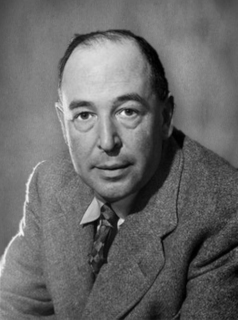
Birth of C.S. Lewis, Poet & Novelist

clive-staples-lewis

Clive Staples Lewis, novelist, poet, academic, medievalist, literary critic, essayist, lay theologian, and Christian apologist, is born in Belfast on November 29, 1898. He is best known for his works of fiction, especially The Screwtape Letters, The Chronicles of Narnia, and The Space Trilogy, and for his non-fiction Christian apologetics, such as Mere Christianity, Miracles, and The Problem of Pain.

Lewis is schooled by private tutors until age nine when his mother dies in 1908 from cancer. His father then sends him to live and study at Wynyard School in Watford, Hertfordshire. After the school is closed soon afterward, he attends Campbell College in the east of Belfast about a mile from his home, but leaves after a few months due to respiratory problems. He is then sent to the health-resort town of Malvern, Worcestershire, where he attends the preparatory school Cherbourg House. It is during this time that he abandons his childhood Christian faith and becomes an atheist. In September 1913, he enrolls at Malvern College. After leaving Malvern, he studies privately with William T. Kirkpatrick, his father’s old tutor and former headmaster of Lurgan College.

Lewis holds academic positions in English literature at both the University of Oxford (Magdalen College, 1925–1954) and the University of  Cambridge (Magdalene College, 1954–1963).

Lewis and fellow novelist J. R. R. Tolkien are close friends. They both serve on the English faculty at Oxford University and are active in the informal Oxford literary group known as the Inklings. He returns to Anglicanism at the age of 32, owing to the influence of Tolkien and other friends, and he becomes an “ordinary layman of the Church of England.” His faith profoundly affects his work, and his wartime radio broadcasts on the subject of Christianity bring him wide acclaim.

Lewis writes more than 30 books which have been translated into more than 30 languages and have sold millions of copies. The books that make up The Chronicles of Narnia have sold the most and have been popularised on stage, television, radio and cinema. His philosophical writings are widely cited by Christian apologists from many denominations.

In early June 1961, Lewis begins suffering from nephritis, which results in blood poisoning. He recovers but on July 15 of that year he falls ill and is admitted to the hospital where he suffers a heart attack the following day, lapses into a coma and awakens the next day. After he is discharged from the hospital his condition continues to decline. He is diagnosed with end-stage renal failure in mid-November. He collapses and dies in his bedroom on November 22. He is buried in the churchyard of Holy Trinity Church, Headington, Oxford.

Media coverage of Lewis’s death is almost completely overshadowed by news of the assassination of United States President John F. Kennedy, which takes place approximately 55 minutes after Lewis’s collapse.

In 2013, on the 50th anniversary of his death, Lewis is honoured with a memorial in Poets’ Corner in Westminster Abbey.