seamus dubhghaill

Promoting Irish Culture and History from Little Rock, Arkansas, USA


Leave a comment

Death of Gobnait Ní Bhruadair, Irish Republican & Lifelong Radical

Gobnait Ní Bhruadair, Irish republican and lifelong radical, dies in Sneem, County Kerry, on January 16, 1955. She campaigns passionately for causes as diverse as the reform of nursing, protection and promotion of the Irish language and the freedom of Ireland from British rule.

Ní Bhruadair is born the Hon. Albinia Lucy Brodrick on December 17, 1861, at 23 Chester Square, Belgrave, London, the fifth daughter of William Brodrick, 8th Viscount Midleton (1830–1907), and his wife, Augusta Mary (née Freemantle), daughter of Thomas Fremantle, 1st Baron Cottesloe. She spends her early childhood in London until the family moves to their country estate in Peper Harow, Surrey in 1870. Educated privately, she travels extensively across the continent and speaks fluent German, Italian and French, and has a reading knowledge of Latin.

Ní Bhruadair’s family is an English Protestant aristocratic one which has been at the forefront of British rule in Ireland since the 17th century. In the early twentieth century it includes leaders of the Unionist campaign against Irish Home Rule. Her brother, St. John Brodrick, 1st Earl of Midleton, is a nominal leader of the Irish Unionist Alliance from 1910 until 1918 when he and other Unionists outside Ulster establish the Irish Unionist Anti-Partition League.

The polar opposite of Ní Bhruadair, her brother is consistent in his low opinion of the Irish and holds imperialist views that warmly embrace much of the jingoism associated with social Darwinism. The young Albinia Lucy Brodrick conforms to her familial political views on Ireland, if her authorship of the pro-Unionist song “Irishmen stand” is an indicator. However, by the start of the twentieth century she becomes a regular visitor to her father’s estate in County Cork. There she begins to educate herself about Ireland and begins to reject the views about Ireland that she had been raised on. In 1902 she writes about the need to develop Irish industry and around the same time she begins to develop an interest in the Gaelic revival. She begins to pay regular visits to the Gaeltacht where she becomes fluent in Irish and is horrified at the abject poverty of the people.

From this point on, Ní Bhruadair’s affinity with Ireland and Irish culture grows intensely. Upon her father’s death in 1907 she becomes financially independent and in 1908 purchases a home near West Cove, Caherdaniel, County Kerry. The same year she establishes an agricultural cooperative there to develop local industry. She organises classes educating people on diet, encourages vegetarianism and, during the smallpox epidemic of 1910, nurses the local people. Determined to establish a hospital for local poor people, she travels to the United States to raise funds.

There Ní Bhruadair takes the opportunity to study American nursing, meets leading Irish Americans and becomes more politicised to Ireland’s cause. Upon her return to Kerry, she establishes a hospital in Caherdaniel later in 1910. She renames the area Ballincoona (Baile an Chúnaimh, ‘the home of help’), but it is unsuccessful and eventually closes for lack of money. She writes on health matters for The Englishwoman and Fortnightly, among other journals, is a member of the council of the National Council of Trained Nurses and gives evidence to the royal commission on venereal disease in 1914.

Ní Bhruadair is a staunch supporter of the 1916 Easter Rising. She joins both Cumann na mBan and Sinn Féin. She visits some of the 1,800 Irish republican internees held by the British in Frongoch internment camp in Wales and writes to the newspapers with practical advice for intending visitors. She canvasses for various Sinn Féin candidates during the 1918 Irish general election and is a Sinn Féin member on Kerry County Council (1919–21), becoming one of its reserve chairpersons. During the Irish War of Independence, she shelters Irish Republican Army (IRA) volunteers and consequently her home becomes the target for Black and Tans attacks.

Along with Dr. Kathleen Lynn she works with the Irish White Cross to distribute food to the dependents of IRA volunteers. By the end of the Irish War of Independence she has become hardened by the suffering she has seen and is by now implacably opposed to British rule in Ireland. She becomes one of the most vociferous voices against the Anglo-Irish Treaty of December 6, 1921. She becomes a firebrand speaker at meetings in the staunchly republican West Kerry area. In April 1923 she is shot by Irish Free State troops and arrested. She is subsequently imprisoned in the North Dublin Union, where she follows the example of other republicans and goes on hunger strike. She is released two weeks later. Following the formation of Fianna Fáil by Éamon de Valera in 1926, she continues to support the more hardline Sinn Féin.

In October 1926 Ní Bhruadair represents Munster at the party’s Ardfheis. She owns the party’s semi-official organ, Irish Freedom, from 1926–37, where she frequently contributes articles and in its later years acts as editor. Her home becomes the target of the Free State government forces in 1929 following an upsurge in violence from anti-Treaty republicans against the government. She and her close friend Mary MacSwiney leave Cumann na mBan following the decision by its members at their 1933 convention to pursue social radicalism. The two then establish an all-women’s nationalist movement named Mná na Poblachta, which fails to attract many new members.

Ní Bhruadair continues to speak Irish and regularly attends Conradh na Gaeilge branch meetings in Tralee. Although sympathetic to Catholicism, she remains a member of the Anglican Church of Ireland, and regularly plays the harmonium at Sneem’s Church of Ireland services. Described by a biographer as “a woman of frugal habits and decided opinions, she was in many ways difficult and eccentric.” She dies on January 16, 1955, and is buried in the Church of Ireland graveyard in Sneem, County Kerry.

In her will Ní Bhruadair leaves most of her wealth (£17,000) to republicans “as they were in the years 1919 to 1921.” The vagueness of her bequest leads to legal wrangles for decades. Finally, in February 1979, Justice Seán Gannon rules that the bequest is void for remoteness, as it is impossible to determine which republican faction meets her criteria.


Leave a comment

Birth of Diarmuid O’Hegarty, Civil Servant & Revolutionary

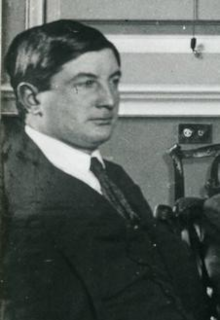
Diarmuid O’Hegarty (Ó hÉigeartuigh), civil servant and revolutionary, is born Jeremiah Stephen Hegarty on December 26, 1892, in Lowertown, Skibbereen, County Cork, the eldest of seven children of Jeremiah Hegarty (1856–1934) and his wife Eileen (née Barry), both teachers. He is educated at the Christian Brothers school, St. Patrick’s Place, Cork, joins the civil service in 1910 and is posted to the Department of Agriculture and Technical Instruction, acquiring invaluable administrative experience as private secretary to T. P. Gill, secretary of the department.

O’Hegarty is a member of the Keating branch of the Gaelic League and the closely associated Teeling circle of the Irish Republican Brotherhood (IRB). In 1913 he becomes secretary and stage manager of a troupe of Gaelic players, Na hAisteoirí, which includes several who later become prominent revolutionaries: Piaras Béaslaí, Gearóid O’Sullivan, Fionán Lynch, and Con Collins. As second lieutenant of F Company, 1st Battalion, Dublin Brigade, Irish Volunteers, during the Easter Rising, he is in charge of barricades in Church Street, Mary Lane, Mary’s Abbey, and Jameson Distillery, an area which sees fierce fighting. Imprisoned in Knutsford (May 1-18), he is released in error and returns to his post in the civil service. On his return he is a key figure in the reorganisation of the Volunteers and IRB, becoming a member of the executive of the IRB’s supreme council along with Michael Collins and Seán Ó Murthuile. He also becomes a central figure in Kathleen Clarke‘s prisoner support group, the Irish Volunteer Dependents Fund, and when it amalgamates with the more moderate Irish National Aid Association to form the INA&VDF in August 1916, he helps to ensure that it is dominated by republicans.

O’Hegarty is very close to Michael Collins and Harry Boland and in 1918 this IRB triumvirate exercises considerable control in the nomination of Sinn Féin candidates for the 1918 Irish general election. In the same year he is dismissed from the civil service for refusing to take the oath of allegiance, but his administrative talents find ample outlet in the secretariat of the revolutionary Dáil and later in the service of the Irish Free State to such an extent that he has been called ‘the civil servant of the revolution’ and ‘the Grey Eminence of the Free State Government.’ As clerk of the First Dáil and secretary to the Dáil cabinet (1919–21), he is largely responsible for its success, organising meetings of the clandestine parliament and coordinating the work of various departments from his offices on the corner of O’Connell Street and Abbey Street and later in Middle Abbey Street. He is determined that the Dáil will demonstrate its worth by ‘functioning as any progressive government would be expected to function.’ He records the minutes and handles all correspondence of the Dáil cabinet. As the conduit through which the Dáil’s ministers communicate, his role is central to the effective operation of government on the run. The influence this gives him within the revolutionary movement is bolstered by his senior role within the IRB and the positions of military significance which he occupies. He is a member of the Volunteer Executive (Jun 1916–Nov 1921), Irish Republican Army (IRA) Director of Communications (Jul 1918–Mar 1920), and Director of Organisation (Mar 1920–Apr 1921). When convicted of illegal assembly and jailed in Mountjoy Prison (Nov 1919–Feb 1920), he immediately wields power within the prison, ordering Noel Lemass off a hunger strike.

O’Hegarty resigns his military duties in April 1921 to concentrate on his work in the Dáil secretariat and serves as secretary to the Irish delegation during the Anglo–Irish Treaty negotiations in London (Oct–Dec 1921). He is a vital voice for the Treaty within the IRB and is appointed secretary to the cabinet of the Provisional Government in 1922, participating in the unsuccessful army unification talks of May 1922. During the Irish Civil War, he is briefly seconded from his civil service post to serve as military governor of Mountjoy Prison (Jul-Aug 1922), where he threatens that prisoners who persist in leaning out of windows and talking to the public outside the prison will be shot. Peadar O’Donnell, who is a prisoner there at the time, remembers him as the focus of much ‘republican bitterness.’ A member of the army council during the Irish Civil War, he serves as Director of Organisation (Jul–Dec 1922) and Director of Intelligence (Dec 1922–May 1923), leaving the army with the rank of lieutenant general on May 1, 1923, to resume his civil service career.

O’Hegarty is secretary to the Executive Council of the Irish Free State (1923–32) and principal private secretary to its president, W. T. Cosgrave. Again, he records the cabinet minutes and is the administrative pivot upon which government turns. He serves as secretary to numerous governmental delegations and is widely praised for his work in this role at the 1926 Imperial Conference and the 1930 Imperial Conference. In 1927 he goes to New York to represent the government at a hearing into the fate of republican funds in the United States. His career is the prime example of the influence of revolutionary veterans within the higher civil service in the early years of the state. After the change of government following the 1932 Irish general election, he is one of the very few senior civil servants who is effectively removed from his position. He is appointed to be a commissioner of public works, becoming chairman in 1949, a position he holds until his retirement in 1957. In 1939–40 he serves on the Economy Committee established by the government to advise on wartime spending, and in 1941 is a member of a tribunal of inquiry into public transport, which is principally concerned with the poor financial state of Great Southern Railways.

On April 27, 1922, with Michael Collins as his best man, O’Hegarty marries Claire Archer, daughter of Edward Archer, a post office telegraph inspector from Dublin, and Susan Archer (née Matthews). Her brother is William (Liam) Archer. They live at 9 Brendan Road, Donnybrook, Dublin.

O’Hegarty dies on March 14, 1958, in Dublin, leaving an estate of £5,441. His papers are in the University College Dublin (UCD) Archives.


Leave a comment

Birth of Jeremiah Joseph “Ginger” O’Connell, Irish Revolutionary

Jeremiah Joseph “Ginger” O’Connell, Irish revolutionary, active in the Irish War of Independence, and later a senior officer in the Defence Forces, is born in Ballina, County Mayo, on December 21, 1887.

O’Connell is born to Jeremiah Ambrose and Winifred O’Connell. He is nicknamed “Ginger” because of his red hair. His father is a national school inspector, so the family lives in Sligo, Derry, Longford and Belfast, and he attends a succession of primary schools. He studies at University College Dublin (UCD) where he receives a BA and a first-class MA. He is a member of the Literary and Historical Society at UCD and has an interest in boxing.

O’Connell is living in Cavan with his father, his sister Mary Margaret, his brother John Aloysius and two servants, Mary Burke and Rose Anne O’Reilly, at the time of the 1911 census, when he is 23. He is working as a Solicitor’s Apprentice, can read and write as well as speak both English and Irish, and is single. His mother is not living as it is recorded that his father is a widower.

O’Connell spends some time in the United States Army, serving with the 69th New York Infantry Regiment between 1912 and 1914. He returns to Ireland in 1914 and joins the Irish Volunteers, becoming Chief of Inspection in 1915. He travels the country organising volunteer corps, as well as contributing to the Irish Volunteer’s journal and delivering lectures on military tactics to both the Volunteers and Fianna Éireann. He also delivers a series of lectures about the famous Irish battles to the Gaelic League in Dublin. He is not a member of the Irish Republican Brotherhood (IRB) as he believes that soldiers should not be a part of secret societies.

At the time the 1916 Easter Rising, O’Connell is operating in Dublin under instruction from Joseph Plunkett. He is dispatched to Cork by Eoin MacNeill to try to prevent the Rising. Following the Rising, he is arrested and held in Frongoch internment camp from April to July 1916. In 1918 he is again arrested and interned, spending time in Wandsworth Prison with Arthur Griffith for the alleged involvement in the fabricated German Plot.

During the Irish War of Independence, O’Connell is a member of the Irish Republican Army (IRA) headquarters staff, as Assistant Director of Training and, after the killing of Dick McKee in 1920, as Director of Training. He coordinates, and is the principal lecturer, for a training course for military officers. The course is run clandestinely in the premises of the Topographical Society on Gardiner Street in Dublin. A sympathetic doorkeeper allows the group in at night when the society is not present. Topics delivered by O’Connell include tactics, ordinance and engineering.

In the IRA split after Dáil Éireann ratifies the Anglo-Irish Treaty, O’Connell takes the pro-Treaty side. He is made Deputy Chief of Staff in the National Army. On June 26, 1922, he is kidnapped by anti-treaty forces in reprisal for the arrest of an anti-treaty officer. His kidnapping is a precipitating factor in the formal outbreak of the Irish Civil War, when government pro-treaty forces two days later attack anti-treaty forces occupying the Four Courts. He survives the fighting and spends the rest of the civil war as General Officer Commanding the Curragh Command.

Following the Irish Civil War, the National Army is reorganised, and as part of that O’Connell is demoted from general to colonel. He subsequently holds a variety of positions: chief lecturer in the army school of instruction (1924–1929); director of no. 2 (intelligence) bureau (1929–1932); OC Irish Army Equitation School (March–June 1932); quartermaster-general (1932–1935) and director of the military archives (1935–1944). He also publishes articles on Irish and foreign military history and tactics in his time as a military historian. He marries Gertrude McGilligan, and they have two children together – one son and one daughter.

O’Connell dies of a heart attack at the age of 56 on February 19, 1944.


Leave a comment

Birth of León Ó Broin, Civil Servant, Historian & Author

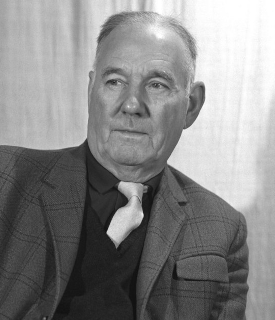
León Ó Broin, senior civil servant, historian, and author, is born Leo Byrne on November 10, 1902, at 21 Aungier Street, Dublin, the second of four sons of James P. Byrne, a potato factor’s bookkeeper, and Mary Byrne (née Killeen), daughter of a seaman who abandoned his family.

After early education in convent school, Ó Broin attends Synge Street CBS, where he is especially adept at languages. After working in several minor clerical employments, he becomes a clerk in the Kingsbridge headquarters of the Great Southern Railway. Joining a local Sinn Féin club, he canvasses for the party in the College Green ward during the 1918 Irish general election. Sent from an early age to Irish language classes by his father, he attends the Irish summer college in Spiddal, County Galway, and joins the Gaelic League, becoming by early 1921 secretary of central branch. He writes articles for the league’s successive weekly organs, each in its turn suppressed by the authorities. Despite regarding such writing as practice work within a language he is yet learning, he is selected best writer of Irish at the 1920 Dublin feis.

Arrested with his father and two brothers just before Christmas 1920 when Black and Tans discover a letter in Irish on his person during a house raid, Ó Broin is imprisoned for several weeks in Wellington Barracks. Leaving his railway job, he works as a clerk in the clandestine office of the Dáil Éireann Department of Agriculture (1921–22). During the Irish Civil War, with departmental work at a standstill, he joins the National Army as a commissioned officer assigned to general headquarters staff at Portobello Barracks. Having recently commenced legal studies at the King’s Inns and University College Dublin (UCD), he handles army legal matters, such as compensation claims for damage to property.

Called to the bar in 1924, Ó Broin enters the civil service. Assigned to the Department of Education (1925–27), he was involved in launching the Irish language publishing imprint An Gúm, intended to redress the paucity of reading material, apart from school texts, in the language. Transferred to the Department of Finance (1927), he serves as estimates officer and parliamentary clerk and is assistant secretary of the economy committee established by the Cumann na nGaedheal government to make recommendations on reductions in current expenditure. Appointed private secretary to the Minister for Finance (1931–32), he serves both Ernest Blythe and the first Fianna Fáil minister, Seán MacEntee. Promoted to assistant principal (1932), and to principal officer (1939), he represents the department on the Irish Folklore Commission, and serves on the interdepartmental committee that, after the disastrous Kirkintilloch bothy fire in 1937, investigates seasonal migration to Scotland. During the emergency he is regional commissioner for Galway and Mayo (1940–45), one of eight such officers charged with organising contingency preparations for dealing with the likely collapse of central administration in the event of invasion by any of the wartime belligerents.

Transferred out of Finance, Ó Broin becomes assistant secretary (1945–48) and secretary (1948–67) of the Department of Posts and Telegraphs, administering both the postal service and telecommunications. He works closely with Fianna Fáil minister Patrick Little to improve the range and quality of music offered by the broadcasting service, playing a large part in the decision to form and adequately staff a full Radio Éireann symphony orchestra. He represents Ireland in several post-war conferences in Europe and America that reorganise the international regulation of broadcasting activities. He is elected to the European Broadcasting Union‘s administrative council (1953). He establishes and serves on a departmental committee in 1953 that studies all facets of launching a television service.

A devout but liberal Catholic, Ó Broin is prominent for many years in the Legion of Mary, founded by his close friend and civil-service colleague Frank Duff. President of a legion presidium of writers, actors, and artists, he is first editor (1937–47) of the quarterly organ Maria Legionis. Sharing Duff’s ecumenism, he belongs to the Mercier Society, the Pillar of Fire Society, and Common Ground, groups organised by Duff in the early 1940s to facilitate discussion between Catholics and, respectively, protestants, Jews, and secular intellectuals. The first two are suspended amid disapproval by the Catholic Archbishop of Dublin, John Charles McQuaid.

On retirement from the civil service in 1967, Ó Broin concentrates on the parallel career of research and writing that he had cultivated over many years. Having begun writing articles and short stories in Irish from his earliest years in the Gaelic League, he publishes his first collection of short stories, Árus na ngábhad, in 1923. With the establishment of An Gúm, he publishes three more collections of original short stories and translations of such masters of the genre as Alexander Pushkin, Prosper Mérimée, Guy de Maupassant, and Jerome K. Jerome. He translates several popular modern novels, including Robert Louis Stevenson‘s Kidnapped and H. G. Wells‘s The War of the Worlds. Active as secretary, actor, and writer with the state-subsidised Gaelic Drama League (An Comhar Drámaíochta), which produces Irish language plays, he publishes many plays in Irish, both original and translated. His best-selling book in Irish is Miss Crookshank agus coirp eile (1951), about the mummified corpses in the vaults of St. Michan’s Church, Dublin.

Ó Broin writes prolifically on modern Irish history and biography. His Irish language biography of Charles Stewart Parnell (1937), the first full-scale study of its kind in Irish since the commencement of the language revival, is a landmark publication, praised for the quality of its prose by such critics as Frank O’Connor and Seán Ó Faoláin. His biography of Robert Emmet, published in Irish in 1954, and awarded the Douglas Hyde prize, pioneers the scholarly subversion of the romantic myth surrounding its subject, and includes consideration of the political and social context. The subjects of subsequent biographies include Richard Robert Madden, Charles Gavan Duffy, Joseph Brenan, Michael Collins, and Frank Duff.

Ó Broin takes a largely biographical approach to historical writing, researching neglected aspects of pivotal historical events, and basing his studies on previously unexploited primary sources, often the papers of a single individual, whose career serves as the linchpin of his narrative, filtering events through the perspective of that person. Another vein of his scholarship is his primary research into the history of Irish separatism, especially with sources in the Irish State Paper Office.

Ó Broin receives an honorary LL. D from the National University of Ireland (NUI) in 1967. Elected a member of the Royal Irish Academy (RIA) in 1971, he is a council member (1974–76) and senior vice-president (1976–77) and chairs the group whose recommendations results in the academy’s establishment of the National Committee on International Affairs. He is president of the Irish Historical Society (1973–74), and a member of the Irish Manuscripts Commission.

In 1925 Ó Broin marries Cait Ní Raghallaigh, an office assistant reared in Baltinglass, County Wicklow, whom he met in the Gaelic League. They have two sons and three daughters. After residing in the south city suburbs, they move to Booterstown, County Dublin in the 1930s, and from there to the Stillorgan Road in the 1950s.

Ó Broin dies February 26, 1990, in Dublin, and is buried in Deans Grange Cemetery. His papers are in the National Library of Ireland (NLI). His eldest son, Eimear Ó Broin, is an accomplished musicologist and assistant conductor of the several Radio Éireann orchestras (1953–89).

(From: “Ó Broin, León” by Lawrence William White, Dictionary of Irish Biography, http://www.dib.ie)


Leave a comment

Death of Pádraic Ó Conaire, Writer & Journalist

Pádraic Ó Conaire, Irish writer and journalist whose production is primarily in the Irish language, dies in Dublin on October 6, 1928. In his lifetime he writes 26 books, 473 stories, 237 essays and 6 plays. His acclaimed novel Deoraíocht has been described by Angela Bourke as “the earliest example of modernist fiction in Irish.”

Ó Conaire is born in the Lobster Pot public house on the New Docks in Galway, County Galway, on February 28, 1882. His father is a publican, who owns two premises in the town., and his mother is Kate McDonagh. He is orphaned by the age of eleven. He spends a period living with his uncle in Gairfean, Ros Muc, Connemara. The area is in the Gaeltacht (Irish-speaking area) and Ó Conaire learns to speak Irish fluently.

Ó Conaire emigrates to London in 1899 where he gets a job with the Board of Education and becomes involved in the work of the Gaelic League. A pioneer in the Gaelic revival in the last century, he and Pádraig Pearse are regarded as being the two most important Irish language short story writers during the first decades of the 20th century.

Ó Conaire marries Molly Ní Mhanais, with whom he has four children: Eileen (b. 22 Feb 1905), Patrick (b. 3 Nov 1906), Kathleen (b. 24 Feb 1909), and Mary Josephine (b. 28 Jul 1911), who dies of diphtheria in 1922.

Ó Conaire returns to Ireland in 1914, leaving his family in London. Living mostly in Galway, he earns a meagre living through writing, teaching at Gaeltacht summer schools, and as an occasional organiser for the Gaelic League.

Ó Conaire dies at the age of 46 on October 6, 1928, while on a visit to Dublin, after complaining of internal pains while at the head office of the Gaelic League. His fellow poet Frederick Robert Higgins writes a celebrated Lament for Pádraic Ó Conaire.

Ó Conaire has family still living to this day in England, as well as in Galway and Canada. The Ó Conaire surname is still strong in the Ros Muc area.

Ó Conaire’s short story M’asal Beag Dubh is the inspiration for an Internet-based satire on the football transfer market. The fictitious character Masal Bugduv is created. The name sounds similar to the Gaelic pronunciation of M’asal Beag Dubh. Journalists who did not fact check quite as thoroughly as they should have missed the satire and tell the world of the up-and-coming Moldovan star.

A statue of Ó Conaire’s is unveiled in 1935 by Éamon de Valera in Eyre Square in the heart of Galway City. It is popular with tourists until it is decapitated by four men in 1999. It is repaired at a cost of £50,000 and moved to Galway City Museum in 2004. A bronze replica of the statue is unveiled in Eyre Square in November 2017.


Leave a comment

Death of Arthur Griffith, Founder of Sinn Féin

Arthur Joseph Griffith, writer, newspaper editor and politician who founded the political party Sinn Féin, dies suddenly in Dublin on August 12, 1922. He leads the Irish delegation at the negotiations that produce the 1921 Anglo-Irish Treaty and serves as President of Dáil Éireann from January 1922 until his death.

Griffith, a Roman Catholic, is born at 61 Upper Dominick Street, Dublin on March 31, 1871, of distant Welsh lineage. He is educated by the Irish Christian Brothers. He works for a time as a printer before joining the Gaelic League (Conradh na Gaeilge), which is aimed at promoting the restoration of the Irish language.

After a short spell in South Africa, Griffith founds and edits the Irish nationalist newspaper The United Irishman in 1899. In 1904, he writes The Resurrection of Hungary: A Parallel for Ireland, which advocates the withdrawal of Irish members from the Parliament of the United Kingdom and the setting up of the institutions of government at home, a policy that becomes known as Sinn Féin (ourselves). On November 28, 1905, he presents “The Sinn Féin Policy” at the first annual Convention of the National Council. The occasion is marked as the founding date of the Sinn Féin party. Although the organization is still small at the time, Griffith takes over as president of Sinn Féin in 1911.

Griffith is arrested following the Easter Rising of 1916, despite not having taken any part in it. On his release, he works to build up Sinn Féin, which wins a string of by-election victories. At the party’s Ardfheis (annual convention) in October 1917, Sinn Féin becomes an unambiguously republican party, and Griffith resigns the presidency in favour of the 1916 leader Éamon de Valera, becoming vice-president instead. Griffith is elected as a member of parliament (MP) for East Cavan in a by-election in June 1918, and is re-elected in the 1918 Irish general election, when Sinn Féin wins a huge electoral victory over the Irish Parliamentary Party and, refusing to take their seats at Westminster, set up their own constituent assembly, Dáil Éireann.

In the Dáil, Griffith serves as Minister for Home Affairs from 1919 to 1921, and Minister for Foreign Affairs from 1921 to 1922. In September 1921, he is appointed chairman of the Irish delegation to negotiate a treaty with the British government. After months of negotiations, he and the other four delegates sign the Anglo-Irish Treaty, which creates the Irish Free State, but not as a republic. This leads to a split in the Dáil. After the Treaty is narrowly approved by the Dáil, de Valera resigns as president and Griffith is elected in his place. The split leads to the Irish Civil War.

Griffith enters St. Vincent’s Nursing Home, Leeson Street, Dublin, during the first week of August 1922, following an acute attack of tonsillitis. He is confined to his room by his doctors, who had observed signs of what they thought might be a subarachnoid hemorrhage. It is difficult to keep him quiet and he resumes his daily work in the government building. When about to leave for his office shortly before 10:00 AM on August 12, 1922, he pauses to retie his shoelace and falls down unconscious. He regains consciousness but collapses again with blood coming from his mouth. Three doctors render assistance, but to no avail. Father John Lee of the Marist Fathers administers extreme unction, and Griffith expires as the priest recites the concluding prayer. The cause of death, intracerebral hemorrhage, is also reported as being due to heart failure. He dies at the age of 51, ten days before Michael Collins‘s assassination in County Cork and two months after the outbreak of the Irish Civil War. He is buried in Glasnevin Cemetery four days later.


Leave a comment

Seán Thomas O’Kelly Elected Second President of Ireland

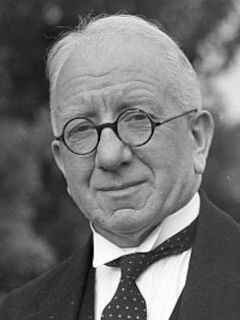
Seán Thomas O’Kelly (Irish: Seán Tomás Ó Ceallaigh) is elected the second President of Ireland on June 18, 1945. He serves two terms from 1945 to 1959. He is a member of Dáil Éireann from 1918 until his election as President. During this time, he serves as Minister for Local Government and Public Health (1932–1939) and Minister for Finance (1939–1945). He serves as Vice-President of the Executive Council from 1932 until 1937 and is the first Tánaiste from 1937 until 1945.

O’Kelly is born on August 25, 1882, on Capel Street in the north inner-city of Dublin. He joins the National Library of Ireland in 1898 as a junior assistant. That same year, he joins the Gaelic League, becoming a member of the governing body in 1910 and General Secretary in 1915.

In 1905 O’Kelly joins Sinn Féin who, at the time, supports a dual monarchy. He is an honorary secretary of the party from 1908 until 1925. In 1906 he is elected to Dublin Corporation, which is Dublin’s city council. He retains the seat for the Inns Quay Ward until 1924.

O’Kelly assists Patrick Pearse in preparing for the Easter Rising in 1916. After the rising, he is jailed, released, and jailed again. He escapes from detention at HM Prison Eastwood Park in Falfield, South Gloucestershire, England and returns to Ireland.

O’Kelly is elected Sinn Féin MP for Dublin College Green in the 1918 Irish general election. Along with other Sinn Féin MPs he refuses to take his seat in the British House of Commons. Instead, they set up an Irish parliament, called Dáil Éireann, in Dublin. O’Kelly is Ceann Comhairle (Chairman) of the First Dáil. He is the Irish Republic’s envoy to the post-World War I peace treaty negotiations at the Palace of Versailles, but the other countries refuse to allow him to speak as they do not recognise the Irish Republic.

O’Kelly is a close friend of Éamon de Valera, and both he and de Valera oppose the Anglo-Irish Treaty of December 1921. When de Valera resigns as President of the Irish Republic on January 6, 1922, O’Kelly returns from Paris to try to persuade de Valera to return to the presidency but de Valera orders him to return to Paris.

During the Irish Civil War, O’Kelly is jailed until December 1923. Afterwards he spends the next two years as a Sinn Féin envoy to the United States.

In 1926 when de Valera leaves Sinn Féin to found his own republican party, Fianna Fáil, O’Kelly follows him, becoming one of the party’s founding members. In 1932, when de Valera is appointed President of the Executive Council of the Irish Free State, he makes O’Kelly the Minister for Local Government and Public Health. He often tries to publicly humiliate the Governor-General of the Irish Free State, James McNeill, which damages O’Kelly’s reputation and image, particularly when the campaign backfires.

In 1938, many believe that de Valera wants to make O’Kelly the Fianna Fáil choice to become President of Ireland, under the new Irish constitution, Bunreacht na hÉireann. When Lord Mayor of Dublin, Alfie Byrne, says he wants to be president there is an all-party agreement to nominate Douglas Hyde, a Protestant Irish Senator, Irish language enthusiast and founder of the Gaelic League. They believe Hyde to be the only person who might win an election against Alfie Byrne. O’Kelly is instead appointed Minister of Finance and helps create Central Bank in 1942.

O’Kelly leaves the cabinet when he is elected President of Ireland on June 18, 1945, in a popular vote of the people, defeating two other candidates. He is re-elected unopposed in 1952. During his second term he visits many nations in Europe and speaks before the United States Congress in 1959. He retires at the end of his second term in 1959, to be replaced by his old friend, Éamon de Valera. Following his retirement, he is described as a model president by the normally hostile newspaper, The Irish Times. Though controversial, he is widely seen as genuine and honest, but tactless.

O’Kelly’s strong Roman Catholic beliefs sometimes cause problems. Éamon de Valera often thinks that O’Kelly either deliberately or accidentally leaks information to the Knights of Saint Columbanus and the Church leaders. He ensures that his first state visit, following the creation of the Republic of Ireland in 1949, is to the Vatican City to meet Pope Pius XII. He accidentally reveals the Pope’s private views on communism. This angers the Pope and Joseph Stalin and is why he is not given the papal Supreme Order of Christ which is given to many Catholic heads of state.

O’Kelly dies in Blackrock, Dublin on November 23, 1966, at the age of 84, fifty years after the Easter Rising that first brought him to prominence. He is buried in Glasnevin Cemetery, Glasnevin, Dublin.


Leave a comment

Formation of the Sinn Féin League

The nationalist groups, Cumann na nGaedheal and the Dungannon Clubs, combine to form the Sinn Féin League on April 21, 1907.

The ideas that lead to Sinn Féin are first propounded by the United Irishman newspaper and its editor, Arthur Griffith. An article by Griffith in that paper in March 1900 calls for the creation of an association to bring together the disparate Irish nationalist groups of the time and, as a result, Cumann na nGaedheal is formed at the end of 1900. Griffith first puts forward his proposal for the abstention of Irish members of parliament (MP) from the Parliament of the United Kingdom at the 1902 Cumann na nGaedheal convention. A second organisation, the National Council, is formed in 1903 by Maud Gonne and others, including Griffith, on the occasion of the visit of King Edward VII to Dublin. Its purpose is to lobby Dublin Corporation to refrain from presenting an address to the king. The motion to present an address is duly defeated, but the National Council remains in existence as a pressure group with the aim of increasing nationalist representation on local councils.

Griffith elaborates his policy in a series of articles in the United Irishman in 1904, which outline how the policy of withdrawing from the imperial parliament and passive resistance had been successfully followed in Hungary, leading to the Austro-Hungarian Compromise of 1867 and the creation of a dual monarchy, and proposes that Irish MPs should follow the same course. These are published later that year in a booklet entitled The Resurrection of Hungary: A Parallel for Ireland. Also in 1904, Mary Ellen Butler, a friend of Griffith and cousin of Ulster Unionist Party leader Edward Carson, remarks in a conversation that his ideas are “the policy of Sinn Féin, in fact” and Griffith enthusiastically adopts the term. The phrase Sinn Féin (‘Ourselves’ or ‘We Ourselves’) had been in use since the 1880s as an expression of separatist thinking and was used as a slogan by the Gaelic League in the 1890s.

The first annual convention of the National Council on November 28, 1905, is notable for two things: the decision, by a majority vote (with Griffith dissenting), to open branches and organise on a national basis; and the presentation by Griffith of his ‘Hungarian’ policy, which is now called the Sinn Féin policy. This meeting is usually taken as the date of the foundation of the Sinn Féin party. In the meantime, a third organisation, the Dungannon Clubs, named after the Dungannon Convention of 1782, has been formed in Belfast by Bulmer Hobson, and it also considers itself to be part of ‘the Sinn Féin movement.’

By 1907, there is pressure on the three organisations to unite — especially from the United States, where John Devoy offers funding, but only to a unified party. The pressure increases when Charles Dolan, the Irish Parliamentary Party MP for North Leitrim, announces his intention to resign his seat and contest it on a Sinn Féin platform. On April 21, 1907, Cumann na nGaedheal and the Dungannon Clubs merge as the ‘Sinn Féin League.’ Negotiations continue until August when, at the National Council annual convention, the League and the National Council merge on terms favourable to Griffith. The resulting party is named Sinn Féin, and its foundation is backdated to the National Council convention of November 1905.

In the 1908 North Leitrim by-election, Sinn Féin secures 27% of the vote. Thereafter, both support and membership fall. Attendance is poor at the 1910 Ardfheis, and there is difficulty finding members willing to take seats on the executive. While some local councillors are elected running under the party banner in the 1911 local elections, by 1915 the party is, in the words of one of Griffith’s colleagues, “on the rocks,” and so insolvent financially that it cannot pay the rent on its headquarters in Harcourt Street in Dublin.

Following the Easter Rising in 1916, Sinn Féin grows in membership, with a reorganisation at its Ard Fheis in 1917. Its split in 1922 in response to the Anglo-Irish Treaty which leads to the Irish Civil War leads to the origins of Fianna Fáil and Fine Gael, the two parties which have since dominated Irish politics. Another split in the remaining Sinn Féin organisation in the early years of the Troubles in 1970 leads to the Sinn Féin of today, which is a republican, left-wing nationalist and secular party.

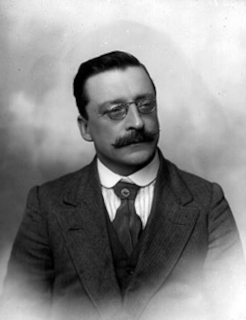
(Pictured: Arthur Griffith, founder (1905) and third president (1911-17) of Sinn Féin)


Leave a comment

Launch of Irish Language Radio Station RTÉ Raidió na Gaeltachta

RTÉ Raidió na Gaeltachta, abbreviated RnaG, an Irish language radio station owned and operated by Raidió Teilifís Éireann (RTÉ), goes on the air for the first time on April 2, 1972, launched by President Éamon de Valera. The station is available on FM in Ireland and via satellite and on the Internet. The station’s main headquarters are in Casla, County Galway with major studios also in Gweedore, County Donegal and Dingle, County Kerry.

After the Irish Free State is formed and the Irish Civil War is concluded, the new state sets up a single radio channel named 2RN in 1926, launched by Douglas Hyde. The channel, operating out of Dublin, largely serves the Anglosphere population and at best reaches as far as County Tipperary, a situation that does not change until more powerful transmitters are adopted in the 1930s at Athlone.

In 1943, de Valera, at the time serving as Taoiseach and whose wife Sinéad Ní Fhlannagáin is a keen Conradh na Gaeilge activist, promotes the idea of a Gaeltacht station, but there is no breakthrough. By this time, 2RN has become Radio Éireann and still only has one channel, with limited broadcasting hours, often in competition for listeners with BBC Radio and Radio Luxembourg.

In the 1950s, a general liberalisation and commercialisation, indeed Americanisation begins to occur in Ireland, as a push is made to move Ireland from a rural-agrarian society with a protectionist cultural policy towards a market economy basis, with supply and demand the primarily basis of public communications. In 1960, RTÉ is established, and direct control of communications moves from a government ministry position to a non-governmental RTÉ Director-General position, first filled by Edward Roth

In the late 1960s, a civil rights movement in the Gaeltacht emerges, seeking development and services for Irish speakers, including a radio service. Out of the Gluaiseacht Chearta Siabhialta na Gaeltachta‘s advocacy comes the pirate radio station Saor Raidió Chonamara in 1970. This sets the subsequent discourse for Irish language and Gaeltacht issues as a civil rights and minority rights imperative.

Gerry Collins, the Minister for Posts and Telegraphs, announces in Dáil Éireann in February 1971 that a new radio station for the Gaeltacht will be created. Raidió na Gaeltachta begins broadcasting at 3:00 PM on April 2, 1972, as part of an Easter Sunday programming. During the very first broadcast, the main station at Casla, County Galway is not yet finished and the studios in County Kerry and County Donegal are still under construction, so the broadcast originates from Galway. The first Ceannaire (Controller) Pádraic Ó Raghallaigh opens the show, which is followed by a recording from President Éamon de Valera. A recording of Seán Ó Riada‘s Irish language Mass, Ceol an Aifrinn, from the Seipéal Mhic Dara at Carraroe is also played.

At foundation, the station begins with a staff of seven, including six former teachers and a businessman, and broadcasts for only two hours a day and is only available in or near the three largest Gaeltacht districts. The local studio at Derrybeg in Gweedore, County Donegal aids the native Irish music scene there. In the 1970s, Raidió na Gaeltachta gives early coverage to Clannad and Mairéad Ní Mhaonaigh, later the singer for Altan. These groups gain popularity not only in Ireland, but on the international stage, selling millions of records during the 1980s especially. The station is dedicated to bringing the listener general news, both national and international, as well as Gaelic sports coverage and more localised affairs of significance to the community in the Gaeltacht.

For many years RnaG is the only Irish language broadcaster in the country. In recent years it has been joined by a television service, Telefís na Gaeilge (TG4), and by regional community radio stations Raidió na Life in Dublin, Raidió Fáilte in Belfast, and Raidió Rí-Rá.


Leave a comment

Death of Margaret Emmeline Dobbs, Scholar & Playwright

Margaret Emmeline Dobbs, Irish scholar and playwright best known for her work to preserve the Irish language, dies in Cushendall, County Antrim, Northern Ireland on January 2, 1962.

Dobbs is born in County Antrim on November 19, 1871 to barrister Conway Edward Dobbs who is Justice of the Peace for County Antrim, High Sheriff for Carrickfergus in 1875 and High Sheriff for County Louth in 1882. Her mother is Sarah Mulholland, daughter of St. Clair Kelvin Mulholland of Eglantine, County Down. The family spends time living in Dublin where Dobbs is born. She attempts to learn Irish, however, when her father dies in 1898 her mother moves the family back to Glenariff.

Dobbs is interested in learning Irish and finds it easier to learn in County Donegal where it is still spoken. Her first teacher is Hugh Flaitile. She attends the Irish College at Cloughaneely in the Donegal Gaeltacht. She brings the idea of promoting the language to the Glens of Antrim and her circle of friends. She is one of the small number of Protestant women interested in the Gaelic revival.

The year 1904 sees the “Great Feis” in Antrim and Dobbs is a founder member of the Feis na nGleann committee and later a tireless literary secretary. In 1946, the Feis committee decides to honour her by presenting her with an illuminated address. It can be seen today at Portnagolan House with its stained glass windows commemorating a great Irishwoman. During her speech she says, “Ireland is a closed book to those who do not know her language. No one can know Ireland properly until one knows the language. Her treasures are hidden as a book unopened. Open the book and learn to love your language.”

Dobbs writes seven plays, published by Dundalgan Press in 1920, though only three are actually performed. The Doctor and Mrs. McAuley wins the Warden trophy for one-act plays at the Belfast festival in 1913. Her plays, however, are generally not a success and after 1920 she never writes another. She continues to work on historical and archaeological studies and her articles are published in the Ulster Journal of Archaeology, in a German magazine for Celtic studies, in the French Revue Celtique and in the Irish magazine Ériu.

Roger Casement is a good friend and although Dobbs never makes her political opinions known she contributes to his defence costs when he is accused of treason. Although her political views are not clearly known, Dobbs has been a member of the Gaelic League and in the executive of Cumann na mBan.

Dobbs dies at her home, Portnagolan House, Cushendall, on January 2, 1962.