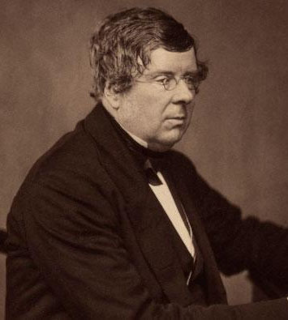
William Parsons, 3rd Earl of Rosse, Anglo-Irishastronomer, naturalist, and engineer, is born in York, England on June 17, 1800. He is President of the Royal Society (UK), the most important association of naturalists in the world in the nineteenth century. He builds several giant telescopes. His 72-inch telescope, built in 1845 and colloquially known as the “Leviathan of Parsonstown,” is the world’s largest telescope, in terms of aperture size, until the early 20th century. From April 1807 until February 1841, he is styled as Baron Oxmantown.
Parsons marries Mary Field, daughter of John Wilmer Field, on April 14, 1836. They have thirteen children, of which four sons survive to adulthood: Lawrence, 4th Earl of Rosse, Rev. Randal Parsons, the Hon. Richard Clere Parsons, and the Hon. Sir Charles Algernon Parsons.
During the 1840s, Parsons has the Leviathan of Parsonstown built, a 72-inch telescope at Birr Castle, Parsonstown, County Offaly. He has to invent many of the techniques he uses for constructing the Leviathan, both because its size is without precedent and because earlier telescope builders had guarded their secrets or had not published their methods. Details of the metal, casting, grinding and polishing of the 3-ton ‘speculum’ are presented in 1844 at the Belfast Natural History Society. His telescope is considered a marvelous technical and architectural achievement, and images of it are circulated widely within the British commonwealth. Building of the Leviathan begins in 1842, and it is first used in 1845, with regular use waiting another two years due to the Great Famine. Using this telescope, he sees and catalogues a large number of nebulae, including a number that would later be recognised as galaxies.
Parsons performs astronomical studies and discovers the spiral nature of some nebulas, today known to be spiral galaxies. His telescope Leviathan is the first to reveal the spiral structure of M51, a galaxy nicknamed later as the “Whirlpool Galaxy,” and his drawings of it closely resemble modern photographs.
Parsons’s son publishes his father’s findings, including the discovery of 226 New General Catalogue of Nebulae and Clusters of Stars (NGC) objects in the publication Observations of Nebulae and Clusters of Stars Made With the Six-foot and Three-foot Reflectors at Birr Castle From the Year 1848 up to the Year 1878, Scientific Transactions of the Royal Dublin Society Vol. II, 1878.
Scott is the third son of Thomas Scott of Scottsborough, County Tipperary, and his wife Rachel, daughter of Mark Prim of Johnswell, County Kilkenny. His parents are cousins, being two of the grandchildren of Nicholas Purcell, 13th Baron of Loughmoe. His elder brother is the uncle of Bernard Phelan, who establishes Château Phélan Ségur, and Dean John Scott, who first plants the gardens open to the public at Ballyin, County Waterford and marries a niece of Scott’s political ally, Henry Grattan.
While at Kilkenny College, Scott stands up to the tormentor of a boy named Hugh Carleton, who grows up to be Viscount Carleton of Clare. They become firm friends, and Carleton’s father, then known as the “King of Cork,” due to his wealth and influence, invites him to their home and becomes his patron. In 1756, Carleton sends both the young men off, with equal allowances, to study at Trinity College, Dublin and then the Middle Temple in London. On being called to the Irish bar in 1765, Scott’s eloquence secures him a position that enables him to pay £300 a year to his patron, Francis Carleton, who through a series of disappointments has been declared bankrupt. He continues to gratefully support his patron until Hugh Carleton is financially able to insist that he take up the payments to his father. Scott in later life turns against Carleton, describing him in his diary as a “worthless wretch.”
Admitted to King’s Inns in 1765, Scott is entitled to practice as a barrister. In 1769 he is elected as the Member of Parliament for Mullingar, a seat he holds until 1783. The following year he is made a King’s Counsel (KC). In 1772 he is Counsel to the Board of Revenue and in 1774 is appointed Solicitor-General for Ireland (1774–1777). Three years later, he is elected a Privy Councillor and Attorney-General for Ireland (1774–1783). He is dismissed from the latter position in 1782 for refusing to acknowledge the right of England to legislate for Ireland. In 1775, he is awarded an honorary degree of Doctor of Law (LL.D.) by Trinity College, Dublin. He holds the office of Prime Serjeant-at-Law of Ireland between 1777 and 1782. He is Clerk of the Pleas of the Court of the Exchequer in 1783 and is elected Member of Parliament for Portarlington between 1783 and 1784.
In 1784, Scott is created 1st Baron Earlsfort of Lisson-Earl, County Tipperary, following his appointment to Lord Chief Justice of the King’s Bench. In 1789 he is created 1st Viscount Clonmel, of Clonmel, County Tipperary and in 1793 is created 1st Earl of Clonmel. By the 1790s he has an annual income of £20,000. Due to heavy drinking and overeating he becomes seriously overweight, and this no doubt contributes to his early death, although his diary shows that he makes frequent efforts to live a more temperate life. Drinking also produces the red face which earns him the nickname “Copper-faced Jack.”
In 1768, Scott marries the widowed Catherine Anna Maria Roe, daughter of Thomas Mathew, of Earl Landaff and sister of Francis Mathew, 1st Earl Landaff. She dies in 1771. In 1779, he marries Margaret Lawless, daughter and eventual heiress of banker Patrick Lawless of Dublin. He leaves a son and heir and a daughter by his second marriage.
Scott lives at Clonmell House, 17 Harcourt Street, Dublin. He also keeps a country residence, Temple Hill House, in County Dublin. Clonmell Street in Dublin is named in his honour, as is Earlsfort Terrace, also in Dublin. He also gains a reputation of being an experienced duelist.
In 1797, in the last conversation he would have with his wife’s cousin, Valentine Lawless, 2nd Baron Cloncurry, he exclaims, “My dear Val, I have been a fortunate man in life. I am a Chief Justice and an Earl; but, believe me, I would rather be beginning the world as a young (chimney) sweep.” He dies at the age of 58 the following year on May 23, 1798.
(Pictured: John Scott, 1st Earl of Clonmell, oil on canvas by Gilbert Charles Stuart)
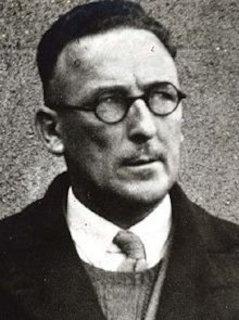
Born on November 3, 1896, in County Roscommon, O’Donovan is an explosives expert and reputedly invents the “Irish War Flour” (named after the flour sacks in which it was smuggled into Dublin aboard ships) and “Irish Cheddar” devices. He subsequently becomes IRA Director of Chemicals in 1921. During the Irish War of Independence, he is imprisoned in Mountjoy Prison and Kilmainham Gaol and later interned in Newbridge, County Kildare.
In addition to fighting in the Irish War of Independence, O’Donovan fights on the Anti-Treaty side during the Irish Civil War. In 1930 he becomes manager at Electricity Supply Board (ESB) headquarters in Dublin.
In August 1938, at the request of IRA Chief of StaffSeán Russell, O’Donovan writes the S-Plan, a bombing campaign targeting the United Kingdom. In his unpublished memoirs he writes that he “conducted the entire training of cadre units, was responsible for all but locally derived intelligence, carried out small pieces of research and, in general, controlled the whole explosives and munitions end” of S-Plan. During this time, he and Russell are the only GHQ members of the old IRA still in the organisation.
As “Agent V-Held”, O’Donovan visits Germany three times in 1939 on behalf of the IRA. On February 28 he negotiates an arms and radio equipment delivery at the Abwehrstelle in Hamburg. On April 26 he concludes a new arms deal with the Abwehrstelle and establishes, with the help of a Breton, a secret courier connection to Ireland via France. On August 23, he receives the last instructions for the event of war.
On February 9, 1940, Abwehr II agent Ernst Weber-Drohl lands at Killala Bay, County Sligo aboard U-37. He is equipped with an ‘Ufa’ transmitter, cash, and instructions for O’Donovan, who by this time is the chief IRA contact for Abwehr I/II. The transmitter is lost upon landing, but when Weber-Drohl reaches O’Donovan at Shankill, Killiney, County Dublin, he is able to deliver new transmission codes, $14,450 in cash, and a message from “Pfalzgraf Section” asking that the IRA concentrate its S-Plan attacks on military rather than civilian targets.
O’Donovan becomes increasingly enamoured of Nazi ideology during this time, and visits Germany three times. In 1942 he writes an article arguing that Ireland’s future lay in an alliance with a victorious Germany and attacks Britain and the United States for being “centres of Freemasonry, international financial control and Jewry.” Even long after the pact with the Germans falls apart, he continues to express his sympathy for the Nazi regime. His son, Gerard O’Donovan, recalls that every Saturday night a visitor would come to the family home and send messages to Germany.
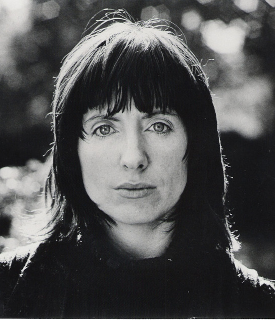
Maude is reared in the Irish language. Her mother, Máire Nic an Iomaire, is a school teacher from Ballyfinglas. She receives her primary education from her mother on a small island off the coast of Rosmuc, Connemara. Her father, John Maude, is from Cill Bhriocáin in Rosmuc. She attends University College Galway, where she excels in French. She becomes a teacher, working in schools in Counties Kildare, Mayo, and Wicklow. She also works in other capacities in London and Dublin.
Maude is widely praised as an actor. She acts at the University, at An Taibhdhearc in Galway and the Damer in Dublin, and is particularly successful in a production of An Triail by Máiréad Ní Ghráda in 1964, in which she plays the protagonist of the story, Máire Ní Chathasaigh. She herself is a playwright and co-authors An Lasair Choille with poet Michael Hartnett.
Maude begins writing poetry in Irish in secondary school and develops a lyrical style closely attuned to the rhythms of the voice. Though not conventionally religious, she says in an interview that she has a deep interest in the spiritual and that this leaves its mark on her poetry. She is noted as a highly effective reciter of her own verse. Géibheann is the best-known of her poems, and is studied at Leaving Certificate Higher Level Irish in the Republic of Ireland. A posthumous collected edition, Caitlín Maude, Dánta, is published in 1984, Caitlín Maude: file in 1985 in Ireland and Italy, and Coiscéim in 1985.
As a member of the Dublin Irish-speaking community Maude is active in many campaigns, including the establishment of the Gaelscoil (Irish-medium primary school) Scoil Santain in Tallaght, County Dublin.
Maude is a sean-nós singer of distinction. She makes one album in this genre, Caitlín, released in 1975 on Gael Linn Records and now available as a CD. It contains both traditional songs and a selection of her poetry.
Maude marries Cathal Ó Luain in 1969. They have one child, their son Caomhán.
Maude dies of complications from cancer at the age of 41 on June 6, 1982. She is buried in Bohernabreena graveyard overlooking the city on the Dublin Mountains.
In 2001, a new writers’ centre in Galway, Ionad Schribhneoiri Chaitlin Maude, Gaillimh, is named in her memory.
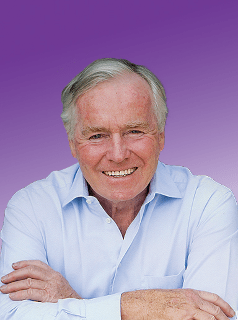
Quinn founds the national supermarket chain Superquinn (originally Quinn’s Supermarkets), of which he remains non-executive president for some years after his family sells out their interest in August 2005 for over €400 million. Superquinn is known for its focus on customer service and pioneers a number of innovations, including Ireland’s first supermarket loyalty card in 1993, SuperClub. It also introduces self-scanning of goods by customers in a number of its outlets. Superquinn becomes the first supermarket in the world to guarantee the absolute traceability of all its beef from pasture to plate, using DNA TraceBack, a system developed at Trinity College, Dublin by IdentiGEN.
Quinn becomes the chairman of the Interim Board for Posts and serves as chairman of its successor An Post (the Irish postal administration) until 1989. He also serves on several other public authorities and boards. From 1993 to 1998, he chairs the steering committee which oversees the development of the Leaving Certificate Applied. In 2006, he is appointed an Adjunct Professor in Marketing at National University of Ireland Galway. He is also chairman of Springboard Ireland.
Quinn is a former President of EuroCommerce, the Brussels-based organisation which represents the retail, wholesale and international trade sectors in Europe. He also serves on the board of directors of CIES, the Food Business Forum based in Paris, as well as the American-based Food Marketing Institute.
In 2009, Quinn works with independent shops and helps them to revamp, modernise and stave off stiff competition from multi-national retailers. It airs as RTÉ‘s six-part television series, Feargal Quinn’s Retail Therapy. A second series airs in 2011, and a third series airs in 2012. In 2011, he fronts RTÉ’s Local Heroes campaign in Drogheda, County Louth, which is an assembled team of experts to kick-start the local economy. It airs as RTÉ One‘s six-part television series, Local Heroes – A Town Fights Back.
Quinn is first elected as a senator in 1993 from the National University of Ireland constituency and is re-elected in 1997, 2002, 2007 and 2011. He is a member of the Joint Oireachtas Committee on European Affairs, the Joint Committee on Finance and Public Service and is an Oireachtas member of the National Economic and Social Forum, along with the Joint Committee on Jobs and Innovation.
Quinn is one of the co-founders and is a driving force behind Democracy Matters – a civil society group that is formed to oppose the Government’s plans to abolish Seanad Éireann. In May 2013, with Senators Katherine Zappone and Mary Ann O’Brien, he introduces the Seanad Bill 2013 to reform the system of electing the elected members of Seanad Éireann (as provided for in Article 18.10 of the Constitution of Ireland) through a one-person, one vote franchise. The Seanad Bill 2013 succeeds in being passed at Second Stage in the Seanad. During the Seanad abolition referendum campaign, the Bill demonstrates to the electorate, in a very palpable way, that reform of the Seanad is achievable if they vote for its retention. In a referendum held in October 2013 on the Abolition of Seanad Éireann, the people vote to retain the Seanad by 51.7%.
In 2014, Quinn reveals that since being first elected to Seanad Éireann, he has donated his entire salary to charity and in more recent years he has refused to accept any salary. In March 2015, he opposes the Marriage Equality bill in the Seanad, and votes ‘No’ in the referendum. He serves as Chairman of the Independent Alliance. He does not contest the 2016 Seanad election.
Quinn dies peacefully at his home in Howth, County Dublin, on April 24, 2019, following a short illness. His funeral Mass takes place at St. Fintan’s Church in Sutton, Dublin. In attendance is PresidentMichael D. Higgins, a representative for TaoiseachLeo Varadkar, Minister for Children Katherine Zappone, Senator Michael McDowell, and a host of other current and former politicians, business figures, and past colleagues of the “Superquinn family.” Fittingly, the coffin is carried from the church to the tune of Frank Sinatra’s “My Way.”
Margaret Hassan, Irish-born aid worker also known as “Madam Margaret,” is born Margaret Fitzsimons in Dalkey, County Dublin on April 18, 1945. She works in Iraq for many years until she is abducted and murdered by unidentified kidnappers in Iraq in 2004. Her remains have never been recovered.
Soon after the end of World War II Hassan’s family moves to London, where she spends most of her early life and where her younger siblings are born. At the age of 27, she marries Tahseen Ali Hassan, a 29-year-old Iraqi studying engineering in the United Kingdom. She moves to Iraq with him in 1972, where she begins work with the British Council of Baghdad, teaching English. Eventually she learns Arabic and becomes an Iraqi citizen.
During the early 1980s, Hassan becomes the assistant director of studies at the British Council, later becoming director. Meanwhile, her husband works as an economist. She remains in Baghdad during the 1991 Gulf War, although the British Council suspends operations in Iraq, and she is left jobless at the end of it.
Hassan joins humanitarian relief organisation CARE International in 1991. Sanitation, health, and nutrition become major concerns in the sanctioned Iraq. She is crucially involved in bringing leukemia medicine to child cancer victims in Iraq in 1998. She becomes a vocal critic of the United Nations restrictions. She is opposed to the United States invasion of Iraq in 2003, arguing that the Iraqis are already “living through a terrible emergency. They do not have the resources to withstand an additional crisis brought about by military action.”
By 2004, Hassan is head of Iraqi operations for CARE. Well known in many of Baghdad’s slums and other cities, she is especially interested in Iraq’s young people, whom she calls “the lost generation.” Her presence draws large crowds of locals.
Hassan is kidnapped in Baghdad on October 19, 2004, and is killed some weeks later on November 8. In a video released of her in captivity she pleads for help and begs British Prime MinisterTony Blair to remove British troops from Iraq. She adds that she does not “want to die like Mr. Bigley,” a reference to Kenneth Bigley, who had been executed in Iraq only weeks earlier.
Patients of an Iraqi hospital take to the streets in protest against the hostage takers’ actions. On October 25, between 100 and 200 Iraqis protest outside CARE’s offices in Baghdad, demanding her release. Prominent elements of the Iraqi insurgency and Iraqi political figures condemn the kidnapping and call for her release. On November 2, Al Jazeera reports that the kidnappers threatened to hand her over to the group led by Abu Musab al-Zarqawi and who is responsible for the execution of Bigley. On November 6, a statement purportedly from al-Zarqawi appears on an Islamist website calling for the release of Hassan unless the kidnappers have information she is aligned with the invading coalition. The statement cannot be authenticated and Hassan’s whereabouts in the video are unknown.
On 15 November, U.S. Marines in Fallujah uncover the body of an unidentified blonde- or grey-haired woman with her legs and arms cut off and throat slit. The body cannot be immediately identified, but is thought unlikely to be Hassan, who has brown hair. There is one other western woman known missing in Iraq at the time the body is discovered, Teresa Borcz Khalifa, a Polish-born long-time Iraqi resident. Khalifa is released by her hostage takers on November 20.
On November 16, CNN reports that CARE has issued a statement indicating that the organisation is aware of a videotape showing Hassan’s execution. Al-Jazeera reports that it has received a tape showing Hassan’s murder but is unable to confirm its authenticity. The video shows Hassan being shot with a handgun by a masked man. It is not known who is responsible for Hassan’s abduction and murder. The group holding her never identifies itself in the hostage videos.
CARE International suspends operations in Iraq because of Hassan’s kidnapping. At least eight other women kidnapped by insurgents during the conflict are released unharmed by their captors. It is unclear why Hassan, who was opposed to the war, lived in Iraq for many years, held Iraqi citizenship, was married to an Arab Muslim and spoke fluent Arabic was killed.
On May 1, 2005, three men are questioned by Iraqi police in connection with the murder. On June 5, 2006, news reports emerge that an Iraqi man by the name of Mustafa Salman al-Jubouri has been sentenced to life imprisonment for “aiding and abetting the kidnappers” but two other men are acquitted. Al-Jubouri appeals this sentence and is given a shorter imprisonment.
An Iraqi man named Ali Lutfi Jassar al-Rawi, also known as Abu Rasha, an architect from Baghdad, is arrested by Iraqi and U.S. forces in 2008 after contacting the British Embassy in Baghdad and attempting to extort 1 million dollars in return for disclosing the location of Hassan’s body. Though Jassar signs statements confessing to the charges, he pleads not guilty, stating he was forced to sign them after receiving beatings and electrical shocks during questioning.
On June 2, 2009, the Press Association reports that Jassar is given a life sentence by Baghdad’s Central Criminal Court for being involved in Hassan’s abduction and murder, and for attempting to blackmail the British Embassy. Hassan’s family welcomes the court’s decision but pleads with Jassar to tell them where her body is so they can return her to Britain for burial. On July 14, 2010, a day before Jassar is due to appear in court for retrial, it is reported that he could not be located in the prison facility where he was being held. He had been missing for a month.
Sir James Peter Comyn, Irish-born barrister and English High Court judge, is born at Beaufield House, Stillorgan, County Dublin on March 8, 1921. Considered by many to be “the finest all-round advocate at the English bar”, he is appointed to the High Court of Justice in 1978, serving on the bench until his retirement in 1985.
Comyn is the son of Nationalist barrister James Comyn KC and of Mary Comyn. Through his father he is the nephew of the barrister Michael Comyn KC. Both his father and uncle had been political and legal advisers to Éamon de Valera, who at one point uses Beaufield House as a safe house. However, the Comyn brothers have a falling out with de Valera shortly before he comes to power in 1932, and Michael Comyn is passed over as Attorney General of the Irish Free State. As a result, James Comyn, who is then attending Belvedere College in Dublin, is sent by his father to attend The Oratory School in England. He spends six months as a trainee at The Irish Times under the editor R. M. “Bertie” Smyllie, but abandons journalism after a joke he added to an obituary is printed in the paper, leading to his demotion to the racing department.
Comyn is called to the English bar by the Inner Temple in 1942, the Irish bar in 1947, and the Hong Kong bar in 1969. In 1944, he begins his pupillage with Edward Holroyd Pearce KC, later a law lord, and joins his chambers at Fountain Court. He practises in London and on the Western circuit, supplementing his earnings by teaching banking, a subject of which he knows nothing. On one occasion, he rises in Lambeth County court to cross-examine a female defendant in an eviction case. Just as he begins by saying “Madam,” the defendant opens her bag, takes out a dead cat, and throws it at him. The judge’s reaction is to tell the defendant, “Madam, if you do that again, I’ll commit you.” Comyn wins the case.
Comyn takes silk in 1961, and acquires a large practice as a senior, appearing in many high-profile cases. In 1964, he wins damages for libel for the former safe-breaker Alfred George Hinds against a Scotland Yard inspector by convincing the jury that Hinds is in fact innocent. In 1970, he successfully defends the Labour MP Will Owen, who is accused of providing information to the Czechoslovak intelligence services. In 1975, he defeats the government’s attempt to obtain an injunction against the publication of the diaries of former minister Richard Crossman.
Comyn is Recorder of Andover between 1964 and 1971 (honorary life recorder from 1972), commissioner of assize for the Western Circuit in 1971, and a Recorder of the Crown Court between 1972 and 1977. He is elected a bencher of the Inner Temple in 1968 and serves as chairman of the Bar council from 1973 to 1974.
Having refused a previous invitation by Quintin Hogg, Baron Hailsham of St. Marylebone to join the bench, Comyn is again nominated by Elwyn Jones, Baron Elwyn-Jones, in 1977, and is appointed a High Court judge in 1978, receiving the customary knighthood upon his appointment. Initially assigned to the Family Division, he does not take to the work and is reassigned to the Queen’s Bench Division in 1979. He has a reputation for leniency in sentencing, first acquired as Recorder of Andover. In 1980–81, he presides over an unsuccessful libel action by a member of the Unification Church, colloquially known as the Moonies, against the Daily Mail, the longest libel trial in England up to that time. His Irish background makes him the target of Irish Republican Army (IRA) action, and in 1981 the Provisional IRA burns his house in Tara.
Recurring bouts of depression lead to Comyn’s early retirement, on grounds of ill health, in 1985. In retirement, he divides his time between England and Ireland, whose citizenship he has retained. He writes a number of books, including memoirs, light verse, and books on famous trials. He also breeds Friesian cattle. He dies in Navan, County Meath on January 5, 1997, at age 75.
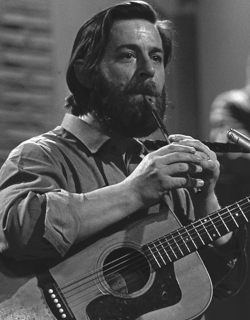
Although born in Dublin, Bourke lives most of his life in Tibradden, County Dublin. His father, a doctor, is in practice in the city. The children have an Irish-speaking nanny. His early exposure to Irish continues throughout his education, attending Colaiste Mhuire, Parnell Square, Dublin. He later attends University College Dublin for a course in Agricultural Science. He does not take his degree but always retains an interest in farming.
After leaving university Bourke meets two of his future bandmates in The Dubliners, Ronnie Drew and Barney McKenna, who invite him to join their sessions in O’Donoghue’s Pub where he plays tin whistle, mouth organ and guitar, and sings. Luke Kelly, who had been singing around the clubs in England, returns to Dublin and joins them, with the four gaining local popularity. Taking the name The Dubliners, the group puts together the first folk concert of its kind in Dublin. The concert is a success, then a theatrical production called “A Ballad Tour of Ireland” is staged at the Gate Theatre shortly afterwards. In 1964 fiddle player John Sheahan joins the band and this becomes known as the original Dubliners line-up.
Bourke is responsible for bringing a Gaelic element to The Dubliners’ music with songs such as “Peggy Lettermore” and “Sé Fáth Mo Bhuartha” being performed in the Irish language. He also sings a number of the group’s more lighthearted and humorous numbers such as “Jar of Porter,” “The Dublin Fusiliers,” “The Limerick Rake,” “Mrs. McGrath,” “Darby O’Leary,” “All For Me Grog” and “The Ballad of Ronnie’s Mare,” as well as patriotic songs such as “Roddy McCorley,” “The Enniskillen Dragoons,” “Take It Down From The Mast” and “Henry Joy.”
On April 5, 1974 The Dubliners travel to Eastbourne where they are to appear in concert. Kelly is worried by the way Bourke keeps moving his head about, as if trying to alleviate increasing pain. Four minutes into the second half, it is decided he cannot continue with the show. Kelly insists that a doctor should be phoned and instructs to await their return to the Irish Club at Eaton Square. The roadie for the trip, John Corry, thinks that it is better to drive straight to St. George’s Hospital in London, where the doctors diagnose a brain aneurysm. He is transferred to the Atkinson Morley Hospital in Wimbledon, while doctors wait for his wife to return from a trip to Ghana, to get her signature before operating. She is told that there is danger of further haemorrhaging. He is operated on at the earliest opportunity. The bleeding begins again while he is on the table which means that they cannot repair the damage, only staunch the bleeding. This leaves him paralysed down his left side and confused as to where he is and what has happened.
Bourke receives intensive therapy, attending a clinic in Dún Laoghaire, County Dublin. He is heartened by his progress and insists on rejoining The Dubliners on their next tour of the Continent in November that year.
Bourke’s continued insistence that he is fit enough to join them on the forthcoming German tour causes them considerable disquiet. They prefer he ease himself back to work, with a few small shows in Ireland. The tour gradually begins to take its toll on him, and it is decided that for the sake of his health he should return home. He flies from Brussels to Dublin.
Bourke makes his last public appearance on Ireland’s RTÉ One during The Late Late Show‘s tribute to The Dubliners in 1987. Despite his lingering paralysis he recites “The Lament for Brendan Behan” after which everyone in the studio, led by Ronnie Drew, sing “The Auld Triangle.”
Bourke dies on May 10, 1988, after a long illness. From 1974 until his death, he is continued to be paid by the band. A fifth member of the group is not recruited until after his death.
Martin is born Marie Helena Martin in Glenageary, County Dublin, on April 24, 1892, the second of twelve children of Thomas Martin and Mary Moore. In 1904, while attending classes for her First Communion, she contracts rheumatic fever, which is to affect her heart permanently. Tragedy hits the family on St. Patrick’s Day 1907, as her father is killed in what is presumed to be an accidental shooting. Later her mother sends her to schools in Scotland, England and Germany, all of which she leaves as quickly as possible.
Upon the outbreak of World War I, Martin joins the Voluntary Aid Detachment, a division of the Red Cross. In October 1915, she is assigned to work in Malta. After learning that her brother had been killed in the campaign of Gallipoli, she returns to Ireland in April 1916. She is called to serve again a month later at Neufchâtel-Hardelot, France, in a field hospital near the front lines of the Battle of the Somme. This assignment lasts until December of that year, followed by a brief stint in Leeds, England. After the war, she is called upon help in nursing victims of the Spanish flu, which had begun to devastate populations around the world.
In 1917 a new curate comes to the parish which Martin attends, the Reverend Thomas Roynane, to whom she turns for guidance. Roynane inspires her with an interest in pursuing missionary work. She goes to England in January 1919 for further medical training. Her mother’s severe illness the following year interrupts her training, however, as she has to return home to care for her.
In April 1920, Roynane arranges for Martin to meet the new bishop, and she volunteers her services as a lay missionary to work in his jurisdiction in southern Nigeria. Agnes Ryan, a local schoolteacher now in her fourth year of medical training, advises her that she wishes to join her in the African mission.
In April 1921, Martin and Ryan leave Ireland for Nigeria. They set sail for Africa from Liverpool on May 25 and arrive in the port of Calabar on June 14. They arrive prepared to provide medical care, only to learn that they are expected to run a school which had been staffed by French Religious Sisters until two years prior. To give the parents and children of the school a sense of continuity, the two women are addressed as “Sisters” by the priests and treated as if they are already members of an established religious institute.
By October, Ryan contracts malaria and develops a heart condition, which require her return to Ireland. Forced to fill in as Acting Headmistress, Martin meets with the bishop in his headquarters at Onitsha and is advised that caution is needed in providing medical care to the people of her mission, so as not to provoke objections by other missionaries in the region. Upon her return to Calabar, she makes a 30-day retreat.
In April 1922 the bishop travels there and holds two weeks of consultations with Martin, Roynane and another missioner, during which the Rule and Constitutions of a new congregation are hammered out, with the understanding that Martin will be the foundress. Martin does not see the bishop again for two years. During this time, she learns that the bishop is working to establish the new congregation in Ireland, a direction she feels will focus the congregation on teaching rather than the medical care. An Irish Sister of Charity, Sister Magdalen Walker, is released from her congregation to help in this new work and arrives in Calabar in October 1923.
The following January Martin is directed by the bishop to return to Ireland to make a canonicalnovitiate. In March she starts her time of postulancy, prior to admission to the novitiate year. After 18 months, however, upon completion of the novitiate year she leaves the community, as the training provided by the Dominican Sisters has not been oriented toward medical care.
In this formal step of forming the new congregation, Martin encounters the prohibition in the new Code of Canon Law of 1917 of the Catholic Church against members of religious orders practicing medicine. Facing this barrier, she still feels a call to consecrated life and considers following the example of the recently canonizedCarmelite nun, Thérèse of Lisieux. In 1927 she applies to the community of that Order in Dublin, but her application is declined, solely on the decision of the prioress who feels that Martin is called to a different path in life. She then goes through a new period of confusion until she is requested to consider again serving the missions. She then forms a small group of women to provide the domestic service for the preparatory school run by the BenedictinemonksGlenstal Abbey.
In 1933, following a long period of illness, Martin approaches the new Apostolic Nuncio to Ireland, ArchbishopPaschal Robinson. He is supportive of her goals and encourages her continually over the next years. Finally, in February 1936, the Holy See lifts prohibition against Religious Sisters serving as doctors or midwives. She then seeks a diocese which will accept a new congregation, without success. In October of that same year, Antonio Riberi is named Apostolic Delegate in Africa, based in Kenya. He gives his support to having the congregation established in Calabar.
While still negotiating to purchase a house in Ireland as a local base, complicated by the fact that they are not yet a formal congregation, the small community sails for Nigeria at the end of 1936. Upon their arrival Martin suffers a heart attack and is hospitalized at Port Harcourt. It is there that she professes religious vows on April 4, 1937. With that the Medical Missionaries of Mary become established.
Martin’s health is always a source of concern, but she lives until 1975. Today the Medical Missionaries of Mary number some 400 women from 16 different nations, who serve in 14 different countries around the world.
Yeats is married to Gráinne Ni hEigeartaigh, a singer and Irish harpist. They have four children: daughters Caitríona (a concert harpist), Siobhán (a patents professional) and Síle (a broadcaster with RTÉ who also dies in 2007), and a son, Pádraig (an engineer).
Yeats dies on January 3, 2007, in St. Michael’s Hospital in Dún Laoghaire. His funeral service takes place in St. Patrick’s Church, Harbour Road, Dalkey, on January 8, 2007, followed by burial in Shanganagh Cemetery.





 seamus dubhghaill