seamus dubhghaill

Promoting Irish Culture and History from Little Rock, Arkansas, USA


Leave a comment

Birth of Pauline Flanagan, Stage & Television Actress

Pauline Flanagan, Irish-born actress who has a long career on stage, is born in Sligo, County Sligo, on June 29, 1925. She is best known in the United States for her role as Annie Colleary, on the television soap opera Ryan’s Hope in 1979 and again in 1981. She later returns to the show as Sister Mary Joel.

Flanagan is born to Patrick and Elizabeth (née Mulligan) Flanagan, who are strongly nationalist and republican, and support the Republican Anti-Treaty during the Irish Civil War, both serving as Lord Mayor of Sligo. Her paternal family, originally from County Fermanagh, are driven out by anti‐Catholic pogroms and resettle in Sligo, where her parents manage a retail business. She is good friends with fellow Irish actresses Joan O’Hara and Paddy Croft. She spends much of the early 1950s touring with Anew McMaster, where she meets Harold Pinter at the Gate’s Pinter Festival.

Flanagan appears in many Broadway plays, making her debut in 1957 in the first Main Stem production of Dylan Thomas‘s Under Milk Wood. She stars as Mrs. Grose in the 1976 Broadway revival of the William Archibald play The Innocents. She also appears on Broadway in Brian Friel‘s play Philadelphia, Here I Come! in 1994.

Flanagan also acts in Off-Broadway productions on several occasions with the Irish Repertory Theatre, including Harold Prince‘s Grandchild of Kings (1992), Seán O’Casey‘s Juno and the Paycock (1995). and Hugh Leonard‘s A Life (2001). For her performance in Grandchild of Kings, she receives the 1992 Outer Critics Circle Awards nomination for Best Actress. Other Off-Broadway work includes Yeats! A Celebration by William Butler Yeats.

Flanagan appears as Myra White in Hugh Leonard’s play Summer (1974), both in the original production at the Olney Theatre Center in Olney, Maryland, and at the Olympia Theatre in the Dublin Theatre Festival.

Flanagan is nominated for the 1982 Drama Desk Award for Outstanding Featured Actress in a Play for Medea in which she performs on Broadway in 1982.

In 1997, Flanagan wins the Barclays Theatre Awards for Best Actress in a Supporting Role for her role in Jennifer Johnston‘s The Desert Lullaby: A Play in Two Acts, at the Lyric Theatre, Belfast. The Barclays Theatre Awards are for outstanding regional theatre (including opera and dance) in the United Kingdom.

In 2001, Flanagan wins a Laurence Olivier Award for Best Actress in a Supporting Role, for her performance in Frank McGuinness‘s Dolly West’s Kitchen at The Old Vic in Waterloo, London.

A resident of Glen Rock, New Jersey, Flanagan dies at The Valley Hospital in Ridgewood, New Jersey, on June 28, 2003, one day before her 78th birthday, of heart failure following a battle with lung cancer. She is survived by her husband, George Vogel (whom she married in 1958), a sister, Maura McNally, and her daughters Melissa Brown and Jane Holtzen.


Leave a comment

Death of Alexander McCabe, Teacher, Revolutionary & Politician

Alexander McCabe (Irish: Alasdar Mac Cába), teacher, revolutionary, Sinn Féin politician, and founder of the Educational Building Society (EBS), dies in Dublin on May 31, 1972.

McCabe is born in Keash, County Sligo, on June 5, 1886. He is educated at Summerhill College, Sligo. He wins a scholarship to St. Patrick’s College of Education, Drumcondra, Dublin, and later obtains a diploma from University College Dublin (UCD). He is appointed headmaster of Drumnagranchy national school, County Sligo, in 1907. He joins the Irish Republican Brotherhood (IRB) in 1913.

McCabe is elected as a Sinn Féin MP for the South Sligo constituency at the 1918 Irish general election. In January 1919, Sinn Féin MPs refuse to recognise the Parliament of the United Kingdom and instead assemble at the Mansion House in Dublin as a revolutionary parliament called Dáil Éireann, though McCabe does not attend as he is in prison in Lincoln Gaol.

At the 1921 Irish elections, McCabe is re-elected for Sligo–Mayo East. He supports the Anglo-Irish Treaty and votes in favour of it. He is again re-elected for Sligo–Mayo East at the 1922 Irish general election, this time as pro-Treaty Sinn Féin Teachta Dála (TD). During the Treaty debate, he asserts that the counties of Ulster which comprise “Northern Ireland” can never be incorporated into an Irish Republic while the British Empire is what it is.

At the 1923 Irish general election, McCabe is elected as a Cumann na nGaedheal TD for Leitrim–Sligo. He resigns from Cumann na nGaedheal in 1924 because of dissatisfaction with government attitude to certain army officers and joins the National Party led by Joseph McGrath.

McCabe resigns his Dáil seat on October 30, 1924, along with several other TDs, and the resulting by-election on March 11, 1925, is won by the Cumann na nGaedheal candidate Martin Roddy. He does not stand for public office again and returns to his post as a schoolteacher.

In the 1930s McCabe is involved with the short-lived but widely followed Irish Christian Front (ICF), serving as the organisation’s secretary and announcing its creation to the public on August 22, 1936. He is also a member of the Blueshirts during this period and later the Irish Friends of Germany (later known as the “National Club”) during World War II, a would-be Nazi Collaborator group in the event Germany were to invade Ireland. He chairs their meetings, denies the group is a fifth column and expresses the belief that a German victory will lead to a United Ireland. He is interned in 1940–41 because of his pro-German sympathies, which he claims resulted from the desire to “see the very lifeblood squeezed out of England.”

In 1935, McCabe co-founds the Educational Building Society with Thomas J. O’Connell. He retires from teaching in the 1940s and becomes the full-time managing director of the EBS.

McCabe dies in Dublin on May 31, 1972, leaving his wife, son, and three daughters. There is a bronze bust of him in the headquarters of the Educational Building Society, Westmoreland Street, Dublin.


Leave a comment

Albert Reynolds Succeeds Charles Haughey as Taoiseach

Albert Reynolds, Fianna Fáil politician and businessman, succeeds Charles Haughey as Taoiseach on February 11, 1992, following Haughey’s retirement as leader of Fianna Fáil.

Reynolds is born in Rooskey, County Roscommon on November 3, 1932. He serves as a Teachta Dála (TD) from 1977 to 2002, Minister for Posts and Telegraphs from 1979 to 1981, Minister for Transport from 1980 to 1981, Minister for Industry and Energy from March 1982 to December 1982, Minister for Industry and Commerce from 1987 to 1988, Minister for Finance from 1988 to 1991, Leader of Fianna Fáil from 1992 to 1994 and as Taoiseach from 1992 to 1994.

Reynolds is educated at Summerhill College in Sligo, County Sligo and works for a state transport company before succeeding at a variety of entrepreneurial ventures, including promoting dances and owning ballrooms, a pet-food factory, and newspapers. In 1974 he is elected to the Longford County Council as a member of Fianna Fáil. He enters Dáil Éireann, lower house of the Oireachtas, the Irish parliament, in 1977 as a member representing the Longford-Westmeath parliamentary constituency and becomes Minister for Posts and Telegraphs in Haughey’s Fianna Fáil government (1979–81). He is subsequently Minister of Industry and Commerce (1987–88) and Minister for Finance (1988–91) in Haughey’s third and fourth governments. He breaks with Haughey in December 1991. On January 30, 1992, Haughey retires as leader of Fianna Fáil at a parliamentary party meeting. Reynolds easily defeats his rivals Mary O’Rourke and Michael Woods in the party leadership election and succeeds Haughey as Taoiseach on February 11, 1992.

The Fianna Fáil–Progressive Democrats coalition that Reynolds inherits breaks up in November 1992 but, after the general election later that month, he surprises many observers by forming a new coalition government with the Labour Party in January 1993. He plays a significant part in bringing about a ceasefire between the Irish Republican Army (IRA) and unionist paramilitary groups in Northern Ireland in 1994, but he is less effective in maintaining his governing coalition. When this government founders in November 1994, he resigns as Taoiseach and as leader of Fianna Fáil, though he remains acting prime minister until a new government is formed the following month. He unsuccessfully seeks his party’s nomination as a candidate for the presidency of Ireland in 1997. He retires from public life in 2002.

In December 2013, it is revealed by his son that Reynolds is in the final stages of Alzheimer’s disease. Reynolds dies on August 21, 2014. The last politician to visit him is former British Prime Minister John Major. His funeral is held at Church of the Sacred Heart, in Donnybrook on August 25, 2014. Attendees include President Michael D. Higgins, Taoiseach Enda Kenny, former British Prime Minister John Major, former Social Democratic and Labour Party (SDLP) leader and Nobel Prize winner John Hume, Sinn Féin President Gerry Adams, Secretary of State for Northern Ireland Theresa Villiers, former President of Ireland Mary McAleese, former Taoiseach Liam Cosgrave, Archbishop of Dublin Diarmuid Martin and the Lord Mayor of Dublin Christy Burke. An unexpected visitor from overseas is the frail but vigorous Jean Kennedy Smith, former United States Ambassador to Ireland, who is the last surviving sibling of John Fitzgerald Kennedy. Reynolds is buried at Shanganagh Cemetery with full military honours.


Leave a comment

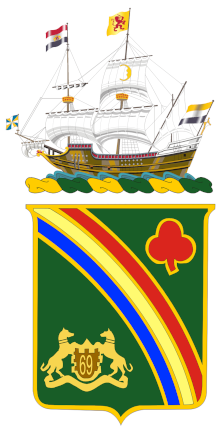
69th Infantry Regiment Refuses to March in Parade for the Prince of Wales

On October 11, 1860, all the militia units of New York City are ordered to turned out to march in in a parade in honor of the visiting Prince of Wales, the 19-year-old Albert Edward, heir to the English throne, who is visiting New York City at the time. Colonel Michael Corcoran, a native of Carrowkeel, near Ballysadare, County Sligo, refuses to march his 69th Infantry Regiment in the parade to protest against British rule in Ireland. He is removed from command and a court martial is pending over the matter when the American Civil War begins.

Five days earlier, Corcoran refuses tickets to a ball in the prince’s honor, telling those who invited him that he is “not desirous of joining in the festivity.”

As for the order to march, Corcoran says he refuses to ask the sons of Erin to honor the son of “a sovereign under whose reign Ireland was made a desert and her sons forced to exile.” He is also heard to refer to the prince as “the bald-faced son of our oppressor.”

Corcoran’s actions cause a firestorm of outrage around the country and especially in New York. U.S. citizens, most completely ignorant of the conditions under which many of these men had lived in British-controlled Ireland, see the actions of the men of the 69th Infantry Regiment as an insult to American hospitality in welcoming these immigrants to their adopted country, though in truth, the welcome is much less than lukewarm.

Corcoran has written his name forever in the pantheon of Irish heroes in America. New York’s Irish present the regiment with a green flag commemorating the event.

Corcoran is arrested and stripped of his command by New York and a court martial is planned. But before he can be tried on the charge, Fort Sumter is fired upon, and the country is more worried about saving the Union than honoring visiting princes. With the outbreak of war, the court martial is dropped and Corcoran is restored to his command because he had been instrumental in bringing other Irish immigrants to the Union cause.

Corcoran leads the 69th Infantry Regiment to Washington, D.C. and serves for a time in the Washington defenses building Fort Corcoran. On July 21, 1861, he leads the regiment into action at the First Battle of Bull Run with what is now called the “Prince of Wales Flag” flying proudly above his men.

After promotion to brigadier general, Corcoran leaves the 69th Infantry Regiment and forms the Corcoran Legion, consisting of at least five other New York regiments.

The Mayor of New York City, Michael Bloomberg, unveils Ireland’s national monument to the Fighting 69th in Ballymote, County Sligo, on August 22, 2006. The monument is sculpted by Philip Flanagan. The inscription around the top of the monument reads “Michael Corcoran 1827–1863” Around the base is inscribed “New York Ballymote Creeslough Bull Run.” Underneath the monument is a piece of steel from the World Trade Center, donated by the family of Michael Lynch, who died in the tower on September 11, 2001. Lynch’s family are from County Sligo.

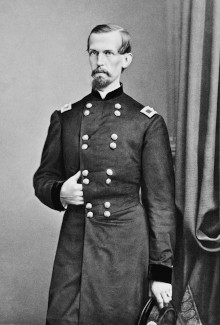
(Pictured: Michael Corcoran, Irish American general in the Union Army during the American Civil War and a close confidant of President Abraham Lincoln)


Leave a comment

Irish 69th New York Infantry Regiment Fights at the First Battle of Bull Run

On July 21, 1861, at the First Battle of Bull Run, the first major engagement of the American Civil War, the Irish 69th New York Infantry Regiment fights under the green flag of Erin and the Stars and Stripes for the first time. The unit is in a brigade commanded by Col. William Tecumseh Sherman, whose name is now one of the most well-known of the war. He is not, however, well loved by the 69th New York.

The battle, called the Battle of First Manassas by the Confederate State Army, is fought in Prince William County, Virginia, just north of the city of Manassas and about thirty miles west-southwest of Washington, D.C. The Union Army is slow in positioning themselves, allowing Confederate reinforcements time to arrive by rail. Each side has about 18,000 poorly trained and poorly led troops. The Union army suffers an ignominious defeat that day, but the 69th is among a handful of Union regiments that perform well during the battle. Held in reserve at first, the 69th soon advances and routs the 4th Alabama. But when the brigade meets stiffer opposition, Sherman attacks with one regiment at a time, wasting his numbers. The battle is followed by a disorganized post-battle retreat of the Union forces.

Just months after the start of the war at Fort Sumter, the northern public clamors for a march against the Confederate capital of Richmond, Virginia, which is expected to bring an early end to the Confederacy. Yielding to political pressure, Brigadier General Irvin McDowell leads his unseasoned Union Army across Bull Run against the equally inexperienced Confederate Army of Brigadier General P. G. T. Beauregard, whose forces are camped near Manassas Junction. McDowell’s ambitious plan for a surprise flank attack on the Confederate left is poorly executed; nevertheless, the Confederates, who had been planning to attack the Union left flank, find themselves at an initial disadvantage.

Confederate reinforcements under Brigadier General Joseph E. Johnston arrive from the Shenandoah Valley by railroad, and the course of the battle quickly changes. A brigade of Virginians under a relatively unknown brigadier general from the Virginia Military Institute, Thomas J. Jackson, stands its ground, which results in Jackson receiving his famous nickname, “Stonewall.” The Confederates launch a strong counterattack, and as the Union troops begin withdrawing under fire, many panic and the retreat turns into a rout. McDowell’s men frantically run without order in the direction of Washington, D.C.

One of the last regiments off the field, the 69th loses 38 men that day, the first being Capt. James Haggerty from Donegal, and 59 wounded. Ninety-five are sent to Confederate prison camps, including its Sligo-born colonel, Michael Corcoran. One of the last men off the field is Waterford‘s Thomas Francis Meagher, captain of Company K, who eventually swims the last yards to safety across Bull Run creek. It is a rough beginning, but the regiment has begun a storied history that soon earns them the sobriquet “Fighting 69th.”

Both armies are sobered by the fierce fighting and the many casualties and realize that the war is going to be much longer and bloodier than anticipated. The First Battle of Bull Run highlights many of the problems and deficiencies that are typical of the first year of the war. Units are committed piecemeal, attacks are frontal, infantry fails to protect exposed artillery, tactical intelligence is minimal, and neither commander is able to employ his whole force effectively. McDowell, with 35,000 men, can commit only about 18,000, and the combined Confederate forces, with about 32,000 men, also commit 18,000.


Leave a comment

Birth of Actress & Author Pauline McLynn

Pauline McLynn, Irish character actress and author, is born in Sligo, County Sligo, on July 11, 1962. She is best known for her roles as Mrs. Doyle in the Channel 4 sitcom Father Ted, Libby Croker in the Channel 4 comedy drama Shameless, Tip Haddem in the BBC One comedy Jam & Jerusalem, and Yvonne Cotton in the BBC soap opera EastEnders.

McLynn grows up with two younger brothers in Galway. She studies History of Art and Modern English at Trinity College Dublin but is more heavily involved in the college’s drama society. She graduates with an MA.

Although McLynn is in her early thirties when playing Mrs. Doyle in Father Ted, makeup is used to make her look far older to fit the character’s elderly profile. She receives a British Comedy Award for her performances in 1996. The award is presented to her by Tony Blair.

Subsequent televised appearances include a similar elderly role in the “Yesterday Island” episode of youth sci-fi series Life Force, sketches on Bremner, Bird and Fortune, and panel shows Just a Minute, Have I Got News for You, and If I Ruled the World. In 1999, she appears in the film adaptation of Angela’s Ashes. She also appears in Jennifer SaundersJam & Jerusalem. Between 2001 and 2003 she reprises Mrs. Doyle in an advert for online tax return filing by the Inland Revenue.

McLynn is critically acclaimed for her performance in the 2005 film Gypo, receiving an Irish Film & Television Academy award nomination for Best Actress.

McLynn appears as Libby Croker in Shameless, which is produced by the British broadcaster Channel 4. In January 2011 it is announced that she has left the show, reportedly after a “difficult year.” She also plays the role of Alice’s mother in the Comedy Central show Threesome. She stars in Samuel Beckett’s Happy Days at the Crucible Theatre, Sheffield, in 2011. She plays Mary Whyte in the BBC’s 2013 sitcom Father Figure.

In 2014, McLynn plays the part of Evelyn in “Kiss for the Camera”, a series three episode of the BBC comedy Pramface. On May 12, 2014, she joins the cast of EastEnders as Yvonne Cotton, the mother of Charlie Cotton (Declan Bennett) and ex-daughter-in-law of Dot Branning (June Brown). After starting as a recurring character, she quickly becomes a regular when her character’s storylines escalate. She makes her final appearance on January 13, 2015, at the end of her contract. However, she returns to the soap opera on May 14, 2015 for one single episode to give evidence against Dot during Nick Cotton‘s (John Altman) murder trial.

In 2017, McLynn appears as the mother of lead character Marcella in Roisin Conaty‘s E4 comedy GameFace, and in April 2018 she portrays Sister Mary in the BBC Two biopic Dave Allen At Peace. She appears as a minor character named Mrs. Trattner in the 2018 film Johnny English Strikes Again.

In 2020, McLynn is one of the celebrity pilgrims on the Sultans Trail in the BBC series Pilgrimage: Road to Istanbul. She also appears in Riverdance: The Animated Adventure.

In 2021 McLynn appears as Oona in the E4 S6 of Inside No. 9. She also appears as Carol, a bar landlady, in the film Last Night in Soho, which is released in October 2021. She also appears in Doctor Who, as Mary in the New Year’s special “Eve of the Daleks.”

McLynn is married to theatrical agent Richard Cook. She is a patron of the children’s charity World Vision Ireland and is president of Friends of Innisfree Housing Association. She is also a patron for Littlehill Animal Rescue, Sanctuary in Ireland and Birmingham Greyhound Protection.

McLynn is a fan of the Premier League football team Aston Villa. She says her best moment supporting Villa came in 1996 when she watched them beat Leeds United in the Football League Cup final with her Father Ted co-star Ardal O’Hanlon, who is a Leeds supporter. She is raised as a Roman Catholic but is now an atheist.

McLynn is involved with many charities against the racing and export of greyhounds. She is a patron of Greyhound Protection UK.


Leave a comment

Seán MacManus Elected Mayor of Sligo

Seán MacManus, Sinn Féin politician, is elected Mayor of Sligo on July 3, 2000. He is the national chairperson of the party from 1984 to 1990.

MacManus is born in 1950 near Blacklion, County Cavan, and moves to London in the 1960s to find work. There he meets and marries Helen McGovern, a native of Glenfarne, County Leitrim. In 1976, he returns to Ireland and settled in the Maugheraboy area of Sligo, County Sligo, so that their family of two boys can be educated in Ireland.

Still based in Maugheraboy, MacManus is involved in Irish Republican politics since the early 1970s and is secretary of the County Sligo Anti-H-Block Committee which campaigns in support of the republican prisoners hunger strikes of 1980/81. He becomes a member of the Sinn Féin Ard Comhairle (National Executive) in 1982 and remains there for over twenty years. He is elected as the first Sinn Féin National Chairperson from 1984 until 1990. After the Irish Republican Army (IRA) ceasefire in 1994 he is part of the first Sinn Féin delegation to meet with the British government in over seventy years. He is also involved in the protracted negotiations leading to the Good Friday Agreement.

First elected to Sligo Corporation (now Sligo Borough Council) in 1994, MacManus remains until its abolition in May 2014. He is also elected to Sligo County Council in 1999 and is re-elected in 2004, 2009 and 2014. He steps down from elected politics in February 2017 being replaced by his son, Chris MacManus.

On July 3, 2000, MacManus is elected Mayor of Sligo, the first Sinn Féin Mayor in the Republic of Ireland since the beginning of the Troubles in 1969. He is also elected mayor in 2003. Sinn Féin President Gerry Adams says the election of McManus is a sign of “Sinn Féin’s rise as an active campaigning alternative in politics in the 26 counties”.

MacManus has two sons. Chris MacManus, the youngest, is also an elected member of Sligo Borough Council (1999–2014) and Sligo County Council (2017–2020) and is an MEP since March 2020. His eldest son, Joseph MacManus, was an IRA volunteer who was killed in a firefight against an off-duty Ulster Defence Regiment (UDR) soldier in Belleek, County Fermanagh, in February 1992.


1 Comment

Death of Maurice Fitzmaurice FitzGerald, 2nd Lord of Offaly

Maurice Fitzmaurice FitzGerald, 2nd Lord of Offaly, a Norman in Ireland peer, soldier, and Justiciar of Ireland from 1232 to 1245, dies on May 20, 1257, at the Franciscan Friary of South Abbey in Youghal, County Cork. He musters many armies against the Irish, and due to his harsh methods as Justiciar, he receives criticism from King Henry III of England.

FitzGerald is born in Ireland in 1194, the son of Gerald FitzMaurice, 1st Lord of Offaly, and Eve de Bermingham. He succeeds to the title of Lord of Offaly on January 15, 1204, and is invested as a knight in July 1217, at the age of 33. In 1224, he founds South Abbey, Youghal, the proto-friary of the Irish Province of the Observant Franciscans, dedicated to Saint Nicholas. He is summoned to London to accompany King Henry III of England to Poitou and Gascony in October 1229. He is appointed Justiciar of Ireland in September 1232 and holds the post until 1245. His reputation is marred by rumours that he had contrived the death of Richard Marshal, 3rd Earl of Pembroke in 1234. He meets Marshal at the Battle of the Curragh on April 1, where Marshal is wounded and dies shortly after. It is rumoured that Marshal had been betrayed. FitzGerald then proceeds to London, where he takes an oath before Henry III, that he is innocent of any participation in Marshal’s death. In 1253, he founds Sligo Abbey, a Dominican convent in Sligo, to house a community of monks to say prayers for Earl Marshal’s soul.

In February 1235, the King criticises FitzGerald for his proceedings in office and describes him as “little pleasant, nay, beyond measure harsh in executing the King’s mandates.” The same year, he takes part in the subjugation of Connacht. In the years 1241 and 1242, and later in 1246, 1247, and 1248 he musters armies against the Irish. In 1247, he invades Tír Chonaill and fights the combined forces of Cenél Conaill and Cenél nEógain at the Battle of Ballyshannon. According to various Irish annals, three eminent lords fall in battle against him: Maol Seachlainn Ó Domhnaill, King of Tír Chonaill, An Giolla Muinealach Ó Baoighill, and Mac Somhairle, King of Argyll (a man seemingly identical to Ruaidhrí mac Raghnaill).

In 1245, FitzGerald is dismissed from his post as Justiciar as a result of tardiness in sending the King assistance in the latter’s military campaigns in Wales. His successor is John FitzGeoffrey. That same year he lays the foundations for Sligo Castle. In 1250, he holds both the office of Member of the Council of Ireland and Commissioner of the Treasury. He also founds the Franciscan Friary at Youghal; hence his nickname of an Brathair, which is Irish for The Friar. He is at the English royal court in January 1252, and receives an urgent summons from King Henry in January 1254.

He married Juliana de Grenville and by her, they have four sons:

In 1257, FitzGerald and his Norman army engage the forces led by Gofraidh Ó Domhnaill, King of Tír Chonaill, at the Battle of Creadran Cille, in Cairbre Drom Cliabh, now the northern part of County Sligo. The two men fight each other in single combat and both are gravely wounded. FitzGerald dies of his injuries at South Abbey, wearing the habit of the Franciscans, on May 20, 1257, aged 63 years. In the Annals of the Four Masters, 1257, his death is described thus: “Maurice FitzGerald for some time Lord Justice of Ireland and the destroyer of the Irish, died.” (In Irish this reads as: “Muiris macGerailt lustis Ereann re h-edh diosccaoilteach Gaoidheal d’écc”.)

Upon FitzGerald’s death, the properties of Lea, Rathangan, and Geashill pass to his grandson Maurice, son of Gerald FitzMaurice, who dies in 1243.

FitzGerald is succeeded as Lord of Offaly by his son, Maurice FitzGerald, 3rd Lord of Offaly, rather than the rightful successor, his grandson, Maurice, son of his eldest son, Gerald.


Leave a comment

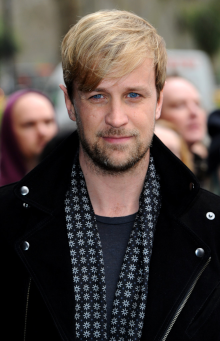
Birth of Kian Egan, Pop Singer, Songwriter & Musician

Kian John Francis Egan, Irish pop singer, songwriter and musician, best known as a member of pop group Westlife, is born on April 29, 1980, in Sligo, County Sligo. Westlife has released twelve albums, embarked on thirteen world tours, and won numerous awards, becoming one of the most successful musical groups of all time.

Egan is born to Kevin Egan and Patricia Egan (née Moore). He is the fifth of their seven children. He attends Summerhill College secondary school in Sligo, where he meets fellow band members Mark Feehily and Shane Filan. He is the cousin of Filan’s wife, Gillian Walsh. Before Westlife, he works at a jeans store.

In his early musical years, Egan is part of a rock band named Skrod. He can play at least five musical instruments, including guitar, piano, and drums. He is a grade 8 pianist and was taught piano by his brother Gavin Egan, a university music graduate and full-time teacher of music in the UK. Before he is in Westlife, he is part of a pop group called Six as One, which later changes its name to IOYOU, with fellow Westlife members Mark Feehily and Shane Filan, alongside Graham Keighron, Michael “Miggles” Garrett and Derrick Lacey.

After IOUYOU is signed by Louis Walsh, its lineup changes to include Egan, Mark Feehily, Shane Filan and two new members – Nicky Byrne and Brian McFadden. The band’s name changes to Westside and later to Westlife. Westlife splits up in 2012 after a Greatest Hits Tour.

During a year long hiatus from Westlife in 2008, Egan launches a new venture with Louis Walsh to put together and co-manage girlband, Wonderland, which includes Jodi Albert, who on May 8, 2009, becomes Egan’s wife. Wonderland’s debut album reaches number 6 on the Irish Albums Chart and number 8 on the UK Albums Chart, however, just four months later, they are dropped by Mercury Records and eventually split up.

In June 2012, Egan announces in an interview with the Sunday Life that he is “looking at doing a TV show with Sky on surfing.” Later reports suggest that the show would be eight episodes long and would broadcast on Sky One later in the year.

In July 2012, Egan presents the British programme This Morning’s Hub on a regular basis, standing in for the regular hosts. Later that year, every Friday morning in October, he begins giving reports on another British programme, This Morning, about the remaining contestants in the ninth series of The X Factor, before the competition’s live shows that weekend.

On October 21, 2012, Egan co-presents the revamped version of Surprise Surprise, but does not return the following year.

In 2013, Egan appears on the thirteenth series of I’m A Celebrity…Get Me Out Of Here! He is ultimately crowned King Of The Jungle, which contributes to an invitation to being signed by Rhino Records to create his Home album.

In January 2014, Egan signs with Rhino Records of Warner Music Group and his debut album Home is released on March 14 of that year in Ireland and March 17 in the UK. His debut single “Home“, a cover of a song by the band Daughtry, has its first exclusive play on BBC Radio 2 on lunch time with Terry Wogan‘s show. The album peaks at number 2 on the Irish Albums Chart and number 9 on the UK Albums Chart. In May 2014, he releases the second single from the album, “I’ll Be,” a cover of the track by Edwin McCain.

In October 2018, Westlife announces the group’s reunion as a four-piece. In 2019, the group headlines “The Twenty Tour,” named in honour of Westlife’s 20th anniversary since its formation and the release of its first single, “Swear It Again,” in 1999. In addition to touring, Westlife also releases new music. “Hello My Love,” the first single from the group’s upcoming album, debuts on The Graham Norton Show in January 2019.

Egan is one of four coaches on The Voice of Ireland. However, his dreams of winning the show go to tatters as he throws his lot in with Jim Devine from Northern Ireland. This immediately puts him at a disadvantage to the other contestants as, ahead of the final, viewers in Northern Ireland cannot download his single, the tally of which contributes to his vote. He is left fuming and in need of support from Sharon Corr as he expresses his opinion on the unfairness of it all and has “huge rows” about it but to no avail.

Egan and his wife and three sons live in Strandhill, County Sligo. He is ranked number five on Ireland’s Sexiest Man of 2014. As of 2017, his net worth is 18 million euros.


Leave a comment

Birth of Leland Bardwell, Poet, Novelist & Playwright

Constan Olive Leland Bardwell, Irish poet, novelist, and playwright, is born Leland Hone in India on February 25, 1922. She was part of the literary scene in London and later Dublin, where she was an editor of literary magazines Hibernia and Cyphers.

Bardwell is born to Irish parents William Hone and Mary Collise and moves to Ireland at the age of two. Her father’s family are of the Anglo-Irish Hone family. She has a difficult childhood growing up in Leixlip, County Kildare. She is educated at Alexandra College and briefly studies in Switzerland. She works in a variety of jobs in Ireland and later Scotland, where, in 1948, she meets poet Michael Bardwell. The couple has two children and later separate.

Bardwell becomes a part of the literary scene of Soho in London, where she socialises with fellow writers, including Anthony CroninFrancis BaconPatrick Kavanagh and Anthony Burgess. In the 1950s, she meets Fintan McLachlan, with whom she has three children, including the composer, John McLachlan. The family moves back to Dublin, where she works as a reviewer for Hibernia magazine and as a poetry editor.

From 1970 onward, Bardwell’s work is published regularly, starting with her first volume of poetry, The Mad Cyclist, which is later followed by her first novel, Girl on a Bicycle. She writes a number of plays and short stories, such as Outpatients, and her works are produced for RTÉ and the BBC. In 1984, she writes a musical play, No Regrets, based on the life of Édith Piaf. It opens at the Gaiety Theatre starring Anne Bushnell, and later tours across Ireland.

Bardwell’s work is heavily influenced by her difficult upbringing and her experiences in London and Dublin. In her memoir, A Restless Life, she describes her life as “a crescendo of madness.” She is considered an important poet by her contemporaries, who include Patrick Kavanagh, John JordanPaul DurcanMacdara Woods and Michael Hartnett. On the publication of her fourth collection of poetry, The White BeachEilean Ni Chuilleanain states “it is good to see her work of the decades collected – it has inspired many Irish poets, male and female, and should be much more widely known,” adding that her work is “witty, full of sharp intimate honesty, full of truth and surprises.”

In 1975, Bardwell co-founds the long running literary magazine Cyphers with Eiléan Ní Chuilleanáin and Macdara Woods, and acts as a co-editor until 2012. She is the recipient of the Marten Toonder Award in 1993, and the Dede Korkut Short Story Award from Turkish PEN in 2010.

In later life, Bardwell moves to Annamakarraig in County Monaghan and later to Cloonagh in County Sligo, where in 1993 she co-founds the Scríobh Literary Festival. She is a member of the Irish artists’ association Aosdána and acts as one of Patrick Kavanagh’s literary executors.

Bardwell dies at the age of 94 in Sligo, County Sligo, on June 28, 2016.

(Photo by Pat Boran)