After the death of Brendan Doris in 2006, Martin McGuinness pays tribute to the Doris family as “a well-known and respected republican family [who] have played a significant role in the republican struggle for many years.”
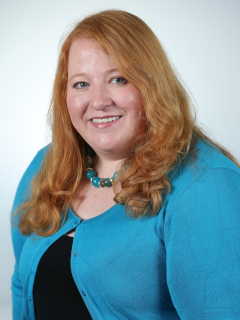
O’Neill becomes involved in republican politics in her teens, assisting her father with constituency work in his role as a Dungannon councillor. She joins Sinn Féin after the Good Friday Agreement in 1998, at the age of 21, and starts working as an advisor to Francie Molloy in the Northern Ireland Assembly, holding this role until 2005.
O’Neill automatically relinquishes her office following Paul Givan‘s resignation as first minister on February 3, 2022. Sinn Féin becomes the largest party after the 2022 Northern Ireland Assembly election, putting O’Neill in line to become the First Minister of Northern Ireland, and the Democratic Unionist Party (DUP) leader to become the deputy First Minister of Northern Ireland. However, she remains to be officially sworn in as First Minister because, as part of its opposition to the Northern Ireland Protocol, the DUP has refused to nominate a deputy First minister and there is therefore no functioning executive of Northern Ireland.
In August 2022, O’Neill is asked in a BBC interview whether it was right during the Troubles for the Provisional IRA “to engage in violent resistance to British rule.” She is criticised for her response, “I think at the time there was no alternative, but now thankfully we have an alternative to conflict, and that is the Good Friday Agreement – that is why it’s so precious to us all.”
In May 2023, O’Neill attends the coronation of King Charles, saying, “Well obviously I wanted to be here. We live in changing times, and it was the respectful thing to do, to show respect and to be here for all those people at home, who I had said I would be a first minister for all. Attendance here is about honouring that and fulfilling my promise.”
Long first takes political office in 2001 when she is elected to Belfast City Council for the Victoria ward. In 2003, she is elected to the Northern Ireland Assembly for Belfast East, succeeding her fellow party member John Alderdice. In 2006, she is named deputy leader of her party. In the 2007 Northern Ireland Assembly election, she more than doubles the party’s vote in the constituency, being placed second ahead of the leader of the Ulster Unionist Party (UUP). The overall UUP vote, however, is 22%. At 18.8%, her vote share is higher than that for Alderdice in 1998.
On December 10, 2012, Long receives a number of death threats, and a petrol bomb is thrown inside an unmarked police car guarding her constituency office. This violence erupts as a reaction by Ulster loyalists to the decision by Alliance Party members of Belfast City Council to vote in favour of restricting the flying of the Union flag at Belfast City Hall to designated days throughout the year, which at the time constitutes 18 specific days.
In January 2016, Long announces that she will return as an Assembly candidate in the 2016 Northern Ireland Assembly election having been nominated in place of incumbent Judith Cochrane. She is subsequently elected on the first count with 14.7% of first-preference votes. Following her return to the Assembly, she assumes positions on the Committee for Communities, the All-Party Group on Fairtrade, the All-Party Group for Housing, and chairs the All-Party Group on Science, Technology, Engineering and Mathematics.
In August 2016, Long calls for Sinn Féin‘s Máirtín Ó Muilleoir to stand aside as Minister of Finance during an investigation of the Stormont Finance Committee’s handling of its Nama inquiry, while Ó Muilleoir is a committee member. This follows allegations that his party had “coached” loyalist blogger Jamie Bryson prior to his appearance before the committee.
In November 2016, Long criticises Sinn Féin and the DUP for delaying the publication of a working group report on abortion, which recommends legislative changes in cases of fatal foetal abnormality, calling on the Executive “to act without further delay to help women who decide to seek a termination in these very difficult circumstances.”
On October 26, 2016, Long is elected Alliance leader unopposed following the resignation of David Ford. In the first manifesto released under her leadership, she affirms her commitment to building a “united, open, liberal and progressive” society. Her party’s legislative priorities are revealed to include the harmonisation and strengthening of equality and anti-discrimination measures, the introduction of civil marriage equality, development of integrated education and a Northern Ireland framework to tackle climate change.
In the 2017 Northern Ireland Assembly election, Long tops the poll in Belfast East and is returned to the Assembly with 18.9% of first-preference votes. The election is widely viewed as a success for Alliance, with the party increasing its vote share by 2 percentage points and retaining all of its seats in a smaller Assembly. The party subsequently holds the balance of power at Stormont.
Following the collapse of talks to restore devolution in February 2018, Long reiterates her view that the pay of MLAs should be cut in the absence of a functioning Executive. In March 2018, Alliance launches its “Next Steps Forward” paper, outlining a number of proposals aimed at breaking the deadlock and Stormont. At the 2019 Alliance Party Conference, she accuses Secretary of State for Northern IrelandKaren Bradley of an “appalling dereliction of duty” over the ongoing stalemate, saying that she had made “no concerted effort to end this interminable drift despite it allegedly being her top priority.”
In the 2019 Northern Ireland local elections, Alliance sees a 65% rise in its representation on councils. Long hails the “incredible result” as a watershed moment for politics in Northern Ireland.
Long is elected to the European Parliament as a representative for Northern Ireland in May 2019 with 18.5% of first-preference votes, the best ever result for Alliance. She is subsequently replaced in the Assembly by Máire Hendron, a founding member of the party and former deputy lord mayor of Belfast. She then replaces Hendron in the Assembly with effect from January 9, 2020.
In 2019, Long becomes the first Northern Ireland politician to have served at every level of government.
On January 11, 2020, following the restoration of the Northern Ireland Assembly after three years of stalemate, Long is elected Minister of Justice in the Northern Ireland Executive. On January 28, she announces that she will progress new domestic abuse legislation through the Assembly which will make coercive control a criminal offence in Northern Ireland. In June 2020, she commissions a review into the support available for prison officers following concerns about absence rates. That same month, she announces her intention to introduce unexplained wealth orders in Northern Ireland to target paramilitary and criminal finances.
In November 2020, Long says she is seriously reconsidering her position within the Executive following the DUP’s deployment of a cross-community vote to prevent an extension of COVID-19 regulations. She tells BBC News, “I have asked people to desist from this abuse of power because it will make my position in the executive unsustainable.”
In March 2022, Long tells the Alliance Party Conference that “some politicians are addicted to crisis and conflict and simply not up to the job of actually governing.” Long leads Alliance into the 2022 Northern Ireland Assembly election on a platform of integrated education, health reform, a Green New Deal, tackling paramilitarism and reform of the Stormont institutions.
Long is a member of Bloomfield Presbyterian Church. Following the Church’s decision to exclude those in same-sex relationships from being full members, she expresses “great concern” and states that she “didn’t know” if she would remain a member herself. She is married to Michael Long, an Alliance councillor on Belfast City Council and former Lord Mayor of Belfast, and son of the engineer Professor Adrian Long. Long and her husband are the first husband and wife to have both served as Lord Mayors of Belfast.
The 32CSM has been described as the “political wing” of the now defunct Real Irish Republican Army (RIRA), but this is denied by both organisations. The group originates in a split from Sinn Féin over the Mitchell Principles.
Those present at the initial meeting are opposed to the direction taken by Sinn Féin and other mainstream republican groups in the Northern Ireland peace process, which leads to the Belfast Agreement (also known as the Good Friday Agreement) the following year. The same division in the republican movement leads to the paramilitary group now known as the Real IRA breaking away from the Provisional Irish Republican Army at around the same time.
Most of the 32CSM’s founders had been members of Sinn Féin. Some had been expelled from the party for challenging the leadership’s direction, while others felt they had not been properly able to air their concerns within Sinn Féin at the direction its leadership had taken. Bernadette Sands McKevitt, wife of Michael McKevitt and a sister of hunger strikerBobby Sands, is a prominent member of the group until a split in the organisation.
The name refers to the 32 counties of Ireland which are created during the Lordship and Kingdom of Ireland. With the partition of Ireland in 1920–22, twenty-six of these counties form the Irish Free State which is abolished in 1937 and is now known as Ireland since 1949. The remaining six counties of Northern Ireland remain part of the United Kingdom. Founder Bernadette Sands McKevitt says in a 1998 interview with the Irish Mirror that people did not fight for “peace” – “they fought for independence” – and that the organisation reaffirms to the republican position in the 1919 Irish Declaration of Independence.
Before the referendums on the 1998 Good Friday Agreement, the 32CSM lodges a legal submission with the United Nations challenging British sovereignty in Ireland. The referendums are opposed by the 32CSM but are supported by 71% of voters in Northern Ireland and by 94% in the Republic of Ireland. It is reported in February 2000 that the group established a “branch” in Kilburn, London.
In November 2005, the 32CSM launches a political initiative titled Irish Democracy, A Framework for Unity.
On May 24, 2014, Gary Donnelly, a member of the 32CSM, is elected to the Derry City and Strabane District Council. In July 2014, a delegation from the 32CSM travels to Canada to take part in a six-day speaking tour. On arrival the delegation is detained and refused entry into Canada.
In 2015, the 32CSM organises a demonstration in Dundee, Scotland, in solidarity with the men convicted of shooting Constable Stephen Carroll, the first police officer to be killed in Northern Ireland since the formation of the PSNI. The organisation says the “Craigavon Two” are innocent and have been victims of a miscarriage of justice.
The group is currently considered a Foreign Terrorist Organization (FTO) in the United States, because the group is considered to be inseparable from the Real IRA, which is designated as an FTO. At a briefing in 2001, a spokesman for the U.S. Department of State states that “evidence provided by both the British and Irish governments and open-source materials demonstrate clearly that the individuals who created the Real IRA also established these two entities to serve as the public face of the Real IRA. These alias organizations engage in propaganda and fundraising on behalf of and in collaboration with the Real IRA.” The U.S. Department of State’s designation makes it illegal for Americans to provide material support to the Real IRA, requires U.S. financial institutions to block the group’s assets and denies alleged Real IRA members visas into the U.S.
The 32CSM also operates outside of the island of Ireland to some extent. The Gaughan/Stagg Cumann covers England, Scotland and Wales, and has an active relationship of mutual promotion with a minority of British left-wing groups and anti-fascist organisations. The James Larkin Republican Flute Band in Liverpool, and the West of Scotland Band Alliance, the largest section of which is the Glasgow-based Parkhead Republican Flute Band, are also supporters of the 32CSM. As of 2014, the 32CSM’s alleged paramilitary wing, the Real IRA, is reported to have been still involved in attempts to perpetrate bombings in Britain as part of the Dissident Irish Republican campaign, which has been ongoing since 1998.
Hendron is the Member of Parliament (MP) for Belfast West between April 1992 and May 1997 in the UK Parliament in London. He takes the seat from Sinn Féin President Gerry Adams at his third attempt with a majority of one percent. He becomes the only nationalist MP to defeat Adams. The seat had previously been held for the SDLP by Gerry Fitt, later Lord Fitt, until 1983. He attracts unprecedented cross-community support from Nationalists and Unionists in the constituency. This is the only example where an SDLP candidate receives a high enough number of Unionist votes in Belfast West to help unseat a Sinn Féin candidate. Adams regains the seat at the 1997 United Kingdom general election.
Hendron is appointed a member of the Northern Ireland Parades Commission in 2005. He retires from this role in December 2010.
On June 11, 2019, Hendron escapes with just bruising and a damaged collarbone after he is struck by a van and thrown up into the air while crossing Balmoral Avenue. He says he is probably partly to blame for the accident as he decided to cross the street in front of a van that was trying to pull out onto the main road. Apparently, the driver of the van did not see Hendron and began to pull out, striking him.
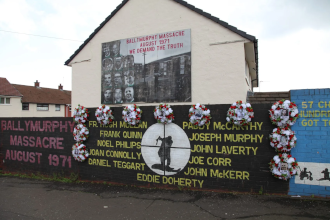
On the morning of Monday, August 9, 1971, the security forces launch Operation Demetrius, the main focus of which is to arrest and intern suspected members of the Provisional Irish Republican Army (IRA). The Parachute Regiment is selected to carry out the operation. The operation is chaotic and informed by poor intelligence, resulting in a number of innocent people being interned. By focusing solely on republicans, it excludes violence carried out by loyalistparamilitaries. Some nationalist neighbourhoods attempt to disrupt the army with barricades, petrol bombs and gunfire. In the Catholic district of Ballymurphy, ten civilians are shot and killed between the evening of August 9 and the morning of August 11, while another dies of heart failure.
Members of the Parachute Regiment state that they were shot at by republicans as they entered the Ballymurphy area and returned fire. The press officer for the British Army stationed in Belfast, Mike Jackson, later to become head of the British Army, includes a disputed account of the shootings in his autobiography, stating that those killed in the shootings were republican gunmen. This claim is strongly denied by the families of those killed in the shootings, including in interviews conducted during the documentary film The Ballymurphy Precedent. The claim is found to be without basis by a later coroner’s inquest, which establishes that those killed were “entirely innocent.”
The six civilians killed on August 9 are Francis Quinn (19), shot while going to the aid of a wounded man, Father Hugh Mullan (38), a Catholic priest, shot while going to the aid of a wounded man, reputedly while waving a white cloth to indicate his intentions, Joan Connolly (44), shot by three soldiers as she stands opposite the army base, Daniel Teggart (44), shot fourteen times mostly in the back as he lay injured on the ground, Noel Phillips (20) and Joseph Murphy (41), shot as they stand opposite the army base. Murphy is subsequently taken into army custody and after his release, as he is dying in hospital, he claims that he had been beaten and shot again while in custody. When his body is exhumed in October 2015, a second bullet is discovered in his body, which activists say corroborates his claim.
Edward Doherty (28), is shot and killed on August 10 while walking along Whiterock Road.
Another three civilians are shot on 11 August: John Laverty (20) and Joseph Corr (43) are shot at separate points at the top of the Whiterock Road. Laverty is shot twice, once in the back and once in the back of the leg. Corr is shot several times and dies of his injuries on August 27. John McKerr (49), is shot in the head by an unknown sniper while standing outside a Catholic church and dies of his injuries on August 20. While a number of eyewitnesses state that soldiers were seen shooting toward the area, the 2021 inquest cannot establish who had killed him. The coroner notes that a more specific finding is not possible, in large part, due to an “abject failing by the authorities to properly inquire into the death of [McKerr at the time].”
Paddy McCarthy (44), an eleventh civilian, dies on August 11 following an altercation with a group of soldiers. His family allege that an empty gun is put in his mouth and the trigger pulled, he suffers a heart attack and dies shortly after the alleged confrontation.
In February 2015, the conviction of Terry Laverty, younger brother of John Laverty, one of those killed, is quashed by the Criminal Cases Review Commission. He had been convicted of riotous behaviour and sentenced to six months on the eyewitness evidence of a private in the Parachute Regiment. The case is referred to court because the sole witness retracts his evidence.
In 2016, Sir Declan Morgan, the Lord Chief Justice of Northern Ireland, recommends an inquest into the killings as one of a series of “legacy inquests” covering 56 cases related to the Troubles. These inquests are delayed, as funding has not been approved by the Northern Ireland Executive. The Stormont first minister, Arlene Foster of the Democratic Unionist Party (DUP), defers a bid for extra funding for inquests into historic killings in Northern Ireland, a decision condemned by the human rights group Amnesty International. Foster confirms she has used her influence in the devolved power-sharing executive to hold back finance for a backlog of inquests connected to the conflict. The High Court says her decision to refuse to put a funding paper on the Executive basis is “unlawful and procedurally flawed.”
In January 2018, the coroner’s office announces that the inquest will begin in September 2018. On May 11, 2021, this coroner’s inquest finds that the ten civilians killed were innocent and that the use of lethal force by the British Army was “not justified.” The circumstances of the 11th death are not part of the inquest since Paddy McCarthy died from a heart attack, allegedly after being threatened by a soldier. Following the inquest verdict, Boris Johnson, the British prime minister, apologises for the deaths at Ballymurphy in a phone call to Foster and deputy First MinisterMichelle O’Neill. The lack of public apology is criticised by some relatives of the victims and Northern Irish politicians.
In May 2021, families of those shot dead by British soldiers in Ballymurphy urge the Irish government to oppose any attempt to prevent the prosecution of British soldiers alleged to have committed crimes during the Troubles.
The killings are the subject of the August 2018 documentaryThe Ballymurphy Precedent, directed by Callum Macrae and made in association with Channel 4.
Founded in 1970 from the New Ulster Movement, the Alliance Party originally represents moderate and non-sectarian unionism. However, over time, particularly in the 1990s, it moves towards neutrality on the Union, and has come to represent wider liberal and non-sectarian concerns. It supports the Good Friday Agreement but maintains a desire for the reform of the political system toward a non-sectarian future. In the Northern Ireland Assembly, it is designated as neither unionist nor Irish nationalist, but “Other.”
The Alliance Party wins their first seat in the UK House of Commons in the 2010 United Kingdom general election, unseating the former Belfast EastMPPeter Robinson, First Minister of Northern Ireland and leader of the Democratic Unionist Party (DUP). Naomi Long is the first MP from the Alliance Party since Stratton Mills, who joined the party from the Ulster Unionist Party (UUP) in 1973. However, the DUP regains the seat at the 2015 United Kingdom general election following an electoral pact with the UUP. In the 2019 United Kingdom general election, the Alliance Party regains its presence in the House of Commons when Stephen Farry wins the North Down seat vacated by the independent unionist, Sylvia Hermon. Earlier in the year, the party’s leader, Naomi Long, wins the party’s first seat in the European Parliament in the last European election before Brexit. Under Long’s leadership, the Alliance Party exceeds expectations in the 2022 Northern Ireland Assembly election and gains numerous seats in the Northern Ireland Assembly.
To seek to achieve unity among the Irish people on the issue of restoring national sovereignty and to promote the revolutionary ideals of republicanism and to this end involve itself in resisting all forms of colonialism and imperialism.
To seek the immediate and unconditional release of all Irish republican prisoners throughout the world.
The 32CSM does not contest elections but acts as a pressure group, with branches, or cumainn, organised throughout the traditional counties of Ireland. It has been described as the “political wing” of the now defunct Real Irish Republican Army (Real IRA or RIRA), but this is denied by both organisations. The group originates in a split from Sinn Féin over the Mitchell Principles.
The organisation is founded on December 7, 1997, at a meeting of like-minded Irish republicans in the Dublin suburb of Finglas. Those present are opposed to the direction taken by Sinn Féin and other mainstream republican groups in the Northern Ireland peace process, which eventually leads to the Good Friday Agreement, also known as the Belfast Agreement, the following year. The same division in the republican movement leads to the paramilitary group now known as the Real IRA breaking away from the Provisional Irish Republican Army at around the same time.
Most of the 32CSM’s founders had been members of Sinn Féin, with some having been expelled from the party for challenging the leadership’s direction, while others felt they had not been properly able to air their concerns within Sinn Féin at the direction its leadership had taken. Bernadette Sands McKevitt, wife of Michael McKevitt and a sister of hunger strikerBobby Sands, is a prominent member of the group until a split in the organisation.
The name refers to the 32 counties of Ireland which were created during the Lordship of Ireland and Kingdom of Ireland. With the partition of Ireland in 1920–22, twenty-six of these counties form the Irish Free State which is abolished in 1937 and is now known as Ireland since 1949. The remaining six counties of Northern Ireland remain part of the United Kingdom. Founder Bernadette Sands McKevitt says in a 1998 interview with The Mirror that people did not fight for “peace” – “they fought for independence” – and that the organisation reaffirms to the republican position in the 1919 Irish Declaration of Independence.
Before the referendums on the 1998 Good Friday Agreement, the 32CSM lodges a legal submission with the United Nations challenging British sovereignty in Ireland. The referendums are opposed by the 32CSM but are supported by 71% of voters in Northern Ireland and by 94% in the Republic of Ireland. It is reported in February 2000 that the group had established a “branch” in Kilburn, London.
In November 2005, the 32CSM launches a political initiative titled Irish Democracy, A Framework for Unity.
On May 24, 2014, Gary Donnelly, a member of the 32CSM, is elected to the Derry and Strabane super council. In July 2014, a delegation from the 32CSM travels to Canada to take part in a six-day speaking tour. On arrival the delegation is detained and refused entry into Canada.
In 2015, the 32CSM organises a demonstration in Dundee, Scotland, in solidarity with the men convicted of shooting Constable Stephen Carroll, the first police officer to be killed in Northern Ireland since the formation of the PSNI. The organisation says the “Craigavon Two” are innocent and are victims of a miscarriage of justice.
The 32CSM also operates outside of the island of Ireland to some extent. The Gaughan/Stagg Cumann covers England, Scotland and Wales, and has an active relationship of mutual promotion with a minority of British left-wing groups and anti-fascist organisations. The James Larkin Republican Flute Band in Liverpool and the West of Scotland Band Alliance, the largest section of which is the Glasgow-based Parkhead Republican Flute Band, are also supporters of the 32CSM. As of 2014, the 32CSM’s alleged paramilitary wing, the Real IRA, is reported to still be involved in attempts to perpetrate bombings in Britain as part of the dissident Irish republican campaign, which has been ongoing since 1998.
The 32CSM is currently considered a foreign terrorist organization (FTO) in the United States, because it is considered to be inseparable from the Real IRA, which is designated as an FTO. At a briefing in 2001, a spokesman for the U.S. Department of State states that “evidence provided by both the British and Irish governments and open-source materials demonstrate clearly that the individuals who created the Real IRA also established these two entities to serve as the public face of the Real IRA. These alias organizations engage in propaganda and fundraising on behalf of and in collaboration with the Real IRA.” The U.S. Department of State’s designation makes it illegal for Americans to provide material support to the Real IRA, requires U.S. financial institutions to block the group’s assets and denies alleged Real IRA members travel visas into the United States.
The BBC‘s Northern Ireland correspondent says the historic trip is intended as a gesture to reassure the province’s unionists, while at the same time trying not to alienate the nationalist population.
The Queen is invited to Armagh by the authorities to present the royal charter renewing Armagh’s status as a city.
In her speech, the Queen addresses all the people of Northern Ireland. She says, “For many difficult years the people of Northern Ireland have shown courage and compassion of an extraordinary kind. Today as they begin to look towards a more peaceful future, Armagh with its two great cathedrals standing so close together presents a powerful symbol of the strength spirit and hopes of people across Northern Ireland.”
Cardinal Cahal Daly says the Queen’s visit is a tribute to the progress made in the peace process since the IRA ceasefire came into effect on August 31, 1994.
Archbishop Robin Eames says, “Look how far we’ve come in a year. It’s a message of symbolism. Be patient, we’ve a long, long way to go but today is one little part of that jigsaw.”
Hendron says, “Things are different now. People must stand up and be counted. You can’t hide in your home. There are two communities here and I think it’s important to go out and shake hands with people like the Queen and from my point of view, she’s very welcome.”
In a March 4, 2008, announcement, the Rev. Ian Paisley signals the end of an era by announcing he will retire as First Minister of Northern Ireland. He also confirms he is stepping down as leader of the Democratic Unionist Party (DUP), the party he founded in the early 1970s. The news represents a huge moment in the politics and recent history of Northern Ireland, removing from the scene as it does one of its most striking figures.
The 81-year-old announces he will quit both posts following an international investment conference in Belfast in May 2008 but will remain as an MP and Assembly member.
“I came to this decision a few weeks ago when I was thinking very much about the conference and what was going come after the conference,” Paisley tells Ulster Television. “I thought that it is a marker, a very big marker and it would be a very appropriate time for me to bow out.”
Paisley denies he is leaving in part over allegations that his son, Ian Paisley Jr., lobbied Downing Street on behalf of a wealthy party member. He says his son has been “wrongly accused.” He is also weakened over defeat in a recent by-election – an indication that a section of the DUP’s electorate is uneasy about his historic decision to share power with Sinn Féin.
Significantly, Paisley does not back any contender in the DUP leadership contest to succeed him. “This is not the Church of Rome. I have no right to say who will succeed me. I will not be like Putin in Russia saying to the president – ‘this is the way you have to go.’ When I make a break it will be [a] break.”
Paisley defends his decision to enter into government with Sinn Féin. “It was the right thing to do because it was the only thing to do to save us from a united Ireland. We were threatened that we would be more Irish in our rulership, that there would be more Dublin say in government. That was what the British government threatened. We managed to put that to a rest.”
“We have laid to rest that and republicans have come to see that they have to put up with Paisley and his clan. We took what was meant for our destruction and turned it into our salvation.”
Speaking from Dubai the previous night, the deputy First Minister, Martin McGuinness, says, “It wasn’t unexpected. It was the right decision to go into sharing power with Sinn Féin which changed the politics of Ireland forever.”
The Sinn Féin MP describes Paisley as “courageous” for agreeing to enter into the power-sharing government. “We have had a positive and constructive working relationship,” McGuinness said.
Paisley’s fiercest critic within unionism, the ex-DUP MEP, Jim Allister, claims opposition to his power-sharing with Sinn Féin and his relationship with McGuinness means that Paisley “jumped before he was pushed.”
Allister’s new party, Traditional Unionist Voice (TUV), split the DUP vote in a by-election in February 2008 and cost the party a council seat in County Down. It was Paisley’s first electoral test since he agreed to share power with Sinn Féin following the St. Andrews Agreement at the end of 2006.
In April 2008, Peter Robinson is chosen to succeed Paisley as leader of the Democratic Unionist Party. The 36 DUP members of the Northern Ireland Assembly unanimously select Robinson, who has been MP for Belfast East since 1979 and Paisley’s deputy since 1980. He is the Minister of Finance and Personnel in the Northern Ireland Executive – Northern Ireland’s power-sharing government – for the previous year.
(From: “Paisley to step down as Ulster’s first minister” by Henry McDonald, Ireland correspondent, The Guardian, March 4, 2008)
Robinson serves in the role of General Secretary of the DUP from 1975, a position he holds until 1979 and which affords him the opportunity to exert unprecedented influence within the fledgeling party. In 1977, he is elected as a councillor for the Castlereagh Borough Council in Dundonald, County Down, and in 1979, he becomes one of the youngest Members of Parliament (MP) when he is narrowly elected for Belfast East. He holds this seat until his defeat by Naomi Long in 2010, making him the longest-serving Belfast MP since the Acts of Union 1800.
In January 2010, following a scandal involving his wife Iris (née Collins), Robinson temporarily hands over his duties as First Minister to Arlene Foster under the terms of the Northern Ireland Act 2006. Following a police investigation, which recommends that he should not be prosecuted following allegations made by the BBC in relation to the scandal, he resumes his duties as First Minister. The Official Assembly Commissioner’s Investigation and Report clears Robinson of any wrongdoing.
In September 2015, Robinson again stands aside to allow Arlene Foster to become acting First Minister after his bid to adjourn the assembly is rejected. His action is a response to a murder for which a member of Sinn Féin, a party in the Northern Ireland Executive, had been questioned. He resumes his duties on October 20, 2015. On November 19, 2015, he announces that he will be stepping down as First Minister and as leader of the DUP. He subsequently steps down as First Minister on January 11, 2016 and is now fully retired from frontline politics.
Robinson is the author of a number of books and pamphlets on local politics and history including: Capital Punishment for Capital Crime (1974), Savagery and Suffering (1975), Ulster the Facts (1981), Self-Inflicted (1981), A War to be Won (1983), It’s Londonderry (1984), Carson – Man of Action (1984), Ulster in Peril (1984), Their Cry was no Surrender (1986), Hands Off the UDR (1990), Sinn Féin – A Case for Proscription (1993), The Union Under Fire (1995), Give Me Liberty (no date), Ulster—the Prey (no date).