seamus dubhghaill

Promoting Irish Culture and History from Little Rock, Arkansas, USA


Leave a comment

The Murder of Dominic “Mad Dog” McGlinchey

Dominic “Mad Dog” McGlinchey, Irish republican paramilitary leader who moves from the Provisional Irish Republican Army (IRA) to become head of the Irish National Liberation Army (INLA) paramilitary group in the early 1980s and self-confesses participation in more than thirty killings, dies in a hail of bullets while making a phone call in Drogheda, County Louth, on February 10, 1994. No one is ever convicted of his murder.

McGlinchey is one of eleven siblings born into a staunchly republican home in Ballyscullion Road, Bellaghy, in rural south County Londonderry, Northern Ireland. His father owns a garage and some of his father’s police customers later die at McGlinchey’s hands. His mother Monica is a devout Catholic. He is educated at the local school. When he was sixteen, he begins an apprenticeship in his father’s garage. About this time, he is joining the numerous civil rights marches that are taking place in the county. His precise reasons for doing so are unclear, but speculation is that he is reacting to events around him and the idea of participating in marches offers glamour and a close identification with his own community.

In 1971, McGlinchey is interned without charge for ten months in Long Kesh Detention Centre. Not long after his release the following year, he is imprisoned again on arms charges. On July 5, 1975, during his imprisonment, he marries Mary O’Neil, daughter of Patrick O’Neil from Toomebridge. Together they have three children.

Following his release, McGlinchey joins Ian Milne and future Provisional IRA hunger strikers Francis Hughes and Thomas McElwee and wages a campaign of shooting and bombing throughout the county and beyond. Together, they later join the Provisional IRA. The gang spends the late 1970s on the run, carrying out operations and evading both the British Army and the Garda Síochána. Following a mailvan robbery, the latter force arrests McGlinchey in County Monaghan in 1977 for carjacking a Garda patrol vehicle and threatening the officer with a pistol, although he claims that the gun is actually a wheel brace. He fails to make bail at Dublin‘s Special Criminal Court after a Garda Superintendent argues that McGlinchey would fail to attend court if bailed. He is convicted and sent to the maximum-security Portlaoise Prison. In 1982, while serving his prison sentence, he clashes with the prison’s IRA leadership and is either expelled by them for indiscipline or leaves the organisation due to strategic differences.

Following his departure from the IRA and his release from prison, McGlinchey joins the INLA. Due to his experience, he rises through the ranks, becoming chief of staff by 1982. Under his leadership, the INLA, which had previously had a reputation for disorganisation, becomes extremely active in cross-border assassinations and bombings. These include many individual assassinations and woundings, but also massacres such as the Droppin Well bombing of 1982 in which both civilians and soldiers die. There are some failed operations, and McGlinchey, who believes this is the result of an informer within the ranks, devotes much time and energy to finding the cause. Those suspected of betraying the organisation are treated brutally, often by McGlinchey personally. As a result of this resurgence of activity and his high profile, the press nicknames him “Mad Dog.” Under his tenure the Darkley massacre is carried out, ostensibly by another group but using a weapon supplied by McGlinchey. In late 1983, while still on the run, he gives an interview with the Sunday Tribune newspaper in which he condemns the Darkley killings but also lays out his political philosophy and plans for the future.

By 1984, McGlinchey has fallen out with members of a powerful Republican family from South Armagh over what he considers missing funds. Men loyal to this family are subsequently killed by McGlinchey’s unit, which includes his wife. In March of the same year, he is captured in Newmarket-on-Fergus, County Clare, following a gunfight with the Gardaí. At this time, he is wanted in Northern Ireland for the shooting of an elderly woman, but republicans have traditionally been able to avoid extradition by claiming their offences were political. The bloody war in the north is leading the Republic of Ireland to re-evaluate its position, however, and he becomes the first republican to be extradited to Northern Ireland. Although convicted and sentenced there to life imprisonment, this is overturned in 1985. As a result, he is returned to the Republic, where he is sentenced to ten years’ imprisonment on firearms charges. While he is incarcerated, his wife is shot dead at her Dundalk home.

McGlinchey is released in March 1993 and claiming to have no further involvement with the INLA, moves to Drogheda. He survives an assassination attempt soon after his release from prison, but in February 1994, his enemies catch up with him. At around 9:30 on the evening of Thursday, February 10, 1994, he visits and dines with friends of his in Duleek Road, near his home. He leaves about forty minutes later, intending to take a video back to a shop in Brookville, on the north side of town. At around 11:00 p.m. he and his 16-year-old son Dominic are returning home, when he pulls up to make a phone call from a public kiosk on Hardman’s Gardens, near Our Lady of Lourdes Hospital. Almost immediately and despite the presence of four witnesses, a red Mazda pulls up alongside him. While his son watches from the car, three men get out and beat McGlinchey. Once he is on the ground the men, who are armed with three pump action shotguns and a pistol, fire into him fourteen times. The attack finishes with a coup de grâce to the head, although he is already dead. His last words are reputed to be “Jesus, Mary help me.” His son yells for an ambulance.

The following day, an autopsy is carried out in Our Lady of Lourdes Hospital, which indicates McGlinchey had been hit in the neck, skull, the left upper chest, the left arm, and both legs. His inquest is held in Drogheda two weeks later, suspended and then reopened in November 1996. Gardaí forensic officers tell the coroner that they had compared the shell casings they had found with the database, but no matches have been made to other known weapons. The officer notes that no such information has been received from the Royal Ulster Constabulary (RUC). The shotguns used are impossible to trace ballistically, but it is ascertained that the Mazda was registered in the north. His and his wife’s killers have never been found.

McGlinchey’s funeral is held on February 13, 1994, in Bellaghy, with no republican accoutrements. There is no INLA colour guard, and only an Irish tricolor draped over the coffin. Over 1,500 people attend and are watched closely by 200 RUC. Police armoured vans are held on the perimeter. He is buried alongside his wife and their young daughter Máire. His coffin is carried from the McGlinchey family home to St. Mary’s Church by pallbearers who are swapped out from the crowd every 40-yards or so. Martin McGuinness is among them, as is Bernadette McAliskey and her daughter Róisín. His sons carry the coffin for the final yards.

McGlinchey’s posthumous reputation ranges from being a “psycho” to his enemies to being an inspiration to those who followed him. Commentators have speculated on what he would have contributed to Irish politics had he lived. Some have suggested that he would have contributed to the Northern Ireland peace process, while others have argued that dissident republicans, opposed to that process, would have found him a willing rallying point. He remains an influence on Irish fiction and music, with both Edna O’Brien and Martin McDonagh producing acclaimed pieces based on his life and career. He is also featured in popular songs.

Leave a comment

Birth of Thomas Charles Wright, Founder of the Ecuadorian Navy

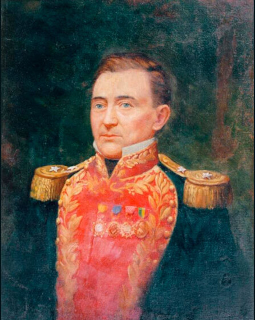
Thomas Charles Wright, founding father of the Ecuadorian Navy and a general in Simón Bolívar‘s army, is born in Queensborough, Drogheda, County Louth, on January 26, 1799. He is regarded as a leading militarist in Ecuador‘s and other South American countries’ struggle for independence.

Wright is born to Joseph Wright and Mary Montgomery. At the age of eleven, he is sent to the Royal Naval College at Portsmouth, regarded at the time as the finest in the world, where he is educated to become an officer.

At the age of fourteen, following his junior officer training, Wright embarks on a sea voyage on board HMS Newcastle under the captaincy of Lord George Stuart. On this vessel he sails to the east coast of the United States where he is engaged in blockading activities in the squadron of Admiral John Borlase Warren. In 1817 he returns to England, having attained the junior officer’s rank of midshipman.

Although Wright passes the lieutenant‘s examination, promotional opportunities are diminishing in the Royal Navy, and he is not given a commission like many young junior officers in Britain. Collectively, he and others decide to enlist in Simón Bolívar’s revolutionary army and sail for South America in support of the uprisings against Spanish colonial rule. In November 1817, he enlists as an officer in the British Legions of Simón Bolívar, under the patronage of Luis Lopez Mendez, Bolivar’s agent in London. Originally setting off from the River Thames in November 1817, several snags delay the departure until January 2, 1818. They depart from Fowey harbor and sail on a brigantine named Dowson, under naval commander Captain Dormer, with 200 other volunteers armed with valuable weapons and ammunition. They land in the Saint Thomas Island after several weeks. Admiral Luis Brión arrives with his squadron on the Island of St Thomas and Pigott and the Rifle Corps are shipped on Patriot vessels to Margarita Island off the coast of Venezuela, arriving on April 21, 1818.

They are sent to Guayana and then to Angostura, beginning the campaign in the Apure. At Angostura (present-day Ciudad Bolívar), Wright first meets Simón Bolívar, for whom he develops a deep admiration. Bolívar opens the liberating campaign in Apure. During 1818–1819, one of the earliest battles with Wright partaking as an officer is at Trapiche de Gamarra on March 27, 1819. These encounters inspire Bolívar to begin his New Granada campaign and the march 1,500 miles over the Andes Mountains. Wright accompanies Bolívar on the legendary crossing on which 25% of the British/Irish troops die.

Wright takes part in the entire land campaign to liberate the northern countries of South America, and fights in numerous land battles with Bolívar’s army. He plays leading roles in the Battle of Vargas Swamp, and later in the victory at the Battle of Boyacá in August 1819, after which he is promoted to captain. In 1820, he returns with his Rifles regiment to the coastal plains to campaign in the jungles east of the Magdalena against the Spanish based on Santa Marta. The Rifles Corp are then transported by sea to Maracaibo, and on June 21, 1821, take part in Simon Bolívar’s decisive victory in the Battle of Carabobo. Cartagena is also seized, and the Rifles are brought in boats up the Magdalena River en route to Popayán. They form part of the forces led by Bolívar in the second of his famed Andean campaigns. After the successful battle at Bomboná on 7 April 7, 1822, Wright is twice mentioned in Bolívar’s order of the day for his exceptional skill and courage. Again, he is promoted and from February 1822 he is an acting lieutenant colonel.

In early 1824, Bolívar realizes that, despite the Patriot Army success on land, unless the South American revolutionary armies can control the seas off their coasts, they will forever be under sea blockade from imperial Spain. He appoints Wright to the newly fledged United Pacific Naval Squadron.

After Guayaquil seizes independence, John Illingworth Hunt is appointed as Commanding General of the Maritime Department. Immediately he takes care of organizing everything concerning the Navy. Thus, in 1823, the first Ecuadorian naval force is formed.

Wright, who in February 1824 is promoted to captain, becomes Commodore of the South Squadron, and embarks on the brig Chimborazo, and conducts patrols along the Peruvian coast with seven transports properly equipped and ready to assist in the transfer of troops, when Bolívar’s army would require it. Following Bolivar’s defeat of the royalist forces at the Battle of Junín on August 6, 1824, Wright is instructed to proceed to Callao with a squadron of five ships and is placed under the orders of Admiral Martin Guisse, head of the United Squadron. The Gran Colombian units, forming this squadron, participate in some naval actions against the royalists and also in the blockade of Callao, the last Spanish stronghold in South America.

Bolívar installs Wright as a Commodore of the Pacific Southern Squadron. He is appointed to command a small fleet of ships in support of Admiral Martin Guisse and joins the Patriotic naval force blockading off Callao. Along with Admiral Guisse and a handful of other former Royal Navy officers, they spearhead the blockade of Callao that successfully fights the Spanish naval squadron sent to lift the blockade of the besieged city. The blockade holds and Callao capitulates in early 1826, ending Spanish rule in South America.

The revolutionary independence struggles end with the unfolding liberation of South America countries, and Wright settles in Ecuador where he helps establish the Ecuadorian Navy and helps create the Ecuadorian naval school that is named in his honor.

The downfall and expulsion of the Spanish colonial power leads to land disputes and new wars among the South American home nations that once were united against Spain. In 1827, Peruvian President José de la Mar invades Bolivia and then invades Ecuador. Wright takes up the cause of defending his new adopted homeland. His navy fights two battles with the Peruvians in the Gulf of Guayaquil.

In 1829, Wright returns to the army as a Colonel and is appointed General Antonio José de Sucre‘s aide-de-camp at the Battle of Tarqui.

Ecuador declares itself a republic in 1830, though the region is completely unsettled with Peru and Colombia both claiming parts of Ecuador as part of their territory. At this time Wright goes back in the Navy with his own flag officer’s pendant. He is also appointed to the army with the rank of General of Brigade in 1830. Two unconstitutional presidents, Vincente Rocafuerte and Valdivieso, declare themselves in office. Wright and Flores lead Rocafuerte’s army into a decisive battle that takes place at Minarica in 1835. This action is decisive, and they defeat General Barriga, who is Valdivieso’s appointed General. The victory guarantees the stability and future of Ecuador, with Rocafuerte becoming Ecuador’s president.

In 1835, Wright is Comandante del Apostadero, later changed to Comandancia General de la Marina (Commander-in-Chief of the Navy) for many years. He does not found the Ecuadorian Naval School, as often incorrectly cited. The college is named in his honor. He is the commanding officer of the Ecuadorian Naval Squadron before Ecuador becomes a Republic, as such he is considered a founding father of the Ecuadorian Navy. In this year he is also promoted to Army General of Division.

In 1843, Wright becomes the Governor of Guayaquil. This is the premier military position in the city.

In 1845, a military coup plot overthrows the liberal government supported by Wright and he goes into exile for fifteen years in Chile and Peru. In Chorrillos, Peru, he befriends the Ecuadorian exile Eloy Alfaro and exerts a massive influence on him as a mentor. Alfaro later becomes President of Ecuador from 1897 to 1913. Wright returns from exile in 1860 and opposes Gabriel García Moreno until his death in 1868.


1 Comment

Final Rally of the Peace People’s Campaign

A rally of twelve to fifteen thousand Peace People from both north and south takes place at the new bridge over the River Boyne at Drogheda, County Louth, on December 5, 1976. In general, the Peace People’s goals are the dissolution of the Irish Republican Army (IRA) and an end to violence in Northern Ireland. The implicit goals of the Peace People rallies are delegitimization of violence, increasing solidarity, and gaining momentum for peace.

In the 1960s, Northern Ireland begins a period of ethno-political conflict called the Troubles. Through a series of social and political injustices, Northern Ireland has become a religiously divided society between historically mainland Protestants and Irish Catholics. Furthermore, the Irish people have become a fragmented body over a range of issues, identities, circumstances and loyalties. The conflict between Protestants and Catholics spills over into violence, marked by riots and targeted killings between the groups beginning in 1968. In addition, paramilitary groups, including the prominent IRA, launch attacks to advance their political agendas.

The violence continues to escalate. On August 10, 1976, Anne Maguire and her children are walking along Finaghy Road North in Belfast. Suddenly, a Ford Cortina slams into them. The car is being driven by Danny Lennon, who moments before had been shot dead by pursuing soldiers.  The mother is the only survivor. The collision kills three of her four children, Joanne (8), John (2), and Andrew (6 months). Joanne and Andrew die instantly while John is injured critically.

The next day, immediately following John’s death, fifty women from the Republican neighborhoods of Andersonstown and Stewartstown protest Republican violence by marching with baby carriages. That evening, Mairead Corrigan, Anne Maguire’s sister, appears on television pleading for an end to the violence. She becomes the first leader of the Peace People to speak publicly.

However, she was not the only one to initiate action. As soon as she hears Mairead speak on the television, Betty Williams begins petitioning door-to-door for an end to sectarian violence. She garners 6,000 signatures of support within a few days.  This support leads directly into the first unofficial action of the Peace People. On 14 August, only four days after the incident, 10,000 women, both Protestant and Catholic, march with banners along Finaghy Road North, the place of the children’s death, to Milltown Cemetery, their burial site.  This march mostly includes women along with a few public figures and men. The marchers proceed in almost utter silence, only broken by short bouts of singing from the nuns in the crowd and verbal and physical attacks by Republican opposition.

The following day, the three who become leaders of the Peace People – Mairead Corrigan, Betty Williams, and journalist Ciaran McKeown – come together for their first official meeting.  During these initial meetings they establish the ideological basis of nonviolence and goals for the campaign.  The essential goals for the movement are the dissolution of the IRA and an end to the violence in Northern Ireland.  The goals of the campaign implicit in their declaration are awareness, solidarity, and momentum. 
Peace People’s declaration:

“We have a simple message to the world from this movement for Peace. We want to live and love and build a just and peaceful society. We want for our children, as we want for ourselves, our lives at home, at work, and at play to be lives of joy and peace. We recognise that to build such a society demands dedication, hard work, and courage. We recognise that there are many problems in our society which are a source of conflict and violence. We recognise that every bullet fired, and every exploding bomb make that work more difficult. We reject the use of the bomb and the bullet and all the techniques of violence. We dedicate ourselves to working with our neighbours, near and far, day in and day out, to build that peaceful society in which the tragedies we have known are a bad memory and a continuing warning.”

During the four-month campaign, Peace People and partners organize and participate in 26 marches in Northern Ireland, Britain, and the Republic of Ireland. In order to organize these marches effectively they establish their main headquarters in Belfast.

After the initial Finaghy Road March, the Peace People, both Protestants and Catholics, rally in Ormeau Park on August 21. The official Declaration of the Peace People is first read at this rally, the largest rally of the entire campaign.   The group numbers over 50,000. The rally even includes some activists from the Republic of Ireland, most notably Judy Hayes from the Glencree Centre of Reconciliation near Dublin. After the rally, she and her colleagues return to the south to organize solidarity demonstrations.     

In the few days before the next march, the organization “Women Together” request Peace People to call off the march, disapproving of Catholics and Protestants participating in a joint march. The Peace People are not dissuaded. The next Saturday, 27,000 people march along Shankill Road, the loyalist/Protestant neighborhood.

In the next three months, Peace People organize and participate in a rally every Saturday; some weeks even have two. Some of the most notable marches include the Derry/Londonderry double-march, the Falls march, the London march, and the Boyne march.

The Saturday following the Shankill march marks the Derry/Londonderry double-march. At this march, Catholics march on one side of the River Foyle and Protestants on the other.  The groups meet on the Craigavon Bridge.  Simultaneously, 50,000 people march in solidarity in Dublin.

On October 23, marchers meet in the Falls, Belfast, in the pouring rain on the same Northumberland street corner where the Shankill March had started.  The Falls Road rally is memorable for the fear and violence that ensues. During this rally Sinn Féin supporters throw stones and bottles at the marchers.  The attackers escalate the violence as the marchers near Falls Park. The marchers are informed by others that more attackers await them at the entrance to the park, inciting fear within the body of the rally.  The leaders decide that this is an important moment of conflict in the rally and that they must push on.  They continue verbally encouraging the marchers through the cloud of bottles, bricks, and stones.

The leaders plan to escalate the campaign momentum for the last two major symbolic rallies in London and Boyne, Drogheda.  A week before the rallies, on November 20-21, they plan a membership drive. Over 105,000 people sign within two days.

The symbolic week of the culminating rallies begins on November 27 at the glamorous London Rally. They begin to march at Hyde Park, cut through Westminster Abbey, and end at Trafalgar Square. Some groups sing “Troops Out,” and others resound with civil rights songs.  

On December 5, Peace People holds its final march of the campaign, along the River Boyne. The Northern and Southern Ireland contingents met at the Peace Bridge. This is an important point in the legacy of the Peace People movement. Now that the enthusiastic rallies are over, the people are responsible for the tedious local work and continuing the momentum and solidarity that the rallies have inspired. The shape of the Peace People is changing.

After the planned marches are over, the rally portion of the campaign fades and the Peace People take a new shape. Corrigan, Williams, and McKeown stop planning marches, but continue to be involved in action that takes the form of conferences and traveling overseas. However, the leaders begin doing more separated work. Ciaran McKeown increases his focus on radical political restructuring.

In 1977, Betty Williams and Mairead Corrigan receive the Nobel Peace Prize.  Issues regarding the use of the monetary award impact the two leaders’ relationships in an irreconcilable manner.  

Due to the fact that many people, unlike McKeown, are less interested in the political side of the equation, the People continue actions along the lines of rallies and social work. Actions continue through the People’s initiative in the form of Peace Committees that each does separate work in local areas.

The Peace People makes a substantial impact.  They help to de-legitimize violence, increase solidarity across sectarian lines, and develop momentum for peace.  Although the violence does not fully subside until 1998 with the negotiation of political change, Ireland sees in 1976 one of its most dramatic decreases in political violence, accompanying the Peace People’s marches and rallies. The campaign dramatizes how tired the people are of bloodshed, their desperate desire for peace, and the clear possibility of alternatives.

(From: “Peace People march against violence in Northern Ireland, 1976” by Hannah Lehmann, Global Nonviolent Action Database, https://nvdatabase.swarthmore.edu/, 2011 | Pictured: The Peace People organisation rally in Drogheda, County Louth, December 5, 1976)


Leave a comment

Oliver Cromwell Abandons the First Siege of Waterford

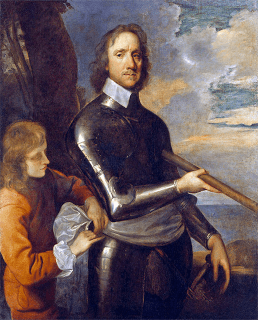
Oliver Cromwell abandons the First Siege of Waterford on December 2, 1649, and goes into winter quarters at Dungarvan. Waterford is besieged twice during 1649 and 1650 during the Cromwellian conquest of Ireland. The town is held by Confederate Ireland, also referred to as the Irish Catholic Confederation, under General Richard Farrell and English Royalist troops under General Thomas Preston. It is besieged by English Parliamentarians under Cromwell, Michael Jones and Henry Ireton.

Waterford is a Catholic city and like most other towns in southeast Ireland, the populace has supported the Confederate Catholic cause since the Irish Rebellion of 1641. Late in 1641, Protestant refugees, displaced by the insurgents, begin to arrive in the town, creating tension among the Catholic townspeople. The city’s mayor wants to protect the refugees, but the recorder and several of the aldermen on the city council want to strip them of their property and let in the rebels, who arrive outside the walls in early 1642. At first, the Mayor’s faction is successful in refusing to admit rebel forces, but by March 1642, the faction in the municipal government sympathetic to the rebellion prevails. The Protestants in Waterford are expelled, in most cases put on ships to England, sometimes after having their property looted by the city mob. In 1645, Confederate troops under Thomas Preston besiege and capture nearby Duncannon from its English garrison, thus removing the threat to shipping coming to and from Waterford.

Waterford’s political community is noted for its intransigent Catholic politics. In 1646, a synod of Catholic Bishops, based in Waterford, excommunicate any Catholic who supports a treaty between the Confederates and English Royalists, which does not allow for the free practice of the Catholic religion. The Confederates finally agree to a treaty with Charles I of England in 1648, in order to join forces with the Royalists against their common enemy, the English Parliament, which is both anti-Catholic and hostile to the King. The Parliamentarians land a major expeditionary force in Ireland at Dublin, under Cromwell in August 1649.

The English Parliamentarian New Model Army arrives to besiege Waterford in October 1649. One of the stated aims of Cromwell’s invasion of Ireland is to punish the Irish for the mistreatment of Protestants in 1641. Given Waterford’s history of partisan Catholic politics, this provokes great fear amongst the townspeople. This fear is accentuated by the fate of Drogheda and nearby Wexford which had recently been taken and sacked by Cromwell’s forces and their garrisons massacred.

Waterford is very important strategically in the war in Ireland. Its port allows for the importation of arms and supplies from continental Europe and its geographical position commands the entrance of the rivers Suir and Barrow.

Before besieging Waterford, Cromwell has to take the surrounding garrisons held by Royalist and Confederate troops in order to secure his lines of communication and supply. Duncannon, whose fort commands the sea passage into Waterford, is besieged by Parliamentarians under Ireton from October 15 to November 5. However, due to a stubborn defence, the garrison there under Edward Wogan holds out. This means that heavy siege artillery cannot be brought up to Waterford by sea.

New Ross surrenders to Cromwell on October 19 and Carrick-on-Suir is taken on November 19. A counterattack on Carrick by Irish troops from Ulster under a Major Geoghegan is repulsed on November 24, leaving 500 of the Ulstermen dead.

Having isolated Waterford from the east and north, Cromwell arrives before the city on November 24. However, Waterford still has access to reinforcements from the west and up to 3,000 Irish soldiers from the Confederate’s Ulster Army under Richard O’Farrell are fed into the city in the course of a week. O’Farrell, having been a successful officer in the Spanish Army, is highly trained and experienced in siege warfare from battles in Flanders. Cromwell has come up against a superior minded soldier and commander. The weather is extremely cold and wet, and the Parliamentarian troops suffer heavily from disease. Out of 6,500 English Parliamentarian soldiers who besiege Waterford in 1649, only 3,000 or so are still fit by the time the siege is called off. Added to this, Cromwell is able to make little headway in taking the city. The capture of a fort at Passage East enables him to bring up siege guns by sea, but the wet weather means that it is all but impossible to transport them close enough to Waterford’s walls to use them. Farrell proves tactically superior in defending Waterford and repels Cromwell’s attempts. Eventually Cromwell has to call off the siege on December 2 and go into winter quarters at Dungarvan. Among his casualties is his commander Michael Jones, who dies of disease.


Leave a comment

Birth of Irish Republican Colm Murphy

Colm Murphy, Irish republican who is the first person to be convicted in connection with the Omagh bombing, but whose conviction is overturned on appeal, is born on August 18, 1952, in Belleeks, County Armagh, Northern Ireland.

Murphy is an active Irish republican paramilitary from his late teens. In March 1972, he is arrested in Dundalk regarding an assault and is sentenced to two years in prison after the Garda Síochána find a loaded revolver in his car. He is imprisoned in the Curragh Camp but escapes in October 1972 and is not recaptured until May 1973. In June 1976, he is imprisoned again, receiving a three-year sentence for firearms offences and a one-year sentence for Provisional Irish Republican Army membership, both sentences to run concurrently. In July 1983, he is arrested in the United States after attempting to buy a consignment of M60 machine guns to be shipped to Ireland for use by the Irish National Liberation Army (INLA). He receives a five-year prison sentence but returns to Ireland in December 1985 after being released early.

In the late 1980s, Murphy begins investing in property and forms a company named Emerald Enterprises in 1990. He purchases the Emerald Bar public house in Dundalk for IR£100,000, and it later becomes a meeting place for dissident republicans. Other investments included 30 acres of land in Drogheda bought for IR£52,000 in 1995, and his company wins contracts for an IR£11 million development at Dublin City University (DCU) and the multi-million-pound International Financial Services Centre in the Dublin Docklands.

Murphy is arrested by the Gardaí on February 21, 1999, for questioning under anti-terrorist legislation. On February 24, he becomes the first person to be charged in connection with the Omagh bombing, when he appears before Dublin‘s Special Criminal Court and is charged with conspiring to cause an explosion under the terms of Ireland’s Offences Against the State Act, between August 13-16, 1998. He is also charged with membership in an illegal organisation, the Real Irish Republican Army (RIRA).

On October 10, 2000, the BBC television show Panorama names Murphy as one of four people connected with the Omagh bombing, along with Seamus Daly and Liam Campbell. In 2001, he undertakes legal action against the BBC and Daily Mail publishers Associated Newspapers for contempt of court. The action against Associated Newspapers is settled on July 31, 2001, and the newspaper releases a statement saying Murphy is entitled to be presumed innocent of the charges against him until proven guilty.

Murphy’s trial begins at Special Criminal Court in Dublin on October 12, 2001. The court hears that Murphy had supplied two mobile phones which were used during the bombing. One witness, Murphy’s second cousin, retracts his evidence and the judge calls the conduct of two detectives outrageous, saying they had persistently lied under cross-examination. Despite this, on January 22, 2002, he is convicted of conspiring to cause the Omagh bombing, and on January 25 is sentenced to 14 years imprisonment with the judge describing him as a long-time republican extremist.

On January 21, 2005, Murphy’s conviction is overturned and a new trial ordered, due to the invasion of Murphy’s presumption of innocence, and alteration of Gardaí interview notes and evidence presented by two officers. A week later, his legal case against the BBC is resolved, with the BBC issuing a statement that Murphy “was fully entitled to maintain his innocence of the charges against him and to test the evidence against him at his trial.”

On October 23, 2006, two Gardaí officers are found not guilty of perjuring themselves during Murphy’s trial. On May 23, 2007, it is announced that Murphy is suffering from short-term memory loss resulting from a car accident in 1988. His lawyers attempt to prevent a retrial taking place, on the grounds that his condition interferes with his right to a fair hearing. The Court of Criminal Appeal is scheduled to hear his case again in October 2008. Following a retrial held in January 2010, he is acquitted on February 24, 2010.

In 2009, Murphy is one of four men found by a civil court to be liable for the Omagh bombing in a case taken by relatives of the victims. On July 7, 2011, in Belfast High Court, Lord Justice Malachy Higgins directs a retrial of the civil claims against Murphy. He questions evidence surrounding emails from U.S. undercover agent David Rupert while overturning the judgment on Murphy. The paucity of the email evidence, the lack of consistency in the emails or at least ambiguity, the possibility of initials referring to someone other than Murphy and the fact that they refer on occasions to double hearsay considerably weaken the emails as evidence, he says. Following a civil retrial on March 20, 2013, Murphy and Seamus Daly are found liable for involvement in the bombing.

Murphy dies peacefully of degenerative lung disease at the age of 70 on April 18, 2023, at Our Lady of Lourdes Hospital in Drogheda, County Louth.


Leave a comment

Birth of Máire Nic Shiubhlaigh, Actress & Republican Activist

Máire Nic Shiubhlaigh, Irish actress and republican activist, is born Mary Elizabeth Walker in Charlemont Street, Dublin, on May 8, 1883. She starts acting in her teens and appears in the first Irish language play performed in Ireland. She is a founder-member of the Abbey Theatre and is leading lady on its opening night in 1904, when she plays the title role in W. B. Yeats‘s Cathleen ni Houlihan. She later joins the Theatre of Ireland, which she helps to found.

Nic Shiubhlaigh is born into a nationalist and Irish-speaking family. Her father, Matthew, comes from County Carlow and is a printer and publisher who becomes proprietor of the Gaelic Press. Her mother, Mary, is a dressmaker from Dublin. She grows up in 56 High Street in the Dublin Liberties.

Nic Shiubhlaigh joins the Gaelic League about 1898 and comes into contact with Arthur Griffith and William Rooney. She joins the cultural and revolutionary women’s group Inghinidhe na hÉireann in 1900. With the help of drama enthusiasts William and Frank Fay, she starts acting with the drama group of Inghinidhe na hÉireann. In 1901, the drama group takes part in a feis with two plays, Tobar Draoidheachta by Patrick S. Dinneen and Red Hugh by Alice Milligan. George Russell and W.B. Yeats, who are in attendance at the performance, are moved by the dedication of the amateur players. Russell, who had already offered the Fays his mythic play Deirdre, persuades Yeats to offer them his patriotic play, Cathleen ni Houlihan.

In 1902, Nic Shiubhlaigh joins W. G. Fay’s Irish National Dramatic Company, along with others such as Maire Quinn, Brian Callender, Charles Caulfield, James H. Cousins, P. J. Kelly, Dudley Digges and Frederick Ryan. Their first production of the two one-act plays, Cathleen ni Houlihan, with Maud Gonne in the lead role, and Deirdre, is on April 2, 1902. The company, which has no funds to speak of, acquires a couple of bare rooms at 34 Lower Camden Street, which with the help of friends from Irish-revival societies, they turn into a tiny theatre. They rehearse at the Coffee Palace and also use the Molesworth Hall for productions. In March 1903, with other members of her family, she appears in the first production of Yeats’ morality play, The Hour-Glass, in which she plays the part of the Angel.

In 1903, the playwrights and most of the actors and staff from these productions go on to form the Irish National Theatre Society, which has its registered offices in the Camden Street theatre. Nic Shiubhlaigh is a founder member and on the management committee of the society. Yeats is president, while Russell, Maud Gonne and Douglas Hyde are vice-presidents. William Fay is stage manager. The society founds the Abbey Theatre.

Nic Shiubhlaigh acts in the Abbey Theatre from the time of its founding. On its opening night on December 27, 1904, she plays the name part in Cathleen ni Houlihan. Her portrait is painted by John Butler Yeats for the occasion and hangs in the vestibule. She is the principal actress of the company after Máire Quinn’s departure to the United States, and when she leaves, the burden of the chief women’s rôles falls upon Sara Allgood.

In September 1905, the Abbey administrator and financial backer, an English theatre impresario called Annie Horniman, in hopes of improving the artistic quality of the productions at the Abbey, offers to guarantee salaries (a sum of £500 per year) for the actors and for Willie Fay as producer. To her mind, this will allow the actors and Fay to dispense with their day jobs and concentrate wholly upon their acting. The more nationally-minded members of the staff disagree. Nic Shiubhlaigh writes, “It was pointed out that the old Irish National Theatre Society had been founded in 1902 on the understanding that its independence as a national movement was to be secured only through the efforts of its members. It would be contrary to these ideals to accept a subsidy from an independent source.” For them it would mean a choice between a national theatre and an artistic theatre. At a meeting of the society, supported by Yeats, Gregory and Synge, the motion to accept Miss Horniman’s proposition is passed by a majority of shareholdings rather than a majority of votes. Nic Shiubhlaigh along with others resign, but they agree to remain until the end of the year, as part of an upcoming tour of England.

Nic Shiubhlaigh remains with the Abbey until December 1905, when along with Honor Lavelle (also known as Helen Laird), Emma Vernon, Máire Garvey, Frank Walker, Seumas O’Sullivan, Padraic Colum and George Roberts, she leaves. She joins the Theatre of Ireland, which she helps to found. This is formed in June 1906 with aims similar to the Irish National Theatre Society. She returns to the Abbey in 1910.

At the time of the 1916 Easter Rising, Nic Shiubhlaigh is living in Glasthule, a suburb of Dublin. She cycles into the city and, along with other members of Cumann na mBan, makes her way to Jacob’s Biscuit Factory, whose garrison under the command of Thomas MacDonagh guards the city against the troops of Portobello Barracks, and acts as an information and supplies hub for other garrisons around the city. She commands the women of the garrison. They remain there until the surrender, cooking and rendering first aid to the garrison, and bringing despatches through the city.

Nic Shiubhlaigh had retired from professional acting in 1912, and seldom works in professional theatre again. In 1929, she marries former IRA Director of Organisation, Major General Eamon “Bob” Price, and they move to Laytown, County Meath.

Nic Shiubhlaigh’s last stage appearance, alongside her sister Gypsy, is in a production of Gaol Gate at the Olympia Theatre, Dublin, on November 21, 1948, staged to mark the 150th anniversary of the death of Theobald Wolfe Tone.

Nic Shiubhlaigh dies on September 9, 1958, in the Drogheda cottage hospital.

Her book, The Splendid Years, written with the help of her nephew Edward Kenny, recalls the years of the national revival and the Easter Rising.

On July 23, 1966, a plaque bearing Nic Shiubhlaigh’s name is unveiled at the Abbey Theatre by the Taoiseach, Seán Lemass. The others named on the plaque are Ellen Bushell, Sean Connolly, Helena Molony, Arthur Shields, Peadar Kearney and Barney Murphy.

(Pictured: 1904 portrait of Máire Nic Shiubhlaigh, as painted by John Butler Yeats)


Leave a comment

The Beginning of the Belfast Blitz

A Luftwaffe bomb kills thirteen people in Belfast, Northern Ireland, on the night of April 7, 1941. Ultimately, the city is devastated by air raids. Seven hundred people are killed and 400 seriously injured in what becomes known as the Belfast Blitz. The Blitz consists of four German air raids on strategic targets in Belfast, in April and May 1941 during World War II.

There had been a number of small bombings, probably by planes that missed their targets over the River Clyde in Glasgow or the cities of North West England. On March 24, 1941, John MacDermott, Minister for Public Security, writes to the Prime Minister of Northern Ireland, John Andrews, expressing his concerns that Belfast is so poorly protected. “Up to now we have escaped attack. So had Clydeside until recently. Clydeside got its blitz during the period of the last moon. There [is] ground for thinking that the … enemy could not easily reach Belfast in force except during a period of moonlight. The period of the next moon from say the 7th to the 16th of April may well bring our turn.” MacDermott is proved right.

The first deliberate raid takes place on the night of April 7. It targets the docks. Neighbouring residential areas are also hit. Six Heinkel He 111 bombers, from Kampfgruppe 26, flying at 7,000 feet, drop incendiaries, high explosive and parachute mines. By British mainland blitz standards, casualties are light. Thirteen die, including a soldier killed when an anti-aircraft gun at the Balmoral show-grounds misfires. The most significant loss is a 4.5-acre factory floor for manufacturing the fuselages of Short Stirling bombers. The Royal Air Force (RAF) announces that Squadron Leader J.W.C. Simpson shot down one of the Heinkels over Downpatrick. The Luftwaffe crews return to their base in Northern France and report that Belfast’s defences are “inferior in quality, scanty and insufficient.” This raid overall causes relatively little damage, but a lot is revealed about Belfast’s inadequate defences.

On Easter Tuesday, April 15, 1941, spectators watching a football match at Windsor Park notice a lone Luftwaffe Junkers Ju 88 aircraft circling overhead. That evening over 150 bombers leave their bases in northern France and the Netherlands and head for Belfast. There are Heinkel He 111s, Junkers Ju 88s and Dornier Do 17s. At 10:40 p.m. the air-raid sirens sound. Accounts differ as to when flares are dropped to light up the city. The first attack is against the city’s waterworks, which had been attacked in the previous raid. High explosives are dropped. Initially it is thought that the Germans had mistaken this reservoir for the harbour and shipyards, where many ships, including HMS Ark Royal are being repaired. However, that attack is not an error. Three vessels nearing completion at Harland & Wolff are hit as is its power station. Wave after wave of bombers drop their incendiaries, high explosives and landmines. When incendiaries are dropped, the city burns as water pressure is too low for effective firefighting. There is no opposition. In the mistaken belief that they might damage RAF fighters, the anti-aircraft batteries cease firing. But the RAF does not respond. The bombs continued to fall until 5:00 a.m.

Outside of London, with some 900 dead, this is the greatest loss of life in a night raid during the Blitz. A stray bomber attacks Derry, killing fifteeen. Another attacks Bangor, County Down, killing five. By 4:00 a.m. the entire city seems to be in flames. At 4:15 a.m., John MacDermott, the Minister of Public Security, manages to contact Minister of Agriculture Basil Brooke seeking permission to seek help from the Irish government. Brooke notes in his diary, “I gave him authority as it is obviously a question of expediency.” Since 1:45 a.m. all telephones have been cut. Fortunately, the railway telegraphy link between Belfast and Dublin is still operational. The telegram is sent at 4:35 a.m. asking the Irish Taoiseach, Éamon de Valera, for assistance.

By 6:00 a.m., within two hours of the request for assistance, 71 firemen with 13 fire tenders from Dundalk, Drogheda, Dublin, and Dún Laoghaire are on their way to cross the Irish border to assist their Belfast colleagues. In each station volunteers are requested, as it is beyond their normal duties. In every instance, all step forward. They remain in Belfast for three days, until they are sent back by the Northern Ireland government. By then 250 firemen from Clydeside have arrived.

Taoiseach Éamon de Valera formally protests to Berlin. Frank Aiken, the Irish Minister for the Co-ordination of Defensive Measures, is in Boston, Massachusetts, at the time. He gives an interview saying, “the people of Belfast are Irish people too.”

There is a second massive air raid on Belfast on Sunday, May 4-5, 1941, three weeks after the Easter Tuesday raid. Around 1:00 a.m., Luftwaffe bombers fly over the city, concentrating their attack on the Harbour Estate and Queen’s Island. Nearby residential areas in east Belfast are also hit when “203 metric tonnes of high explosive bombs, 80 land mines attached to parachutes, and 800 firebomb canisters containing 96,000 incendiary bombs” are dropped. Over 150 people die in what becomes known as the “Fire Blitz.” Casualties are lower than at Easter, partly because the sirens sound at 11:45 p.m. while the Luftwaffe attack more cautiously from a greater height. St. George’s Church in High Street is damaged by fire. Again, the Irish emergency services cross the border, this time without waiting for an invitation.

(Pictured: Rescue workers search through the rubble of Eglington Street in Belfast, Northern Ireland, after a German Luftwaffe air raid, May 7, 1941)


Leave a comment

Birth of Political Economist John Elliott Cairnes

John Elliott Cairnes, Irish-born political economist, is born on December 26, 1823, at Castlebellingham, County Louth. He has been described as the “last of the classical economists.”

Cairnes is the son of William Elliott Cairnes (1787–1863) of Stameen, near Drogheda, and Marianne Woolsey, whose mother is the sister of Sir William Bellingham, 1st Baronet of Castlebellingham. William decides upon a business career, against the wishes of his mother, Catherine Moore of Moore Hall, Killinchy, and becomes a partner in the Woolsey Brewery at Castlebellingham. In 1825, he starts on his own account in Drogheda, making the Drogheda Brewery an unqualified success. He is remembered for his great business capacity and for the deep interest he takes in charity.

After leaving school, Cairnes spends some years in the counting house of his father at Drogheda. His tastes, however, lay altogether in the direction of study, and he is permitted to enter Trinity College Dublin, where he takes the degree of BA in 1848, and six years later that of MA. After passing through the curriculum of Arts, he engages in the study of Law and is called to the Irish bar. But he lacks a desire to pursue the legal profession, and over some ensuing years, he devotes himself to writing in various publications about social and economic questions and treatises that relate to Ireland. He focuses mostly on political economy, which he studies thoroughly.

While residing in Dublin, Cairnes makes the acquaintance of the Archbishop of Dublin Richard Whately, who conceives a very high respect for Cairnes’ character and abilities. In 1856, a vacancy occurs in the chair of political economy at Dublin, founded by Whately, and Cairnes receives the appointment. In accordance with the regulations of the foundation, the lectures of his first year’s course are published. The book appears in 1857 with the title Character and Logical Method of Political Economy. It follows up on and expands John Stuart Mill‘s treatment in the Essays on some Unsettled Questions in Political Economy and forms an admirable introduction to the study of economics as a science. In it the author’s peculiar powers of thought and expression are displayed to the best advantage. Logical exactness, precision of language, and firm grasp of the true nature of economic facts, are the qualities characteristic of this as of all his other works. If the book had done nothing more, it would still have conferred inestimable benefit on political economists by its clear exposition of the true nature and meaning of the ambiguous term law. To the view of the province and method of political economy expounded in this early work the author always remains true, and several of his later essays, such as those on Political Economy and Land, Political Economy and Laissez-Faire, are but reiterations of the same doctrine. His next contribution to economical science is a series of articles on the gold question, published partly in Fraser’s Magazine, in which the probable consequences of the increased supply of gold attendant on the Australian and Californian gold discoveries are analysed with great skill and ability. And a critical article on Michel Chevalier‘s work, On the Probable Fall in the Value of Gold, appears in the Edinburgh Review for July 1860.

In 1861, Cairnes is appointed to the professorship of jurisprudence and political economy in Queens College Galway, and in the following year he publishes his admirable work The Slave Power, one of the finest specimens of applied economic philosophy. The inherent disadvantages of the employment of slave labour are exposed with great fullness and ability, and the conclusions arrived at have taken their place among the recognised doctrines of political economy. The opinions expressed by Cairnes as to the probable issue of American Civil War are largely verified by the actual course of events, and the appearance of the book has a marked influence on the attitude taken by serious political thinkers in England towards the Confederate States of America.

During the remainder of his residence at Galway, Cairnes publishes nothing beyond some fragments and pamphlets, mainly upon Irish questions. The most valuable of these papers are the series devoted to the consideration of university education. His health, at no time very good, is still further weakened in 1865 by a fall from his horse. He is ever afterwards incapacitated from active exertion and is constantly liable to have his work interfered with by attacks of illness.

In 1866 Cairnes is appointed professor of political economy in University College, London. He is compelled to spend the session 1868–1869 in Italy, but on his return continues to lecture until 1872. During his last session he conducts a mixed class, ladies being admitted to his lectures. His health soon renders it impossible for him to discharge his public duties. He resigns his post in 1872 and retires with the honorary title of professor emeritus of political economy. In 1873 his own university confers on him the degree of LL.D.

Cairnes dies at the age of 51 at Blackheath, London, England, on July 8, 1875.


Leave a comment

Birth of Feargal Quinn, Businessman, Politician & TV Personality

Feargal Quinn, Irish businessman, politician and television personality, is born in Dublin on November 27, 1936. He is the founder of the Superquinn supermarket chain and serves as a Senator in Seanad Éireann representing the National University of Ireland constituency from 1993 to 2016.

Quinn’s father, Eamonn, founds a grocery brand and later the Red Island resort in Skerries, Dublin. He is a first cousin of Labour Party politician Ruairi Quinn and of Lochlann Quinn, former chairman of Allied Irish Banks (AIB). He is educated at Newbridge College and is a commerce graduate of University College Dublin (UCD). He builds a career in business and later takes on a range of public service roles.

Quinn founds the national supermarket chain Superquinn (originally Quinn’s Supermarkets), of which he remains non-executive president for some years after his family sells out their interest in August 2005 for over €400 million. Superquinn is known for its focus on customer service and pioneers a number of innovations, including Ireland’s first supermarket loyalty card in 1993, SuperClub. It also introduces self-scanning of goods by customers in a number of its outlets. Superquinn becomes the first supermarket in the world to guarantee the absolute traceability of all its beef from pasture to plate, using DNA TraceBack, a system developed at Trinity College, Dublin by IdentiGEN.

Quinn becomes the chairman of the Interim Board for Posts and serves as chairman of its successor An Post (the Irish postal administration) until 1989. He also serves on several other public authorities and boards. From 1993 to 1998, he chairs the steering committee which oversees the development of the Leaving Certificate Applied. In 2006, he is appointed an Adjunct Professor in Marketing at National University of Ireland Galway. He is also chairman of Springboard Ireland.

Quinn is a former President of EuroCommerce, the Brussels-based organisation which represents the retail, wholesale and international trade sectors in Europe. He also serves on the board of directors of CIES, the Food Business Forum based in Paris, as well as the American-based Food Marketing Institute.

In 2009, Quinn works with independent shops and helps them to revamp, modernise and stave off stiff competition from multi-national retailers. It airs as RTÉ‘s six-part television series, Feargal Quinn’s Retail Therapy. A second series airs in 2011, and a third series airs in 2012. In 2011, he fronts RTÉ’s Local Heroes campaign in Drogheda, County Louth, which is an assembled team of experts to kick-start the local economy. It airs as RTÉ One‘s six-part television series, Local Heroes – A Town Fights Back.

Quinn is first elected as a senator in 1993 from the National University of Ireland constituency and is re-elected in 1997, 2002, 2007 and 2011. He is a member of the Joint Oireachtas Committee on European Affairs, the Joint Committee on Finance and Public Service and is an Oireachtas member of the National Economic and Social Forum, along with the Joint Committee on Jobs and Innovation.

Quinn is one of the co-founders and is a driving force behind Democracy Matters – a civil society group that is formed to oppose the Government’s plans to abolish Seanad Éireann. In May 2013, with Senators Katherine Zappone and Mary Ann O’Brien, he introduces the Seanad Bill 2013 to reform the system of electing the elected members of Seanad Éireann (as provided for in Article 18.10 of the Constitution of Ireland) through a one-person, one vote franchise. The Seanad Bill 2013 succeeds in being passed at Second Stage in the Seanad. During the Seanad abolition referendum campaign, the Bill demonstrates to the electorate, in a very palpable way, that reform of the Seanad is achievable if they vote for its retention. In a referendum held in October 2013 on the Abolition of Seanad Éireann, the people vote to retain the Seanad by 51.7%.

In 2014, Quinn reveals that since being first elected to Seanad Éireann, he has donated his entire salary to charity and in more recent years he has refused to accept any salary. In March 2015, he opposes the Marriage Equality bill in the Seanad, and votes ‘No’ in the referendum. He serves as Chairman of the Independent Alliance. He does not contest the 2016 Seanad election.

Quinn is the recipient of five honorary doctorates from education institutions, including NUI Galway in 2006, a papal knighthood along with a fellowship and the French Ordre National du Mérite. He shares with Oprah Winfrey the 2006 “Listener of the Year” award of the International Listening Association.

Quinn dies peacefully at his home in Howth, County Dublin, on April 24, 2019, following a short illness. His funeral Mass takes place at St. Fintan’s Church in Sutton, north County Dublin. In attendance is President Michael D. Higgins, a representative for Taoiseach Leo Varadkar, Minister for Children Katherine Zappone, Senator Michael McDowell, and a host of other current and former politicians, business figures, and past colleagues of the “Superquinn family.” Fittingly, the coffin is carried from the church to the tune of Frank Sinatra’s “My Way.”


Leave a comment

Execution of Oliver Plunkett, Catholic Archbishop of Armagh

Oliver Plunkett (Irish: Oilibhéar Pluincéid), Catholic Archbishop of Armagh and Primate of All Ireland who is the last victim of the Popish Plot, is executed in Tyburn, London, England, on July 1, 1681. He is beatified in 1920 and canonised in 1975, thus becoming the first new Irish saint in almost seven hundred years.

Plunkett is born on November 1, 1625 (earlier biographers give his date of birth as November 1, 1629, but 1625 has been the consensus since the 1930s) in Loughcrew, County Meath, to well-to-do parents with Hiberno-Norman ancestors. A grandson of James Plunket, 8th Baron Killeen (c. 1542-1595), he is related by birth to a number of landed families, such as the recently ennobled Earls of Roscommon, as well as the long-established Earls of Fingall, Lords Louth, and Lords Dunsany. Until his sixteenth year, his education is entrusted to his cousin Patrick Plunkett, Abbot of St. Mary’s, Dublin, and brother of Luke Plunket, 1st Earl of Fingall, who later becomes successively Bishop of Ardagh and of Meath.

As an aspirant to the priesthood, Plunkett sets out for Rome in 1647, under the care of Father Pierfrancesco Scarampi of the Roman Oratory. At this time the Irish Confederate Wars are raging in Ireland. These are essentially conflicts between native Irish Catholics, English and Irish Anglicans and Nonconformists. Scarampi is the Papal envoy to the Catholic movement known as the Confederation of Ireland. Many of Plunkett’s relatives are involved in this organisation.

Plunkett is admitted to the Pontifical Irish College in Rome and proves to be an able pupil. He is ordained a priest in 1654 and deputed by the Irish bishops to act as their representative in Rome. Meanwhile, the Cromwellian conquest of Ireland (1649–53) had defeated the Catholic cause in Ireland. In the aftermath the public practice of Catholicism is banned, and Catholic clergy are executed. As a result, it is impossible for Plunkett to return to Ireland for many years. He petitions to remain in Rome and, in 1657, becomes a professor of theology. Throughout the period of the Commonwealth and the first years of Charles II‘s reign, he successfully pleads the cause of the Irish Catholic Church and also serves as theological professor at the College of Propaganda Fide. At the Congregation of Propaganda Fide on July 9, 1669, he is appointed Archbishop of Armagh, the Irish primatial see, and is consecrated on November 30 at Ghent by the Bishop of Ghent, Eugeen-Albert, count d’Allamont. He eventually sets foot on Irish soil again on March 7, 1670, as the Stuart Restoration of 1660 had begun on a basis of toleration. The pallium is granted him in the Consistory of July 28, 1670.

After arriving back in Ireland, Plunkett tackles drunkenness among the clergy, writing, “Let us remove this defect from an Irish priest, and he will be a saint.” The Penal Laws had been relaxed in line with the Declaration of Breda in 1660 and he is able to establish a Jesuit College in Drogheda in 1670. A year later 150 students attend the college, no fewer than 40 of whom are Protestant, making this college the first integrated school in Ireland. His ministry is a successful one and he is said to have confirmed 48,000 Catholics over a four-year period. The government in Dublin, especially under the Lord Lieutenant of Ireland, James Butler, 1st Duke of Ormond (the Protestant son of Catholic parents), extend a generous measure of toleration to the Catholic hierarchy until the mid-1670s.

On the enactment of the Test Act in 1673, to which Plunkett does not agree for doctrinal reasons, the college is closed and demolished. He goes into hiding, travelling only in disguise, and refuses a government edict to register at a seaport to await passage into exile. For the next few years, he is largely left in peace since the Dublin government, except when put under pressure from the English government in London, prefer to leave the Catholic bishops alone.

In 1678 the so-called Popish Plot, concocted in England by clergyman Titus Oates, leads to further anti-Catholic action. Archbishop of Dublin Peter Talbot is arrested, and Plunkett again goes into hiding. Despite being on the run and with a price on his head, he refuses to leave his flock. He is arrested in Dublin on December 6, 1679, and imprisoned in Dublin Castle, where he gives absolution to the dying Talbot. He is tried at Dundalk for conspiring against the state by allegedly plotting to bring 20,000 French soldiers into the country, and for levying a tax on his clergy to support 70,000 men for rebellion. Though this is unproven, some in government circles are worried about the possibility that a repetition of the Irish Rebellion of 1641 is being planned and, in any case, this is a convenient excuse for proceeding against Plunkett.

Plunkett is found guilty of high treason in June 1681 “for promoting the Roman faith,” and is condemned to death. Numerous pleas for mercy are made but Charles II, although himself a reputed crypto-Catholic, thinks it too politically dangerous to spare Plunkett.

Plunkett is hanged, drawn and quartered at Tyburn on July 1, 1681, the last Catholic martyr to die in England. His body is initially buried in two tin boxes, next to five Jesuits who had died previously, in the courtyard of St. Giles in the Fields church. The remains are exhumed in 1683 and moved to the Benedictine monastery at Lamspringe, near Hildesheim in Germany. The head is brought to Rome, and from there to Armagh, and eventually to Drogheda where since June 29, 1921, it has rested in St. Peter’s Roman Catholic Church. Most of the body is brought to Downside Abbey, England, where the major part is located today, with some parts remaining at Lamspringe. On the occasion of his canonization in 1975 his casket is opened, and some parts of his body given to the St. Peter’s Church in Drogheda.