seamus dubhghaill

Promoting Irish Culture and History from Little Rock, Arkansas, USA


Leave a comment

Birth of Mary Lou McDonald, Current President of Sinn Féin

Mary Louise McDonald, Irish politician and President of Sinn Féin since February 2018, is born in Dublin on May 1, 1969.

McDonald is born into a middle-class family in south Dublin. Her father Patrick McDonald, a builder and surveyor, and her mother Joan, separate when she is nine years old, and she stays with her mother in Rathgar. She has three siblings, one older and two younger. Her great-uncle, James O’Connor, was a member of the Anti-Treaty IRA and was executed at the Curragh Camp during the Irish Civil War.

McDonald is educated at Rathgar National School and at the Catholic all-girls, Notre Dame des Missions in Churchtown, South Dublin, where she is involved in debating. She then attends Trinity College Dublin (TCD), the University of Limerick and Dublin City University (DCU), studying English Literature, European Integration Studies and Human Resource Management.

She works as a researcher for the Institute of European Affairs, a consultant for the Irish Productivity Centre, a human resources consultancy that is jointly operated by Ibec and Irish Congress of Trade Unions (ICTU), and a trainer in the Partnership Unit of the Educational and Training Services Trust.

McDonald starts her political career by first joining Fianna Fáil in 1998 but leaves the party after a year due to core policy differences, particularly in relation to Northern Ireland and social justice. She quickly realises that Sinn Féin is a more appropriate party for her Republican views after meeting Sinn Féin members through the Irish National Congress.

She first runs for office at the 2002 Irish general election when she unsuccessfully contests the Dublin West constituency for Sinn Féin, polling 8.02% of first preference votes.

In 2004, McDonald becomes Sinn Féin’s first Member of the European Parliament (MEP) in Ireland, when she is elected at the 2004 European Parliament election in Ireland for the Dublin constituency, receiving over 60,000 first preference votes. She serves until 2009 and is a prominent member of the Employment and Social Affairs committee and Civil Liberties committee.

McDonald is an unsuccessful candidate in the Dublin Central constituency at the 2007 Irish general election. In 2009 she becomes the vice president of Sinn Féin.

McDonald contests the Dublin Central constituency again at the 2011 Irish general election, this time picking up 13.1% of first preference votes. She is successful in taking the last seat in the constituency. Following the election, she becomes Sinn Féin’s Spokesperson for Public Expenditure and Reform and is a member of the Public Accounts Committee from then until 2017.

After her re-election to the Dáil at the 2016 Irish general election, in which she tops the poll in Dublin Central, she becomes Sinn Féin’s All-Ireland Spokesperson for Mental Health and Suicide Prevention, which she holds until being elected president of Sinn Féin in 2018.

At a Sinn Féin party conference on November 18, 2017, Gerry Adams is re-elected party leader but announces that he will ask party leadership to call for a special Ard Fheis to be held within three months to choose a new president, and that he will not stand for re-election as TD for the Louth constituency in the next election.

At the close of nominations to succeed Adams on January 20, 2018, McDonald is announced as the president-elect of Sinn Féin, as she is the sole nominee to enter the race. She is confirmed as president at a special Ard Fheis on February 10, 2018, in Dublin.

McDonald is nominated as Taoiseach on February 20, 2020, but is defeated 45 to 84. On June 26, 2020, Fianna Fáil, Fine Gael, and the Green Party form a coalition government, leaving Sinn Féin as the largest opposition party, and McDonald as Leader of the Opposition. She dismisses the coalition agreement as a “marriage of convenience,” and accuses Fianna Fáil and Fine Gael of conspiring to exclude Sinn Féin from government.

At the 2024 Irish general election, McDonald is re-elected to the Dáil topping the poll in Dublin Central with Sinn Féin increasing their seat share by two seats, remaining the second largest party by representation in the Dáil and attaining 19% of the first preference votes, a fall of 5.5% from 2020 and fall behind Fianna Fáil by 2.9% and Fine Gael by 1.8%.

McDonald is again nominated as Taoiseach on December 18, 2024, but is defeated 44 to 110.

McDonald’s husband, Martin Lanigan, works as a gas control superintendent for the emergency dispatch division of Gas Networks Ireland, a state infrastructure provider. They have two children and live in Cabra, Dublin.


Leave a comment

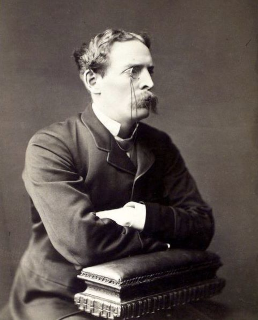
Birth of Thomas Sinclair, Businessman & Politician

Thomas Sinclair, Ulster Scots businessman and politician who drafted the Ulster Covenant, is born in Belfast on September 23, 1838.

Sinclair’s parents are Thomas (1811–1867), merchant and ship-owner, and Sarah Sinclair (née Archer) (1800–1849). His father goes into business with his brother John (1808–1856), setting up a provisions and general merchant store at 5–11 Tomb Street, Belfast. John marries Eliza Pirrie, a relative of the prominent ship builder William Pirrie, 1st Viscount Pirrie. After the death of his father in 1867, Sinclair inherits £35,000 as his mother, brother and sister are all deceased.

In 1876, Sinclair marries Mary Duffin of Strandtown Lodge, Belfast. They have a daughter, Frances Elizabeth Crichton, and a son. She dies in 1879. He marries Elizabeth Richardson in 1882. She is the niece of John Grubb Richardson and the widow of Sinclair’s cousin, John M. Sinclair. They have three sons and two daughters.

Sinclair attends Royal Belfast Academical Institution and Queen’s College Belfast, graduating with a BA with gold medal for mathematics in 1856, and an MA with gold medals in logic, political economy, and English literature in 1859. After his father’s death, he takes over running the family business. He expands and grows it by merging it with another large provisions business with American branches, Kingan & Co. He is related to the Kingans through his cousin Sarah, who is married to the owner, Samuel Kingan.

Despite numerous requests, Sinclair never stands for parliament, instead serving as deputy lieutenant, justice of the peace, president of the Ulster chamber of commerce in 1876 and 1902, and privy councilor in 1896. Having been a supporter of William Ewart Gladstone, he joins the Ulster Liberal Party in 1868, supporting the land acts of 1870 and 1881. Following the home rule bill of 1886, he convenes a meeting in the Ulster Hall of liberals on April 30, 1886, which passes a resolution in condemnation of the bill. Forming the Ulster Liberal Unionist Association, of which he is chair, he organises the Ulster Convention in Belfast. Held on June 17, 1892, it sees 11,879 Ulster unionists meet to protest home rule. Nine months after the convention, he is appointed to the executive committee of the new unionist clubs, which are founded to protect the union. The defeat of the British Liberal Party in 1895 significantly decreases the threat of home rule, leading to the unionists’ clubs being suspended, and Sinclair returning to his activities in liberal reform. He is the leading Ulster member of the recess committee from 1895, which is founded by Horace Plunkett. He supports Plunkett’s backing of T. P. Gill as secretary of the Irish Agricultural Organisation Society (IAOS) in 1899, in the face of strong protest by conservative unionists.

Despite his unionist politics, Sinclair is nonsectarian, and during his time as chairman of the convocation of the Queen’s University he defends the core non-sectarian principles of the institution and refuses to allow any form of denominational teaching. Through his work with the recess committee, he ensures that the new Department of Agriculture’s vocational and technical education will remain secular.

By 1904 and the devolution crisis, Sinclair sides with conservative unionists, being of the 30 members of the standing committee of the Ulster Unionist Council on its foundation in December 1904. He proposes that all suspended unionist clubs be reestablished in January 1911, with the purpose of increasing their membership and responsibilities. This results in the clubs taking up arms, with over 80 groups drilling by April 1911, which goes on to form the core of the Ulster Volunteers. On September 25, 1911, he is appointed to a five-man commission tasked with writing a constitution for a provisional government of Ulster. He is one of the contributors to the 1912 collection of essays from the unionist party, Against home rule. He identifies the six county Ulster, proffering the idea of a two-nation island, warning that Ulster will never form part of an independent Ireland. Later in 1912, he is tasked with drafting Ulster’s Solemn League and Covenant, a pledge for signatories to oppose and defeat home rule and never recognise an Irish parliament.

Sinclair dies from kidney failure on February 14, 1914, at his home, Hopefield House, Belfast. His funeral procession on February 18 is headed by 200 UVF officers. The Ulster Museum holds a portrait of Sinclair by Frank McKelvey, and QUB holds one by Henrietta Rae (pictured above). A memorial window at Church House, the headquarters of the Presbyterian Church, is unveiled in his memory on June 8, 1915, and there is a Sinclair Memorial Hall opened in his honour on September 10, 1915. A blue plaque is erected to him on the Duncairn Centre for Arts & Culture.

The Sinclair Ward in the Royal Victoria Hospital, Belfast, is originally funded by Sinclair’s father, in honour of his wife Sarah under the Sinclair Memorial Fund. The surgeon and politician Thomas Sinclair is also a relative.


Leave a comment

Birth of Edward Dowden, Critic, Professor & Poet

Edward Dowden, Irish critic, professor and poet, is born in Cork, County Cork, on May 3, 1843.

Dowden is the son of John Wheeler Dowden, a merchant and landowner, and is born three years after his brother John, who becomes Bishop of Edinburgh in 1886. His literary tastes emerge early, in a series of essays written at the age of twelve. His home education continues at Queen’s College, Cork and at Trinity College, Dublin. He contributes to the literary magazine Kottabos.

Dowden has a distinguished career, becoming president of the University Philosophical Society, and wins the vice-chancellor’s prize for English verse and prose, and the first senior moderatorship in ethics and logic. In 1867 he is elected professor of oratory and English literature in Dublin University.

Dowden’s first book, Shakespeare: A Critical Study of His Mind and Art (1875), results from a revision of a course of lectures, and makes him widely known as a critic: translations appear in German and Russian; his Poems (1876) goes into a second edition. His Shakespeare Primer (1877) is translated into Italian and German. In 1878 the Royal Irish Academy awards him the Cunningham gold medal “for his literary writings, especially in the field of Shakespearian criticism.”

Later works by Dowden in this field include an edition of The Sonnets of William Shakespeare (1881), Passionate Pilgrim (1883), Introduction to Shakespeare (1893), Hamlet (1899), Romeo and Juliet (1900), Cymbeline (1903), and an article entitled “Shakespeare as a Man of Science” (in the National Review, July 1902), which criticizes T. E. Webb’s Mystery of William Shakespeare. His critical essays “Studies in Literature” (1878), “Transcripts and Studies” (1888), “New Studies in Literature” (1895) show a profound knowledge of the currents and tendencies of thought in various ages and countries; but his The Life of Percy Bysshe Shelley (1886) makes him best known to the public at large. In 1900 he edits an edition of Shelley‘s works.

Other books by Dowden which indicate his interests in literature include: Southey (1879), his edition of Southey’s Correspondence with Caroline Bowles (1881), and Select Poems of Southey (1895), his Correspondence of Sir Henry Taylor (1888), his edition of William Wordsworth‘s Poetical Works (1892) and of his Lyrical Ballads (1890), his French Revolution and English Literature (1897), History of French Literature (1897), Puritan and Anglican (1900), Robert Browning (1904) and Michel de Montaigne (1905). His devotion to Johann Wolfgang von Goethe leads to his succeeding Max Müller in 1888 as president of the English Goethe Society.

In 1889 Dowden gives the first annual Taylorian Lecture at the University of Oxford, and from 1892 to 1896 serves as Clark lecturer at Trinity College, Cambridge. To his research are due, among other matters of literary interest, the first account of Thomas Carlyle‘s Lectures on periods of European culture; the identification of Shelley as the author of a review (in The Critical Review of December 1814) of a romance by Thomas Jefferson Hogg; a description of Shelley’s Philosophical View of Reform; a manuscript diary of Fabre d’Églantine; and a record by Dr Wilhelm Weissenborn of Goethe’s last days and death. He also discovers a Narrative of a Prisoner of War under Napoleon (published in Blackwood’s Magazine), an unknown pamphlet by Bishop George Berkeley, some unpublished writings of William Hayley relating to William Cowper, and a unique copy of the Tales of Terror.

Dowden’s wide interests and scholarly methods make his influence on criticism both sound and stimulating, and his own ideals are well described in his essay on The Interpretation of Literature in his Transcripts and Studies. As commissioner of education in Ireland (1896–1901), trustee of the National Library of Ireland, secretary of the Irish Liberal Union and vice-president of the Irish Unionist Alliance, he enforces his view that literature should not be divorced from practical life. His biographical/critical concepts, particularly in connection with Shakespeare, are played with by Stephen Dedalus in the library chapter of James Joyce‘s Ulysses. Leslie Fiedler is to play with them again in The Stranger in Shakespeare.

Dowden marries twice, first to Mary Clerke in 1866, and secondly in 1895 to Elizabeth Dickinson West, daughter of the dean of St Patrick’s. His daughter by his first wife, Hester Dowden, is a well-known spiritualist medium.

Dowden dies in Dublin on April 4, 1913. His Letters are published in 1914 by Elizabeth and Hilda Dowden.

A Dublin City Council plaque commemorating Dowden is unveiled on November 29, 2016.


Leave a comment

Death of Frank Hugh O’Donnell, Writer, Journalist & Politician

Frank Hugh O’Donnell, Irish writer, journalist and nationalist politician, dies in London on November 2, 1916.

O’Donnell is born in an army barracks in Devon, England, where his father, Sergeant Bernard MacDonald, is stationed. His mother, Mary Kain, is a native of Ballybane, close to Galway city. He is educated at the Erasmus Smith School in Galway, Coláiste Iognáid (the “Jes”), and later enrolls in Queen’s College Galway, where he studies English literature, history and political economy. While a student at the college, he acquires a considerable reputation as an orator, and is a frequent contributor to meetings of the college’s Literary and Debating Society, of which he becomes vice-auditor for the 1864–65 session.

Even in his student days, O’Donnell seems to be quick to voice his opinions, and revells in controversy. In November 1866, addressing the Literary and Debating Society on the question “Was the character of Warren Hastings as Governor-General of India praiseworthy?” he causes uproar by denouncing “the principle and the system which have lain at the root of the international and intercolonial policy of England, from the days when Elizabeth, the Infamous, chartered for profit two of the first ships which opened the African slave trade.” His remarks cause the chairman of the meeting, Professor Thomas Moffett, to prevent him from continuing his speech, stating that “such an epithet ought not to be applied to any predecessor of our present gracious Queen.” O’Donnell regards such action as an unwarranted restriction on his freedom of speech, and in a letter published in the local press gives an early example of his high-flown literary style:

“I hold that Debating Societies are the nurseries of independent thought, and the training schools of sober criticism. I believe in the power and impartiality of an enlightened studenthood … I have followed the mind of Austin. I have sat at the feet of Cairnes. I have drunk of the philosophy of Mill. I claim for Judicial Science, for Economic Science, for the Philosophy of History, a place in the discussions of our society, I pity, and I scorn the formidable confederacy of fools who dare not call a spade a spade.”

This incident, combined with the reluctance of the society to prevent O’Donnell from addressing its meetings, eventually leads to the suspension of the society from the Queen’s College and its temporary migration to rooms in the city of Galway.

O’Donnell graduates from the Queen’s College with an M.A. degree in 1868, winning several gold medals for his academic performance. By this stage, he has begun to style himself ‘Frank Hugh O’Donnell,’ believing himself to be a descendant of Hugh O’Donnell, 2nd Earl of Tyrconnell.

Leaving Galway, O’Donnell moves to London, where he embarks on a career in journalism, following his college contemporary T. P. O’Connor. O’Connor’s knowledge of modern European languages has helped him to establish himself as a correspondent on European affairs, and he assists O’Donnell in developing a similar reputation. He spends a brief period on the staff of The Morning Post.

In the 1874 United Kingdom general election, O’Donnell is elected Member of Parliament (MP) for Galway Borough but is unseated by the courts in what appears to be a politically inspired judgment which uses certain unsavoury campaigning tactics in which O’Donnell had indulged as its basis. He is succeeded in the seat by his election agent, Dr. Michael Francis Ward, who is himself succeeded in 1880 by T. P. O’Connor in an unusual succession, all three having been either auditor or vice-auditor of the Queen’s College Literary and Debating Society in the same era.

In 1875, O’Donnell is a founding member of the Constitutional Society of India, a group promoting political autonomy for India. In 1877, he secures a more permanent election to the House of Commons of the United Kingdom as MP for Dungarvan. He holds the seat until 1885, when the constituency is abolished. He strikes a colourful and controversial figure in parliament and becomes renowned for his declamatory speech-making. He is a prominent obstructionist and claims credit for inventing the tactic of obstructionism which is to yield such results for the Home Rule League under Charles Stewart Parnell. Indeed, he sees himself as a natural leader and becomes disillusioned when Parnell is selected in May 1880 to succeed William Shaw as leader of the Irish Parliamentary Party. He calls the British ‘Imperial pirates’ and inaugurates the Constitutional Society of India. Its aim is Home Rule for India, “Mr. O’Donnell’s grand passion in politics was a confederation of all the discontented races of the Empire under the lead of the Irish party. He once brought down some scores of dusky students of all the races and creeds of Hindustan to the House of Commons.”

Parnell refuses to let O’Donnell be nominated in 1885. He leaves the Irish Parliamentary Party and conventional politics, but not its general aims of promoting home rule and tenant farmers’ rights. His last and perhaps most important contribution to the fortunes of the party is the libel case he launches against The Times in 1888 over the series “Parnellism and Crime.” Though the case is lost, it results in the establishment of the Parnell Commission which exonerates Parnell from condoning the Phoenix Park Murders and exposes the Pigott Forgeries.

In his later years O’Donnell begins investigating misconduct by both the British Civil Service and the Roman Catholic church in Ireland. His Paraguay on Shannon (1908) is an amusing but serious critique of unethical practices by the Catholic clergy in local politics, education, and their involvement in the Congested Districts Board for Ireland that is financed by Parliament in order to improve the depressed economy of western Ireland. Parliament believes that by improving the living standards of the Irish peasant class, they can “kill Home Rule with kindness.”

After careful investigation, O’Donnell accuses members of the Catholic clergy of illegally diverting Government money earmarked for economic development into new Cathedrals, parish churches, and other ecclesiastical building projects. He argues that the British Government needs to provide better oversight of how the Congested Districts Board’s funds are being used. He believes that “in Ireland material ruin has accompanied clerical despotism.” His hostility to the Church draws the ire of Catholic historians who systematically undermine his credibility.

Ernest Belfort Bax writes that O’Donnell’s “matter is better than his manner.”

O’Donnell dies a bachelor in London on November 2, 1916, and is buried in Glasnevin Cemetery, Dublin.


Leave a comment

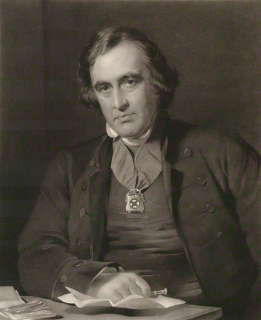
Birth of Richard Chenevix Trench, Anglican Archbishop & Poet

Richard Chenevix Trench, Anglican archbishop and poet, is born in Dublin on September 9, 1807.

Trench is the son of Richard Trench (1774–1860), barrister-at-law, and the Dublin writer Melesina Chenevix (1768–1827). His elder brother is Francis Chenevix Trench. He is educated at Harrow School, and graduates from Trinity College, Cambridge in 1829. In 1830 he visits Spain. While incumbent of Curdridge Chapel near Bishop’s Waltham in Hampshire, he publishes The Story of Justin Martyr and Other Poems (1835), which is favourably received, and is followed by Sabbation, Honor Neale, and other Poems (1838), and Poems from Eastern Sources (1842). These volumes reveal the author as the most gifted of the immediate disciples of William Wordsworth, with a warmer colouring and more pronounced ecclesiastical sympathies than the master, and strong affinities to Alfred, Lord Tennyson, John Keble and Richard Monckton Milnes.

In 1841 Trench resigns his living to become curate to Samuel Wilberforce, then rector of Alverstoke, and upon Wilberforce’s promotion to the deanery of Westminster Abbey in 1845 he is presented to the rectory of Itchen Stoke. In 1845 and 1846 he preaches the Hulsean Lectures, and in the former year is made examining chaplain to Wilberforce, now Bishop of Oxford. He is shortly afterwards appointed to a theological chair at King’s College London.

Trench joins the Canterbury Association on March 27, 1848, on the same day as Samuel Wilberforce and Wilberforce’s brother Robert.

In 1851 Trench establishes his fame as a philologist by The Study of Words, originally delivered as lectures to the pupils of the Diocesan Training School, Winchester. His stated purpose is to demonstrate that in words, even taken singly, “there are boundless stores of moral and historic truth, and no less of passion and imagination laid up” — an argument which he supports by a number of apposite illustrations. It is followed by two little volumes of similar character — English Past and Present (1855) and A Select Glossary of English Words (1859). All have gone through numerous editions and have contributed much to promote the historical study of the English tongue. Another great service to English philology is rendered by his paper, read before the Philological Society, On some Deficiencies in our English Dictionaries (1857), which gives the first impulse to the great Oxford English Dictionary. He envisages a totally new dictionary that is a “lexicon totius Anglicitatis.” As one of the three founders of the dictionary, he expresses his vision that it will be “an entirely new Dictionary; no patch upon old garments, but a new garment throughout.”

Trench’s advocacy of a revised translation of the New Testament (1858) helps promote another great national project. In 1856 he publishes a valuable essay on Pedro Calderón de la Barca, with a translation of a portion of Life is a Dream in the original metre. In 1841 he had published his Notes on the Parables of our Lord, and in 1846 his Notes on the Miracles, popular works which are treasuries of erudite and acute illustration.

In 1856 Trench becomes Dean of Westminster Abbey, a position which suits him. Here he introduces evening nave services. In January 1864 he is advanced to the post of Archbishop of Dublin. Arthur Penrhyn Stanley had been first choice, but is rejected by the Church of Ireland, and, according to Bishop Wilberforce’s correspondence, Trench’s appointment is favoured neither by the Prime Minister nor the Lord Lieutenant. It is, moreover, unpopular in Ireland, and a blow to English literature, yet it turns out to be fortunate. He cannot prevent the disestablishment of the Church of Ireland, though he resists with dignity. But, when the disestablished communion has to be reconstituted under the greatest difficulties, it is important that the occupant of his position should be a man of a liberal and genial spirit.

This is the work of the remainder of Trench’s life. It exposes him at times to considerable abuse, but he comes to be appreciated and, when he resigns his archbishopric because of poor health in November 1884, clergy and laity unanimously record their sense of his “wisdom, learning, diligence, and munificence.” He finds time for Lectures on Medieval Church History (1878), and his poetical works are rearranged and collected in two volumes (last edition, 1885). He dies at Eaton Square, London, on March 28, 1886, after a lingering illness. He is buried at Westminster Abbey.

George W. E. Russell describes Trench as “a man of singularly vague and dreamy habits” and recounts the following anecdote of his old age:

“He once went back to pay a visit to his successor, Lord Plunket. Finding himself back again in his old palace, sitting at his old dinner-table, and gazing across it at his wife, he lapsed in memory to the days when he was master of the house, and gently remarked to Mrs. Trench, ‘I am afraid, my love, that we must put this cook down among our failures.'”


Leave a comment

Death of Gerald Griffin, Novelist, Poet & Playwright

Gerald Griffin (Irish: Gearóid Ó Gríofa), Irish novelist, poet and playwright, dies of typhus fever on June 12, 1840. His novel The Collegians is the basis of Dion Boucicault‘s play The Colleen Bawn, or The Brides of Garryowen. Feeling he is “wasting his time” writing fiction, he joins the Congregation of Christian Brothers, a Catholic religious congregation founded by Edmund Ignatius Rice, to teach the children of the poor.

Griffin is born in Limerick, County Limerick, on December 12, 1803, the youngest son of thirteen children of a substantial Catholic farming family. Patrick Griffin, his father, also makes a living through brewing, and he participates as one of Henry Grattan‘s Irish Volunteers (18th century). His mother comes from the ancient O’Brien dynasty and first introduces him to English literature. When he is aged seven, the family moves to Fairy Lawn, a house near Loghill, County Clare, which sits on a hill above the bank of the Shannon Estuary, about twenty-seven miles from Limerick. Here he has an idyllic childhood and receives a classical education.

In 1820 the family at Fairy Lawn is broken up. The parents with several of the children emigrate to the United States and settle in Pennsylvania. Griffin, with one brother and two sisters, is left behind under the care of his elder brother William, a practicing physician in Adare, County Limerick. He meets John Banim in Limerick. Inspired by the successful production of Banim’s play Damon and Pythias (1821), Griffin, at nineteen years of age, moves to London in 1823. After an unsuccessful attempt at becoming a playwright, he endures years of poverty in London, managing only to scrape by through writing reviews for periodicals and newspapers. At the end of two years, he obtains steady employment in the publishing house as reader and reviser of manuscripts, and in a short time becomes frequent contributor to some of the leading periodicals and magazines. His early pieces in The Literary Gazette vividly describe the rural setting of his childhood, recount Irish folklore, translate the Celtic Irish language for the English readers, and, as Robert Lee Wolff observes, “waxed richly sardonic about Irishmen who tried to be more English than the English.”

Griffin’s Holland-Tide or Munster Popular Tales is published by Simpkin & Marshall in 1827. Holland-Tide is a collection of seven short stories, all of which are told in the house of a hospitable Munster farmer during All Hallows’ Eve in Munster. Holland-Tide establishes his reputation, and he returns to Ireland, where he writes Tales of the Munster Festivals in Pallaskenry to which his brother William has moved.

Experience leads Griffin to modify his expectations in relation to literary work, and, with a view to the legal profession, he enters the University of London as a law student, but in a short time removes to Dublin for the study of ancient Irish history, preparatory to his work The Invasion, which is published in 1832. This work has a good sale and is highly praised by scholars but never becomes popular.

With the exception of a tour through Scotland and a short trip on the European continent, Griffin lives with his brother, keeping up to some extent his literary labours. By 1833, he is increasingly concerned that he is wasting his time and begins to devote himself to teaching the poor children of the neighborhood. In 1838, hes all of his unpublished manuscripts and joins the Congregation of Christian Brothers, a Catholic religious order which has as its special aim the education of children of the poor. Writing to an old friend he says he feels a great deal happier in the practice of this daily routine than he ever did while roving about the great city, absorbed in the modest project of rivaling Shakespeare and throwing Scott in the shade. In June 1839, he is transferred from Dublin to Cork, where he dies of typhus fever at the age of thirty-six on June 12, 1840.

Griffin’s play Gisippus is produced posthumously at Theatre Royal, Drury Lane on February 23, 1842, by William Macready, and it runs to a second edition in print.

One of Griffin’s most famous works is The Collegians, a novel based on a trial that he had reported on, involving the murder of a young Irish Catholic girl (Ellen Hanley) by a Protestant Anglo-Irish man (John Scanlon). The novel is later adapted for the stage as The Colleen Bawn by Dion Boucicault.

Griffin has a street named after him in Limerick and another in Cork. Loughill/Ballyhahill GAA club in west Limerick plays under the name of Gerald Griffins.

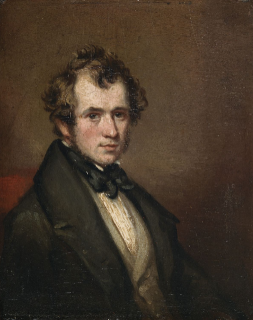
(Pictured: “Portrait of Gerald Griffin (1803-1840), Poet and Novelist,” painting by Richard Rothwell (1800-1868), National Gallery of Ireland)


Leave a comment

Birth of John Kells Ingram, Economist & Poet

CREATOR: gd-jpeg v1.0 (using IJG JPEG v62), quality = 90

John Kells Ingram, economist and poet who starts his career as a mathematician, is born into an Ulster Scots family on July 7, 1823, at the Rectory of Templecarne (Aghnahoo), just south of Pettigo, County Donegal. He has been co-credited, along with John William Stubbs, with introducing the geometric concept of inversive geometry.

Ingram enters Trinity College, Dublin on October 13, 1837. He is elected a Scholar of Trinity College in 1840, graduates with a BA in mathematics in 1842, and is awarded an MA in 1850. In 1852 he becomes a professor of oratory at Trinity and writes extensively on Shakespeare. He shows considerable promise in both mathematics and classics and achieves early popularity as a poet. He has a distinguished career at Trinity, spanning over fifty-five years, as a student, fellow and professor, successively of Oratory, English Literature, Jurisprudence and Greek, subsequently becoming the College Librarian and ultimately its Vice Provost.

One evening in March 1843 Ingram writes a poem for which he is best remembered, a political ballad called “The Memory of the Dead” in honour of the Irish Rebellion of 1798 led by the Society of United Irishmen. The poem is published anonymously on April 1, 1843, in Thomas Davis‘s The Nation newspaper although its authorship is an open secret in Dublin. It is set to music for voice and piano in 1845 by John Edward Pigot and becomes a popular Irish nationalist anthem. It is one of the best-known of Irish Republican songs and is often played by the piper at Republican funerals.

In 1847 Ingram helps to found the Statistical and Social Inquiry Society of Ireland. His early economic writings deal mainly with the Poor Law, which in theory is supposed to provide relief for the poor but in reality, does little to alleviate the distress in Ireland. Strongly influenced by the French sociologist Auguste Comte, he rejects the more isolated approach of classical economics which builds on the assumption that people try to do the best they can. Instead, he seeks to develop a unified theory of economics along the lines of Comtean positivist philosophy, which seeks ways for economic policies to contribute to the good of society. His writings on this topic include the essay “Present Position and Prospects of Political Economy” (1878) and A History of Political Economy (1888).

John Kells Ingram dies on May 1, 1907, in his home at 38 Upper Mount Street, Dublin, where he had lived since 1884. He is buried in Mount Jerome Cemetery.


Leave a comment

Birth of Richard Brinsley Sheridan, Playwright & Satirist

Richard Brinsley Butler Sheridan, Irish satirist, playwright and poet, and long-term owner of the London Theatre Royal, Drury Lane, is born on October 30, 1751, in Dublin, where his family has a house on then fashionable Dorset Street.

While in Dublin Sheridan attends the English Grammar School in Grafton Street. The family moves permanently to England in 1758 where he is a pupil at Harrow School from 1762 to 1768. After his period in Harrow School, his father employs a private tutor to directs his studies.

In 1775, Sheridan’s first play, The Rivals, is produced at London’s Covent Garden Theatre. It is a failure on its first night. He casts a more capable actor in the lead for its second performance, and it is a smash which immediately establishes the young playwright’s reputation and the favour of fashionable London. It has gone on to become a standard of English literature.

Shortly after the success of The Rivals, Sheridan and his father-in-law, Thomas Linley the Elder, a successful composer, produce the opera, The Duenna. This piece is accorded such a warm reception that it plays for seventy-five performances.

The following year, Sheridan, his father-in-law, and one other partner purchase a half-interest in the Drury Lane theatre and, two years later, buy out the other half. Sheridan is the manager of the theatre for many years and later becomes sole owner with no managerial role.

His most famous play, The School for Scandal (Drury Lane, May 8, 1777), is considered one of the greatest comedies of manners in English. It is followed by The Critic (1779), an updating of the satirical Restoration comedy The Rehearsal. He has a rivalry with his fellow playwright Richard Cumberland and includes a parody of Cumberland in The Critic. In 1778, Sheridan writes The Camp, which comments on the ongoing threat of a French invasion of Britain.

In 1780, Sheridan enters Parliament as the ally of Charles James Fox on the side of the American Colonials in the political debate of that year. He remains in Parliament for 32 years.

On February 24, 1809, despite the much-vaunted fire safety precautions of 1794, the theatre burns down. On being encountered drinking a glass of wine in the street while watching the fire, Sheridan is famously reported to have said, “A man may surely be allowed to take a glass of wine by his own fireside.”

When he fails to be re-elected to Parliament in 1812, his creditors close in on him and his last years are harassed by debt and disappointment. On hearing of his debts, the United States Congress offers Sheridan £20,000 in recognition of his efforts to prevent the American Revolutionary War. The offer is refused.

In December 1815 Sheridan becomes ill and is largely confined to bed. He dies in poverty on July 7, 1816, and is buried in the Poets’ Corner of Westminster Abbey. His funeral is attended by dukes, earls, lords, viscounts, the Lord Mayor of London, and other notables.


Leave a comment

Death of Richard Brinsley Sheridan, Playwright & Satirist

Richard Brinsley Butler Sheridan, Irish satirist, playwright, poet, and long-term owner of London‘s Theatre Royal, Drury Lane, dies on July 7, 1816, at 14 Savile Row, London.

Sheridan is born on October 30, 1751, in Dublin, where his family has a house on then fashionable Dorset Street. While in Dublin Sheridan attends the English Grammar School in Grafton Street. The family moves permanently to England in 1758 where he is a pupil at Harrow School from 1762 to 1768. After his period in Harrow School, his father employs a private tutor to directs his studies.

In 1775, Sheridan’s first play, The Rivals, is produced at London’s Covent Garden Theatre. It is a failure on its first night. He casts a more capable actor in the lead for its second performance, and it is a smash which immediately establishes the young playwright’s reputation and the favour of fashionable London. It has gone on to become a standard of English literature.

Shortly after the success of The Rivals, Sheridan and his father-in-law, Thomas Linley the Elder, a successful composer, produce the opera, The Duenna. This piece is accorded such a warm reception that it plays for seventy-five performances.

The following year, Sheridan, his father-in-law, and one other partner purchase a half-interest in the Drury Lane theatre and, two years later, buy out the other half. Sheridan is the manager of the theatre for many years and later becomes sole owner with no managerial role.

His most famous play, The School for Scandal (Drury Lane, May 8, 1777), is considered one of the greatest comedies of manners in English. It is followed by The Critic (1779), an updating of the satirical Restoration comedy The Rehearsal. He has a rivalry with his fellow playwright Richard Cumberland and includes a parody of Cumberland in The Critic. In 1778, Sheridan writes The Camp, which comments on the ongoing threat of a French invasion of Britain.

In 1780, Sheridan entered Parliament as the ally of Charles James Fox on the side of the American Colonials in the political debate of that year. He remains in Parliament for 32 years.

On February 24, 1809, despite the much-vaunted fire safety precautions of 1794, the theatre burns down. On being encountered drinking a glass of wine in the street while watching the fire, Sheridan is famously reported to have said, “A man may surely be allowed to take a glass of wine by his own fireside.”

When he fails to be re-elected to Parliament in 1812, his creditors close in on him and his last years are harassed by debt and disappointment. On hearing of his debts, the United States Congress offers Sheridan £20,000 in recognition of his efforts to prevent the American Revolutionary War. The offer is refused.

In December 1815 Sheridan becomes ill and is largely confined to bed. He dies in poverty on July 7, 1816, and is buried in the Poets’ Corner of Westminster Abbey. His funeral is attended by dukes, earls, lords, viscounts, the Lord Mayor of London, and other notables.