seamus dubhghaill

Promoting Irish Culture and History from Little Rock, Arkansas, USA


Leave a comment

Death of William III, King of England, Scotland & Ireland

Kneller, Godfrey, 1646-1723; King William III (1650-1702)

William III, also widely known as William of Orange, dies at Kensington Palace on March 8, 1702, following a fall from his horse when it stumbles on a molehill. Upon his death, Anne accedes to the throne of Britain and Ireland.

William is sovereign Prince of Orange from birth, Stadtholder of Holland, Zeeland, Utrecht, Gelderland and Overijssel in the Dutch Republic from 1672 and King of England, Ireland and Scotland from 1689 until his death in 1702. As King of Scotland, he is known as William II. He is sometimes informally known in Northern Ireland and Scotland as “King Billy.”

William is born on November 4, 1650, at Binnenhof, The Hague, Dutch Republic. He inherits the Principality of Orange from his father, William II, who dies a week before William’s birth. His mother, Mary, is the daughter of King Charles I of England. In 1677, William marries his fifteen-year-old first cousin, Mary, the daughter of his maternal uncle James, Duke of York.

A Protestant, William participates in several wars against the powerful Catholic King of France, Louis XIV, in coalition with Protestant and Catholic powers in Europe. Many Protestants herald him as a champion of their faith. In 1685, William’s Catholic uncle and father-in-law, James, becomes king of England, Scotland and Ireland. James’s reign is unpopular with the Protestant majority in Britain. William, supported by a group of influential British political and religious leaders, invades England in what becomes known as the Glorious Revolution. On November 5, 1688, he lands at the southern English port of Brixham. James is deposed and William and his wife become joint sovereigns in his place.

William’s reputation as a staunch Protestant enables him to take power in Britain when many are fearful of a revival of Catholicism under James. William’s victory at the Battle of the Boyne in 1690 is still commemorated by loyalists in Northern Ireland and Scotland.

William and Mary reign together until Mary’s death from smallpox on December 28, 1694, after which William rules as sole monarch. Despite his conversion to Anglicanism, his popularity plummets during his reign as a sole monarch. His reign in Britain marks the beginning of the transition from the personal rule of the House of Stuart to the more Parliament-centred rule of the House of Hanover.

On March 8, 1702, William dies of pneumonia, a complication from a broken collarbone following a fall from his horse, Sorrel. The horse had been confiscated from Sir John Fenwick, one of the Jacobites who had conspired against William. Because his horse had stumbled into a mole’s burrow, many Jacobites toast “the little gentleman in the black velvet waistcoat.” Years later, Winston Churchill, in his A History of the English-Speaking Peoples, states that the fall “opened the door to a troop of lurking foes.” William is buried in Westminster Abbey alongside his wife. His sister-in-law, Anne, becomes queen regnant of England, Scotland and Ireland.

William’s death means that he would remain the only member of the Dutch House of Orange to reign over England.


Leave a comment

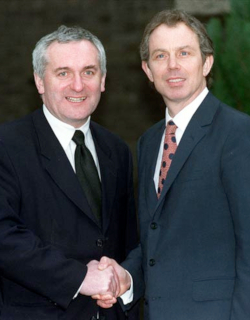
Ahern & Blair Push for Implementation of the Good Friday Agreement

ahern-and-blair-1998

At an informal European Union summit near Bonn on February 26, 1999, Taoiseach Bertie Ahern and British Prime Minister Tony Blair agree to push for implementation of the Good Friday Agreement by the March 10 deadline.

As EU delegates discuss the Union’s budget and Europe‘s farming subsidies, the two prime ministers vow to battle on with the peace deal’s outstanding problems.

“We’re very clear on what we have to do in the Good Friday agreement … we have just got to keep pushing the thing forward as well as we possibly can,” says Blair.

Both Ahern and Blair say the way forward on the outstanding deadlocked issue of paramilitary disarmament is through the official decommissioning commission. Chaired by former Canadian General John de Chastelain, the international commission is working to take arms out of the province’s political arena.

The republican party Sinn Féin insists it is fully cooperating with the commission, which is implementing the final deadline for the handover of arms in May 2000. But some Ulster Unionists oppose further peace moves because of the Irish Republican Army‘s (IRA) failure to begin disarming.

According to Ahern and Blair, the following few weeks will be a key time to try and finalise disarmament issues.

“During the month of March … we can conclude the central aspects,” says Blair.

However, in a separate development on February 26, the chairman of the IRA’s political wing, Sinn Féin’s Mitchel McLaughlin, warns that pressure on disarmament could cause irreparable damage to the fragile peace process. He adds that disarmament should not become a litmus test for progress.

“Those who are now demanding prior decommissioning before we move to setting up the executive are reneging on the Good Friday Agreement,” says McLaughlin in an interview with BBC Radio.

(From BBC News Online Network, Friday, February 26, 1999 | Pictured: Bertie Ahern with Tony Blair at the signing of the Good Friday Agreement in April 1998)


Leave a comment

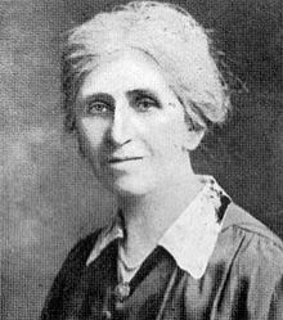
Birth of Matilda Cullen Knowles, Pioneer in Irish Lichenology

matilda-cullen-knowles

Matilda Cullen Knowles, considered the founder of modern studies of Irish lichens following her work in the early twentieth century on the multi-disciplinary Clare Island Survey, is born on January 31, 1864 in Cullybackey near Ballymena, County Antrim, Northern Ireland. Her work is said to have “formed an important baseline contribution to the cryptogamic botany of Ireland and western oceanic Europe.”

Knowles’ early interest in botany is encouraged by her father, William James Knowles, himself an amateur scientist who takes Matilda and her sister to meetings of the Belfast Naturalists’ Field Club. This is where she first meets Robert Lloyd Praeger who continues to be a lifelong influence. In 1895 she is introduced to the Derry botanist Mary Leebody and together they work on a supplement to Samuel Alexander Stewart‘s and Thomas Hughes Corey‘s 1888 book the Flora of the North-east of Ireland.

Knowles then volunteers to help with the crowdsourcing of material about the plants of County Tyrone. While completing this work Knowles publishes her own first paper about Tyrone’s flowering plants in 1897. She eventually sends in over 500 examples that are considered for inclusion in the Irish Topographical Botany, which Praeger publishes in 1901.

In 1902, after attending the Royal College of Science for Ireland for a year, Knowles is appointed a temporary assistant in the then Botanical Section of the National Science and Art Museum. She works closely with Professor Thomas Johnson to continue the development of the Herbarium collection. She also co-authors with him the Hand List of Irish Flowering Plants and Ferns (1910).

One of Knowles’ first works is The Maritime and Marine Lichens of Howth, which the Royal Dublin Society publishes in 1913. Knowles had gathered the knowledge and experience to do this while diligently assisting with a survey of Clare Island as suggested by Praeger. This novel survey involves not only Irish but also several European scientists including prominent UK lichenologist, Annie Lorrain Smith. This is claimed as the most extensive piece of field work at the time. As a result, Knowles is able to create a foundation for her later specialism in lichens.

Knowles publishes more than thirty scientific papers on a wide range of botanical subjects between 1897 and 1933. It is while studying the lichens of Howth that she discovers how lichens by the shore grow in distinct tidal zones that can be distinguished by their colour: black, orange and grey.

Her major work is The Lichens of Ireland which adds over 100 species of lichen to the Irish List and records the distribution of the eight hundred species identified in Ireland. She achieves this task with the collaboration of thirty other natural scientists. It is published in 1929 and includes twenty lichens that had previously not been identified as Irish.

Professor Thomas Johnson retires in 1923, allowing Knowles to take over curatorship, working with Margaret Buchanan. As she becomes older Knowles’ hearing begins to fail such that she has to rely on an ear trumpet. Despite her deafness she still attends meetings. She cares for and adds to the National Museum Herbarium collection although never gets the credit she deserves. In 1933 she plans to retire but pneumonia ends her life before she ends her career. Knowles dies in Dublin on April 27, 1933.

Knowles is honoured with a commemorative plaque by the Irish National Committee for Science and Engineering in October 2014 to mark the 150th anniversary of her birth.


Leave a comment

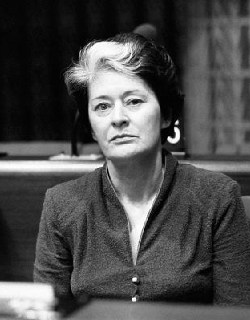
Birth of Eileen Christine Desmond, Labour Party Politician

eileen-desmond

Eileen Christine Desmond (née Harrington), Irish Labour Party politician who serves as Minister for Health and Minister for Social Welfare from 1981 to 1982, is born in Kinsale, County Cork on December 29, 1932. She serves as a Teachta Dála (TD) from 1965 to 1969, 1973 to 1981 and 1981 to 1987. She serves as a Member of the European Parliament (MEP) for the Munster constituency from 1979 to 1984. She is a Senator for the Industrial and Commercial Panel from 1969 to 1973.

Harrington is educated locally at the Convent of Mercy in Kinsale, where she is one of only two girls in her class to sit the Leaving Certificate examination. Before entering politics, she works as a civil servant with the Department of Posts and Telegraphs. She marries Dan Desmond in 1958.

Desmond is first elected to Dáil Éireann in a by-election on March 10, 1965, due to the death of her husband who had been a Teachta Dála (TD) since 1948. Her victory in the Cork Mid constituency leads Taoiseach Seán Lemass to dissolve the 17th Dáil and call a general election. She is elected for the second time in a year but loses her seat at the 1969 general election. However, she is then elected to the 12th Seanad on the Industrial and Commercial Panel, where she serves until her re-election to the 20th Dáil at the 1973 general election.

Desmond is elected to the European Parliament at the 1979 European Parliament election for the Munster constituency. However, her time in Europe is short-lived, as she returns to domestic politics when she is offered a position as Minister and the chance to impact upon national legislation. At the 1981 general election she switches her constituency to Cork South-Central. A Fine GaelLabour Party coalition comes to power, and she is appointed Minister for Health and Social Welfare.

Desmond’s cabinet appointment is historic, as she is only the second woman to be a member of cabinet since the foundation of the state in 1922, and the first in any Fine Gael or Labour Party cabinet. Countess Markievicz had held the cabinet post of Minister for Labour in the revolutionary First Dáil in 1919, but only one woman had held cabinet office after the foundation of the state, Máire Geoghegan-Quinn of Fianna Fáil who was appointed as Minister for the Gaeltacht in 1979.

Desmond retires from full-time politics at the 1987 general election for health reasons. She dies suddenly in Cork, County Cork on January 6, 2005.


Leave a comment

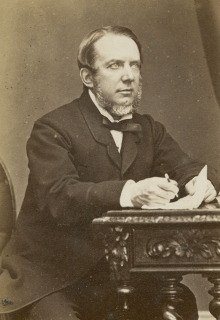
Birth of Kuno Meyer, Scholar of Celtic Philology

kuno-meyer

Kuno Meyer, German scholar distinguished in the field of Celtic philology and literature, is born in Hamburg, Germany on December 20, 1858. He was considered first and foremost a lexicographer among Celtic scholars but is known by the general public in Ireland rather as the man who introduced them to Selections from Ancient Irish Poetry (1911). His brother was the distinguished classical scholar, Eduard Meyer.

Meyer studies in Hamburg at the Gelehrtenschule des Johanneums. He spends two years in Edinburgh, Scotland, as a teenager (1874–1876) learning English. From 1879, he attends Leipzig University, where he is taught Celtic scholarship by Ernst Windisch. He receives his doctorate for his thesis Eine irische Version der Alexandersage, an Irish version of the Romance of Alexander, in 1884.

Meyer then takes up the post of lecturer in Teutonic languages at the new University College, Liverpool, the precursor of the University of Liverpool, which is established three years earlier.

Meyer continues to publish on Old Irish and more general topics on the Celtic languages, as well as producing textbooks for German. In 1896, he founds and edits, jointly with Ludwig Christian Stern, the prestigious Zeitschrift für celtische Philologie. He also cofounds Archiv für celtische Lexicographie in 1898 with Whitley Stokes, producing three volumes from 1900 to 1907.

In 1903, Meyer founds the School of Irish Learning in Dublin, and the next year creates its journal Ériu of which he is the editor. Also in 1904, he becomes Todd Professor in the Celtic Languages at the Royal Irish Academy. In October 1911, he follows Heinrich Zimmer as Professor of Celtic Philology at Friedrich Wilhelm University in Berlin. The following year, a volume of Miscellany is presented to him by pupils and friends in honour of his election, and he is made a freeman of both Dublin and Cork.

At the outbreak of World War I, Meyer leaves Europe for the United States, where he lectures at Columbia University, University of Illinois at Urbana-Champaign, and elsewhere. A pro-German speech he gives in December 1914 to Clan na Gael on Long Island causes outrage in Britain and some factions among the Irish, and as a result, he is removed from the roll of freemen in Dublin and Cork and from his Honorary Professorship of Celtic at Liverpool. He also resigns as Director of the School of Irish Learning and editor of Ériu. Harvard University also had extended an invitation to Meyer to lecture on campus, but it subsequently cancels the invitation in the fall of 1914 on account of Meyer’s propagandist activity.

Meyer nevertheless accepts candidacy for the post of exchange professor at Harvard, at the recommendation of German professors there. However, when the April 1915 issue of The Harvard Advocate awards first prize to an anti-German satirical poem “Gott mit Uns” written by an undergraduate, Meyer sends the university and the press a letter of protest, rebuking the faculty members who served as judges for failure to exercise neutrality. Meyer also declines his candidacy from the exchange professorship in the letter. In a reply, President Abbott Lawrence Lowell says, in explaining Harvard’s policy, that freedom of speech includes pro-German and pro-Allied voices alike.

Meyer is injured in a railway collision in 1915 and meets 27-year-old Florence Lewis while he is recovering in a California hospital. They marry shortly afterwards. He returns to Germany in 1917 and dies in Leipzig on October 11, 1919.

Posthumously, in 1920, Meyer’s name is restored, both by Dublin and Cork, in their Rolls of Honorary Freemen. The restoration occurs on April 19, 1920, in Dublin, where Sinn Féin had won control of the City Council three months earlier, rescinding the decision taken in 1915 by the Irish Parliamentary Party. The restoration in Cork follows on May 14, 1920.


Leave a comment

Death of Composer Michael William Balfe

michael-william-balfe

Michael William Balfe, Irish composer best remembered for his opera The Bohemian Girl, dies in Dublin on October 20, 1870.

Balfe is born in Dublin on May 15, 1808, where his musical gifts become apparent at an early age. He receives instruction from his father, a dancing master and violinist, and the composer William Rooke. His family moves to Wexford when he is a child.

In 1817, Balfe appears as a violinist in public, and in this year composes a ballad, first called “Young Fanny” and afterwards, when sung in Paul Pry by Lucia Elizabeth Vestris, “The Lovers’ Mistake”. In 1823, upon the death of his father, he moves to London and is engaged as a violinist in the orchestra of the Theatre Royal, Drury Lane. He eventually becomes the leader of that orchestra. While there, he studies violin with Charles Edward Horn and composition with Charles Frederick Horn.

While still playing the violin, Balfe pursues a career as an opera singer. He debuts unsuccessfully at Norwich in Carl Maria von Weber‘s Der Freischütz. In 1825, Count Mazzara takes him to Rome for vocal and musical studies and introduces him to Luigi Cherubini. In Italy, he also pursues composing, writing his first dramatic work, a ballet, La Perouse. He becomes a protégée of Gioachino Rossini‘s, and at the close of 1827, he appears as Figaro in The Barber of Seville at the Italian opera in Paris.

Balfe soon returns to Italy, where he is based for the next eight years, singing and composing several operas. In 1829 in Bologna, he composes his first cantata for the soprano Giulia Grisi, then 18 years old. He produces his first complete opera, I rivali di se stessi, at Palermo in the carnival season of 1829—1830.

Balfe returned to London in May 1835. His initial success takes place some months later with the premiere of The Siege of Rochelle on October 29, 1835, at Drury Lane. Encouraged by his success, he produces The Maid of Artois in 1836, which is followed by more operas in English. In July 1838, Balfe composes a new opera, Falstaff, for The Italian Opera House, based on The Merry Wives of Windsor, with an Italian libretto by S. Manfredo Maggione.

In 1841, Balfe founds the National Opera at the Lyceum Theatre, but the venture is a failure. The same year, he premieres his opera, Keolanthe. He then moves to Paris, presenting Le Puits d’amour in early 1843, followed by his opera based on Les quatre fils Aymon for the Opéra-Comique and L’étoile de Seville for the Paris Opera. Meanwhile, in 1843, he returns to London where he produces his most successful work, The Bohemian Girl, on November 27, 1843, at the Theatre Royal, Drury Lane. The piece runs for over 100 nights, and productions are soon mounted in New York, Dublin, Philadelphia, Vienna, Sydney, and throughout Europe and elsewhere.

From 1846 to 1852, Balfe is appointed musical director and principal conductor for the Italian Opera at Her Majesty’s Theatre. There he first produces several of Giuseppe Verdi‘s operas for London audiences. He conducts for Jenny Lind at her opera debut and on many occasions thereafter.

In 1851, in anticipation of The Great Exhibition in London, Balfe composes an innovative cantata, Inno Delle Nazioni, sung by nine female singers, each representing a country. He continues to compose new operas in English, including The Armourer of Nantes (1863), and writes hundreds of songs. His last opera, nearly completed when he dies, is The Knight of the Leopard and achieves considerable success in Italian as Il Talismano.

Balfe retires in 1864 to Hertfordshire, where he rents a country estate. He dies at his home in Rowney Abbey, Ware, Hertfordshire, on October 20, 1870, and is buried at Kensal Green Cemetery in London, next to fellow Irish composer William Vincent Wallace. In 1882, a medallion portrait of him is unveiled in Westminster Abbey.

In all, Balfe composes at least 29 operas. He also writes several cantatas and a symphony. His only large-scale piece that is still performed regularly today is The Bohemian Girl.


Leave a comment

Birth of Dolores Keane, Folk Singer & Actress

dolores-keane

Dolores Keane, folk singer and occasional actress, is born on September 26, 1953, in the small village of Sylane, near Tuam, in rural County Galway. She is a founding member of the successful group De Dannan and has since embarked on a very successful solo career, establishing herself as one of the most loved interpreters of Irish song.

Keane is raised from the age of four by her aunts Rita and Sarah Keane, who are also well-known sean-nós singers. She starts her singing at a very young age, due to the influence of her musical aunts. She makes her first recording for Radio Éireann in 1958 at the age of five. This early start sets her on the path to a career in music. Her brother, Seán, also goes on to enjoy a successful music career.

In 1975, Keane co-founds the traditional Irish band De Dannan, and they release their debut album Dé Danann in that same year. The group gains international recognition and enjoys major success in the late 1970s in the United States. She tours with the band and their single “The Rambling Irishman” is a big hit in Ireland. In early 1976, after a short two-year spell, she leaves De Dannan and is replaced by Andy Irvine, who records live with the band on April 30, 1976, during the 3rd Irish Folk Festival in Germany. Soon thereafter, she marries multi-instrumentalist John Faulkner, with whom she subsequently records three albums of folk music.

Keane lives and works in London for several years with Faulkner before they move to Ireland in the early 1980s. They work on a series of film scores and programmes for the BBC and form two successful bands, The Reel Union and Kinvara. During this period, she records her first solo album, There Was a Maid in 1978. This is followed by two other releases, Broken Hearted I’ll Wander (1979) and Farewell to Eirinn (1980), which gives credit to Faulkner. In the mid-1980s she rejoins De Dannan and records the albums Anthem and Ballroom with them.

Keane turns her attention, once again, to her solo career in 1988. It sees the release of the eponymous Dolores Keane album. Her follow-up album, A Lion in a Cage (1989), features a song written by Faulkner called “Lion in a Cage” protesting the imprisonment of Nelson Mandela. It serves as Keane’s second Irish number one, and she performs the hit at the celebration of his release. This exposure expands her reputation and popularity worldwide. A new facet is added to her career when she plays the female lead in the Dublin production of Brendan Behan‘s The Hostage. The opening night is attended by Mary Robinson, the President of Ireland at the time.

In 1992, Keane is among the many female Irish singers to lend their music to the record-smashing anthology A Woman’s Heart. The album goes on to become the biggest-selling album in Irish history. A Woman’s Heart Vol.2 is released in late 1994 and emulates its predecessor in album charts the world over. Also in 1994, a solo album, Solid Ground, is released on the Shanachie Records label and receives critical acclaim in Europe and America.

In August 1995, Keane is awarded the prestigious Fiddler’s Green Hall of Fame award in Rostrevor, County Down, for her “significant contribution to the cause of Irish music and culture.” In that same year, she takes to the stage in the Dublin production of John Millington Synge‘s The Playboy of the Western World. She contributes to the RTÉ/BBC television production “Bringing It All Back Home,” a series of programmes illustrating the movement of Irish music to America.

In August 1997, Keane goes to number one again in the Irish album charts with a compilation album with her most loved songs. And another studio album, Night Owl, is released in 1998. It sees her returning to her traditional Irish roots and it does well in Europe and America. Despite a healthy solo career, she goes on tour with De Dannan again in the late 1990s, where she plays to packed audiences in venues such as Birmingham, Alabama and New York City.

Keane puts an end to recording and touring in the late 1990s, due to depression and alcoholism, for which she receives extensive treatment. As of June 2014, she is given the all clear after suffering from cancer.


Leave a comment

Birth of Dolores O’Riordan, Singer & Songwriter

dolores-o-riordan

Dolores Mary Eileen O’Riordan, Irish musician, singer and songwriter, is born in Ballybricken, County Limerick on September 6, 1971. She leads the rock band The Cranberries from 1990 until their break-up in 2003. They reunite in 2009. She is known for her lilting mezzo-soprano voice, her emphasised use of yodeling, and her strong Limerick accent.

O’Riordan is the youngest of nine children, two of whom die in infancy. Her father, Terence Patrick “Terry” O’Riordan (1937–2011), is a farm labourer who is left unable to work due to brain damage caused by a motorbike accident in 1968. Her mother, Eileen, is a school caterer. She attends Laurel Hill Coláiste FCJ school in Limerick. She leaves school without any qualifications.

In 1989, brothers Mike and Noel Hogan form The Cranberry Saw Us with drummer Fergal Lawler and singer Niall Quinn, in Limerick. Less than a year later, Quinn leaves the band. The remaining band members then place an advertisement for a female singer. O’Riordan responds to the advertisement and auditions by writing lyrics and melodies to some existing demos. When she returns with a rough version of “Linger,” she is hired, and they record Nothing Left At All, a three-track EP released on tape by local record label Xeric Records, which sells 300 copies. The group changes their name to “The Cranberries.” The owner of Xeric Studios, Pearse Gilmore, becomes their manager and provides the group with studio time to complete another demo tape, which he produces. It features early versions of “Linger” and “Dreams,” which are sent to record companies throughout the United Kingdom (UK).

This demo earns the attention of both the UK press and record industry and sparks a bidding war between major British record labels. Eventually, the group signs with Island Records. As part of The Cranberries she releases along with them five albums: Everybody Else Is Doing It, So Why Can’t We? (1993), No Need to Argue (1994), To the Faithful Departed (1996), Bury the Hatchet (1999), and Wake Up and Smell the Coffee (2001), and a greatest-hits compilation, Stars: The Best of 1992–2002. In 2003, the band decides to take a temporary time-out to experiment on solo projects.

In 2003, O’Riordan embarks on a solo career which includes an appearance with the Italian artist Zucchero Fornaciari on the album Zu & Co., with the song “Pure Love.” The album also features other artists such as Sting, Sheryl Crow, Luciano Pavarotti, Miles Davis, John Lee Hooker, Macy Gray, and Eric Clapton.

In 2005, O’Riordan appears on the Jam & Spoon‘s album Tripomatic Fairytales 3003 as a guest vocalist on the track “Mirror Lover.” She makes a cameo appearance in the 2006 Adam Sandler comedy Click as a wedding singer performing an alternate version of The Cranberries’ “Linger” set to strings. Her first single, “Ordinary Day,” is produced by BRIT Awards winner Youth, whose previous credits include The Verve, Embrace, Primal Scream, U2, and Paul McCartney.

Are You Listening? is released in Ireland on May 4, 2007, in Europe on May 7, and in North America on May 15. In 2008, O’Riordan wins a European Border Breakers Award (EBBA) which is presented annually to recognize the success of ten emerging artists or groups who reach audiences outside their own countries with their first internationally released album in the past year. Her second album, No Baggage, featuring eleven tracks, is released in August 2009.

In January 2009, the University Philosophical Society at Trinity College, Dublin invites The Cranberries to reunite for a concert celebrating O’Riordan’s appointment as an honorary member of the Society, which leads the band members to consider reuniting for a tour and a recording session. On August 25, 2009, while promoting her solo album No Baggage in New York City on 101.9 RXP radio, O’Riordan announces the reunion of the Cranberries for a world tour. The tour begins in North America in mid-November, followed by South America in mid-January 2010 and Europe in March 2010. She remains in the band until her unexpected death.

She appears as a judge on RTÉ‘s The Voice of Ireland during the 2013–2014 season. In April 2014, O’Riordan joins and begins recording new material with the trio D.A.R.K.

On January 15, 2018, at the age of 46, while in London for a recording session, O’Riordan dies suddenly at the London Hilton on Park Lane hotel in Mayfair. The cause of death is not immediately made public. Police say it is not being treated as suspicious. The coroner’s office says the results of its inquiry would not be released until April 3 at the earliest. On April 3 the inquest is cancelled with no new date announced.

A three-day memorial in her hometown, with O’Riordan lying in repose, lasts from January 20-22 at St. Joseph’s church. On January 23, she is buried after a service at Saint Ailbe’s Roman Catholic Church, Ballybricken, County Limerick. It begins with the studio recording of “Ave Maria” as sung by O’Riordan and Luciano Pavarotti. She is buried alongside her father.


Leave a comment

Transatlantic Cable Brought Ashore at Killala

transatlantic-cable-county-mayo

A $300 million transatlantic cable is brought ashore on Ross Strand in Killala, County Mayo on August 14, 2015. The fiber optic cable will enable a super-fast Internet connection and is expected to be a major economic boost for the West.

The Irish Lights vessel Granuaile begins laying the cable a few hundred metres offshore. Divers pull the cable ashore while the ship continues laying to a point about 4 km offshore. From there another vessel, the Reliance, takes over the task, relay-race like, and begins laying further out towards the United States.

The fiber optic cable is owned and operated by Irish company Aqua Comms and will run directly from Ross Strand in Killala to Long Island, New York. It has the capacity to handle up to one third of the world’s telephone calls and can cover the entire Internet traffic of Europe and the United States. The system will enable 53.8 millisecond transfer speeds across the Atlantic Ocean when it goes live in early 2016.

Silicon Republic describes Mayo as “Europe’s entry point to a vastly superior service when construction is completed by next year.” These connections are expected to create “thousands of jobs” in data centre operations. It will have a 53.8 millisecond latency and be capable of handling a third of the world’s phone calls, with over 1.6 million simultaneous Ultra HD video channels, or over 32 million LTE wireless callers.

CEO Martin Roche says, “It will also be the most secure transatlantic cable system, due to the carefully mapped route and the design built into the construction of this project.”

Taoiseach Enda Kenny says, “This new digital infrastructure is essential to help create jobs and new business opportunities across Ireland.” He also added, “This is the most important landing since [French general] Humbert in 1798.”

Local councillor Jarlath Munnelly says the project could “transform” Killala and the north Mayo region. “This is an exciting project, which I am enthusiastically supportive of. It has the potential to transform North Mayo, not just Killala, by enhancing the telecommunications infrastructure in the area, and putting Ireland and Mayo into the centre of a global network,” said the councillor.


Leave a comment

Birth of Januarius MacGahan, Journalist & Correspondent

januarius-macgahan

Januarius Aloysius MacGahan, American journalist and war correspondent for the New York Herald and The Daily News, is born near New Lexington, Ohio on June 12, 1844. His articles describing the massacre of Bulgarian civilians by Turkish soldiers and irregular volunteers in 1876 creates public outrage in Europe and are a major factor in preventing Britain from supporting Turkey in the Russo–Turkish War of 1877–78, which leads to Bulgaria gaining independence from the Ottoman Empire.

MacGahan’s father is an immigrant from Ireland who had served on the Northumberland, the ship which took Napoleon into exile on Saint Helena. He moves to St. Louis, where he briefly works as a teacher and as a journalist. There he meets his cousin, General Philip Sheridan, an American Civil War hero also of Irish parentage, who convinces him to study law in Europe. He sails to Brussels in December 1868.

MacGahan does not get a law degree, but he discovers that he has a gift for languages, learning French and German. He runs short of money and is about to return to America in 1870 when the Franco-Prussian War breaks out. Sheridan happens to be an observer with the German Army, and he uses his influence to persuade the European editor of the New York Herald to hire MacGahan as a war correspondent with the French Army.

MacGahan’s vivid articles from the front lines describing the stunning defeat of the French Army win him a large following, and many of his dispatches to the Herald are reprinted by European newspapers. When the war ends, he interviews French leader Léon Gambetta and Victor Hugo and, in March 1871, he hurries to Paris and is one of the first foreign correspondents to report on the uprising of the Paris Commune. He is arrested by the French military and nearly executed and is only rescued through the intervention of the U.S. Minister to France Elihu B. Washburne.

In 1871 MacGahan is assigned as the Herald‘s correspondent to Saint Petersburg. He learns Russian, mingles with the Russian military and nobility, covers the Russian tour of General William Tecumseh Sherman and meets his future wife, Varvara Elagina, whom he marries in 1873. In 1874 he spends ten months in Spain, covering the Third Carlist War.

In 1876 MacGahan quarrels with James Gordon Bennett Jr., the publisher of the New York Herald, and leaves the newspaper. He is invited by his friend, Eugene Schuyler, the American Consul-General in Constantinople, to investigate reports of large-scale atrocities committed by the Turkish Army following the failure of an attempted uprising by Bulgarian nationalists in April 1876. He obtains a commission from The Daily News, then the leading liberal newspaper in England, and leaves for Bulgaria on July 23, 1876.

MacGahan reports that the Turkish soldiers have forced some of the villagers into the church, then the church is burned, and survivors tortured to learn where they have hidden their treasures. He says that of a population of seven thousand, only two thousand survive. According to his account, fifty-eight villages in Bulgaria are destroyed, five monasteries demolished, and fifteen thousand people in all massacred. These reports, published first in The Daily News, and then in other papers, cause widespread popular outrage against Turkey in Britain. The government of British Prime Minister Benjamin Disraeli, a supporter of Turkey, tries to minimize the massacres and says that the Bulgarians are equally to blame, but his arguments are refuted by the newspaper accounts of MacGahan.

In the wake of the massacres and atrocities committed by the Ottoman forces during the suppression of the April Uprising, as well as centuries-long conflicts between Russia and Turkey in Crimea, the Russian Government, stirred by anti-Turkish and Pan-Slavism sentiment, prepare to invade the Ottoman Empire, and declare war on it on April 24, 1877. The Turkish Government of Sultan Abdul Hamid II appeals for help to Britain, its traditional ally against Russia, but the British government responds that it cannot intervene “because of the state of public feeling.”

MacGahan is assigned as a war correspondent for The Daily News and, thanks to his friendship with General Skobelev, the Russian commander, rides with the first units of the Russian Army as it crosses the Danube into Bulgaria. He covers all the major battles of the Russo–Turkish War, including the Siege of Plevna and the Battle of Shipka Pass. He reports on the final defeat of the Turkish armies and is present at the signing of the Treaty of San Stefano, which ends the war.

MacGahan is in Constantinople, preparing to travel to Berlin for the conference that determines the final borders of Bulgaria, when he catches typhoid fever. He dies on June 9, 1878, and is buried in the Greek cemetery, in the presence of diplomats, war correspondents, and General Skobelev. Five years later his body is returned to the United States and reburied in New Lexington and a statue is erected in his honor by a society of Bulgarian Americans.