seamus dubhghaill

Promoting Irish Culture and History from Little Rock, Arkansas, USA


Leave a comment

Birth of William Vincent Wallace, Composer & Musician

william-vincent-wallace

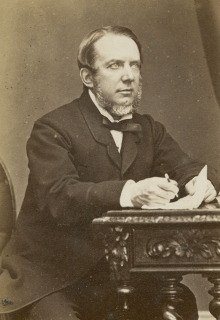
William Vincent Wallace, Irish composer and musician, is born at Colbeck Street, Waterford, County Waterford on March 11, 1812. In his day, he is famous on three continents as a double virtuoso on violin and piano. Nowadays, he is mainly remembered as an opera composer of note, with key works such as Maritana (1845) and Lurline (1847/60), but he also writes a large amount of piano music that is much in vogue in the 19th century.

Wallace’s father, Spencer Wallace of County Mayo, becomes a regimental bandmaster with the North Mayo Militia based in Ballina. William is born while the regiment is stationed for one year in Waterford. The family returns to Ballina in 1816 and he spends his formative years there, taking an active part in his father’s band and already composing pieces by the age of nine for the band recitals.

Under the tuition of his father and uncle, Wallace writes pieces for the bands and orchestras of his native area. He becomes accomplished in playing various band instruments before the family leaves the Army in 1826, moving from Waterford to Dublin, and becoming active in music in the capital. He learns to play several instruments as a boy, including the violin, clarinet, organ, and piano. In 1830, at the age of 18, he becomes organist of the Roman Catholic Cathedral at Thurles, County Tipperary, and teaches music at the Ursuline Convent there. He falls in love with a pupil, Isabella Kelly, whose father consents to their marriage in 1832 on condition that Wallace become a Roman Catholic. The couple soon moves to Dublin where he is employed as a violinist at the Theatre Royal.

Economic conditions in Dublin deteriorate after the Acts of Union 1800 and the whole Wallace family decides to emigrate to Australia in 1835. Wallace’s party first lands at Hobart, Tasmania in late October, where they stay several months before moving on to Sydney in January 1836. The Wallaces open the first Australian music academy in April. Wallace has already given many celebrity concerts in Sydney, and being the first virtuoso to visit the Colony, becomes known as the “Australian Paganini.” He is also active in the business of importing pianos from London, but his main activity involves many recitals in and around Sydney under the patronage of the Governor, General Sir Richard Bourke. The most significant musical events of this period are two large oratorio concerts on behalf of the organ fund at St. Mary’s Cathedral in Sydney in 1836 and 1838, which he directs, and which utilize all the available musical talent of the Colony, including the recently formed Philharmonic [Choral] Society.

In 1838, Wallace separates from his wife and begins a roving career that takes him around the globe. In 1841, he conducts a season of Italian opera in Mexico City. Moving on to the United States, he stays in New Orleans for some years, where he is feted as a virtuoso on violin and piano, before reaching New York City, where he is equally celebrated, and publishes his first compositions (1843–44).

Wallace arrives in London in 1845 and makes various appearances as a pianist. In November of that year, his opera Maritana is performed at the Theatre Royal, Drury Lane with great success, and is later presented internationally. Maritana is followed by Matilda of Hungary (1847), Lurline (1847/60), The Amber Witch (1861), Love’s Triumph (1862) and The Desert Flower (1863). He also publishes numerous compositions for the piano.

In New York in 1843–1844, Wallace is associated with the early concert seasons of the New York Philharmonic Society, and in 1853 is elected an Honorary (Life) Member of the Society. In 1854, he becomes an American citizen after a marriage in New York to German-born pianist Hélène Stoepel, sister of composer Robert Stoepel. In later years, having returned to Europe for the premieres of his later operas, he develops a heart condition for which he receives treatment in Paris in 1864. He dies in poor circumstances at the Château de Bagen, Sauveterre-de-Comminges, in the Haute Garonne on October 12, 1865. He is buried in Kensal Green Cemetery, London.

(Pictured: William Vincent Wallace. Undated portrait by Mathew Brady, New York City, Library of Congress)


Leave a comment

The Clive Barracks Bombing

clive-barracks-bombing

The Clive Barracks bombing, a bomb attack carried out by the Provisional Irish Republican Army on a British Army barracks at Ternhill, Shropshire, takes place on February 20, 1989. The attack injures two soldiers from the Parachute Regiment and destroys a large part of the barracks.

The IRA intensifies their campaign outside of Northern Ireland in 1988. In May 1988 the IRA enjoys one of their most successful ambushes on British Military figures in mainland Europe with attacks in the Netherlands where they kill three and injured three Royal Air Force soldiers. Four months later in August 1988, the Provisional IRA carries out the Inglis Barracks bombing, which kills one British soldier and injures ten others. It is the first IRA attack in England since the infamous Brighton hotel bombing in October 1984.

On Monday, February 20, 1989, the Provisional IRA explodes two bombs at Clive Barracks at Ternhill. Only two of the planned three bombs are primed and ready to explode when the two IRA members, both of whom are wearing combat jackets, are spotted and approached by a sentry, Lance-Corporal Alan Norris, who raises the alarm. They throw the third bomb, which was inside a backpack, at him and run to a car they had stolen earlier and drive away. Soldiers fire three rounds at the IRA members as they are fleeing but no shots hit their target.

The bombs explode about ten minutes after the IRA men escape. Even though nobody is killed in the attack, the explosions cause large damage to the barracks. The alarm sounded by Norris gives about fifty British soldiers a chance to escape almost certain death. Only two soldiers are injured, one being hit by flying glass the other with only minor injuries.

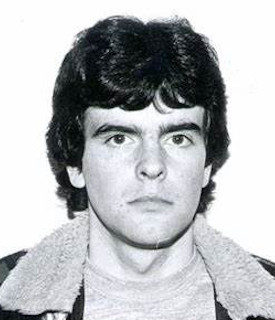
The IRA claims responsibility for the bombings and British police believe IRA fugitive Patrick Sheehy is the main operator in the attack. The IRA issues a statement saying, “While Britain maintains its colonial grip on the north of Ireland, the IRA will continue to strike at those who oversee and implement British Government policy in our country.”

Five months later, in July 1989, the IRA kills a British soldier in Hanover, West Germany when they place a booby trap IED under his car. On September 7 the IRA mistakenly shoots dead Heidi Hazell, the German wife of a British soldier, in a hail of bullets in Dortmund. In the climax of the England and European campaign by the IRA is the Deal barracks bombing in which the IRA kills eleven Royal Marines and seriously injures 22 others. It is the highest death toll from an operation in England in seven years since the Hyde Park and Regent’s Park bombings on September 22, 1982, which kill 11 soldiers and injured more than fifty.


Leave a comment

Irish Neutrality During World War II

File written by Adobe Photoshop? 4.0

On February 19, 1939 Taoiseach Éamon de Valera states his intention to preserve Irish neutrality in the event of a second world war.

The policy of Irish neutrality during World War II is adopted by the Oireachtas at the instigation of De Valera upon the outbreak of World War II in Europe. It is maintained throughout the conflict, in spite of several German airstrikes by aircraft that miss their intended British targets and attacks on Ireland’s shipping fleet by Allies and Axis alike. De Valera refrains from joining either the Allies or Axis powers. While the possibilities of not only a German but also a British invasion are discussed in Dáil Éireann, and either eventuality is prepared for, with the most detailed preparations being done in tandem with the Allies under Plan W, De Valera’s ruling party, Fianna Fáil, supports his neutral policy for the duration of the war.

This period is known in the Republic of Ireland as “The Emergency“, owing to the wording of the constitutional article employed to suspend normal government of the country.

Pursuing a policy of neutrality requires attaining a balance between the strict observance of non-alignment and the taking of practical steps to repel or discourage an invasion from either of the two concerned parties.

Ireland maintains a public stance of neutrality to the end, although this policy leads to a considerable delay in Ireland’s membership of the United Nations (UN). Ireland’s applications for membership are vetoed by the Soviet Union, a permanent member of the United Nations Security Council, from 1946 to December 1955. Seán MacBride considers that the UN boycott of Ireland had been originally agreed upon at the 1945 Yalta Conference by Winston Churchill and Joseph Stalin. Ireland’s acceptance into the UN is finally announced by John A. Costello on December 15, 1955.

Despite the official position of neutrality, there are many unpublicised contraventions of this, such as permitting the use of the Donegal Corridor to Allied military aircraft, and extensive co-operation between Allied and Irish intelligence, including exchanges of information, such as detailed weather reports of the Atlantic Ocean. For example, the decision to go ahead with the Normandy landings is decided by a weather report from Blacksod Bay, County Mayo.

(Pictured: Markings to alert aircraft to neutral Ireland during World War II on Malin Head, County Donegal)


Leave a comment

Birth of Irish Billionaire Tony Ryan

tony-ryan

Thomas Anthony “Tony” Ryan, Irish billionaire, philanthropist and businessman, is born in Thurles, County Tipperary on February 2, 1936. He works for Aer Lingus, before going on to found their aircraft leasing arm, wet-leasing out their aircraft in the quieter winter months.

In 1975, with Aer Lingus and the Guinness Peat Group, Ryan founds Guinness Peat Aviation (later GPA Group), an aircraft leasing company, with a $50,000 investment. GPA grows to be the world’s biggest aircraft lessor, worth $4 billion at its peak. However its value dramatically collapses in 1992 after the cancellation of its planned IPO.

Ryan makes €55m from the sale of AerFi, the successor to GPA, in 2000. In 2001, he acquires Castleton Farm near Lexington, Kentucky from the Van Lennep Family Trust. He renames it Castleton Lyons and undertakes renovations to the property while returning to its original roots as a thoroughbred operation. He is a tax exile who lives in Monte Carlo, but also owns a stud farm near his home in Dolla, County Tipperary. He is the 7th wealthiest individual from Ireland in the Sunday Times Rich List 2007 with over €1.5bn(£1bn).

Ryan is best known in the public mind as the founder of the eponymous Ryanair with Christopher Ryan and Liam Lonergan. Ryanair is believed to be the main source of his wealth in later life. Ryanair is now one of the biggest airlines in Europe and is valued at over 15 billion Euros as of December 2019.

Ryan over the years helps nurture two successful business protégés, Denis O’Brien and Michael O’Leary, both of whom become billionaires.

Ryan holds honorary doctorates from several universities, including Trinity College, Dublin, the National University of Ireland, Galway and the University of Limerick.

Ryan is an active and innovative funder of university education in Ireland. He donates a marine science institute to NUI Galway in 1993 which is named the Martin Ryan Marine Science Institute in honour of his father. He shows interest in marine science and aquaculture development in the west of Ireland. He also funds The Ryan Academy for Entrepreneurship at the Citywest park, that is run by Dublin City University.

At the time of his death Ryan owns 16% of Tiger Airways, a discount carrier based in Singapore which is founded in December 2003.

Ryan dies on October 3, 2007 at Celbridge, County Kildare following an 18-month battle with pancreatic cancer. His eldest son, Cathal, dies just three months later, aged 48, after being diagnosed with cancer.


1 Comment

Archibald Hamilton Rowan Tried for Distribution of Seditious Paper

archibald-hamilton-rowan

Archibald Hamilton Rowan, a founding member of the Dublin Society of United Irishmen, is tried on a charge of distributing seditious paper on January 29, 1794.

Hamilton Rowan is born in the home of his grandfather, William Rowan, in London on May 1, 1751, and lives there with his mother and sister for much of his early life. He is admitted to Queens’ College, Cambridge in 1768, but is expelled from the college and rusticated for an attempt to throw a tutor into the River Cam. He is sent for a period in 1769 to Warrington Academy.

Hamilton Rowan travels throughout the 1770s and 1780s, visiting parts of Europe, the Americas, and North Africa. In 1781 he marries Sarah Dawson in Paris, France. The couple has ten children. He is the godfather of the Irish mathematician William Rowan Hamilton.

Hamilton Rowan returns to Ireland in his thirties, in 1784, to live at Rathcoffey near Clane in County Kildare. He becomes a celebrity and, despite his wealth and privilege, a strong advocate for Irish liberty. That same year he joins the Killyleagh Volunteers, a militia group later associated with radical reform. He first gains public attention by championing the cause of fourteen-year-old Mary Neal in 1788. Neal had been lured into a Dublin brothel and then assaulted by Lord Carhampton. Hamilton Rowan publicly denounces Carhampton and publishes a pamphlet A Brief Investigation of the Sufferings of John, Anne, and Mary Neal in the same year. An imposing figure at more than six feet tall, his notoriety grows when he enters a Dublin dining club threatening several of Mary Neal’s detractors, with his massive Newfoundland at his side and a shillelagh in hand. The incident wins him public applause and celebrity as a champion of the poor.

In 1790 Hamilton Rowan joins the Northern Whig Club, and by October has become a founding member of the Dublin Society of United Irishmen, working alongside famous radicals such as William Drennan and Theobald Wolfe Tone. He is arrested in 1792 for seditious libel when caught handing out “An Address to the Volunteers of Ireland,” a piece of United Irish propaganda. Unknown to him, from 1791 Dublin Castle has a spy in the Dublin Society, Thomas Collins, whose activity is never discovered. From February 1793 Britain and Ireland join the War of the First Coalition against France, and the United Irish movement is outlawed in 1794.

Hamilton Rowan’s reputation for radicalism and bluster grow during this time when he leaves Ireland to confront the Lord Advocate of Scotland about negative comments made in respect to his character and that of members of the Society of United Irishmen. As a prominent member of the Irish gentry, he is an important figure in the United Irishmen and becomes the contact for the Scottish radical societies as a result of his visit. Upon his return to Dublin, he is charged and was found guilty of seditious libel, even though he is excellently defended by the famous John Philpot Curran. He is sentenced to two years imprisonment, receives a fine of £500, and is forced to pay two assurities for good behaviour of £1,000 each. In January 1794 he retires to his apartments in Dublin’s Newgate Prison.

In the years following, Hamilton Rowan spends time in exile in France, the United States and Germany. He is allowed to return to Ireland in 1806. He returns to the ancestral home of Killyleagh Castle, County Down, receiving a hero’s welcome. While he has agreed to be a model citizen under the conditions of his return to Ireland, he remains active in politics and retains his youthful radicalism. Following his last public appearance at a meeting in the Rotunda in Dublin on January 20, 1829, he is lifted up by a mob and paraded through the streets.

Hamilton Rowan dies at the age of 84 in his home on November 1, 1834. He is buried in the vaults of St. Mary’s Church, Dublin.


Leave a comment

Death of Eileen Desmond, Labour Party Politician

eileen-desmond

Eileen Christine Desmond (née Harrington), Irish Labour Party politician who serves as Minister for Health and Minister for Social Welfare from 1981 to 1982, dies suddenly in Cork, County Cork on January 6, 2005. She serves as a Teachta Dála (TD) from 1965 to 1969, 1973 to 1981 and 1981 to 1987. She serves as a Member of the European Parliament (MEP) for the Munster constituency from 1979 to 1984. She is a Senator for the Industrial and Commercial Panel from 1969 to 1973.

Desmond is born in Kinsale, County Cork on December 29, 1932. She is educated locally at the Convent of Mercy in Kinsale, where she is one of only two girls in her class to sit the Leaving Certificate examination. Before entering politics, she works as a civil servant with the Department of Posts and Telegraphs. She marries Dan Desmond in 1958.

Desmond is first elected to Dáil Éireann in a by-election on March 10, 1965, due to the death of her husband who had been a Teachta Dála (TD) since 1948. Her victory in the Cork Mid constituency leads Taoiseach Seán Lemass to dissolve the 17th Dáil and call a general election. She is elected for the second time in a year but loses her seat at the 1969 general election. However, she is then elected to the 12th Seanad on the Industrial and Commercial Panel, where she serves until her re-election to the 20th Dáil at the 1973 general election.

Desmond is elected to the European Parliament at the 1979 European Parliament election for the Munster constituency. However, her time in Europe is short-lived, as she returns to domestic politics when she is offered a position as Minister and the chance to impact upon national legislation. At the 1981 general election she switches her constituency to Cork South-Central. A Fine Gael–Labour Party coalition comes to power, and she is appointed Minister for Health and Social Welfare.

Desmond’s cabinet appointment is historic, as she is only the second woman to be a member of cabinet since the foundation of the state in 1922, and the first in any Fine Gael or Labour Party cabinet. Countess Markievicz had held the cabinet post of Minister for Labour in the revolutionary First Dáil in 1919, but only one woman had held cabinet office after the foundation of the state, Máire Geoghegan-Quinn of Fianna Fáil who was appointed as Minister for the Gaeltacht in 1979.

Desmond retires from full-time politics at the 1987 general election for health reasons. She dies suddenly in Cork, County Cork on January 6, 2005. Her funeral Mass takes place at Our Lady and St. John’s Church, Carrigaline with burial following in Crosshaven Cemetery.


Leave a comment

Death of William Sampson, United Irishman, Author & Lawyer

william-sampson

William Sampson, member of the Society of United Irishmen, author and Irish Protestant lawyer known for his defence of religious liberty in Ireland and the United States, dies in New York City on December 28, 1836.

Sampson is born in Derry, County Londonderry, to an affluent Anglican family. He attends Trinity College Dublin and studies law at Lincoln’s Inn in London. In his twenties, he briefly visits an uncle in North Carolina. In 1790 he marries Grace Clark, and they have two sons, William and John, and a daughter, Catherine Anne.

Admitted to the Irish Bar, Sampson becomes Junior Counsel to John Philpot Curran and helps him provide legal defences for many members of the Society of United Irishmen. A member of the Church of Ireland, he is disturbed by anti-Catholic violence and contributes writings to the Society’s newspapers. He is arrested at the time of the Irish Rebellion of 1798, imprisoned, and compelled to leave Ireland for exile in Europe.

Shipwrecked at Pwllheli in Wales, Sampson makes his way to exile in Porto, Portugal, where he is again arrested, imprisoned in Lisbon, and then expelled. After living some years in France, and then Hamburg, he flees to England ahead of the approach of Napoleon‘s armies where he is re-arrested. After unsuccessfully petitioning for a return to Ireland, he arrives in New York City on July 4, 1806.

In the United States, Sampson successfully continues his career in the law, eventually sending for his family. He sets up a business publishing detailed accounts of the court proceedings in cases with popular appeal. In 1809 he reports on the case of a Navy Lieutenant Renshaw prosecuted for dueling. That same year he handles a case against Amos and Demis Broad, accused of brutally beating their slave, Betty, and her 3-year-old daughter where Sampson succeeded in having both slaves manumitted. The authorities in Ireland had disbarred Sampson, which causes him some bitter amusement, as it does not affect his work in the United States.

Sampson’s most important case in the United States is in 1813 and is referred to as “The Catholic Question in America.” Police investigating the misdemeanor of receiving stolen goods question the suspects’ priest, the Reverend Mr. Kohlman. He declines to give any information that he has heard in confession. The priest is called to testify at the trial in the Court of General Sessions in the City of New York. He again declines. The issue whether to compel the testimony is fully briefed and carefully argued on both sides, with a detailed examination of the common law. In the end, the confessional privilege is accepted for the first time in a court of the United States.

William Sampson dies on December 28, 1836, and is buried in the Riker Family graveyard on Long Island in what is now East Elmhurst, Queens, New York. He is later reinterred in Green-Wood Cemetery in Brooklyn, where he is now buried in the same plot as Matilda Witherington Tone and William Theobald Wolfe Tone, the wife and son of the Irish revolutionary Wolfe Tone, and his daughter Catherine, the wife of William Theobald Wolfe Tone.


Leave a comment

Birth of Erskine H. Childers, 4th President of Ireland

erskine-hamilton-childers-1

Erskine Hamilton Childers, Irish politician and a member of the Fianna Fáil party who serves as the fourth President of Ireland (1973–74), is born on December 11, 1905, in the Embankment Gardens, Westminster, London, to a Protestant family, originally from Glendalough, County Wicklow.

Childers is educated at Gresham’s School, Holt, and the University of Cambridge, hence his striking British upper-class accent. On November 24, 1922, when he is sixteen, his father, Robert Erskine Childers, is executed by the new Irish Free State on politically inspired charges of gun-possession. The pistol he had been found with had been given to him by Michael Collins. Before his execution, in a spirit of reconciliation, the elder Childers obtains a promise from his son to seek out and shake the hand of every man who had signed his death warrant.

Following his father’s funeral, he returns to Gresham’s, then two years later he goes on to Trinity College, Cambridge. He returns to Ireland in 1932 and becomes advertising manager of The Irish Press, the newly founded newspaper owned by the family of Éamon de Valera.

Childers’s political debut is as a successful Fianna Fáil candidate for a seat in Dáil Éireann, the lower house of the Oireachtas, the Irish parliament, in 1938. He becomes a Parliamentary secretary in 1944 and is later Minister for Posts and Telegraphs (1951–54), Minister for Lands (1957–59), and Minister for Transport and Power (1959–69). He also serves as Tánaiste and Minister for Health (1969–73). He supports Taoiseach Jack Lynch’s condemnation of the violence in Northern Ireland and Lynch’s advocacy of a European role for the Irish republic within the European Economic Community (now European Community, embedded in the European Union).

Childers is nominated as the presidential candidate of Fianna Fáil at the behest of de Valera, who pressures Jack Lynch in the selection of the presidential candidate. He is a controversial nominee, owing not only to his British birth and upbringing but to his Protestantism. However, on the campaign trail his personal popularity proved enormous, and in a political upset at the 1973 Irish presidential election, he is elected the fourth President of Ireland on May 30, 1973, defeating Tom O’Higgins by 635,867 (52%) votes to 578,771 (48%). He becomes the second Protestant to hold the office, the first being Douglas Hyde (1938–1945).

Prevented from transforming the presidency as he desires, Childers instead throws his energy into a busy schedule of official visits and speeches, which is physically taxing.

On November 17, 1974, during a conference to the psychiatrists of the Royal College of Physicians of Ireland in Dublin, Childers suffers a congestional heart failure causing him to lie sideways and turn blue before suddenly collapsing. He is pronounced dead the same day at Mater Misericordiae University Hospital.

Childers’s state funeral in St. Patrick’s Cathedral, Dublin, is attended by his presidential predecessor Éamon de Valera and world leaders including Louis Mountbatten, 1st Earl Mountbatten of Burma (representing Queen Elizabeth II), the British Prime Minister Harold Wilson and British Opposition Leader Edward Heath, and Presidents and crowned heads of state from Europe and beyond. He is buried in the grounds of the Church of Ireland Derralossary Church, in Roundwood, County Wicklow.


Leave a comment

Birth of Damien Rice, Singer & Songwriter

damien-rice

Damien Rice, Irish singer-songwriter, musician and record producer, is born in Dublin on December 7, 1973. He is raised in Celbridge, County Kildare and plays piano, guitar, percussion, and clarinet.

Rice forms the rock band Juniper along with Paul Noonan, Dominic Philips, David Geraghty and Brian Crosby in 1991. They meet while attending Salesian College Celbridge, a secondary school in Celbridge. After touring throughout Ireland, the band releases their debut EP Manna in 1995. They are signed to a six album deal with Polygram Records in 1997.

The band enjoys moderate success with a couple of single releases, but a projected album flounders because of record company politics. After achieving his musical goals with Juniper, Rice becomes frustrated with the artistic compromises required by the record label and he leaves the band in 1998. The remaining members of Juniper go on to become Bell X1.

After leaving the band Rice works as a farmer in Tuscany and busks throughout Europe before returning to Ireland in 2001 and beginning a solo musical career. He gives a demo recording to his second cousin, music producer David Arnold, who then gives Rice a mobile studio. Over the next year he continues to record his album and then embarks on a tour of Ireland with vocalist Lisa Hannigan, New York drummer Tom Osander, cellist Vyvienne Long, guitarist Mark Kelly and Dublin bassist Shane Fitzsimons.

In 2002 Rice’s debut album, O, reachs No. 8 on the UK Albums Chart and remains on the chart for 97 weeks. It also wins the Shortlist Music Prize and generates three top-30 singles in the UK. He releases his second album, 9, in 2006 and his songs have appeared in numerous films and television episodes. After eight years of various collaborations, he releases his third studio album My Favourite Faded Fantasy on October 31, 2014.

Rice’s personal activities include musical contributions to charitable projects such as the Songs for Tibet: The Art of Peace, the Enough Project and the Burma Campaign UK and the U.S. Campaign for Burma to free Burmese democracy movement leader Aung San Suu Kyi.

Rice lives in Carlisle, England for many years before advancing on with his music career where he moves abroad.


Leave a comment

Birth of Micheál Mac Liammóir, Actor, Writer & Poet

CREATOR: gd-jpeg v1.0 (using IJG JPEG v80), quality = 80

Micheál Mac Liammóir, British-born Irish actor, playwright, impresario, writer, poet and painter, is born Alfred Willmore on October 25, 1899. He is born to a Protestant family living in the Kensal Green district of London. He co-founds the Gate Theatre with his partner Hilton Edwards and is one of the most recognizable figures in the arts in twentieth-century Ireland.

As Alfred Willmore, he is one of the leading child actors on the English stage, in the company of Noël Coward. He appears for several seasons in Peter Pan. He studies painting at London’s Slade School of Fine Art, continuing to paint throughout his lifetime. In the 1920s he travels all over Europe. He is captivated by Irish culture and learns the Irish language which he speaks and writes fluently. He changes his name to an Irish version, presenting himself in Ireland as a descendant of Irish Catholics from Cork. Later in his life, he writes three autobiographies in Irish and translates them into English.

While acting in Ireland with the touring company of his brother-in-law Anew MacMaster, Mac Liammóir meets the man who becomes his partner and lover, Hilton Edwards. Their first meeting takes place in the Athenaeum, Enniscorthy, County Wexford. Deciding to remain in Dublin, where they live at Harcourt Terrace, the pair assists with the inaugural production of Galway‘s Irish language theatre, An Taibhdhearc. The play is Mac Liammóir’s version of the mythical story Diarmuid agus Gráinne, in which Mac Liammóir plays the lead role as Diarmuid.

Mac Liammóir and Edwards then throw themselves into their own venture, co-founding the Gate Theatre in Dublin in 1928. The Gate becomes a showcase for modern plays and design. Mac Liammóir’s set and costume designs are key elements of the Gate’s success. His many notable acting roles include Robert Emmet/The Speaker in Denis Johnston‘s The Old Lady Says “No!” and the title role in Hamlet.

In 1948, Mac Liammóir appears in the NBC television production of Great Catherine with Gertrude Lawrence. In 1951, during a break in the making of Othello, he produces Orson Welles‘s ghost-story Return to Glennascaul which is directed by Hilton Edwards. He plays Iago in Welles’s film version of Othello (1951). The following year, he goes on to play ‘Poor Tom’ in another Welles project, the TV film of King Lear (1953) for CBS.

Mac Liammóir writes and performs a one-man show, The Importance of Being Oscar, based on the life and work of Oscar Wilde. The Telefís Éireann production wins him a Jacob’s Award in December 1964. It is later filmed by the BBC with Mac Liammóir reprising the role.

Mac Liammóir narrates the 1963 film Tom Jones and is the Irish storyteller in 30 Is a Dangerous Age, Cynthia (1968) which stars Dudley Moore.

In 1969 Mac Liammóir has a supporting role in John Huston‘s The Kremlin Letter. In 1970 he performs the role of narrator on the cult album Peace on Earth by the Northern Irish showband, The Freshmen and in 1971 he plays an elocution teacher in Curtis Harrington‘s What’s the Matter with Helen?.

Mac Liammóir claims when talking to Irish playwright Mary Manning, to have had a homosexual relationship with General Eoin O’Duffy, former Garda Síochána Commissioner and head of the paramilitary Blueshirts in Ireland, during the 1930s. The claim is revealed publicly by RTÉ in a documentary, The Odd Couple, broadcast in 1999. However, Mac Liammóir’s claims have not been substantiated.

Mac Liammóir’s life and artistic development are the subject of a major study by Tom Madden, The Making of an Artist. Edwards and Mac Liammóir are the subject of a biography, titled The Boys by Christopher Fitz-Simon.

Micheál Mac Liammóir dies at the age of 78 on March 6, 1978. Edwards and Mac Liammóir are buried alongside each other at St. Fintan’s Cemetery, Sutton, Dublin.