Hamilton enters Trinity College Dublin on November 17, 1742, at the age of 13 with Thomas McDonnell as his tutor. He graduates Bachelor of Arts (BA) in 1747 and Trinity Master of Arts (MA Dubl) in 1750. He takes the competitive examination for a vacant fellowship of the college in 1750, but the position is secured instead by his friend Richard Murray, who is a few years older. Two fellowships become vacant the following year and Hamilton is elected to one of them at the age of 22. He is appointed Erasmus Smith’s Professor of Natural and Experimental Philosophy at Trinity College Dublin in 1759 and that same year graduates Bachelor of Divinity (BD). He is elected a Fellow of the Royal Society on February 19, 1761, and graduates Doctor of Divinity (DD) in 1762.
Trinity College presents him to the rectory of Kilmacrennan in the diocese of Raphoe, County Donegal, in 1764. This is a small benefice in the gift of the college, for which he resigns his fellowship. He retains the Erasmus Smith’s chair, however, being succeeded in that by Thomas Wilson in 1769. He resigns from Kilmacrenan in 1767 and becomes vicar of St. Ann’s Church in Dublin.
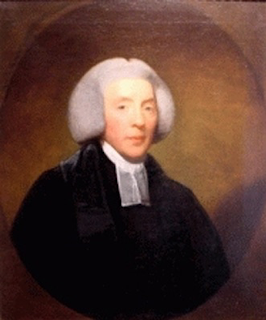
Hamilton then becomes Dean of Armagh, the chief resident cleric of St. Patrick’s Cathedral in Armagh, County Armagh, from April 1768 to 1796. Finding the existing dean’s house inconvenient and poorly situated, he has a new one built in a better location just off Portadown Road, now known as Dean’s Hill. The house, of three stories and a semi-basement, is built in 1772–74. The house is later sold by the church and the present owners provide bed and breakfast accommodation in it. While dean he also acts as treasurer for the infirmary or county hospital, he establishes Sunday schools in the districts of the parish, and he founds a charitable loan for poor tradesmen. He is also instrumental in planning a piped water supply for the town, which is later put into effect. He is one of the 38 original members of the Royal Irish Academy when it is founded in 1785. Gilbert Stuart paints his portrait in about 1790 (pictured above).
Hamilton is promoted to Bishop of Clonfert and Kilmacduagh on January 20, 1796, without seeking it. On January 24, 1799, he is translated to Ossory, where he is bishop until 1805. He dies of a fever at Kilkenny, County Kilkenny, on December 1, 1805. He is buried in the graveyard of St. Canice’s Cathedral at Kilkenny, and there is a memorial to him inside the cathedral.
Hamilton writes a mathematical treatise on conic sections called De Sectionibus Conicis: Tractatus Geometricus, published in 1758. In this book he “was the first to deduce the properties of the conic section from the properties of the cone, by demonstrations which were general, unencumbered by lemmas, and proceeding in a more natural and perspicuous order,” according to writer James Wills in 1847. The work is acclaimed for its lucidity and Leonhard Euler describes it as a perfect book. It is “soon adopted in all the British universities” and is translated from Latin into English as A Geometrical Treatise of the Conic Sections in 1773.
Hamilton also writes Philosophical Essays on Vapours (1767), Four Introductory Lectures on Natural Philosophy (1774), and An Essay on the Existence and Attributes of the Supreme Being (1784). His principal works are collected and republished, with a memoir, as The Works of the Right Rev. Hugh Hamilton by his eldest son, Alexander Hamilton, in two volumes in 1809.
Hamilton marries Isabella, daughter of Hans Widman Wood of Rosmead, County Westmeath, in 1772. Isabella’s mother Frances is the twin sister of Edward King, 1st Earl of Kingston. They have five sons and two daughters. They are Alexander, who was a barrister; Frances; Hans, who is rector of Knocktopher, County Kilkenny, and associated with the Carrickshock incident of 1831; Isabella; Henry; George, who is a biblical scholar; and Hugh, who marries Elizabeth Staples, a daughter of John Staples, a Member of Parliament. The younger Hugh is the great-grandfather of Clive Staples Lewis, better known as C. S. Lewis. Bishop Hugh Hamilton is a great-great-great-grandfather of the mathematicians John Lighton Synge and his brother Edward Hutchinson Synge. Dodgson Hamilton Madden, the High Court judge and noted scholar, is Hamilton’s great-grandson.
(Pictured: “Hugh Hamilton,” oil on canvas by Gilbert Stuart)
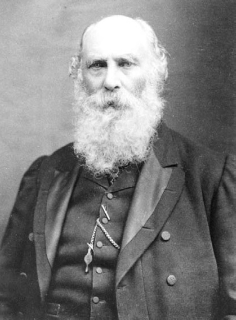
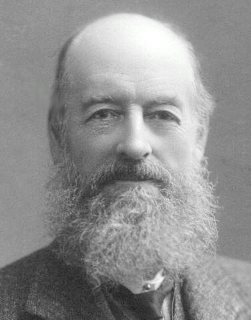
George Johnstone StoneyFRS, Irish physicist, is born on February 15, 1826, at Oakley Park, near Birr, County Offaly, in the Irish Midlands. He is most famous for introducing the term “electron” as the “fundamental unit quantity of electricity.” He introduces the concept, though not the word, as early as 1874, initially naming it “electrine,” and the word itself comes in 1891. He publishes around 75 scientific papers during his lifetime.
Stoney is the son of George Stoney and Anne (née Bindon Blood). His only brother is Bindon Blood Stoney, who becomes chief engineer of the Dublin Port and Docks Board. The Stoney family is an old-established Anglo-Irish family. During the time of the famine (1845–52), when land prices plummet, the family property is sold to support his widowed mother and family. He attends Trinity College Dublin (TCD), graduating with a BA degree in 1848. From 1848 to 1852 he works as an astronomy assistant to William Parsons, 3rd Earl of Rosse, at Birr Castle, County Offaly, where Parsons had built the world’s largest telescope, the 72-inch Leviathan of Parsonstown. Simultaneously he continues to study physics and mathematics and is awarded an MA by TCD in 1852.
From 1852 to 1857, Stoney is professor of physics at Queen’s College Galway. From 1857 to 1882, he is employed as Secretary of the Queen’s University of Ireland, an administrative job based in Dublin. In the early 1880s, he moves to the post of superintendent of Civil Service Examinations in Ireland, a post he holds until his retirement in 1893. He continues his independent scientific research throughout his decades of non-scientific employment duties in Dublin. He also serves for decades as honorary secretary and then vice-president of the Royal Dublin Society (RDS), a scientific society modeled after the Royal Society of London and, after his move to London in 1893, he serves on the council of that society as well. Additionally, he intermittently serves on scientific review committees of the British Association for the Advancement of Science from the early 1860s.
Stoney publishes seventy-five scientific papers in a variety of journals, but chiefly in the journals of the Royal Dublin Society. He makes significant contributions to cosmic physics and to the theory of gases. He estimates the number of molecules in a cubic millimeter of gas, at room temperature and pressure, from data obtained from the kinetic theory of gases. His most important scientific work is the conception and calculation of the magnitude of the “atom of electricity.” In 1891, he proposes the term “electron” to describe the fundamental unit of electrical charge, and his contributions to research in this area lays the foundations for the eventual discovery of the particle by J. J. Thomson in 1897.
Stoney proposes the first system of natural units in 1881. He realizes that a fixed amount of charge is transferred per chemical bond affected during electrolysis, the elementary chargee, which can serve as a unit of charge, and that combined with other known universal constants, namely the speed of lightc and the Newtonian constant of gravitationG, a complete system of units can be derived. He shows how to derive units of mass, length, time and electric charge as base units. Due to the form in which Coulomb’s law is expressed, the constant 4πε0 is implicitly included, ε0 being the vacuum permittivity.
Like Stoney, Max Planck independently derives a system of natural units (of similar scale) some decades after him, using different constants of nature.
Hermann Weyl makes a notable attempt to construct a unified theory by associating a gravitational unit of charge with the Stoney length. Weyl’s theory leads to significant mathematical innovations, but his theory is generally thought to lack physical significance.
Stoney marries his cousin, Margaret Sophia Stoney, by whom he has had two sons and three daughters. One of his sons, George Gerald Stoney FRS, is a scientist. His daughter Florence StoneyOBE is a radiologist while his daughter Edith is considered to be the first woman medical physicist. His most scientifically notable relative is his nephew, the Dublin-based physicist George Francis FitzGerald. He is second cousin of the grandfather of Ethel Sara Turing, mother of Alan Turing.
After moving to London, Stoney lives first at Hornsey Rise, north London, before moving to 30 Chepstow Crescent, Notting Hill, West London. In his later years illness confines him to a single floor of the house, which is filled with books, papers, and scientific instruments, often self-made. He dies at his home in Notting Hill, on July 5, 1911. His cremated ashes are buried in St. Nahi’s Church, Dundrum, Dublin.
Patterson is born in Belfast on April 18, 1802, the eldest son among three sons and a daughter of Robert Patterson, ironmonger, who supplies equipment for linen mills, and his wife Catherine Patterson (neé Clarke), who is from Dublin. He attends Belfast Royal Academy, and from 1814 is one of the first pupils of the Belfast Academical Institution. He is apprenticed in 1818 to his father, and takes over the business on his father’s death in 1831. Even as a boy, he devotes his leisure time to the study of natural history, and during summer holidays investigates the flora and fauna of the countryside and seaside resorts near Belfast. One of his brothers, William (1805–37), has similar interests.
At the age of 18, Patterson is a founder along with seven others, including James Lawson Drummond, James MacAdam and George Crawford Hyndman, of the Belfast Natural History Society in 1821 (from 1842 “and Philosophical” is added to the society’s name). He is the society’s president for many years, taking a leading role in setting up its museum in 1830–31, and over the years giving many lectures, mostly published in its proceedings. Like many contemporaries, he is an enthusiast for the study of phrenology, and lectures on the subject in Belfast in 1836.
In 1871, Patterson is presented with an illuminated address by the BNHPS for his work to promote the study of natural history, especially as a subject in education. He is the only recipient of the Society’s Templeton medal. Though still engaged in business, he makes a reputation as Belfast’s most distinguished amateur naturalist, publishing monographs such as Letters on the Insects Mentioned by Shakespeare (1838). During dredging excursions in Belfast Lough he discovers several forms of marine life new to Great Britain and Ireland. He is one of the earliest members of the British Association for the Advancement of Science, and secretary of its natural history section from 1839 to 1844. When the Association meets in Belfast in 1852, he acts as local treasurer. He corresponds with prominent naturalists, including Charles Darwin.
In 1843, Patterson publishes in The Zoologist magazine The Reptiles Mentioned by Shakespeare. His Zoology for Schools (2 volumes, 1846, 1848) is followed by First Steps in Zoology (2 volumes, 1849, 1851). A large volume, Zoological Diagrams, with colour illustrations, is published in 1853. All his books have a wide circulation, particularly in the national schools, and stimulates the study of zoology. In accordance with the will of his friend William Thompson, Patterson and James Ramsey Garrett begin to prepare the final volume of Thompson’s Natural History of Ireland for publication. Garrett dies in 1855 and Patterson completes the volume in 1856. He is elected Member of the Royal Irish Academy (MRIA) in 1856, and Fellow of the Royal Society (FRS) in 1859.
Patterson is in the vanguard of a generation of Ulster naturalists who through their work encourage the study of Irish flora and fauna and the establishment of field clubs and natural history societies. He also takes an active part in the public life of Belfast, and in philanthropy. He is a member of the unitarian congregation. He is one of the founders of the Ulster Society for the Prevention of Cruelty to Animals and is particularly interested in the Belfast Society for Promoting Knowledge (the Linen Hall Library), in the Botanic Gardens, and in his old school, Royal Belfast Academical Institution. As a Belfast harbour commissioner (1858–70), he brings commercial and environmental insights to decisions concerning port development.
Patterson marries Mary Elizabeth Ferrar in 1833. She is the daughter of a Belfast magistrate, William H. Ferrar, and writes poetry. Patterson also writes poetry, as well as hymns. Many of their poems are collected in Verses by Robert and Mary Patterson (1886), and they are represented in Selections from the British Poets, published for the use of national schools in 1849. They have five sons and six daughters. His second son, Robert Lloyd Patterson, is also a naturalist. Another son was William H. Patterson. His grandson Robert Patterson, editor of the Irish Naturalist, is secretary of the Belfast Natural History and Philosophical Society, secretary and president of the Belfast Naturalists’ Field Club and secretary of the Ulster Fisheries and Biology Association, which he founds. Robert M. Patterson, a grandson, is a prominent businessman and highly regarded amateur artist. Rosamond Praeger is a granddaughter, and Robert Lloyd Praeger a grandson. The latter writes of his grandfather: “After seventy-five years I can still see him – a man of middle height, and rather formal manner, pursuing his country rambles on Saturday afternoons in black frock-coat and top hat, and pointing out to us delighted children lady-birds and tree-creepers.”
Patterson retires from business in 1865, and dies on February 14, 1872, at his residence in College Square North, Belfast. He is buried in Belfast City Cemetery, where there is a monument to his memory.
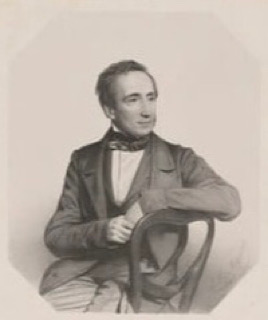
(From: “Patterson, Robert” by Andrew O’Brien, Dictionary of Irish Biography, http://www.dib.ie, October 2009 | Pictured: “Robert Patterson” by Thomas Herbert Maguire, printed by M & N Hanhart lithograph, 1849, National Portrait Gallery)
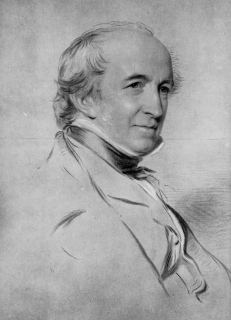
Spring Rice is educated at Trinity College, Cambridge, and later studies law at Lincoln’s Inn, but is not called to the Bar. His family is politically well-connected, both in Ireland and Great Britain, and he is encouraged to stand for Parliament by his father-in-law, Lord Limerick.
Spring Rice first stands for election in Limerick City in 1818 but is defeated by the Tory incumbent, John Vereker, by 300 votes. He wins the seat in 1820 and enters the House of Commons. He positions himself as a moderate unionist reformer who opposes the radical nationalist politics of Daniel O’Connell and becomes known for his expertise on Irish and economic affairs. In 1824 he leads the committee which establishes the Ordnance Survey in Ireland.
Spring Rice’s fluent debating style in the Commons brings him to the attention of leading Whigs and he comes under the patronage of the Marquess of Lansdowne. As a result, he is made Under-Secretary of State for the Home Department under George Canning and Lord Goderich in 1827, with responsibility for Irish affairs. This requires him to accept deferral of Catholic emancipation, a policy which he strongly supports. He then serves as joint Secretary to the Treasury from 1830 to 1834 under Lord Grey. Following the Reform Act 1832, he is elected to represent Cambridge from 1832 to 1839. In June 1834, Grey appoints him Secretary of State for War and the Colonies, with a seat in the cabinet, a post he retains when Lord Melbourne becomes Prime Minister in July. A strong and vocal unionist throughout his life, he leads the Parliamentary opposition to Daniel O’Connell’s 1834 attempt to repeal the Acts of Union 1800. In a six-hour speech in the House of Commons on April 23, 1834, he suggests that Ireland should be renamed “West Britain.” In the Commons, he also champions causes such as the worldwide abolition of slavery and the introduction of state-supported education.
The Whig government falls in November 1834, after which Spring Rice attempts to be elected Speaker of the House of Commons in early 1835. When the Whigs return to power under Melbourne in April 1835, he is made Chancellor of the Exchequer. As Chancellor, he has to deal with crop failures, a depression and rebellion in North America, all of which create large deficits and put considerable strain on the government. His Church Rate Bill of 1837 is quickly abandoned and his attempt to revise the charter of the Bank of Ireland ends in humiliation. Unhappy as Chancellor, he again tries to be elected as Speaker but fails. He is a dogmatic figure, described by Lord Melbourne as “too much given to details and possessed of no broad views.” Upon his departure from office in 1839, he has become a scapegoat for the government’s many problems. That same year he is raised to the peerage as Baron Monteagle of Brandon, in the County of Kerry, a title intended earlier for his ancestor Sir Stephen Rice. He is also Comptroller General of the Exchequer from 1835 to 1865, despite Lord Howick‘s initial opposition to the maintenance of the office. He differs from the government regarding the exchequer control over the treasury, and the abolition of the old exchequer is already determined upon when he dies.
From 1839 Spring Rice largely retires from public life, although he occasionally speaks in the House of Lords on matters generally relating to government finance and Ireland. He vehemently opposes John Russell, 1st Earl Russell‘s policy regarding the Irish famine, giving a speech in the Lords in which he says the government had “degraded our people, and you, English, now shrink from your responsibilities.”
Spring Rice is well regarded in Limerick, where he is seen as a compassionate landlord and a good politician. An advocate of traditional Whiggism, he strongly believes in ensuring society is protected from conflict between the upper and lower classes. Although a pious Anglican, his support for Catholic emancipation wins him the favour of many Irishmen, most of whom are Roman Catholic. He leads the campaign for better county government in Ireland at a time when many Irish nationalists are indifferent to the cause. During the Great Famine of the 1840s, he responds to the plight of his tenants with benevolence. The ameliorative measures he implements on his estates almost bankrupts the family and only the dowry from his second marriage saves his financial situation. A monument in honour of him still stands in the People’s Park in Limerick.
Even so, Spring Rice’s reputation in Ireland is not entirely favourable. In a book regarding assisted emigration from Ireland, a process in which a landlord pays for their tenants’ passage to the United States or Australia, Moran suggests that Spring Rice was engaged in the practice. In 1838, he is recorded as having “helped” a boat load of his tenants depart for North America, thereby allowing himself the use of their land. However, he is also recorded as being in support of state-assisted emigration across the British Isles, suggesting that his motivation is not necessarily selfish.
In 1802 Corry is dismissed from the Exchequer and replaced by John Foster (later Lord Oriel), he is awarded, however, £2,000 p.a. in compensation. In 1806 the changes in ownership of the Newry estates alters his position. The lands pass to a senior line of the Needham family and they support General Francis Needham, 1st Earl of Kilmorey, at the general election. Corry does not have the funds needed, in excess of £5000, to purchase a seat elsewhere. However, Lady Downshire is inclined to support the Grenville ministry and comes to a formal agreement with Corry to give him £1000 towards his expenses should he be successful in Newry, and, if not, to bring him in for another borough. He fails against the Needham interest in Newry, but a seat at Newport, Isle of Wight, is purchased for him, with £4000 from Lady Downshire, and he is appointed to the Board of Trade. Six months later Grenville’s ministry has fallen and there is another general election. Corry stands, again unsuccessfully, for Newry.
Corry is unmarried but has a long-term relationship with Jane Symms. They have three sons and three daughters. His daughter Ann marries Lt. Col. Henry Westenra, the brother of Robert Cuninghame, 1st Baron Rossmore. His residence in Newry is the Abbey Yard, now a school, and Derrymore House, Bessbrook, County Armagh, which he had inherited from his father and sold in 1810. It is now the property of the National Trust. During his life, a road is constructed from near the main entrance of Derrymore House around Newry and links up with the Dublin Road on the southern side of the town primarily for his use. This road subsequently becomes known as “The Chancellor’s Road,” as a result of his term as the Irish Chancellor of the Exchequer. A local legend has it that the road is constructed after an incident in which Corry’s stagecoach is stoned while passing through Newry by people angry at an unpopular window tax he had introduced. The road has retained this name, but it is cut in half by the Newry by-pass in the mid-1990s, however, as a result of works associated with the new A1 dual carriageway, the two-halves of the road are now reconnected.
Corry dies at his house in Merrion Square, Dublin, on May 15, 1813, his 60th birthday. He is buried in St. Patrick’s Cathedral, Dublin.
Parsons also performs some preliminary work in association with the practices of the electrodeposition of copper sulfate upon silver films circa 1865 while in search of the design for a truly flat mirror to use in a telescope. However, he finds it impossible to properly electroplate copper upon these silver films, as the copper contracts and detaches from the underlying glass substrate. His note has been cited as one of the earliest confirmations in literature that thin films on glass substrates experience residual stresses. He revives discussion in his work Nature’s August 1908 edition after witnessing similar techniques used to present newly devised searchlights before the Royal Society.
Although overshadowed by his father (when astronomers speak of “Lord Rosse”, it is almost always the father that they refer to), Parsons nonetheless pursues some astronomical observations of his own, particularly of the Moon. Most notably, he discovers NGC 2, a spiral galaxy in the constellationPegasus.
After some years of ill-health, Parsons dies on August 30, 1908, at Birr Castle and is buried in the local churchyard. He leaves a bequest to the Royal Society to establish the “Rosse Fund,” and a further £1,000 to the science school fund at TCD.
Mitchell is the younger son of David William Mitchell, owner of a Dublin ironmongery and furniture business, and Francis Elizabeth Mitchell (née Kirby). His elder brother David becomes president of the Royal College of Physicians of Ireland (RCPI) and his sister Lillias is a noted weaver and teacher. He is educated at The High School, Dublin, and Trinity College Dublin (TCD), where he is a scholar in 1933 and receives a gold medal the following year. In 1934 he is appointed assistant to the professor of geology at TCD, and later is lecturer in geology (1940), reader in Irish archaeology (1959) and professor of Quaternary studies – a personal chair (1965). He is an efficient administrator and serves TCD successively as registrar, senior lecturer, and tutor, and after retirement is briefly a pro-chancellor of the university.
Mitchell’s major research focuses on the evolution of Ireland during the last two million years, particularly during the Quaternary since the retreat of the glacial ice over Ireland, and the effect man has had on this landscape. His interest in Quaternary studies begins in 1934, when he is appointed by the Royal Irish Academy (RIA) as an assistant to the Danish botanist and Quaternary geologistKnud Jessen, who uses the distribution of ancient pollen grains to reconstruct vegetational history. From 1940 he publishes a series of papers on topics such as the distribution of Irish giant deer and reindeer remains in Ireland, lacustrine deposits in County Meath, interglacial deposits in southeast Ireland, the palynology of Irish raised bogs, cave deposits, fossil pingos in County Wexford, bog flows, and the deposits of the older Pleistocene period in Ireland. His major study in this field is the documentation (1965) of the vegetational history of Littleton bog, County Tipperary, which has given its name to the present interglacial – the Littletonian warm stage.
Mitchell does not confine his studies to Ireland but also carries out work in Glasgow, Cornwall, and the Isle of Man. In 1957, he helps organise the British Association for the Advancement of Science meeting in Dublin and is later chairman of the Geological Society of London sub-commission on British and Irish Quaternary stratigraphy, which produces a comprehensive report in 1973. He is a frequent broadcaster on radio and a prolific author of academic papers, and in later life writes several acclaimed books, including The Irish Landscape (1976), which goes through two further editions as Reading the Irish Landscape (1986, 1997), and a volume of semi-autobiography, The Way That I Followed (1990).
In 1940, Mitchell marries Lucy Margaret (‘Pic’) (1911–87), daughter of E. J. Gwynn, provost of TCD. They have two daughters. For many years they live at Townley Hall, near Drogheda, County Louth, which had been TCD’s agricultural facility. A 1985 portrait by David Hone is displayed at Trinity College Dublin.
(From: “Mitchell, George Francis (‘Frank’)” by Patrick N. Wyse Jackson, Dictionary of Irish Biography, http://www.dib.ie, October 2009)
Janet McNeill, prolific Irish novelist and playwright, is born on September 14, 1907, in Dublin. Author of more than 20 children’s books, as well as adult novels, plays, and two opera libretti, she is best known for her children’s comic fantasy series My Friend Specs McCann.
McNeill is born to Rev. William McNeill, a minister at Adelaide Road Presbyterian Church, and Jeannie Patterson (Hogg) McNeill. In 1913, the family moves to Birkenhead, Merseyside, England, where her father becomes minister at Trinity Road Church. She attends public school in Birkenhead and studies classics at the University of St. Andrews in St. Andrews, Scotland, completing a MA degree in 1929. While at university, she is involved in writing and acting with the College Players. In 1924, the family returns to Ireland due to her father’s failing health, and Rev. McNeill becomes the minister of a village church in Rostrevor, County Down, Northern Ireland, while Janet joins the Belfast Telegraph as a secretary.
In 1933, McNeill marries Robert Alexander, the chief engineer in the Belfast city surveyor’s department, and the couple settles in Lisburn, where they raise their four sons. One son is the zoologist Professor Robert McNeill Alexander, CBE, FRS. Though she plans to write her first novel early on, she finds it impossible to write seriously until the children grow up, saying, “It was four years before I had a baby and twenty-five before I produced the book.”
In 1946, McNeill wins a prize in a BBC competition for her play Gospel Truth. She begins writing radio dramas, which are broadcast by the BBC. She suffers an intracerebral hemorrhage in 1953. During her recovery, she begins writing novels both for adults and children, producing a large body of work between 1955 and 1964. Her popular children’s character, Specs McCann, who debuts in a 1955 book and makes several reappearances, also inspires a newspaper cartoon strip by Rowel Friers, a Belfast artist and friend of hers.
Her 1944 novel The Maiden Dinosaur is her first to be published in the United States, twenty-two years later. She also has three writing credits on television with series and plays. Several of her plays are staged at the Ulster Group Theatre.
In 1964, McNeill’s husband retires, and the couple moves to Bristol, South West England. She writes one more novel after she leaves Northern Ireland but continues to write children’s books for another decade. During this time, she writes her only children’s play, published as Switch On, Switch Off, and other plays (1968), which presents different moral themes in scenes set in “domestic and workplace settings in contemporary England.” Her children’s book The Battle of St. George Without is televised by the BBC in 1969.
In her adult fiction, McNeill focuses on the lifestyle and social mores of Belfast and Ulster in the mid-twentieth century. Her characters are primarily “menopausal, middle-aged, middle-class Protestants.” She depicts the “dreary, Ulster religiosity” of ministers and laymen alike, and the class conventions and sexual repression of middle-aged, upper-middle-class women. The theme of suppressing self-identity and goals, both by wives in deference to their husbands and parents on behalf of their children, pervades her adult novels.
McNeill has a number of health problems and dies in Bristol in October 1994.
George Johnstone StoneyFRS, Irish physicist, dies on July 5, 1911, at Notting Hill, London, England. He is most famous for introducing the term “electron” as the “fundamental unit quantity of electricity.” He introduces the concept, though not the word, as early as 1874, initially naming it “electrine,” and the word itself comes in 1891. He publishes around 75 scientific papers during his lifetime.
Stoney is born on February 15, 1826, at Oakley Park, near Birr, County Offaly, in the Irish Midlands, the son of George Stoney and Anne (née Bindon Blood). His only brother is Bindon Blood Stoney, who becomes chief engineer of the Dublin Port and Docks Board. The Stoney family is an old-established Anglo-Irish family. During the time of the famine (1845–52), when land prices plummet, the family property is sold to support his widowed mother and family. He attends Trinity College Dublin (TCD), graduating with a BA degree in 1848. From 1848 to 1852 he works as an astronomy assistant to William Parsons, 3rd Earl of Rosse, at Birr Castle, County Offaly, where Parsons had built the world’s largest telescope, the 72-inch Leviathan of Parsonstown. Simultaneously he continues to study physics and mathematics and is awarded an MA by TCD in 1852.
From 1852 to 1857, Stoney is professor of physics at Queen’s College Galway. From 1857 to 1882, he is employed as Secretary of the Queen’s University of Ireland, an administrative job based in Dublin. In the early 1880s, he moves to the post of superintendent of Civil Service Examinations in Ireland, a post he holds until his retirement in 1893. He continues his independent scientific research throughout his decades of non-scientific employment duties in Dublin. He also serves for decades as honorary secretary and then vice-president of the Royal Dublin Society (RDS), a scientific society modeled after the Royal Society of London and, after his move to London in 1893, he serves on the council of that society as well. Additionally, he intermittently serves on scientific review committees of the British Association for the Advancement of Science from the early 1860s.
Stoney publishes seventy-five scientific papers in a variety of journals, but chiefly in the journals of the Royal Dublin Society. He makes significant contributions to cosmic physics and to the theory of gases. He estimates the number of molecules in a cubic millimeter of gas, at room temperature and pressure, from data obtained from the kinetic theory of gases. His most important scientific work is the conception and calculation of the magnitude of the “atom of electricity.” In 1891, he proposes the term “electron” to describe the fundamental unit of electrical charge, and his contributions to research in this area lays the foundations for the eventual discovery of the particle by J. J. Thomson in 1897.
Stoney proposes the first system of natural units in 1881. He realizes that a fixed amount of charge is transferred per chemical bond affected during electrolysis, the elementary chargee, which can serve as a unit of charge, and that combined with other known universal constants, namely the speed of lightc and the Newtonian constant of gravitationG, a complete system of units can be derived. He shows how to derive units of mass, length, time and electric charge as base units. Due to the form in which Coulomb’s law is expressed, the constant 4πε0 is implicitly included, ε0 being the vacuum permittivity.
Like Stoney, Max Planck independently derives a system of natural units (of similar scale) some decades after him, using different constants of nature.
Hermann Weyl makes a notable attempt to construct a unified theory by associating a gravitational unit of charge with the Stoney length. Weyl’s theory leads to significant mathematical innovations, but his theory is generally thought to lack physical significance.
Stoney marries his cousin, Margaret Sophia Stoney, by whom he has had two sons and three daughters. One of his sons, George Gerald Stoney FRS, is a scientist. His daughter Florence StoneyOBE is a radiologist while his daughter Edith is considered to be the first woman medical physicist. His most scientifically notable relative is his nephew, the Dublin-based physicist George Francis FitzGerald. He is second cousin of the grandfather of Ethel Sara Turing, mother of Alan Turing.
After moving to London, Stoney lives first at Hornsey Rise, north London, before moving to 30 Chepstow Crescent, Notting Hill, west London. In his later years illness confines him to a single floor of the house, which is filled with books, papers, and scientific instruments, often self-made. He dies at his home on July 5, 1911. His cremated ashes are buried in St. Nahi’s Church, Dundrum, Dublin.
Stoney is born into an old-established Anglo-Irish scientific family at 40 Wellington Road, Ballsbridge, Dublin, on January 6, 1869. The daughter of George Johnstone Stoney, FRS, an eminent physicist who coins the term “electron” in 1891 as the “fundamental unit quantity of electricity,” and his wife and cousin, Margaret Sophia Stoney. One of her two brothers, George Gerald, is an engineer and a Fellow of the Royal Society (FRS). One of her two sisters, Florence Stoney, is a radiologist and receives an OBE. Her cousin is the Dublin-based physicist George Francis FitzGerald FRS (1851–1901), and her uncle Bindon Blood Stoney FRS is Engineer of Dublin Port, renowned for building a number of the main Dublin bridges and developing the Quayside.
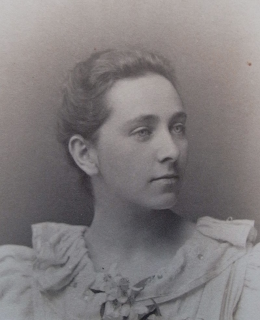
Stoney demonstrates considerable mathematical talent and gains a scholarship at Newnham College, Cambridge, where she achieves a First in the Part I Tripos examination in 1893. However, she is not awarded a University of Cambridge degree as women are excluded from graduation until 1948. During her time at Newnham, she is in charge of the College telescope. She is later awarded a BA and an MA from Trinity College Dublin, after they accept women in 1904.
Following the 1876 Medical Act, it is illegal for academic institutions to prevent access to medical education based on gender. The first medical school for women in Britain is established in 1874 by Dr. Sophia Jex-Blake in anticipation of this law. The London School of Medicine for Women quickly becomes part of the University of London, with clinical teaching at the Royal Free Hospital. Stoney’s sister Florence is a student at the school, graduates in medicine with honours in 1895 (MB BS) and obtains her MD in 1898. Meanwhile, Stoney gains an appointment as a physics lecturer at the school in 1899. Her first tasks are to set up a physics laboratory and design the physics course. The laboratory is planned for 20 students, and the course content is pure physics, as required by university regulations. It includes mechanics, magnetism, electricity, optics, sound, heat and energy. In her obituary in The Lancet, an ex-student of hers notes: “Her lectures on physics mostly developed into informal talks, during which Miss Stoney, usually in a blue pinafore, scratched on a blackboard with coloured chalks, turning anxiously at intervals to ask ‘Have you taken my point?’. She was perhaps too good a mathematician … to understand the difficulties of the average medical student, but experience had taught her how distressing these could be”.
In 1901, the Royal Free Hospital appoints Florence into a new part-time position of medical electrician. The following April, the two sisters open a new x-ray service in the electrical department. During their time at the Royal Free Hospital, the two sisters actively support the women’s suffrage movement, though oppose the direct violent action with which it is later associated.
During her time at the school, Stoney also plays a central role in the British Federation of University Women (BFUW). She is elected treasurer, in her absence, at the first executive meeting on October 9, 1909, a position she holds until the end of May 1915. She becomes increasingly engaged with the political lobbying of the Federation. At the executive meeting on October 19, 1912, she proposes the names of two members for a subcommittee to secure the passing into law of a bill to enable women to become barristers, solicitors or parliamentary agents. The legislation is eventually enacted after the war within the Sex Disqualification (Removal) Act 1919.
Stoney resigns her post at the school in March 1915 and it is recorded that “with due regret and most unwillingly a change is desirable in the physics lectureship.” She is offered £300 on tendering her resignation.
Both Stoney and Florence offer their services to the British Red Cross at the War Office in London, to provide a radiological service to support the troops in Europe, on the day Britain declares war. Their offer is refused, because they are women. Florence sets up her own unit with the Women’s Imperial Service League and spends the next 6 months in Europe. Stoney organises supplies from London where she also serves on the League’s committee. Florence returns to London at the time Stoney resigns from the London School of Medicine for Women. She contacts the Scottish Women’s Hospitals (SWH), an organisation formed in 1914 to give medical support in the field of battle and financed by the women’s suffrage movement. The organisation has gained agreement to set up a new 250-bed tented hospital at Domaine de Chanteloup, Sainte-Savine, near Troyes (France), funded by the Cambridge women’s colleges of Girton and Newnham and it becomes her role to plan and operate the x-ray facilities. She establishes stereoscopy to localise bullets and shrapnel and introduces the use of x-rays in the diagnosis of gas gangrene, interstitial gas being a mandate for immediate amputation to give any chance of survival.
The hospital is near the front line and, in her own words, by September 1915, “the town had been evacuated, the station had been mined, and we heard the heavy guns ever going at nighttime.” The unit is entirely female, except for two part-time male drivers, and her technical assistant, Mr. Mallett.
They are assigned to the Corps Expéditionnaire d’Orient and ordered to move to Serbia. After boarding the steamship Mossoul in Marseille, they reach Salonika (known as Thessaloniki in modern Greece) on November 3, where they take the night train north to Ghevgheli (now Gevgelija in modern North Macedonia), on the Serbian side of the Greek border. They set up a hospital in an unused silk factory where they treat 100 patients with injuries ranging from frostbite to severe lung and head wounds. Following defeats at the hands of Bulgarian forces, Stoney and her staff retreat to Salonika by December 6, 1916. Eleven days later, they have re-established the hospital on a drained low swamp by the sea, and by New Year’s Day 1917 she has the lights on and the x-rays working. Despite the lack of equipment and resources, she establishes an electrotherapy department and various equipments for the muscular rehabilitation of the soldiers in their care. She also assists with problems on two British hospital ships, on which the x-ray systems have been damaged during a storm and gives support to the SWH unit in Ostrovo (now Arnissa on Lake Vegoritida formerly lake Ostrovo in Northern Greece), which arrives during September 1916. She has a break for sick leave in December 1917 and returns the following summer. She applies for an appointment as an army camp radiologist in Salonika, but her demand is blocked by the War Office.
In October 1917, Stoney returns to France to lead the x-ray departments at the SWH hospitals of Royaumont and Villers-Cotterêts. In March 1918, she has to supervise a camp closure and retreat for the third time, when Villers-Cotterêts is overrun by the German troops. During the final months of the war the fighting intensifies and there is a steep increase in workload. In the month of June alone the x-ray workload peaks at over 1,300, partly because of an increased use of fluoroscopy.
On returning to England, Stoney takes a post as lecturer in physics in the Household and Social Science department at King’s College for Women which she holds until retirement in 1925. After leaving King’s she moves to Bournemouth, where she lives with her sister Florence, who is suffering from spinal cancer, dying in 1932.
During her retirement, Stoney resumes her work with the BFUW for which she had acted as the first treasurer before the war. She becomes one of the earliest (and oldest) members of the Women’s Engineering Society and plays an active part in the organisation until shortly before her death. She travels widely and, in 1934, she speaks to the Australian Federation of University Women on the subject of women in engineering, highlighting the contribution made by women workers during the war. In 1936, she establishes the Johnstone and Florence Stoney Studentship in the BFUW, for “research in biological, geological, meteorological or radiological science undertaken preferably in Australia, New Zealand or South Africa.” The studentship is now administered by Newnham College, Cambridge, and supports clinical medical students going abroad for their elective period. The declaration of Trust is dated February 11, 1942 and the Johnstone And Florence Stoney Studentship Fund Charity is registered on March 25, 1976.
Stoney dies on June 25, 1938, at age 69, and obituaries are printed in both the scientific and medical press – Nature, The Lancet, The Woman Engineer and national newspapers in England, The Times and Australia.
Stoney is remembered for her considerable bravery and resourcefulness in the face of extreme danger, and her imagination in contributing to clinical care under the most difficult conditions of war. As a strong advocate of education for women, she enables young graduate women to spend time on research overseas and another to enable physicists to enter medical school thanks to the fund she created. Through her work and engagements, she is remembered as a pioneer of medical physics.
(Pictured: Edith Anne Stoney during her time in Cambridge in the early 1890s)




 seamus dubhghaill