seamus dubhghaill

Promoting Irish Culture and History from Little Rock, Arkansas, USA


Leave a comment

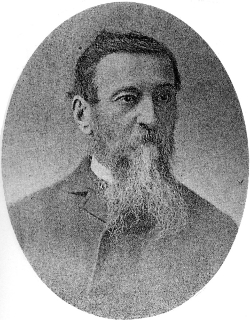
Birth of Thomas Clarke Luby, Irish Revolutionary

thomas-clarke-luby

Thomas Clarke Luby, Irish revolutionary, author, journalist and one of the founding members of the Irish Republican Brotherhood, is born in Dublin on January 16, 1822.

Luby is the son of a Church of Ireland clergyman from Templemore, County Tipperary, his mother being a Catholic. He is educated at Trinity College Dublin where he studies law and puts in the necessary number of terms in London and Dublin where he acquires a reputation as a scholar and takes his degree. He goes on to teach at the college for a time.

Luby supports the Repeal Association and contributes to The Nation newspaper. After the breach with Daniel O’Connell, he joins the Young Irelanders in the Irish Confederation. He is deeply influenced by James Fintan Lalor at this time. Following the suppression of the Young Ireland Rebellion of 1848, he with Lalor and Philip Gray attempt to revive the fighting in 1849 as members of the secret Irish Democratic Association. This, however, ends in failure.

In 1851 Luby travels to France, where he hopes to join the French Foreign Legion to learn infantry tactics but finds the recruiting temporarily suspended. From France he goes to Australia for a year before returning to Ireland. From the end of 1855 he edits the Tribune newspaper founded by John E. Pigot who had been a member of The Nation group. During this time, he remains in touch with the small group of ’49 men including Philip Gray and attempts to start a new revolutionary movement. Luby’s views on social issues grow more conservative after 1848 which he makes clear to James Stephens whom he meets in 1856.

In the autumn of 1857 Owen Considine arrives with a message signed by four Irish exiles in the United States, two of whom are John O’Mahony and Michael Doheny. The message conveys the confidence they have in Stephens and asks him to establish an organisation in Ireland to win national independence. Considine also carries a private letter from O’Mahony to Stephens which is a warning, and which is overlooked by Luby and Stephens at the time. Both believe that there is a strong organisation behind the letter, only later to find it is rather a number of loosely linked groups. On December 23 Stephens dispatches Joseph Denieffe to America with his reply which is disguised as a business letter dated and addressed from Paris. In his reply, Stephen’s outlines his conditions and his requirements from the organisation in America.

On March 17, 1858, Denieffe arrives in Dublin with the acceptance of Stephens’s terms by the New York Committee and the eighty pounds. On that very evening the Irish Republican Brotherhood is established in Peter Langan’s timberyard in Lombard Street.

In mid-1863 Stephens informs his colleagues he wishes to start a newspaper, with financial aid from O’Mahony and the Fenian Brotherhood in America. The offices are established at 12 Parliament Street, almost at the gates of Dublin Castle. The first issue of the Irish People appears on November 28, 1863. The staff of the paper along with Luby are Charles J. Kickham and Denis Dowling Mulcahy as the editorial staff. Jeremiah O’Donovan Rossa and James O’Connor have charge of the business office, with John Haltigan being the printer. John O’Leary is brought from London to take charge in the role of Editor.

On July 15, 1865, American-made plans for a rising in Ireland are discovered. Superintendent Daniel Ryan, head of the G Division of the Dublin Metropolitan Police at Dublin Castle, has an informer within the offices of the Irish People who supplies him with an “action this year” message on its way to the IRB unit in Tipperary. With this information, Ryan raids the offices of the Irish People on Thursday, September 15, followed by the arrests of Luby, O’Leary and O’Donovan Rossa. Kickham is caught after a month on the run. Stephens is also caught with the support of Fenian prison warders. The last number of the paper is dated September 16, 1865.

After his arrest and the suppression of the Irish People, Luby is sentenced to twenty years of penal servitude. He is released in January 1871 but is compelled to remain away from Ireland until the expiration of his sentence.

Upon his release Luby goes first to the Continent and later settles in New York City. He lectures all over the country for years and writes for a number of Irish newspapers on political topics. At the memorial meeting on the death of John Mitchel, he delivers the principal address in Madison Square Garden.

Thomas Clarke Luby dies at 109½ Oak Street, Jersey City, New Jersey of paralysis, on November 29, 1901, and is buried in a grave shared with his wife in Bayview Cemetery in Jersey City. His epitaph reads: “Thomas Clarke Luby 1822–1901 He devoted his life to love of Ireland and quest of truth.”


Leave a comment

Death of Michael Cusack, Founder of the GAA

michael-cusack

Michael Cusack, teacher and founder of the Gaelic Athletic Association, dies in Dublin on November 25, 1906.

Cusack is born on the eastern fringe of the Burren to Irish speaking parents in Carran, County Clare on September 20, 1847, during the Great Famine. He becomes a national school teacher and in 1874, after teaching in various parts of Ireland, becomes a professor at Blackrock College, then known as the French College. In 1877, he establishes his own civil service academy, Cusack’s Academy, in Dublin which proves successful in preparing pupils for the civil service examinations.

A romantic nationalist, Cusack is also reputed to have been associated with the Fenian movement. He is active in the Gaelic revival, initially as a member of the Society for the Preservation of the Irish Language which is founded in 1876, and later the Gaelic League who in 1879 breaks away from the Society. Also in 1879, he meets Pat Nally, who is a member of the Irish Republican Brotherhood and a leading nationalist and athlete. He finds that he and Nally agree on the influence of British landlordism on Irish athletics.

He would recall how both Nally and himself, While walking through Phoenix Park in Dublin and seeing only a handful of people playing sports in the park so depresses Cusack and Nally that they agree it is time to “make an effort to preserve the physical strength of [their] race.” Nally organises a National Athletics Sports meeting in County Mayo in September 1879 which is a success, with Cusack organising a similar event which is open to artisans in Dublin the following April.

On November 1, 1884, Cusack together with Maurice Davin, of Carrick-on-Suir, County Tipperary, calls a meeting in Hayes’ Commercial Hotel, Thurles, County Tipperary, and founds the Gaelic Athletic Association (GAA). Davin is elected president and Cusack becomes its first secretary. Later, Archbishop Thomas William Croke, Archbishop of Cashel & Emly, Michael Davitt and Charles Stewart Parnell become patrons. Cusack also becomes involved in the Irish language movement, founding The Celtic Times, a weekly newspaper which focuses on “native games” and Irish culture.

Michael Cusack dies in Dublin on November 27, 1906, at the age of 59. He is buried in Dublin’s Glasnevin Cemetery.


Leave a comment

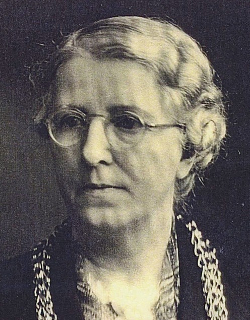
Death of Kathleen Clarke, Founder of Cumann na mBan

kathleen-clarke

Kathleen Clarke (née Daly), a founder member of Cumann na mBan, and one of very few privy to the plans of the Easter Rising in 1916, dies in Dublin on September 29, 1972. She is the wife of Tom Clarke and sister of Edward “Ned” Daly, both of whom are executed for their part in the Rising. She is subsequently a Teachta Dála (TD) and senator with both Sinn Féin and Fianna Fáil, and the first female Lord Mayor of Dublin (1939–41).

Kathleen Daly is born into a prominent Fenian family in Limerick on April 11, 1878, the third daughter of Edward and Catherine Daly. Her paternal uncle, John Daly, is at the time imprisoned for his political activities in Chatham and Portland Prisons in England. He is released in 1896 and returns home to Limerick. When Tom Clarke, who had been imprisoned with her uncle, is released in 1898 he travels to Limerick to receive the Freedom of the City and stays with the Daly family.

In 1901 Daly decides to emigrate to the United States to join Tom, who had been there since 1900, having secured work through his Fenian contacts. They marry on July 16, 1901, in New York City. Through his contacts in the Clan na Gael and the Irish Republican Brotherhood (IRB), Tom Clarke continues to be involved in nationalist activity. Kathleen joins the Gaelic League while in the United States and they return to Ireland in November 1907.

In 1914 Clarke becomes a founder member of Cumann na mBan. Her husband forbids her permission to take an active part in the 1916 Easter Rising as she has orders regardless of how the events pan out. As Tom Clarke is the first signatory of the Proclamation of the Irish Republic, he is chosen to be executed for his part in the Easter Rising. Her younger brother, Ned Daly, is also executed for taking part in the rising. She visits both of them before they are executed. After the Rising, Michael Collins establishes contact with her while in prison in his attempts to re-build the IRB network. She also sets up the Irish National Aid Fund to aid those who had family members killed or imprisoned as a result of the Easter Rising, closely aided by Sorcha MacMahon.

Clarke becomes a member of Sinn Féin and in 1917 is elected a member of the party’s Executive. During the German Plot she is arrested and imprisoned in Holloway Prison for eleven months. During the Irish War of Independence, she serves as a District Judge on the Republican Courts in Dublin. In 1919 she is elected as an Alderman for the Wood Quay and Mountjoy Wards of Dublin Corporation and serves until the Corporation is abolished in 1925.

Clarke is elected unopposed as a Sinn Féin TD to the Second Dáil at the 1921 elections for the Dublin Mid constituency. She is not re-elected at the 1922 Irish general election, however, and supports the Anti-Treaty forces during the Irish Civil War. In 1926 she becomes a founder member of Fianna Fáil and has to resign from Cumann na mBan. She is re-elected to the short-lived 5th Dáil at the June 1927 Irish general election as a Fianna Fáil member for the Dublin Mid constituency but loses her seat at the September 1927 Irish general election and does not regain it. She is elected as one of six Fianna Fáil Senators to the Free State Seanad for nine years at the 1928 Seanad election under the leadership of Joseph Connolly. She remains a member of the Seanad until it is abolished in 1936.

In 1930 Clarke is elected to the re-constituted Dublin Corporation for Fianna Fáil along with Robert Briscoe, Seán T. O’Kelly, Thomas Kelly and Oscar Traynor. She serves as the first Fianna Fáil Lord Mayor of Dublin as well as the first female Lord Mayor, from 1939 to 1941. She opposes the Constitution of Ireland as she feels that several of its sections would place women in a lower position that they had been afforded in the Proclamation of the Irish Republic. She is criticised by many in the Fianna Fáil organisation as a result and, while she resigns from the Thomas Clarke Cumann, she remains a member of the Fianna Fáil Ard Chomhairle.

While Clarke does not support the Irish Republican Army (IRA) bombing in England during World War II, she appeals for those sentenced to death by the Irish Government to be given clemency. Ultimately this leads to her breaking with the party completely after her term as Lord Mayor finishes in 1941. She declines to stand as a Fianna Fáil candidate at the 1943 Irish general election.

In 1966, as part of the celebrations of the Easter Rising, Clarke and other surviving relatives are awarded honorary Doctor of Law by the National University of Ireland. Following her death on September 29, 1972, she receives the rare honour of a state funeral. She is buried at Deans Grange Cemetery, Dublin.


Leave a comment

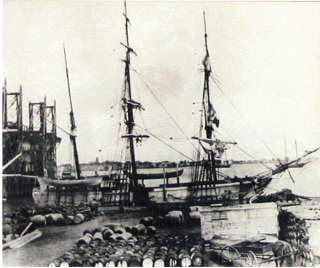
The Catalpa Rescue

catalpa

The whaling ship Catalpa is given a tumultuous welcome as it sails into New York harbor on August 19, 1876. She has no whales on board, but a far more valuable cargo, six Fenian prisoners from the British penal colony of Western Australia.

Clan na Gael‘s John Devoy, with the help of his friend John Boyle O’Reilly, a Fenian who had once escaped from Australia himself and editor of the Boston newspaper The Pilot, plan the escape. Somehow maintaining the secrecy of the mission, the two arrange to buy and crew the whaler Catalpa, purchased in New Bedford, Massachusetts, for the attempt.

The Catalpa sets out in April 1875 with most of the crew unaware of their actual mission. They reach western Australia in March 1876.

The first intended day for escape from the penal colony is April 6, but the appearance of HMS Convict and other Royal Navy ships and customs officers quickly lead to a postponement. The escape is rearranged for April 17, when most of the Convict Establishment garrison is watching the Royal Perth Yacht Club regatta.

Catalpa drops anchor in international waters off Rockingham and dispatches a whaleboat to shore. At 8:30 AM, six Fenians, Thomas Darragh, Martin Hogan, Michael Harrington, Thomas Hassett, Robert Cranston and James Wilson, who are working in work parties outside the prison walls abscond. They are met by Fenian agents John Breslin and Thomas Desmond and picked up in horse traps. A seventh Fenian, James Kiely, is left behind. The men race 12 miles south to Rockingham pier where Captain George Smith Anthony awaits them with the whaleboat. A local named Bell he had spoken to earlier sees the men and quickly alerts the authorities.

As they row to the Catalpa a fierce squall strikes, breaking the whaleboat’s mast. The storm lasts until dawn on April 18 and is so intense that Anthony later states that he did not expect the small boat to survive. At 7:00 AM, with the storm over, they again make for the Catalpa but an hour later spot the screw steamer SS Georgette, which has been commandeered by the colonial governor, heading for the whaler. The men lay down in the whaleboat and it is not seen by the SS Georgette. The SS Georgette finds the Catalpa, but in Captain Anthony’s absence the First Mate refuses to allow the colonial police to board as the ship is outside the colony’s three-mile limit. The steamer is forced to return to Fremantle for coal after following the Catalpa for several hours.

As the whaleboat again makes for the ship a police cutter with 30 to 40 armed men is spotted. The two boats race to reach the Catalpa first, with the whaleboat winning, and the men climbing aboard as the police cutter passes by. The cutter turns, lingers briefly beside the Catalpa, and then heads to shore.

Early on April 19 the refuelled and now heavily armed SS Georgette returns and comes alongside the whaler, demanding the surrender of the prisoners and attempting to herd the ship back into Australian waters. They fire a warning shot with the 12-pounder cannon that had been installed the night before. Ignoring the demand to surrender, Anthony raises and then points towards the U.S. flag, informing the SS Georgette that an attack on the Catalpa will be considered an act of war against the United States, and proceeds westward.

Governor William Cleaver Robinson has ordered the police on the SS Georgette not to create an incident outside territorial waters. After steaming around threateningly for about an hour, the SS Georgette heads back to Fremantle and Catalpa slips away into the Indian Ocean.

The Catalpa does its best to avoid Royal Navy ships on its way back to the United States. O’Reilly receives the news of the escape on June 6 and releases the news to the press. The news sparks celebrations in the United States and Ireland and anger in Britain and Australia, although there is also sympathy for the cause within the Australian population. The Catalpa arrives in New York Harbor on August 19, 1876. Clan na Gael and the Fenians achieve one of their greatest victories over the British Empire.


Leave a comment

The Battle of Ridgeway

battle-of-ridgeway

The Battle of Ridgeway, sometimes called the Battle of Lime Ridge or Limestone Ridge, is fought on June 2, 1866, in the vicinity of the town of Fort Erie across the Niagara River from Buffalo, New York between Canadian troops and an irregular army of Irish American invaders, the Fenians.

The Fenian insurgents, led by Brigadier General John O’Neill, a former Union cavalry commander who had specialized in anti-guerrilla warfare in Ohio, secures boats and transfers some 800 men across the Niagara River, landing above Fort Erie, before dawn on June 1, 1866. An additional 200–400 Fenians and supplies cross later in the morning and early afternoon until the U.S. Navy gunboat, the USS Michigan, begins intercepting Fenian barges at 2:20 PM.

O’Neill spends the first day trying to rally the local citizenry to the Fenian cause and to commandeer supplies for his mission, but his force is plagued by desertions almost from the outset. An additional column of 200 Fenians join his group, bringing his total strength at Ridgeway to at least 650 men.

Meanwhile, the British are mobilizing both local Canadian militia and British garrison troops to defend against the impending invasion of Canada. The Fenians night-march north across Black Creek through a cedar swamp, then turn inland on Ridge Road on the morning of June 2, taking up a defensive position on Limestone Ridge near the present Canadian town of Ridgeway. There, they clash with 850 advancing Canadian militia commanded by Lieutenant-Colonel Alfred Booker of the 13th Battalion.

In the first hour of the battle, the Canadians appear to prevail, driving Fenian skirmishers back across Bertie Road. Then the tide turns, and to this day, it is not clear what causes the impending chaos. O’Neill, observing the chaos breaking out in the Canadian ranks, quickly orders a bayonet charge that completely routs the inexperienced Canadians. The Fenians take and briefly hold the town of Ridgeway. Then, expecting to be overwhelmed by British reinforcements, they quickly turn back to Fort Erie where they fight a second battle, the Battle of Fort Erie, against a small but determined detachment of Canadians holding the town.

The Canadian loss is nine killed on the field, four dying of wounds in the immediate days following the battle, 22 dying of wounds or disease later and 37 are wounded, some severely enough to require amputation of their limbs. O’Neill says that four or five of his men are killed, but Canadians claim to have found six Fenian bodies on the field. The relatively low casualty figures make this an interesting battle for proponents of theories about soldiers’ reluctance to shoot to kill but might also be accounted for by the fact that the Fenians had deployed only their skirmishers in an attempt to lure the Canadians towards their main force which did not advance until the last minutes of the battle when they launched a bayonet attack that broke Canadian lines.

The battlefield is designated a National Historic Site of Canada in 1921 and is the last battle fought in the province of Ontario against a foreign invasion. The action at Ridgeway has the distinction of being the only armed victory for the cause of Irish independence between the Irish Rebellion of 1798 and the Irish War of Independence (1919).

(Pictured: An 1869 illustration of the battle: Charge of General O’Neill’s Fenians upon the Canadian troops, causing their rout.)


1 Comment

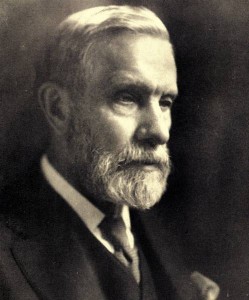
Birth of Edward Martyn, Playwright & Activist

edward-martyn

Edward Martyn, Irish playwright and early republican political and cultural activist, is born in County Galway on January 30, 1859. He serves as the first president of Sinn Féin from 1905 to 1908.

Martyn is the elder son of John Martyn of Tullira Castle, Ardrahan and Annie Mary Josephine (née Smyth) of Masonbrook, Loughrea, both of County Galway. He is educated at Belvedere College, Dublin, and Wimbledon College, London, both Jesuit schools, after which he enters Christ Church, Oxford in 1877, but leaves without taking a degree in 1879. His only sibling, John, dies in 1883.

Martyn begins writing fiction and plays in the 1880s. While his own output is undistinguished, he acquires a well-earned reputation as a noted connoisseur of music, both European classical and Irish traditional. He is a fine musician in his own right, giving memorable performances for guests on an organ he has installed at Tullira. He uses his wealth to benefit Irish culture.

Martyn is reportedly pivotal in introducing William Butler Yeats and Lady Gregory to each other in 1896. The three found the Irish Literary Theatre, for whom Martyn writes his best and most popular plays, The Heather Field and A Tale of a Town. He covers the costs of the company’s first three seasons, which proves crucial to establishing the company and the future of the Abbey Theatre. He later parts ways with Yeats and Gregory, something he later regrets, but remains on warm terms with Lady Gregory until the end of his life.

Martyn is a cousin and friend to George Moore (1852–1933). The two make frequent trips all over Europe, where Moore influences Martyn’s views on modern art, which result in the latter purchasing several works by Edgar Degas, Claude Monet, Jean-Baptiste-Camille Corot and Kitagawa Utamaro, all later donated to the National Gallery of Ireland. Moore does not share Martyn’s fenian ideas nor espousal of violent means to achieve national sovereignty. Their different political opinions eventually drive their friendship apart.

Martyn is descended from Richard Óge Martyn, a leading Irish Confederate, and Oliver Óge Martyn, a Jacobite who fights in the Williamite War in Ireland. Yet by his lifetime, the family are unionists. Martyn’s outlook begins to change in the 1880s after studying Irish history, as well as living through the events of the Irish Land War. He comes out as an Irish republican when he famously refuses to allow “God Save The Queen” to be sung after a dinner party at Tullira. By this stage he is involved with the political work of Maude Gonne and Arthur Griffith and is a vocal opponent of the visit of Queen Victoria to Ireland in 1897. He also protests the visit by Edward VII in 1903, this time as chairman of the People’s Protection Committee. He is the first president of Sinn Féin from 1905 to 1908. In 1908 he resigns from the party and politics in general to concentrate on writing and his other activities.

He is on close personal terms with Thomas MacDonagh, Joseph Mary Plunkett and Patrick Pearse, and deeply mourns their executions in the aftermath of the Easter Rising. A parish hall and church that he founded at Labane, near Tullira, are burned by the Black and Tans. He supports the Anglo-Irish Treaty of 1921.

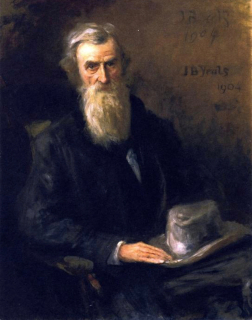
Martyn dies at Tullira on December 5, 1923, after years of ill health. Friends and family are shocked at a provision in his will that directs that his body be donated for the use of medical science and, after dissection, be buried in an unmarked pauper’s grave. The Palestrina Choir sings at his graveside. He bequeaths his papers to the Carmelites of Clarendon Street in Dublin, who subsequently misplace and lose them. Portraits of Martyn exist by, among others, John Butler Yeats and Sarah Purser. On his death the senior line of the Martyn family dies out. His property is inherited by his cousins, the Smyths of Masonbrook and Lord Hemphill. Tullira is sold by the latter forty years later changing ownership several times since.


Leave a comment

British Release of Fenian Prisoners

cuba-five

The British, in a general amnesty, release 33 Fenian prisoners on January 5, 1871. Most of these prisoners are men who have either been swept up by the British in 1865, when they suppressed the Fenian newspaper The Irish People for taking part in the Fenian Rising of March 1867, or had been rounded up after the “Smashing of the Van” rescue of Thomas J. Kelly and Timothy Deasy in September 1867.

The British penal system of the period is brutal under normal circumstances, and the Fenians receive much harsher treatment than that received by the normal inmates. Those Fenians still on the outside agitate constantly for the release of their comrades. The man most responsible for the release of 1871 is John “Amnesty” Nolan, who thus earns his sobriquet.

The names of many of the men released by William Ewart Gladstone’s government are well known to those who have studied the Irish republican movement. One of them is Jeremiah O’Donovan Rossa, as steadfast an enemy of English rule in Ireland as any who has ever lived. After Rossa’s death in the United States, his body is returned to Ireland for burial, and his funeral in 1915 includes the famous eulogy by Patrick Pearse, one of the seminal moments in the renewal of armed struggle for Irish freedom. Another Fenian released that day is John Devoy, who perhaps more than any other man keeps the struggle for Irish freedom alive among Irish exiles in America.

The British government releases the Fenians on condition that they exile themselves to the country of their choice and not return until their sentences have expired. Many chose to go to Australia, but Rossa, Devoy, John McClure, Henry Mulleda, and Charles Underwood O’Connell, who have all been imprisoned together, chose to go to the United States and ship together from Liverpool on board the Cuba. The so-called Cuba Five arrive in New York City to a hero’s welcome from the city’s large Irish community and even receive a resolution of welcome from the United States House of Representatives.

(Pictured: “The Cuba Five” – John Devoy, Jeremiah O’Donovan Rossa, Charles Underwood O’Connell, Henry Mulleda and John McClure)


Leave a comment

New Departure

Fenians propose a “New Departure,” an alliance with the Parnellites, on October 27, 1878. The term New Departure is used to describe several initiatives in the late 19th century by which Irish republicans, who are committed to independence from Britain by physical force, attempt to find a common ground for co-operation with groups committed to Irish Home Rule by constitutional means. The term refers to the fact that Fenians are to some extent departing from their orthodox doctrine of noninvolvement with constitutional politics, especially the British parliament.

In January 1877, James Joseph O’Kelly, a journalist with the New York Herald persuades John Devoy to meet with Irish parliamentarians. In January 1878, Devoy meets with Charles Stewart Parnell in Dublin. In March the exiled senior Irish Republican Brotherhood member John O’Leary and Supreme Council secretary John O’Connor meet secretly in London with MPs Charles Stewart Parnell, Frank Hugh O’Donnell, William Henry O’Sullivan and O’Kelly. The meeting is sought by Parnell or by William Carroll of Clan na Gael to consider co-operation between the IRB and Parnell. Parnell apparently merely listens and does not commit himself.

John O’Connor and Dr. Mark Ryan, both members of the IRB’s Supreme Council, believe O’Connor Power has some hand in the new departure. John O’Connor suspects that Michael Davitt of the IRB has been influenced by O’Connor Power, and that the new departure proposals conceal some sinister scheme of Power’s devising, assumptions that Davitt hotly rejects. The precedent for constitutional agitation set by Power is not lost on orthodox Fenians such as Dr. Ryan, who sees behind the new departure the nefarious influence of the member for Mayo.

In late 1878 Michael Davitt makes a fund-raising political lecture tour of the United States, promoted by William Carroll and John Devoy of Clan na Gael. On October 13 in Brooklyn, New York, Davitt first presents, in a lecture titled “Ireland in parliament from a nationalist’s point of view,” a doctrine that Irish republicans cannot prevent Irishmen voting or being elected to the British parliament, but they can influence who is sent to that parliament. He states that the Home Rule League, especially Isaac Butt and John O’Connor Power, are failing to prevent Ireland from being “imperialised” or “West Britainised.” Davitt however believes that Parnell and Joseph Biggar are acceptable Irish MPs, and Irish republicans should ensure that more such strong nationalists are voted in. John Devoy follows and points out that if Irish republicans are to gain the support of Britain’s potential enemies, such as Russia, they need to provide far stronger opposition to Britain both inside and outside parliament. He points out that Russia has not yet seen the Irish as providing any such meaningful opposition, in fact to Russia they appear loyal to Britain. Hence it is necessary to replace representatives in all Irish public bodies with suitable committed nationalists. Both Davitt and Devoy at this meeting stress that resolution of the Irish land question by transfer of ownership to the farmers themselves is integral to Irish demands on Britain.

On October 27, 1878, Devoy, without first consulting Davitt, summarises these ideas in what he terms a “new departure” in the New York Herald, and it is reported in Ireland on November 11. He also states that Irish participation in the British parliament is to be temporary, and that at a suitable time Irish nationalist MPs will withdraw to Dublin and form an independent Irish legislature. Davitt is at first worried that perceived connections to the Fenians will threaten Parnell in parliament, but Devoy convinces him that Parnell will not be affected. IRB leaders John O’Leary and Charles Kickham reject the overture to constitutionalists and Parnell gives no comment. He does however adopt the militant rhetoric of land ownership to be transferred to the Irish farmers themselves in various public speeches in Ireland. Hence the stage is set for the successful collaboration in 1879 over the Land War.

(Pictured: John Devoy)


Leave a comment

Police Raid & Shut Down “The Irish People”

Police raid and close the offices of the Fenian newspaper The Irish People on September 15, 1865. Jeremiah O’Donovan Rossa, Thomas Clarke Luby, and John O’Leary are arrested.

In mid-1863, James Stephens informs his colleagues he wishes to start a newspaper, with financial aid from John O’Mahony and the Fenian Brotherhood in America. The offices are established at 12 Parliament Street, almost at the gates of Dublin Castle. The first edition of The Irish People appears on November 28, 1863. The staff of the paper along with Charles Kickham are Thomas Clarke Luby and Denis Dowling Mulcahy as the editorial staff. Jeremiah O’Donovan Rossa and James O’Connor are in charge of the business office, with John Haltigan being the printer. John O’Leary is brought from London to take charge in the role of Editor. Shortly after the establishment of the paper, James Stephens departs on an American tour, and to attend to organisational matters.

American Fenians make plans for a rising in Ireland, but the plans are discovered on July 15, 1865 when an emissary loses them at Kingstown railway station. They find their way to Dublin Castle and to Superintendent Daniel Ryan head of G Division. Ryan has an informer within the offices of The Irish People named Pierce Nagle, who supplies Ryan with an “action this year” message on its way to the Irish Republican Brotherhood unit in Tipperary. With this information, Ryan raids the offices of The Irish People on September 15, followed by the arrests of John O’Leary, Thomas Clarke Luby and Jeremiah O’Donovan Rossa. The last edition of the paper is dated September 16, 1865.

Before leaving for America, Stephens entrusts to Luby a document containing secret resolutions on the Committee of Organization or Executive of the IRB. Though Luby intimates its existence to O’Leary, he does not inform Kickham as there seems no necessity. This document later forms the basis of the prosecution against the staff of The Irish People. The document reads:

EXECUTIVE

I hereby appoint Thomas Clarke Luby, John O’Leary and Charles J. Kickham, a Committee of Organisation or Executive, with the same supreme control over the Home Organisation (Ireland, England, Scotland, etc.) I have exercised myself. I further empower them to appoint a Committee of Military Inspection, and a Committee of Appeal and Judgment, the functions of which Committee will be made known to each member of them by the Executive. Trusting to the patriotism and ability of the Executive, I fully endorse their action beforehand, and call on every man in our ranks to support and be guided by them in all that concerns our military brotherhood.

9 March 1864, Dublin
J. STEPHENS

Charles Kickham is caught after a month on the run and James Stephens is also eventually caught but with the support of Fenian prison warders John J. Breslin and Daniel Byrne is less than a fortnight in Richmond Bridewell Prison when he vanishes and escapes to France.

(From Stair na hÉireann, https://stairnaheireann.net/2015/09/15/1865-police-raid-and-close-the-irish-people-offices-odonovan-rossa-luby-and-oleary-are-arrested/)


Leave a comment

The Funeral of Jeremiah O’Donovan Rossa

The funeral of Fenian Jeremiah O’Donovan Rossa is held before a huge crowd at Glasnevin Cemetery in Dublin on August 1, 1915.

Rossa’s body had been returned from New York City where he died June 29. He had been exiled by the British for his Fenian activities in 1871. While in exile, Rossa manages to alienate many of his former Fenian colleagues, including his good friend John Devoy, with his uncompromising advocacy of violence to end British rule in Ireland. Perhaps his attitude is due in part to the harsh treatment he receives in British prisons as well as scenes he witnesses while helping to distribute relief in his native County Cork during the Great Hunger.

In the late 1870s, he organizes the “Skirmishing Fund,” which finances the infamous Fenian dynamite campaign in England. When he dies in New York on June 29, 1915, he is estranged from most in the Irish republican movement.

Rossa’s funeral is one of the seminal events in the revival of the Irish republican movement in Ireland. During the three days when Rossa lays in the vestibule of the City Hall, encased in a coffin with a plate glass lid, thousands of citizens pass by to pay their final respects.

The coffin is conveyed from the City Hall in the four-horse bier in waiting at 2:25 PM and fifteen minutes later the cortège starts, headed by a guard of honour of the Irish Volunteers with rifles, a mounted guard being supplied by the same body. The coffin is thickly covered with wreaths and an open carriage behind is also filled with floral tokens, while many of the contingents carry wreaths to be placed on the grave.

The procession, in marching four deep at a slow pace, takes a little over fifty minutes to pass the corner of Dame Street into George’s Street. A conservative estimate of those who actually take part in the procession give the numbers as exceeding 6,000 and there must be at least ten times that number lining the streets.

The funeral comes into College Green at about 3:00 PM, headed by a body of Volunteers with the St. James’s Band. It is nearing 6:00 PM when the hearse passes through the main gates of Glasnevin Cemetery. The avenue leading to the mortuary chapel is lined by detachments of Volunteers. The prayers in the chapel are said by the Rev. D. Byrne, chaplain. Several priests then accompany the coffin to the grave, which is situated just beyond the eastern fringe of the O’Connell circle, close to the graves of two other prominent Fenians, John O’Leary and James Stephens.

Patrick Pearse gives an address at the graveside which has resounded with republicans down through the years. The final words of his oration provide them with one of their most enduring slogans, “Ireland unfree will never be at peace.”

A firing party then fires a volley, the Last Post is sounded, and wreaths are laid on the grave.