seamus dubhghaill

Promoting Irish Culture and History from Little Rock, Arkansas, USA


Leave a comment

The Dunlavin Green Executions

dunlavin-green-monumentThe Dunlavin Green executions, the summary execution of 36 suspected rebel prisoners in County Wicklow by the British military shortly after the outbreak of the Irish Rebellion of 1798, take place on May 26, 1798. There are several accounts of the events, recorded at differing times and differing in detail.

The British government had begun raising yeomanry forces from the local Irish population in 1796. The force, composed of both Catholics and Protestants, was raised to help defend against a possible French invasion of Ireland and to aid in the policing of the country. The Society of United Irishmen have long threatened a rebellion in Ireland, which finally occurs in late May 1798. Major uprisings of the rebellion only occur in Ulster, Wicklow and Wexford, a county in the province of Leinster. For several months prior to May 1798, Wicklow and many other areas of the country have been subject to martial law which had been imposed in an effort to prevent the long threatened rebellion.

The campaign extends against the military itself as some corps of yeomen and militia, especially those with Catholic members, are suspected as United Irish infiltrators who have joined to get training and arms. Several days after the outbreak of the rebellion, the yeomanry and militia at Dunlavin are called out on parade and informed by their commanding officer that he has information on the identities of those in the corps who are affiliated with the United Irishmen among them. The British do not actually have such information, but twenty-eight fall for their bluff and come forward in hopes of receiving clemency.

Those who come forward are immediately arrested and imprisoned while several are subjected to flogging in an effort to extract information about the rebels plans and organization. Those who are outed as affiliates of the United Irishmen are imprisoned in the Market House of Dunlavin, while the British officers decide what to do with them.

The following day, Captain William Ryves of the Rathsallagh yeomanry has his horse shot from under him by rebels while on patrol. Ryves rides to Dunlavin the next day and brings eight suspected rebels imprisoned by his corps with him. There he meets with Captain Saunders of the Saunders-grove yeomanry. It is decided that their prisoners, a total of 36 men, should be put to death. On May 26, Market Day, the 36 are taken to the green, lined up and shot in front of the townspeople, including, in some cases, their own families.

The firing squad returns to the Market House where others are flogged or hanged. Before the bodies of the shot men are removed, soldiers’ wives loot them of valuables. The bodies are either removed for burial by their families or interred in a common grave at Tournant cemetery. One man survives, despite grievous wounds, and lives to “an advanced age.” Two more men, either hanging or about to be, are saved by the intervention of a “respectable Protestant” and escape.

One loyalist account details the events leading up to the execution differently. According to this account, Captain Ryves, a yeomanry commander at Dunlavin, receives word that a large number of rebels are set to attack Dunlavin and he observes that many Protestant houses have been set on fire in the surrounding countryside. Under the circumstances, he expects that the rebels’ intention is a pogrom of Protestants and loyalists in the town and its environs. A foray by the troops into the countryside fails and the garrison’s officers are aware that they are outnumbered by the prisoners held in the Market House.

The executions appear to have been motivated by simple revenge and intimidation, rather than fear of the prisoners and the ongoing rebellion. Though the public exhibition may have been designed to intimidate and discourage rebels in the immediate area from taking to the field, news of the executions, as well as those at Carnew spread rapidly and play a part in the rapid mobilization of rebels in northern County Wexford over the next few days.

The story of Dunlavin Green is quickly commemorated in the famous balladDunlavin Green,” which tells the story from the view of a sympathetic local eyewitness. In 1998, a commemorative stone was installed in St. Nicholas of Myra Roman Catholic church, adjacent to the green.

Leave a comment

The Battle of Fontenoy

battle-of-fontenoy

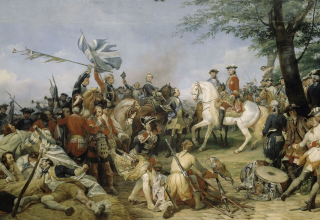
The Irish Brigade of France, a brigade in the French Royal Army composed of Irish exiles most commonly identified in Irish history as The Wild Geese, achieve its most glorious victory at the Battle of Fontenoy on May 11, 1745, during the War of the Austrian Succession.

The battle takes place in the Belgian municipality of Antoing, near Tournai. A French army of 50,000 commanded by Marshal Maurice de Saxe defeats a slightly larger Pragmatic Army of 52,000 consisting of the Dutch Republic, Great Britain, Hanover and the Holy Roman Empire, led by Prince William, Duke of Cumberland. The Irish Brigade is led by Justin McCarthy, Viscount Mountcashel and is comprised of six regiments.

Despite setbacks elsewhere, at the end of 1744 the French hold the initiative in the Austrian Netherlands, and their leaders consider this theatre offers the best opportunity for a decisive victory. In late April, they besiege Tournai, which controls access to the upper Scheldt basin, which makes it a vital link in the North European trading network and the Allies march to its relief.

Leaving 22,000 men in front of Tournai, Saxe places his main force five miles away in the villages of St. Antoine, Vezin and Fontenoy, along a naturally strong feature which he strengthens with defensive works. After a series of unsuccessful flank assaults, the Allies attack the French centre with a column of 15,000 men.

Colonel Arthur Dillon‘s regiment, which had already been badly shot up earlier in the fight, along with the brigade’s other five, charge the British as they seem on the verge of breaking the French line. Fifty years of Irish frustration and British betrayal now come back to haunt the British. As the men of the Irish Brigade close through a hail of British bullets, their shouts are heard above the din: “Cuimhnígí ar Luimneach agus ar fheall na Sasanach!” (Remember Limerick and the Saxon Faith).

Nothing can withstand the wave of hatred and revenge that breaks on the hapless British line that day. The victory is won but the cost is high. Colonel Dillon is dead, and Lord Clare is wounded twice. The brigade suffers 656 casualties in all, the highest percentage of all the French units.

Although the Allies retreat in good order, Tournai falls shortly afterwards, followed by Ghent, Oudenaarde, Bruges and Dendermonde. The withdrawal of British forces in October to deal with the Jacobite Rising facilitates the capture of Ostend and Nieuwpoort. By the end of 1745, France controls much of the Austrian Netherlands, threatening British links with Europe.

However, by early 1746, France is struggling to finance the war and begins peace talks at the Congress of Breda in May. Despite victories at Rocoux in October 1746 and Lauffeld in July 1747, the war continues until the Treaty of Aix-la-Chapelle in 1748.

It is a day never to be forgotten by the Irish worldwide. At Manassas, Virginia, 116 years later, Thomas Francis Meagher cries out to the 69th New York, another regiment of Irishmen, “Remember Fontenoy!”

(Pictured: The Irish Brigade, presenting a captured British colour to Louis XV and the Dauphin)


Leave a comment

Birth of Máire de Paor, Historian & Archaeologist

maire-de-paor

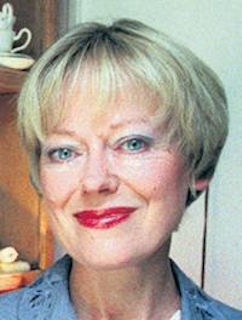
Máire de Paor, Irish historian and archaeologist who also works as a researcher and presenter for national broadcaster RTÉ, is born on May 6, 1925, in Buncrana, County Donegal.

De Paor is born Máire MacDermott to Eamonn MacDermott and Delia MacVeigh. She is educated in the Convent of Mercy in Buncrana before going to University College Dublin, where she completes a master’s degree and a doctorate on early Christian archaeology and metalwork.

De Paor works in the Department of Archeology at UCD from 1946 to 1958. She marries Liam de Paor in 1946, and they have a daughter and four boys. They collaborate on a number of publications. She publishes her papers in the Proceedings of the Royal Irish Academy, Archaeologia, Seanchas Armagh and Comhar. Her husband also works at the university and, as a result of policies about married women, she is forced to leave. Initially she lectures in the United States, Canada, Scandinavia, France and the United Kingdom. She works as lecturer in archaeology at Trinity College, Dublin. The de Paors spend a year in Nepal on a UNESCO project in 1963.

De Paor works as a freelance researcher for Raidió Teilifís Éireann until she is given a full-time position in the 1970s.

De Paor is elected a member of the Royal Irish Academy in 1960 and is a member of the Arts Council from 1973. She becomes a member of Conradh na Gaeilge from 1962. From 1968 she is working with Cumann Merriman, the Irish cultural organisation named after Brian Merriman, working with the group as a director of the schools and spends four years as chairperson. In 1992 she is appointed to the board of Amharclann de hÍde.

Máire de Paor dies on December 6, 1994, at the age of 69.

University College Dublin has created the Dr. Máire de Paor Award for best PhD thesis. Her biographer identifies her as a committed republican, socialist and feminist.


Leave a comment

Execution of Major Geoffrey Lee Compton-Smith

geoffrey-lee-compton-smith

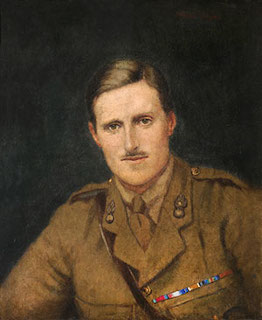
Major Geoffrey Lee Compton-Smith (DSO) of the 2nd Battalion of the Royal Welch Fusiliers is captured and executed by the Irish Republican Army (IRA) on April 30, 1921, during the Irish War of Independence.

Compton-Smith was born in 1889 in South Kensington, London. After finishing school, he decides not to follow the family tradition of studying law. He actually wants to become an artist, but his father insists that he join the army. He studies at the Royal Military College at Sandhurst and during World War I his regiment is sent to France. In 1917 he is wounded at the Battle of Arras, but he continues to fight on. He is awarded the Distinguished Service Order (DSO). In 1919 he is sent to serve in Ireland during the Irish War of Independence.

In 1919 Compton-Smith is commander of the British Army base at Ballyvonane, near Buttevant, but he is also an intelligence officer. As an officer he also sometimes presides over courts martial. In January 1921, for instance, three IRA volunteers are tried by him for involvement in the ambush at Shinanagh, near Charleville, and he sentences them each to six months.

February 1921 is a bad time for the IRA in County Cork. They suffer major losses at the ambushes at Clonmult and Mourne Abbey, and several volunteers are taken prisoner, four of whom are sentenced to death. The IRA believes that these death sentences might be commuted if a British officer is held as a hostage. This leads to the capture of Compton-Smith. On April 16, 1921, he travels to Blarney, supposedly on a sketching trip but actually to meet a nurse in Victoria Barracks with whom he is having an affair. The IRA has spies in Victoria Barracks who likely tip off the IRA that Compton-Smith is coming to Blarney. A squad led by Frank Busteed easily capture him after he gets off the train.

Busteed then meets with Jackie O’Leary, the IRA battalion commander. It is decided that Donoughmore is the perfect place to keep a hostage, because parts of the parish are remote and the IRA is strong there.

On April 18, under the cover of darkness, Compton-Smith is transferred by car to Knockane House, an abandoned big house in Donoughmore. The following night he is moved again, this time by pony and trap, to Barrahaurin, a remote townland in the Boggeragh Mountains. He is kept there for the last eleven days of his life, on the small farm of Jack and Mary Moynihan. He is held prisoner in a shed, always under guard. Every evening he is brought into the house, where he eats and stays at the fireside. He and his guards have conversations about history and politics.

The four IRA prisoners are executed on April 28, 1921. On April 30, O’Leary informs Compton-Smith that he is going to be executed. He then writes a final letter to his wife. He tells her that he will die with her name on his lips and her face before his eyes and that he will “die like an Englishman and a soldier.” He also writes a letter to his regiment and one to Lt. General Strickland.

After finishing his letters, Compton-Smith is led up into Barrahaurin bog behind the Moynihan house, to a place where his grave had already been dug and is given a final cigarette. In his witness statement Maurice Brew writes, “When removed to the place of execution he placed his cigarette case in his breast pocket of his tunic … He then lighted a cigarette and said that when he dropped the cigarette it could be taken as a signal by the execution squad to open fire.”

It is not until late May, following the discovery of the cache of letters in a Dublin raid, that the Compton-Smith family is informed of his death. His father, William, then starts a campaign to find his son’s body. He wrote letters to MPs and to the British Army, seeking information and help. He also writes to Erskine Childers but gets no reply. He offers a reward of £500 for information, but only The Irish Times agrees to print his advertisement.

In November 1921 a cousin of Compton-Smith’s wife, Gladys, meets Michael Collins in London and asks him for help in finding the body. Correspondence between Collins and the Compton-Smith family suggests that Collins is trying to help in 1922, but he fails to get any results before he is assassinated at Béal na Bláth later that same year.

On March 3, 1926, Compton-Smith’s grave is discovered by the Gardaí. The newspapers report that the remains, because of the conditions of the bog, “were not so badly decomposed as to render identification impossible.” The body is brought to Collins Barracks in Cork. On March 5 the Gardaí send a telegram to the Compton-Smiths, informing them that the body has been located.

The reburial of Compton-Smith is carried out with great dignity on March 19, 1926. The Irish Army escorts the coffin from Collins Barracks to Penrose Quay, where British forces from Spike Island take the coffin on board a boat. While the boat travels down the River Lee, the Irish Army’s guard of honour presents arms and sounds the “Last Post.” The British then bring the coffin to Carlisle Fort, near Whitegate, where it was buried in the in the British Military Cemetery with full military honours.


Leave a comment

Birth of Clare Boylan, Author & Journalist

clare-boylan

Clare Boylan, Irish author, journalist and critic for newspapers, magazines and many international broadcast media, is born in Dublin on April 21, 1948.

After leaving St. Louis convent, Boylan takes a job as a sales assistant in a bookshop before beginning her career as a journalist at The Irish Press, now defunct. In 1974 she wins the Journalist of the Year award when working in the city for the Evening Press. Later in her career she edits the glossy magazine Image, before largely giving up journalism to focus on a career as an author.

Boylan’s novels are Holy Pictures (1983), Last Resorts (1984), Black Baby (1988), Home Rule (1992), Beloved Stranger (1999), Room for a Single Lady (1997), which wins the Spirit of Light Award and is optioned for a film, and Emma Brown (2003). The latter work is a continuation of a 20-page fragment written by Charlotte Brontë before her death.

Boylan’s short stories are collected in A Nail on the Head (1983), Concerning Virgins (1990) and That Bad Woman (1995). The film Making Waves, based on her short story “Some Ladies on a Tour”, is nominated for an Oscar in 1988.

Boylan’s non-fiction includes The Agony and the Ego (1994) and The Literary Companion to Cats (1994). She writes introductions to the novels of Kate O’Brien and Molly Keane and adapts Keane’s novel Good Behaviour as the classic serial for BBC Radio 4 (2004). Her work has been translated as far afield as Russia and Hong Kong.

In later life, Boylan lives in County Wicklow with her husband Alan Wilkes. When she is diagnosed with ovarian cancer, she faces her illness with characteristic strength. She takes up kickboxing and spends time in France, shopping, cooking and entertaining friends. She succumbs to cancer at the age of 58 on May 16, 2006.


Leave a comment

The Battle of Culloden

culloden-moor-memorial

The Battle of Culloden, the final confrontation of the Jacobite rising of 1745 known in Scotland as simply “The ’45,” is fought on April 16, 1746. The Jacobite army of Charles Edward Stuart, also known as Bonnie Prince Charlie, is decisively defeated by a British government force under William Augustus, Duke of Cumberland, on Drummossie Moor near Inverness in the Scottish Highlands. It is the last pitched battle fought on British soil.

Charles is the eldest son of James Francis Edward Stuart, the exiled Stuart claimant to the British throne. Believing there is support for a Stuart restoration in both Scotland and England, he lands in Scotland in July 1745. The Jacobite Army is often assumed to have been largely composed of Gaelic-speaking Catholic Highlanders. In reality nearly a quarter of the rank and file are recruited in Aberdeenshire, Forfarshire and Banffshire, with another 20% from Perthshire. Although the army is predominantly Scots it contains a few English recruits plus significant numbers of Irish, Scottish and French professionals in French service with the Irish Brigade and Garde Écossaise.

After amassing his army of Scots Jacobite supporters, Charles takes Edinburgh by September and defeats a British government force at Prestonpans. The government recalls 12,000 troops from the Continent to deal with the rising. A Jacobite invasion of England reaches as far as Derby before turning back, having attracted relatively few English recruits.

The Jacobites, with limited French military support, attempt to consolidate their control of Scotland, whereby early 1746 they are opposed by a substantial government army. A scrambled Jacobite victory at Falkirk fails to change the strategic situation. With supplies and pay running short and with the government troops resupplied and reorganised under the Duke of Cumberland, son of British monarch George II, the Jacobite leadership has few options left other than to stand and fight. The two armies eventually meet at Culloden, on terrain that gives Cumberland’s larger, well-rested force the advantage.

The battle lasts only an hour, with the Jacobites suffering a bloody defeat with between 1,500 and 2,000 killed or wounded. Approximately 300 government soldiers are killed or wounded. While perhaps as many as 6,000 Jacobites remain in arms in Scotland, the leadership takes the decision to disperse, effectively ending the rising. The men of the combined Irish regiments, under the command of Brigadier Walter Stapleton, are the last off the field, covering the retreat of Prince Charles and the remnants of his army. The Irish had given their blood to the cause of a Stuart King for the last time. Most of the surviving Irish surrender at Inverness. The prince himself eventually manages to make his escape to France.

Culloden and its aftermath continue to arouse strong feelings. The University of Glasgow awards the Duke of Cumberland an honorary doctorate, but many modern commentators allege that the aftermath of the battle and subsequent crackdown on Jacobite sympathisers were brutal, earning Cumberland the sobriquet “Butcher.” Efforts are subsequently made to further integrate the comparatively undeveloped Scottish Highlands into the Kingdom of Great Britain. Civil penalties are introduced to undermine the Scottish clan system, which had provided the Jacobites with the means to rapidly mobilise an army.

Today, a visitor centre is located near the site of the battle. This centre is first opened in December 2007, with the intention of preserving the battlefield in a condition similar to how it was on April 16, 1746. One difference is that it currently is covered in shrubs and heather. During the 18th century, however, the area was used as common grazing ground, mainly for tenants of the Culloden estate. Those visiting can walk the site by way of footpaths on the ground and can also enjoy a view from above on a raised platform. Possibly the most recognisable feature of the battlefield today is the 20-foot-tall memorial cairn, erected by Duncan Forbes in 1881. In the same year Forbes also erects headstones to mark the mass graves of the clans.


Leave a comment

Easter Rising “Remembrance Wall” Unveiled

glasnevin-memorial-wall

A “Remembrance Wall” showing the names of all those who died during the 1916 Easter Rising is unveiled at Glasnevin Cemetery in Dublin on April 3, 2016. The memorial wall bears the names of all those who died, Irish and British, military and civilian, in the rebellion 100 years earlier.

Almost 500 people are killed in the uprising, with 268 of them being civilians caught up in the violence. The names are displayed chronologically without distinction between the different categories. The inclusion of the names of 119 British soldiers on the wall, some of whom are buried in Glasnevin, causes some controversy and a number of protesters gather outside the cemetery to demonstrate as the interfaith service takes place inside. A significant Garda Síochána presence monitors the protest events.

The Glasnevin Trust insists the memorial is an attempt to present the historical facts, without hierarchy or judgement. Chairman of Glasnevin Trust John Green tells the service the wall reflects modern Ireland. “Behind each and every one of these lost lives is a story of heartbreak, no matter what side the person served on or indeed for those innocently caught up in the conflict,” he says. “One hundred years on we believe this memorial reflects the time we live in, with the overwhelming majority of the Irish people wishing to live in peace and in reconciliation. But it is for each visitor to take from the wall what they wish.”

Senior church figures from a range of faiths and humanist representatives are among those to speak at the ceremony. Inspiration for the project is drawn from an international memorial near Arras in France that lists the names of 580,000 people killed in fighting on the western front in World War I. Taoiseach Enda Kenny lays a wreath during the event, which is part of the official State programme commemorating the uprising.

Conradh na Gaeilge expresses its disappointment about a spelling mistake on the new memorial wall. The wall is titled Éirí Amach na Cásca but the word Éirí (meaning Rising) appears with a fada on the first i, instead of on the E. Julian de Spáinn of Conradh na Gaeilge says the mistake illustrates a laziness toward the Irish language and he cannot understand why those involved did not ensure that the Irish is as accurate and correct as the English spelling on the wall.


Leave a comment

Birth of Sophie Bryant, Mathematician, Educator & Feminist

sophie-bryant

Sophie Willock Bryant, Anglo-Irish mathematician, educator, feminist and activist, is born Sophie Willock in Dublin on February 15, 1850.

Bryant’s father is Rev. Dr. William Willock DD, Fellow and Tutor of Trinity College, Dublin. She is educated at home, largely by her father. As a teenager she moves to London when her father is appointed Professor of Geometry at the University of London in 1863, and she attends Bedford College. At the age of nineteen she marries Dr. William Hicks Bryant, a surgeon ten years her senior, who dies of cirrhosis within a year.

In 1875 Bryant becomes a teacher and is invited by Frances Mary Buss to join the staff of North London Collegiate School. In 1895 she succeeds Buss as headmistress of North London Collegiate, serving until 1918.

When the University of London opens its degree courses to women in 1878, Bryant becomes one of the first women to obtain First Class Honours, in Mental and Moral Sciences, together with a degree in mathematics in 1881, and three years later is awarded the degree of Doctor of Science. In 1882 she is the third woman to be elected to the London Mathematical Society and is the first active female member, publishing her first paper with the Society in 1884. Together with Charles Smith, Bryant edits three volumes of Euclid‘s Elements, for the use of schools (Euclid’s Elements of Geometry, books I and II (1897); Euclid’s Elements of Geometry, books III and IV (1899); Euclid’s Elements of Geometry, books VI and IX (1901)).

Bryant is a pioneer in education for women. She is the first woman to receive a Doctor of Science in England, one of the first three women to be appointed to a Royal Commission, the Bryce commission on Secondary Education in 1894–1895, and one of the first three women to be appointed to the Senate of the University of London. When Trinity College Dublin opens its degrees to women, she is one of the first to be awarded an honorary doctorate. She is also instrumental in setting up the Cambridge Training College for Women, now Hughes Hall, Cambridge. She is also said to be one of the first women to own a bicycle.

Bryant is interested in Irish politics, writes books on Irish history and ancient Irish law (Celtic Ireland (1889), The Genius of the Gael (1913)), and is an ardent Protestant Irish nationalist. She is president of the Irish National Literary Society in 1914. She supports women’s suffrage but advocates postponement until women were better educated.

Bryant loves physical activity and the outdoors. She rows, cycles, swims, and twice climbs the Matterhorn. She dies at the age of 72 in a hiking accident in the Alps near Chamonix, France on August 14, 1922.


Leave a comment

Birth of Frank Harris, Journalist & Novelist

frank-harris

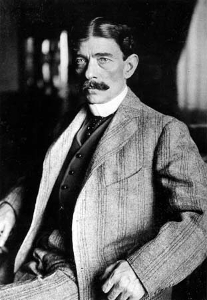
Frank Harris, Irish American editor, novelist, short story writer, journalist and publisher, is born James Thomas Harris to Welsh parents in Galway, County Galway on February 14, 1855. He is friendly with many well-known figures of his day.

Harris’s father, Thomas Vernon Harris, is a naval officer from Fishguard, Pembrokeshire, Wales. While living with his older brother he is, for a year or more, a pupil at The Royal School, Armagh. At the age of twelve he is sent to Wales to continue his education as a boarder at the Ruabon Grammar School in Denbighshire, a time he is to remember later in My Life and Loves. He is unhappy at the school and runs away within a year.

Harris runs away to the United States in late 1869, arriving in New York City virtually penniless. The 13-year-old takes a series of odd jobs to support himself, working first as a shoeshiner, a porter, a general laborer, and a construction worker on the erection of the Brooklyn Bridge. He later turns these early occupational experiences into art, incorporating tales from them into his book The Bomb (1908).

From New York Harris moves to Chicago, where he takes a job as a hotel clerk and eventually a manager. Owing to Chicago’s central place in the meat packing industry, he makes the acquaintance of various cattlemen, who inspire him to leave the big city to take up work as a cowboy. He eventually grows tired of life in the cattle industry and enrolls at the University of Kansas, where he studies law and earns a degree, gaining admission to the Kansas Bar Association.

Harris is not cut out to be a lawyer and soon decides to turn his attention to literature. He returns to England in 1882, later traveling to various cities in Germany, Austria, France, and Greece on his literary quest. He works briefly as an American newspaper correspondent before settling down in England to seriously pursue the vocation of journalism.

Harris first comes to general notice as the editor of a series of London papers including The Evening News, The Fortnightly Review and the Saturday Review, the latter being the high point of his journalistic career, with H. G. Wells and George Bernard Shaw as regular contributors.

From 1908 to 1914 Harris concentrates on working as a novelist, authoring a series of popular books such as The Bomb, The Man Shakespeare, and The Yellow Ticket and Other Stories. With the advent of World War I in the summer of 1914, he decides to return to the United States.

From 1916 to 1922 Harris edits the U.S. edition of Pearson’s Magazine, a popular monthly which combines short story fiction with socialist-tinted features on contemporary news topics. One issue of the publication is banned from the mails by United States Postmaster General Albert S. Burleson during the period of American participation in World War I. Despite this Harris manages to navigate the delicate situation which faces the left-wing press and keeps Pearson’s Magazine functioning and solvent during the war years.

Harris becomes an American citizen in April 1921. In 1922 he travels to Berlin to publish his best-known work, his four-volume autobiography My Life and Loves (1922–1927). It is notorious for its graphic descriptions of his purported sexual encounters and for its exaggeration of the scope of his adventures and his role in history. A fifth volume, supposedly taken from his notes but of doubtful provenance, is published in 1954, long after his death.

Harris also writes short stories and novels, two books on William Shakespeare, a series of biographical sketches in five volumes under the title Contemporary Portraits and biographies of his friends Oscar Wilde and George Bernard Shaw. His attempts as a playwright are less successful. Only Mr. and Mrs. Daventry (1900), which is based on an idea by Oscar Wilde, is produced on the stage.

Married three times, Harris dies of a heart attack in Nice, France on August 26, 1931. He is buried at Cimetière Sainte-Marguerite, adjacent to the Cimetière Caucade, in Nice. Just after his death a biography written by Hugh Kingsmill (pseudonym of Hugh Kingsmill Lunn) is published.


Leave a comment

Death of Charles Gavan Duffy

charles-gavin-duffy

Charles Gavan Duffy, Irish nationalist, journalist, poet, and Australian politician, dies on February 9, 1903, in Nice, France. He is the 8th Premier of Victoria and one of the most colourful figures in Victorian political history.

Duffy is born on April 12, 1816, in Dublin Street, Monaghan, County Monaghan. Both of his parents die while he is still a child and his uncle, Fr. James Duffy, who is the Catholic Parish Priest of Castleblayney, becomes his guardian for a number of years. He is educated at St. Malachy’s College in Belfast and is admitted to the Irish Bar in 1845. Duffy becomes a leading figure in Irish literary circles.

Duffy, along with Thomas Osborne Davis and John Blake Dillon, founds The Nation and becomes its first editor. Davis and Dillon later become Young Irelanders. All three are members of Daniel O’Connell‘s Repeal Association. This paper, under Duffy, transforms from a literary voice into a “rebellious organisation.”

In August 1850, Duffy forms the Tenant Right League to bring about reforms in the Irish land system and protect tenants’ rights, and in 1852 is elected to the House of Commons for New Ross. By 1855, the cause of Irish tenants seems more hopeless than ever. Broken in health and spirit, Duffy publishes a farewell address to his constituency, declaring that he has resolved to retire from parliament, as it is no longer possible to accomplish the task for which he has solicited their votes.

In 1856, emigrates with his family to Australia, settling in the newly formed Colony of Victoria. A public appeal is held to enable him to buy the freehold property necessary to stand for the colonial Parliament. He is immediately elected to the Legislative Assembly for Villiers and Heytesbury in the Western District in 1856. He later represented Dalhousie and then North Gippsland. With the collapse of the Victorian Government‘s Haines Ministry during 1857, another Irish Catholic, John O’Shanassy, unexpectedly becomes Premier with Duffy his second-in-charge.

In 1871, Duffy leads the opposition to Premier Sir James McCulloch‘s plan to introduce a land tax, on the grounds that it unfairly penalises small farmers. When McCulloch’s government is defeated on this issue, Duffy becomes Premier and Chief Secretary.  The majority of the colony is Protestant, and Duffy is accused of favouring Catholics in government appointments. In June 1872, his government is defeated in the Assembly on a confidence motion allegedly motivated by sectarianism.

When Graham Berry becomes Premier in 1877, he makes Duffy Speaker of the Legislative Assembly, a post he holds without much enthusiasm until 1880, when he quits politics and retires to the south of France. He remains interested in both the politics of his adoptive country and of Ireland. He is knighted in 1873 and is made KCMG in 1877. Sir Charles Gavan Duffy dies in Nice, France, at the age of 86 in 1903.