seamus dubhghaill

Promoting Irish Culture and History from Little Rock, Arkansas, USA


Leave a comment

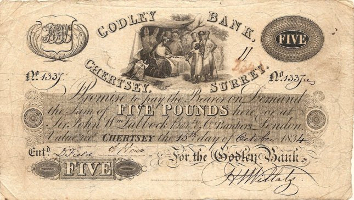
Bank of Ireland Suspends Gold Payments

godley-bank-note-1834The Bank of Ireland suspends gold payments on February 26, 1797. In the late 18th century, cash is king, whether it be gold or silver. If one has no gold or silver, one has no goods, unless one is a member of the 10,000 or so landed aristocratic families who are allowed to run up debts.

At the end of the 18th century Britain is at war with France. The British government requires gold above all to conduct its war with Napoleon. There is not enough to go around. There is not enough gold in the vaults of the Bank of England to adequately fund the war, much less for sending any of it to Ireland. Therefore, in 1797 the Bank of Ireland is obliged to stop issuing gold that it does not have and rather rely on well established banknotes to keep money in circulation. A few weeks later the stance taken by the Bank is approved of by Irish legislators in the Irish Parliament.

The withdrawal of gold and the increased issuing of notes leads to the establishment of a number of private banks in Ireland who are allowed to issue their own notes. In 1799 there are eleven private banks. By 1803, this number has increased to forty-one. Many of these banks subsequently fail and destroy the lives of their customers. The partners who run these financial institutions are identified on the banknotes they issue. Therefore their clients can see the names, but not the addresses, of the men who have financially destroyed them when they fall into liquidation.


Leave a comment

The Battle of Wandiwash

fort-vandavasi

General Thomas Arthur, comte de Lally‘s French army, including his regiment of the Irish Brigade, is defeated on January 22, 1760, in the Battle of Wandiwash, a decisive battle in India during the Seven Years’ War, by Irish-born Sir Eyre Coote‘s British army. Wandiwash is the Anglicised pronunciation of Vandavasi.

When Lally is selected as commander-in-chief of the French expedition to India in 1756, he is one of the greatest living soldiers of France. Lally’s force is delayed and does not leave France until May 1757. Further delays occur en route and he finally lands at Pondicherry, India, on April 28, 1758. In less than two months, Lally clears the English forces from a huge area around Pondicherry and captures almost 300 pieces of artillery. Lally next lays siege to Madras, but his naval support abandons him, and, in January 1759, the English are reinforced, forcing Lally to retire toward Pondicherry. Forces away from India are conspiring against Lally now, as the merchant fleets of the French have been rendered useless by the English navy.

Lally’s army, burdened by a lack of naval support and funds resulting in his troops having not been paid in six months, attempts to regain the fort at Wandiwash, now in Tamil Nadu. He is attacked by Sir Eyre Coote’s forces and decisively defeated. The French general Marquis de Bussy-Castelnau and the French are then restricted to Pondicherry where, facing starvation, they surrender on January 16, 1761.

This is the Third Carnatic War fought between the French and the British. Having made substantial gains in Bengal and Hyderabad, the British, after collecting huge amount of revenue, are fully equipped to face the French in Wandiwash, whom they defeat.

According to the 19th century book Annals of the Wars of the Eighteenth Century by Author Eduard Cust, the French Army consists of 300 European Cavalry, 2,250 European infantry, 1,300 soldiers, 3,000 Marathas and 16 pieces of artillery while the English deploy about 80 European Horses, 250 Native horses, 1,900 European Infantry, 2,100 soldiers and 26 pieces of artillery. The Battle of Wandiwash involves the capture of Chettupattu, Thiruvannamalai, Tindivanam and Perumukkal.

(Pictured: The Vandavasi fort in Vandavasi, Tamil Nadu, India, where the decisive Battle of Wandiwash takes place.)


Leave a comment

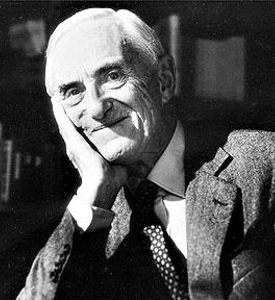
Birth of Robert Blair “Paddy” Mayne

robert-blair-paddy-mayne

Robert Blair “Paddy” Mayne, British Army soldier, solicitor, Ireland rugby union international, amateur boxer, and a founding member of the Special Air Service (SAS), is born in Newtownards, County Down, on January 11, 1915.

Mayne attends school at Regent House School, a school for students aged 4 to 18. While at Regent he discovers his skill and love for the game of rugby. He also enjoys cricket and golf and becomes a marksman with the rifle club. He goes on to Queen’s University Belfast to study law. At university he takes up boxing and becomes the Irish Universities Heavyweight Champion in August 1936. He also wins the Scrabo Golf Club President’s cup in 1937. He graduates from Queen’s University in 1939.

During 1938, Mayne travels to Africa on the 1938 British Lions Tour to South Africa. He plays on a team that tours around Africa playing other local clubs. While traveling, it is discovered that Mayne has a wild side and on various occasions finds himself in trouble. His “go to” is to trash the hotel rooms of his teammates. The team includes some of the best players from around Ireland and Britain.

In 1939, with outbreak of World War II, Mayne joins the Supplementary Reserves in Newtownards and receives a commission in the Royal Artillery. He serves in several units in Ireland and England, generally with light and heavy anti-aircraft units. He volunteers for the No. 11 (Scottish) Commando unit which is sent to the Middle East. There he sees action during the Syria-Lebanon campaign. Specifically, during the Battle of the Litani River, he draws attention from Captain David Stirling who is forming the new Special Air Service (SAS). Sterling recruits Mayne for the new SAS while he is in jail for striking his commanding officer.

From November 1941 to the end of 1942, Mayne is involved in several raids behind enemy lines with the SAS. He uses jeeps to go to various Axis bases and begin blowing up planes and fuel dumps. It is claimed that he personally destroyed 100 planes during these missions. In addition to serving in the Middle East, he serves as well in Sicily, Italy, Belgium, the Netherlands, Germany, Norway and France. In most of these locations he works with the resistance behind the enemy lines. In France he helps to train the French Resistance.

By the end of the war, Mayne has been promoted to the rank of Lieutenant Colonel and has also received the British Army’s Distinguished Service Order with three bars, which means he received the award four times. After the war he joins the British Antarctic Survey in the Falkland Islands. He returns home to Newtownards when back issues, which started while he was serving in the Middle East, become more difficult for him.

Mayne is initiated into Eklektikos Lodge No. 542 in Newtownards in 1945. He is a very enthusiastic mason and joins a second lodge in Newtownards, Friendship Lodge No. 447. On the evening of December 13, 1955, he attends a meeting of Friendship Lodge and then joins some of his masonic brothers at a local bar. At about 4:00 AM on December 14, he is found dead in his Riley RM roadster in Mill Street, Newtownards, having reportedly collided with a farmer’s vehicle.

At his funeral hundreds of mourners turn out to pay their respects and to see him interred in a family plot in the town’s old Movilla Abbey graveyard. After his death his masonic jewel is preserved for many years by an old school friend before it is presented to Newtownards Borough Council where it is displayed in the Mayoral Chamber of the Council Offices.


Leave a comment

Death of Novelist & Translator Patrick O’Brian

Patrick O'Brian

Patrick O’Brian, English novelist and translator, dies in Dublin on January 2, 2000.

O’Brian is born Richard Patrick Russ, in Chalfont St. Peter, Buckinghamshire, to Charles Russ, an English physician of German descent, and Jessie Russ (née Goddard), an English woman of Irish descent. His literary career begins in his childhood with the publishing of his earliest works, including several short stories, the book Hussein, An Entertainment, and the short story collection Beasts Royal. The latter two bring him considerable critical praise especially considering his youth. He publishes his first novel, Caesar: The Life Story of a Panda Leopard, at the age of 15 with help from his father.

O’Brian is best known for his Aubrey–Maturin series of sea novels set in the Royal Navy during the Napoleonic Wars, and centered on the friendship of the English naval captain Jack Aubrey and the Irish–Catalan physician Stephen Maturin. The 20-novel series, the first of which is Master and Commander, is known for its well-researched and highly detailed portrayal of early 19th-century life, as well as its authentic and evocative language. A partially finished 21st novel in the series is published posthumously containing facing pages of handwriting and typescript.

O’Brian write a number of other novels and short stories, most of which were published before he achieves success with the Aubrey–Maturin series. He also translates works from French to English, and writes two biographies.

O’Brian’s major success as a writer comes late in life, when the Aubrey-Maturin series catches the eye of an American publisher. The series draws more readers and favourable reviews when the author is in his seventies. Near the end of his life, and in the same year he loses his beloved wife, British media reveals details of O’Brian’s early life, first marriage, and post-war change of name, causing distress to the very private author and to many of his readers at that time.

Between 1946 and 1949 O’Brian and his wife Mary live in Cwm Croesor, a remote valley in north Wales, where they initially rent a cottage from Clough Williams-Ellis. In 1949 they move to Collioure, a Catalan town in southern France. He and Mary remain together in Collioure until her death in 1998.

O’Brian dies on January 2, 2000 at Trinity College, Dublin where he had been living and working on his next book. His body is returned to Collioure, where he is buried next to his wife.


Leave a comment

Birth of Irish Writer Arthur Murphy

arthur-murphy

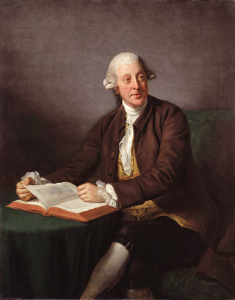
Arthur Murphy, Irish writer also known by the pseudonym Charles Ranger, is born at Cloonyquin, County Roscommon, on December 27, 1727, the son of Richard Murphy and Jane French.

Murphy studies at Saint-Omer in France, and is a gifted student of the Latin and Greek classics. He works as an actor in the theatre, becomes a barrister, a journalist and finally a playwright. He edits Gray’s Inn Journal between 1752 and 1754. As Henry Thrale‘s oldest and dearest friend, he introduces Samuel Johnson to the Thrales in January 1765. He is appointed Commissioner of Bankruptcy in 1803.

Murphy is known for his translations of Tacitus in 1753, which are still published as late as 1922. He also writes three biographies – Fielding‘s Works (1762), An Essay on the Life and Genius of Samuel Johnson (1792), and Life of David Garrick (1801).

An example of Murphy’s theatrical writings is The Citizen, a farce, first produced at Drury Lane in 1761. Philpot, a wealthy skinflint, has bargained with Sir Jasper Wilding for his son Young Philpot to marry Maria Wilding, and for his daughter Sally to marry Wilding’s son, for settlements and twenty thousand pounds paid to Sir Jasper. Young Philpot has lost a fortune, but borrows money from his father and embarks on an insurance fraud involving shipwrecked goods. Maria plans to marry Beaufort, who loves her. As Young Philpot tries to propose, she convinces him she is half-witted, and he spurns her. In the second act, Philpot senior is visiting Corinna, a lady of loose virtue, but hides under the table when his son calls upon her. He overhears as Young Philpot tells her how he has cajoled the money out of his father. Maria’s brother surprises them, and old Philpot is also discovered, to their mutual shame. In the final scene Sir Jasper with a lawyer obtains Philpot’s signature to the agreements, but meanwhile Maria, an educated girl, shows her strong character to Young Philpot and he again refuses to propose. Having signed away his rights old Philpot offers to marry her, but the lawyer reveals himself as Beaufort, and explains that he has swapped the deeds, so that Philpot has unwittingly signed his agreement for Maria to marry Beaufort.

Murphy is thought to have coined the legal term “wilful misconstruction” whilst representing the Donaldson v. Becket appeal to the House of Lords in 1774 against the perpetual possession of copyright.

Arthur Murphy dies at Knightsbridge, London, on June 18, 1805, and is buried at Hammersmith, London. A biography is written in 1811 by Dr. Jesse Foot. Nathaniel Dance-Holland paints Murphy’s portrait which is thought to now be in the Irish National Portrait Collection.

(Pictured: 1777 portrait of Arthur Murphy by Nathaniel Dance-Holland)


Leave a comment

Death of Aeneas Coffey, Inventor & Distiller

Aeneas Coffey, Irish inventor and distiller, dies in England on November 26, 1852. He is born in Calais, France, to Irish parents in 1780. He is educated at Trinity College, Dublin, and enters the excise service around 1799–1800 as a gauger. He marries Susanna Logie in 1808, and they have a son, also named Aeneas, who may have been their only child.

According to British customs and excise records, Coffey is a remarkable man with widespread interests and multiple talents who rises quickly through the excise service ranks. He is appointed sub-commissioner of Inland Excise and Taxes for the district of Drogheda in 1813. He is appointed Surveyor of Excise for Clonmel and Wicklow in 1815. In 1816 he is promoted to the same post at Cork. By 1818 he is Acting Inspector General of Excise for the whole of Ireland and within two years is promoted to Inspector General of Excise in Dublin.

Coffey is a strong, determined upholder of the law, but aware of its shortcomings. He survives many nasty skirmishes with illegal distillers and smugglers, particularly in County Donegal in Ulster and in the west of Ireland, where moonshining is most rife. On several occasions he proposes to the government simple, pragmatic solutions to rules and regulations which have hampered legal distillers. Not all of his ideas are accepted. Between 1820 and 1824 he submits reports and gives evidence to Parliamentary Commissions of Inquiry on many aspects of distilling, including formalising the different spellings of Irish whiskey and Scotch whisky. His 1822 report is solidly backed by the Irish distillers. He believes in making it viable to distill legally, and illegal distilling might largely disappear.

He assists the government in the drafting of the 1823 Excise Act which makes it easier to distill legally. It sanctions the distilling of whiskey in return for a licence fee of £10, and a set payment per gallon of proof spirit. It also provides for the appointment of a single Board of Excise, under Treasury control, for the whole of the United Kingdom, replacing the separate excise boards for England, Scotland and Ireland. The 1823 Excise Act also provides for not more than four assistant commissioners of excise to transact current business in Scotland and Ireland, under the control of the board in London. Coffey resigns from government excise service at his own request in 1824.

Between his Dublin education and his work as an excise officer, Coffey has ample opportunity to observe the design and workings of whiskey stills, as Ireland is the world’s leading producer of whiskey in the 19th century, and Dublin is at the center of that global industry. This is how Coffey becomes familiar with a design differing from the traditional copper pot alembic still commonly used in Ireland, the continuous, or column, still. First patented by a Cork County distillery in 1822, the column still remains a relatively inefficient piece of equipment, although it points the way towards a cheaper and more productive way to distill alcohol. It is that last point that captures Coffey’s imagination. He makes his own modifications to existing column still designs, so as to allow a greater portion of the vapors to re-circulate into the still instead of moving into the receiver with the spirit. The result is more efficient, producing a lighter spirit at higher alcohol content. Coffey patents his design in 1830, and it becomes the basis for every column still used ever since.

On his retirement from service, Coffey goes into the Irish distilling business. For a short time he runs the Dodder Bank Distillery, Dublin and Dock Distillery in Grand Canal Street, Dublin, before setting up on his own as Aeneas Coffey Whiskey Company in 1830. The development of the Coffey still makes distillation of his own whiskey much more economical.

Nothing is known of the final years and last resting place of Aeneas Coffey. His only son, also called Aeneas Coffey, emigrates to South Africa and manages a distillery. He marries but his wife dies childless. He returns to England and spends his final years near London.


Leave a comment

Birth of Oliver Goldsmith, Novelist, Playwright & Poet

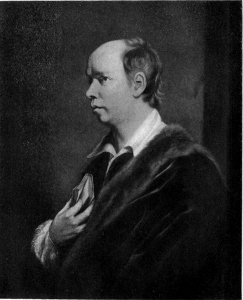
Oliver Goldsmith, novelist, playwright and poet, is born on November 10, 1728. He is best known for his novel The Vicar of Wakefield (1766), his pastoral poem The Deserted Village (1770), and his plays The Good-Natur’d Man (1768) and She Stoops to Conquer (1771, first performed in 1773). He is thought to have written the classic children’s tale The History of Little Goody Two-Shoes (1765).

The location of Goldsmith’s birth is uncertain. He is born either in the townland of Pallas, near Ballymahon, County Longford, where his father is the Anglican curate of the parish of Forgney, or at the residence of his maternal grandparents, at the Smith Hill house near Elphin, County Roscommon. When Goldsmith is two years old, his father is appointed the rector of the parish of Kilkenny West in County Westmeath. The family moves to the parsonage at Lissoy, between Athlone and Ballymahon, and continues to live there until his father’s death in 1747.

In 1744 Goldsmith enters Trinity College, Dublin. Neglecting his studies in theology and law, he falls to the bottom of his class. In 1747, along with four other undergraduates, he is expelled for a riot in which they attempt to storm the Marshalsea Prison. He graduates in 1749 as a Bachelor of Arts, but without the discipline or distinction necessary to gain entry into a profession in the church or the law. He lives for a short time with his mother, tries various professions without success, studies medicine desultorily at the University of Edinburgh from 1752 to 1755, and sets out on a walking tour of Flanders, France, Switzerland and Northern Italy, living by his wits.

Goldsmith settles in London in 1756, where he briefly holds various jobs, including an apothecary‘s assistant and an usher of a school. Perennially in debt and addicted to gambling, Goldsmith produces a massive output as a hack writer on Grub Street for the publishers of London, but his few painstaking works earn him the company of Samuel Johnson, with whom he is a founding member of “The Club.” There, through fellow Club member Edmund Burke, he makes the acquaintance of Sir George Savile, who later arranges a job for him at Thornhill Grammar School. During this period, he uses the pseudonym “James Willington” to publish his 1758 translation of the autobiography of the Huguenot Jean Marteilhe.

In character Goldsmith has a lively sense of fun, is totally guileless, and never happier than when in the light-hearted company of children. The money that he sporadically earns is often frittered away or happily given away to the next good cause that presents itself so that any financial security tends to be fleeting and short-lived. His talents are unreservedly recognised by Samuel Johnson whose patronage aids his eventual recognition in the literary world and the world of drama.

Goldsmith is described by contemporaries as prone to envy, a congenial but impetuous and disorganised personality who once planned to emigrate to America but failed because he missed his ship. At some point around this time he works at Thornhill Grammar School, later basing the character Squire Thornhill in The Vicar of Wakefield on his benefactor Sir George Savile and certainly spending time with eminent scientist Rev. John Mitchell, whom he probably knows from London. Mitchell sorely misses good company, which Goldsmith naturally provides in spades.

Oliver Goldsmith’s premature death in 1774 may have been partly due to his own misdiagnosis of his kidney infection. He is buried in Temple Church in London. There is a monument to him in the centre of Ballymahon, also in Westminster Abbey with an epitaph written by Samuel Johnson.


Leave a comment

Birth of Cardinal Tomás Séamus Ó Fiaich

Tomás Séamus Ó Fiaich, Irish prelate of the Roman Catholic Church, is born in Cullyhanna, County Armagh, on November 3, 1923. He serves as the Catholic Primate of All Ireland and Archbishop of Armagh from 1977 until his death. He is created a Cardinal in 1979.

Ó Fiaich is ordained a priest on July 6, 1948. He spends his first year of ordination as assistant priest in Clonfeacle parish. He undertakes post-graduate studies at University College, Dublin, (1948–50), receiving a Master of Arts (MA) in early and medieval Irish history. He also studies at the Catholic University of Leuven in Belgium, (1950–52), receiving a licentiate in historical sciences.

In 1952 Ó Fiaich returns to Clonfeacle where he remains as assistant priest until the following summer and his appointment to the faculty of St. Patrick’s College, Maynooth. He is an academic and noted Irish language scholar, folklorist and historian in the Pontifical University in St. Patrick’s College, Maynooth, the National Seminary of Ireland. From 1959 to 1974 he is Professor of Modern Irish History at the college. In this capacity he suggests to Nollaig Ó Muraíle that he begin research on Dubhaltach Mac Fhirbhisigh and his works. He “was an inspired lecturer, an open and endearing man, who was loved by his students… Tomas O’Fiaich was my Good Samaritan.”

Ó Fiaich serves as vice president of the college from 1970 to 1974 and is then appointed college president, a post that traditionally precedes appointment to an episcopal position in the Irish Church. He holds this position until 1977.

Following the relatively early death from cancer of Cardinal William Conway in April 1977, Monsignor Ó Fiaich is appointed Archbishop of Armagh by Pope Paul VI on August 18, 1977. He is consecrated bishop on October 2, 1977. The principal consecrator is the papal nuncio Archbishop Gaetano Alibrandi. The principal co-consecrators are Bishop Francis Lenny, the auxiliary Bishop of Armagh, and Bishop William Philbin, the Bishop of Down and Connor. Pope John Paul II raises Ó Fiaich to the cardinalate on June 30, 1979, and he is appointed Cardinal-Priest of S. Patrizio that same day.

Ó Fiaich dies of a heart attack on the evening of May 8, 1990, while leading the annual pilgrimage by the Archdiocese of Armagh to the Marian shrine of Lourdes in France. He arrives in France the day before and complains of feeling ill shortly after saying Mass at the grotto in the French town. He is rushed by helicopter to a hospital in Toulouse, 125 miles away, where he dies. He lies in state at the cathedral in Armagh, where thousands of people lined up to pay their respects.

Ó Fiaich is succeeded as archbishop and cardinal by a man six years his senior, Cahal Daly, then the Bishop of Down and Connor.


Leave a comment

Execution of Robert Emmet, Irish Nationalist & Republican

Robert Emmet, Irish nationalist and Republican, orator and rebel leader, is hung, drawn, and quartered in Dublin on September 20, 1803, following his conviction for high treason.

Emmet is born at 109 St. Stephen’s Green, in Dublin on March 4, 1778, the youngest son of Dr. Robert Emmet, a court physician, and his wife, Elizabeth Mason. He attends Oswald’s school, in Dopping’s-court, off Golden-lane and enters Trinity College, Dublin in October 1793, at the age of fifteen. He becomes secretary of a secret United Irish Committee in college and is expelled in April 1798 as a result. That same year he flees to France to avoid the many British arrests of nationalists that are taking place in Ireland.

After the 1798 rising, Emmet is involved in reorganising the defeated Society of United Irishmen. In April 1799 a warrant is issued for his arrest. He escapes and soon after travels to the continent in the hope of securing French military aid. His efforts are unsuccessful, as Napoleon is concentrating his efforts on invading England.

Emmet returns to Ireland in October 1802 and, along with fellow revolutionaries Thomas Russell and James Hope, begins preparations for another uprising in March of the following year. A premature explosion at one of Emmet’s arms depots forces him to advance the date of the rising before the authorities’ suspicions are aroused.

Emmet is unable to secure the help of Michael Dwyer‘s Wicklow rebels. Many rebels from Kildare turn back due to the scarcity of firearms they had been promised, but the rising proceeds in Dublin on the evening of July 23, 1803. Failing to seize Dublin Castle, which is lightly defended, the rising amounts to a large-scale disturbance in the Thomas Street area. He sees a dragoon pulled from his horse and piked to death, the sight of which prompts him to call off the rising to avoid further bloodshed, but he has no control over of his followers. Sporadic clashes continue into the night until finally quelled by British military forces.

Emmet flees into hiding but is captured on August 25 and taken to Dublin Castle, then removed to Kilmainham Gaol. He is tried for treason on September 19. The Crown repairs the weaknesses in its case by secretly buying the assistance of Emmet’s defence attorney, Leonard McNally, for £200 and a pension. McNally’s assistant Peter Burrowes cannot be bought, and he pleads the case as best he can. Emmet is found guilty of high treason.

Chief Justice John Toler, 1st Earl of Norbury sentences Emmet to be hanged, drawn and quartered, as is customary for conviction of treason. The following day, September 20, Emmet is executed in Thomas Street near St. Catherine’s Church. He is hanged and beheaded once dead. As family members and friends of Emmet had also been arrested, including some who had nothing to do with the rebellion, no one comes forward to claim his remains out of fear of arrest.

Emmet’s remains are first delivered to Newgate Prison and then back to Kilmainham Gaol, where the jailer is under instructions that if no one claims them, they are to be buried in a nearby hospital’s burial grounds. A later search there finds no remains. It is speculated that Emmet’s remains were secretly removed from the site and reinterred in St. Michan’s Church, a Dublin church with strong United Irish associations, though it is never confirmed. It is later suspected that they are buried secretly in the vault of a Dublin Anglican church. When the vault is inspected in the 1950s a headless corpse was found, suspected of being Emmet’s, but cannot be identified. Widely accepted is the theory that Emmet’s remains were transferred to St. Peter’s Church in Aungier St. under cover of the burial of his sister, Mary Anne Holmes, in 1804. In the 1980s the church is deconsecrated, and all the coffins are removed from the vaults. The church has since been demolished.


Leave a comment

Police Raid & Shut Down “The Irish People”

Police raid and close the offices of the Fenian newspaper The Irish People on September 15, 1865. Jeremiah O’Donovan Rossa, Thomas Clarke Luby, and John O’Leary are arrested.

In mid-1863, James Stephens informs his colleagues he wishes to start a newspaper, with financial aid from John O’Mahony and the Fenian Brotherhood in America. The offices are established at 12 Parliament Street, almost at the gates of Dublin Castle. The first edition of The Irish People appears on November 28, 1863. The staff of the paper along with Charles Kickham are Thomas Clarke Luby and Denis Dowling Mulcahy as the editorial staff. Jeremiah O’Donovan Rossa and James O’Connor are in charge of the business office, with John Haltigan being the printer. John O’Leary is brought from London to take charge in the role of Editor. Shortly after the establishment of the paper, James Stephens departs on an American tour, and to attend to organisational matters.

American Fenians make plans for a rising in Ireland, but the plans are discovered on July 15, 1865 when an emissary loses them at Kingstown railway station. They find their way to Dublin Castle and to Superintendent Daniel Ryan head of G Division. Ryan has an informer within the offices of The Irish People named Pierce Nagle, who supplies Ryan with an “action this year” message on its way to the Irish Republican Brotherhood unit in Tipperary. With this information, Ryan raids the offices of The Irish People on September 15, followed by the arrests of John O’Leary, Thomas Clarke Luby and Jeremiah O’Donovan Rossa. The last edition of the paper is dated September 16, 1865.

Before leaving for America, Stephens entrusts to Luby a document containing secret resolutions on the Committee of Organization or Executive of the IRB. Though Luby intimates its existence to O’Leary, he does not inform Kickham as there seems no necessity. This document later forms the basis of the prosecution against the staff of The Irish People. The document reads:

EXECUTIVE

I hereby appoint Thomas Clarke Luby, John O’Leary and Charles J. Kickham, a Committee of Organisation or Executive, with the same supreme control over the Home Organisation (Ireland, England, Scotland, etc.) I have exercised myself. I further empower them to appoint a Committee of Military Inspection, and a Committee of Appeal and Judgment, the functions of which Committee will be made known to each member of them by the Executive. Trusting to the patriotism and ability of the Executive, I fully endorse their action beforehand, and call on every man in our ranks to support and be guided by them in all that concerns our military brotherhood.

9 March 1864, Dublin
J. STEPHENS

Charles Kickham is caught after a month on the run and James Stephens is also eventually caught but with the support of Fenian prison warders John J. Breslin and Daniel Byrne is less than a fortnight in Richmond Bridewell Prison when he vanishes and escapes to France.

(From Stair na hÉireann, https://stairnaheireann.net/2015/09/15/1865-police-raid-and-close-the-irish-people-offices-odonovan-rossa-luby-and-oleary-are-arrested/)