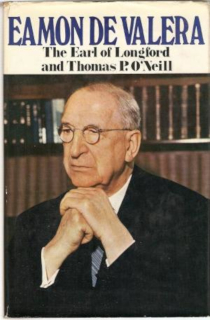
De Valera knows of O’Neill’s reputation as a historian and asks him to undertake the project. A contract is signed with the publishers in 1963, and O’Neill moves to Áras an Uachtaráin to work on the book. He is later joined by Lord Longford as co-author.
O’Neill’s other works include a biography in Irish of James Fintan Lalor and a major study of the Great Famine, which establishes his reputation as a historian.
After the completion of the de Valera work, O’Neill is appointed lecturer and later professor of history in University College, Galway. On his retirement, he returns to live in Dublin, where he renews his association with the National Library, becoming a strong supporter of its expansion.
O’Neill is survived by his wife, Marie, and six children. His funeral Mass takes place at St. Joseph’s Church on March 5, followed by his interment at Shanganagh Cemetery.
(From: “Biographer of de Valera dies at 74,” The Irish Times, Monday, March 4, 1996)
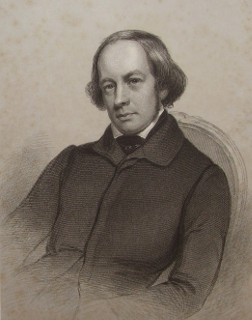
Kane is born at 48 Henry Street, Dublin on September 24, 1809 to John and Eleanor Kean (née Troy). His father is involved in the Irish Rebellion of 1798 and flees for a time to France where he studies chemistry. Back in Dublin, Kean (now Kane) founds the Kane Company and manufactures sulfuric acid.
Kane studies chemistry at his father’s factory and attends lectures at the Royal Dublin Society as a teenager. He publishes his first paper in 1828, Observations on the existence of chlorine in the native peroxide of manganese, in the London Quarterly Journal of Science, Literature and Art. The following year, his description of the natural arsenide of manganese results in the compound being named Kaneite in his honour. He studies medicine at Trinity College, Dublin, graduating in 1834 while working in the Meath Hospital. He is appointed Professor of Chemistry at the Apothecaries’ Hall, Dublin in 1831, which earns him the moniker of the “boy professor.” In the following year he participates in the founding of the Dublin Journal of Medical & Chemical Science.
Kane publishes a three-volume Elements of Chemistry in 1841–1844, and a detailed report on the Industrial Resources of Ireland. This includes the first assessment of the water power potential of the River Shannon, which is not realised until the 1920s at Ardnacrusha.
Kane becomes a political adviser on scientific and industrial matters. He serves on several commissions to enquire into the Great Irish Famine, along with Professors Lindley and Taylor, all more or less ineffective. His political and administrative work means that his contribution to chemistry ceases after about 1844.
Kane’s work on Irish industry leads to his being appointed director of the Museum of Irish Industry in Dublin in 1845. The Museum is a successor to the Museum of Economic Geology, and is housed at 51 St. Stephen’s Green.
Also in 1845 Kane becomes the first President of Queen’s College, Cork (now University College Cork). He does not spend a lot of time in Cork as he has work in Dublin, and his wife lives there. The science building on the campus is named in his honour. He is knighted in 1846.
In 1873 Kane takes up the post of National Commissioner for Education. He is elected president of the Royal Irish Academy in 1877, holding the role until 1882. In 1880 he is appointed the first chancellor of the newly created Royal University of Ireland. After a motion to admit women to the University, put forward by Prof. Samuel Haughton at Academic Council in Trinity College Dublin, March 10, 1880, Kane is appointed to a committee of ten men to look into the matter. He is opposed to the admission of women, and nothing is reported from the committee in the Council minutes for the next ten years.
One of the most tragic events of the Great Famine occurs on December 1, 1848 when 72 people suffocate in the small aft cabin of the paddle steamerLondonderry, which often sails between Sligo and Liverpool.
One hundred seventy-two men, women, and children, mostly impoverished farmers from County Mayo and County Sligo, and their families, fleeing the ravages of the Great Famine, board the Londonderry in Sligo in late November. As the steamer is approaching Derry on the first leg of its journey to England, a sudden storm prompts Captain Alexander Johnstone to order his crew to force all the passengers into a small aft cabin, measuring about eighteen feet in length and, at most, twelve feet wide. The situation is exacerbated when the only ventilation available is covered with a tarpaulin to ensure that water does not get into the cabin. As a result, many of the passengers begin to suffocate.
The captain seeks refuge from the storm in the harbour at Derry on December 1. When the hatches of the Londonderry are opened it reveals a horrific scene. The corpses of 31 women, 23 men and 18 children are found in the grossly overcrowded hold. Soldiers are called to the docks as public rage intensifies. The public outcry that follows belatedly forces the British government to publish guidelines for the safe transport of Irish Immigrants, too late unfortunately for the victims of the coffin shipLondonderry.
After the tragic voyage, the master and two mates are arrested. During an inquest, survivors accuse the Scottish crew of being cruel and savage. The captain says that he had given orders for the decks to be cleared for the passengers’ safety while the storm raged.
The coroner’s jury returns a verdict of manslaughter, commenting that more consideration was shown to the cattle than the passengers entrusted to their care.
In 1996 six coffins are found by workmen on a building site in the Waterside area of Derry, in grounds close to the former workhouse. They are believed to be the remains of some of the poverty-stricken travelers from the ill-fated paddle steamer.
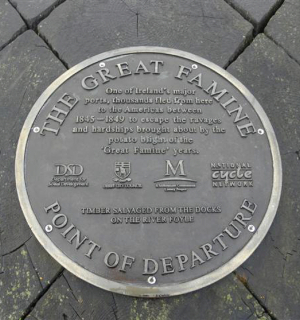
(Pictured: The Great Hunger Plaque, Derry, near Derry County Borough, Derry, Clooney Park, Creggan and Boom Hall)
Cusack is born on the eastern fringe of the Burren to Irish speaking parents in Carran, County Clare on September 20, 1847, during the Great Famine. He becomes a national school teacher and in 1874, after teaching in various parts of Ireland, becomes a professor at Blackrock College, then known as the French College. In 1877, he establishes his own civil service academy, Cusack’s Academy, in Dublin which proves successful in preparing pupils for the civil service examinations.
A romantic nationalist, Cusack is also reputed to have been associated with the Fenian movement. He is active in the Gaelic revival, initially as a member of the Society for the Preservation of the Irish Language which is founded in 1876, and later the Gaelic League who in 1879 breaks away from the Society. Also in 1879, he meets Pat Nally, who is a member of the Irish Republican Brotherhood and a leading nationalist and athlete. He finds that he and Nally agree on the influence of British landlordism on Irish athletics.
He would recall how both Nally and himself, While walking through Phoenix Park in Dublin and seeing only a handful of people playing sports in the park so depresses Cusack and Nally that they agree it is time to “make an effort to preserve the physical strength of [their] race.” Nally organises a National Athletics Sports meeting in County Mayo in September 1879 which is a success, with Cusack organising a similar event which is open to artisans in Dublin the following April.
In tribute to emigrants who sailed to the New World on coffin ships, Coillte, a state-sponsored company in Ireland, announces on October 29, 1998 plans for the establishment of a forest plantation, the Forest of Dunbrody, on the outskirts of New Ross, County Wexford. The public, and particularly Irish Americans, are invited to buy a tree in the name of their loved ones. A total of 25,000 trees are planted, comprising species such as ash, oak, larch and Douglas fir.
The purpose of the plantation is to replace timbers used in the construction of the Dunbrody, a 176-foot-long replica of the Famine emigrant ships which left Ireland in the 1840s. The ship, which weighs 458 tonnes, is the culmination of a two-year, £4 million project, the inspiration of the JFK Trust.
The ship is a reconstruction of the original Dunbrody which operated out of New Ross, in all but its electrical and navigational equipment. It immediately proves to be a tourist attraction with over 30,000 visitors witnessing the traditional skills of 19th-century shipbuilding being carried out by a team of 30 trainees of Foras Áiseanna Saothair (FÁS), the Irish National Training and Employment Authority, and an international team of shipwrights.
Coillte, which had up to this point already sponsored much of the timber for the project, decides to establish a plantation of the same name as the ship after members of the building crew express an interest and as a demonstration of wood as a renewable resource.
After years of tireless effort the Dunbrody is finally ready to launch. Early on the morning of February 11, 2001 the gates of the dry dock are opened and the Dunbrody floats to her lines, ready to take her pace at the Quay of New Ross. The launch ceremony is attended by TaoiseachBertie Ahern and former United States Ambassador to IrelandJean Kennedy Smith.
Burke’s parents, though in moderate circumstances, gave him a good education. He studies at first under the care of the Patrician Brothers and is afterwards sent to a private school. An attack of typhoid fever when he is fourteen years old, and the famine year of 1847 have a sobering effect. Toward the end of that year, he asks to be received into the Order of Preachers and is sent to Perugia in Italy to make his novitiate. On December 29, he is clothed there in the habit of St. Dominic and receives the name of Thomas.
Shortly afterward Burke is sent to Rome to begin his studies at the College of St. Thomas, the future Pontifical University of Saint Thomas Aquinas, where he is a student of philosophy and theology. He passes thence to the Roman convent of Santa Sabina. His superiors send him, while yet a student, as novice-master to Woodchester, the novitiate of the resuscitated English Province. He is ordained into the priesthood on March 26, 1853. On August 3, 1854, he defends publicly the theses in universâ theologiâ. He is made lector at the College of St. Thomas in 1854.
Early in the following year Burke is recalled to Ireland to found the novitiate of the Irish Province at Tallaght, near Dublin. In 1859 he preaches his first notable sermon on “Church Music.” It immediately lifts him into fame.
Elected Prior of Tallaght in 1863, Burke goes to Rome the following year as Rector of the Dominican Convent of San Clemente and attracts great attention by his preaching. He returns to Ireland in 1867 and delivers his oration on Daniel O’Connell at Glasnevin before fifty thousand people.
Bishop Leahy takes him as his theologian to the First Vatican Council in 1870, and the following year he is sent as Visitor to the Dominican convents in America. He is besieged with invitations to preach and lecture. The seats are filled hours before he appears, and his audiences overflow the churches and halls in which he lectures. In New York City he delivers the discourses in refutation of the English historian James Anthony Froude.
In an eighteen-month period Burke gives four hundred lectures, exclusive of sermons, with the proceeds amounting to nearly $400,000. His mission is a triumph, but the triumph is dearly won. When he arrives in Ireland on March 7, 1873, he is spent and broken.
During the next decade Burke preaches in Ireland, England, and Scotland. He begins the erection of the church in Tallaght in 1883, and the following May preaches a series of sermons in the new Dominican church, London. In June he returns to Tallaght in a dying condition and preaches his last sermon in the Jesuit church, Dublin, in aid of the starving children of Donegal. A few days afterwards, on July 2, 1882, he dies. He is buried in the church of Tallaght, now a memorial to him.
(Pictured: Statue of Thomas Nicholas Burke by John Francis Kavanagh by Nimmo’s Pier in Galway)
Penal Laws are passed on September 7, 1695, which restrict the rights of Irish Catholics to have an education, to bear arms, or to possess a horse worth more than five pounds. This is the price the Irish have to pay for their support of King James II in his war against William of Orange.
The Catholic James flees to Ireland and raises an army after he is deposed during England’s Glorious Revolution. His successor, William of Orange, wages war in Ireland from 1689 to 1691, eventually defeating James’s armies and causing the ex-monarch to flee to France. It is Ireland’s last great episode of resistance to British rule until the Society of United Irishmen emerges in the 1790s.
Originally it looks as though the terms will be rather lenient. The draft of the Treaty of Limerick, which ends the war between William and James, contains generous terms for the latter’s defeated supporters in Ireland. Soldiers who fought in James’s army are offered free passage to France to join James in exile. James’s supporters in Ireland are to be allowed to keep their lands and to practice their trades and professions. Finally, Catholics are promised freedom of religion.
William supports these lenient terms because he wants to end the struggle in Ireland. It is costing a great deal of money and diverting military resources he wants to use in his ongoing war against France. Irish Protestants, however, bitterly oppose the treaty’s concessions to Catholics, and successfully water down or remove key provisions from the final draft of the Treaty. They also successfully push for a series of anti-Catholic measures known as the Penal Laws.
The first of the Penal Laws are passed on September 7, 1695. Many more follow over the next 30 years. These “popery laws,” as they are popularly known, sharply curtail the civil, religious, and economic rights of Catholics in Ireland. The most important ones make it illegal for Catholics to marry Protestants, inherit land from Protestants, buy land, carry weapons, teach school, practice law, vote in parliamentary elections, hold public office, practice their religion, own a horse worth more than 5 pounds, and hold a commission in the army or navy.
One particularly devastating law forces Catholic landowners to divide their estates among all their sons, in contrast to the preferred practice of handing most or all of the land to the eldest, unless they convert to the Church of Ireland. This leaves them with a choice between two evils: abandon their Catholic faith in order to save their holdings or allow them to be successively subdivided into oblivion.
It is this law, along with continued land forfeitures, that over the next century and a half push Ireland’s people onto smaller and smaller plots of land. Smaller holdings force Irish peasants to turn to the potato, a high yield crop, for the bulk of their daily diet. By the eve of the Great Famine, more than 60 percent of the Irish people depend on the potato for the main source of food. Thus, the Penal Laws create the conditions that turn an accident of nature — the fungus that ravages Ireland’s potato crop between 1845 and 1850 — into a monumental human tragedy.
Some Penal Laws are either repealed or simply ignored in the course of the eighteenth century. By the late-1700s, for example, Catholics are allowed to buy land and practice their religion. But the most debilitating laws, those that deny Irish Catholics basic political, economic, and civil rights, are kept in full force until Daniel O’Connell launches his successful campaign for Catholic Emancipation in the 1820s.
(Source: The Irish Echo, oldest Irish American newspaper in the United States, February 16, 2011)
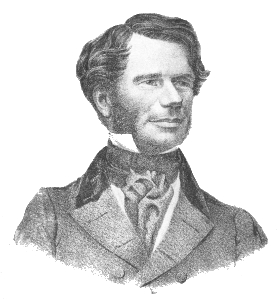
Although a Protestant country-gentleman, O’Brien supports Catholic emancipation while remaining a supporter of British-Irish union. In 1843, in protest against the imprisonment of Daniel O’Connell, he joins O’Connell’s anti-union Repeal Association.
Three years later, O’Brien withdraws the Young Irelanders from the association. In January 1847, with Thomas Francis Meagher, he founds the Irish Confederation, although he continues to preach reconciliation until O’Connell’s death in May 1847. He is active in seeking relief from the hardships of the famine. In March 1848, he speaks out in favour of a National Guard and tries to incite a national rebellion. He is tried for sedition on May 15, 1848, but is not convicted.
On July 29, 1848, O’Brien and other Young Irelanders lead landlords and tenants in a rising in three counties, with an almost bloodless battle against police at Ballingarry, County Tipperary. In O’Brien’s subsequent trial, the jury finds him guilty of high treason. He is sentenced to be hanged, drawn, and quartered. Petitions for clemency are signed by 70,000 people in Ireland and 10,000 people in England. In Dublin on June 5, 1849, the sentences of O’Brien and other members of the Irish Confederation are commuted to transportation for life to Van Diemen’s Land (Tasmania in present-day Australia).
O’Brien attempts to escape from Maria Island off Tasmania but is betrayed by the captain of the schooner hired for the escape. He is sent to Port Arthur where he meets up with John Mitchel.
O’Brien is a founding member of the Ossianic Society, which is founded in Dublin on St. Patrick’s Day 1853, whose aim is to further the interests of the Irish language and to publish and translate literature relating to the Fianna. He writes to his son Edward from Van Diemen’s Land, urging him to learn the Irish language. He himself studies the language and uses an Irish-language Bible and presents to the Royal Irish Academy Irish-language manuscripts he has collected.
In 1854, after five years in Tasmania, O’Brien is released on the condition he never returns to Ireland. He settles in Brussels. In May 1856, he is granted an unconditional pardon and returns to Ireland that July. He contributes to the Nation newspaper but plays no further part in politics.
In 1864 he visits England and Wales, with the view of rallying his failing health, but no improvement takes place, and he dies at Bangor, in Wales on June 16, 1864.
A statue of William Smith O’Brien stands in O’Connell Street, Dublin. Sculpted in Portland limestone, it is designed by Thomas Farrell and erected in D’Olier Street, Dublin, in 1870. It is moved to its present position in 1929.
Trevelyan is the son of a Cornish clergyman, the Venerable George Trevelyan, who becomes Archdeacon of Taunton, and his wife Harriet, daughter of Sir Richard Neave. As a young man, he works with the colonial government in Calcutta, India. In the late 1850s and 1860s he serves there in senior-level appointments.
Trevelyan’s most enduring mark on history may be the quasi-genocidalanti-Irish racial sentiment he expresses during his term in the critical position of administrating relief to the millions of Irish peasants suffering under the Great Famine, an Gorta Mór, as Assistant Secretary to HM Treasury (1840–1859) under the Whig administration of Lord John Russell.
During the height of the famine Trevelyan deliberately drags his feet in disbursing direct government food and monetary aid to the Irish due to his strident belief in laissez-faire economics and the free hand of the market. In a letter to an Irish peer, Thomas Spring Rice, 1st Baron Monteagle of Brandon, a former Chancellor of the Exchequer, he describes the famine as an “effective mechanism for reducing surplus population” as well as “the judgement of God” and writes that “The real evil with which we have to contend is not the physical evil of the Famine, but the moral evil of the selfish, perverse and turbulent character of the people.”
Trevelyan never expresses remorse for his comments, even after the full dreadful scope of the Irish famine becomes known. His defenders claim that other factors than Trevelyan’s personal acts and beliefs are more central to the problem.
Sir Charles Trevelyan dies at the age of 70 at 67 Eaton Square, London, on June 19, 1886.
Trevelyan is referred to in the modern Irish folk songThe Fields of Athenry about an Gorta Mór. For his actions, or lack thereof, during the Great Famine, he is commonly considered one of the most detested figures in Irish history, along with the likes of Oliver Cromwell.
O’Neill receives some schooling in Drumgallon. He emigrates to New Jersey in 1848 at the height of the Great Famine in Ireland. He receives an additional year of education there and works in a number of jobs. In 1857 he enlists in the 2nd United States Dragoons and serves in the Utah War (May 1857 – July 1858), apparently deserting afterwards to California.
In California, he joins the 1st Cavalry and serves as a sergeant in the American Civil War with this regiment until December 1862, at which time he is commissioned as an officer in the 5th Indiana Cavalry. He is credited as being a daring fighting officer, but believes he has not received due promotion, which leads to a transfer to the 17th United States Colored Infantry as captain. He leaves the Union Army prior to the end of the conflict, marrying Mary Crow, with whom he has several children.
While in Tennessee, O’Neill joins the militant Irish American movement, the Fenian Brotherhood, which eschews politics in favor of militant action to expel the British presence in Ireland. He attaches himself to the group led by William Randall Roberts, who wishes to attack Canada.
O’Neill, ranked as colonel, travels to the Canada–US border with a group from Nashville to participate in the Fenian raids. The assigned commander of the expedition does not appear, so O’Neill takes command. On June 1, 1866, he leads a group of six hundred men across the Niagara River and occupies Fort Erie.
The following day, north of Ridgeway, Ontario, O’Neill’s group encounters a detached column of Canadian volunteers, commanded by Lt-Col. Alfred Booker. The inexperienced Canadians are routed by the Civil War veterans. O’Neill withdraws back to Fort Erie and fights a battle against a detachment led by John Stoughton Dennis. With overwhelming numbers of Canadian forces closing in, O’Neill oversees a successful evacuation on the night of June 2-3 back to United States territory. He is later charged with violating the neutrality laws of the United States, but the charges are later dropped.
The penetration of O’Neill’s organisation by British and Canadian spies ensures that his next venture into Canada, the Battle of Eccles Hill, in 1870 is known in advance, and Canada is accordingly prepared. After the Battle of Trout River ends in a disorganized rout, O’Neill is arrested by United States MarshalGeorge P. Foster and charged with violating neutrality laws. He is sentenced to two years in prison in July 1870 but he and other Fenians are pardoned by President Ulysses S. Grant that October.
Though he renounces the idea of further attacks on Canada, he changes his mind at the urging of an associate of Louis Riel, William Bernard O’Donoghue. With the latter, and without the backing of the bulk of the Fenians, he leads an attack on the Hudson’s Bay Company‘s post at Pembina, Manitoba, on October 5, 1871. The area is then disputed between America and Canada. He is arrested by American troops.
In 1874 O’Neill embarks on a lecture tour along the east coast, encouraging the poor Irish that they would have a better standard of living if they would resettle with him in Nebraska. The first Irish colony in Nebraska is set up in Holt County in the town that bears his name today – O’Neill, Nebraska. His legacy is in the communities that exist in Nebraska today. These settlements are thriving and successful farming communities. John O’Neill can claim credit for the spirit of generosity that is still part of these communities today.
In 1877, while on a speaking tour in Little Rock, Arkansas, O’Neill becomes ill and returns to his home in Nebraska. His condition continues to deteriorate and, after been admitted to St. Joseph’s Hospital Omaha in November 1877, suffers a paralytic stroke and dies on January 8, 1878.




 seamus dubhghaill