He returns to England to be brigade major of the 2nd Infantry Brigade at Aldershot in 1886. He becomes deputy assistant adjutant general at Horse Guards in 1892, and deputy assistant adjutant general at Aldershot in 1894. He takes part in the Fourth Anglo-Ashanti War in 1895 and becomes assistant adjutant general at Horse Guards in 1897.
Stopford takes part in the Second Boer War as military secretary to General Sir Redvers Buller and later military secretary to the general officer commanding Natal, for which he is knighted as a Knight Commander of the Order of St. Michael and St. George in November 1900. After his return to Britain, he is appointed deputy adjutant general at Aldershot in 1901, and chief staff officer for I Corps with the temporary rank of brigadier general, on April 1, 1902. Two years later, he is appointed director of military training at Horse Guards. Promoted to major general in February 1904, he is Major-General commanding the Brigade of Guards and general officer commanding (GOC) of the London District from 1906. He is promoted to lieutenant general in September 1909.
On August 5, 1914, a day after the British entry into World War I, he is appointed GOC First Army, part of Home Forces, a position he holds until he takes command of IX Corps the following year.
As GOC of IX Corps, Stopford is blamed for the failure to attack following the landing at Suvla Bay in August 1915, during the Gallipoli campaign. He chose to command the landing from HMS Jonquil, anchored offshore, but sleeps as the landing is in progress. He is quickly replaced on August 15 by Major-General Sir Julian Byng.
After almost 50 years of military service, Stopford retires from the army in 1920.
Stopford dies at the age of 75 on May 4, 1929, at Marylebone, City of Westminster, Greater London, England. He is buried in the Holy Trinity and St. Andrew’s Churchyard in Ashe, Basingstoke and Deane borough, Hampshire, England.
Bracken is the third child and second of three sons of Joseph Kevin (J. K.) Bracken and Hannah Bracken (née Ryan). The family moves to Kilmallock, County Limerick, in 1903, the year before his father’s death. By 1908, his mother takes the family to live in Glasnevin, a new suburb in north Dublin, and subsequently off the North Circular Road. He is educated in St. Patrick’s National School, Drumcondra, and at the Christian Brothers‘ O’Connell School in North Richmond Street. He is a mischievous, delinquent child, one time throwing a schoolfellow into the Royal Canal. In February 1915 he is sent to Mungret College, a Jesuit boarding school near Limerick. He is not amenable to the regime and runs away on several occasions, finding accommodation in local hotels under a false name.
At the end of 1915 Bracken goes to Australia with £14 in his pocket. He is first based in Echuca, Victoria, where he is put up in a convent. Later he moves to other houses run by religious orders. A voracious reader, he claims that he is doing research for a life of CardinalPatrick Francis Moran, and signs himself “Brendan Newman Bracken.” He seeks admission as a pupil to Riverview, the fashionable Jesuit school in Sydney, claiming that he had been educated at Clongowes Wood College. Unfortunately for him, a priest who had just come out from Clongowes exposes him. Opinionated and argumentative, he does not conceal his skepticism about the Catholic religion. For a time, he teaches in a Protestant school in Orange, New South Wales.
Bracken returns to Ireland in 1919. By this time his mother has remarried and is living with her new husband, Patrick Laffan, on a farm in Beauparc, County Meath. After a short stay there, he moves to Liverpool and finds employment as a teacher at the Liverpool Collegiate School, claiming that he had been to the University of Sydney. He teaches at the school for two terms in 1920, earning extra money as tutor to a young boy. With his savings he is able to gain admission to Sedbergh School, a public school in the town of Sedbergh in Cumbria, North West England, giving his name as Brendan Rendall Bracken, born 1904, and stating that his parents had perished in a bush fire in Australia, leaving him money to complete his education. He remains only one term but distinguishes himself by winning a prize for history. After Sedbergh, Bracken teaches at Rottingdean preparatory school and then at Bishops Stortford School. He cuts a flamboyant figure and drops the name of famous acquaintances with gay abandon. He stands over 6 feet and has a powerful presence and a domineering personality; his mop of red hair and pale freckled skin combine with black teeth to give him a bizarre appearance.
In 1922 Bracken moves to London. He takes charge of the Illustrated Review when its editor, Hilaire Belloc, resigns. Renamed English Life and covering political and social events, it affords Bracken an opportunity to meet prominent people, including J. L. Garvin, editor of The Observer. In autumn 1923 Garvin introduces him to Winston Churchill, who had lost his parliamentary seat in 1922 and decided to contact Leicester West in the 1923 United Kingdom general election. Bracken offers his services as campaign manager. The friendship between Churchill and Bracken is soon so close that Bracken is rumoured to be Churchill’s natural son. Churchill’s wife Clementine dislikes Bracken and discourages the friendship.
Meanwhile Bracken enjoys the life of a ubiquitous socialite and builds up his career in publishing. He becomes a director of Eyre & Spottiswoode in 1926, starting The Banker, a monthly magazine, for them, and acquiring the Financial News in 1928 and a half-share in The Economist. To these are added in due course the Investors Chronicle and The Practitioner. His success in business enables him to acquire a home in North Street in 1928, near the Houses of Parliament. He is driven about in a chauffeured Hispano-Suiza car.
In 1929, Bracken has himself adopted as conservative candidate for Paddington North, a marginal seat. After a hard-fought campaign characterised by minor violence provoked by Bracken’s intemperate language, he wins the seat by 528 votes. At one point a rumour is put about that Bracken is in reality a Polish Jew, which he has to disprove by exhibiting a copy of his birth certificate. His background is a subject of speculation among acquaintances, and in throwaway remarks he gives different fictitious versions of it, Ireland figuring in none of them. He does however remain in constant touch with his mother, to whom he seems to have been deeply devoted, until her death in 1928. However, he has as little contact as possible with his brother and sisters, although he does give assistance to some of them and their families at various times.
In parliament Bracken voices right-wing views on economic issues and is an enthusiastic imperialist. After Churchill resigns from the conservative front bench in 1930 because they would not oppose the Labour government’s proposal for Indian self-government, he is supported by Bracken. During the 1930s, when Churchill is in the wilderness, disagreeing with the party leadership on India and on what he sees as a policy of appeasement toward Hitler‘s Germany, Bracken is his sole political ally. Stanley Baldwin calls him Churchill’s “faithful chela.”
In September 1939, Churchill joins Neville Chamberlain‘s war cabinet as First Lord of the Admiralty. Bracken is appointed his parliamentary private secretary, continuing in that role when Churchill becomes Prime Minister. Despite the king’s opposition, Churchill insists in June 1940 that Bracken should be appointed a privy councillor. Bracken shuts up his house and moves to the Prime Minister’s residence for the duration of the war. As a confidant of the Prime Minister, he often acts as a go-between with other politicians and newspapermen. He is allowed to oversee patronage and takes a special interest in ecclesiastical appointments. In July 1941, he is persuaded by Lord Beaverbrook and Churchill to become Minister for Information. He wins over most of the proprietors by giving them more news, often on a confidential basis, and censorship is kept to a minimum. The BBC is also allowed a fair measure of freedom as long as it behaves responsibly; under the leadership of Cyril Radcliffe, the civil service head of the ministry, it operates more smoothly. Bracken was generally acclaimed for that success.
After the resignation of the Labour ministers from the government at the end of the war in Europe, Bracken joins the cabinet as First Lord of the Admiralty. He is prominent in the general election campaign that follows and is the only conservative minister apart from Churchill to give more than one radio broadcast. He is accused, probably unjustly, of provoking Churchill to take extreme positions, and blamed when the conservatives are heavily defeated at the polls. Bracken himself loses Paddington North to Lt. Gen. Sir Noel Mason-MacFarlane. However, he is soon back in parliament representing Bournemouth, and as front-bench spokesman is an uncompromising opponent of the nationalisation measures of the Labour government (1945–51). He is out of sympathy with the leftward drift of the conservative party associated with Rab Butler and Harold Macmillan.
In December 1951, when Churchill is again Prime Minister, Bracken declines an invitation to serve as Colonial Secretary, pleading that his recurring sinusitis makes it impossible. He resigns his seat in the House of Commons and is created a peer, Viscount Bracken of Christchurch in Hampshire, but never takes his seat in the House of Lords. Although he retires from politics, he remains close to political events through his friendship with Churchill. He is deeply involved in concealing the severe stroke that Churchill suffers in 1953, so that he can carry on as Prime Minister.
In the postwar period, Bracken has important business interests. The Financial News group acquires the Financial Times in 1945, and he is returned as chairman of the expanded company. He writes a weekly Financial Times column until 1954. He oversees the building near St. Paul’s of a new head office, named “Bracken House” after his death. He is also chairman of the Union Corporation mining house, with interests in South Africa, which he frequently visits. From 1950 he is chairman of the board of governors of Sedbergh School, where he goes frequently and often walks for miles across the fells. He organises and finances the restoration of the eighteenth-century school building as a library, with a commemoratory inscription, “Remember Winston Churchill.”
From 1955 Bracken is a trustee of the National Gallery. He is an unrelenting opponent of the proposal to return to Ireland the impressionist paintings bequeathed to it by Hugh Lane, because a codicil willing them to Dublin has not been witnessed. Throughout the postwar period he carries on a prolific correspondence with friends such as Lord Beaverbrook, the American ambassador Lewis Douglas, and the Australian entrepreneur W. S. Robinson. These are a valuable and entertaining source on the political history of the time.
In January 1958, Bracken, who has always been a heavy smoker, is diagnosed with throat cancer. He lingers on until August 8, 1958, when he dies at the flat of his friend Sir Patrick Hennessy in Park Lane. He resists efforts made to reconcile him to the church of Rome. By his own wish he is cremated, and his ashes are scattered on Romney Marsh, Kent. On his instructions his papers are burned by his chauffeur. His estate comes to £145,032.
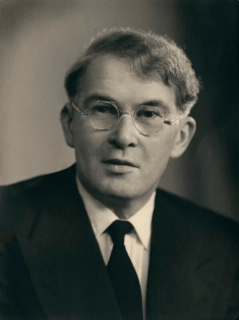
(From: “Bracken, Brendan” by Charles Lysaght, Dictionary of Irish Biography, www. dib.ie, October 2009 | Pictured: Brendan Bracken, bromide print by Elliott & Fry, January 13, 1950, National Portrait Gallery, London)
Hyde-Lees is the daughter of militia captain (William) Gilbert Hyde-Lees (1865–1909), of the Manchester Regiment, and Edith “Nelly” Ellen (1868–1942), daughter of barrister and manufacturer Montagu Woodmass, JP. Her father is regarded by her mother’s family as “a most undesirable character, but ‘rolling in money,'” having taken up the life of a “gentleman alcoholic” on resigning his commission after receiving an inheritance from his wealthy uncle Harold Lees, of Pickhill Hall, near Wrexham, then part of Denbighshire. He is “attractive, reckless, witty, and… musical,” and fond of pranks. She has an elder brother, Harold (1890–1963), who becomes a clergyman, with “rigid moral standards” and “a less than joyous existence,” his only indulgence being “a fine collection of drawings and etchings.” When she is only a few years old, her parents’ marriage fails due to her father’s alcoholism. Her father has enough income to support his family, allowing Georgie and her mother to spend “a good deal of their time” travelling in Europe, but his wife is in the awkward social position of being a “married woman without a husband.” The family lives a vaguely bohemian and nomadic lifestyle, travelling frequently to country homes and spending long periods visiting relatives.
Hyde-Lees attends a number of schools in Knightsbridge, London art schools, studies languages and classics, and piano. She becomes a close friend of Dorothy Shakespear, who is fond of Georgie and shares many of her interests despite being six years her senior. After the death of her father in 1909 at the age of 44, her mother marries Dorothy’s uncle, Henry Tucker, Olivia Shakespear‘s brother, and they move to Kensington.
Hyde-Lee’s mother often brings young musicians and artists she has recently met to Olivia Shakespear’s salon, many of whom become well-known modernists, including Ezra Pound, Walter Rummel, and Frederic Manning. She continues to make the rounds of country estates with her mother and Olivia and Dorothy Shakespear. It is in their company in 1910 or 1911, as a seventeen-year-old, that one morning she meets W. B. Yeats at the British Museum and again that afternoon during tea at the Shakespears.
Seven years later, when Hyde-Lees is 25 and Yeats is 52, he asks her to marry him. Only a few weeks earlier, Iseult Gonne, the daughter of Maud Gonne whom Yeats had loved for many years, had rejected his marriage proposal. She and Yeats marry just three weeks later, on October 20, 1917, in a public register office, witnessed by her mother and Ezra Pound. During the honeymoon, while Yeats is still brooding about Iseult’s rejection, she begins the automatic writing which fascinates him. Yeats writes about her psychography days later in what is to be A Vision (1925), and it holds the marriage together for many years. Within a year of marriage, Yeats declares her name of Georgie to be insufferable, and henceforth calls her George.
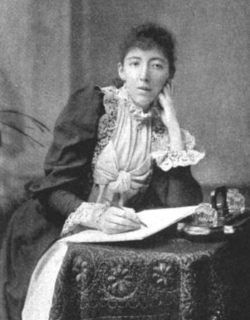
MacMahon, who is educated at home, is also literary. From the 1890s she begins contributing to periodicals such as the New Ireland Review, for which she writes on local history. Her first novel, A New Note, appears in 1894 and over the next thirty-five years she is prolific, publishing over twenty novels as well as making numerous contributions to magazines, and several to BBC radio programmes. She is unmarried and writing is her main source of income, but during World War I she works as a civil servant in various government departments including War, Trade, and the newly created Intelligence department. Afterward she lives in Brockenhurst, Hampshire, England, and converts at some stage to Catholicism.
MacMahon’s novels are romances. Typical of them is An Honorable Estate (1898), which features an English heiress marrying an impoverished Irish clergyman in a fit of pique, only to fall in love with him. They are undemanding but entertaining and occasionally ironic, with clever social commentary. Irish Book Lover, a quarterly review of Irish literature and bibliography, commends The Job (1914) for its insightful and sympathetic characterisation. It is an account of a baronet‘s struggle to improve his Irish estate despite the fecklessness of the inhabitants. Ireland is a frequent setting for her stories. Her view of it verges on the sentimental, and she often features eccentric but ultimately good-hearted country people.
However, MacMahon’s last book, Wind of Dawn (1927), is a more profound, interesting study. Set during the Irish War of Independence and the truce, it looks at the complexities within Irish society and the differences in attitude between the Anglo- and native Irish. Rich in characters, it features a naive English girl in love with Ireland, a papist-hating domestic servant, and an ascendancy grande dame who finds England monotonous but is adamant that her children will be educated there and will not acquire a brogue. Unlike MacMahon’s other books, it is not a romance and ends in tragedy and then acceptance for the coming change of regime. It reads like a lesser novel by Elizabeth Bowen and resembles in theme and argument, though not in quality, The Last September (1929), which it predates. Unfortunately, she is not inspired to go further in this line. She writes no more and retires on a government civil pension.
By the time of her death on April 19, 1956, MacMahon has fallen into complete obscurity, and surprisingly, given the quantity and relative merit of her work, she has no entry to date in any of the numerous anthologies of Irish or women writers.
Melesina Trench (née Chenevix), Irish writer, poet and diarist, dies in Malvern, Worcestershire, England, on May 27, 1827. During her lifetime she is known more for her beauty than her writing. It is not until her son, Richard Chenevix Trench, publishes her diaries posthumously in 1861 that her work receives notice.
Chenevix is born in Dublin on March 22, 1768, to Philip Chenevix and Mary Elizabeth Gervais. She is orphaned before her fourth birthday and is brought up by her paternal grandfather, Richard Chenevix (1698–1779), the AnglicanBishop of Waterford and Lismore. The family is of Huguenot extraction.
After the death of Richard Chenevix, Chenevix goes to live with her other grandfather, the Archdeacon Gervais. On October 31, 1786, she marries Colonel Richard St. George, who dies only four years later in Portugal, leaving one son, Charles Manners St. George, who becomes a diplomat.
On March 3, 1803, in Paris she marries her second husband, Richard Trench, who is the sixth son of Frederick Trench and brother of Frederick Trench, 1st Baron Ashtown.
After the breakdown of the Peace of Amiens, Richard Trench is detained in France by Napoleon‘s armies, and in August 1805 Melesina takes it upon herself to petition Napoleon in person and pleads for her husband’s release. Her husband is released in 1807, and the couple settles at Elm Lodge in Bursledon, Hampshire, England.
Their son, Francis Chenevix Trench, is born in 1805. In 1807, when they are on holiday in Dublin, their son Richard Chenevix Trench is born. He goes on to be the Archbishop of Dublin, renowned poet and contemporary of Alfred, Lord Tennyson. Her only daughter dies a few years later at the age of four.
Trench corresponds with, amongst others, Mary Leadbeater, with whom she works to improve the lot of the peasantry at her estate at Ballybarney. She dies at the age of 59 in Malvern, Worcestershire on May 27, 1827.
Melesina Trench’s diaries and letters are compiled posthumously by Richard Chenevix Trench as The remains of the late Mrs. Richard Trench in 1861 with an engraving of her taken from a painting by George Romney. Another oil painting, The Evening Star by Sir Thomas Lawrence, has her as a subject, and she is reproduced in portrait miniatures – one in Paris by Jean-Baptiste Isabey and another by Hamilton that is copied by the engraver Francis Engleheart.
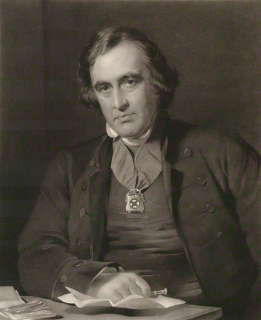
Trench is the son of Richard Trench (1774–1860), barrister-at-law, and the Dublin writer Melesina Chenevix (1768–1827). His elder brother is Francis Chenevix Trench. He is educated at Harrow School, and graduates from Trinity College, Cambridge in 1829. In 1830 he visits Spain. While incumbent of Curdridge Chapel near Bishop’s Waltham in Hampshire, he publishes The Story of Justin Martyr and Other Poems (1835), which is favourably received, and is followed by Sabbation, Honor Neale, and other Poems (1838), and Poems from Eastern Sources (1842). These volumes reveal the author as the most gifted of the immediate disciples of William Wordsworth, with a warmer colouring and more pronounced ecclesiastical sympathies than the master, and strong affinities to Alfred, Lord Tennyson, John Keble and Richard Monckton Milnes.
In 1841 Trench resigns his living to become curate to Samuel Wilberforce, then rector of Alverstoke, and upon Wilberforce’s promotion to the deanery of Westminster Abbey in 1845 he is presented to the rectory of Itchen Stoke. In 1845 and 1846 he preaches the Hulsean Lectures, and in the former year is made examining chaplain to Wilberforce, now Bishop of Oxford. He is shortly afterwards appointed to a theological chair at King’s College London.
Trench joins the Canterbury Association on March 27, 1848, on the same day as Samuel Wilberforce and Wilberforce’s brother Robert.
In 1851 Trench establishes his fame as a philologist by The Study of Words, originally delivered as lectures to the pupils of the Diocesan Training School, Winchester. His stated purpose is to demonstrate that in words, even taken singly, “there are boundless stores of moral and historic truth, and no less of passion and imagination laid up” — an argument which he supports by a number of apposite illustrations. It is followed by two little volumes of similar character — English Past and Present (1855) and A Select Glossary of English Words (1859). All have gone through numerous editions and have contributed much to promote the historical study of the English tongue. Another great service to English philology is rendered by his paper, read before the Philological Society, On some Deficiencies in our English Dictionaries (1857), which gives the first impulse to the great Oxford English Dictionary. He envisages a totally new dictionary that is a “lexicon totius Anglicitatis.” As one of the three founders of the dictionary, he expresses his vision that it will be “an entirely new Dictionary; no patch upon old garments, but a new garment throughout.”
Trench’s advocacy of a revised translation of the New Testament (1858) helps promote another great national project. In 1856 he publishes a valuable essay on Pedro Calderón de la Barca, with a translation of a portion of Life is a Dream in the original metre. In 1841 he had published his Notes on the Parables of our Lord, and in 1846 his Notes on the Miracles, popular works which are treasuries of erudite and acute illustration.
In 1856 Trench becomes Dean of Westminster Abbey, a position which suits him. Here he introduces evening nave services. In January 1864 he is advanced to the post of Archbishop of Dublin. Arthur Penrhyn Stanley had been first choice, but is rejected by the Church of Ireland, and, according to Bishop Wilberforce’s correspondence, Trench’s appointment is favoured neither by the Prime Minister nor the Lord Lieutenant. It is, moreover, unpopular in Ireland, and a blow to English literature, yet it turns out to be fortunate. He cannot prevent the disestablishment of the Church of Ireland, though he resists with dignity. But, when the disestablished communion has to be reconstituted under the greatest difficulties, it is important that the occupant of his position should be a man of a liberal and genial spirit.
This is the work of the remainder of Trench’s life. It exposes him at times to considerable abuse, but he comes to be appreciated and, when he resigns his archbishopric because of poor health in November 1884, clergy and laity unanimously record their sense of his “wisdom, learning, diligence, and munificence.” He finds time for Lectures on Medieval Church History (1878), and his poetical works are rearranged and collected in two volumes (last edition, 1885). He dies at Eaton Square, London, on March 28, 1886, after a lingering illness. He is buried at Westminster Abbey.
George W. E. Russell describes Trench as “a man of singularly vague and dreamy habits” and recounts the following anecdote of his old age:
“He once went back to pay a visit to his successor, Lord Plunket. Finding himself back again in his old palace, sitting at his old dinner-table, and gazing across it at his wife, he lapsed in memory to the days when he was master of the house, and gently remarked to Mrs. Trench, ‘I am afraid, my love, that we must put this cook down among our failures.'”
On his release Coote returns to England, is promoted major in the 47th (Lancashire) Regiment of Foot in 1783, and in 1784 inherits the substantial estates of his uncle Sir Eyre Coote. He inherits a further £200,000 by remainder on his father’s death in 1796. He resides for a time at Portrane House, Maryborough, Queen’s County, and is elected MP for Ballynakill (1790–97) and Maryborough (1797–1800). Although he opposes the union, he vacates his seat to allow his elder brother Charles, 2nd Baron Castle Coote, to return a pro-union member. He serves with distinction in the West Indies (1793–95), particularly at the storming of Guadeloupe on July 3, 1794, and becomes colonel of the 70th (Surrey) Regiment of Foot (1794), aide-de-camp to King George III (1795), and brigadier-general in charge of the camp at Bandon, County Cork (1796).
Coote is active in suppressing the United Irishmen in Cork throughout 1797, and in June arrests several soldiers and locals suspected of attempting to suborn the Bandon camp. On January 1, 1798, he is promoted major-general and given the command at Dover. He leads the expedition of 1,400 men that destroy the canal gates at Ostend on May 18, 1798, holding out stubbornly for two days against superior Dutch forces until he is seriously wounded and his force overwhelmed. Taken prisoner, he is exchanged and in 1800 commands a brigade in Sir Ralph Abercromby‘s Mediterranean campaign, distinguishing himself at Abu Qir and Alexandria. For his services in Egypt, he receives the thanks of parliament, is made a Knight of the Bath, and is granted the Crescent by the Sultan.
In 1801 Coote returns to Ireland. Elected MP for Queen’s County (1802–06), he generally supports the government and is appointed governor of the fort of Maryborough. He gives the site and a large sum of money towards the building of the old county hospital in Maryborough. In 1805 he is promoted lieutenant-general, and he serves as lieutenant-governor of Jamaica (1806–08). His physical and mental health deteriorates in the West Indian climate, and he is relieved of his post in April 1808. He is second in command in the Walcheren Campaign of 1809 and leads the force that takes the fortress of Flushing. However, he shows signs of severe stress during the campaign and asks to be relieved from command because his eldest daughter is seriously ill.
Coote is conferred LL.D. at Trinity College, Cambridge in 1811. Elected MP for Barnstaple, Devon (1812–18), he usually votes with government, but opposes them by supporting Catholic emancipation, claiming that Catholics strongly deserve relief because of the great contribution Catholic soldiers had made during the war. He strongly opposes the abolition of flogging in the army. Despite a growing reputation for eccentricity, he is promoted full general in 1814 and appointed Knight Grand Cross (GCB) on January 2, 1815, but his conduct becomes increasingly erratic. In November 1815 he pays boys at Christ’s Hospital school, London, to allow him to flog them and to flog him in return. Discovered by the school matron, he is charged with indecent behaviour. The Lord Mayor of London dismisses the case and Coote donates £1,000 to the school, but the scandal leads to a military inquiry on April 18, 1816. Although it is argued that his mind had been affected by the Jamaican sun and the deaths of his daughters, the inquiry finds that he is not insane and that his conduct is unworthy of an officer. Despite the protests of many senior officers, he is discharged from the army and deprived of his honours.
Coote continues to decline and dies in London on December 10, 1823. He is buried at his seat of West Park, Hampshire, where in 1828 a large monument is erected to him and his uncle Sir Eyre Coote.
Coote first marries Sarah Robard in 1785, with whom he has three daughters, all of whom die young of consumption. Secondly, he marries in 1805, Katherine, daughter of John Bagwell of Marlfield, County Tipperary, with whom he has one son, his heir Eyre Coote III, MP for Clonmel (1830–33). He also has a child by Sally, a slave girl in Jamaica, from whom Colin Powell, United States Army general and Secretary of State, claims descent.
Wellesley is born to Garret Wesley, 1st Earl of Mornington and Anne Wellesley, Countess of Mornington. Fatherless at an early age and neglected by his mother, he is a reserved, withdrawn child. He fails to shine at Eton College and instead attends private classes in Brussels, followed by a military school in Angers, France. Ironically, he has no desire for a military career. Instead, he wishes to pursue his love of music. Following his mother’s wishes, however, he joins a Highland regiment.
Wellesley fights at Flanders in Belgium in 1794, and directs the campaign in India in 1796, where his elder brother Richard is Governor-General. Knighted for his efforts, he returns to England in 1805.
After the Battle of Waterloo, Wellesley becomes Commander in Chief of the army in occupied France until November 1818. He then returns to England and Parliament, and joins Robert Jenkinson, 2nd Earl of Liverpool’s government in 1819 as Master-General of the Ordnance. He undertakes a number of diplomatic visits overseas, including a trip to Russia.
In 1828, after twice being overlooked in favour of George Canning and F. J. Robinson, 1st Viscount Goderich, Wellesley is finally invited by King George IV to form his own government and set about forming his Cabinet. As Prime Minister, he is very conservative; known for his measures to repress reform, his popularity sinks a little during his time in office. Yet one of his first achievements is overseeing Catholic emancipation in 1829, the granting of almost full civil rights to Catholics in the United Kingdom. Feelings run very high on the issue. George Finch-Hatton, 10th Earl of Winchilsea, an opponent of the bill, claims that by granting freedoms to Catholics Wellesley “treacherously plotted the destruction of the Protestant constitution.”
Wellesley has a much less enlightened position on parliamentary reform. He defends rule by the elite and refuses to expand the political franchise. His fear of mob rule is enhanced by the riots and sabotage that follow rising rural unemployment. His opposition to reform causes his popularity to plummet to such an extent that crowds gathered to throw missiles at his London home.
The government is defeated in the House of Commons and Wellesley resigns on November 16, 1830, to be replaced by Charles Grey, 2nd Earl Grey. Wellesley, however, continues to fight reform in opposition, though he finally consents to the Great Reform Act in 1832.
Two years later Wellesley refuses a second invitation to form a government because he believes membership in the House of Commons has become essential. The king reluctantly approves Robert Peel, who is in Italy at the time. Hence, Wellesley acts as interim leader for three weeks in November and December 1834, taking the responsibilities of Prime Minister and most of the other ministries. In Peel’s first cabinet (1834–1835), he becomes Foreign Secretary, while in the second (1841–1846) he is a Minister without portfolio and Leader of the House of Lords. Upon Peel’s resignation in 1846, he retires from politics.
In 1848 Wellesley organises a military force to protect London against possible Chartist violence at the large meeting at Kennington Common.
(From: “Arthur Wellesley, 1st Duke of Wellington,” GOV.UK (wwww.gov.uk) | Pictured: “Arthur Wellesley, 1st Duke of Wellington (1769-1852)” by Thomas Lawrence, oil on canvas)
At the end of 1972 she is withdrawn and refitted to carry 1,500 single class passengers on cruises. Unusually, this transition from an early life as a purpose-built ocean liner to a long and successful career in cruising, occurs without any major external alterations, and with only minimal internal and mechanical changes over the years.
On April 2, 1982, Argentina invades the Falkland Islands, which initiates the Falklands War. At the time, SS Canberra is cruising in the Mediterranean Sea. The next day, her captain, Dennis Scott-Masson, receives a message asking his time of arrival at Gibraltar, which is not on his itinerary. When he calls at Gibraltar, he learns that the Ministry of Defence had requisitioned SS Canberra for use as a troopship. SS Canberra sails to Southampton, Hampshire where she is quickly refitted, sailing on April 9 for the South Atlantic.
SS Canberra anchors in San Carlos Water on May 21 as part of the landings by British forces to retake the islands. Although her size and white colour make her an unmissable target for the Argentine Air Force, the liner is not badly hit in the landings as the Argentine pilots tend to attack the Royal Navy frigates and destroyers instead of the supply and troop ships. After the war, Argentine pilots claim they were told not to hit SS Canberra, as they mistook her for a hospital ship.
SS Canberra then sails to South Georgia island, where 3,000 troops are transferred from Queen Elizabeth 2. They are landed at San Carlos on June 2. When the war ends, SS Canberra is used as a cartel to repatriate captured Argentine soldiers, landing them at Puerto Madryn, before returning to Southampton to a rapturous welcome on July 11.
After a lengthy refit, SS Canberra returns to civilian service as a cruise ship. Her role in the Falklands War makes her very popular with the British public, and ticket sales after her return are elevated for many years as a result. Age and high running costs eventually catch up with her though, as she has much higher fuel consumption than most modern cruise ships. Although Premier Cruise Line makes a bid for the old ship, P&O had already decided that they do not want SS Canberra to operate under a different flag.
SS Canberra is withdrawn from P&O service in September 1997 and sold to ship breakers for scrapping on October 10, 1997, leaving for Gadani ship-breaking yard in Pakistan on October 31, 1997. Her deep draft means that she cannot be beached as far as most ships, and due to her solid construction, the scrapping process takes nearly a year instead of the estimated three months, being totally scrapped by the end of 1998.
The SS Canberra appears in the 1971 James Bond film Diamonds Are Forever as the liner where Mr. Wint and Mr. Kidd try to kill Bond. In 1997, singer/songwriter Gerard Kenny releases the single “Farewell Canberra” which is specially composed for the final voyage.
After preparatory education at Worplesdon and at Greenford, near Harrow, Kean is sent to Eton College, where he remains for three years. In 1827, he is offered a cadetship in the East India Company‘s service, which he is prepared to accept if his father would settle an income of £400 on his mother. The elder Kean refuses to do this, so he determines to become an actor. He makes his first appearance at Drury Lane on October 1, 1827 as Norval in John Home‘s Douglas, but his continued failure to achieve popularity leads him to leave London in the spring of 1828 for the provinces. In Glasgow, on October 1 of that year, father and son act together in Arnold Payne’s Brutus, the elder Kean in the title role and his son as Titus.
After a visit to the United States in 1830, where he is received with much favour, Kean appears in 1833 at Covent Garden as “Sir Edmund Mortimer” in George Colman‘s The Iron Chest, but his success is not pronounced enough to encourage him to remain in London, especially as he has already won a high position in the provinces. In January 1838, however, he returns to Drury Lane, and plays Hamlet with a success which gives him a place among the principal tragedians of his time. He marries the actress Ellen Tree (1805-1880) on January 25, 1842, and pays a second visit to the United States with her from 1845 to 1847.
From his “tour round the world” Kean returns to England in 1866 in broken health, and dies at the age of 57 in London on January 22, 1868. He is buried in All Saints Churchyard, Catherington, East Hampshire district, Hampshire.






 seamus dubhghaill