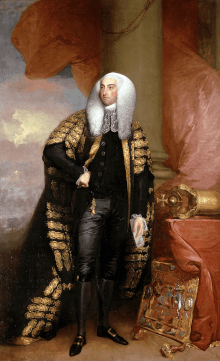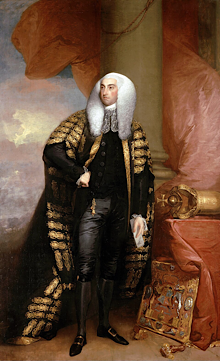
FitzGerald is born on March 13, 1749, in Arlington Place, Piccadilly, London, the second son of nine sons and ten daughters of James Fitzgerald, 20th Earl of Kildare and later 1st Duke of Leinster, and his wife, Lady Emily Lennox. He is educated at Eton College (1758–63). He is the elder brother of the 1790s revolutionary Lord Edward FitzGerald, and is a first cousin of the English liberal politician Charles James Fox.
In November 1775, FitzGerald marries Emilia Olivia Usher, daughter of the 1st Baron Saint George and Elizabeth Dominick and sole grand daughter of Sir Christopher Dominick. They have three sons and six daughters.
In 1770, FitzGerald is chosen Grandmaster of the masonicGrand Lodge of Ireland, a post he holds for two years. He is re-elected for another year in 1777. In 1783, he is among the first knights in the newly created Order of St. Patrick.
In 1788–89, FitzGerald is Master of the Rolls in Ireland. In theory a senior judicial office, it is then largely a sinecure, but so blatant a choice of a man who is wholly unqualified for it gives rise to unfavourable comment, and a few years later it becomes the rule that the Master must be a lawyer of repute.
FitzGerald’s homes are at Carton and Kilkea Castle in County Kildare, and at Leinster House in Dublin (now the home of the Oireachtas). He is a founder member of the Order of St. Patrick in 1783 and of the Royal Irish Academy in 1785, and is a large investor in the Royal Canal company launched in 1790. His family’s estates of 60,000 acres (25,000 Ha) in Kildare are in three main parts, around Maynooth, Rathangan and Athy. He rebuilds the main bridge in Athy over the River Barrow.
FitzGerald dies of strangury, a urinary tract disorder, at Carton House on October 20, 1804. He is buried in Kildare Abbey. His funeral is so well attended that the mourners reach across The Curragh. He is succeeded by his second, but eldest surviving, son, Augustus Frederick Fitzgerald, as 3rd Duke of Leinster.
The Royal Irish Constabulary (RIC), the police force in Ireland from 1822 until 1922, when all of the island was part of the United Kingdom, is disbanded on August 17, 1922, and replaced by the Garda Síochána.
A separate civic police force, the unarmed Dublin Metropolitan Police (DMP), patrols the capital and parts of County Wicklow, while the cities of Derry and Belfast, originally with their own police forces, later have special divisions within the RIC. For most of its history, the ethnic and religious makeup of the RIC broadly matches that of the Irish population, although Anglo-IrishProtestants are overrepresented among its senior officers.
The Peace Preservation Act 1814, for which Sir Robert Peel is largely responsible, and the Irish Constabulary Act 1822 forms the provincial constabularies. The 1822 act establishes a force in each province with chief constables and inspectors general under the United Kingdom civil administration for Ireland controlled by the Dublin Castle administration.
The RIC’s existence is increasingly troubled by the rise of the Home Rule campaign in the early twentieth century period prior to World War I.
In January 1922, the British and Irish delegations agree to disband the RIC. Phased disbandments begin within a few weeks with RIC personnel both regular and auxiliary being withdrawn to six centres in southern Ireland. On April 2, 1922, the force formally ceases to exist, although the actual process is not completed until August 17. The RIC is replaced by the Civic Guard (renamed as the Garda Síochána the following year) in the Irish Free State and by the Royal Ulster Constabulary (RUC) in Northern Ireland.
According to a parliamentary answer in October 1922, 1,330 ex-RIC men join the new RUC in Northern Ireland. This results in an RUC force that is 21% Roman Catholic at its inception in 1922. As the former RIC members retire over the subsequent years, this proportion steadily falls.
Just thirteen men transfer to the Garda Síochána. These include men who had earlier assisted Irish Republican Army (IRA) operations in various ways. Some retire, and the Irish Free State pays their pensions as provided for in the terms of the Anglo-Irish Treaty agreement. Others, still faced with threats of violent reprisals, emigrate with their families to Great Britain or other parts of the British Empire, most often to join police forces in Canada, Australia, New Zealand, South Africa and Southern Rhodesia. A number of these men join the Palestine Police Force, which is recruiting in the UK at the time.
Two acts are passed in 1800 with the same long title: An Act for the Union of Great Britain and Ireland. The short title of the act of the British Parliament is Union with Ireland Act 1800, assigned by the Short Titles Act 1896. The short title of the act of the Irish Parliament is Act of Union (Ireland) 1800, assigned by a 1951 act of the Parliament of Northern Ireland, and hence not effective in the Republic of Ireland, where it was referred to by its long title when repealed in 1962.
Before these acts, Ireland has been in personal union with England since 1542, when the Irish Parliament passes the Crown of Ireland Act 1542, proclaiming King Henry VIII of England to be King of Ireland. Since the 12th century, the King of England has been technical overlord of the Lordship of Ireland, a papal possession. Both the Kingdoms of Ireland and England later come into personal union with that of Scotland upon the Union of the Crowns in 1603.
In 1707, the Kingdom of England and the Kingdom of Scotland are united into a single kingdom: the Kingdom of Great Britain. Upon that union, each House of the Parliament of Ireland passes a congratulatory address to Queen Anne, praying her: “May God put it in your royal heart to add greater strength and lustre to your crown, by a still more comprehensive Union.” The Irish Parliament is both before then subject to certain restrictions that made it subordinate to the Parliament of England and after then, to the Parliament of Great Britain; however, Ireland gains effective legislative independence from Great Britain through the Constitution of 1782.
By this time access to institutional power in Ireland is restricted to a small minority: the Anglo-Irish of the Protestant Ascendancy. Frustration at the lack of reform among the Catholic majority eventually leads, along with other reasons, to a rebellion in 1798, involving a French invasion of Ireland and the seeking of complete independence from Great Britain. This rebellion is crushed with much bloodshed, and the motion for union is motivated at least in part by the belief that the union will alleviate the political rancour that led to the rebellion. The rebellion is felt to have been exacerbated as much by brutally reactionary loyalists as by United Irishmen (anti-unionists).
Furthermore, Catholic emancipation is being discussed in Great Britain, and fears that a newly enfranchised Catholic majority will drastically change the character of the Irish government and parliament also contributes to a desire from London to merge the Parliaments.
According to historian James Stafford, an Enlightenment critique of Empire in Ireland lays the intellectual foundations for the Acts of Union. He writes that Enlightenment thinkers connected “the exclusion of the Irish Kingdom from free participation in imperial and European trade with the exclusion of its Catholic subjects, under the terms of the ‘Penal Laws’, from the benefits of property and political representation.” These critiques are used to justify a parliamentary union between Britain and Ireland.
Complementary acts are enacted by the Parliament of Great Britain and the Parliament of Ireland.
The Parliament of Ireland gains a large measure of legislative independence under the Constitution of 1782. Many members of the Irish Parliament jealously guard that autonomy (notably Henry Grattan), and a motion for union is legally rejected in 1799. Only Anglicans are permitted to become members of the Parliament of Ireland though the great majority of the Irish population are Roman Catholic, with many Presbyterians in Ulster. Under the Roman Catholic Relief Act 1793, Roman Catholics regain the right to vote if they own or rent property worth £2 annually. Wealthy Catholics are strongly in favour of union in the hope for rapid religious emancipation and the right to sit as MPs, which only comes to pass under the Roman Catholic Relief Act 1829.
From the perspective of Great Britain’s elites, the union is desirable because of the uncertainty that follows the French Revolution of 1789 and the Irish Rebellion of 1798. If Ireland adopts Catholic emancipation willingly or not, a Roman Catholic Parliament could break away from Britain and ally with the French, but the same measure within the United Kingdom would exclude that possibility. Also, in creating a regency during King George III‘s “madness”, the Irish and British Parliaments give the Prince Regent different powers. These considerations lead Great Britain to decide to attempt the merger of both kingdoms and Parliaments.
The final passage of the Act in the Irish House of Commons turns on an about 16% relative majority, garnering 58% of the votes, and similar in the Irish House of Lords, in part per contemporary accounts through bribery with the awarding of peerages and honours to critics to get votes. The first attempt is defeated in the Irish House of Commons by 109 votes to 104, but the second vote in 1800 passes by 158 to 115.
Sullivan, the second of six sons of Daniel Sullivan, house painter, and his wife, Catherine (née Baylor), a teacher, is born on May 15, 1829, in Bantry, County Cork. A popular date for Sullivan’s birth appears in many histories as 1830, but his gravestone reads 1829. He is educated in the local national school. One of his brothers is Timothy Daniel Sullivan, the Lord Mayor of Dublin from 1886 to 1888.
During the Great Famine of 1845 to 1847, Sullivan is employed as a clerk in connection with the relief works started by the government. Deeply influenced by the distress he witnesses, he afterward joins the Confederate Club formed in Bantry in support of the revolutionary movement of the Young Irelanders and is the organiser of the enthusiastic reception given by the town to William Smith O’Brien in July 1848 during the insurgent leader’s tour of the southern counties. Early in 1853, he goes to Dublin to seek employment as an artist. An exhibition of the arts and industries of Ireland is held in Dublin that year, and he is engaged to supply pencil sketches to the Dublin Expositor, a journal issued in connection with the exhibition. Subsequently, he obtains a post as a draughtsman in the Irish valuation office, and afterward as a reporter on the Liverpool Daily Post.
In 1855, Sullivan becomes assistant editor of The Nation, and subsequently editor and proprietor. From 1861 to 1884, in conjunction with his elder brother, T. D. Sullivan, he makes The Nation one of the most potent factors in the Irish Nationalist cause and also issues the Weekly News and Zozimus. Called to the Irish bar in 1876, he is a “special call” of the Inner Temple in 1877 and is made QC in 1881. He mainly practices at the English bar, though he acts in some political cases in Ireland.
As a member of the Dublin Corporation, Sullivan secures a magnificent site for the Grattan Monument, toward which he donates £400, the amount of a subscription by his admirers while he is undergoing imprisonment for a political offence in 1868. The monument is formally unveiled in January 1876. Between 1878 and 1882 he is engaged in many notable trials. His last great case is on November 30, 1883, when he is a colleague of Lord Russell in the defence of Patrick O’Donnell for the murder of James Carey, an informer.
Sullivan suffers another heart attack while on holiday in Bantry in September 1884 and spends his last days with William Martin Murphy at Dartry, County Dublin. Murphy regards him as a father figure, attributing his success to Sullivan’s early advice and journalistic training. Sullivan dies on October 17, 1884, at Dartry Lodge, Rathmines, Dublin. He is buried at Glasnevin Cemetery. With his wife, Frances Genevieve Donovan, whom he marries on April 27, 1861, and who outlives him by nearly forty years, he has a family of three sons and five daughters. His second son and namesake, Alexander Martin Sullivan, is the last to hold the rank of Serjeant-at-law (Ireland).
In addition to his labours, Sullivan is a great temperance reformer. He also writes two notable books, The Story of Ireland and New Ireland and contributes many sketches (including some verse) to Irish Penny Readings (1879–85). Some of his correspondence is located in the Isaac Butt papers in the National Library of Ireland.
When appointed Lord Chancellor of Ireland in 1789, FitzGibbon is granted his first peerage as Baron FitzGibbon, of Lower Connello in the County of Limerick, in the Peerage of Ireland that year. This does not entitle him to a seat in the British House of Lords, only in the Irish House of Lords. His later promotions come mostly in the Peerage of Ireland, being advanced to a Viscountcy in 1793 and the Earldom of Clare in 1795. He finally achieves a seat in the British House of Lords in 1799 when created Baron FitzGibbon, of Sidbury in the County of Devon, in the Peerage of Great Britain.
As Lord Chancellor for Ireland, FitzGibbon is a renowned champion of the Protestant Ascendancy and an opponent of Catholic emancipation. He despises the Parliament of Ireland‘s popular independent Constitution of 1782. He is also personally and politically opposed to the Irish politician Henry Grattan who urges a moderate course in the Irish Parliament and is responsible for defeating Grattan’s efforts to reform the Irish land tithe system under which Irish Catholic farmers (and all non-Anglican farmers) are forced to financially support the minority Anglican Church of Ireland. These are not fully repealed until 1869 when the Church of Ireland is finally disestablished, although Irish tithes are commuted after the Tithe War (1831–1836).
FitzGibbon opposes the Irish Roman Catholic Relief Act 1793 personally but apparently recommends its acceptance in the House of Lords, being forced out of necessity when that Act had been recommended to the Irish Executive by the British Cabinet led by William Pitt the Younger. Pitt expects Ireland to follow the British Roman Catholic Relief Act 1791 and allow Catholics to vote again and hold public offices. At the same time, FitzGibbon apparently denounces the policy this Act embodies, so it is probably safe to say that FitzGibbon’s own beliefs and principles conflict with his obligations as a member of the Irish executive of the time.
FitzGibbon’s role in the recall, soon after his arrival, of the popular pro-Emancipation Lord Lieutenant of Ireland, William Fitzwilliam, 4th Earl of Fitzwilliam, is debatable. Although he is probably politically opposed to the Lord Lieutenant of Ireland, Fitzwilliam is apparently recalled, because of his own independent actions. Fitzwilliam is known to be friendly to the Ponsonby family and is generally a Foxite liberal Whig. His close association with and patronage of Irish Whigs led by Grattan and Ponsonby during his short tenure, along with his alleged support of an immediate effort to secure Catholic emancipation in a manner not authorized by the British cabinet is likely what leads to his recall. Thus, if anyone is to blame in the short-lived “Fitzwilliam episode” it is Henry Grattan and the Ponsonby brothers – presumably William Ponsonby, later Lord Imokilly, and his brother George Ponsonby — not to mention Lord Fitzwilliam himself. Irish Catholics at the time and later naturally see things very differently and blame hardline Protestants such as FitzGibbon.
Irish Catholics and FitzGibbon apparently agree on one point – Irish political and economic union with Great Britain, which eventually takes place in 1801. Pitt wants Union with Ireland concomitantly with Catholic emancipation, commutation of tithes, and the endowment of the Irish Catholic priesthood. Union is opposed by most hardline Irish Protestants, as well as liberals such as Grattan. FitzGibbon is a strong supporter of the Union since 1793 but refuses to have Catholic emancipation with the Union.
In the end, FitzGibbon’s views wins out, leading to the Union of Ireland with Great Britain to form the United Kingdom of Great Britain and Ireland without any concessions for Ireland’s Catholic majority, or for that matter, Catholics in the rest of the new United Kingdom. He later claims that he has been duped by the way in which the Act is passed and is bitterly opposed to any concessions during the short remainder of his life.
FitzGibbon’s role as Lord Chancellor of Ireland during the period of the 1798 rebellion is questionable. According to some, he supports a hardline policy which uses torture, murder and massacre to crush the rebellion, or that as Lord Chancellor, he has considerable influence on military affairs, and that martial law cannot be imposed without his consent. Others allege that as Lord Chancellor, he has no say in military affairs. His former side is displayed by sparing the lives of the captured United Irish leaders in return for their confession of complicity and provision of information relating to the planning of the rebellion. However, this willingness of the prisoners to partake of the agreement is spurred by the execution of the Sheares brothers on July 14, 1798.
In contrast to the leniency shown to the largely upper-class leadership, the full weight of military repression is inflicted upon the common people throughout the years 1797–98 with untold thousands suffering imprisonment, torture, transportation and death. Fitzgibbon ss inclined to show no mercy to unrepentant rebels and in October 1798 he expressed his disgust upon the capture of Wolfe Tone that he had been granted a trial and his belief that Tone should have been hanged as soon as he set foot on land.
FitzGibbon is quick to recognise that sectarianism is a useful ally to divide the rebels and prevent the United Irishmen from achieving their goal of uniting Protestant, Catholic and Dissenter, writing in June 1798, “In the North nothing will keep the rebels quiet but the conviction that where treason has broken out the rebellion is merely popish.”
FitzGibbon is noted by some as a good, improving landlord to both his Protestant and Catholic tenants. Some claim that the tenants of his Mountshannon estate call him “Black Jack” FitzGibbon. However, there is no evidence to support this claim, although there is little to no evidence on his dealings as a landlord. Irish nationalists and others point out that while he might have been interested in the welfare of his own tenants on his own estate, he treats other Irish Catholics very differently. Without further evidence, his role as a Protestant landowner in mainly Catholic Ireland is of little importance against his known dealings as Lord Chancellor.
FitzGibbon dies at his home, 6 Ely Place near St. Stephen’s Green, Dublin, on January 28, 1802, and is buried in the churchyard at St. Peter’s Church, Aungier Street, Dublin. A hero to Protestant hardliners, but despised by the majority Catholic population, his funeral cortege is the cause of a riot and there is a widespread story that a number of dead cats are thrown at his coffin as it departs Ely Place.
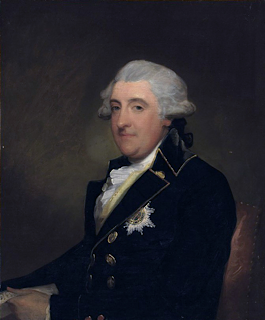
(Pictured: “Portrait of John FitzGibbon, 1st Earl of Clare,” painting by Gilbert Stuart, 1789)
When Oisín Kelly completes his statue of the union leader James Larkin in 1978, he does not know that it is to be among his final works. He is at the height of his power, the go-to sculptor for public commissions in Ireland.
That Larkin would be commemorated by a monument in Dublin is proposed in 1959 by the Workers’ Union of Ireland (WUI), which Larkin had set up in 1924, after his expulsion from the Irish Transport and General Workers’ Union (ITGWU), which he had also established. But it is 1974, the centenary of Larkin’s birth, before the commemoration gets under way. Larkin had claimed to be two years younger than he was, which results in his centenary celebrations taking place in 1976 and the date of his birth inscribed on the monument having to be corrected to read 1874.
The memorial committee, comprising the great and the good of the union, includes Donal Nevin, who is instrumental in choosing the sculptor. Kelly is an inspired choice, as the resulting statue is one of the most dynamic public works in the centre of Dublin. Only John Henry Foley’s representation of Henry Grattan, from 1876, on College Green, exudes a similar energy. In these two works, emphatic gesture and naturalistic treatment of the men’s clothing create a liveliness in the figures. Foley’s 19th-century concern is to create a contrast with his statues of Oliver Goldsmith and Edmund Burke, positioned opposite, in the grounds of Trinity College Dublin (TCD). Kelly’s 20th-century aspiration is to please both his patron and the public.
Kelly, who had not known Larkin, chooses to use a familiar image of the man. Joseph Cashman had photographed Larkin addressing a crowd in Dublin in 1923. He looked so vital and passionate that the photograph has become iconic.
Once his maquette is approved, Kelly begins work on the plaster model in the backyard of his family home, in Firhouse, outside Dublin. His neighbour Eddie Golden, the actor, poses for the statue. When the full-size model is completed, it is transferred to Dublin Art Foundry, where it is cast in bronze by Leo Higgins and John Behan.
Although ready for unveiling in 1978, a delay ensues while attempts are made to quarry a colossal stone for the pedestal. Larkin’s son Denis is keen that it be carved from a single piece of granite, which proves impossible. Also, PresidentPatrick Hillery’s decision to perform the unveiling necessitates careful consideration of his speech. The writing of several drafts ensures that his language is neither controversial nor ambiguous. The word “comrades,” present in early drafts, does not appear in the final text. The statue is unveiled on June 15, 1979.
The sculpture has a commanding presence on O’Connell Street, where it has become one of the most popular monuments in Dublin. It regularly serves as a site of celebration and demonstration and is often a central motif in photographs of union members and politicians of the left gathering for anniversaries, or of crowds of the aggrieved and dissatisfied marching past.
The quotation on the pedestal, in French, Irish and English, dates back to the French Revolution: “The great appear great because we are on our knees. Let us rise.”
(From: “Modern Ireland in 100 Artworks: 1978 – James Larkin statue, by Oisín Kelly” by Paula Murphy, The Irish Times, http://www.irishtimes.com, January 30, 2016)
Brownlow’s father, grandfather, and great-grandfather had been MPs, and in 1753 he wins a hotly contested by-election in which his opponents accuse him of papist and Jacobite sympathies. The unsuccessful candidate is Francis Caulfeild, brother of James, 1st Earl of Charlemont, his petition to parliament causing a furor and is defeated by only one vote in one of the most celebrated electoral struggles of the day. Brownlow represents the county for over forty years, from 1753 until his death. In 1753, he supports the government on the controversial money bill.
Brownlow marries Judith, daughter of the Rev. Charles Meredyth, Dean of Ardfert, of County Meath, on May 25, 1754. They have two sons. After her death in Lyon, France, in October 1763, he marries Catherine, daughter of Roger Hall of Newry, County Down, on November 25, 1765. They have two sons and five daughters, three who marry into the nobility. In 1758, he is one of the Wide Streets commissioners in Dublin and owns an imposing house in Merrion Square. He is a trustee of the linen board in Ulster, and makes many improvements to his estate, castle, and demesne, the local church, and the town of Lurgan. However, it is alleged that private roads in his demesne were built with public money. He is one of a few landowners in County Armagh who are believed to have misappropriated the unusually high county cess levied by the grand jury, of which he is a member. In 1758, he suggests that salaries be paid to government officials, and one official, Henry Meredyth, his first wife’s uncle, subsequently receives an annual salary of £500.
In June 1763, large numbers of Presbyterian farmers and weavers, calling themselves the Hearts of Oak, in a notable show of dissatisfaction with the privileges of landlords, march on the homes of the gentry to demand redress. Brownlow is in England and avoids a confrontation. Despite the allegations of abuse of public money, he is generally recognised as one of the more independent and reform-minded MPs of the day. He captains a Volunteer troop of dragoons which march from Lurgan to assist Belfast after the French commander François Thurot lands at Carrickfergus in 1760. As one of the supporters of Henry Grattan, he is prominent in the Volunteer movement of the 1780s. He is captain of the Lurgan Volunteer company and lieutenant-colonel of the northern battalion and backs the movement in parliament until displeased by the Volunteer national convention (November 10 – December 2, 1783), which seeks franchise reform and seems to challenge the authority of the existing parliament.
Brownlow subscribes £9,000 to help found the Bank of Ireland in 1783, and in parliament on February 7, 1785, vigorously opposes William Pitt‘s proposals on Ireland’s commercial relations with England, seeing in them the danger that Ireland would become a “tributary nation.” He is appointed a privy councilor in 1765. He organises horse races in his locality and is a talented harpsichord player. After his death on October 28, 1794, the Belfast News Letter prints an unusually long and glowing tribute, expressing admiration for his “incorruptible integrity” and patriotism, as well as two poetic elegies. He is succeeded by his son William Brownlow.
(From: “Brownlow, William” by Linde Lunney, Dictionary of Irish Biography, http://www.dib.ie, October 2009 | Pictured: Portrait of the Right Honorable William Brownlow, oil on canvas by Gilbert Stuart, circa 1790)
Ryan attributes to Pearse the saying “[G]ive me a hundred men and I will free Ireland!” He becomes part of a group of former students lodging in St. Enda’s while they go to university who join the Irish Republican Brotherhood (IRB). They meet in a safe house at Rathfarnham in 1911. The men take the tram from Rathfarnham to Nelson’s Pillar in central Dublin. Pearse once told his friend, “Let them talk! I am the most dangerous revolutionary of the whole lot of them!” In 1911, the Dungannon Clubs revive the Volunteers Militia movement. These clubs are not initially successful in Dublin but are more so in Belfast amongst nationalists. One of the northern members is the Dubliner Oscar Traynor, in his youth a professional footballer with Belfast Celtic F.C., later a war hero and later again a politician and Minister for Posts and Telegraphs.
Eoin MacNeill is appointed leader of the Irish Volunteers. Ryan writes that Pearse, a risk-taker and idealist, tells him MacNeill is “too tactful.” MacNeill is prepared to entertain the Irish Parliamentary Party with negotiations. Ryan quotes Pearse as saying, “[MacNeill] has the reputation of being tactful, but his tact consists in bowing to the will of the Redmondites every time. He never makes a fight except when they assail his personal honour, when he bridles up at once… very delicate position… he is weak, hopelessly weak.”
Pearse tells Ryan that MacNeill is “a Grattan come to life again.” Henry Grattan is a constitutional orator and MP in the Protestant-only 18th-century Irish House of Commons, but one of those who fiercely opposes the notorious Acts of Union 1800, secured by massive bribery (which is then repaid out of Irish taxes), making Ireland part of the United Kingdom. Moreover, MacNeill is an “inconclusive ditherer.” He wants the Irish Volunteers to be apolitical.
The Easter Rising is preceded by the revelation of the “Castle Document,” a plan by the British government to arrest the leaders of the Irish Volunteers and Irish Citizen Army and other radicals. Ryan claims that this document, presented to MacNeill on the Wednesday before the Rising and said to have been stolen from high-ranking British staff in Dublin Castle, is a forgery. Some claim that it is concocted by Joseph Plunkett with the implicit approval of Catholic Archbishop Cullen of Dublin, a sympathiser with Dublin Castle and Redmond’s war stratagem. “Forgery is a strong word,” Ryan says, “but that in its final form the document was a forgery no doubt can exist whatever.” Modern interpretation from Charles Townshend has judged the document to be genuine, and the opinion attributed to the Archbishop’s Palace as circumstantial. Grace Gifford, Plunkett’s widow, says that she was with Plunkett when he deciphered it at Larkfield House. Prior to his execution, Seán Mac Diarmada is met by a priest, and makes the assumptive response that it is a fraudulent document.
Ryan fights through the Easter Rising from April 24, 1916, in the General Post Office (GPO) under murderous artillery fire and describes the battle vividly in his witness statement to the Bureau of Military History. He describes the garrison retreating to Moore Street and quotes Pearse’s sculptor brother Willie Pearse, who is executed a few days later, as saying “Connolly has been asked out to negotiate. They have decided to go to save the men from slaughter, for slaughter it is.”
Ryan fights in the Irish War of Independence and afterwards writes about his experiences. However, the Irish Civil War which follows from June 1922 to April 1923 repels him. He cannot accept that Irishmen would fight Irishmen.
Ryan marries Sarah Hartley in 1933. In 1939 they return to Ireland, where he edits the Torch, a Labour paper. Finding his views at odds with the Labour Party‘s official line, publication ceases in 1944. He and his wife then move to Swords in north County Dublin, where they operate a poultry farm.
In 1783 FitzGerald visits the West Indies before returning to Ireland, where his brother, William FitzGerald, 2nd Duke of Leinster, has procured Edward’s election to the Irish Parliament as an MP for Athy, a seat he holds until 1790. In Parliament he acts with the small Opposition Irish Patriot Party group led by Henry Grattan but takes no prominent part in debate. In the spring of 1786, he takes the then unusual step for a young nobleman of entering the Military College, Woolwich, after which he makes a tour through Spain in 1787. Dejected by unrequited love for his cousin Georgina Lennox, he sails for New Brunswick to join the 54th Regiment with the rank of Major.
In April 1789, guided by compass, FitzGerald traverses the country with a brother officer from Fredericton, New Brunswick to Quebec, falling in with Indians by the way, with whom he fraternizes. He accomplishes the journey in twenty-six days and establishes a shorter practicable route than that hitherto followed. The route crosses the extremely rugged and heavily forested northern part of the present state of Maine. In a subsequent expedition he is formally adopted at Detroit by the Bear clan of the Mohawk with the name “Eghnidal,” and makes his way down the Mississippi River to New Orleans, whence he returns to England.
Finding that his brother has procured his election for Kildare County, a seat he holds from 1790 to 1798, and desiring to maintain political independence, FitzGerald refuses the command of an expedition against Cádiz offered him by William Pitt the Younger and devotes himself for the next few years to the pleasures of society and to his parliamentary duties. He is on terms of intimacy with his first cousin Charles Fox, with Richard Sheridan and other leading Whigs. According to Thomas Moore, FitzGerald is only one of numerous suitors of Sheridan’s first wife, Elizabeth, whose attentions are received with favour. She conceives a child by him, a baby girl who is born on March 30, 1792.
His Whig connections, together with his transatlantic experiences, predisposed FitzGerald to sympathize with the doctrines of the French Revolution, which he embraces enthusiastically when he visits Paris in October 1792. He lodges with Thomas Paine and listens to the debates in the Convention. While in Paris, he becomes enamoured of a young girl named Pamela whom he chances to see at the theatre, and who has a striking likeness to Elizabeth Sheridan. On December 27, 1792, he and Pamela are married at Tournai, one of the witnesses being Louis Philippe, afterwards King of the French. In January 1793 the couple reaches Dublin.
Ireland is by then seething with dissent which is finding a focus in the increasingly popular and revolutionary Society of the United Irishmen, which has been forced underground by the outbreak of war between France and Britain in 1793. FitzGerald, fresh from the gallery of the Convention in Paris, returns to his seat in the Irish Parliament and immediately springs to their defence. Within a week of his return, he is ordered into custody and required to apologise at the bar of the House of Commons for violently denouncing in the House a government proclamation which Grattan had approved for the suppression of the United-Irish attempt to revive the Irish Volunteer movement with a “National Guard.” However, it is not until 1796 that he joins the United Irishmen, who by now have given up as hopeless the path of constitutional reform and whose aim, after the recall of Lord Fitzwilliam in 1795, is nothing less than the establishment of an independent Irish republic.
In May 1796 Theobald Wolfe Tone is in Paris endeavouring to obtain French assistance for an insurrection in Ireland. In the same month, FitzGerald and his friend Arthur O’Connor proceed to Hamburg, where they open negotiations with the Directory through Reinhard, French minister to the Hanseatic towns. The Duke of York, meeting Pamela at Devonshire House on her way through London with her husband, tells her that his plans are known and advises that he should not go abroad. The proceedings of the conspirators at Hamburg are made known to the government in London by an informer, Samuel Turner. The result of the Hamburg negotiations is Louis Lazare Hoche‘s abortive expedition to Bantry Bay in December 1796.
In September 1797 the Government learns from the informer Leonard McNally that FitzGerald is among those directing the conspiracy of the United Irishmen, which is now quickly maturing. Thomas Reynolds, converted from a conspirator to an informer, keeps the authorities posted in what is going on, though lack of evidence produced in court delays the arrest of the ringleaders. But on March 12, 1798, Reynolds’ information leads to the seizure of a number of conspirators at the house of Oliver Bond. FitzGerald, warned by Reynolds, is not among them.
As a fellow member of the Ascendancy class, the Government are anxious to make an exception for FitzGerald, avoiding the embarrassing and dangerous consequences of his subversive activities. They communicate their willingness to spare him from the normal fate meted out to traitors. FitzGerald however refuses to desert others who cannot escape, and whom he has himself led into danger. On March 30 the government proclamation of martial law authorising the military to act as they see fit to crush the United Irishmen leads to a campaign of vicious brutality in several parts of the country.
FitzGerald’s social position makes him the most important United Irish leader still at liberty. On May 9 a reward of £1,000 is offered by Dublin Castle for his apprehension. Since the arrests at Bond’s house, he has been in hiding. The date for the rising is finally fixed for May 23 and FitzGerald awaits the day hidden by Mary Moore above her family’s inn in Thomas Street, Dublin.
Tipped off that the house is going to be raided, Moore turns to Francis Magan, a Catholicbarrister and trusted sympathiser, who agrees to hide Fitzgerald. Making its way to Magan’s house on May 18, Fitzgerald’s party is challenged by Major Henry Sirr and a company of Dumbarton Fencibles. Moore escapes with Fitzgerald and takes him back to Thomas Street to the house of Nicholas Murphy.
Moore explains to Magan what had happened and, unbeknownst to her, Magan informs Dublin Castle. The Moore house is raided that day. Mary, running to warn the Leinster Directory meeting nearby in James’s Gate, receives a bayonet cut across the shoulders. That same evening Sirr storms Murphy’s house where FitzGerald is in bed suffering from a fever. Alerted by the commotion, he jumps out of bed and, ignoring the pleas of the arresting officers to surrender peacefully, he stabs one and mortally wounds the other with a dagger in a desperate attempt to escape. He is secured only after Major Sirr shoots him in the shoulder.
FitzGerald is conveyed to New Prison, Dublin where he is denied proper medical treatment. After a brief detention in Dublin Castle he is taken to Newgate Prison, Dublin where his wound, which has become infected, becomes mortally inflamed. His wife, whom the government probably has enough evidence to convict of treason, has fled the country, never to see her husband again, but FitzGerald’s brother Henry and his aunt Lady Louisa Conolly are allowed to see him in his last moments. He dies at the age of 34 on June 4, 1798, as the rebellion rages outside. He is buried the next day in the cemetery of St. Werburgh’s Church, Dublin. An Act of Attainder confiscating his property is passed as 38 Geo. 3 c. 77 but is eventually repealed in 1819.
Curran is the eldest of five children of James Curran, seneschal of the Newmarket manor court, and Sarah, née Philpot. The Curran family are said to have originally been named Curwen, their ancestor having come from Cumberland as a soldier under Oliver Cromwell during the Cromwellian conquest of Ireland, originally settling in County Londonderry.
Curran is educated at Midleton College, County Cork, before studing law at Trinity College Dublin. He continues his legal studies at King’s Inns and the Middle Temple. He is called to the Irish Bar in 1775. Upon his first trial, his nerves get the better of him and he cannot proceed. His short stature, boyish features, shrill voice and a stutter are said to have impacted his career, and earn him the nickname “Stuttering Jack Curran.”
However, Curran can speak passionately in court on subjects close to his heart. He eventually overcomes his nerves and gets rid of his speech impediment by constantly reciting Shakespeare and Bolingbroke in front of a mirror, becoming a noted orator and wit. His championing of popular Irish causes such as Catholic emancipation make him one of the most popular lawyers in Ireland. He is also fluent in the Irish language which is still the language of the majority at the time. He writes a large amount of humorous and romantic poetry.
The case which cements Curran’s popularity is that of Father Neale and St. Leger St. Leger, 1st Viscount Doneraile at the County Cork Assizes in 1780. Having a passion for lost causes, he represents the priest and wins over the jury by setting aside the issue of religion.
A liberal Protestant whose politics are similar to Henry Grattan, Curran employs all his eloquence to oppose the illiberal policy of the Government, and also the Union with Britain. He stands as Member of Parliament (MP) for Kilbeggan in 1783. He subsequently represents Rathcormack (1790-98) and Banagher from 1800 until the Act of Union in 1801, which bitterly disappoints him, forcing him to contemplate emigrating to the United States.
In 1798, Ireland rebels against the British House of Commons and lack of reforms on Catholic emancipation. The British defeat the Irish rebels in numerous battles and soon establish their control over the country by 1799. Many of the Irish ring leaders are charged with treason and are facing death sentences. Curran plays an important role in court defending the leaders of the United Irishmen.
Curran’s youngest daughter Sarah‘s romance with United Irishmen leader Robert Emmet scandalises Curran, who had tried to split them up. He is arrested and agrees to pass their correspondence on to Standish O’Grady, 1st Viscount Guillamore, the Attorney-General for Ireland. In the circumstances he cannot defend Emmet. He is suspected of involvement in Emmet’s Rebellion, but is completely exonerated. However, his friend Arthur Wolfe, 1st Viscount Kilwarden, is killed by the rebels, and he loses any faith in the beliefs of the United Irishmen. Emmet is found guilty of rebelling against the Crown and the union between Great Britain and Ireland and is hanged in 1803. Curran disowns Sarah, who dies of tuberculosis five years later.
Curran is appointed Master of the Rolls in Ireland in 1806, following William Pitt the Younger‘s replacement by a more liberal cabinet.
Curran retires in 1814 and spends his last three years in London. He dies in his home in Brompton on October 14, 1817. In 1837, his remains are transferred from Paddington Cemetery, London to Glasnevin Cemetery in Dublin, where they are laid in an 8-foot-high classical-style sarcophagus. In 1845 a white marble memorial to him, with a carved bust by Christopher Moore, is placed near the west door of St. Patrick’s Cathedral, Dublin.