seamus dubhghaill

Promoting Irish Culture and History from Little Rock, Arkansas, USA


Leave a comment

Death of Dame Jean Iris Murdoch, Novelist & Philosopher

Dame Jean Iris Murdoch DBE, Irish and British novelist and philosopher, dies in Oxford, England, on February 8, 1999. She is best known for her novels about good and evil, sexual relationships, morality, and the power of the unconscious. In 2008, The Times ranks her twelfth on a list of “The 50 greatest British writers since 1945.”

Murdoch is born on July 15, 1919, in Phibsborough, Dublin, the daughter of Irene Alice (née Richardson) and Wills John Hughes Murdoch. Her father, a civil servant, comes from a mainly Presbyterian sheep farming family from Hillhall, County Down. In 1915, he enlists as a soldier in King Edward’s Horse and serves in France during World War I before being commissioned as a second lieutenant. Her mother trains as a singer before Iris is born and is from a middle-class Church of Ireland family in Dublin. Her parents first meet in Dublin when her father is on leave and are married in 1918. Iris is the couple’s only child. When she is a few weeks old the family moves to London, where her father had joined the Ministry of Health as a second-class clerk.  She is a second cousin of the Irish mathematician Brian Murdoch.

Murdoch is brought up in Chiswick and educated in progressive independent schools, entering the Froebel Demonstration School in 1925 and attending Badminton School in Bristol as a boarder from 1932 to 1938. In 1938 she goes up to Somerville College, Oxford, with the intention of studying English, but switches to “Greats“, a course of study combining classics, ancient history, and philosophy. At Oxford she studies philosophy with Donald M. MacKinnon and attends Eduard Fraenkel‘s seminars on Agamemnon. She is awarded a first-class honours degree in 1942. After leaving Oxford she goes to work in London for HM Treasury. In June 1944 she leaves the Treasury and goes to work for the United Nations Relief and Rehabilitation Administration (UNRRA). At first, she is stationed in London at the agency’s European Regional Office. In 1945 she is transferred first to Brussels, then to Innsbruck, and finally to Graz, Austria, where she works in a refugee camp. She leaves the UNRRA in 1946.

From 1947 to 1948 Murdoch studies philosophy as a postgraduate at Newnham College, Cambridge. She meets Ludwig Wittgenstein at Cambridge but does not hear him lecture, as he had left his Trinity College professorship before she arrives. In 1948 she becomes a fellow of St. Anne’s College, Oxford, where she teaches philosophy until 1963. From 1963 to 1967 she teaches one day a week in the General Studies department at the Royal College of Art.

In 1956 Murdoch marries John Bayley, a literary critic, novelist, and from 1974 to 1992 Warton Professor of English at Oxford University, whom she had met in Oxford in 1954. The unusual romantic partnership lasts more than forty years until Murdoch’s death. Bayley thinks that sex is “inescapably ridiculous.” She in contrast has “multiple affairs with both men and women which, on discomposing occasions, Bayley witnesses for himself.”

Murdoch’s first novel, Under the Net, is published in 1954 and is selected in 1998 as one of Modern Library’s 100 best English-language novels of the 20th century. She had previously published essays on philosophy, and the first monograph about Jean-Paul Sartre published in English. She goes on to produce 25 more novels and additional works of philosophy, as well as poetry and drama.

Murdoch’s 1978 novel The Sea, the Sea wins the Booker Prize. Her other books include The Bell (1958), A Severed Head (1961), The Red and the Green (1965), The Nice and the Good (1968), The Black Prince (1973), Henry and Cato (1976), The Philosopher’s Pupil (1983), The Good Apprentice (1985), The Book and the Brotherhood (1987), The Message to the Planet (1989), and The Green Knight (1993).

In 1976 she is named a Commander of the Order of the British Empire and in 1987 is made a Dame Commander of the Order of the British Empire by Queen Elizabeth II for services to literature. She is awarded honorary degrees by the University of Bath (D.Litt, 1983), University of Cambridge (1993) and Kingston University (1994), among others. She is elected a Foreign Honorary Member of the American Academy of Arts and Sciences in 1982.

Murdoch’s last novel, Jackson’s Dilemma, is published in 1995. She is diagnosed with Alzheimer’s disease in 1997 and dies on February 8, 1999, in Oxford. There is a bench dedicated to her in the grounds of Lady Margaret Hall, Oxford, where she enjoyed walking.


Leave a comment

Birth of Brian Cowen, Former Taoiseach & Leader of Fianna Fáil

Brian Cowen, Irish former politician who is Taoiseach and Leader of Fianna Fáil from 2008 to 2011, is born in Tullamore, County Offaly, on January 10, 1960.

Cowen is exposed to politics at a young age. His grandfather was a councillor in the Fianna Fáil party, and his father, Bernard Cowen, held a seat in Dáil Éireann, the lower house of the Oireachtas (Irish parliament). He is an exemplary debater in school and often speaks at his father’s election rallies. He studies at University College Dublin and at the Incorporated Law Society of Ireland, where he is trained as a solicitor. His father’s death in 1984 prompts a by-election for the seat he had held in the Dáil. At the age of 24, he captures the seat, becoming one of the youngest members ever to sit in the Dáil.

Cowen’s political mentor is Albert Reynolds, who becomes Taoiseach in 1992 when Fianna Fáil is in a coalition government with the Progressive Democrats. He is an outspoken critic of the coalition, famously stating about the Progressive Democrats, “When in doubt, leave them out!” He serves as Minister for Labour (1992–93), and in 1993, after the breakup of the Fianna Fáil–Progressive Democrats government, he helps to negotiate the short-lived coalition of Fianna Fáil and the Labour Party. He then serves as Minister for Transport, Energy, and Communications (1993–94), leaving office after Fianna Fáil is forced into opposition by the formation of a Fine Gael–Labour–Democratic Left coalition.

During Fianna Fáil’s years out of government, Cowen serves successively as opposition Spokesperson for Agriculture, Food, and Forestry (1994–97) and Spokesperson for Health (1997). Following elections in 1997, Fianna Fáil leader Bertie Ahern forms a coalition government with the Progressive Democrats, and the party once again returns to power. Cowen serves as Minister for Health and Children (1997–2000), Minister for Foreign Affairs (2000–04), and Minister for Finance (2004–08). In June 2007 he was appointed Tánaiste.

Cowen is known for his sharp tongue and sometimes rough-hewn manner, but he is also recognized for his fierce intelligence, wit, and jovial demeanour. A combative politician and loyal party member, he is for many years seen as an obvious successor to Ahern. In April 2008, amid an investigation into possible past financial misconduct, Ahern announces that he will resign as Taoiseach and Leader of Fianna Fáil the following month. Cowen, who had remained supportive of Ahern throughout, is elected Leader of Fianna Fáil in April 2008. He becomes Taoiseach the following month and is faced with leading the country amid the global financial crisis that creates Ireland’s worst economy since the 1930s.

Cowen’s government oversees the bailout of Ireland’s banking system, which had been thrown into crisis by the collapse of the housing market, but the rescue comes at the cost of a skyrocketing deficit. As the country’s economic difficulties deepen, he seeks a cure that he hopes would obviate the need of foreign intervention, proposing an increase in income taxes and cuts in services. In November 2010, however, as concern for Ireland’s financial stability grows among its eurozone partners, he agrees to accept a bailout of more than $100 million from the European Union and the International Monetary Fund. There is concern in Ireland that one condition for foreign aid might be an increase in Ireland’s comparatively low corporate taxes. The Green Party, Fianna Fáil’s junior partner in the governing coalition, responds to the situation by calling for early elections.

In mid-January 2011 Cowen’s leadership of Fianna Fáil is challenged by Minister for Foreign Affairs Micheál Martin, partly in response to rumours that had swirled of a golf course meeting that had taken place between the Taoiseach and the former head of the Anglo Irish Bank before the government’s bailout of the Irish banking industry. He survives a leadership vote, but about one-third of the party’s parliamentary bloc votes against him. In a rapid succession of events that occur over the course of a few days, an unsuccessful reshuffle of the cabinet follows the resignation of six cabinet ministers, after which Cowen calls for an election to be held on March 11 and then announces that he will step down as party leader but continue as caretaker Taoiseach until the election. The Green Party then withdraws from the ruling coalition, forcing an even earlier election. Waiting until the parliament passes a finance bill that is necessary to meet the conditions of an International Monetary Fund–European Union loan but which imposes austerity measures that had proved very unpopular with much of the Irish public, he officially calls the election for February 25. Martin takes over as the Leader of Fianna Fáil, which suffers a crushing defeat in the election at the hands of Fine Gael.

In May 2014, Cowen becomes part of the board of Topaz Energy. He is appointed to the board of Beacon Hospital in February 2015. In July 2017, he is conferred with an honorary doctorate from the National University of Ireland. During his 50-minute acceptance speech he criticises the EU for its behaviour towards Ireland during the financial crisis and expresses regret that so many jobs were lost during the recession. Following the conferring ceremony, the NUI faces considerable public criticism for deciding to make the award to Cowen. Former (and founding) President of the University of Limerick, Edward M. Walsh, announces that he will hand back his own honorary doctorate in protest, and does so on November 14, 2018.

On July 5, 2019, Cowen is admitted to Beacon Hospital after suffering a major brain hemorrhage. He is then transferred to St. Vincent’s University Hospital where he spends five months before transferring to a physical rehabilitation facility. As of late 2020, while he is still in hospital following a stroke the previous year, he has been making steady progress.


Leave a comment

Birth of John Boland, Politician & Olympic Medalist

John Mary Pius Boland, Irish Nationalist politician, is born at 135 Capel Street, Dublin, on September 16, 1870. He serves as a Member of Parliament (MP) in the House of Commons of the United Kingdom of Great Britain and Ireland and as a member of the Irish Parliamentary Party for South Kerry (1900–1918). He is also noteworthy as a gold medalist tennis player at the first modern Olympics in Athens in 1896.

Boland is born to Patrick Boland (1840–1877), businessman, and Mary Donnelly. Following the death of his mother in 1882, he is placed with his six siblings under the guardianship of his uncle Nicholas Donnelly, auxiliary bishop of Dublin.

Boland is educated at two private Catholic schools, one Irish, the second English, and both of whose existence and evolution are influenced by John Henry Newman – the Catholic University School, Dublin, and The Oratory School, Birmingham. His secondary education at the two schools helps give him the foundation and understanding to play an influential role in the politics of Great Britain and Ireland at the beginning of the 20th century, when he is a member of the Irish Parliamentary Party which pursues constitutional Home Rule.

In 1892 Boland graduates with a BA from London University. He studies for a semester in Bonn, Germany, where he is a member of Bavaria Bonn, a student fraternity that is member of the Cartellverband. He studies law at Christ Church, Oxford, graduating with a BA in 1896 and MA in 1901. Although called to the Bar in 1897, he never practises.

Boland is the first Olympic champion in tennis for Great Britain and Ireland at the first modern Olympics, which takes place in Athens in 1896. He visits his friend Thrasyvoulos Manos in Athens during the Olympics, and Manos, a member of the organising committee, enters Boland in the tennis tournament. Boland promptly wins the singles tournament, defeating Friedrich Traun of Germany in the first round, Evangelos Rallis of Greece in the second, Konstantinos Paspatis of Greece in the semifinals, and Dionysios Kasdaglis of Greece in the final.

Boland then enters the doubles event with Traun, the German runner whom he had defeated in the first round of the singles. Together, they win the doubles event. They defeat Aristidis and Konstantinos Akratopoulos of Greece in the first round, have a bye in the semifinals, and defeat Demetrios Petrokokkinos of Greece and Dimitrios Kasdaglis in the final. When the Union Flag and the German flag are run up the flagpole to honour Boland and Traun’s victory, Boland points out to the man hoisting the flags that he is Irish, adding “It’s a gold harp on a green ground, we hope.” The officials agree to have an Irish flag prepared.

Following a visit to Kerry, Boland becomes concerned about the lack of literacy among the native population, as he also has a keen interest in the Irish language.

In 1908, Boland is appointed a member of the commission for the foundation of the National University of Ireland (NUI). From 1926 to 1947, he is General Secretary of the Catholic Truth Society. He receives a papal knighthood, becoming a Knight of St. Gregory in recognition for his work in education, and in 1950 he is awarded an honorary doctorate of Laws by the NUI.

Boland marries Eileen Moloney (1876–1937), daughter of an Australian Dr. Patrick Moloney, at SS Peter and Edward, Palace-street, Westminster, on October 22, 1902. They have one son and five daughters. His daughter Honor Crowley (née Boland) succeeds her husband, Frederick Crowley, upon his death sitting as Fianna Fáil TD for South Kerry from 1945 until her death in 1966. His daughter Bridget Boland is a playwright who writes The Prisoner.

Boland dies at the age of 87 at his home in London on Saint Patrick’s Day, March 17, 1958.


Leave a comment

Death of James Hamilton, 3rd Duke of Abercorn

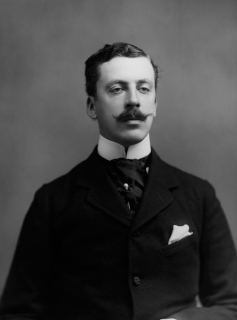
James Albert Edward Hamilton, 3rd Duke of Abercorn, dies on September 12, 1953 in London, England.

Hamilton is born in Hamilton Place, Piccadilly, London, on November 30, 1869. Styled Marquess of Hamilton between 1885 and 1913, he is a British peer and Unionist politician. He serves as the first Governor of Northern Ireland, a post he holds between 1922 and 1945. He is a great-grandfather of Diana, Princess of Wales.

Hamilton is the eldest son of James Hamilton, 2nd Duke of Abercorn, and godson of the Prince of Wales. His mother, Lady Mary Anna, is the fourth daughter of Richard Curzon-Howe, 1st Earl Howe. He is educated at Eton College and subsequently serves first in the Royal Inniskilling Fusiliers until 1892 when he joins the 1st Life Guards. He is later transferred as major to the North Irish Horse.

In early 1901 he accompanies his father on a special diplomatic mission to announce the accession of King Edward to the governments of Denmark, Sweden and Norway, Russia, Germany, and Saxony.

In the 1900 United Kingdom general election in Ireland, Hamilton stands successfully as Unionist candidate for Londonderry City, and three years later he becomes Treasurer of the Household, a post he holds until the fall of Arthur Balfour‘s Conservative administration in 1905. After serving for a time as an Opposition whip, Hamilton succeeds his father as third Duke of Abercorn in 1913. In 1922, he is appointed governor of the newly created Northern Ireland. He also serves as Lord Lieutenant of Tyrone from 1917 until his death, having previously been a Deputy Lieutenant for County Donegal. Hamilton proves a popular royal representative in Northern Ireland and is reappointed to the post in 1928 after completing his first term of office. In 1931, he declines the offer of the governor generalship of Canada, and three years later he is again reappointed governor for a third term. He remains in this capacity until his resignation in July 1945.

Hamilton is made the last non-royal Knight of the Most Illustrious Order of Saint Patrick in 1922. In 1928 he becomes a Knight of the Most Noble Order of the Garter and is also the recipient of an honorary degree from the Queen’s University Belfast. He receives the Royal Victorian Chain in 1945, the same year he is sworn of the Privy Council.

Hamilton marries Lady Rosalind Cecilia Caroline Bingham, only daughter of Charles George Bingham, 4th Earl of Lucan and his wife Lady Cecilia Catherine Gordon-Lennox at St. Paul’s Church, Knightsbridge, on November 1, 1894. They have three daughters and two sons.

Hamilton dies at his London home on September 12, 1953, and is buried at Baronscourt in County Tyrone.

(Pictured: “James Albert Edward Hamilton, 3rd Duke of Abercorn” by Alexander Bassano, Collodion Negative, 1894, Photographs Collection, National Portrait Gallery, London)


Leave a comment

Birth of Maureen Toal, Stage & Television Actress

Maureen Toal, Irish stage and television actress whose professional career lasts for more than sixty years, is born on September 7, 1930 in Fairview, Dublin.

Toal begins performing at the Abbey Theatre in Dublin in 1946, when she is just sixteen years old. She becomes a fixture at the theatre, portraying Bessie Burgess in Seán O’Casey‘s The Plough and the Stars and the Widow Quinn in John Millington Synge‘s The Playboy of the Western World. She also appears in several one woman shows, including Baglady, which is written by Irish playwright Frank McGuinness.

Another playwright, John B. Keane, writes the role of Mame Fadden in his play, The Change in Mame Fadden, specifically for Toal. Hugh Leonard also pens characters in his plays A life and Great Big Blonde with the intention of casting Toal in the parts. She is best known to Irish television audiences for her role as Teasy McDaid on RTÉ One‘s Glenroe during the 1990s.

In 1952, Toal marries fellow Irish actor Milo O’Shea. They divorce in 1974.

The University College Dublin awards Toal an honorary doctorate in literature in 2010.

Toal dies in her sleep at her home in Sandycove, Dublin, on August 24, 2012, two weeks before her 82nd birthday. She is survived by her sons, Steven and Colm O’Shea, two sisters, one brother, and three grandchildren.


Leave a comment

Death of Jazz Guitarist Louis Stewart

Louis Stewart, Irish jazz guitarist, dies in Harold’s Cross, Dublin on August 20, 2016.

Born on January 5, 1944 in Waterford, County Waterford, Stewart grows up in Dublin. He begins playing guitar when he is thirteen, influenced by guitarists Les Paul and Barney Kessel. He begins his professional career performing in Dublin showbands. In 1968, he wins an award as the most outstanding soloist at the Montreux Jazz Festival. Soon after, he spends three years with Benny Goodman.

Stewart records his debut album, Louis the First, in Dublin, and then records in London with Billy Higgins, Peter Ind, Sam Jones, Red Mitchell, and Spike Robinson. From the mid to late 1970s, he works with George Shearing, touring the United States, Brazil, and playing European festivals, and recording eight albums, including several for the MPS Records label in a virtuosic trio with Shearing and the Danish bassist Niels-Henning Ørsted Pedersen. He also appears on albums by Joe Williams and J. J. Johnson, and works with many other jazz musicians.

In 1981, ahead of Stewart’s debut in the United States as a leader, The New York Times states, “Mr. Stewart seems to have his musical roots in bebop. He leans toward material associated with Charlie Parker and he spins out single-note lines that flow with an unhurried grace, colored by sudden bright, lively chorded phrases. His up-tempo virtuosity is balanced by a laid-back approach to ballads, which catches the mood of the piece without sacrificing the rhythmic emphasis that keeps it moving.”

Stewart is prominently featured in Norman Mongan’s book, The History Of The Guitar In Jazz, in a chapter devoted to guitarists who are considered to be contemporary masters (along with players such as Jim Hall, Pat Martino, and George Benson). In a review of his live album Overdrive (Hep, 1993), AllMusic states, “Louis Stewart is one of the all-time greats, and it is obvious from the first notes he plays on any occasion.”

Stewart receives an honorary doctorate from Trinity College, Dublin, in 1998. In 2009, he becomes only the second jazz musician to be elected to Aosdána, an Irish affiliation of people engaged in literature, music, and visual arts that was established by the Irish Arts Council in 1981 to honour those whose work has made an outstanding contribution to the creative arts in Ireland.

In 2015, Stewart is diagnosed with cancer and dies on August 20, 2016 in Harold’s Cross, Dublin, at the age of 72.


Leave a comment

Birth of Classical Scholar Sir William Ridgeway

Sir William Ridgeway, FBA, Anglo-Irish classical scholar and the Disney Professor of Archaeology at the University of Cambridge, is born on August 6, 1853, at Ballydermot, Kings County (now County Offaly).

Ridgeway is the son of Rev. John Henry Ridgeway and Marianne Ridgeway. He is a direct descendant of one of Oliver Cromwell’s settlers in Ireland. He is educated at Portarlington School and Trinity College Dublin, after which he studies at Peterhouse, Cambridge then Gonville and Caius College, Cambridge, completing the Classical tripos there in 1880.

In 1880, Ridgeway marries Lucinda Maria Kate Samuels in Rathdown, County Dublin. Their daughter Lucy Marion Ridgeway (1882–1958) marries economist John Archibald Venn in 1906.

In 1883, Ridgeway is elected Professor of Greek at Queen’s College, Cork, then Disney Professor of Archaeology at Cambridge in 1892. He also holds tenure as Gifford lecturer in Religion at the University of Aberdeen from 1909 to 1911 from which is published The Evolution of Religions of Ancient Greece and Rome.

Ridgeway contributes articles to the Encyclopedia Biblica (1903), Encyclopædia Britannica (1911) and writes The Origin of Metallic Currency and Weight Standards (1892), and The Early Age of Greece (1901) which are significant works in Archaeology and Anthropology.

Ridgeway is President of the Royal Anthropological Institute of Great Britain and Ireland from 1908-10 and is instrumental in the foundation of the Cambridge school of Anthropology.

Ridgeway receives an honorary Doctorate of Letters (D.Litt.) from the University of Dublin in June 1902 and is elected a Fellow of the British Academy in 1904. For his research on horses, he receives the Doctor of Science (Sc.D.) of Cambridge in 1909. He is knighted in the 1919 Birthday Honours list.

Ridgeway dies on August 12, 1926.

(Pictured: “Sir William Ridgeway” by Richard Jack (1866-1952), oil on canvas, 1921, Gonville & Caius College, University of Cambridge)


Leave a comment

Birth of Astronomer William Edward Wilson

William Edward Wilson, Irish astronomer, is born at Greenisland, County Antrim, on July 19, 1851. He is the only son of John and Frances Wilson of Daramona House, Streete, County Westmeath, and is privately educated.

Wilson becomes interested in astronomy and travels to Oran in 1870 to photograph the solar eclipse. In 1871 he acquires a reflecting telescope of 12 inches (30.5 cm) aperture and sets it up in a dome in the gardens of Daramona House. He uses it to experiment on the photography of the moon with wet plates and also begins to study solar radiation using thermopiles. In 1881, he replaces the original telescope with a Grubb reflector of 24 inches (61 cm) aperture and a new dome and mounting that has an electrically controlled clock drive. The new telescope is mounted in a two-story tower attached to the house with an attached physical laboratory, darkroom and machine shop.

Wilson’s main research effort, in partnership with P.L. Gray, is to determine the temperature of the sun using a “differential radio-micrometer” of the sort developed by C.V. Boys in 1889, which combines a bolometer and galvanometer into one instrument. The result of their measurements is an effective temperature of about 8000 °C for the sun which, after correction to deal with absorption in the earth’s atmosphere, give a value of 6590 °C, compared to the modern value of 6075 °C.

Some of Wilson’s other astronomical projects include observations on the transit of Venus, determination of stellar motion, observations of sunspots and a trip to Spain to photograph a solar eclipse. He takes a great many excellent photographs of celestial bodies such as nebulae. His astronomical findings are published in a series of memoirs such as Experimental Observations on the Effective Temperature of the Sun.

Wilson is elected a fellow of the Royal Astronomical Society in 1875 and a Fellow of the Royal Society in 1896. He receives an honorary doctorate (D.Sc.) from the University of Dublin in June 1901. He serves as High Sheriff of Westmeath for 1894.

Wilson dies on March 6, 1908 at Daramona at the relatively young age of 56, and is buried in the family plot in Steete churchyard. He had married Caroline Ada in 1886, the daughter of Capt. R.C. Granville, and they have a son and two daughters. His son donates his telescope to the University of London, where it is used for research and teaching, finally becoming a feature in Liverpool museum.


Leave a comment

Birth of Joss Lynam, Civil Engineer & Mountaineer

Joss Lynam, Irish civil engineer who is well known as a mountaineer, hillwalker, orienteer, writer and sports administrator, is born James Perry O’Flaherty Lynam in London on June 29, 1924. He is one of Ireland’s most influential figures in outdoor activities.

Lynam is born to Irish parents Edward and Martha (née Perry), both Galway natives. He and his older sister, Biddy, are both raised in London where his father works as curator of maps in the British Museum. This is where he is first introduced to orienteering and cartography. The family frequently returns to the west coast of Ireland to holiday. Here he finds his love for mountaineering and climbs his first mountain, Knocknarea in County Sligo, with his aunt.

At 18, Lynam joins the British Army and trains as an officer. He is deployed to India in 1944 under the Corps of Royal Engineers where he spends the remainder of World War II. While there, he participates in his first of many Himalayan expeditions, climbing Kolahoi Peak. When he returns in 1947, he immediately moves to Dublin and enrolls in Trinity College Dublin, after encouragement from his parents, where he begins to study engineering. He graduates and receives his degree with Upper Second Class (2.1) Honours.

Lynam is a civil engineer by profession but devotes most of his life developing the sport of mountaineering in Ireland. He climbs extensively in Ireland, Great Britain, the Alps and in India. He is leader, or deputy leader, of expeditions to Greenland, the Andes, Kashmir, Tian Shan, Garhwal, Tibet and India, including the 1987 expedition to Changtse, that is the forerunner to the successful first Irish ascent of Mount Everest in 1993.

With his involvement in developing adventure sport in Ireland Lynam is active in promoting access and developing waymarked trails. He is involved in the creation and administration of the Federation of Mountaineering Clubs in Ireland (now Mountaineering Ireland), the Association for Adventure Sports, Bord Oiliúint Sléibhte (Irish Mountain Training Board), Tiglin (National Outdoor Training Centre), Outdoor Education Ireland, and Cospóir (now Sport Ireland) and the National Waymarked Ways Advisory Committee (part of Sport Ireland).

Lynam is a founder member of the Irish Mountaineering Club (IMC) serving as president from 1982-1984. He is also a founder member of both the Irish Orienteers and Three Rock Orienteering club. He is president of the Union Internationale des Associations d’Alpinisme‘s expeditions commission in the 1990s.

Lynam writes and edits many guide books on walking and climbing in Ireland and helps create and is editor of The Mountain Log (the journal of Mountaineering Ireland).

In 2001, Lynam is awarded an honorary degree from Trinity College Dublin in acknowledgment of his volunteer work and remarkable achievements. He celebrates his 80th birthday by climbing the Paradise Lost Route and then goes on to abseil down Winder’s Slab for his 82nd birthday, both routes in Dalkey Quarry. Both climbs are to raise funds for cancer research, as he had been undergoing chemotherapy for Hodgkin’s Disease.

As a result of a short illness, which is being treated at St. Vincent’s University Hospital Dublin, Lynam dies on the January 9, 2011, aged 86. His funeral is held in the Church of St. Therésè, Mount Merrion, Dublin and then continues to Mount Jerome Cemetery and Crematorium.

After Lynam’s death, his two daughters, Clodagh and Ruth, donate his papers to his alma mater, Trinity College Dublin. These papers cover a vast range of topics such as his life and career, family, childhood, experience of war, his involvement with different mountaineering clubs, and his many writings. The collection also contains photos and slides that he captures himself of landscapes and mountaineering, and consists of maps that are collected by him and his father. There is so much material in the collection that it takes a year for the collection to be catalogued by an archivist.

Lynam’s ashes are scattered by his daughters over the Knocknarea Mountain on the February 12, 2011, being the first mountain he climbed. The Lynam Lecture is introduced in 2011 by Mountaineering Ireland in his memory and his achievements in climbing, hillwalking and mountaineering in Ireland and around the world. Every December the Lynam Lecture is held by leading national and international mountaineers and discusses the development and future of mountaineering in Ireland. Past speakers include Ines Papert, Frank Nugent and Paddy O’Leary.


1 Comment

Birth of Garry Hynes, Theatre Director & Tony Award Winner

Garry Hynes, Irish theatre director, is born in Ballaghaderreen, County Roscommon, on June 10, 1953. She is the first woman to win the prestigious Tony Award for direction of a play.

Hynes is educated at St. Louis Convent at Monaghan, the Dominican Convent at Galway, and University College Galway (UCG).

Hynes is a co-founder of the Druid Theatre Company with Mick Lally and Marie Mullen in 1975 after meeting through the drama society of UCG. She is Druid’s artistic director from 1975 to 1991, and again from 1995 to date. She directs for the Abbey Theatre from 1984 and is its artistic director from 1991 to 1994, and also the Royal Shakespeare Company, the Royal Exchange, Manchester, the John F. Kennedy Center for the Performing Arts and the Royal Court Theatre, London.

Hynes directs DruidSynge, the company’s critically acclaimed production of all six of John Millington Synge‘s plays that première at the Galway Arts Festival in 2005 and has since toured to Dublin, Edinburgh, Inis Meáin, Minneapolis and New York City. DruidSynge has been described by Charles Isherwood of The New York Times as “the highlight not just of my theatre going year but of my theatre going life” and by The Irish Times as “one of the greatest achievements in the history of Irish theatre.”

In 2017, award-winning artist Vera Klute is commissioned by the National Gallery of Ireland to create a portrait of Hynes as part of the 2015 Hennessey Portrait Prize. The bust, made of porcelain, concrete and timber (with a dimension of 164cm x 54cm x 45cm), is unveiled to the public in April 2017 and is currently on display as part of the Gallery’s National Portrait Collection.

In 1998 Hynes wins the Tony Award for Direction for The Beauty Queen of Leenane, the first woman to receive the award. She is a recipient of many other Theatre Awards, including The Irish Times/ESB Irish Theatre Award for Best Director (2002) and a The Irish Times Special Tribute Award for her contribution to Irish Theatre in February 2005.

Hynes has received honorary Doctorates from the University of Dublin (2004), The National University of Ireland, Galway (1998) and the National Council for Educational Awards (1988). On June 15, 2006, she is awarded the Freedom of the City of Galway, its highest bestowed honour.

Hynes is the civil partner of film producer Martha O’Neill.