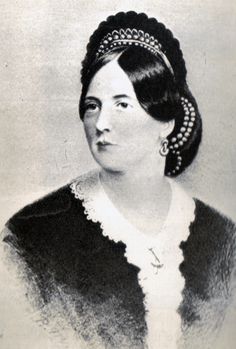
Lynch is born in Dublin on March 25, 1859. Her father, who is a committed, non-violent Fenian, dies when she is young. Her mother, Anna Theresa Calderwood, is married twice. She grows up in a very female house with her mother and ten sisters and half-sisters. Her stepfather is James Cantwell, also a Fenian, who runs the Star and Garter Hotel. After finishing school, she works as a sub-editor for a provincial paper and as a governess in Europe.
A nationalist like her father and stepfather, Lynch is an executive member of the Ladies’ Land League and as a result closely associates with Fanny Parnell. She writes extensively, producing short stories and satirical sketches, as well as Land War fiction, travel writing, translations and literary criticism. Her satirical pieces include “A Dublin Literary Coterie Sketched by a Non-Pretentious Observer” (1888) and “My Friend Arcanieva” (1895). She publishes William O’Brien‘s paper United Ireland from France, after it is suppressed in Ireland. She disagrees with William Butler Yeats on the literary merit of Emily Lawless, calling her work “highly polished literary stories.”
Lynch also writes fiction on the subject of political and cultural affairs in Ireland, sometimes meeting controversy. Her first novel, Through Troubled Waters (1885), is a fictionalised version of a real-life incident in Galway in which the daughters of a prosperous landowning family are murdered to make way for the sons to inherit the land. The novel also depicts the rural clergy as complicit, by denouncing the victims from the pulpit. The newspaper United Ireland strongly criticises the novel, claiming it peddles in anti-Irish stereotypes for a British audience. She responds by stating that she had intended the book for an Irish publisher and audience, and that she should not be asked “to prove my patriotism at the expense of truth.”
Lynch publishes across Ireland, the United Kingdom and from Paris. By 1896, she has settled in Paris, having also lived in both Spain and Greece. She speaks Greek and French. She then returns to lecture in Ireland and is a part of the salons of Paris in the Belle Époque as well as the Irish Literary Revival in Dublin. She is friends with the historian, biographer and literary critic Arvède Barine (pseudonym of Louise-Cécile Vincens), the writers Mabel and Mary Robinson, and the medievalist Gaston Paris. Her work however does not bring significant income, and she is forced to apply to the Royal Literary Fund for help on multiple occasions. Eventually it takes a toll on her health. She spends time in hospital in Margate, England in 1903.
Craig is the seventh of nine children of James Craig (1828–1900), a wealthy whiskey distiller who had entered the firm of Dunville & Co. as a clerk and by age 40 is a millionaire and a partner in the firm. Craig Snr. owns a large house called Craigavon, overlooking Belfast Lough. His mother, Eleanor Gilmore Browne, is the daughter of Robert Browne, a prosperous man who owned property in Belfast and a farm outside Lisburn. Craig is educated at Merchiston Castle School in Edinburgh, Scotland. After school he begins work as a stockbroker, eventually opening his own firm in Belfast.
Craig enlists in the 3rd (Militia) battalion of the Royal Irish Rifles on January 17, 1900, to serve in the Second Boer War. He is seconded to the Imperial Yeomanry, a cavalry force created for service during the war, as a lieutenant in the 13th battalion on February 24, 1900, and leaves Liverpool for South Africa on the SS Cymric in March 1900. After arrival he is soon sent to the front and is taken prisoner in May 1900, but released by the Boers because of a perforated colon. On his recovery he becomes deputy assistant director of the Imperial Military Railways, showing the qualities of organisation that are to mark his involvement in both British and Ulster politics. In June 1901 he is sent home suffering from dysentery, and by the time he is fit for service again the war is over. He is promoted to captain in the 3rd Royal Irish Rifles on September 20, 1902, while still seconded to South Africa.
On June 7, 1921, Craig is appointed the first Prime Minister of Northern Ireland by the Lord Lieutenant of Ireland. The House of Commons of Northern Ireland assembles for the first time later that day.
Craig had made his career in British as well as Northern Irish politics, but his premiership shows little sign of his earlier close acquaintance with the British political world. He becomes intensely parochial and suffers from his loss of intimacy with British politicians in 1938, when the British government concludes agreements with Dublin to end the Anglo-Irish trade war between the two countries. He never tries to persuade Westminster to protect Northern Ireland‘s industries, especially the linen industry, which is central to its economy. He is anxious not to provoke Westminster, given the precarious state of Northern Ireland’s position. In April 1939, and again in May 1940 during World War II, he calls for conscription to be introduced in Northern Ireland (which the British government, fearing a backlash from nationalists, refuses). He also calls for Winston Churchill to invade Ireland using Scottish and Welsh troops in order to seize the valuable ports and install a Governor-General at Dublin.
While still prime minister, Craig dies peacefully at his home at Glencraig, County Down at the age of 69 on November 24, 1940. He is buried on the Stormont Estate on December 5, 1940, and is succeeded as the Prime Minister of Northern Ireland by the Minister of Finance, J. M. Andrews.
(Pictured: James Craig, 1st Viscount Craigavon, bromide print by Olive Edis, National Portrait Gallery, London)
The People’s Democracy organizes the four-day march from Belfast to Derry, starting on January 1, 1969. The march is to be the acid test of the government’s intentions. Either the government will face up to the extreme right of its own Unionist Party and protect the march from the ‘harassing and hindering,’ or it will be exposed as impotent in the face of sectarian thuggery, and Westminster will be forced to intervene, re-opening the whole Irish question for the first time in 50 years. The march is modelled on the Selma to Montgomery march in Alabama in 1965, which had exposed the racist thuggery of America’s Deep South and forced the United States government into major reforms.
The departure on New Year’s Day 1969 of approximately 40 People’s Democracy supporters on the march to Derry is marked by a protest in Belfast by loyalists under the direction of MajorRonald Bunting, a close associate of Rev. Ian Paisley. It is the loyalist’s intention to harass the march along its entire journey.
On the first day of the march, the group makes its way unhindered towards Antrim. Just outside Antrim the marchers run into a police barricade, behind which several hundred loyalists are gathered, led by Major Bunting. The RUC refuses to remove the blockade and after a lengthy delay, and minor scuffles, the marchers are driven in police tenders to Whitehall Community Centre where they spend an unsettled night interrupted by a bomb threat.
The next day, the marchers set off for Randalstown but again find their way blocked by Major Bunting and a crowd of loyalists. Once again, the RUC refuses to remove the loyalist protesters and the marchers are eventually transported to Toome by car. The marchers are welcomed at Toome and after taking lunch in the village they set out for Maghera. After 30 minutes the march is again halted and then rerouted away from the loyalist village of Knockloughlin. After two miles, loyalist protestors led by Major Bunting again halt the march. Another standoff ensues and, as locals gather to support the marchers, the RUC’s County Inspector Kerr asks the loyalists to stand aside, which they do. The marchers then make their way towards Maghera, where loyalists have gathered to await their arrival. On hearing of this ‘reception’ committee, which is armed with clubs and sticks, the marchers decide to bypass the village and spend the night at Bracaghreilly. That night Maghera witnesses considerable violence from frustrated loyalists.
On January 3, the third day of the march, the marchers set out for Dungiven and encounter little opposition. After lunch in Dungiven they travel on to Feeny. A mile outside Dungiven the marchers are halted by the RUC with reports of a loyalist protest further along the road. A civil rights supporter then arrives along the road that is allegedly blocked and reports no obstructions ahead. The marchers decide to breach police lines and encounter no protest ahead. After reaching Feeny the marchers move on to Claudy, where they receive a friendly reception and settle down for the night. That night a loyalist attack on the hall in which the marchers are staying is repulsed by locals.
The same night in Derry, a rally by Ian Paisley in the Guildhall leads to serious disorder. While those inside the hall are listening to Major Bunting call for loyalists to gather the next day at Burntollet, a crowd of nationalists gather outside the building in protest. During clashes as the rally disperses, Major Bunting’s car is destroyed. Later that night stockpiles of bottles and stones are left by loyalists in the fields at Burntollet.
On the morning of January 4, the marchers, who now number approximately 500, set out on the last league of their journey to Derry. Just before reaching Burntollet District Inspector Harrison stops the march in order to investigate reports of loyalists ahead. Harrison, together with County Inspector Kerr, speak of 50 loyalists ahead and claim to be confident that there is no danger. With the RUC leading the way the marchers advance. In the field overlooking the road the marchers observe approximately 300 loyalists, identified by white armbands and armed with cudgels. They come under a bombardment of missiles. Marchers seek to escape the bombardment by speeding up the road but there is to be no escape as they immediately encounter a second contingent of loyalists blocking their escape.
As many marchers flee into the fields they are pursued by attackers and the RUC makes no attempt to intervene. Others are thrown into the nearby River Faughan. As what is left of the marchers continue on to Derry, they are also attacked twice in Derry’s Waterside before receiving a rousing welcome in Guildhall Square.
That night clashes occur between the RUC and local people and the first “Free Derry” is born. At 2:00 AM members of the RUC attack the Bogside, running amok in the Lecky Road and St. Columbs Wells districts. Windows are broken, residents are assaulted, and sectarian abuse is directed at the people of the Bogside. The reaction to this ‘invasion’ ranges from the painting of the Free Derry legend to the formation of vigilante squads in the area, based at the Foyle Harps Hall in the Brandywell and Rossville Hall in the Bogside. The barricades remain up for a number of days and relations between the community in the Bogside and the RUC, which has never been particularly good, grows steadily worse.
These events, together with the steady increase of conflict between local youths and the RUC as the year progress, is to lay the foundations for the resistance that is to take place during the Battle of the Bogside.
(From: “People’s Democracy march, January 4, 1969” by Jude Collins, http://www.judecollins.com, January 4, 2016)
Jane is the last of the four children of Charles Elgee, the son of Archdeacon John Elgee, a Wexford solicitor, and his wife Sarah (née Kingsbury). Her great-grandfather is an Italian who had come to Wexford in the 18th century. She has a special interest in Irish folktales, which she helps to gather. She marries Sir William Wilde on November 12, 1851, and they have three children, William Charles Kingsbury Wilde (1852–1899), Oscar Fingal O’Flahertie Wills Wilde (1854–1900), and Isola Francesca Emily Wilde (1857–1867).
Wilde, who is the niece of Charles Maturin, writes for the Young Ireland movement of the 1840s, publishing poems in The Nation under the pseudonym of “Speranza.” Her works include pro-Irish independence and anti-British writing. She is sometimes known as “Speranza of the Nation.” Charles Gavan Duffy is the editor when “Speranza” writes commentary calling for armed revolution in Ireland. The authorities at Dublin Castle shut down the paper and bring the editor to court. Duffy refuses to name who has written the offending article. “Speranza” reputedly stands up in court and claims responsibility for the article. The confession is ignored by the authorities. But in any event the newspaper is permanently shut down by the authorities.
Wilde is an early advocate of women’s rights, and campaigns for better education for women. She invites the suffragistMillicent Fawcett to her home to speak on female liberty. She praises the passing of the Married Women’s Property Act 1882, preventing women from having to enter marriage “as a bond slave, disenfranchised of all rights over her fortune.”
William Wilde is knighted in January 1864, but the family celebrations are short-lived, for in the same year Sir William and Lady Wilde are at the centre of a sensational Dublin court case regarding a young woman called Mary Travers, the daughter of a colleague of Sir William’s, who claims that he had seduced her and who then brings an action against Lady Wilde for libel. Mary Travers wins the case and costs of £2,000 are awarded against Lady Wilde. Then, in 1867, their daughter Isola dies of fever at the age of nine. In 1871 the two illegitimate daughters of Sir William are burned to death and in 1876 Sir William himself dies. The family discovers that he is virtually bankrupt.
Lady Wilde leaves Dublin for London in 1879, where she joins her two sons, Willie, a journalist, and Oscar, who is making a name for himself in literary circles. She lives with her older son in poverty, supplementing their meagre income by writing for fashionable magazines and producing books based on the researches of her late husband into Irish folklore.
Lady Wilde contracts bronchitis in January 1896 and, dying, asks for permission to see Oscar, who is in prison. Her request is refused. It is claimed that her “fetch” appears in Oscar’s prison cell as she dies at her home, 146 Oakley Street, Chelsea, on February 3, 1896. Willie Wilde, her older son, is penniless, so Oscar pays for her funeral, which is held on February 5, at Kensal Green Cemetery in London. A headstone proves too expensive and she is buried anonymously in common ground. A monument to her, in the form of a Celtic cross, is erected at Kensal Green Cemetery by the Oscar Wilde Society in 1999.
One of five children born to Archibald McNeill, a Roman Catholic working class “baker, sailor and merchant,” and his wife, Rosetta (née McAuley) McNeill, McNeill is the brother of nationalist leader Eoin MacNeill. He serves as a high-ranking member of the Indian Civil Service in Calcutta.
When the first Governor-General of the Irish Free State, Tim Healy, retires in December 1927, McNeill is proposed as his replacement by the Irish government of W. T. Cosgrave and duly appointed by King George V as Governor-General of the Irish Free State.
In office, McNeill clashes with the King’s Private Secretary when he insists on following the constitutional advice of his Irish ministers, rather than that of the Palace, in procedures relating to the receipt of Letters of Credence accrediting ambassadors to the King in Ireland. He also refuses to attend ceremonies in Trinity College, Dublin, when some elements in the college try to ensure that the old British national anthemGod Save the King is played, rather than the new Irish anthem, Amhrán na bhFiann.
However, McNeill’s tact is not reciprocated by de Valera’s government, and some of its ministers seek to humiliate him as the King’s representative by withdrawing the Irish Army‘s band from playing at functions he attends and demanding he withdraw invitations to visitors to meet him. In one notorious incident in April, two ministers, Seán T. O’Kelly (a future President of Ireland) and Frank Aiken, publicly walk out of a diplomatic function when McNeill, there as the guest of the French ambassador, arrives. In a fury, McNeill writes to de Valera demanding an apology for this treatment. When none is forthcoming, apart from an ambiguous message from de Valera that could be interpreted as partially blaming McNeill for attending functions at which ministers would be present, he publishes his correspondence with de Valera, even though de Valera had formally advised him not to do so. De Valera then demands that George V dismiss him.
The King engineers a compromise, whereby de Valera withdraws his dismissal request and McNeill, who is due to retire at the end of 1932, will push forward his retirement date by a month or so. McNeill, at the King’s request, resigns on November 1, 1932.
The Northern state consists of the six northeastern counties of Ulster with a unionist majority. They are Antrim, Down, Armagh, Derry, Tyrone, and Fermanagh. Belfast is to be the seat of a government and hold limited devolved powers. The counties of Donegal, Cavan, and Monaghan are to be absorbed within the Irish Free State controlled from parliament in Dublin.
Irish nationalists are dismayed with the plan. Protestant Unionists, particularly those living within the boundaries of the new state, accept and start to implement the Act. Sectarian attacks are launched upon Catholic homes in Belfast, Derry, Banbridge, Lisburn, and Dromore. Catholics are driven from Belfast shipyards and from various engineering works in the city. Supposedly these attacks are in revenge for Irish Republican Army (IRA) assassinations.
The IRA continues the campaign to establish a republic with the Irish War of Independence. By the middle of 1921, both sides are exhausted, and a truce is called on June 9.
In July 1921, Éamon DeValera, the president of Dáil Éireann, goes to London to meet with Prime Minister Lloyd George. They agree an Irish delegation will come to London to discuss terms in the autumn.
During the debate, Lloyd George insists Ireland remain part of the Commonwealth and Dáil Éireann members take the oath of allegiance to the British throne. After a delay of two months, Lloyd George delivers the ultimatum on December 5, sign a treaty within three days or there will be war.
The Anglo-Irish Treaty is to give Ireland a 26 county Free State with Dominion status. The right to raise taxes, regulate foreign trade, independence in internal affairs, own an army, and the oath of allegiance is changed to one of fidelity.
The British are to retain three naval bases within the jurisdiction of the Free State, at Cobh, Lough Swilly, and Berehaven. The Northern Ireland boundary is to be determined by a commission. This gives false hope to large tracts of Tyrone, Fermanagh, Down, Armagh, and Derry City would be given to the Free State as they have Catholic majorities.
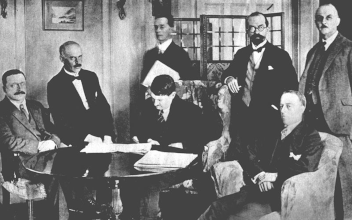
Just after 2:00 AM on December 6, 1921, the Irish delegation, without consulting the Dáil, finally sign a treaty with the British. Collins writes, prophetically, later on the day of the signing, “early this morning I signed my death warrant.”
The Treaty displeases the Catholics in the north and the unionists in the south. Meanwhile, many of those involved in the conflict are abhorred at the fact that not all of Ireland is to leave the United Kingdom.
(From: “The Anglo-Irish Treaty (1921)” by Brian O’Neill, Your Irish Culture, http://www.yourirish.com, May 20, 2020)
Cahir Healy, Irish nationalist politician, is born in Mountcharles, County Donegal, on December 2, 1877. He is a leader of northern Nationalists and is a self educated man who makes major contributions to Ireland’s cultural and literary heritage.
Healy is re-elected in 1923, but remains in custody until the following year, in which he does not defend his seat. Instead, he is elected to represent the seat in the House of Commons of Northern Ireland in the 1925 Northern Ireland general election, but does not take his seat until 1927 due to the Nationalist abstentionist policy. In 1928 he becomes a founder of the National League of the North. In 1929, with the break-up of the large Fermanagh and Tyrone constituency, he switches to sit for the new seat of South Fermanagh. In a 1931 Fermanagh and Tyrone by-election he is again elected for Fermanagh and Tyrone to the British Parliament, but stands down again in 1935.
Healy becomes an insurance official but continues to write, his output including journalism, poetry and short stories. He is interned by the United Kingdom government for a year during World War II under Defence Regulation 18B. In 1950 he is elected to the British House of Commons for a third time, on this occasion representing Fermanagh and South Tyrone. He finally sits in the British Parliament in 1952, and holds the seat until he stands down in 1955. He leaves the Northern Ireland House of Commons in 1965, by which point he is the Father of the House.
Healy dies on February 8, 1970, at the age of 92 at Enniskillen, County Fermanagh.
(Pictured: Portrait of Cahir Healy by Lafayette, half-plate nitrate negative, July 7, 1932, given by Pinewood Studios via Victoria and Albert Museum, 1989, National Portrait Gallery, London)
As a young man O’Neill leaves Ireland, one of the ninety-nine involved in the Flight of the Earls escaping the English conquest of his native Ulster. He grows up in the Spanish Netherlands and spends 40 years serving in the Irish regiment of the Spanish army. He sees most of his combat in the Eighty Years’ War against the Dutch Republic in Flanders, notably at the Siege of Arras, where he commands the Spanish garrison. He also distinguishes himself in the Franco-Spanish War by holding out for 48 days with 2,000 men against a French army of 35,000.
O’Neill is, like many Gaelic Irish officers in the Spanish service, very hostile to the English Protestant presence in Ireland. In 1627, he is involved in petitioning the Spanish monarchy to invade Ireland using the Irish Spanish regiments. He proposes that Ireland be made a republic under Spanish protection to avoid in-fighting between Irish Catholic landed families over which of them would provide a prince or king of Ireland. This plot comes to nothing. However in 1642, He returns to Ireland with 300 veterans to aid the Irish Rebellion of 1641.
The subsequent war, known as the Irish Confederate Wars, is part of the Wars of the Three Kingdoms, civil wars throughout Britain and Ireland. Because of his military experience, O’Neill is recognised on his return to Ireland in July 1642, at Doe Castle in County Donegal, as the leading representative of the O’Neills and head of the Ulster Irish. Sir Phelim O’Neill resigns the northern command of the Irish rebellion in his favour and escorts him from Lough Swilly to Charlemont.
Jealousy between the kinsmen is complicated by differences between O’Neill and the Catholic Confederation which meet at Kilkenny in October 1642. O’Neill professes to be acting in the interest of Charles I, but his real aim is the complete Independence of Ireland as a Roman Catholic country, while the Old English Catholics represented by the council desire to secure religious liberty and an Irish constitution under the crown of England. More concretely, O’Neill wants the Plantation of Ulster overturned and the recovery of the O’Neill clan’s ancestral lands. Moreover, he is unhappy that the majority of Confederate military resources are directed to Thomas Preston‘s Leinster army. Preston is also a Spanish veteran but he and O’Neill have an intense personal dislike of each other.
Although O’Neill is a competent general, he is outnumbered by the Scottish Covenanter army that lands in Ulster in 1642. Following a reverse at Clones, he has to abandon central Ulster and is followed by thousands of refugees, fleeing the retribution of the Scottish soldiers for some atrocities against Protestants in the rebellion of 1641. He does his best to stop the killings of Protestant civilians, for which he receives the gratitude of many Protestant settlers. From 1642–1646 a stalemate exists in Ulster, which he uses to train and discipline his Ulster Army. This poorly supplied force nevertheless gains a very bad reputation for plundering and robbing friendly civilians around its quarters in northern Leinster and southern Ulster.
In 1646 O’Neill, with substantial Gallowglass numbers and additionally furnished with supplies by the Papal Nuncio, Giovanni Battista Rinuccini, attacks the Scottish Covenanter army under Major-General Robert Monro, who had landed in Ireland in April 1642. On June 5, 1646 O’Neill utterly routs Monro at the Battle of Benburb, killing or capturing up to 3,000 Scots. However after being summoned to the south by Rinuccini, he fails to take advantage of the victory, and allows Monro to remain unmolested at Carrickfergus.
In March 1646 a treaty is signed between James Butler, 1st Duke of Ormond and the Catholics, which would have committed the Catholics to sending troops to aid the Royalist cause in the English Civil War. The peace terms however, are rejected by a majority of the Irish Catholic military leaders and the Catholic clergy including the Nuncio, Rinuccini. O’Neill leads his Ulster army, along with Thomas Preston’s Leinster army, in a failed attempt to take Dublin from Ormond. However, the Irish Confederates suffer heavy military defeats the following year at the hands of Parliamentarian forces in Ireland at Dungan’s Hill and Knocknanauss, leading to a moderation of their demands and a new peace deal with the Royalists. This time O’Neill is alone among the Irish generals in rejecting the peace deal and finds himself isolated by the departure of the papal nuncio from Ireland in February 1649.
So alienated is O’Neill by the terms of the peace the Confederates have made with Ormond that he refuses to join the Catholic/Royalist coalition and in 1648 his Ulster army fights with other Irish Catholic armies. He makes overtures for alliance to George Monck, 1st Duke of Albemarle, who is in command of the parliamentarians in the north, to obtain supplies for his forces, and at one stage even tries to make a separate treaty with the English Parliament against the Royalists in Ireland. Failing to obtain any better terms from them, he turns once more to Ormond and the Catholic confederates, with whom he prepares to co-operate more earnestly when Oliver Cromwell‘s arrival in Ireland in August 1649 brings the Catholic party face to face with serious danger.
Before, however, anything is accomplished by this combination, O’Neill dies on November 6, 1649 at the O’Reilly stronghold of Cloughoughter Castle located on an island in Lough Oughter in County Cavan. There is no clear evidence of the cause of death, with one belief being that he was poisoned by a priest, while others think it is more likely that he died from an illness resulting from an old wound. Under cover of night he is reputed to have been brought to the Franciscan abbey in Cavan town for burial. However some local tradition still suggests that it may have been at Trinity abbey located upon an island in Lough Oughter, which may be more likely given the logistics of his removal. His death is a major blow to the Irish of Ulster and is kept secret for some time.
The Catholic nobles and gentry meet in Ulster in March 1650 to appoint a commander to succeed O’Neill, and their choice is Heber MacMahon, Roman Catholic Bishop of Clogher, the chief organiser of the recent Clonmacnoise meeting. O’Neill’s Ulster army is unable to prevent the Cromwellian conquest of Ireland, despite a successful defence of Clonmel by O’Neill’s nephew Hugh Dubh O’Neill and is destroyed at the Battle of Scarrifholis in County Donegal in 1650. Its remnants continue guerrilla warfare until 1653, when they surrender at Cloughoughter Castle in County Cavan. Most of the survivors are transported to serve in the Spanish Army.
Barry’s execution inflames nationalist public opinion in Ireland, largely because of his age. The timing of the execution, only seven days after the death by hunger strike of Terence MacSwiney, the republicanLord Mayor of Cork, brings public opinion to a fever-pitch. His pending death sentence attracts international attention, and attempts are made by United States and Vatican officials to secure a reprieve. His execution and MacSwiney’s death precipitate an escalation in violence as the Irish War of Independence enters its bloodiest phase, and Barry becomes an Irish republican martyr.
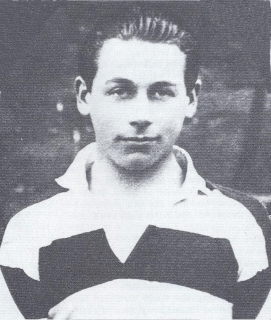
Barry is born on January 20, 1902, at 8 Fleet Street, Dublin, to Thomas and Mary (née Dowling) Barry. The fourth of seven children, two boys and five sisters, he is baptised in St. Andrew’s Church, Westland Row. As a child he attends the National School in Rathvilly, County Carlow, and the O’Connell Schools in Dublin, before enrolling in the Preparatory Grade at St. Mary’s College, Dublin, in September 1915. He remains at that school until May 31, 1916, when it is closed by its clerical sponsors. With the closure of St. Mary’s College, he transfers to Belvedere College, a Jesuit school in Dublin.
In October 1917, during his second year at Belvedere, Barry joins Company C, 1st Battalion of the Dublin Brigade of the Irish Volunteers. When Company C is later reorganized, he is reassigned to the newly formed Company H, under the command of Captain Seamus Kavanagh. The following year he is introduced by Seán O’Neill and Bob O’Flanagan to the Clarke Luby Club of the Irish Republican Brotherhood (IRB), and at some point in time he is sworn as a member of this secret society which is led by Michael Collins.
Two Dublin Volunteers notice that a British army lorry guarded by an armed party of soldiers makes twice weekly trips to Monk’s Bakery on Church Street to obtain bread. Based on these observations, John Joe Carroll of Company H conducts a reconnaissance of the bakery. In addition to its main entrance on Church Street, he observes that the bakery yard is also accessible by a corridor leading from a shop on North King Street. He concludes that this makes the bakery an attractive site for an ambush.
On the morning of September 20, 1920, Barry goes to Mass, then joins a party of IRA volunteers on Bolton Street in Dublin. Their orders are to ambush a British army lorry as it picks up a delivery of bread from the bakery and capture their weapons. The ambush is scheduled for 11:00 AM, which gives him enough time to take part in the operation and return to class in time for an examination he has at 2:00 PM. The truck arrives late and is under the command of Sergeant Banks.
Armed with a .38 MauserParabellum, Barry and members of C Company are to surround the lorry, disarm the soldiers, take the weapons and escape. He covers the back of the vehicle and, when challenged, the five soldiers comply with the order to lay down their weapons. A shot is then fired, possibly a warning shot from an uncovered soldier in the front. Barry and the rest of the ambush party then open fire. His gun jams twice and he dives for cover under the vehicle. His comrades flee and he is left behind. He is then spotted and arrested by the soldiers. One soldier is killed and two other later die of their wounds.
The War Office orders that Barry be tried by court-martial under the Restoration of Order in Ireland Act 1920, which received royal assent on August 9, 1920. Barry is charged on three counts of the murder of Private Marshall Whitehead. In accordance with military procedure the verdict is not announced in court. He is returned to Mountjoy Prison. Later that night the district court-martial officer enters his cell and reads out the sentence: death by hanging. The public learns on October 28 that the date of execution has been fixed for November 1.
Barry is hanged on November 1, 1920, after hearing two Masses in his cell. Canon Waters, who walks with him to the scaffold, writes to Barry’s mother later, “You are the mother, my dear Mrs. Barry, of one of the bravest and best boys I have ever known. His death was one of the most holy, and your dear boy is waiting for you now, beyond the reach of sorrow or trial.”
Barry’s body is buried at 1:30 PM, in a plot near the women’s prison. His comrade and fellow-student Frank Flood is buried alongside him four months later. A plain cross marks their graves and those of Patrick Moran, Thomas Whelan, Thomas Traynor, Patrick Doyle, Thomas Bryan, Bernard Ryan, Edmond Foley and Patrick Maher who are hanged in the same prison before the Anglo-Irish Treaty of July 1921 which ends hostilities between Irish republicans and the British. The men are buried in unconsecrated ground on the jail property and their graves are unidentified until 1934. They become known as the Forgotten Ten by republicans campaigning for the bodies to be reburied with honour and proper rites. On October 14, 2001, the remains of these ten men are given a state funeral and moved from Mountjoy Prison to be re-interred at Glasnevin Cemetery in Dublin.
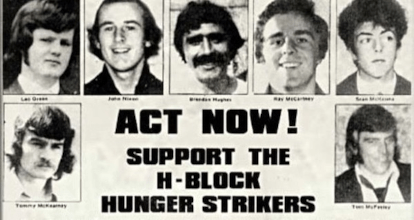
Irish political prisoners confined in the infamous H-Blocks of Long Kesh Detention Centre commence a hunger strike on October 27, 1980. The hunger strike is to continue until their demands for political status and for an end to British torture are met, or until death.
On December 1, three female prisoners, Mary Doyle, Mairéad Farrell and Mairéad Nugent, join the strike in Armagh Prison. Thirty more republican prisoners join later.
Despite being deceived into ending prematurely after 53 days, it sets the scene for a second hunger strike the following March, led by Bobby Sands. The first hunger strike announcement is made in a statement which is reprinted in full below.
“We the Republican POWs in the H-Blocks, Long Kesh, demand the right of political recognition and that we be accorded the status of political prisoners. We claim this right as captured combatants in the continuing struggle for national liberation and self-determination. We refute most strongly the tag of criminal with which the British have attempted to label us and our struggle, and we point to the devisive, partitionist institution of the six-county state as the sole criminal aspect of the present conflict.
“All of us were arrested under repressive laws, interrogated and often tortured in RUC barracks, and processed through special non-jury courts, where we were sentenced to lengthy terms of imprisonment. After this we were put in the H-Blocks and were expected to bow the knee before the British administration and wear their criminal uniform. Attempts to criminalise us were designed to depoliticise the Irish national struggle.
“We don’t have to recite again the widespread, almost total forms of punishment, degradations and deprivations we have been subjected to. All have failed to break our resistance.
“For the past four years we have endured this brutality in deplorable conditions. We have been stripped naked and robbed of our individuality, yet we refuse to be broken. Further repression only serves to strengthen our resolve and that of our gallant female comrades’ enduring the same hardships in Armagh jail.
“During this period many individuals, religious figures and political organisations and sections of the media have condemned the way we have been treated. Yet despite appeals for a resolution of the H-Block protest, the British government has remained intransigent and has displayed vindictive arrogance in dealing with the problem. They refuse to treat this issue in a realistic manner which is just another reflection of their attitude to the entire Irish question.
“Bearing in mind the serious implications of our final step, not only for us but for our people, we wish to make it clear that every channel has now been exhausted, and not wishing to break faith with those from whom we have inherited our principles, we now commit ourselves to a hunger strike.
“We call on the Irish people to lend us their support for our just demands and we are confident that this support will be very much in evidence in the coming days.
“We call on all solidarity and support groups to intensify their efforts and we also look forward with full confidence to the support of our exiled countrymen in America and Australia.
“We declare that political status is ours of right and we declare that from Monday, October 27th, 1980, a hunger strike by a number of men representing H- Blocks 3, 4, and 5 will commence.
“Our widely recognised resistance has carried us through four years of immense suffering, and it shall carry us through to the bitter climax of death, if necessary.”





 seamus dubhghaill