seamus dubhghaill

Promoting Irish Culture and History from Little Rock, Arkansas, USA


Leave a comment

Birth of Rob Kearney, Former Rugby Union Player

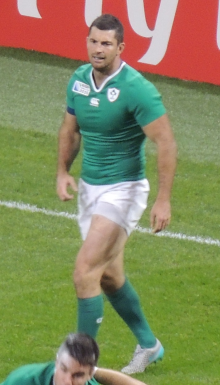
Robert Kearney, former rugby union player, is born on a dairy farm on March 26, 1986, on the Cooley Peninsula in County Louth. He plays for 15 years for Leinster followed by a six-month stint in Australia, playing for Perth based side Western Force. He also plays over a decade for the Ireland national rugby union team with whom he earns 95 caps and goes on two British & Irish Lions tours in 2009 and 2013. As a youth he also plays rugby union for Clongowes Wood College and Gaelic football for Louth in the All-Ireland Minor Football Championship.

Kearney is the third of five children. He has an older brother, Richard, a younger brother Dave (who plays for Leinster) and a sister, Sara, the youngest of the five children. His elder brother Ross dies at the age of six following an accident in 1988. He is a seventh cousin of former U.S. President Joe Biden.

Like many of his peers, Kearney gets involved in athletics at an early age. The dominant sport in the area is Gaelic football. As a youth, he plays Gaelic for Naomh Muire, and in the Cooley Kickhams underage setup, before graduating to the Cooley senior football team at the age of 17 in 2004 and also Louth at minor level.

Kearney attends Clongowes Wood College in County Kildare for his secondary education. After his Leaving Certificate he moves to University College Dublin (UCD) on a sports scholarship, where he plays for the rugby team. He graduates in April 2010 with a Bachelor of Arts degree in economics. In 2005 he helps the U-20s team win the McCorry Cup, beating Dublin University Football Club (DUFC) in the final. In 2018, he is awarded the UCD Alumni Award in Sport.

Kearney plays for Leinster at both schoolboy and U-19 level before going on to represent them as a senior. He scores a hat-trick of tries on his debut for Leinster in a pre-season friendly win over Parma.

Kearney makes his Celtic League debut for Leinster in 2005 in a 22–20 defeat away to the Ospreys. He makes 32 appearances in the competition, scoring eight tries, with three penalties during a period in September 2006, when usual place kicker, Felipe Contepomi, is injured. He plays in his first Heineken Cup game in a 19–22 defeat against Bath at the Royal Dublin Society (RDS) on October 22, 2005. It is the first of ten appearances scoring ten tries in the process. He is part of Leinster’s Heineken Cup winning team in 2009 but misses the 2011 final due to injury. On May 21, 2012, the day after Leinster wins their second straight Heineken Cup, he is announced as the ERC Player of the Year for 2012. During the 2011–12 campaign he starts all nine European matches scoring six tries. He is crowned Leinster player of the year for the 2011–12 season. He confirms his departure from Leinster on September 24, 2020.

In late September 2020, it is confirmed that Kearney has signed a one-year contract with Australian side Western Force. He makes his Force debut in an 11–27 defeat to the Brumbies on February 19, 2021. He announces his retirement from rugby after one season with Western Force in Super Rugby AU and Super Rugby Trans-Tasman. Following his retirement, he returns to Louth GAA club Cooley Kickhams where he begins training in August 2021 for the first time since 2005.

Kearney represents Ireland at schoolboy and U-19 level, and tours with Ireland A in the 2006 Churchill Cup. He is first called into the Irish training squad for 2005’s autumn internationals but does not play. He is named in the Irish squad to the 2007 summer tour of Argentina and earns his first cap against Argentina on June 2, 2007, in a 16–0 defeat. During the 2008 Six Nations Championship he scores two tries, one against Scotland and one against England. He is a member of the victorious Ireland team that wins the 2009 Six Nations Championship, Triple Crown and Grand Slam. One of the most famous incidents in his career is a high tackle incident involving Italy‘s Andrea Masi in the first minute of a game. The incident is taken as an indication of the danger posed by Kearney in attack. He misses almost a year – from November 2010 until August 2011 – due to a knee injury that requires surgery.

In the 2011 Rugby World Cup, Kearney is selected but is injured for the first game against the United States. However, he plays in all the other matches which take Ireland through to the quarterfinals, in which they are knocked out by Wales, 22–10. He is selected in the Ireland squad for the 2012 Six Nations Championship and named in the starting team to play Wales in the opening match. He plays in all the other games, which see Ireland finish third in the table. He is also in the first Irish rugby team in 39 years to beat Australia on Australian soil, in the 2018 summer series. He is named in the Ireland squad for the 2019 Rugby World Cup in Japan, starting three of Ireland’s five matches and splitting time at fullback with Jordan Larmour.

Kearney is named in the British & Irish Lions squad for the 2009 tour to South Africa. He makes his Lions test debut as a substitute in the 26–21 first test defeat in Durban. Due to an injury to Lee Byrne, he is selected again for the second test in Pretoria. He scores the only try for the Lions in a 28–25 defeat. He then plays in the final test in Johannesburg which the Lions win 28–9. On April 30, 2013, he is named in his second British & Irish Lions squad.

Kearney marries Jess Redden in 2021, and their son is born in 2023.


Leave a comment

Birth of Mildred Anne Butler, Animal & Genre Painter

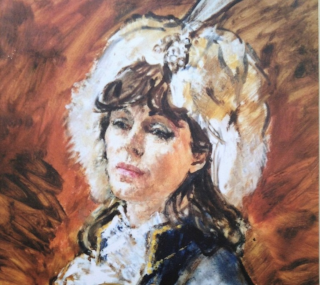
Mildred Anne Butler, Irish artist who works in watercolour and oil of landscape, genre and animal subjects, is born on January 11, 1858, in Kilmurry, a Georgian house near Thomastown, County Kilkenny.

The youngest daughter of Captain Henry Butler, a grandson of the Edmund Butler, 11th Viscount Mountgarret, and Clara Butler (née Taylor) of the Newarke, Leicester, England. Her father is himself an enthusiastic painter, known for his publication South African sketches: illustrative of the wildlife of a hunter on the frontier of Cape Colony (1841). Her early artistic efforts are mainly copies of romantic subjects, but the influence of the London artist Paul Jacob Naftel, with whom she begins corresponding in the early 1880s, proves to be crucial to her artistic development. Studies with William Frank Calderon, an expert in animal painting, are also significant. She subsequently spends the summers of 1894 and 1895 in Newlyn, Cornwall, England, with the Irish artist Norman Garstin, who introduces her to contemporary French painting.

In 1885, Butler makes her first visit to the continent, traveling through France, Switzerland, and Italy. From 1905 to 1914 she travels regularly to Europe, most particularly Aix-les-Bains and Wiesbaden, during which time she produces genre views of French and German villages. After 1914 her life at the family home is interrupted only by visits to London exhibitions. She is best known for her paintings of Kilmurry and its environs, many of which display an interest in botany. Much of her work is dominated by detailed representations of animals and birds, often drawn from photographs and stuffed specimens.

Butler’s career as an exhibitor begins in 1882 with the Irish Fine Arts Society, later known as the Water Colour Society of Ireland (WCSI), with which she has a long association. She exhibits regularly with the society from 1892 onward and is a member of its committee for many years. She is also closely associated with the Dudley Museum and Art Gallery in London. Her work is first shown there in 1888, and on this evidence, she is elected to their society. The purchase by the Chantrey bequest for the Tate Gallery of The Morning Bath for £50 in 1896 is a high point in her career. The first painting by a woman to be selected by the council, its purchase is followed by almost consistently good press reviews for her work. The Athenaeum of May 5, 1897, writes: “The young lady knows how to look at her subjects with the eyes of a well-trained artist.”

Butler also comes to the attention of the American artistic press. She contributes to the portfolio of drawings given by the Society of Lady Artists to Princess May on her marriage to the Duke of York in 1893, while in 1922 her work is included in the portfolio presented to Princess Mary on her marriage. Her patrons include Queen Alexandra, and the grand duke of Hesse, who purchases two of her paintings after she is invited to exhibit in Hesse Darmstadt in 1911. In 1914 she is made a member of the Union Internationale des Beaux Arts, and in 1921 her paintings are shown in Japan. She regularly exhibits with the Belfast Ramblers, the Royal Ulster Academy, the Royal Academy of Arts (RA), the Royal Hibernian Academy (RHA), the Society of Lady Artists, and the Royal Watercolour Society, of which she is made an associate member in 1896, and a full member in 1937.

In her later years, severe rheumatism prevents Butler from painting. She has a keen interest in music. She survives all five of her siblings, and inherits Kilmurry, where she dies on October 11, 1941. She is buried at Thomastown, County Kilkenny. Her paintings are represented in the collections of the National Gallery of Ireland, Dublin City Gallery the Hugh Lane, the Ulster Museum, and the Tate, London.

(From: “Butler, Mildred Anne” by Frances Clarke, Dictionary of Irish Biography, http://www.dib.ie, October 2009)


Leave a comment

Death of Middle-Distance Runner Noel Carroll

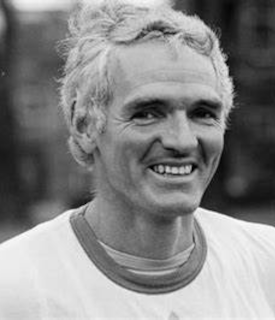
Noel Carroll, Irish middle-distance runner who wins a bronze medal in the 1969 European Indoor Games, dies on October 23, 1998. He sets European and World Records in the 1960s. He becomes the Dublin Corporation‘s first official spokesman, and later the chief executive of the Dublin Chamber of Commerce and leads the group which founds the Dublin Marathon.

Carroll is born in Annagassan, County Louth, on December 7, 1941, and leaves school to join the Irish Army where he begins running. In 1962, while competing in the Millrose Games in New York City, he is recruited by James F. “Jumbo” Elliott and attends Villanova University, where he joins the Villanova Wildcats and wins a number of track championships.

At Villanova, Carroll runs a sub-four-minute mile and in 1964, is the anchor for the team which breaks the 4 x 880-yard relay World Record. In the same year, he also sets the European Indoor record for the 880-yards and competes in the 1964 Summer Olympics in Tokyo, Japan, in the Men’s 800 metres finishing just outside of the qualifying places in heat 5 of the first round with a time of 1:51.1. When running against Bill Crothers in 1964, Sports Illustrated describes him as “one of the best middle-distance runners in the world.”

Carroll represents Ireland in the 400 metres (time: 46.8) and the 800 metres (time: 1:49) in the 1968 Summer Olympics in Mexico City, and continues to win national championships, fourteen in total. He wins a bronze medal in the 800m at the 1969 European Indoor Games in Belgrade.

In 1972, Carroll becomes the spokesman for the Dublin Corporation, now known as Dublin City Council, a post he holds until 1996, when he joins the Dublin Chamber of Commerce as its chief executive.

In 1980, Carroll leads a group which approaches the Business Houses Athletic Association and the Dublin Corporation with the idea for the Dublin Marathon. He is also among the 2,100 people who compete in the race that year. The winner of the Marathon receives the Noel Carroll Memorial Trophy presented each year by one of Carroll’s children.

Carroll dies on October 23, 1998, after suffering a heart attack while training at University College Dublin (UCD). In 2008, his four children take part in the Dublin Marathon to raise money for the Noel Carroll Building, the headquarters of a project in Kolkata, India, run by GOAL, a charity for which Carroll had served as the chairman.

Carroll’s grandson is the Irish rugby international player, Jordi Murphy.


Leave a comment

Birth of Edward Flanagan, Founder of Boys Town

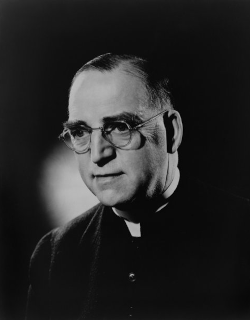
Edward Joseph Flanagan, Irish-born priest of the Catholic Church in the United States, is born on July 13, 1886, in the townland of Leabeg, County Roscommon, near the village of Ballymoe, County Galway. He founds the orphanage known as Boys Town located in Boys Town, Douglas County, Nebraska, which now also serves as a center for troubled youth.

Flanagan is born to John and Honoria Flanagan. He attends Summerhill College, Sligo.

In 1904, Flanagan emigrates to the United States and becomes a U.S. citizen in 1919. He attends Mount St. Mary’s University in Emmitsburg, Maryland, where he receives a Bachelor of Arts degree in 1906 and a Master of Arts degree in 1908. He studies at Saint Joseph’s Seminary in Dunwoodie, Yonkers, New York. He continues his studies in Italy and at the University of Innsbruck in Austria where he is ordained a priest on July 26, 1912. His first parish is in O’Neill, Nebraska, where from 1912 he serves as an assistant pastor at St. Patrick’s Catholic Church. He then moves to Omaha, Nebraska, to serve as an assistant pastor at St. Patrick’s Church and later at St. Philomena’s Church.

In 1917, Flanagan founds a home for homeless boys in Omaha. Bishop Jeremiah James Harty of the Diocese of Omaha has misgivings but endorses Flanagan’s experiment. Because the downtown facilities are inadequate, he establishes Boys Town, ten miles west of Omaha in 1921. Under his direction, Boys Town grows to be a large community with its own boy-mayor, schools, chapel, post office, cottages, gymnasium, and other facilities where boys between the ages of 10 and 16 can receive an education and learn a trade.

Boys Town, a 1938 film starring Spencer Tracy based on Flanagan’s life, wins Tracy an Academy Award for Best Actor for his performance. Mickey Rooney also stars as one of the residents. Tracy spends his entire Oscar acceptance speech talking about Flanagan. Without confirming it with Tracy, an overzealous MGM publicity representative announces incorrectly that Tracy is donating his Oscar to Flanagan. The Academy of Motion Picture Arts and Sciences hastily strikes another inscription so Tracy keeps his statuette and Boys Town gets one as well. A sequel also starring Tracy and Rooney, Men of Boys Town, is released in 1941.

Flanagan himself appears in a separate 1938 MGM short, The City of Little Men, promoting Boys Town and giving a tour of its facilities. The actor Stephen McNally plays Flanagan in a 1957 episode of the ABC religion anthology series, Crossroads.

Flanagan receives many awards for his work with the delinquent and homeless boys. Pope Pius XI names him a Domestic Prelate with the title Right Reverend Monsignor in 1937. He serves on several committees and boards dealing with the welfare of children and is the author of articles on child welfare. Internationally known, he travels to the Republic of Ireland in 1946, where he is appalled by the children’s institutions there, calling them “a national disgrace.” When his observations are published after returning to Omaha, instead of improving the horrid conditions, vicious attacks are leveled against him in the Irish print media and the Oireachtas. He is invited by General Douglas MacArthur to Japan and Korea in 1947 to advise on child welfare, as well as to Austria and Germany in 1948. While in Berlin, Germany, he dies of a heart attack on May 15, 1948. He is interred at Dowd Memorial Chapel of the Immaculate Conception Parish in Boys Town, Nebraska.

In 1986, the United States Postal Service issues a 4¢ Great Americans series postage stamp honoring Flanagan. He is a member of the Nebraska Hall of Fame.

On February 25, 2012, the Catholic Archdiocese of Omaha, Nebraska opens the canonization process of Flanagan. At a March 17, 2012 prayer service at Boys Town’s Immaculate Conception Church, he is given the title “Servant of God,” the first of three titles bestowed before canonization as a Catholic saint. The investigation is completed in June 2015 and the results forwarded to the Vatican. If the Vatican approves the local findings, Flanagan will be declared venerable. The next steps will be beatification and canonization.

There is a portrait statue dedicated to Fr. Edward J. Flanagan in Ballymoe, County Galway.


Leave a comment

Death of Sir Charles Algernon Parsons, Anglo-Irish Engineer & Scientist

Sir Charles Algernon Parsons, Anglo-Irish engineer and scientist best known for his invention of the compound steam turbine, dies on February 11, 1931, on board the steamship Duchess of Richmond while on a cruise with his wife.

Parsons is born in London on June 13, 1854, the youngest among eleven children of the famous astronomer William Parsons, 3rd Earl of Rosse, of Parsonstown (now Birr), King’s County (now County Offaly) and Mary Parsons (née Field), a Yorkshire heiress. Only four sons survive to adulthood. He is strongly influenced by his father, who encourages him to use the workshops at the Birr Castle observatory, and he is tutored at home by some of the assistant astronomers before entering Trinity College Dublin in 1871. He transfers to St. John’s College, Cambridge, and upon graduation in 1877 as eleventh wrangler in a class of thirty-six studying mathematics, he takes the unusual step for the son of an earl, of becoming a premium apprentice at the Elswick Engine and Ordnance Works of Sir William George Armstrong at Newcastle upon Tyne. In the period following this he develops a unique high-speed steam engine, and a torpedo which is powered by a gas turbine. He joins Clarke Chapman at Gateshead as a partner in 1884. In a matter of months he files patents for the world’s first effective steam turbine. These embody many novelties, but the key feature is an electricity generator rated at 6 kW and designed to run, directly coupled, at the astonishing speed of 18,000 rpm.

Parsons is not satisfied that his partners’ efforts to promote turbine development are sufficiently aggressive, and in 1889 he leaves to establish his own company, C. A. Parsons & Company, at Heaton near Newcastle upon Tyne. The price of this impetuous action is the loss of access to his original patents. He quickly establishes alternative designs and by 1892 he has built a turbo-alternator with an output of 100 kW for the Cambridge Electricity Company. Exhausting to a condenser, it has a steam consumption comparable with the best steam engines. Even his 1884 patents envisage applying turbines to marine propulsion, but it is 1893 before he can embark on the design of a suitable demonstration boat of 40 tons. By using careful tests on models, he perfects the hull shape and predicts the power requirements. At this time he recovers his 1884 patents and even wins the very rare prize of an extension for five years, which is a measure of the perceived national importance of his invention.

A syndicate is formed to raise the capital necessary to build Parsons’s turbine-powered vessel Turbinia. At the Spithead Fleet Review in 1897 she speeds among the ships of the world’s navies at 34.5 knots. In 1905 the Royal Navy decides to adopt turbines for its future warships. This example is followed by navies worldwide, from the United States to Japan. Builders of mercantile vessels follow quickly and the turbines of the Cunard liner RMS Mauretania (1906), each developing 26,000 kW, are the largest in existence at the time. The Mauretania holds the Blue Riband for the speediest Atlantic crossing until 1929, a fact that keeps Parsons’s name before the public.

The firm of C. A. Parsons (1889), which builds turbines for use on land, is privately owned, but the Parsons Marine Steam Turbine Company (1897) is a public company. Parsons also earns income from over 300 patents through the Parsons Foreign Patents Co. (1899). He readily licenses others to use his patents but he avoides costly litigation, the ruin of many inventors.

Parsons inherits an interest in optical instruments from his father. In 1890 he develops a cost-effective method for manufacturing searchlight mirrors, using sheets of plate glass and an iron mold heated in a gas furnace. During World War I he supplies most of the national requirements. In 1921 he acquires the optical instrument manufacturers Ross Ltd. and the Derby Crown Glass Company, makers of optical quality glass. In 1925 the firm of Howard Grubb, which makes large optical telescopes, is rescued from insolvency by Parsons. He believes that it is of national importance to maintain the industrial capacity to make optical equipment. Not all of his projects are commercially profitable, as for example his acoustic amplifier, dubbed the “Auxetophone,” or his attempts at synthesising diamonds, which absorbs much time and effort. In the development of his many inventions, he displays great tenacity in the face of reverses and always employs a meticulously scientific approach.

The supply of power on a large scale is revolutionised by the steam turbine. During the twenty years following the building of his first turbogenerator, Parsons remains at the forefront of promoting, building, and selling ever larger and more efficient turbines. He is not only a scientific engineer and inventor, but also a successful manufacturer and businessman. Modest and retiring in manner, his chief weakness lay in a lack of skill in managing interpersonal relationships, though this is compensated to a large extent by his integrity and loyalty. He seeks out the ablest men to run his businesses, among them several Fellows of the Royal Society (FRS). He is elected FRS himself in 1898 and is knighted in 1911. In 1927 he becomes the first engineer to be awarded the Order of Merit for his outstanding contributions to society. He is honoured by many universities and institutions in Europe and the United States.

Parsons marries Katharine Bethell, a Yorkshire woman, in 1883. They have one daughter and a son who dies on active service in 1918. He keeps a residence in London and in Northumbria.

Parsons dies on February 11, 1931, on board the steamship Duchess of Richmond while on a cruise with his wife. The cause of death is given as neuritis. A memorial service is held at Westminster Abbey on March 3, 1931. He is buried in the parish church of St. Bartholomew’s in Kirkwhelpington in Northumberland. His estate is valued at £1,214,355 gross.

A portrait of Parsons, painted by Maurice Codner, hangs in the Institution of Mechanical Engineers, London. There is also a portrait by Sir William Orpen in the Laing Art Gallery, Newcastle upon Tyne, and a portrait by Walter Stoneman in the National Portrait Gallery, London.

(From: “Parsons, Sir Charles Algernon” by W. Garrett Scaife, Dictionary of Irish Biography, http://www.dib.ie, October 2009)


Leave a comment

Birth of Maeve Kyle, Olympic Athlete & Hockey Player

Maeve Esther Enid Kyle, OBE, Irish Olympic athlete and hockey player, is born Maeve Esther Enid Shankey in County Kilkenny on October 6, 1928.

Kyle briefly attends Kilkenny College where her father C.G. Shankey is headmaster, before attending Alexandra College and finally, Trinity College, Dublin. She is the granddaughter of William Thrift.

Kyle competes in the 100m and 200m in the 1956 Summer Olympics in Melbourne, Australia, and subsequently in the 1960 Summer Olympics in Rome, Italy, and the 1964 Summer Olympics in Tokyo, Japan, where she reaches the semi-finals of both the 400m and 800m. She takes the bronze medal in the 400m at the 1966 European Athletics Indoor Championships in Dortmund, Germany. She wins four gold medals in W45 Category at the 1977 World Masters Athletics Championships in Gothenburg, Sweden, in the 100m, 400m, high jump and long jump. She holds World Masters records at W40 for the 100m (12:00 secs) and 400m (55.30 secs) and W45 100m (12.50 secs) and W50 long jump at 5.04m.

In field hockey, Kyle gains 58 Irish caps as well as representing three of the four Irish provinces (Leinster, Munster and Ulster) at different stages of her career. She is named in the World All Star team in 1953 and 1959. She is also a competitor in tennis, swimming, sailing and cricket and works as a coach. She is chair of Coaching NI. In 2006, she is awarded the honorary degree of Doctor of the University (DUniv) from the University of Ulster.

Kyle is awarded the Lifetime Achievement Award at the 2006 Coaching Awards in London in recognition of her work with athletes at the Ballymena and Antrim Athletics Club. Earlier in 2006 she is one of 10 players who are initially installed into Irish hockey’s Hall of Fame. She is appointed Officer of the Order of the British Empire (OBE) in the 2008 New Year Honours.


Leave a comment

Birth of Michael Carruth, Olympic Boxing Gold Medalist

Michael Carruth, a southpaw Irish Olympic boxer, is born in Dublin on July 9, 1967. He is best known for winning the welterweight gold medal at the 1992 Summer Olympics in Barcelona, Spain. He turns Pro in 1994 but retires in 2000.

Boxing as a lightweight at the 1988 Summer Olympics in Seoul, South Korea, following a bye in the first round, Carruth defeats Satoru Higashi of Japan before being defeated by George Scott of Sweden.

In the 1992 Summer Olympics in Barcelona, Carruth steps up to the welterweight class. Following a bye in the round of 32, he defeats Mikaele Masoe of American Samoa on points in the round of 16. He defeats Andreas Otto of Germany on points in the quarterfinals and Arkhom Chenglai of Thailand in the semi-final. In the final he defeats Juan Hernández Sierra of Cuba on points.

Carruth’s medal is Ireland’s first ever gold medal in boxing, only a couple of hours after teammate Wayne McCullough has to settle for the silver in bantamweight. It is also the first Olympic gold medal for Ireland since Ron Delany won the Men’s 1500m event at the 1956 Summer Olympics in Melbourne, Australia.

Within a few days of Carruth winning his Olympic medal the Government of Ireland announces that he has been instantly promoted to sergeant within the Irish Army in recognition of his achievement at the Olympics. And, on the day of his return to Ireland, local pubs drop the price of beer to that of 1956.

Carruth turns pro in 1994 after taking leave from his job as a soldier in the Irish Army. He is trained by former Irish boxing great Steve Collins. He has limited success as a pro, losing in both of his defining pro bouts: in 1997 against Mihai Leu for the World Boxing Organization (WBO) Welterweight title and in 2000 against Adrian Stone for the International Boxing Organization (IBO) Light Middleweight title. He retires in 2000, after the loss to Stone, with a career professional record of 18-3-0.

In 2006, Carruth competes on the TV series Celebrity Jigs ‘n’ Reels. He serves as an expert boxing analyst for RTÉ‘s Olympic coverage in 2008, 2012 and 2016. In 2020, he appears in the fourth season of the Irish edition of Dancing with the Stars. He and his professional partner, Karen Byrne, are eliminated on February 3, 2020.

During his short spell as senior Westmeath county football team manager, Brendan Hackett appoints Carruth as masseur in 2009.


2 Comments

Birth of Irish Composer John McLachlan

Irish composer John McLachlan is born in Dublin on March 5, 1964.

McLachlan is the son of the writer Leland Bardwell, and studies at the Dublin Institute of Technology (DIT) Conservatory of Music and Drama (1982–86), the Royal Irish Academy of Music (1989–97), and Trinity College Dublin (BA 1988). He studies composition with William York, Robert Hanson and Kevin Volans. He holds a Ph.D. in musicology from Trinity College (1999) for a study of the relationship between analysis and compositional technique in the post-war avant-garde.

McLachlan writes numerous articles for The Journal of Music in Ireland (2000–10). He is executive director of the Association of Irish Composers (1998–2012), and in 2007 he is elected to Aosdána.

McLachlan is the featured composer in the RTÉ National Symphony Orchestra‘s “Horizons” series in 2003 and 2008. He also represents Ireland at international festivals, including the ISCM World Music Days in Slovenia in 2003 and Croatia in 2005. In 2006, his work Grand Action is commissioned as a test-piece for the AXA Dublin International Piano Competition.

McLachlan’s musical aesthetic is largely shaped by a desire to impart a sense of narrative and expectation to his music without recourse to pastiche rhetorical devices. A critic writes of a recording of McLachlan’s piano piece Nine: “The style of each little piece sends one’s imagination and musical memory reeling, some of them evoking French Impressionism, some jazzy in feel, some reminiscent of the miniatures for piano of Webern, and none of them in any way, shape or form derivative.” Much of his music is structured in contrasting and suddenly changing block-like sections of homogeneous material. The material within these sections is propelled by a rigorous focus on subtle rhythmic and melodic permutations, which result in both surface opacity and gradually increasing tension.

McLachlan’s works have been performed in the United States, Peru, Japan, South Africa, Britain, France, Italy, Germany, Holland, Switzerland, Finland, Denmark, Portugal, Spain, Romania, Moldova, Slovenia, Croatia, and around Ireland, with broadcasts in several of these countries. Performers who have played his music include the National Symphony Orchestra of Ireland, Opera Theatre Company, the National Chamber Choir, Concorde, Sequenza, Traject, Archaeus, the Pro Arte Orchestra, Antipodes, Ensemble Nordlys, The Fidelio Trio, The ConTempo Quartet and Trio Arbós as well as many prominent soloists including Ian Pace, John Feeley, Mary Dullea, Darragh Morgan, Satoko Inoue and David Adams.

McLachlan is also known as a broadcaster and writer on contemporary music, with many published articles.

McLachlan now lives in Inishowen, County Donegal.


Leave a comment

Birth of Mariga Guinness, Co-founder of the Irish Georgian Society

Mariga Guinness, architectural conservationist and socialite, and co-founder of the Irish Georgian Society, is born in London on September 21, 1932.

Guinness is born Hermione Maria-Gabrielle von Urach, the only child of the marriage of Albrecht von Urach, from Lichtenstein Castle, a member of the royal house of Wurtemberg, and Rosemary Blackadder (1901–1975) from Berwickshire in Scotland, a journalist and artist, who are married in Oslo, Norway in 1931. For the first few months of her life, she is very ill. In 1934, her parents, both working as journalists, move the family to Venice. They later move again to Japan. Her mother develops depression, and in 1937 tries to gain uninvited access to Emperor Hirohito‘s palace with her daughter. This results in her mother being arrested, sedated, and deported, which is the beginning of a decline in her mental health which culminates in a lobotomy in 1941 and spending the rest of her life in private mental institutions. Urach is returned to Europe, where she is raised by her godmother, Hermione Ramsden, in Surrey and Norway. She is educated by as many as seventeen governesses, with brief spells in boarding schools. Until the age of eighteen she is known as Gabrielle.

Urach meets Desmond Guinness in 1951, when she is nineteen, and they are married in Oxford in 1954. They have two children, Patrick (born 1956) and Marina (born 1957).

The couple moves to Ireland in 1955 where they rent Carton House, County Kildare. They share a love of Georgian architecture which results in them buying Leixlip Castle in 1958 and establishing the Irish Georgian Society on February 21 of the same year. Through the society they campaign for the restoration and protection of architectural sites such as Mountjoy Square, the gateway to the Dromana estate in County Waterford, the Tailors’ Hall in Dublin, and Conolly’s Folly in County Kildare. In 1967 they purchase Castletown House, also in County Kildare, with a plan to restore it, and make it a base for the Irish Georgian Society.

During the 1960s Leixlip Castle is a hub for those interested in architecture and conservation, and the Guinnesses work hands-on on a range of projects. By 1969, their marriage is in difficulties and Guinness moves to London. She later moves to Glenarm, County Antrim to live with Hugh O’Neill, and when that relationship ends, she returns to Leixlip Castle, but a divorce is finalised in 1981. Having lived in Dublin for a time, she rents Tullynisk House, the dower house of Birr Castle in County Offaly in 1983. Guinness becomes isolated and develops a problem with alcohol. While returning to Ireland from Wales on a car ferry on May 8, 1989, she has a massive heart attack which is compounded by a reaction to an injection of penicillin. She is buried at Conolly’s Folly.

Through Patrick, Guiness becomes grandmother of the fashion model Jasmine Guinness. Her daughter Marina is a patron of the arts and of Irish musicians including Glen Hansard, Damien Rice, and the band Kíla. Marina has three children of her own: Patrick (by Stewart Copeland of The Police), Violet (by photographer Perry Ogden), and Finbar (by record producer Denny Cordell).

In 2020, a new film on Guinness’s life and work, entitled Memory of Mariga, receives its United States premiere as part of the Elizabethtown Film Festival on Saturday, September 19, at the Crowne Pointe Theatre in Elizabethtown, Kentucky. In 2021, the same film receives its Irish premiere at the Fastnet Film Festival.


Leave a comment

Death of Fr. Edward J. Flanagan, Founder of Boys Town

Edward Joseph Flanagan, Irish-born priest of the Catholic Church in the United States, dies in Berlin, Germany on May 15, 1948. He founds the orphanage known as Boys Town located in Boys Town, Douglas County, Nebraska, which now also serves as a center for troubled youth.

Flanagan is born to John and Honoria Flanagan in the townland of Leabeg, County Roscommon, near the village of Ballymoe, County Galway, on July 13, 1886. He attends Summerhill College, Sligo.

In 1904, Flanagan emigrates to the United States and becomes a US citizen in 1919. He attends Mount St. Mary’s University in Emmitsburg, Maryland, where he receives a Bachelor of Arts degree in 1906 and a Master of Arts degree in 1908. He studies at Saint Joseph’s Seminary in Dunwoodie, Yonkers, New York. He continues his studies in Italy and at the University of Innsbruck in Austria where he is ordained a priest on July 26, 1912. His first parish is in O’Neill, Nebraska, where from 1912 he serves as an assistant pastor at St. Patrick’s Catholic Church. He then moves to Omaha, Nebraska, to serve as an assistant pastor at St. Patrick’s Church and later at St. Philomena’s Church.

In 1917, Flanagan founds a home for homeless boys in Omaha. Bishop Jeremiah James Harty of the Diocese of Omaha has misgivings but endorses Flanagan’s experiment. Because the downtown facilities are inadequate, he establishes Boys Town, ten miles west of Omaha in 1921. Under his direction, Boys Town grows to be a large community with its own boy-mayor, schools, chapel, post office, cottages, gymnasium, and other facilities where boys between the ages of 10 and 16 can receive an education and learn a trade.

Boys Town, a 1938 film starring Spencer Tracy based on Flanagan’s life, wins Tracy an Academy Award for Best Actor for his performance. Mickey Rooney also stars as one of the residents. Tracy spends his entire Oscar acceptance speech talking about Flanagan. Without confirming it with Tracy, an overzealous MGM publicity representative announces incorrectly that Tracy is donating his Oscar to Flanagan. The Academy of Motion Picture Arts and Sciences hastily strikes another inscription, so Tracy keeps his statuette and Boys Town gets one as well. A sequel also starring Tracy and Rooney, Men of Boys Town, is released in 1941.

Flanagan himself appears in a separate 1938 MGM short, The City of Little Men, promoting Boys Town and giving a tour of its facilities. The actor Stephen McNally plays Flanagan in a 1957 episode of the ABC religion anthology series, Crossroads.

Flanagan receives many awards for his work with the delinquent and homeless boys. Pope Pius XI names him a Domestic Prelate with the title Right Reverend Monsignor in 1937. He serves on several committees and boards dealing with the welfare of children and is the author of articles on child welfare. Internationally known, he travels to the Republic of Ireland in 1946, where he is appalled by the children’s institutions there, calling them “a national disgrace.” When his observations are published after returning to Omaha, instead of improving the horrid conditions, vicious attacks are leveled against him in the Irish print media and the Oireachtas. He is invited by General Douglas MacArthur to Japan and Korea in 1947 to advise on child welfare, as well as to Austria and Germany in 1948. While in Germany, he dies of a heart attack on May 15, 1948. He is interred at Dowd Memorial Chapel of the Immaculate Conception Parish in Boys Town, Nebraska.

In 1986, the United States Postal Service issues a 4¢ Great Americans series postage stamp honoring Flanagan. He is a member of the Nebraska Hall of Fame.

On February 25, 2012, the Catholic Archdiocese of Omaha, Nebraska opens the canonization process of Flanagan. At a March 17, 2012 prayer service at Boys Town’s Immaculate Conception Church, he is given the title “Servant of God,” the first of three titles bestowed before canonization as a Catholic saint. The investigation is completed in June 2015 and the results forwarded to the Vatican. If the Vatican approves the local findings, Flanagan will be declared venerable. The next steps will be beatification and canonization.

There is a portrait statue dedicated to Fr. Edward J. Flanagan in Ballymoe, County Galway.