seamus dubhghaill

Promoting Irish Culture and History from Little Rock, Arkansas, USA


Leave a comment

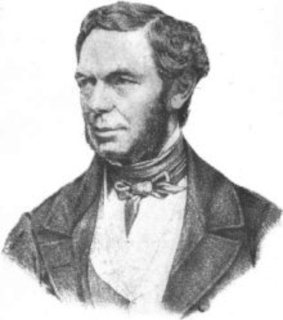
Birth of Michael Doheny, Writer, Lawyer & Co-founder of the IRB

Michael Doheny, Irish writer, lawyer, member of the Young Ireland movement, and co-founder of the Irish Republican Brotherhood (IRB), is born on May 22, 1805, at Brookhill, parish of Fethard, County Tipperary, the second son of Michael Doheny of Brookhill, a small farmer, and Ellen Doheny (née Keley).

Doheny receives a rudimentary education from an itinerant scholar while labouring on his father’s holding, and in 1826 attends Maher’s classical academy near Emly for nine months. Educating himself in the late 1820s and early 1830s while teaching the children of local farmers, he determines on a career in law to help secure political redress for the disenfranchised poor. He is admitted to Gray’s Inn in November 1834, enters the King’s Inns, Dublin, in 1835 and is called to the Irish bar in 1838. Settling later that year in Cashel, County Tipperary, he first practises in the local courts and then on the southern circuit. Appointed legal assessor to the borough of Cashel under the Municipal Corporations (Ireland) Act 1840, he successfully prosecutes former borough officers for misappropriation of funds and fraudulent transfer of property, winning wider attention. He had supported the campaign for repeal in the early 1830s, and in 1841 joins Daniel O’Connell‘s Repeal Association, becoming active in forming temperance bands and setting up town meetings. By May 1841 he is on the association’s general committee. O’Connell finds him less tractable than most and is ruffled by his queries into the association’s financial management.

During 1842 Doheny begins to associate with the more militant members of the repeal movement such as Thomas Davis. There is a marked gap in age and class between Doheny and most of this group and some look down on his lack of refinement. Others, however, admire his zeal and sincerity, and an anonymous colleague describes him as “rough, generous, bold, a son of the soil, slovenly in dress, red-haired and red-featured, but a true personification of the hopes, passions, and traditions of the people.” Assisting in the launch of The Nation in October 1842, he is chagrined to find most of his articles rejected as unfit for publication, although fifteen are published between January 1843 and September 1844. He also publishes a competent History of the American Revolution (1846) for The Nation‘s “Library of Ireland” series. More impressive as a speaker than a writer, he contributes regularly to repeal meetings at Conciliation Hall, Burgh Quay, Dublin. He enthuses at the apparent martial potential of the immense, ordered crowds attending the “monster” repeal meetings of 1843, and is one of the main organisers of the Cashel meeting of May 31, 1843, at which he is loudly cheered. However, his later claim to have deliberately set up these meetings, with Davis and John Blake Dillon, on quasi-military lines in order to prepare the peasantry for a future war with Britain, is far-fetched. His opposition to O’Connell’s decision to submit to proclamation of the proposed meeting of October 8, 1843, at Clontarf again greatly irritates O’Connell.

An active member of the Repeal Association parliamentary committee from February 1844, in February and March 1845 Doheny chairs a sub-committee of five senior barristers investigating the legality of withdrawal from the House of Commons by the body of repeal MPs, coming “reluctantly” to the verdict that such an action is open to criminal prosecution. O’Connell’s gruff dismissal of his report testifies to their awkward relationship. He further vexes O’Connell by his advocacy of non-denominational university education during debates over the Maynooth College Act 1845. Irrevocable divisions between the Young Irelanders and O’Connell open up between April and July 1846 when Doheny leads calls for endorsement of the conduct of William Smith O’Brien – imprisoned for a month for refusal to serve on a parliamentary committee – and voices Young Ireland’s martial convictions in a speech at Liverpool. After the secession of the Young Irelanders from the Repeal Association in July 1846, he opposes attempts at reconciliation and is one of the founders of the Irish Confederation on January 13, 1847.

During the summer of 1847, Doheny begins setting up “Confederate Clubs” in east Tipperary and aids James Fintan Lalor in organising a failed tenant league meeting at Holycross, County Tipperary, on September 19. He is one of the few Young Irelanders attracted to Lalor’s revolutionary agrarian philosophy, but supports Smith O’Brien against John Mitchel in January 1848, deploring irresponsible demands for insurrection. However, after Mitchel’s conviction for treason felony in May, he supports armed action. Arrested for seditious speechmaking at Cashel on July 12, he is bailed on July 20. During the confused period of “rebellion” in late July, he attempts to organise the peasantry in Tipperary but is frustrated by O’Brien’s vacillation.

After the collapse of the armed adventure at Ballingarry on July 31, Doheny takes refuge near Slievenamon and, with James Stephens, eludes pursuit for nearly two months, until he finally escapes, disguised as a clergyman, on a cattle-ship from Cork to Bristol. Some days later he reaches Paris, where he stays for two months with Stephens and John O’Mahony before leaving for New York City. Practising law in New York, he dedicates himself to the development of an Irish American republican movement. Tensions between conservative and radical Young Ireland exiles, perhaps aggravated by social snobbery, surface by late 1849, when he is arrested for attempting to push Thomas D’Arcy McGee into an open cellar on a New York street, angered by accusations of boasting, drunkenness, and incompetence. Similar criticisms are made by John Blake Dillon and appear to have some foundation.

Doheny finds time to write The Felon’s Track (1849), a polemical account of the repeal agitation and the 1848 insurrection that is highly critical of O’Connell. Despite a rambling narrative, it becomes a popular work and is reprinted several times. He also gives several lectures on historical and literary subjects to Irish American societies and contributes a memoir on Geoffrey Keating to O’Mahony’s translation (1857) of Foras Feasa ar Éirinn.

Involved with the New York Irish militia from his arrival, he is elected lieutenant colonel of the 69th Infantry Regiment in November 1851, and in September 1852 becomes colonel of a new regiment, the Irish Republican Rifles. These formations are often wracked by dissension over strategy and leadership, and in February 1856 he and O’Mahony found the Emmet Monument Association, planning to mobilise an Irish American force to invade Ireland. Efforts to acquire Russian backing fails on the close of the Crimean War in March 1857.

In autumn 1857, Doheny and O’Mahony make overtures to James Stephens to reorganise the republican movement in Ireland, and in March 1858 they accept Stephens’s demands for undisputed authority there, though by the winter of 1858–59 Doheny shows increasing distrust of Stephens’s ambitions. Adopting the organisational structure set out by Stephens in establishing the IRB in 1858, he and O’Mahony found the American equivalent, the Fenian Brotherhood, in early 1859, although he plays a subordinate part. In July 1859, he founds and edits a short-lived newspaper in New York, The Phoenix, to promote Fenian ideals. Active in opposing the national petition for self-government of 1860–61, he argues that Britain will only yield to force. He assists in making preparations for the funeral of Terence Bellew MacManus in Ireland and acts as one of the pallbearers in New York. Travelling to Ireland in October 1861, he appears to argue for using the excitement engendered by the funeral to spark an insurrection in Dublin but is thwarted by Stephens.

Doheny dies suddenly on April 1, 1862, in New York and is buried in Calvary Cemetery in the city’s borough of Queens.

(From: “Doheny, Michael” by James Quinn and Desmond McCabe, Dictionary of Irish Biography, http://www.dib.ie, October 2009)


Leave a comment

Death of Thomas Staples, Last Surviving Member of the Irish House of Commons

Sir Thomas Staples, 9th Baronet, Anglo-Irish politician and lawyer, dies on May 14, 1865, in Dublin, County Dublin, eleven weeks short of his 90th birthday. He is the last surviving person to have been a member of the Irish House of Commons, albeit only having been in the House for a short time.

Staples is born on July 31, 1775, the son of John Staples (1736-1820) and Henrietta Molesworth (1745-1813), a daughter of Richard Molesworth, 3rd Viscount Molesworth. His siblings are Rev. John Molesworth Staples (1776-1858), Grace “Marchioness of Ormonde” Louisa Staples Butler (1779-1860) and Hon. Frances Staples Ponsonby (1782-1858).

Between March and April 1800, he is the Member of Parliament for Knocktopher in the Irish House of Commons, before resigning. In 1832, he inherits his cousin’s baronetcy. He is a barrister in Dublin and is appointed a Queen’s Advocate in Ireland in 1845.

Staples lives at Lissan House, near the market town of Cookstown, County Tyrone. He marries Catherine Hawkins (1796-1872), daughter and heiress of Reverend John Hawkins and Anne Montgomery, on October 27, 1813. They have no children.

Staples dies in Dublin on May 14, 1865, and is buried in the Lissan Church of Ireland Churchyard in Cookstown. His title is inherited by his nephew.


Leave a comment

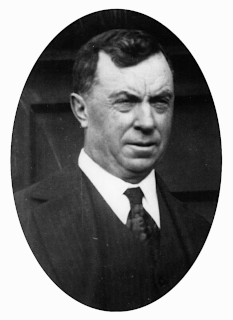
Birth of Daniel F. Cohalan, Irish American Lawyer & Politician

Daniel Florence Cohalan, American lawyer and politician of Irish descent, is born December 21, 1867, in Middletown, Orange County, New York, the eldest of five sons of Timothy E. Cohalan and Ellen Cohalan (née O’Leary), both Irish immigrants.

Cohalan graduates from Manhattan College in 1885, takes a master’s degree in 1894, and is given an honorary LL.D. in 1911. He is admitted to the bar in 1888, and practices law in New York City. In September 1889, he removes to the Bronx, practices law there, and enters politics, joining Tammany Hall, becoming an adviser to party boss Charles F. Murphy and later to John F. Curry. He is Grand Sachem of the Tammany Society from 1908 to 1911.

Cohalan is active in Democratic Party politics by 1900, drafting state party platforms and serving as a delegate to the national conventions in 1904 and 1908.

On May 18, 1911, Cohalan is appointed by Gov. John Alden Dix to the New York Supreme Court, to fill the vacancy caused by the election of James Aloysius O’Gorman as U.S. Senator from New York. In November 1911, he is elected to succeed himself. On December 28, 1923, he tenders his resignation, to become effective on January 12, 1924, claiming that the annual salary of $17,500 is not enough to provide for his large family.

Cohalan is a close associate of Irish revolutionary leader John Devoy and is influential in many Irish American societies including Clan na Gael. He helps to form the Sinn Féin League in 1907 and is a key organiser of the Irish Race Convention and the Friends of Irish Freedom (FOIF) on March 4-5, 1916. He is involved with the financing and planning of the Easter Rising in Dublin and is instrumental in sending Roger Casement to Germany in 1914. He is Chairman of the Irish Race Convention held in Philadelphia on February 22-23, 1919, and active in the Friends of Irish Freedom (1916–34).

When the United States enters World War I, Cohalan’s earlier work to obtain German assistance for Ireland becomes a liability, but he urges Irish Americans to support the war effort and to insist that self-determination for Ireland be included among the war aims. He opposes the peace treaty and the League of Nations and leads an Irish American delegation to the United States Senate Committee on Foreign Relations hearings, contributing to the defeat of the treaty in the Senate.

Cohalan strongly opposes President Woodrow Wilson‘s proposals for the League of Nations, on the basis that the Irish Republic had been denied a policy of self-determination at the Paris Peace Conference in 1919. In 1920, he works for the nomination of Hiram W. Johnson as the Republican Party candidate for president. His quarrels with Franklin D. Roosevelt begin in 1910, and he fights Roosevelt’s nomination for president in 1932 and 1936. He breaks with both Éamon de Valera and Irish American leader Joseph McGarrity in late 1919 on Irish American political direction.

In the aftermath of the Anglo–Irish Treaty, Cohalan and the FOIF back Arthur Griffith, Michael Collins and the Irish Free State. He visits Ireland in 1923 and supports William T. Cosgrave in the election of that year.

Cohalan dies at his home in Manhattan, New York, on November 12, 1946, and is buried on November 15 at the Calvary Cemetery in Woodside, Queens, New York. The Daniel F. Cohalan papers are in the possession of the American Irish Historical Society, New York.

State Senator John P. Cohalan (1873–1950) is one of Cohalan’s eleven siblings, and church historian Monsignor Florence Daniel Cohalan (1908–2001) is one of his nine children.


Leave a comment

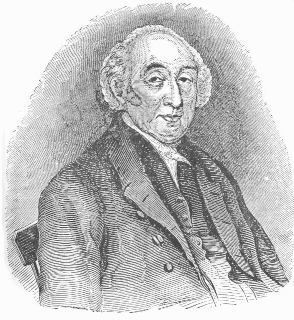
Death of Robert Holmes, Lawyer & Nationalist

Robert Holmes, Irish lawyer and nationalist, dies in London on October 7, 1859.

Holmes, the son of parents who are natives of Antrim, County Antrim, and settled in Belfast, is born during a visit by his parents to Dublin in 1765. He enters Trinity College, Dublin in 1782, and graduates B.A. in 1787. He at first devotes himself to medicine, but he soon turns his attention to the law. In 1795, he is called to the bar. He spends a substantial period of his professional life travelling the northeast circuit in Ireland, where he gains a reputation for great ability and legal skill.

Holmes studies law and becomes one of the best-known defenders of the Nationalist leaders in Ireland. He speaks in 1846 in defence of Charles Gavan Duffy, editor of The Nation. Duffy had been indicted over an article written by John Mitchel, which comes to be known as the “Railway Article.” His defence proves successful and his speech on behalf of his client is described by Lord Chief Justice Edward Pennefather as “the most eloquent ever heard in a court of Justice.”

In 1798, during a parade of the lawyer’s corps of yeomanry, of which he is a member, Holmes throws down his arms on learning that the corps is to be placed under the military authorities, dreading that he might have to act against the populace. To one Joy, a barrister, who had used insulting language to him respecting this circumstance, he sends a challenge, for which he suffers three months’ imprisonment. In 1799, he publishes a satirical pamphlet on the projected Acts of Union, entitled A Demonstration of the Necessity of the Legislative Union of Great Britain and Ireland. With the rising of his brother-in-law, Robert Emmet, on July 23, 1803, he has no connection, although he is arrested on suspicion and imprisoned for some months. This retards his advancement. He declines to receive any favours from the government, refusing in succession the offices of Crown prosecutor, King’s Counsel, and Solicitor-General, and to the last he remains a member of the outer bar.

Holmes has for many years the largest practice of any member of the Irish courts, and is listened to with attention by judges, although he is not always very civil to them. His law arguments form an important set of articles in the Irish Law Reports, and he is an impressive advocate, notably in his speeches in Watson v. Dill, in defence of The Nation newspaper, and his oration on behalf of John Mitchel, tried for treason-felony on May 24, 1848. During the course of his practice he makes over £100,000.

Holmes marries, firstly, Mary Anne Emmet, daughter of Dr. Robert Emmet. She is the sister of Robert Emmet, who leads an unsuccessful rebellion in 1803, and whose brother, Thomas Addis Emmet, is a leading member, with Theobald Wolfe Tone, of the Society of United Irishmen. Both take part in the Irish Rebellion of 1798. The marriage produces one surviving child, a daughter, who later marries George William Lenox-Conyngham, chief clerk of the Foreign Office, and in turn has an only daughter who in 1861 marries Viscount Doneraile.

Holmes marries in 1810 at Childwall, Liverpool, as his second wife, the English educator and writer Eliza Lawrence. She dies in 1811.

After his retirement in 1852, Holmes resides in London with his only child Elizabeth. He dies at the age of 94 at her home, 37 Eaton Place, Belgrave Square, London, on October 7, 1859.

During the course of his life, Holmes is the author of three published works. The first, published in 1799, is entitled A Demonstration of the Necessity of the Legislative Union of Great Britain and Ireland, a satirical pamphlet ridiculing the arguments of its supporters. The next is An Address to the Yeomanry of Ireland, demonstrating the necessity of their declaring their opinions upon Political Subjects. His most important work however, according to Peter Aloysius Sillard, is The Case of Ireland Stated, which apparently goes through six editions, the last in 1847.

(Pictured: Image of Robert Holmes from Michael Doheny’s “The Felon’s Track”)


Leave a comment

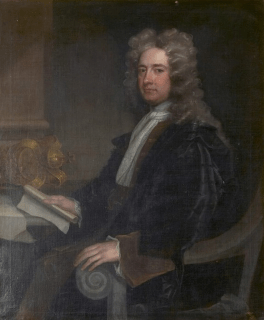
William Conolly Resigns as Speaker of the Irish House of Commons

William Conolly, Irish politician, Commissioner of Revenue, lawyer and landowner also known as Speaker Conolly, resigns as Speaker of the Irish House of Commons on October 13, 1729, on grounds of ill health. Sir Ralph Gore is elected unanimously in his place. His name is spelled Conolly rather than the more familiar Connolly, derived ultimately from the Gaelic surname “Ó Conghalaigh.”

Conolly is born on April 9, 1662, in Ballyshannon, County Donegal, the son of an innkeeper, Patrick Conolly. His father is a native of County Monaghan, and a descendant of the Ó Conghalaigh clan of Airgíalla, who settles in County Donegal, embraces the Anglican Church, and has children William, Patrick, Hugh, Phelim and Thady. His father sets aside enough money that he is able to send Conolly to Dublin to study law. He qualifies as an attorney in 1685, aged twenty-three.

Conolly practises as a lawyer in Dublin and in 1694 he marries Katherine Conyngham, daughter of General Sir Albert Conyngham. The Conynghams are an Ulster Scots family who are originally from Mountcharles in County Donegal. The family later settles at Slane Castle in County Meath in the 1780s, where the Conynghams still reside. They have no children, and on Katherine’s death in 1752 the estates are inherited by William James Conolly, his nephew by his brother Patrick.

Conolly makes his fortune from land transfers, following the confiscations by the Crown of lands belonging to supporters of King James II, in the wake of the Glorious Revolution and the accession of William III and Mary II in 1688–91, known as the “Williamite War in Ireland.” About 600,000 Irish acres are confiscated to be sold to pay for the costs of the war, nearly 5% of the land area of Ireland. Conolly is the largest individual buyer, in particular buying 3,300 acres in County Meath that had been assigned to the Earl of Albemarle.

Conolly builds the first winged Palladian house in Ireland, Castletown House in Celbridge, County Kildare, starting in 1722, and specifies that every part of it has to be made from Irish materials. His Dublin townhouse is on Capel Street, then the most fashionable part of the city. He also commissions the former Customs House (now the site of the Clarence Hotel) and the Irish Houses of Parliament, the world’s first building specifically designed as a bicameral parliament.

Conolly is the most important of the “Undertakers,” the managers of Government business in the Irish House of Commons, in the early 18th century. He is associated with the moderate faction of Whigs and is opposed by the Brodrick faction from Cork. He is a Member of Parliament for Donegal Borough from 1692 to 1703 and subsequently for Londonderry County until his death in 1729. In 1703 and 1713, he is also elected for Newtown Limavady and in 1727 for Ballyshannon but chooses each time not to sit.

Conolly is Speaker of the Irish House of Commons and a Commissioner of the Revenue from 1715 to his death in 1729. He is re-elected as Speaker of the House of Commons in the first session of George II‘s parliament and continues to serve until he collapses in the Commons on September 26, 1729. He is eventually persuaded to resign the Speaker’s chair on October 13, and he dies at his house in Capel Street, Dublin, on October 30. He is buried in Celbridge following a spectacular public funeral, which sees the beginnings of the custom of mourners wearing linen scarves to promote the Irish linen industry.

On his death, the Archbishop of Armagh, Hugh Boulter, estimates Conolly’s income in 1729 at £17,000 p.a. His widow Katherine continues to live in style at Castletown until her death in 1752. She builds the Wonderful Barn and the Conolly Folly in the 1740s. Then their estates pass briefly to William’s nephew William junior, and then on to his great-nephew Thomas Conolly M.P., known as “Squire Tom,” who is married to Lady Louisa Conolly.

A pub in Celbridge, The Speaker’s Bar, is named in his memory. There is also a pub in Firhouse, Dublin, called The Speaker Conolly named after him.


Leave a comment

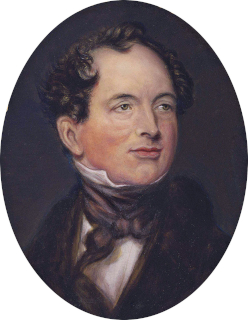
Death of Thomas Moore, Poet, Singer & Songwriter

thomas-moore

Thomas Moore, Irish poet, singer, songwriter, and entertainer, dies at Sloperton Cottage, Bromham, Wiltshire, England on February 25, 1852. He is best remembered for the lyrics of “The Minstrel Boy” and “The Last Rose of Summer.” He is a close friend of Lord Byron and Percy Bysshe Shelley.

The son of a Roman Catholic wine merchant, Moore is born at 12 Aungier Street in Dublin on May 28, 1779. From a relatively early age he shows an interest in music and other performing arts. He attends several Dublin schools including Samuel Whyte’s English Grammar School in Grafton Street where he learns the English accent with which he speaks for the rest of his life. In 1795 he graduates from Trinity College, Dublin in an effort to fulfill his mother’s dream of his becoming a lawyer.

Upon graduation from Trinity, Moore studies law in London. His major poetic work, Irish Melodies (1807–34), earns him an income of £500 annually for a quarter of a century. It contains such titles as “The Last Rose of Summer” and “Oft in the Stilly Night.” The Melodies, a group of 130 poems set to the music of Moore and Sir John Andrew Stevenson and performed for London’s aristocracy, arouses sympathy and support for the Irish nationalists, among whom Moore is a popular hero.

Lalla-Rookh (1817), a narrative poem set in an atmosphere of Oriental splendour, gives Moore a reputation among his contemporaries rivaling that of Byron and Sir Walter Scott. It is perhaps the most translated poem of its time, and it earns what is up until then the highest price paid by an English publisher for a poem (£3,000). His many satirical works, such as The Fudge Family in Paris (1818), portray the politics and manners of the Regency era.

In 1824 Moore becomes a participant in one of the most celebrated episodes of the Romantic era. He is the recipient of Byron’s memoirs, but he and the publisher John Murray burn them, presumably to protect Byron. He later brings out the Letters and Journals of Lord Byron: With Notices of his Life (1830), in which he includes a life of the poet. His lifelong espousal of the Catholic cause leads him to produce such brilliant works as his parody of agrarian insurgency, The Memoirs of Captain Rock (1824), and his courageous biography of the revolutionary leader of the Irish Rebellion of 1798, The Life and Death of Lord Edward Fitzgerald (1831).

Moore finally settles in Sloperton Cottage at Bromham, Wiltshire, England, and becomes a novelist and biographer as well as a successful poet. Around the time of the Reform Act he is invited to stand for parliament, and considers it, but nothing comes of it. In 1829 he is painted by Thomas Lawrence, one of the last works completed by the artist before his death.

Moore’s personal life is dogged by tragedy including the deaths of all five of his children within his lifetime and a stroke in later life, which disables him from performances – the activity for which he is most renowned. He dies being cared for by his wife at Sloperton on February 25, 1852. His remains are in a vault at St. Nicholas churchyard, Bromham, within view of his cottage-home, beside his daughter Anastasia.


Leave a comment

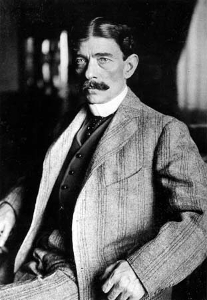
Death of Frank Harris, Novelist & Journalist

Frank Harris, British editor, novelist, short story writer, journalist and publisher, dies on August 26, 1931. He is friendly with many well-known figures of his day.

Harris is born James Thomas Harris on February 14, 1855, in Galway, County Galway, to Welsh parents. While living with his older brother he is, for a year or more, a pupil at The Royal School, Armagh. At the age of twelve he is sent to Wales to continue his education as a boarder at the Ruabon Grammar School in Denbighshire, a time he is to remember later in My Life and Loves. Harris is unhappy at the school and runs away within a year.

Harris runs away to the United States in late 1869, arriving in New York City virtually penniless. The 13-year-old takes a series of odd jobs to support himself, working first as a shoeshiner, a porter, a general laborer, and a construction worker on the erection of the Brooklyn Bridge. He later turns these early occupational experiences into art, incorporating tales from them into his book The Bomb.

From New York Harris moves to the American Midwest, settling in Chicago, where he takes a job as a hotel clerk and eventually a manager. Owing to Chicago’s central place in the meat packing industry, Harris makes the acquaintance of various cattlemen, who inspire him to leave the big city to take up work as a cowboy. He eventually grows tired of life in the cattle industry and enrolls at the University of Kansas, where he studies law and earns a degree, gaining admission to the Kansas state bar association.

Harris is not cut out to be a lawyer and soon decides to turn his attention to literature. He returns to England in 1882, later traveling to various cities in Germany, Austria, France, and Greece on his literary quest. He works briefly as an American newspaper correspondent before settling down in England to seriously pursue the vocation of journalism.

Harris first comes to general notice as the editor of a series of London papers including The Evening News, The Fortnightly Review and the Saturday Review, the last-named being the high point of his journalistic career, with H. G. Wells and George Bernard Shaw as regular contributors.

From 1908 to 1914 Harris concentrates on working as a novelist, authoring a series of popular books such as The Bomb, The Man Shakespeare, and The Yellow Ticket and Other Stories. With the advent of World War I in the summer of 1914, Harris decides to return to the United States.

From 1916 to 1922 he edits the U.S. edition of Pearson’s Magazine, a popular monthly which combines short story fiction with socialist-tinted features on contemporary news topics. One issue of the publication is banned from the mails by United States Postmaster General Albert S. Burleson during the period of American participation in the Great War. Despite this Harris manages to navigate the delicate situation which faces the left wing press and to keep the Pearson’s Magazine functioning and solvent during the war years.

Harris becomes an American citizen in April 1921. In 1922 he travels to Berlin to publish his best-known work, his autobiography My Life and Loves. It is notorious for its graphic descriptions of Harris’ purported sexual encounters and for its exaggeration of the scope of his adventures and his role in history. Years later, Time Magazine reflects in its March 21, 1960 issue “Had he not been a thundering liar, Frank Harris would have been a great autobiographer….he had the crippling disqualification that he told the truth, as Max Beerbohm remarked, only ‘when his invention flagged’.” A fifth volume, supposedly taken from his notes but of doubtful provenance, is published in 1954, long after his death.

Harris also writes short stories and novels, two books on Shakespeare, a series of biographical sketches in five volumes under the title Contemporary Portraits and biographies of his friends Oscar Wilde and George Bernard Shaw. His attempts at playwriting are less successful. Only Mr. and Mrs. Daventry (1900), which is based on an idea by Oscar Wilde, is produced on the stage.

Married three times, Harris dies of a heart attack in Nice at the age of 75 on August 26, 1931. He is subsequently buried at Cimetière Caucade in the same city. Just after his death a biography written by Hugh Kingsmill (pseudonym of Hugh Kingsmill Lunn) is published.


Leave a comment

Execution of the Sheares Brothers

Brothers John and Henry Sheares, both Irish lawyers and members of the Society of United Irishmen, are executed in Dublin on July 14, 1798 during the Irish Rebellion of 1798.

The Sheares brothers are the sons of Henry Sheares, a liberal banker from County Cork who also sits in the Irish Parliament for the Borough of Clonakilty. Henry attends Trinity College, Dublin, buys an officer’s commission and then studies as a lawyer, being called to the bar as a barrister in 1790. John qualifies as a barrister in 1788.

In 1792 the brothers go to Paris and are swept away by the popular enthusiasms of the French Revolution. They meet leaders such as Jacques Pierre Brissot and Jean-Marie Roland, both of whom are to be executed in 1793. In particular they witness the introduction of the guillotine, on which 1,400 are to die in 1792. On the boat from France to England they meet Daniel O’Connell, then a student, who is disgusted by the increasingly bloodthirsty nature of the revolution. O’Connell remains an advocate of non-violence thereafter.

The brothers join the United Irish movement upon their return to Dublin in January 1793, when it is still legal, and John begins to write articles for the Press, a nationalist paper. However, France declares war on Britain, and by extension on Ireland, in February 1793. The Society’s initial aims of securing Catholic emancipation and universal suffrage are unsuccessful, amounting to the administration’s 1793 Relief Act. Its stance becomes more radical, and in turn the Irish administration fears a group inspired by France, banning it in 1794.

The Sheares brothers principally organise the movement in Cork, while continuing with their legal careers. A Mr. Conway, one of their keenest members in Cork, informs the administration of their activities. During 1793 the brothers also join the Dublin Society of the United Irishmen, where another spy, Thomas Collins, passes on their names. Their other two less famous brothers enlist in the British army and are killed in action. On the arrest of most of the United Irish “Directory” members in March 1798, John is chosen as a replacement on the approach to the outbreak of rebellion. His main act at this point is to decide on the date – May 23.

The Directory fatally stays in Dublin, where the United Irish have less support. Already quietly betrayed by Conway and Collins, John also befriends Captain Warnesford Armstrong from County Down, who claims to be a busy member of the party there. John never verifies this, and Armstrong informs the authorities of the brothers’ whereabouts, also appearing as a witness in the ensuing trial. They are arrested on May 21 and indicted on June 26.

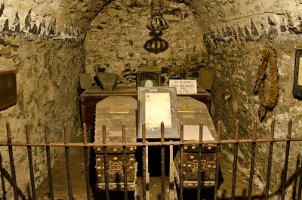
Inevitably the brothers are tried on July 12, as the rebellion is at its height, and are hanged, drawn and quartered two days later outside Newgate Prison. Their lawyer is John Philpot Curran who, with Sir Jonah Barrington, obtain a stay of execution in the hope that Henry will recant, but the brothers are already dead. They are buried at Dublin’s St. Michan’s Church. Visitors are brought to their coffins on a tour of St. Michan’s vaults.

(Pictured: The coffins of the Sheares brothers in the crypt of St. Michan’s Church)