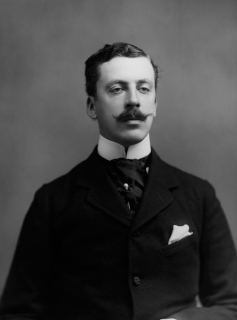
Hamilton is born in Hamilton Place, Piccadilly, London, on November 30, 1869. Styled Marquess of Hamilton between 1885 and 1913, he is a British peer and Unionist politician. He serves as the first Governor of Northern Ireland, a post he holds between 1922 and 1945. He is a great-grandfather of Diana, Princess of Wales.
In early 1901 he accompanies his father on a special diplomatic mission to announce the accession of King Edward to the governments of Denmark, Sweden and Norway, Russia, Germany, and Saxony.
Hamilton dies at his London home on September 12, 1953, and is buried at Baronscourt in County Tyrone.
(Pictured: “James Albert Edward Hamilton, 3rd Duke of Abercorn” by Alexander Bassano, Collodion Negative, 1894, Photographs Collection, National Portrait Gallery, London)
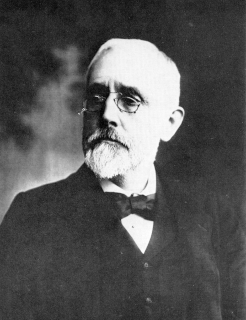
Dillon is a member of the British House of Commons during 1880–1883 and 1885–1918. For his vigorous work in the Irish National Land League, which seeks fixed tenure, fair rents, and free sale of Irish land, he is imprisoned twice between May 1881 and May 1882. He is Parnell’s fellow inmate in Kilmainham Gaol in Dublin from October 1881. For six months in 1888 he is imprisoned for aiding William O’Brien, author of the “plan of campaign” against high rent charges by English absentee landlords in Irish farming districts.
When Parnell is named co-respondent in Captain William Henry O’Shea’s divorce suit in 1890, Dillon and O’Brien at first affirm their support of him, but they finally decide that he will thenceforth be a liability as party leader. The party then splits, the anti-Parnellite majority forming the Irish National Federation, of which Dillon serves as chairman from 1896. In 1900, however, he agrees to join a reunited party under the Parnellite John Redmond.
During the prime ministry of Arthur James Balfour (1902–1905), Dillon comes to believe that the British Conservative government intends to grant Irish reforms without independence, thereby “killing Home Rule by kindness.” In 1905 he advises Irishmen to vote for Liberal Party candidates for Parliament, and, after the Liberals had taken office that year, he supports their reform program.
Throughout World War I Dillon vehemently opposes the extension of British military conscription to Ireland, both because that measure would strengthen the agitation by the more extreme nationalist Sinn Féin party and because he never accepted the view that British imperial interests necessarily coincided with those of Ireland. After the Easter Rising in Dublin in 1916, he protests against the harsh measures that ensue and, in the House of Commons, makes a passionate speech in defense of the Irish rebels.
Upon Redmond’s death on March 6, 1918, Dillon, who had broken with him over Irish support for the British war effort, succeeds him as Irish Parliamentary Party leader. By that time, however, the party has been discredited and in the 1918 Irish general election Sinn Féin wins easily. On losing his House of Commons seat to Éamon de Valera, the future president of the Republic of Ireland, he retires from politics.
Lever is the second son of James Lever, an architect and builder, and is educated in private schools. His escapades at Trinity College, Dublin (1823–1828), where he earns a degree in medicine in 1831, are drawn on for the plots of some of his novels. The character Frank Webber in the novel Charles O’Malley is based on a college friend, Robert Boyle, who later becomes a clergyman. He and Boyle earn pocket-money singing ballads of their own composing in the streets of Dublin and play many other pranks which he embellishes in the novels Charles O’Malley, Con Cregan and Lord Kilgobbin.
Before seriously embarking upon his medical studies, Lever visits Canada as an unqualified surgeon on an emigrant ship. Arriving in Canada, he journeys into the backwoods, where he is affiliated to a tribe of Native Americans but has to flee because his life is in danger, as later his character Bagenal Daly does in his novel The Knight of Gwynne.
Back in Europe, Lever pretends he is a student from the University of Göttingen and travels to the University of Jena and then to Vienna. He loves German student life and several of his songs, such as “The Pope He Loved a Merry Life,” are based on student-song models. His medical degree earns him an appointment to the Board of Health in County Clare and then as a dispensary doctor in Portstewart, County Londonderry, but his conduct as a country doctor earns him the censure of the authorities.
In 1833 Lever marries his first love, Catherine Baker, and in February 1837, after varied experiences, he begins publishing The Confessions of Harry Lorrequer in the recently established Dublin University Magazine. Before Harry Lorrequer appears in volume form (1839), he has settled on the strength of a slight diplomatic connection as a fashionable physician in Brussels.
In 1842 Lever returns to Dublin to edit the Dublin University Magazine and gathers round him a typical coterie of Irish wits. In June 1842 he welcomes William Makepeace Thackeray, the author of The Snob Papers, to Templeogue, four miles southwest of Dublin, on his Irish tour. The O’Donoghue and Arthur O’Leary (1845) make his native land an impossible place for Lever to continue in. Thackeray suggests London, but Lever requires a new field of literary observation and anecdote. His creative inspiration exhausted, he decides to renew it on the continent. In 1845 he resigns his editorship and goes back to Brussels, whence he starts upon an unlimited tour of central Europe in a family coach. Now and again, he halts for a few months and entertains to the limit of his resources in some ducal castle or other which he hires for an off season.
Depressed in spirit as Lever is, his wit is unextinguished. He is still the delight of the salons with his stories, and in 1867, after a few years’ experience of a similar kind at La Spezia, he is cheered by a letter from Lord Derby offering him the more lucrative consulship of Trieste. The $600 annual salary does not atone to Lever for the lassitude of prolonged exile. Trieste, at first “all that I could desire,” became with characteristic abruptness “detestable and damnable.”
Lever’s depression, partly due to incipient heart disease, partly to the growing conviction that he is the victim of literary and critical conspiracy, is confirmed by the death of his wife on April 23, 1870, to whom he is tenderly attached. He visits Ireland in the following year and seems alternately in high and low spirits. Death had already given him one or two runaway knocks, and, after his return to Trieste, he fails gradually, dying suddenly, however, and almost painlessly, from heart failure on June 1, 1872, at his home, Villa Gasteiger. His daughters, one of whom, Sydney, is believed to have been the real author of A Rent in a Cloud (1869), are well provided for.
Banim is born in Kilkenny, County Kilkenny on August 5, 1796. He is educated at Dr. Magrath’s Catholic school. He goes on to study for the bar, but a decline in his father’s business causes him to retire from his studies. He returns home to take over the family business, which he returns to prosperity, restoring his parents to comfort, both material and mental. In 1826 he visits John in London, making the acquaintance of many distinguished men of letters. When the struggle for Catholic emancipation is at its height, he works energetically for the cause.
Around 1822, Banim’s brother John broaches his idea for a series of national tales. He assists John in the O’Hara Tales, where he uses the name “Abel O’Hara,” and there is difficulty in allocating their respective contributions. While John is the more experienced writer, Michael provides material based on his social observations. They revise each other’s work. He writes in such hours as he can snatch from business and is the principal author of about thirteen out of the twenty-four works attributed to the brothers, including Crohoore of the Bill-Hook, The Croppy, and Father Connell. He is amiable, unambitious, modest, and generous to a degree. He keeps himself in the background, letting his younger brother have all the honor of their joint production. In 1828 he has the honor of a visit from the Comte de Montalembert, who has read the O’Hara Tales and is then on a tour through Ireland.
When his brother John is struck down by illness, Banim writes and earnestly invites him to return to Kilkenny and share his home. “You speak a great deal too much,” he observes in one letter, “about what you think you owe me. As you are my brother, never allude to it again. My creed on this subject is, that one brother should not want while the other can supply him.” However, John remains in France, seeking medical care in Paris.
Following his brother’s death in 1842, Banim writes Clough Fionn (1852), and The Town of the Cascades (1864). In 1861 he writes prefaces and notes for a reprint of the “O’Hara” novels by the publishing firm William H. Sadlier, Inc. of New York City. Besides their desire to give a true picture of their country, still crippled and prostrate from the effects of the Penal Laws, the Banims are undoubtedly influenced by the Romantic movement, then at its height.
In 1840, Banim marries Catherine O’Dwyer with whom he has two daughters, Mathilde and Mary. Although a man of means, in less than a year he loses almost the whole of his fortune through the failure of a merchant. Poor health follows. He is appointed postmaster of Kilkenny in 1852, a position he holds until illness forces him to retire in 1873. He also serves a term as mayor. His health failing, he goes with his family to reside at Booterstown, near Dublin, where he dies on August 30, 1874. His widow is granted a civil list pension.
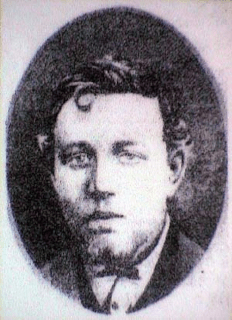
Casey is born to a teacher during the height of the Great Famine of 1846. Eight years later he moves to Gurteen, near Ballymahon in County Longford, when his father is given the post of headmaster at the local school. His work would come to be closely associated with Ballymahon.
As a teenager Casey works as an assistant to his father and is expected to follow him into teaching. However, he is disillusioned by the insufficiently nationalistic nature of the curriculum and spends a great deal of time writing poetry. It is at this time, reputedly at the age of fifteen, that he writes his best-known song, “The Rising of the Moon,” which commemorates the Irish Rebellion of 1798.
Following the increasing popularity of his songs and ballads at nationalist gatherings, Casey moves to Dublin in the 1860s and becomes active in the Fenian movement. He is a major contributor to The Nation newspaper, for which he assumes his pen name of ‘Leo.’
In 1866, at the age of 20, Casey publishes a collection of poems, entitled A Wreath of Shamrocks. Most of the poems therein had already been published elsewhere, primarily in The Nation. The further fame engendered by the success of the book leads him to be sought after as a speaker. He addresses mass rallies in Dublin, Liverpool and London that year, in the lead up to the Fenian Rising in 1867.
When the uprising fails, Casey is imprisoned without trial for eight months in Mountjoy Prison. He is released on the understanding that he would leave for Australia and not return to Ireland. However, he chooses to stay on in Summerhill, Dublin in disguise, living as a Quaker and continuing to write and publish in secret.
Casey marries Mary Josephine Briscoe in January 1868 and they have a son Michael, who dies shortly after birth in October 1869. Casey’s health had been broken by the treatment he had received in prison. He falls from a cab on or near O’Connell Bridge in the centre of Dublin in 1870. He dies from his injuries on St. Patrick’s Day, March 17, 1870.
Following his death, Casey is buried in Glasnevin Cemetery. The newspapers report that between fifty and one hundred thousand mourners walk in his funeral procession.
Born on January 5, 1944 in Waterford, County Waterford, Stewart grows up in Dublin. He begins playing guitar when he is thirteen, influenced by guitarists Les Paul and Barney Kessel. He begins his professional career performing in Dublin showbands. In 1968, he wins an award as the most outstanding soloist at the Montreux Jazz Festival. Soon after, he spends three years with Benny Goodman.
In 1981, ahead of Stewart’s debut in the United States as a leader, The New York Times states, “Mr. Stewart seems to have his musical roots in bebop. He leans toward material associated with Charlie Parker and he spins out single-note lines that flow with an unhurried grace, colored by sudden bright, lively chorded phrases. His up-tempo virtuosity is balanced by a laid-back approach to ballads, which catches the mood of the piece without sacrificing the rhythmic emphasis that keeps it moving.”
Stewart is prominently featured in Norman Mongan’s book, The History Of The Guitar In Jazz, in a chapter devoted to guitarists who are considered to be contemporary masters (along with players such as Jim Hall, Pat Martino, and George Benson). In a review of his live album Overdrive (Hep, 1993), AllMusic states, “Louis Stewart is one of the all-time greats, and it is obvious from the first notes he plays on any occasion.”
Stewart receives an honorary doctorate from Trinity College, Dublin, in 1998. In 2009, he becomes only the second jazz musician to be elected to Aosdána, an Irish affiliation of people engaged in literature, music, and visual arts that was established by the Irish Arts Council in 1981 to honour those whose work has made an outstanding contribution to the creative arts in Ireland.
In 2015, Stewart is diagnosed with cancer and dies on August 20, 2016 in Harold’s Cross, Dublin, at the age of 72.
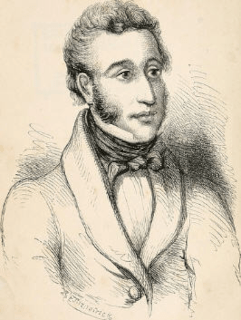
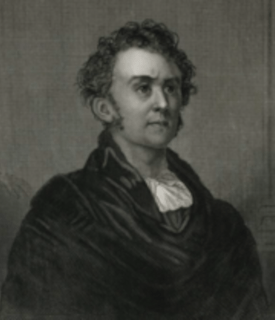
Richard Lalor Sheil, Irish politician, writer and orator, is born at Drumdowney, Slieverue, County Kilkenny on August 17, 1791. The family is temporarily domiciled at Drumdowney while their new mansion at Bellevue, near Waterford, is under construction.
Shiel’s father is Edward Sheil, who acquires considerable wealth in Cadiz in southern Spain and owns an estate in County Tipperary. His mother is Catherine McCarthy of Springhouse, near Bansha, County Tipperary, a member of the old aristocratic family of Mac Cárthaigh Riabhach of Springhouse, who in their time were Princes of Carbery and Counts of Toulouse in France. He is taught French and Latin by the Abbé de Grimeau, a French refugee. He is then sent to a Catholic school in Kensington, London, presided over by a French nobleman, M. de Broglie. For a time, he attends the lay college in St. Patrick’s College, Maynooth. In October 1804, he is removed to Stonyhurst College, Lancashire, and in November 1807 enters Trinity College, Dublin, where he specially distinguishes himself in the debates of the Historical Society.
After taking his degree in 1811 Sheil is admitted a student of Lincoln’s Inn and is called to the Irish bar in 1814. He is one of the founders of the Catholic Association in 1823 and draws up the petition for inquiry into the mode of administering the laws in Ireland, which is presented in that year to both Houses of Parliament.
In 1825, Sheil accompanies Daniel O’Connell to London to protest against the suppression of the Catholic Association. The protest is unsuccessful, but, although nominally dissolved, the association continues its propaganda after the defeat of the Catholic Relief Bill in 1825. He is one of O’Connell’s leading supporters in the agitation persistently carried on until Catholic emancipation was granted in 1829.
In the same year Shiel is returned to Parliament for Milborne Port, and in 1831 for County Louth, holding that seat until 1832. He takes a prominent part in all the debates relating to Ireland, and although he is greater as a platform orator than as a debater, he gradually wins the somewhat reluctant admiration of the House. In August 1839, he becomes Vice-President of the Board of Trade in Lord Melbourne‘s ministry.
After the accession of Lord John Russell to power in 1846, Shiel is appointed Master of the Mint, and in 1850 he is appointed minister at the court of Tuscany. He dies in Florence on May 23, 1851. His remains are conveyed back to Ireland by a British ship-of-war, and interred at Long Orchard, near Templetuohy, County Tipperary.
George W. E. Russell says of Shiel, “Sheil was very small, and of mean presence, with a singularly fidgety manner, a shrill voice, and a delivery unintelligibly rapid. But in sheer beauty of elaborated diction not O’Connell nor anyone else could surpass him.”
Shiel’s play, Adelaide, or the Emigrants, is performed at the Crow Street Theatre in Dublin, on February 19, 1814, with success, and, on May 23, 1816, it is performed at Covent Garden in London. The Apostate, produced at the latter theatre on May 3, 1817, establishes his reputation as a dramatist. His other principal plays are Bellamira (written in 1818), Evadne (1819), Huguenot (produced in 1822) and Montini (1820).
In 1822, Sheil begins, with William Henry Curran, to contribute to The New Monthly Magazine a series of papers entitled “Sketches of the Irish Bar.” Curran, in fact, does most of the writing. These pieces are edited by Marmion Wilme Savage in 1855 in two volumes, under the title of Sketches Legal and Political. Sheil’s Speeches are edited in 1845 by Thomas MacNevin.
In 1816, Shiel marries a Miss O’Halloran, niece of Sir William MacMahon, Master of the Rolls in Ireland. They have one son, who predeceases Sheil. His wife dies in January 1822. In July 1830, he marries Anastasia Lalor Power, a widow. He then adds the middle name Lalor.
The Battle of Curlew Pass is fought on August 15, 1599, during the campaign of the Earl of Essex in the Nine Years’ War, between an English force under Sir Conyers Clifford and a rebel Irish force led by Hugh Roe O’Donnell. The English are ambushed and routed while marching through a pass in the Curlew Mountains, near the town of Boyle, in northwestern Ireland. The English forces suffer heavy casualties. Losses by allied Irish forces are not recorded but are probably minimal.
In April 1599, Robert Devereux, 2nd Earl of Essex, lands in Ireland with over 17,000 troops and cavalry to put down the rebellion of Hugh O’Neill and Red Hugh O’Donnell, which has spread from Ulster to all Ireland. To this end, he supports an Irish enemy of O’Donnell’s, Sir Donogh O’Connor (O’Connor Sligo), encouraging him to repossess those territories of his in Sligo that O’Donnell has occupied. Sligo Town is an excellent advance base, with Ballyshannon 20 miles to the northeast commanding an important river-ford at the principal western passage into O’Donnell’s country in Ulster. English military advisers have long urged the government councils in Dublin and London to capture these strategic points. O’Connor’s brother-in-law, Tibbot ne Long Bourke, is appointed joint-commander with an English captain of a force sailing from Galway, and O’Connor is expected to receive them in Sligo. However, O’Donnell quickly besieges O’Connor at Collooney Castle with over 2,000 men in an effort to starve him out, and Essex is put on the back foot. Essex has no option but to support the besieged O’Connor, one of the few Gaelic chieftains the Crown can rely upon for support. He orders the experienced Sir Conyers Clifford, who is based in Athlone, to relieve the castle with 1,500 English infantry and 200 cavalry. It is hoped that the operation would also distract the chief rebel, O’Neill, and afford the crown an opportunity to march into his Ulster territory across its southeastern border.
O’Donnell leaves 300 men at Collooney Castle under his cousin, Niall Garbh O’Donnell, and sends another 600 to Sligo town to prevent the landing of English reinforcements under Tibbot ne Long Bourke. He then marches to Dunavaragh with 1,500 of his men, where he is joined by additional forces under local chieftains Conor MacDermott and Brian Óg na Samhthach Ó Ruairc. The Irish then carefully prepare an ambush site in the Curlew Mountains, along the English line of march. O’Donnell has trees felled and placed along the road to impede their progress. When he gets word of the English passing through Boyle, O’Donnell positions his men. Musketeers, archers and javelin men are placed in the woods alongside the road to harass the English. The main body of Irish infantry, armed with pikes and axes, are placed out of sight behind the ridge of the mountain.
In hot harvest weather, Clifford’s force marches from Athlone through Roscommon, Tulsk and Boyle. At 4:00 PM on August 15, they reach the foot of the Curlew Mountains, which have to be crossed before Sligo can be approached. The expedition is poorly supplied, and Clifford’s men are tired and hungry, and probably in no fit state to continue. But Clifford has received false intelligence that the pass is undefended, and he therefore chooses to seize the opportunity and march across, promising his troops plenty of beef in the evening. This means that his men miss out on the rest that had been planned for them in Boyle, whereas the Irish are well fed and prepared.
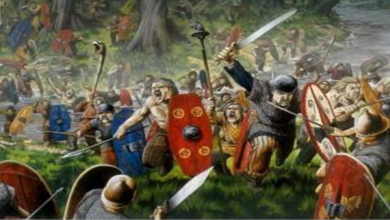
The English come under gunfire, arrow and javelin attack as soon as they reach the first of O’Donnell’s barricades, between Boyle and Ballinafad. The barricade is immediately abandoned by the Irish but as the English moved past and proceed up the hill they sustain further casualties. The road consists of “stones of six or seven foot broad, lying above ground, with plashes of bog between them,” and is lined with woodland on one side. The further the English advance, the more intensive the rebels’ fire becomes, and some English soldiers begin to lose their nerve and slip away. Eventually, there is a firefight, lasting about 90 minutes, at the end of which the English vanguard has run out of gunpowder. The commander of the vanguard, Alexander Radcliffe, can no longer control his troops. They wheel about in a panic and collide with the main column, which breaks and flees. The commander leads a charge with his remaining pikemen but is shot dead. With the English ranks in disarray, the main body of Irish infantry, which has concealed itself on the reverse slope of the hill, closes in and fights hand to hand. Clifford tries to regain control over his men, but appears overcome by his circumstances. He manages to rally himself and is killed by a pike-thrust as he rushes the enemy. The English are routed, but the situation is prevented from becoming a complete disaster for them when the commander of the horse, Sir Griffin Markham, charges uphill and temporarily drives the rebels back.
Though the actions of the English cavalry allows many of their foot soldiers to escape, Clifford’s men are pursued as far as the town of Boyle, where they find shelter in Boyle Abbey. About 500 English are killed in the battle. Irish losses are not recorded, but are probably small, having been firing from prepared positions and then routing a disorganised and demoralised enemy.
Clifford’s head is cut off and delivered to O’Donnell, who has remained nearby but without taking part in the fight. While the head is brought to Collooney Castle to intimidate its defenders, the trunk is carried by MacDermott to the monastery of Lough Key, where he hopes to use it to ransom his own prisoners. At last, the trunk is given a decent burial in the monastery.
O’Connor Sligo surrenders the castle shortly afterwards and reluctantly joins with the rebels. After the victory, there is a noticeable increase in the rate of desertion by Irish troops from the ranks of Essex’s army, and the earl orders that the surviving troops be divided up as fit only to hold walls.
The battle is a classic Gaelic Irish ambush, similar to the Battle of Glenmalure in 1580 or the Battle of the Yellow Ford in 1598. According to the Annals of the Four Masters, the victory is put down to the intercession of the Blessed Mary, rather than to arms. But Clifford had been overconfident, a trait in him that Essex once warned against, and it is clear that English military commanders are choosing to learn the hard way about the increased effectiveness of Irish rebel forces. Queen Elizabeth I‘s principal secretary, Sir Robert Cecil, rates this defeat (and the simultaneous defeat of Sir Henry Harrington in the Battle of Deputy’s Pass in County Wicklow) as the two heaviest blows ever suffered by the English in Ireland, and seeks to lay the blame indirectly on Essex. It leaves O’Donnell and O’Neill free from any threat from the Connacht side, and renders a land-based attack through Armagh highly improbable, a factor that weighs with Essex as he marches northward later in the year and enters a truce with O’Neill.
In August 1602, the Curlew Pass is the scene of the last victory won by the rebels during the war, when a panicking English force is again routed and suffers significant losses. This time the rebels are led by Rory O’Donnell who commands 400 musketeers.
Today the battlefield at Curlew Pass is overlooked by an impressionistic sculpture by Maurice Harron called “The Gaelic Chieftain”, unveiled in 1999.
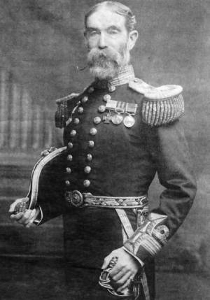
On June 21, 1854, in the Baltic Sea during the Crimean War, HMS Hecla, along with two other ships, is bombarding Bomarsund, a fort in the Åland Islands off Finland. The fire is returned from the fort, and, at the height of the action, a live shell lands on HMS Hecla‘s upper deck with its fuse still hissing. All hands are ordered to fling themselves flat on the deck, but 20-year-old Lucas with great presence of mind runs forward and hurls the shell into the sea where it explodes with a tremendous roar before it hits the water. Thanks to his action no one on board is killed or seriously wounded by the shell and, accordingly, he is immediately promoted to lieutenant by his commanding officer. His act of bravery is the first to be rewarded with the Victoria Cross in 1857.
In 1879 Lucas marries Frances Russell Hall, daughter of Admiral William Hutcheon Hall, who had been captain of HMS Hecla in 1854. The couple has three daughters together. Lucas serves for a time as Justice of the Peace for both Kent and Argyllshire.
Lucas’s campaign medals, including his Victoria Cross, are displayed at the National Maritime Museum in Greenwich, London. They are not the original medals, which were left on a train and never recovered. Replacement copies were made, though the reverse of the Victoria Cross copy is uninscribed.
Sweeney meets Rosemary Barber in 1972 and they marry in 1979. Two offspring – daughter Nico and son Malvin – are produced before the couple goes their separate ways in the early 21st century. Having lived in London for many years until 2001, he separates from Rosemary and goes to live in Timișoara, Romania and Berlin. In 2007, he meets his partner, Mary Noonan, and in early 2008 he moves to Cork to live with her there.
Sweeney produces numerous collections of poetry for which he wins several awards. His novels for children include The Snow Vulture (1992) and Fox (2002). He authors a satirical thriller, co-written with John Hartley Williams, and entitled Death Comes for the Poets (2012).
As Bill Swainson, Sweeney’s editor at Allison & Busby in the 1980s, recalls: “As well as writing his own poetry, Matthew was a great encourager of poetry in others. The workshops he animated, and later the residencies he undertook, were famous for their geniality and seriousness and fun. Sometime in the late 1980s I attended one of these workshops in an upstairs room of a pub in Lamb’s Conduit Street, Bloomsbury, where the poems were circulated anonymously and carefully read and commented on by all. Around the pushed-together tables were Ruth Padel, Eva Salzman, Don Paterson, Maurice Riordan, Jo Shapcott, Lavinia Greenlaw, Michael Donaghy, Maura Dooley and Tim Dooley.” Sweeney later has residencies at the University of East Anglia and Southbank Centre, among many others. He reads at three Rotterdam Poetry Festivals, in 1998, 2003 and 2009.
According to the poet Gerard Smyth: “I always sensed that in the first instance [Sweeney] regarded himself as a European rather than an Irish poet – and rightly so: like the German Georg Trakl whom he admired he apprehended the world in a way that challenged our perceptions and commanded our attention.” Sweeney’s work has been considered “barely touched by the mainstream of English writing” and more so by the German writers Heinrich von Kleist, Georg Büchner, Franz Kafka, Günter Grass and Heinrich Böll, as well as the aforementioned Georg Trakl. According to Poetry International Web, he would be among the top five most famous Irish poets on the international scene.
Having been diagnosed with motor neuron disease the previous year, Sweeney dies at the age of 65 at Cork University Hospital on August 5, 2018, surrounded by family and friends. He continues writing up until three days before his death. In an interview shortly before his death he is quizzed on his legacy, to which he gives the response, “Mostly what awaits the poet is posthumous oblivion. Maybe there will be a young man in Hamburg, or Munich, or possibly Vienna, for whom my German translations will be for a while important – and might just contribute to him becoming a German language poet with Irish leanings.”
Among those attending a special ceremony on August 8, 2018 at the Triskel Arts Centre in Cork to celebrate Sweeney’s life are fellow poets Jo Shapcott, Thomas McCarthy, Gerry Murphy, Maurice Riordan and Padraig Rooney. On August 9, 2018, he is buried in Clonmany New Cemetery in County Donegal.




 seamus dubhghaill