seamus dubhghaill

Promoting Irish Culture and History from Little Rock, Arkansas, USA


Leave a comment

Death of Patrick McGee, Actor & Director

patrick-mcgee

Patrick George McGee, Northern Irish actor and director of stage and screen known professionally as Patrick Magee, dies from a heart attack at his flat in Fulham, London on August 14, 1982. He is known for his collaborations with Samuel Beckett and Harold Pinter, as well as creating the role of the Marquis de Sade in the original stage and screen productions of Marat/Sade. He also appears in numerous horror films and in two Stanley Kubrick films, A Clockwork Orange and Barry Lyndon.

McGee is born into a middle-class family in Armagh, County Armagh, Northern Ireland on March 31, 1922. He is the first born of five children and is educated at St. Patrick’s Grammar School, Armagh.

McGee’s first stage experience in Ireland is with Anew McMaster’s touring company, performing the works of William Shakespeare. It is here that he first works with Pinter. He is then brought to London by Tyrone Guthrie for a series of Irish plays. He meets Beckett in 1957 and soon records passages from the novel Molloy and the short story From an Abandoned Work for BBC Radio. Impressed by “the cracked quality of Magee’s distinctly Irish voice,” Beckett requests copies of the tapes and writes Krapp’s Last Tape especially for the actor. First produced at the Royal Court Theatre in London on October 28, 1958, the play stars McGee and is directed by Donald McWhinnie. A televised version is later broadcast by BBC Two on November 29, 1972.

In 1964, McGee joins the Royal Shakespeare Company, after Pinter, directing his own play, The Birthday Party, specifically requests him for the role of McCann. In 1965 he appears in Peter Weiss‘s Marat/Sade, and when the play transfers to Broadway he wins a Tony Award. He also appears in the 1966 RSC production of Staircase opposite Paul Scofield.

McGee’s early film roles include Joseph Losey‘s The Criminal (1960) and The Servant (1963), the latter an adaptation scripted by Pinter. He also appears as Surgeon-Major James Henry Reynolds in Zulu (1964), Séance on a Wet Afternoon (1964), Anzio (1968), and in the film versions of Marat/Sade (1967) and The Birthday Party (1968). He is perhaps best known for his role as the victimised writer Frank Alexander, who tortures Alex DeLarge with Ludwig van Beethoven‘s music, in Stanley Kubrick’s film A Clockwork Orange (1971). His other role for Kubrick is as Redmond Barry’s mentor, the Chevalier de Balibari, in Barry Lyndon (1975).

McGee also appears in Young Winston (1972), The Final Programme (1973), Galileo (1975), Sir Henry at Rawlinson End (1980), The Monster Club and Chariots of Fire (1981) but is most often seen in horror films. These include Roger Corman‘s The Masque of Red Death (1964), and the Boris Karloff vehicle Die, Monster, Die! (1965) for AIP; The Skull (1965), Tales from the Crypt (1972), Asylum (1972), and And Now the Screaming Starts! (1973) for Amicus Productions; Demons of the Mind (1972) for Hammer Film Productions; and Walerian Borowczyk‘s Docteur Jekyll et les femmes (1981).

Patrick McGee dies from a heart attack at his flat in Fulham, London on August 14, 1982, at the age of 60, according to obituaries in The Herald and The New York Times. On July 29, 2017, a blue plaque is unveiled in Edward Street, Armagh to mark Patrick McGee’s birthplace.
Leave a comment

Birth of Peter O’Toole, Stage & Film Actor

peter-o-toole

Peter Seamus O’Toole, British stage and film actor of Irish descent, is born on August 2, 1932, in Leeds, Yorkshire, England. Some sources give his birthplace as Connemara, County Galway. Records from the General Registry Office in Leeds confirm that O’Toole is born in the north England town in 1932.

O’Toole grows up in Leeds and is educated at the Royal Academy of Dramatic Art in London. He is a reporter for the Yorkshire Evening Post in his teens and makes his amateur stage debut at Leeds Civic Theatre. After serving two years in the Royal Navy, he acts with the Bristol Old Vic Company from 1955 to 1958 and makes his London debut as Peter Shirley in George Bernard Shaw’s Major Barbara (1956). He appears with the Shakespeare Memorial Company at Stratford-upon-Avon, Warwickshire, England, in 1960 in highly praised performances as Shylock in The Merchant of Venice and as Petruchio in The Taming of the Shrew, and he plays the lead in Hamlet for the inaugural production of the Royal National Theatre in London in 1963. A prominent film star by this point in his career, he continues to appear on stages throughout the world to great acclaim. He is named associate director of the Old Vic in 1980.

O’Toole makes his motion picture debut in Kidnapped in 1960 and two years later becomes an international star for his portrayal of T.E. Lawrence in David Lean’s epic Lawrence of Arabia (1962). In 1964 he plays Henry II of England in Becket, and he has the title role in Lord Jim (1965). He appears as Henry II again in The Lion in Winter (1968), a film notable for the witty verbal sparring matches between O’Toole and costar Katharine Hepburn. The Ruling Class (1972), a controversial black comedy that has become a cult classic, casts O’Toole as a schizophrenic English earl with a messiah complex.

Personal problems contribute to a decline in his popularity during the 1970s, but he makes a strong comeback in the early 1980s with three well-received efforts. He portrays a duplicitous and domineering movie director in The Stunt Man (1980), and his performance as the Roman commander Lucius Flavius Silva in the acclaimed television miniseries Masada (1981) is hailed as one of the finest of his career. His most popular vehicle during this period is My Favorite Year (1982), an affectionate satire on the early days of television, in which he plays Alan Swann, a faded Errol Flynn-type swashbuckling screen star with a penchant for tippling and troublemaking.

O’Toole subsequently maintains his status with fine performances in such films as the Oscar-winning The Last Emperor (1987), the cult favourite Wings of Fame (1989), and Fairy Tale: A True Story (1997), in which he portrays Sir Arthur Conan Doyle. Notable screen roles in the 21st century included King Priam in the historical epic Troy (2004), an aging romantic in Venus (2006), the voice of a haughty food critic in the animated Ratatouille (2007), and a priest in the historical drama For Greater Glory (2012). In addition, in 2008 he portrays Pope Paul III in the TV series The Tudors.

In 1992 O’Toole publishes a lively memoir, Loitering with Intent: The Child. A second volume, Loitering with Intent: The Apprentice, appears in 1996. He is nominated for an Academy Award eight times — for Lawrence of Arabia, Becket, The Lion in Winter, Goodbye, Mr. Chips (1969), The Ruling Class, The Stunt Man, My Favorite Year, and Venus — but never wins. In 2003 he is awarded an honorary Oscar. He receives an Emmy Award for his performance as Bishop Pierre Cauchon in the television miniseries Joan of Arc (1999).

O’Toole dies on December 14, 2013, at Wellington Hospital in St. John’s Wood, London, at the age of 81. His funeral is held at Golders Green Crematorium in London on December 21, 2013, where his body is cremated in a wicker coffin. His ashes are planned to be taken to Connemara, Ireland. They are being kept at the residence of the President of Ireland, Áras an Uachtaráin, by President Michael D. Higgins, an old friend of O’Toole. His family has stated their intention to fulfill his wishes and take his ashes to the west of Ireland.


Leave a comment

Birth of Emily Brontë, Novelist & Poet

emily-bronte

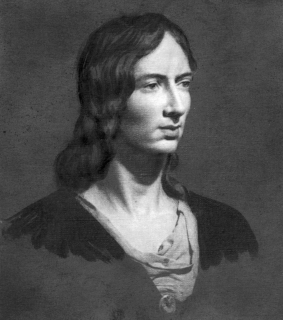
Emily Brontë, English novelist and poet who produces but one novel, Wuthering Heights (1847), is born on July 30, 1818, in Thornton, West Riding of Yorkshire, England. She is perhaps the greatest of the three Brontë sisters, but the record of her life is extremely meager, for she is silent and reserved and leaves no correspondence of interest, and her single novel darkens rather than solves the mystery of her spiritual existence.

Her father, Patrick Brontë (1777–1861), an Irishman, holds a number of curacies. Hartshead, Yorkshire, is the birthplace of his elder daughters, Maria and Elizabeth, who died young. Nearby Thornton is the birthplace of Emily and her siblings Charlotte, Patrick Branwell, and Anne. In 1820 Patrick Brontë becomes rector of Haworth, remaining there for the rest of his life.

After the death of their mother in 1821, the children are left very much to themselves in the bleak moorland rectory. The children are educated, during their early life, at home, except for a single year that Charlotte and Emily spend at the Cowan Bridge School at Cowan Bridge in Lancashire. In 1835, when Charlotte secures a teaching position at Miss Wooler’s school at Roe Head, Emily accompanies her as a pupil but suffers from homesickness and remains only three months. In 1838 Emily spends six exhausting months as a teacher at Law Hill School, near Halifax, and then resigns.

In an effort to keep the family together at home, Charlotte plans to keep a school for girls at Haworth. In February 1842 she and Emily go to Brussels to learn foreign languages and school management at the Héger Pensionnat. Although Emily pines for home and for the wild moorlands, it seems that in Brussels she is better appreciated than Charlotte. Her passionate nature is more easily understood than Charlotte’s decorous temperament. In October, however, when her aunt dies, Emily returns permanently to Haworth.

In 1845 Charlotte comes across some poems by Emily, and this leads to the discovery that all three sisters have written verse. A year later they publish jointly a volume of verse, Poems by Currer, Ellis and Acton Bell, the initials of these pseudonyms being those of the sisters. It contains 21 of Emily’s poems, and a consensus of later criticism has accepted the fact that Emily’s verse alone reveals true poetic genius. The venture costs the sisters about £50 in all, and only two copies are sold.

By midsummer of 1847 Emily’s Wuthering Heights and Anne’s Agnes Grey have been accepted for joint publication by J. Cautley Newby of London, but publication of the three volumes is delayed until the appearance of their sister Charlotte’s Jane Eyre, which is immediately and hugely successful. Wuthering Heights, when published in December 1847, does not fare well. Critics are hostile, calling it too savage, too animal-like, and clumsy in construction. Only later does it come to be considered one of the finest novels in the English language.

Soon after the publication of her novel, Emily’s health begins to fail rapidly. She had been ill for some time, but now her breathing becomes difficult, and she suffers great pain. She dies of tuberculosis on December 19, 1848, in Haworth. She is buried at St. Michael and All Angels’ Church in Haworth.


Leave a comment

Birth of Sir Hudson Lowe, Governor of Saint Helena

CREATOR: gd-jpeg v1.0 (using IJG JPEG v80), quality = 90

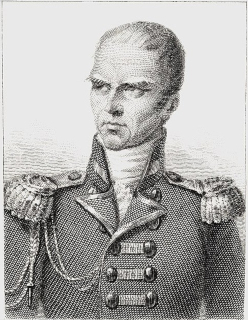
Sir Hudson Lowe, Anglo-Irish soldier and colonial administrator who is best known for his time as Governor of Saint Helena, where he is the “gaoler” of Napoleon Bonaparte, is born in Galway, County Galway on July 28, 1769.

Lowe is the son of John Lowe, an army surgeon. His childhood is spent in various garrison towns, particularly in the West Indies, but he is educated chiefly at Salisbury Grammar. He obtains a post as ensign in the East Devon Militia when he is eleven. In 1787 he enters his father’s regiment, the 50th Regiment of Foot, which is then serving in Gibraltar under Governor-General Charles O’Hara. In 1791, he is promoted to lieutenant. The same year he is granted eighteen months’ leave and chooses to spend the time traveling through Italy rather than return to Britain. He chooses to avoid traveling to France as the French Revolution had recently broken out.

Lowe holds several important commands in the war with France from 1793. He is knighted in 1814. He arrives on the island of Saint Helena, Napoleon’s last place of exile, in April 1816. Many persons, notably Arthur Wellesley, 1st Duke of Wellington, consider the choice ill advised, for Lowe is a conscientious but unimaginative man who takes his responsibility with excessive seriousness. Overwhelmed by the magnitude of the charge given him, he adheres rigorously to orders and treats Napoleon with extreme punctiliousness. After October 1816, the news that rescue operations are being planned by Bonapartists in the United States causes Lowe to impose even stricter regulations. The next month he deports Emmanuel, comte de Las Cases, Napoleon’s confidant and former imperial chamberlain, for writing letters about Lowe’s severity.

When, in late 1817, Napoleon first shows symptoms of his fatal illness, Lowe does nothing to mitigate the emperor’s living conditions. Yet he recommends that the British government increase its allowance to Napoleon’s household by one-half. After the emperor’s death on May 5, 1821, Lowe returns to England, where he receives the thanks of King George IV but is met with generally unfavourable opinion and is widely criticized for his unbending treatment of the former emperor. He later commands the British forces on Ceylon (1825–30) but is not appointed governor of that island when the office falls vacant in 1830.

Hudson Lowe dies at the age of 75 at Charlotte Cottage, near Sloane Street, Chelsea, London, of paralysis, on January 10, 1844.


5 Comments

Birth of Fenian John O’Leary

john-o-leary

John O’Leary, Irish republican and a leading Fenian, is born on July 23, 1830, in Tipperary, County Tipperary. He is imprisoned in England during the nineteenth century for his involvement in the Irish Republican Brotherhood.

O’Leary, born a Catholic, is educated at the local Protestant grammar school, The Abbey School, and later the Catholic Carlow College. He identifies with the views advocated by Thomas Davis and meets James Stephens in 1846.

He begins his studies in law at Trinity College, Dublin, in 1847, where, through the Grattan Club, he associates with Charles Gavan Duffy, James Fintan Lalor and Thomas Francis Meagher.

After the failure of the Young Ireland Rebellion of 1848, O’Leary attempts to rescue the Young Ireland leaders from Clonmel Gaol, and is himself imprisoned for a week from September 8, 1849. He takes part in a further attempted uprising in Cashel on September 16, 1849, but this proves abortive.

O’Leary abandons his study of law at Trinity College because he is unwilling to take the oath of allegiance required of a barrister. He enrolls at Queen’s College, Cork in 1850, to study medicine, later moving to Queen’s College, Galway, then on to further studies at Meath Hospital in Dublin, in Paris and in London. In 1855, he visits Paris, where he becomes acquainted with Kevin Izod O’Doherty, John Martin and the American painter, James Abbott McNeill Whistler. He subsequently becomes financial manager of the newly formed Irish Republican Brotherhood (IRB) and is joint editor of the IRB paper The Irish People.

On September 16, 1865, O’Leary is arrested and later tried on charges of high treason, eventually reduced to “treason felony.” He is sentenced to twenty years of penal servitude, of which five years are spent in English prisons, prior to his release and exile in January 1871. During his exile, he lives mainly in Paris, also visiting the United States, remains active in the IRB and its associated organisations, and writes many letters to newspapers and journals.

On the expiration of his 20-year prison term and therefore of the conditions associated with his release in 1885, O’Leary returns to Ireland. He and his sister, the poet Ellen O’Leary, both become important figures within Dublin cultural and nationalist circles, which include William Butler Yeats, Maud Gonne, Rose Kavanagh, Rosa Mulholland, George Sigerson, and Katharine Tynan. He also functions as an elder statesman of the separatist movement, being active in the Young Ireland Society, and acts as president of the Irish Transvaal Committee, which supports the Boer side in the Second Boer War.

John O’Leary dies at his residence in Dublin on the evening of March 16, 1907. He is referred to famously by W.B. Yeats in his poem September 1913: “Romantic Ireland’s dead and gone/It’s with O’Leary in the grave.”

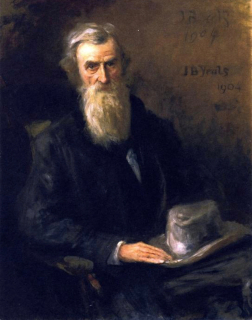
(Pictured: Painting of John O’Leary, a favorite subject of John Butler Yeats (1904). The National Gallery of Ireland owns three oil portraits of O’Leary.)


Leave a comment

Birth of John B. Keane, Irish Playwright & Novelist

john-b-keane

John Brendan Keane, Irish playwright, novelist and essayist, is born in Listowel, County Kerry on July 21, 1928.

Keane is the son of a national school teacher, William B. Keane, and his wife Hannah Purtill. He is educated at Listowel National School and then at St. Michael’s College, Listowel. He works as a chemist’s assistant for A.H. Jones who dabbles in buying antiques. He has various jobs in the United Kingdom between 1951 and 1955 working as a street cleaner and a bartender and lives in a variety of places including Northampton and London. It is while he is in Northampton that he is first published in an unnamed women’s magazine for which he receives £15.

After returning from the UK, Keane is a pub owner in Listowel from 1955 where he writes plays for the local theatre company and sponsors, from 1971, the annual Listowel Writers’ Week. He marries Mary O’Connor at Knocknagoshel Church on January 5, 1955 and they have four children: Billy, Conor, John and Joanna.

His first play, Sive (1959), is initially rejected by the Abbey Theatre in Dublin but goes on to win the amateur All-Ireland Drama Festival. Later plays include The Field (1965), which is released in a bowdlerized film version in 1990, and Big Maggie (1969), which is produced on Broadway in 1982. In 1998 Keane is honoured with a medal from the Abbey for his contribution to Irish theatre.

Keane is an Honorary Life Member of the Royal Dublin Society from 1991, serves as president of Irish club of PEN International and is a founder member of the Society of Irish Playwrights as well as a member of Aosdána. He is named the patron of the Listowel Players after the Listowel Drama Group fractures. He remains a prominent member of the Fine Gael party throughout his life, never being shy of political debate.

John Keane dies of prostate cancer on May 30, 2002, in Listowel at the age of 73.

Keane’s nephew is the investigative journalist Fergal Keane. His son John is a journalist with the Kilkenny People while his son Billy regularly writes a column for the Irish Independent.


Leave a comment

Birth of Jimmy Kennedy, Songwriter & Lyricist

jimmy-kennedy-1

James Kennedy, songwriter and lyricist, is born on July 20, 1902, near Omagh, County Tyrone in what is now Northern Ireland. He puts words to existing music such as “The Teddy Bears’ Picnic” and “My Prayer” and co-writes with composers Michael Carr, Wilhelm Grosz and Nat Simon, among others. In a career spanning more than fifty years, he writes some 2,000 songs, of which over 200 become worldwide hits and about 50 are all-time popular music classics.

Kennedy’s father, Joseph Hamilton Kennedy, is a policeman in the Royal Irish Constabulary (RIC). While growing up in the village of Coagh, Kennedy writes several songs and poems. He is inspired by local surroundings — the view of the Ballinderry River, the local Springhill House and the plentiful chestnut trees on his family’s property, as evidenced in his poem Chestnut Trees. He later moves to Portstewart, a seaside resort in County Londonderry.

Kennedy graduates from Trinity College, Dublin, before teaching in England. He is accepted into the Colonial Service, as a civil servant, in 1927.

While awaiting a Colonial Service posting to the colony of Nigeria, Kennedy embarks on a career in songwriting. His first success comes in 1930 with “The Barmaid’s Song”, sung by Gracie Fields. Fellow lyricist Harry Castling introduces him to Bert Feldman, a music publisher based in London‘s “Tin Pan Alley“, for whom he starts to work. In the early 1930s he writes a number of successful songs, including “Oh, Donna Clara” (1930), “My Song Goes Round the World” (1931), and “The Teddy Bears’ Picnic” (1933), in which he provides new lyrics to John Walter Bratton‘s tune from 1907.

In 1934, Feldman turns down Kennedy’s song “Isle of Capri“, but it becomes a major hit for a new publisher, Peter Maurice. He writes several more successful songs for Maurice, including “Red Sails in the Sunset” (1935), inspired by beautiful summer evenings in Portstewart, Northern Ireland, “Harbour Lights” (1937) and “South of the Border” (1939), inspired by a holiday picture postcard he receives from Tijuana, Mexico and written with composer Michael Carr. He and Carr also collaborate on several West End shows in the 1930s, including London Rhapsody (1937). “My Prayer,” with original music by Georges Boulanger, has English lyrics penned by Kennedy in 1939. It is originally written by Boulanger with the title “Avant de Mourir” in 1926.

During the early stages of World War II, while serving in the British Army‘s Royal Artillery, where he rises to the rank of Captain, Kennedy writes the wartime hit, “We’re Going to Hang out the Washing on the Siegfried Line.” His hits also include “Cokey Cokey” (1945), and the English lyrics to “Lili Marlene.” After the end of the war, his songs include “Apple Blossom Wedding” (1947), “Istanbul (Not Constantinople)” (1953), and “Love Is Like a Violin” (1960). In the 1960s he writes the song “The Banks of the Erne'”, for recording by his friend from the war years, Theo Hyde, also known as Ray Warren.

Kennedy is a patron of the Castlebar Song Contest from 1973 until his death in 1984 and his association with the event adds great prestige to the contest.

Kennedy wins two Ivor Novello Awards for his contribution to music and receives an honorary degree from the New University of Ulster. He is awarded the OBE in 1983 and, in 1997, is posthumously inducted into the Songwriter’s Hall of Fame.

Jimmy Kennedy dies in Cheltenham on April 6, 1984, at the age of 81. He is interred in Taunton, Somerset.


Leave a comment

Birth of James Owen Hannay, Clergyman & Novelist

Generated by IIPImage

James Owen Hannay, Irish clergyman and prolific novelist who writes under the pen name of George A. Birmingham, is born on July 16, 1865, in Belfast. Today the house where he is born is a part of the administration building of Queen’s University Belfast.

Hannay receives his education in England. He enters Temple Grove School near the River Thames at the age of nine, and later studies at a public school called Haileybury School. He then returns to Ireland to enter the Divinity School of Trinity College Dublin. He is ordained in 1889 as a Church of Ireland (Anglican) minister and starts working as a curate for Delgany, County Wicklow, a seaside town south of Dublin.

To make up for a deficiency in their living Hannay writes a short story and sends it to a London publisher. It is accepted for publication, and he receives a check of £10. On his wife’s advice, he gives up writing fiction and commits himself to the study of Christian theology with her. This bears fruit with the publications of The Spirit and Origin of Christian Monasticism (1903) and The Wisdom of the Desert (1904).

Hannay then serves as rector of Holy Trinity Church in Westport, County Mayo. It is here that he makes his debut as a novelist. His early writings raise the ire of nationalist Catholics, and he withdraws from the Gaelic League in the wake of ongoing protests about the tour of his successful play General John Regan.

Hannay becomes rector of Kildare parish from 1918 to 1920, and after serving as chaplain to the Lord Lieutenant of Ireland, he joins the British ambassadorial team in Budapest in 1922. He returns to officiate at Mells, Somerset from 1924 to 1934, after which he is appointed vicar of Holy Trinity Church in the London suburb of Kensington where he serves from 1934 until his death in London on February 2, 1950.

Hannay enjoys sailing and is taught the rudiments by his father and grandfather in Belfast. When he is based in Westport, the financial success of his writing enables him to purchase a boat, a Dublin Bay Water Wag. In recognition of Hannay, the Water Wag Club of Dun Laoghaire returns to Westport and Clew Bay in 2016. In the frontispiece of his book The Inviolable Sanctuary Hannay includes a picture of the Water Wag.


Leave a comment

Birth of Alfred Harmsworth, Newspaper Publisher

alfred-harmsworth

Alfred Charles William Harmsworth, Viscount Northcliffe, one of the most successful newspaper publishers in the history of the British press and a founder of popular modern journalism, is born on July 15, 1865 in Chapelizod, near Dublin.

After an impoverished childhood and a few attempts at making a quick fortune, young Harmsworth embarks on freelance journalism as a contributor to popular papers, rises to editorial positions, and starts a paper called Answers to Correspondents. After some difficulty in securing financial backing, he begins publication, soon shortening the name to Answers. As the paper gains public favour, he is joined by his brother Harold, whose financial ability and capacity for attracting advertising, combined with Alfred’s genius for sensing the public taste, make it a success. Answers is followed by many other inexpensive popular periodicals, chief among them Comic Cuts and Forget-Me-Not, for the new reading public of women. These form the basis for what becomes Amalgamated Press, the largest periodical-publishing empire in the world.

In 1894 Harmsworth enters the newspaper field, purchasing the nearly bankrupt London Evening News and transforming it into a popular newspaper with brief news reports, a daily story, and a column for women. Within a year circulation grows to 160,000 copies, and profits are substantial. Conceiving the idea of a chain of halfpenny morning papers in the provinces, he purchases two papers in Glasgow, Scotland, and merges them into the Glasgow Daily Record. He then decides to experiment with a popular national daily in London. The Daily Mail, first published on May 4, 1896, is a sensational success. Announced as “the penny newspaper for one halfpenny” and “the busy man’s daily journal,” it is exactly suited to the new reading public. All news stories and feature articles are kept short, and articles of interest to women, political and social gossip, and a serial story are made regular features. With its first issue, the Daily Mail establishes a world record in daily newspaper circulation, a lead it never loses during Harmsworth’s lifetime.

Next Harmsworth purchases the Weekly Dispatch when it is nearly bankrupt and transforms it into the Sunday Dispatch, the biggest-selling Sunday newspaper in the country. In 1903 he founds the Daily Mirror, which successfully exploits a new market as a picture paper, with a circulation rivaling that of the Daily Mail. He saves The Observer from extinction in 1905, the year in which he is made Baron Northcliffe. In 1908 he reaches the pinnacle of his career by securing control of The Times, which he transforms from a 19th-century relic into a modern newspaper.

Northcliffe’s contributions to the British effort in World War I begin with his early exposure in the Daily Mail of the British army’s shell shortage. His criticisms of Lord Kitchener arouse intense resentment in some quarters, but he also presses for the creation of a separate Ministry of Munitions and for the formation in 1915 of a wartime coalition government. For his service as head of the British war mission in the United States in 1917, he is created a viscount. He acts as the British government’s director of propaganda aimed at Germany and other enemy countries in 1918. By this time Northcliffe’s press empire appears to hold such power over public opinion that he tries unsuccessfully to influence the composition of Prime Minister David Lloyd George’s cabinet. Always unpredictable, he becomes the victim of a megalomania that damages his judgment and leads to the breakdown that precedes his death.

Harmsworth’s health declines during 1921 due mainly to a streptococcal infection. He goes on a world tour to revive himself, but it fails to do so. He dies of endocarditis in a hut on the roof of his London house on August 14, 1922, leaving three months’ pay to each of his six thousand employees. The viscountcy, barony, and baronetcy of Northcliffe become extinct upon his death. His body is buried at East Finchley Cemetery in North London.

Northcliffe’s success as a publisher rests on his instinctive understanding of the new reading public that had been created by compulsory education. Though he wants political power, the effect of his newspapers upon public affairs is generally considered to have been smaller than he believed. His influence lay rather in changing the direction of much of the press away from its traditional informative and interpretative role to that of the commercial exploiter and entertainer of mass publics.


Leave a comment

Birth of Fiona Shaw, Actress & Director

fiona-shaw

Fiona Mary Shaw, accomplished classical actress and theatre and opera director, is born in Farranree, County Cork on July 10, 1958. She is best known for her role as Petunia Dursley in the Harry Potter films and her role portraying Marnie Stonebrook in the HBO series True Blood.

Shaw attends secondary school at Scoil Mhuire in Cork. She receives her degree at University College Cork. She trains at the Royal Academy of Dramatic Art (RADA) in London and is part of a ‘new wave’ of actors to emerge from the Academy. She receives much acclaim as Julia in the Royal National Theatre production of Richard Sheridan‘s The Rivals (1983).

Shaw’s theatrical roles include Celia in As You Like It (1984), Madame de Volanges in Les Liaisons Dangereuses (1985), Katherine in The Taming of the Shrew (1987), Lady Franjul in The New Inn (1987), Young Woman in Machinal (1993), for which she wins the Laurence Olivier Award for Best Actress, Winnie in Happy Days (2007), and the title roles in Electra (1988), The Good Person of Sechuan (1989), Hedda Gabler (1991), The Prime of Miss Jean Brodie (1998) and Medea (2000). She performs T. S. Eliot‘s poem The Waste Land as a one-person show at the Liberty Theatre in New York City to great acclaim in 1996, winning the Drama Desk Award for Outstanding One-Person Show for her performance.

Shaw plays Miss Morrison in the 1984 The Adventures of Sherlock Holmes episode “The Adventure of the Crooked Man” and Catherine Greenshaw in Agatha Christie’s Marple episode “Greenshaw’s Folly” in 2013.

Shaw notably plays the male lead in Richard II, directed by Deborah Warner in 1995. She has collaborated with Warner on a number of occasions, on both stage and screen. She has also worked in film and television, including My Left Foot (1989), Mountains of the Moon (1990), Three Men and a Little Lady (1990), Super Mario Bros. (1993), Undercover Blues (1993), Persuasion (1995), Jane Eyre (1996), The Butcher Boy (1997), The Avengers (1998), Gormenghast (2000), and five of the Harry Potter films in which she plays Harry Potter‘s aunt Petunia Dursley. She has a brief but key role in Brian DePalma‘s The Black Dahlia (2006).

In 2009, Shaw collaborates with Deborah Warner again, taking the lead role in Tony Kushner‘s translation of Bertolt Brecht‘s Mother Courage and Her Children. In a 2002 article for The Daily Telegraph, Rupert Christiansen describes their professional relationship as “surely one of the most richly creative partnerships in theatrical history.” Other collaborations between the two women include productions of Brecht’s The Good Woman of Szechuan and Henrik Ibsen‘s Hedda Gabler, the latter adapted for television.

Shaw appears in The Waste Land at Wilton’s Music Hall in January 2010 and in a Royal National Theatre revival of London Assurance in March 2010. In November 2010, she stars in Ibsen’s John Gabriel Borkman at the Abbey Theatre, Dublin alongside Alan Rickman and Lindsay Duncan. The play is also staged in New York’s Brooklyn Academy of Music in 2011.

Shaw appears in season four of American TV show True Blood. Her character, Marnie Stonebrook, has been described as an underachieving palm reader who is spiritually possessed by an actual witch. Her character leads a coven of necromancer witches who threaten the status quo in Bon Temps, erasing most of Eric Northman‘s memories and leaving him almost helpless when he tries to kill her and break up their coven.

In 2012, Shaw appears in the Royal National Theatre revival of Scenes from an Execution by Howard Barker.

The world’s largest solo theatre festival, United Solo Theatre Festival, recognizes her performance in The Testament of Mary on Broadway with the 2013 United Solo Special Award.

In 2018 Shaw begins portraying Carolyn Martens, head of the MI6 Russian Desk, in BBC America‘s Killing Eve, for which she wins the BAFTA Award for Best Actress in a Supporting Role in a Television Series. Later the same year, she plays a senior MI6 officer in Mrs. Wilson.