seamus dubhghaill

Promoting Irish Culture and History from Little Rock, Arkansas, USA


Leave a comment

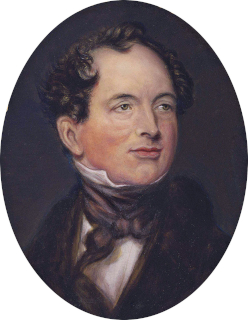
Death of Thomas Moore, Poet, Singer & Songwriter

thomas-moore

Thomas Moore, Irish poet, singer, songwriter, and entertainer, dies at Sloperton Cottage, Bromham, Wiltshire, England on February 25, 1852. He is best remembered for the lyrics of “The Minstrel Boy” and “The Last Rose of Summer.” He is a close friend of Lord Byron and Percy Bysshe Shelley.

The son of a Roman Catholic wine merchant, Moore is born at 12 Aungier Street in Dublin on May 28, 1779. From a relatively early age he shows an interest in music and other performing arts. He attends several Dublin schools including Samuel Whyte’s English Grammar School in Grafton Street where he learns the English accent with which he speaks for the rest of his life. In 1795 he graduates from Trinity College, Dublin in an effort to fulfill his mother’s dream of his becoming a lawyer.

Upon graduation from Trinity, Moore studies law in London. His major poetic work, Irish Melodies (1807–34), earns him an income of £500 annually for a quarter of a century. It contains such titles as “The Last Rose of Summer” and “Oft in the Stilly Night.” The Melodies, a group of 130 poems set to the music of Moore and Sir John Andrew Stevenson and performed for London’s aristocracy, arouses sympathy and support for the Irish nationalists, among whom Moore is a popular hero.

Lalla-Rookh (1817), a narrative poem set in an atmosphere of Oriental splendour, gives Moore a reputation among his contemporaries rivaling that of Byron and Sir Walter Scott. It is perhaps the most translated poem of its time, and it earns what is up until then the highest price paid by an English publisher for a poem (£3,000). His many satirical works, such as The Fudge Family in Paris (1818), portray the politics and manners of the Regency era.

In 1824 Moore becomes a participant in one of the most celebrated episodes of the Romantic era. He is the recipient of Byron’s memoirs, but he and the publisher John Murray burn them, presumably to protect Byron. He later brings out the Letters and Journals of Lord Byron: With Notices of his Life (1830), in which he includes a life of the poet. His lifelong espousal of the Catholic cause leads him to produce such brilliant works as his parody of agrarian insurgency, The Memoirs of Captain Rock (1824), and his courageous biography of the revolutionary leader of the Irish Rebellion of 1798, The Life and Death of Lord Edward Fitzgerald (1831).

Moore finally settles in Sloperton Cottage at Bromham, Wiltshire, England, and becomes a novelist and biographer as well as a successful poet. Around the time of the Reform Act he is invited to stand for parliament, and considers it, but nothing comes of it. In 1829 he is painted by Thomas Lawrence, one of the last works completed by the artist before his death.

Moore’s personal life is dogged by tragedy including the deaths of all five of his children within his lifetime and a stroke in later life, which disables him from performances – the activity for which he is most renowned. He dies being cared for by his wife at Sloperton on February 25, 1852. His remains are in a vault at St. Nicholas churchyard, Bromham, within view of his cottage-home, beside his daughter Anastasia.
Leave a comment

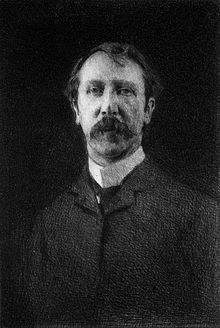
Birth of George Moore, Writer, Poet & Dramatist

george-augustus-moore

George Augustus Moore, novelist, short story writer, poet, art critic, memoirist, and dramatist, is born in Moore Hall, near Lough Carra, County Mayo on February 24, 1852. He is considered an innovator in fiction in his day.

Moore comes from a distinguished Catholic family of Irish landholders. When he is 21, he leaves Ireland for Paris to become a painter. His Reminiscences of the Impressionist Painters (1906) vividly describes the Café Nouvelle-Athènes and the circle of Impressionist painters who frequent it. He is particularly friendly with Édouard Manet, who sketches three portraits of him. Another account of the years in Paris, in which he introduces the younger generation in England to his version of fin de siècle decadence, is his first autobiography, Confessions of a Young Man (1888).

Deciding that he has no talent for painting, Moore returns to London in 1882 to write. His first novels, A Modern Lover (1883) and A Mummer’s Wife (1885), introduce a new note of French Naturalism into the English scene, and he later adopts the realistic techniques of Gustave Flaubert and Honoré de Balzac. Esther Waters (1894), his best novel, deals with the plight of a servant girl who has a baby out of wedlock. It is a story of hardship and humiliation illumined by the novelist’s compassion. It is an immediate success, and he follows it with works in a similar vein: Evelyn Innes (1898) and Sister Teresa (1901).

In 1901 Moore moves to Dublin, partly because of his loathing for the South African War and partly because of the Irish Literary Revival spearheaded by his friend, the poet William Butler Yeats. In Dublin he contributes notably to the planning of the Abbey Theatre. He also produces The Untilled Field (1903), a volume of fine short stories reminiscent of Ivan Turgenev’s writing that focuses on the drudgery of Irish rural life, and a short poetic novel, The Lake (1905). The real fruits of his life in Ireland, however, come with the trilogy Hail and Farewell (Ave, 1911; Salve, 1912; Vale, 1914). Discursive, affectionate, and satirical by turns, it reads like a sustained monologue that is both a carefully studied piece of self-revelation and an acute, though not always reliable, portrait gallery of his Irish acquaintance, which included Yeats, George William Russell, and Lady Gregory. Above all it is a perfectly modulated display of the comic spirit.

The increasing narrowness of the Irish mind, politics, and clericalism sends Moore back to England in 1911. After Hail and Farewell, he makes another literary departure. Aiming at epic effect he produces The Brook Kerith (1916), an elaborate and stylish retelling of the Gospel story that is surprisingly effective despite some dull patches. He continues his attempts to find a prose style worthy of epic theme in Héloïse and Abélard (1921). His other works include A Story-Teller’s Holiday (1918), a blend of autobiography, anecdote, Irish legend, and satire, Conversations in Ebury Street (1924), autobiography, The Pastoral Loves of Daphnis and Chloe (1924) and Ulick and Soracha (1926), an Irish legendary romance.

George Moore dies at his home at Ebury Street in the London district of Belgravia on January 21, 1933, leaving a fortune of £70,000. He is cremated in London at a service attended by Ramsay MacDonald among others. An urn containing his ashes is interred on Castle Island in Lough Carra in view of the ruins of Moore Hall, which had been burned by anti-treaty forces in 1923, during the final months of the Irish Civil War.


Leave a comment

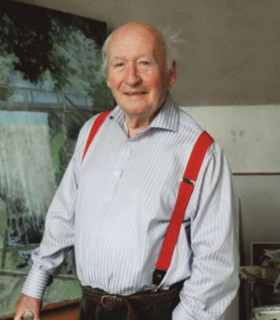
Death of Landscape Painter T.P. Flanagan

t-p-flanagan

Terence Philip “T.P.” Flanagan, one of the finest landscape painters of his generation, passes away in Belfast on February 23, 2011, at the age of eighty. For more than 60 years he shapes the face of landscape painting in Northern Ireland and is known internationally for his rural scenes of his native County Fermanagh and County Sligo. With his stunning watercolours and intricate brush strokes, he is described as one of the most successful artists of his generation. Poet Seamus Heaney, who dedicates his 1969 poem Bogland to Flanagan, pays tribute saying “he was a teacher and a friend whose work held a deep personal significance.”

Flanagan is born in Enniskillen, County Fermanagh in 1929. When he is in his late teens, he learns the art of watercolour painting from the famous local portraitist and landscape artist Kathleen Bridle. Later, he paints her portrait, which now hangs in the Ulster Museum, and interviews her in a film of her life and art, which is produced shortly before her death in 1989.

After his time with Bridle, Flanagan attends Belfast College of Art from 1949-1953. The following year he joins the teaching staff at St. Mary’s College of Education, where he remains for 28 years, eventually becoming Head of the Art Department.

Flanagan spends the majority of his painting career in Ireland, but his landscapes have received wide attention and his work has been recognised both in Ireland and abroad. His first solo exhibition is held at the Council for the Encouragement of Music and the Arts (CEMA), Belfast in 1961. He also shows regularly at the Hendriks Gallery in Dublin and at the Tom Caldwell Gallery in Belfast during the 1970s and 1980s. He participates in many group exhibitions, including “Four Ulster Painters” at the Arnolfini gallery in Bristol (1965), “Two Irish Painters” (with Colin Middleton) at the Herbert Art Gallery & Museum, Coventry, (1968) and is represented in “The Gordon Lambert Collection Exhibitions” held at the Hugh Lane Gallery, Dublin (1972) and the Ulster Museum (1976). In addition, he exhibits at the Royal Hibernian Academy (RHA) in Dublin and at the Royal Ulster Academy Of Arts (RUA) in Belfast.

Abroad, Flanagan’s works are exhibited at the Armstrong Gallery, New York (1986) and the Concept Gallery, Pittsburgh. A retrospective of his painting from the period 1967-1977 is held at the Arts Council of Northern Ireland in 1977. In 1995, the Ulster Museum stages a major retrospective of his paintings (1945-1995). Other retrospectives are held at the Hugh Lane Gallery in Dublin and the Stadsmusueum, Gothenberg, Sweden. His paintings are also included in the show “A Century of Irish Painting” organized by the Hugh Lane Gallery which tours Japanese museums in 1995.

As an artist, Flanagan works in oils as well as his preferred watercolours, although by rapid application of the paint with minimal overworking, even his oils manage to retain the luminous colouring of the watercolourist. He specializes in landscape painting within his native County Fermanagh and the adjoining County Sligo, his methods being ideally suited to capturing the soft atmospheric light of Ireland’s northwest.

Flanagan is elected associate of the RUA in 1960, a full member in 1964, and President 1978-82. During his long career, he receives numerous commissions and other awards for his works, which are represented in the collections of The Arts Councils of Ireland & Northern Ireland, the Ulster Museum, the Hugh Lane Municipal Gallery, Dublin, Irish Museum of Modern Art, and the National Self-Portrait Collection, Limerick.

Flanagan dies suddenly on February 23, 2011. His funeral takes place at St. Brigid’s Church in south Belfast and is buried at St. Michaels’ Church in Enniskillen.

The auction record for a work by T.P. Flanagan is set in 2009, when his landscape painting, entitled Castlecoole From Lough Coole, is sold at Christie’s, London, for £20,000.

(From Encyclopedia of Visual Artists In Ireland, visual-arts-cork.com)


Leave a comment

Birth of Phil Coulter, Songwriter & Producer

phil-coulter

Phil Coulter, musician, songwriter and record producer, is born in Derry, County Londonderry, Northern Ireland on February 19, 1942. He is one of the most eclectic and accomplished arranger/musicians to emerge from Ireland during the 1960s.

Coulter spends his secondary school years at St. Columb’s College. He later studies music and French at the Queen’s University Belfast. During his time at Queen’s he takes up songwriting, composing the hit Foolin’ Time for the Capitol Showband. His talents are swiftly captured by leading entrepreneur Phil Solomon. Initially working with such showbands as the Cadets and Pacific, he continues to compose for the Capitol Showband and even pens their 1965 Eurovision Song Contest entry, Walking the Streets in the Rain. In the meantime, Coulter works on Solomon’s other acts, including Twinkle, who enjoys a major UK hit with the Coulter-arranged Terry. He also contributes to Them’s song catalogue, with the driving I Can Only Give You Everything.

After leaving the Solomon stable in 1967, Coulter, now based in London, forms a partnership with Bill Martin, which becomes one of the most successful of its era. The duo is particularly known for their ability to produce instantly memorable pop hits, and achieve international fame after penning Sandie Shaw’s 1967 Eurovision Song Contest winner, Puppet on a String. They barely miss repeating that feat the following year with Cliff Richard’s stomping Congratulations.

Coulter subsequently leads his own country to victory in the contest by arranging Dana’s 1970 winner, All Kinds of Everything. That same year, Coulter/Martin are commissioned to write Back Home, the official song for the England national football team, which proves a lengthy UK number 1. As well as his pop outings, which include writing My Boy and an album’s worth of material for Richard Harris, he maintains his connection with the Irish folk scene, via his work with another of Solomon’s acts, The Dubliners. He also produces three albums for the groundbreaking Planxty and works with The Fureys.

During the mid-1970s, Coulter and Martin are called in to assist the Bay City Rollers, and subsequently compose a string of hits for the Scottish teenyboppers, including Remember (Sha-La-La), Shang-a-Lang, Summerlove Sensation, Saturday Night, and All Of Me Loves All Of You. During the same period, they enjoy three Top 10 hits with Kenny and reach the top again in 1976 with Slik’s Forever and Ever. He also produces several records by comedian Billy Connolly, including 1975’s UK number 1 D.I.V.O.R.C.E..

After his partnership with Martin ends in the late 1970s, Coulter specializes in orchestral recordings, which prove hugely successful in Irish communities. Albums such as Classic Tranquillity and Sea Of Tranquillity (both 1984), Words And Music (1989), American Tranquillity (1994), Celtic Horizons (1996), and collaborations with flautist James Galway and Roma Downey, also enjoy major international success, and Coulter is a regular fixture in the upper regions of the U.S. New Age album chart.

Coulter’s production credits during the 1990s include work for Sinéad O’Connor and Boyzone. His lengthy career, as producer, arranger, songwriter and performer, is all the more remarkable for encompassing such contrasting musical areas from folk and orchestral to straightforward Tin Pan Alley pop.

Despite his successes, Coulter suffers several family tragedies. His son is born with Down syndrome and dies at the age of three. The song Scorn Not His Simplicity is written in his memory. His brother also dies tragically in a drowning incident in Ireland, which briefly causes him to retreat from the music business. He records the anthemic Home From The Sea with the Lifeboat Chorus as a tribute.

Coulter has received honorary doctorates from the University of Ulster (1988), Dublin Institute of Technology (2006), and the Open University (2018).


Leave a comment

Paddington & Victoria Stations Bombings

london-victoria-station

The Provisional Irish Republican Army (PIRA) explodes two bombs at London mainline stations on February 18, 1991, one at Victoria station and the other at Paddington station, killing one person and injuring 38 others all at Victoria station. It is the IRA’s second major attack in London in February 1991 after the Downing Street mortar attack eleven days earlier which is an attempt to wipe out the British war cabinet and British prime minister John Major. It is also the first IRA attack on civilians since the 1983 Harrods bombing, marking a strategic change in their bombing campaign.

The Paddington bomb, which goes off at 4:20 AM, is much smaller than the second bomb at Victoria and is designed to make sure the security services will take the Victoria bomb seriously and not as a hoax. There are no deaths or injuries at Paddington station, but the roof is badly damaged.

Sometime before 7:00 AM, a caller with an Irish accent says, “We are the Irish Republican Army. Bombs to go off in all mainline stations in 45 minutes.” The Victoria station bomb, which is hidden in a rubbish bin inside the station, goes off at 7:40 AM. Despite a 45-minute warning and the Paddington bomb three hours earlier, the security services are slow to act. The bomb kills one person instantly and injures 38 others from flying glass and other debris. This is the worst attack suffered by civilians in England by the IRA since the 1983 Harrods bombing which killed three policemen, three civilians and injured 50 people. All London’s rail terminals are closed, disrupting the journeys of almost half a million commuters and bringing chaos to London, which is the IRA’s intended goal. There is also a hoax call made to Heathrow Airport, causing the airport’s closure.

That night the Provisional IRA claims responsibility for the bombings but blames the British police for the casualties. A statement from the Provisional IRA GHQ says, “The cynical decision of senior security personnel not to evacuate railway stations named in secondary warnings, even three hours after the warning device had exploded at Paddington in the early hours of this morning was directly responsible for the casualties at Victoria.” The statement goes on, “All future warnings should be acted upon.” The main purpose of the bombings in the overall IRA strategy is to keep pressure up on John Major, his Government and to make sure he acts on the Irish Troubles.

Police defend the decision not to close all stations after receiving warning that bombs had been planted. Commander George Churchill-Coleman, head of Scotland Yard‘s anti-terrorist squad, says that dozens of hoax calls are received every day. “It is very easy with hindsight to be critical.” Churchill-Coleman also says that the bomb was “quite deliberately intended to maim and kill.”

A year later, a French TV crew interviews an IRA Commander who says he speaks on behalf of the IRA’s GHQ Staff. The commander of the unit says of the Victoria station bombing that warnings were given by telephone naming nine railroad stations in London and that a 50-minute warning was given. He goes on to say that the attack was not aimed at hurting anybody but to disrupt the British transport system.

This bombing marks the IRA’s shift to targeting civilian areas following the July 1990 London Stock Exchange bombing. It is also the first IRA attack on the London transport system since 1976. The IRA keeps bombing targets in England for the remainder of the year.

(Pictured: London Victoria Station – The main station building for this terminus, with trains servicing the south and south-eastern destinations, as well as Gatwick. In front is the bus station.)


Leave a comment

Birth of Marie Dolores Eliza Rosanna Gilbert, Dancer & Actress

lola-montez

Marie Dolores Eliza Rosanna Gilbert, Countess of Landsfeld, Irish dancer and actress better known by the stage name Lola Montez, is born in Grange, County Sligo, on February 17, 1821. She becomes famous as a “Spanish dancer,” courtesan, and mistress of King Ludwig I of Bavaria, who makes her Countess of Landsfeld. She uses her influence to institute liberal reforms. At the start of the German revolutions of 1848-1849, she is forced to flee. She proceeds to the United States via Switzerland, France, and London, returning to her work as an entertainer and lecturer.

Gilbert’s family makes their residence at King House in Boyle, County Roscommon, until early 1823, when they journey to Liverpool, thence departing for India on March 14. Gilbert spends much of her childhood in India but is educated in Scotland and England. At age 19 she elopes with Lieutenant Thomas James. The couple separates five years later, and, in 1843, Gilbert launches a career as a dancer. Her London debut in June 1843 as “Lola Montez, the Spanish dancer” is disrupted when she is recognized as Mrs. James. The fiasco would probably have ended the career of anyone less beautiful and determined, but Gilbert receives additional dancing engagements throughout Europe. During her travels she reputedly forms liaisons with Franz Liszt and Alexandre Dumas, among many others.

Late in 1846, Gilbert dances in Munich and Ludwig I of Bavaria is so struck by her beauty that he offers her a castle. She accepts, becomes Baroness Rosenthal and Countess of Lansfeld, and remains as his mistress. Under Gilbert’s influence, Louis inaugurates liberal and anti-Jesuit governmental policies, but his infatuation with her helps to bring about the collapse of his regime in the revolution of 1848. In March of that year Ludwig abdicates in favour of his son. Gilbert flees to London, where in 1849 she marries Lieutenant George Heald, although she has never been divorced from James. Heald later leaves her.

From 1851 to 1853 Gilbert performs in the United States. Her third marriage, to Patrick P. Hull of San Francisco in 1853, ends in divorce soon after she moves to Grass Valley, California. There, among other amusements, she coaches young Lotta Crabtree in singing and dancing. She settles in New York City after an unsuccessful tour of Australia in 1855–1856 and gathers a following as a lecturer on such topics as fashion, gallantry, and beautiful women. An apparently genuine religious conversion leads her to take up various personal philanthropies.

Gilbert publishes Anecdotes of Love; Being a True Account of the Most Remarkable Events Connected with the History of Love; in All Ages and among All Nations (1858), The Arts of Beauty, or, Secrets of a Lady’s Toilet with Hints to Gentlemen on the Art of Fascination (1858), and Lectures of Lola Montez, Including Her Autobiography (1858). The international notoriety of her heyday persists long after her death and inspires numerous literary and balletic allusions.

Gilbert spends her last days in rescue work among women. By November 1859 she is showing the tertiary effects of syphilis, and her body begins to waste away. She dies at the age of 39 on January 17, 1861. She is buried in Green-Wood Cemetery in Brooklyn, New York.


Leave a comment

Birth of Stephen Lucius Gwynn, Writer & Politician

stephen-lucius-gwynn

Stephen Lucius Gwynn, journalist, biographer, author, poet, Protestant Nationalist politician, and Member of Parliament (MP) in the House of Commons of the United Kingdom of Great Britain and Ireland, is born on February 13, 1864, in St. Columba’s College, Rathfarnham, Dublin, where his father John Gwynn, a biblical scholar and Church of Ireland clergyman, is a warden.

Gwynn spends his early childhood in rural County Donegal, which shapes his later view of Ireland. He is educated at St. Columba’s College and goes on to Brasenose College, Oxford, where, as scholar, in 1884 he is awarded first-class honours in classical moderations and in 1886 literae humaniores. During term holidays he returns to Dublin, where he meets several of the political and literary figures of the day.

After graduating Gwynn moves to France where he works as a schoolmaster for ten years. In December 1889 he marries his cousin Mary Louisa Gwynn. They have four sons and two daughters. Having dabbled in journalism since his student days, he moves to London in 1896 to pursue a career as a writer. He soon becomes a prominent figure in literary and journalistic circles.

In 1904 the Gwynns return to Ireland to live in Raheny, County Dublin. In November 1906 he wins a seat for Galway Borough, which he represents as a member of the Irish Parliamentary Party until 1918. During this time, he also becomes active with the Gaelic League and the Irish Literary Revival.

At the outbreak of World War I, Gwynn gives his support to John Redmond that Irishmen should enlist in the British forces. At the age of fifty-one he enlists as a private in the 7th Leinster Regiment and is later commissioned lieutenant in the 6th Battalion Connaught Rangers, attached to the 16th (Irish) Division. He is promoted to captain in 1915 and serves with his battalion at the battles of Ginchy and Guillemont during the Somme offensive and also at Messines in 1917, leaving the front line shortly afterwards.

Gwynn is appointed to the Dardanelles Commission in 1916, an investigation into the unsuccessful 1915 Gallipoli Campaign.

After the war Gwynn continues with his writing and political life. He receives honorary doctorates from the National University of Ireland in 1940 and the University of Dublin in 1945. He dies on June 11, 1950, at his home in Terenure, Dublin and is buried at Tallaght cemetery.


Leave a comment

Death of Robert Hobart, 4th Earl of Buckinghamshire

robert-hobart-4th-earl-of-buckinghamshire

Robert Hobart, 4th Earl of Buckinghamshire and former Member of Parliament (MP) for Portarlington and Armagh Borough, dies from a fall from his horse in St. James’s Park, London on February 4, 1816. He is styled Lord Hobart from 1793 to 1804.

Hobart is born at Hampden House on May 6, 1760, the son of George Hobart, 3rd Earl of Buckinghamshire and Albinia, daughter of Lord Vere Bertie, younger son of Robert Bertie, 1st Duke of Ancaster and Kesteven. He is educated at Westminster School, London, and later serves in the American Revolutionary War. He acts as aide-de-camp to successive lord lieutenants of Ireland from 1784 onwards.

Hobart is a Member of Parliament (MP) in the Irish House of Commons for Portarlington from 1784 to 1790 and thereafter for Armagh Borough from 1790 to 1797. He sits also in the House of Commons of the United Kingdom for the rotten borough of Bramber in 1788, a seat he holds until 1790, and then for Lincoln from 1790 to 1796. In 1793 he is invested a member of the Privy Council, and appointed Governor of Madras. In 1798 he is recalled to England by the President of the Board of Control responsible for Indian affairs, Henry Dundas, and summoned to the House of Lords through a writ of acceleration in his father’s junior title of Baron Hobart.

Hobart later serves as Secretary of State for War and the Colonies from 1801 to 1804 when it is said he had “a better grasp of the local or colonial conditions, and a more active spirit than did some of his successors.” He is Chancellor of the Duchy of Lancaster in 1805 and again in 1812, Postmaster General from 1806 to 1807 and President of the Board of Control from 1812 to 1816. Hobart, the capital of Tasmania, is named after him.

Hobart marries firstly Margaretta, daughter of Edmund Bourke, in 1792. They have one son, who dies in infancy, and a daughter, Lady Sarah, who marries Prime Minister Lord Goderich and is the mother of George Robinson, 1st Marquess of Ripon. After Margaretta’s death in 1796 he marries secondly the Hon. Eleanor Agnes, daughter of William Eden, 1st Baron Auckland, in 1799. There are no children from this marriage.

Robert Hobart dies at Hamilton Place, London, on February 4, 1816 at the age of 55, after falling from his horse. He is succeeded in the earldom by his nephew, George. Lady Buckinghamshire dies in October 1851, at the age of 74.


Leave a comment

Laying of the Foundation Stone of Parliament House

parliament-house

The foundation stone of Parliament House in College Green is laid on February 3, 1729, by Thomas Wyndham, 1st Baron Wyndham, the Lord Chancellor of Ireland. Parliament House is initially home to the Parliament of Ireland and later houses the Bank of Ireland. It is the world’s first purpose-built bicameral parliament house. The current parliament building is Leinster House.

The building is home to the two Houses of Parliament, serving as the seat of both chambers, the House of Lords and House of Commons, of the Parliament of the Kingdom of Ireland for most of the 18th century until that parliament is abolished by the Acts of Union 1800, when Ireland becomes part of the United Kingdom of Great Britain and Ireland.

In the 17th century, parliament settles at Chichester House, a town house in Hoggen Green (later College Green) formerly owned by Sir George Carew, Lord President of Munster and Lord High Treasurer of Ireland, which had been built on the site of a nunnery disbanded by King Henry VIII at the time of the dissolution of the monasteries. Carew’s house, named Chichester House after its later owner Sir Arthur Chichester, is a building of sufficient importance to have become the temporary home of the Kingdom of Ireland’s law courts during the Michaelmas law term in 1605. Most famously, the legal documentation facilitating the Plantation of Ulster is signed there on November 16, 1612.

Chichester House is in a dilapidated state, allegedly haunted and unfit for official use. In 1727 parliament votes to spend £6,000 on a new building on the site. It is to be the world’s first purpose-built two-chamber parliament building.

The then ancient Palace of Westminster, the seat of the English before 1707 and, later, British Parliament, is a converted building. The House of Commons‘s odd seating arrangements is due to the chamber’s previous existence as a chapel. Hence MPs face each other from former pews.

The design of the new building, one of two purpose-built Irish parliamentary buildings (along with Parliament Buildings, Stormont), is entrusted to an architect, Edward Lovett Pearce, who is a member of parliament and a protégé of the Speaker of the Irish House of Commons, William Conolly of Castletown House. During construction, Parliament moves into the Blue Coat Hospital on Dublin‘s Northside.

The original, domed House of Commons chamber is destroyed by fire in the 1790s, and a less elaborate new chamber, without a dome, is rebuilt in the same location and opened in 1796, four years before the Parliament’s ultimate abolition.

Pearce’s designs come to be studied and copied both at home and abroad. The Viceregal Apartments in Dublin Castle imitate his top-lit corridors. The British Museum in Bloomsbury in London copies his colonnaded main entrance. His impact reaches Washington, D.C., where his building, and in particular his octagonal House of Commons chamber, is studied as plans are made for the United States Capitol building. While the shape of the chamber is not replicated, some of its decorative motifs are, with the ceiling structure in the Old Senate Chamber and old House of Representatives chamber (now the National Statuary Hall) bearing a striking resemblance to Pearce’s ceiling in the House of Commons.

(Pictured: Architectural drawing of the front of Parliament House by Peter Mazell based on the drawing by Rowland Omer, 1767)


Leave a comment

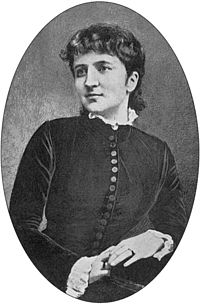
Birth of Katharine O’Shea Parnell

katharine-oshea

Katharine O’Shea (née Wood), English woman of aristocratic background, whose decade-long secret adultery with Charles Stewart Parnell leads to a widely publicized divorce in 1890 and his political downfall, is born in Braintree, Essex on January 30, 1846.

Katharine is the daughter of Sir John Page Wood, 2nd Baronet (1796–1866), and granddaughter of Sir Matthew Wood, a former Lord Mayor of London. She has an elder brother who becomes Field Marshal Sir Henry Evelyn Wood and is also the niece of both Western Wood MP (1804–1863) and Lord William Wood, William Ewart Gladstone‘s first Liberal Lord Chancellor.

Katharine marries Captain William O’Shea in 1867, a Catholic Nationalist MP for Clare from whom she separates around 1875. She first meets Parnell in 1880 and begins a relationship with him. Three of her children are fathered by Parnell. Although Captain O’Shea keeps publicly quiet for several years, he is aware of the relationship. He challenges Parnell to a duel in 1881 and initially forbids his estranged wife to see him, although she says that he encouraged her in the relationship. Although their relationship is a subject of gossip in London political circles from 1881, later public knowledge of the affair in an England governed by “Victorian morality” with a “nonconformist conscience” creates a huge scandal, as adultery is prohibited by the Ten Commandments.

Out of her family connection to the Liberal Party, Katharine acts as liaison between Parnell and Gladstone during negotiations prior to the introduction of the First Irish Home Rule Bill in April 1886. Parnell moves to her home in Eltham, close to the London-Kent border, that summer.

Captain O’Shea files for divorce in 1889 and his reasons are a matter for speculation. Some say he may have political motives. Alternatively, it is claimed that he has been hoping for an inheritance from Katharine’s rich aunt whom he had expected to die earlier, but when she dies in 1889 her money is left in trust to cousins. After the divorce the court awards custody of Katharine O’Shea and C.S. Parnell’s two surviving daughters to her ex-husband.

Katharine’s November divorce proceedings from Captain O’Shea, in which Parnell is named as co-respondent, leads to Parnell’s being deserted by a majority of his own Irish Parliamentary Party and to his downfall as its leader in December 1890. Catholic Ireland feels a profound sense of shock when Katharine breaks the vows of her previous Catholic marriage by marrying Parnell on June 25, 1891. With his political life and his health essentially ruined, Parnell dies at the age of 45 in Hove on October 6, 1891 in her arms, less than four months after their marriage. The cause is stomach cancer, possibly complicated by coronary artery disease inherited from his grandfather and father, who also died prematurely.

Though to her friends Katharine is known as Katie O’Shea, Parnell’s enemies, in order to damage him personally, call her “Kitty O’Shea” because at that time “kitty,” as well as being an Hiberno-English version of Catherine/Katherine/Katharine, is also a slang term for a prostitute. She lives the rest of her life in relative obscurity. She dies on February 5, 1921, at the age of 75, and is buried in Littlehampton, Sussex, England, apparently never once setting foot on Irish soil.

Captain Henry Harrison, MP, who had acted as Parnell’s bodyguard and aide-de-camp, devotes himself after Parnell’s death to the service of his widow. From her he hears a completely different version of the events surrounding the divorce issue from that which had appeared in the press, and this is to form the seed of his later two books defending Parnell published in 1931 and 1938. They have a major impact on Irish historiography, leading to a more favourable view of Parnell’s role in the O’Shea affair.