seamus dubhghaill

Promoting Irish Culture and History from Little Rock, Arkansas, USA


Leave a comment

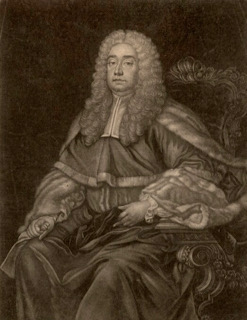
Death of Hedges Eyre Chatterton, Irish Conservative Party MP

Hedges Eyre Chatterton, Irish Conservative Party Member of Parliament (MP) in the Parliament of the United Kingdom and subsequently Vice-Chancellor of Ireland, dies on August 30, 1910.

Chatterton is born in 1819 in Cork, County Cork, the eldest son of Abraham Chatterton, a solicitor, and Jane Tisdall of Kenmare, County Kerry. He attends Trinity College Dublin (TCD), before being called to the Irish Bar in 1843. He becomes a Queen’s Counsel (QC) in 1858. He is Solicitor-General for Ireland from 1866 to 1867 and Attorney-General for Ireland in 1867. He is made a member of the Privy Council of Ireland on March 30, 1867. He is elected MP for Dublin University in 1867. He leaves the House of Commons on his appointment to the newly created judicial office of Vice-Chancellor of Ireland in 1867, an office which is abolished when he retires in 1904.

He marries firstly Mary Halloran of Cloyne, County Cork, in 1845. She dies in 1901. In the year of his retirement, he remarries Florence Henrietta Gore, widow of Edward Croker. He has no children. James Joyce remarks in Ulysses that his second marriage at the age of 85 infuriates his nephew, who had been waiting patiently for years to inherit his money.

Despite his many years of service on the Bench, Chatterton does not seem to be highly regarded as a judge. On his retirement the Bar pays tribute to his good qualities but adds several qualifications: “there might have been on the Bench lawyers more profound, reasoners more acute…” In his first decade on the Bench, Chatterton has to endure the continual denigration of Jonathan Christian, the Lord Justice of Appeal in Chancery. Christian is notoriously bitter-tongued, and while he despises most of his colleagues, he seems to have a particular dislike of Chatterton. He regularly votes on appeal to overturn his judgments, and frequently adds personal insults. Nor does he confine his attacks to the courtroom: there is controversy in 1870 when remarks of Christian that Chatterton is “lazy, stupid, conceited and so incompetent that he ought to be pensioned off” find their way into The Irish Times. The hint about pensioning off Chatterton is not taken up, no doubt because he enjoys the confidence of the Lord Chancellor of IrelandThomas O’Hagan, 1st Baron O’Hagan, who is also on bad terms with Christian. In an appeal from Chatterton in 1873, the two appeal judges clash publicly, with O’Hagan reprimanding Christian for insulting a judge who is not there to defend himself.

Chatterton becomes involved in controversy in 1885, over the first attempt to rename Sackville Street to O’Connell StreetDublin Corporation votes for the name change, but it arouses considerable objections from local residents, one of whom seeks an injunction. Chatterton grants the injunction on the ground that the corporation has exceeded its statutory powers. Rather unwisely, he also attacks the merits of the decision, accusing the Corporation of “sentimental notions.” The corporation is angered by both the decision and the criticisms: while it may have been a coincidence, the fact that Temple Street is briefly renamed Chatterton Street is interpreted by some as an insult to the judge, since the street is much frequented by prostitutes. The controversy is short-lived as the corporation is granted the necessary statutory powers in 1890, and the new name becomes official in 1924, by which time it has gained popular acceptance.

Chatterton dies on August 30, 1910, and is buried in Dean’s Grange Cemetery in the suburban area of Deansgrange in Dún Laoghaire–RathdownCounty Dublin.


Leave a comment

Death of John Bowes, 1st Baron Bowes

John Bowes, 1st Baron BowesPC (I), Anglo-Irish peer, politician and judge, dies in Dublin on July 22, 1767. He is noted for his great legal ability, but also for his implacable hostility to Roman Catholics.

Bowes is born in London, the second son of Thomas Bowes, a merchant and member of the Worshipful Company of Turners, and his wife, a Miss North, and is called to the Bar in 1712. He comes to Ireland as a member of the staff of Richard West, the Lord Chancellor of Ireland, in 1723. He builds up a large practice at the Irish Bar and is appointed Solicitor-General for Ireland in 1730, and Attorney-General for Ireland in 1739. He is raised to the Bench as Lord Chief Baron of the Irish Exchequer in 1741, having previously failed to become third Baron (which is a surprisingly lucrative office, as the Baron receives several extra fees). He is appointed Lord Chancellor of Ireland by King George II in 1757, despite the chronic ill-health which afflicts him. In his last years, his legs are so swollen that he can scarcely walk.

Bowes epitomizes the severity of the 18th century Penal Laws against Irish Catholics when he rules, in about 1759, that: “The law does not suppose any such person to exist as an Irish Roman Catholic, nor could such a person draw breath without the Crown’s permission”. Such views, given that Roman Catholics make up more than 90% of the Irish population at the time, inevitably make him bitterly unpopular, and in 1760 he is assaulted during a riot outside the House of Commons.

In spite of his religious bigotry, Bowes is considered one of the outstanding judges of his time. In particular, he is a reforming Lord Chancellor, who is praised for making the Court of Chancery “a terror for fraud, and a comfort and protection for honest men”. As Attorney-General he shows considerable courage in going on assize during the Irish Famine (1740–1741) despite the infectious fever which is raging at the time, and which claims the lives of three other judges who decide to brave the dangers.

Between 1731 and 1742, Bowes represents Taghmon in the Irish House of Commons.

Bowes is considered one of the finest speakers of his time. His speech for the prosecution at the trial of Henry Barry, 4th Baron Barry of Santry, who is charged with murder in 1739, is described by those who hear it as a masterpiece of eloquence and logic, and leads to the Irish House of Lords bringing in a unanimous verdict of guilty against Santry.

Bowes is raised to the peerage of Ireland in 1758 as Baron Bowes, of Clonlyon in the County of Meath.

Bowes dies in Dublin on July 22, 1767, his mental faculties fully intact despite his bodily infirmities. He is buried in Christ Church Cathedral, Dublin, where his brother raises a memorial to him. He never marries, and his title becomes extinct on his death. He lives at Belvedere House, Drumcondra. His estates passes to his brother Rumsey Bowes of BinfieldBerkshire.


Leave a comment

Henry Barry, 4th Baron Barry of Santry, Tried for Murder

On April 27, 1739, Henry Barry, 4th Baron Barry of Santry, is tried by his peers in the Irish House of Lords for the murder of Laughlin Murphy in August 1738. They unanimously find him guilty but recommend him to the royal mercy. The Lord Lieutenant, William Cavendish, 3rd Duke of Devonshire, endorses this plea, and Barry is pardoned under the great seal on June 17. His estates, which had been forfeited for life, are restored in 1741.

Barry is born in Dublin on September 3, 1710, the only son of Henry Barry, 3rd Baron Barry of Santry, and Bridget Domvile, daughter of Sir Thomas Domvile, 1st Baronet, of Templeogue, and his first wife (and cousin) Elizabeth Lake, daughter of Sir Lancelot Lake. He succeeds to the title in 1735 and takes his seat in the Irish House of Lords.

Barry seems to be an extreme example of an eighteenth-century rake, a man of quarrelsome and violent nature, and a heavy drinker. He is a member of the notorious Dublin Hellfire Club. The club’s reputation never fully recovers from the sensational publicity surrounding his trial for murder, although there is no reason to think that any of his fellow members knew of or condoned the crime. There are widespread rumours that he had committed at least one previous murder which was successfully hushed up, although there seems to be no firm evidence for this.

On August 9, 1738, Barry is drinking with some friends at a tavern in Palmerstown, then a small village near Dublin. Drinking more heavily than usual, he attacks a drinking companion but is unable to draw his sword. Enraged, he runs to the kitchen, where he chances to meet Laughlin Murphy, the tavern porter, and for no known reason runs him through with his sword. He then bribes the innkeeper to let him escape. Murphy is taken to Dublin where he lingers for several weeks, dying on September 25, 1738.

Although Barry is not immediately apprehended, there is no reason to believe that the Crown intends that he should escape justice. The authorities clearly aim not only to prosecute him but to secure a conviction. Even in an age when the aristocracy enjoys special privileges, the murder of Murphy, who by all accounts was an honest and hardworking man with a wife and young family to support, shocks public opinion, whereas Barry is regarded, even among members of his own class, as a public nuisance. In due course, he is arrested and indicted for murder. He demands, as the privilege of peerage, a trial by his peers. The trial, which takes place in the Irish Houses of Parliament on April 27, 1739, arouses immense public interest.

Thomas Wyndham, the Lord Chancellor of Ireland, presides in his office Lord High Steward of Ireland, with 23 peers sitting as judges. The Attorney-General for Ireland, Robert Jocelyn, and the Solicitor-General for Ireland, John Bowes, lead for the prosecution.

Bowes dominates the proceedings, and his speeches make his reputation as an orator. Thomas Rundle, Bishop of Derry, who as a spiritual peer is only an observer at the trial, says, “I never heard, never read, so perfect a piece of eloquence…the strength and light of his reason, the fairness and candour.” The Bishop is scathing about the quality of counsel for the defence, describing the performance of Barry’s counsel as “detestable.” The defence case is that Murphy had died not from his wound but from a long-standing illness (or alternatively a rat bite), but in view of the medical evidence produced by the prosecution this is a hopeless argument. According to Bishop Rundle, Barry’s counsel fails even to mention the possibility that Murphy, who lingered for six weeks after being stabbed, might have died through inadequate medical care. Given the overwhelming evidence of Barry’s guilt, however, any defence would probably have been useless, and despite what is described as their “looks of horror,” his peers have little difficulty in finding him guilty. Wyndham, who had conducted the trial with exemplary fairness, pronounces the death sentence. His retirement soon afterward is generally thought to be due to the strain of the trial.

King George II, like all British monarchs, has the prerogative of mercy, and a campaign is launched by Barry’s friends and relatives to persuade the King to grant a pardon. Their plea concentrates on the victim’s low social standing, the implication being that the life of a peer is worth more than that of a tavern worker, despite the victim’s blameless character and the savage and wanton nature of the murder. The King proves reluctant to grant a pardon, and for a time it seems that Barry will be executed, but in due course, a reprieve is issued. Popular legend has it that his uncle, Sir Compton Domvile, through whose estate at Templeogue the River Dodder flows, secured a royal pardon for his nephew by threatening to divert the course of the river, thus depriving the citizens of Dublin of what is then, and remains long after, their main supply of drinking water.

On June 17, 1740, Barry receives a full royal pardon and the restoration of his title and estates. Soon afterward he leaves Ireland for good and settles in England. He is said to have had a personal audience with the King and thanked him in person for his clemency.

Barry’s last years are wretched. Although he has a second marriage shortly before his death, he is abandoned by all his former friends, is in great pain from gout, and is prone to depression. He dies in Nottingham on March 22, 1751, and is buried at St. Nicholas Church, Nottingham. On his death the title becomes extinct. His estates pass to his cousin, Sir Compton Domvile, 2nd Baronet, who makes unsuccessful efforts to have the barony revived. His widow Elizabeth outlives him by many years, dying in December 1816.


Leave a comment

Birth of Abraham Brewster, Judge & Lord Chancellor of Ireland

Abraham Brewster PC (Ire), Irish judge and Lord Chancellor of Ireland, is born in Ballymutra House in Ballynultagh Townland, County Wicklow, on April 10, 1796.

Brewster is the son of William Bagenal Brewster, of Ballinulta, County Wicklow, by his wife Mary, daughter of Thomas Bates. He receives his earlier education at Kilkenny College, then proceeds to Trinity College Dublin (TCD) in 1812, taking his B.A. degree in 1817, and long after, in 1847, his M.A. degree.

Brewster is called to the Irish bar in 1819, and, having chosen Leinster for his circuit, soon acquires the reputation of a sound lawyer and a powerful speaker. Lord Plunket honours him with a silk gown on July 13, 1835. Notwithstanding the opposition of Daniel O’Connell, who dislikes him, he is appointed Law Adviser to the Lord Lieutenant of Ireland on October 10, 1841, and is Solicitor-General for Ireland from February 2, 1846, until July 16. By the influence of his friend Sir James Graham, First Lord of the Admiralty, he is Attorney-General for Ireland and privy councilor from January 10, 1853, until the fall of the Aberdeen ministry on February 10, 1855.[1]

In 1854, Brewster is appointed to the Royal Commission for Consolidating the Statute Law, a royal commission to consolidate existing statutes and enactments of English law.

Brewster is very active in almost all branches of his profession after his resignation, and his reputation as an advocate may be gathered from the pages of the Irish Law and Equity Reports, and in the later series of the Irish Common Law Reports, the Irish Chancery Reports, and the Irish Jurist, in all of which his name very frequently appears. Among the most important cases in which he takes part are the Mountgarrett case in 1854, involving a peerage and an estate of £10,000 a year, the Carden abduction case in July of the same year, the Yelverton case in 1861, the Egmont will case in 1863, the Marquess of Donegall‘s ejectment action and lastly, the great will cause of Fitzgerald v. Fitzgerald, in which Brewster’s statement for the plaintiff is said to be one of his most successful efforts.

On Edward Smith-Stanley becoming prime minister, Brewster succeeds Francis Blackburne as Lord Justice of Appeal in Ireland in July 1866, and Lord Chancellor of Ireland the following March. As Lord Chancellor, he sits in his court for the last time on December 17, 1868, when Benjamin Disraeli‘s government resigns. He then retires from public life.

There are only three or four judgments delivered by him in print, either in the Court of Appeal or the Court of Chancery (Ireland). His judicial manner is quiet, but with what is called “a touch of serviceable fierceness” which keeps order in Court. He is highly regarded by his colleagues. Even the bitter-tongued Jonathan Christian, who despises most of his fellow judges, defers to Brewster.

Brewster dies at his residence, 26 Merrion Square South, Dublin, on July 26, 1874, and is buried in the family vault at Tullow, County Carlow, on July 30. By his marriage in 1819 with Mary Ann, daughter of Robert Gray of Upton House, County Carlow, who dies in Dublin on November 24, 1862, he has issue one son, Colonel William Bagenal Brewster, and one daughter, Elizabeth Mary, wife of Mr. Henry French, both of whom die in the lifetime of their father. His estates are inherited by Elizabeth’s son, Robert French-Brewster, who adopts his grandfather’s surname. A nephew, Edward Brewster, studies under Abraham Brewster and becomes a lawyer and politician in New South Wales. Edward’s brother, John Grey Brewster, also emigrates to Australia, where he becomes a prosperous grazier and company director, retiring to England in later years where he dies in 1897.

(Pictured: Right Honourable Abraham Brewster photographed by Thomas Cranfield, 1861)


Leave a comment

The Popery Act 1704 Receives Royal Assent

An Act to prevent the further Growth of Popery, commonly known as the Popery Act or the Gavelkind Act, is an act of the Parliament of Ireland that receives royal assent on March 4, 1704. It is designed to suppress Roman Catholicism in Ireland (“Popery“). William Edward Hartpole Lecky calls it the most notorious of the Irish Penal Laws.

Inheritance in traditional Irish law uses gavelkind, whereby an estate is divided equally among a dead man’s sons. In contrast, English common law uses male primogeniture, with the eldest son receiving the entire estate. The 1704 act enforces gavelkind for Catholics and primogeniture for Protestants.

Two separate bills “to prevent the further Growth of Popery” are introduced in the parliamentary session of 1703–04. One originates with the Privy Council of Ireland and is referred on July 4, 1703, to the Attorney-General for Ireland. The other is introduced as heads of a bill in the Irish House of Commons on September 28, 1703, and is sent to the Lord Lieutenant of Ireland on November 19. Under Poynings’ Law, both bills are transmitted to the Privy Council of England for approval. Formally, one bill is vetoed, and the other is returned to Dublin with amendments. A lack of surviving documentation makes it impossible to determine which of the two has which fate. The approved bill is engrossed on January 20, 1704, presented in the Commons on February 14, sent to the Irish House of Lords on February 25, and given royal assent on March 4.

Sir Theobald “Toby” Butler, the former Solicitor-General for Ireland, a Roman Catholic, makes a celebrated speech at the bar of the Commons denouncing the act as being “against the laws of God and man… against the rules of reason and justice.” Other eminent Catholic lawyers like Stephen Rice also denounce the measure but to no avail.

Charles Ivar McGrath says that while the Popery Act has “evident … negative effects,” specific research is lacking, and that it is intended more to prevent an increase in Catholic landholding than encourage further decrease. The Catholic share of land had already fallen from 60% before the Irish Rebellion of 1641 to 22% before the Williamite War in Ireland to 14% in 1704. The figure of 5% in 1776 given in Arthur Young‘s Tour in Ireland is probably an underestimate, although in 1778 only 1.5% of rent is paid to Catholics.

Catholic gavelkind cements a tradition of farm subdivision, which persists beyond the act’s repeal and contributes to the Great Famine of the 1840s.

The act is “explained and amended” by a 1709 act, 8 Anne c. 3 (I), which specifies certain time limits left ambiguous by the original act, and closes some loopholes used by Catholics to remain beneficial owners of nominally Protestant property.

A 1719 act, 6 Geo. 1. c. 9 (I), indemnifies officials who have not hitherto subscribed to the oath required by the Popery Act. The time period for Dissenters subscribing to the oath is routinely extended, initially by an Indemnity Act at the start of each biennial parliamentary session. Similar acts are passed by the British parliament, and after the union the UK parliament continues the practice.

From the late 18th century Roman Catholic relief bills ease the Penal Laws, by explicit or implicit repeal and replacement. In 1772, Catholics are allowed to lease up to fifty Irish acres of bog-land for up to 61 years. The 1704 oath of allegiance for Catholics is replaced in 1774. Gardiner’s Act, the Leases for Lives Act 1777, implicitly repeals many other provisions of the 1704 act. Some are replaced with less onerous restrictions. The sacramental test is repealed for Dissenters in 1780. The Roman Catholic Relief Act 1782 repeals section 23 of the 1704 act. Another act of 1782 allows lay Catholics to be guardians of Protestants. Most restrictions on intermarriage are removed by the Roman Catholic Relief Act 1792. Many Penal Laws are repealed in general terms by the Roman Catholic Relief Act 1793. The sacramental test for Catholics is effectively replaced by the 1774 oath.

The Roman Catholic Relief Act 1829 abolishes the declaration against transubstantiation and specifies a new public oath for Catholics, explicitly permitting Catholics to hold Irish civil or military offices other than Lord Lieutenant and Lord Chancellor of Ireland, with the same oaths as required of non-Catholics (in addition to the new Catholic oath).

The Criminal Law Commission‘s 1845 report on oaths says sections 1, 3, and 6 of the 1704 act have fallen into disuse and should be repealed. The Religious Disabilities Act 1846, passed in consequence of the committee’s report, explicitly repeals provisions of sections 1, 3, and 4 of the 1704 act.

The Popery Act is explicitly repealed as obsolete by the Promissory Oaths Act 1871, with the exception of section 25, which is made redundant by the coming into force in 1871 of the Irish Church Act 1869 and is repealed by the Statute Law Revision (Ireland) Act 1878.


3 Comments

Hugh Brady Appointed Church of Ireland Bishop of Meath

Hugh Brady, a native of Trim, County Meath, is appointed Church of Ireland Bishop of Meath on October 21, 1563. He serves in this position until his death on February 14, 1584.

Brady is born in 1527, but his parentage is uncertain, as are most of the details of his early life. He is said to be a graduate of the University of Oxford and later a professor of divinity there, but there is no evidence of this in the college registers.

Brady’s first patron is Edmund Grindal, Bishop of London, under whose auspices he secures a prestigious appointment to the rectorship of St. Mary Aldermary, London, in early 1561. Over the next two years he becomes acquainted with a relative and chief advisor of Queen Elizabeth I, William Cecil. He is eager to return to Ireland and is appointed Bishop of Meath on October 21, 1563, while still in England. He is ideally qualified for this role, being a native of the diocese and a skilled preacher fluent in English and Irish. Arriving in Dublin on December 3, 1563, he is consecrated on December 19, being made a member of the Privy Council of Ireland soon thereafter.

On reaching his diocese, Brady is dismayed at its dilapidated state. His diocesan income scarcely exceeds £60 a year, many of the churches are in ruins, his clergy are uneducated and largely pro-Catholic, and the right to appoint clergy to many parish churches is in the hands of Catholic landowners. Further, the rival Catholic Bishop of Meath, William Walsh, is dedicated, capable, and popular. Although Walsh is belatedly arrested in 1565, his willingness to lead by example and suffer persecution for his beliefs stiffens Catholic resistance in Meath.

Brady is always diligent in attendance at Council meetings. He is vigorous in beating off raids on his diocese by Shane O’Neill, the effective ruler of Ulster. He enjoys the friendship of Sir Henry Sidney, the Lord Deputy of Ireland, who praises his sound judgment, hospitality and blameless private life. His good qualities lead Sidney and Adam Loftus, Archbishop of Armagh, to propose Brady as Archbishop of Dublin, after they have lobbied successfully for the recall of Archbishop Hugh Curwen. However, soon after, Brady and Loftus quarrel, and Loftus blocks Brady’s nomination in order to obtain the See of Dublin for himself.

Nonetheless, Brady retains Sidney’s confidence and finds a new ally in 1567 when Robert Weston becomes Lord Chancellor of Ireland. Weston sympathises with his educational and evangelical bent while gaining the respect of the querulous Loftus, thereby defusing the animosity between Ireland’s leading Protestant clergy.

In 1569, Brady’s diocese is amalgamated with the diocese of Clonmacnoise. He now heads a sprawling diocese that includes Gaelic areas where the crown has very little authority. In practice, he appears to have largely ignored Clonmacnoise. In Meath, a government inquiry in 1575 shows that he has made little headway in spreading the Protestant faith or in restoring the fabric and finances of the church. He has found clergy for nearly every church in the diocese, but most are of a poor standard. He contributes to the diocese’s worsening finances by alienating church land to family and associates. The free school he establishes is also forced to close due to a lack of suitable premises.

Following Sidney’s dismissal as Lord Deputy of Ireland in 1578, Protestant hard-liners begin to dominate the Irish government, causing Brady to lose influence. He complains in 1581 that his letters to London are being opened and read by his colleagues and sometimes being suppressed. His influence declines in Meath also as discontent with the government increases. In 1577, his men capture a number of friars at Navan but are attacked by locals and forced to free their captives. Thereafter, local officials and landowners routinely defy his authority. His conciliatory policies totally discredited, he stays away from Dublin and resides mainly at his episcopal palace at Ardbraccan.

From 1582 Brady suffers from ill health, forcing him to curtail his preaching. He dies on February 14, 1584, and is buried near the parish church at Dunboyne.

Brady marries twice, but little is known of his first wife. In 1568, following the death of his first wife, he marries Weston’s daughter Alice. They had at least four children, including Luke, their eldest son, and Nicholas, grandfather of his namesake the poet. After Brady’s death, his widow marries Sir Geoffrey Fenton and has further issue, including Catherine, Countess of Cork. The poet Nicholas Brady is the bishop’s great-grandson. Maziere Brady, Lord Chancellor of Ireland, is a nineteenth-century descendant of the bishop.


Leave a comment

Birth of John FitzGibbon, 1st Earl of Clare, Lord Chancellor of Ireland

John FitzGibbon, 1st Earl of Clare PC (Ire), Attorney-General for Ireland from 1783 to 1789 and Lord Chancellor of Ireland from 1789 to 1802, is born near Donnybrook, Dublin, on August 23, 1749. He remains a deeply controversial figure in Irish history, being described variously as an old-fashioned anti-Catholic Whig political party hardliner and an early advocate of the Act of Union between Ireland and Great Britain (which finally happens in 1801, shortly before his death).

FitzGibbon is the son of John FitzGibbon of Ballysheedy, County Limerick, and his wife Isabella Grove, daughter of John Grove, of Ballyhimmock, County Cork. His father is born a Catholic but converts to the state religion in order to become a lawyer and amasses a large fortune. He has three sisters, Arabella, Elizabeth, and Eleanor. He is educated at Trinity College Dublin (TCD) and Christ Church, Oxford. He enters the Irish House of Commons in 1778 as Member for Dublin University, and holds this seat until 1783, when he is appointed Attorney General. From the same year, he represents Kilmallock until 1790. He is appointed High Sheriff of County Limerick for 1782.

When appointed Lord Chancellor of Ireland in 1789, FitzGibbon is granted his first peerage as Baron FitzGibbon, of Lower Connello in the County of Limerick, in the Peerage of Ireland that year. This does not entitle him to a seat in the British House of Lords, only in the Irish House of Lords. His later promotions come mostly in the Peerage of Ireland, being advanced to a Viscountcy in 1793 and the Earldom of Clare in 1795. He finally achieves a seat in the British House of Lords in 1799 when created Baron FitzGibbon, of Sidbury in the County of Devon, in the Peerage of Great Britain.

As Lord Chancellor for Ireland, FitzGibbon is a renowned champion of the Protestant Ascendancy and an opponent of Catholic emancipation. He despises the Parliament of Ireland‘s popular independent Constitution of 1782. He is also personally and politically opposed to the Irish politician Henry Grattan who urges a moderate course in the Irish Parliament and is responsible for defeating Grattan’s efforts to reform the Irish land tithe system under which Irish Catholic farmers (and all non-Anglican farmers) are forced to financially support the minority Anglican Church of Ireland. These are not fully repealed until 1869 when the Church of Ireland is finally disestablished, although Irish tithes are commuted after the Tithe War (1831–1836).

FitzGibbon opposes the Irish Roman Catholic Relief Act 1793 personally but apparently recommends its acceptance in the House of Lords, being forced out of necessity when that Act had been recommended to the Irish Executive by the British Cabinet led by William Pitt the Younger. Pitt expects Ireland to follow the British Roman Catholic Relief Act 1791 and allow Catholics to vote again and hold public offices. At the same time, FitzGibbon apparently denounces the policy this Act embodies, so it is probably safe to say that FitzGibbon’s own beliefs and principles conflict with his obligations as a member of the Irish executive of the time.

FitzGibbon’s role in the recall, soon after his arrival, of the popular pro-Emancipation Lord Lieutenant of Ireland, William Fitzwilliam, 4th Earl of Fitzwilliam, is debatable. Although he is probably politically opposed to the Lord Lieutenant of Ireland, Fitzwilliam is apparently recalled, because of his own independent actions. Fitzwilliam is known to be friendly to the Ponsonby family and is generally a Foxite liberal Whig. His close association with and patronage of Irish Whigs led by Grattan and Ponsonby during his short tenure, along with his alleged support of an immediate effort to secure Catholic emancipation in a manner not authorized by the British cabinet is likely what leads to his recall. Thus, if anyone is to blame in the short-lived “Fitzwilliam episode” it is Henry Grattan and the Ponsonby brothers – presumably William Ponsonby, later Lord Imokilly, and his brother George Ponsonby — not to mention Lord Fitzwilliam himself. Irish Catholics at the time and later naturally see things very differently and blame hardline Protestants such as FitzGibbon.

Irish Catholics and FitzGibbon apparently agree on one point – Irish political and economic union with Great Britain, which eventually takes place in 1801. Pitt wants Union with Ireland concomitantly with Catholic emancipation, commutation of tithes, and the endowment of the Irish Catholic priesthood. Union is opposed by most hardline Irish Protestants, as well as liberals such as Grattan. FitzGibbon is a strong supporter of the Union since 1793 but refuses to have Catholic emancipation with the Union.

In the end, FitzGibbon’s views wins out, leading to the Union of Ireland with Great Britain to form the United Kingdom of Great Britain and Ireland without any concessions for Ireland’s Catholic majority, or for that matter, Catholics in the rest of the new United Kingdom. He later claims that he has been duped by the way in which the Act is passed and is bitterly opposed to any concessions during the short remainder of his life.

FitzGibbon’s role as Lord Chancellor of Ireland during the period of the 1798 rebellion is questionable. According to some, he supports a hardline policy which uses torture, murder and massacre to crush the rebellion, or that as Lord Chancellor, he has considerable influence on military affairs, and that martial law cannot be imposed without his consent. Others allege that as Lord Chancellor, he has no say in military affairs. His former side is displayed by sparing the lives of the captured United Irish leaders in return for their confession of complicity and provision of information relating to the planning of the rebellion. However, this willingness of the prisoners to partake of the agreement is spurred by the execution of the Sheares brothers on July 14, 1798.

In contrast to the leniency shown to the largely upper-class leadership, the full weight of military repression is inflicted upon the common people throughout the years 1797–98 with untold thousands suffering imprisonment, torture, transportation and death. Fitzgibbon ss inclined to show no mercy to unrepentant rebels and in October 1798 he expressed his disgust upon the capture of Wolfe Tone that he had been granted a trial and his belief that Tone should have been hanged as soon as he set foot on land.

FitzGibbon is quick to recognise that sectarianism is a useful ally to divide the rebels and prevent the United Irishmen from achieving their goal of uniting Protestant, Catholic and Dissenter, writing in June 1798, “In the North nothing will keep the rebels quiet but the conviction that where treason has broken out the rebellion is merely popish.”

FitzGibbon is noted by some as a good, improving landlord to both his Protestant and Catholic tenants. Some claim that the tenants of his Mountshannon estate call him “Black Jack” FitzGibbon. However, there is no evidence to support this claim, although there is little to no evidence on his dealings as a landlord. Irish nationalists and others point out that while he might have been interested in the welfare of his own tenants on his own estate, he treats other Irish Catholics very differently. Without further evidence, his role as a Protestant landowner in mainly Catholic Ireland is of little importance against his known dealings as Lord Chancellor.

FitzGibbon dies at his home, 6 Ely Place near St. Stephen’s Green, Dublin, on January 28, 1802, and is buried in the churchyard at St. Peter’s Church, Aungier Street, Dublin. A hero to Protestant hardliners, but despised by the majority Catholic population, his funeral cortege is the cause of a riot and there is a widespread story that a number of dead cats are thrown at his coffin as it departs Ely Place.
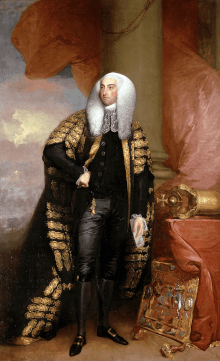
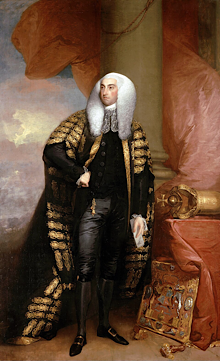
(Pictured: “Portrait of John FitzGibbon, 1st Earl of Clare,” painting by Gilbert Stuart, 1789)


Leave a comment

Birth of John Hogan, the “Greatest of Irish Sculptors”

Irish sculptor John Hogan, described in some sources as the “greatest of Irish sculptors,” is born in Tallow, County Waterford, on October 14, 1800. According to the Dictionary of Irish Biography he is responsible for “much of the most significant religious sculpture in Ireland” during the 19th century. Working primarily from Rome, among his best-known works are three versions of The Dead Christ, commissioned for churches in Dublin, Cork, and the Basilica of St. John the Baptist in St. John’s, Newfoundland and Labrador, Canada.

Hogan is the third child of John Hogan, a carpenter and builder of Cove Street, Cork, County Cork, and Frances Cos, the great-granddaughter of Sir Richard Cox, Lord Chancellor of Ireland from 1703 to 1707. As the family feels that she had married beneath her station, she is disinherited.

At the age of fourteen, Hogan is placed as clerk to an attorney, where he spends much of his time carving figures in wood. After two years, he chooses to be apprenticed to the architect Sir Thomas Deane, where his talents for drawing and carving are developed. He carves balusters, capitals, and ornamental figures for Deane’s buildings. At the completion of his apprenticeship in March 1820, Deane encourages him to consider taking up sculpture as a profession. For the next three years, he attends lectures on anatomy, copies casts of classic statuary in the Gallery of the Cork Society of Arts, and makes anatomical studies in wood of feet, hands, and legs. Among the first of his works to attract notice is a life-size figure of Minerva for an insurance building built by Deane.

In 1821, Hogan carves twenty-seven statues in wood for the North Chapel in Cork for the reredos behind the high altar. After subsequent cathedral renovations, these are now positioned in decorative plasterwork over the nave. He also does a bas-relief of the “Last Supper” for the altar. This work keeps him employed for about a year.

In 1823, the engraver William Paulet Carey visits Cork, and impressed with Hogan’s talent, begins to publicise his work in order to raise subscriptions for him to study in Italy. Hogan arrives in Rome, by way of Dublin and Liverpool, in 1824. He works in the galleries of the Vatican but cannot afford a studio. Additional subscriptions allow him to improve his situation, rent a studio, purchase marble, and hire models. Danish sculptor Bertel Thorvaldsen says to him, “My son, you are the best sculptor I leave after me in Rome.”

In 1829, Hogan visits Ireland, bringing several works with him. The Royal Arts Society provides a venue for an exhibition. The Royal Dublin Society awards him a gold medal.

Hogan’s best-known work and masterpiece are the three versions of the statue of The Dead Christ or The Redeemer in Death. Created in flawless Carrara marble, the first version (1829) is located in St. Therese’s Church, Dublin, the second (1833) in St. Finbarr’s (South) Church, Cork, and the third and final version (1854) is located in the Basilica of St. John the Baptist, Newfoundland. His other works include the Sleeping Shepherd and The Drunken Faun. He assures his international reputation in 1829 with The Dead Christ. Thereafter, his creations are snapped up by Irish bishops visiting his Rome studio.

In 1837 Hogan is elected a member of the Virtuosi del Pantheon. During the next several years, he has several works in hand, including a marble statue of Daniel O Connell, for the Repeal Association. The statue stands today at City Hall, Dublin, the same spot where O’Connell gave his first speech against the Acts of Union in 1800.

In 1840, a monumental group in memory of Bishop James Warren Doyle, founder of the Cathedral of the Assumption in Carlow, is brought to Dublin and exhibited at the Royal Exchange. The statue of Bishop Doyle is in the Cathedral of the Assumption, as is a second Hogan work depicting the Holy Family.

Hogan marries Cornelia Bevignani in Rome in 1838. The figure of Hibernia, in Hogan’s work Hibernia with the Bust of Lord Cloncurry (1844), is reportedly modelled on his wife. A representation of this work is later used as the watermark on all Series A banknotes printed in Ireland from the 1920s to the 1970s. The couple has four sons and eight daughters.

With the revolutionary movement growing in Italy during the 1840s, and after spending twenty-four years in Rome, Hogan returns with his family to Ireland in 1848. At first, he finds little work in the aftermath of the Great Famine, but gradually commissions increase. He can be impatient with ignorance, intolerant of professional inferiority, and independent. He holds aloof from other artists and refuses to join the Royal Hibernian Academy.

Hogan has a stroke in 1855 and, though he recovers somewhat, his health begins to fail. By the year prior to his death, he can no longer work and his sons, John Valentine Hogan and James Cahill, assist at his studio and complete some of the work.

Hogan dies at his home at 14 Wentworth Place (later renamed Hogan Place), Dublin, on March 27, 1858. He is buried at Glasnevin Cemetery in Dublin.

(Pictured: Scan of a drawing depicting the Irish sculptor John Hogan with his sculpture The Drunken Faun in background, published in the Dublin University Magazine, January 1850)


Leave a comment

Birth of James Whiteside, Politician & Judge

James Whiteside, Irish politician and judge, is born at Delgany, County Wicklow, on August 12, 1804.

Whiteside is the son of William Whiteside, a clergyman of the Church of Ireland. His father is transferred to the parish of Rathmines but dies when his son is only two years old, leaving his widow in straitened circumstances. She schools her son personally in his early years. He is educated at Trinity College Dublin, enters the Middle Temple, and is called to the Irish bar in 1830.

Whiteside very rapidly acquires a large practice, and after taking silk in 1842 he gains a reputation for forensic oratory surpassing that of all his contemporaries and rivalling that of his most famous predecessors of the 18th century. He defends Daniel O’Connell in the state trial of 1843, and William Smith O’Brien in 1848. His greatest triumph is in the Yelverton case in 1861. He is elected Member of Parliament (MP) for Enniskillen in 1851, and in 1859 becomes an MP for Dublin University. In Parliament, he is no less successful as a speaker than at the bar, and in 1852 is appointed Solicitor-General for Ireland in the first administration of Prime Minister Edward Smith-Stanley, becoming Attorney-General for Ireland in 1858, and again in 1866. In the same year he is appointed Lord Chief Justice of the Queen’s Bench, having previously turned down offers of a junior judgeship. His reputation as a judge does not equal his reputation as an advocate, although he retains his great popularity. In 1848, after a visit to Italy, he publishes Italy in the Nineteenth Century. In 1870 he collects and republishes some papers contributed many years before to periodicals, under the title Early Sketches of Eminent Persons.

In July 1833, Whiteside marries Rosetta, daughter of William and Rosetta Napier, and sister of Sir Joseph Napier, Lord Chancellor of Ireland. Like his brother-in-law, Joseph, he is devoted to the Church of Ireland and strongly opposes its disestablishment.

Whiteside is universally well-liked, being noted for charm, erudition and a sense of humour. Barristers who practise before him say that his charm, courtesy and constant flow of jokes make appearing in his Court a delightful experience.

Whiteside’s last years on the bench ware affected by ill health. He dies on November 25, 1876, at Brighton, Sussex, England. His brother-in-law, from whom he is estranged in later years, is overcome with grief at his death and collapses at the funeral. He is buried at Mount Jerome Cemetery in Dublin.

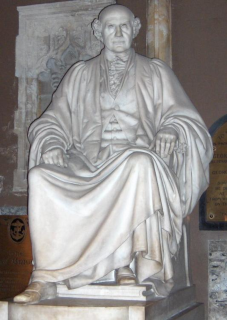
(Pictured: Statue of James Whiteside by Albert Bruce-Joy on display in St. Patrick’s Cathedral)


Leave a comment

Birth of Jonathan Christian, Irish Judge

Jonathan Christian, Irish judge, is born in Carrick-on-Suir, County Tipperary, on February 17, 1808. He serves as Solicitor-General for Ireland from 1856 to 1858. He is a judge of the Court of Common Pleas (Ireland) from 1858 to 1867 when he is appointed Lord Justice of Appeal in Chancery. On the creation of the new Irish Court of Appeal in 1878 he serves briefly on that Court but retires after a few months.

Christian is considered one of the best Irish lawyers of his time, but as a judge, he regularly courts controversy. His bitter and sarcastic temper and open contempt for most of his colleagues leads to frequent clashes both in Court and in the Press. Though he is rebuked for misconduct several times by the House of Commons, no serious thought seems to be given to removing him from office.

Christian is the third son of George Christian, a solicitor, and his wife Margaret Cormack. He is educated at the Trinity College Dublin, enters Gray’s Inn in 1831 and is called to the Bar of Ireland in 1834. He marries Mary Thomas in 1859 and they have four sons and four daughters. He lives at Ravenswell, Bray, County Wicklow.

Christian’s early years at the Bar are not successful, and he admits to being near to despair at times about his prospects. His practice lays in the Court of Chancery (Ireland). Chancery procedures are extremely complex, and he finds them at first almost unintelligible. Gradually he masters the intricacies of Chancery practice and becomes a leader of the Bar, taking silk in 1841. It is said that his expertise in Chancery procedures leaves even the Lord Chancellor himself quite unable to argue with him.

Christian is appointed Law Adviser to the Lord Lieutenant of Ireland, an influential post which involves assisting the Attorney General and Solicitor General in advising the Crown in 1850, but resigns after only a few months, on the ground that it interferes with his private practice. He is appointed Third Sergeant later the same year but resigns in 1855, allegedly because he is disappointed at not receiving further promotion. Promotion does in time come his way. He is appointed Solicitor General the following year and a judge of the Court of Common Pleas in 1858. He is unusual in having no strong political loyalty. It is said that his political allegiance is known only to himself.

As a judge of the Court of Common Pleas, Christian gets on well with his colleagues, and any dissenting judgements he writes are short and courteous. It is after his appointment as a Lord Justice of Appeal in Chancery in 1867 that his behaviour begins to attract unfavourable comment, as he goes out of his way to court controversy on a wide variety of topics.

Christian develops a deep contempt for the Irish Reports, castigating them in open Court as “nonsense,” “worthless rubbish” and “disjointed twaddle.” All attempts by colleagues to get him to moderate his language fail. He threatens to refuse to let his judgements be reported, and in his last years, his relations with the law reporters are so bad that they simply publish their uncorrected notes of his decisions rather than sending them to the judge for revision.

In 1867 a new office of Vice-Chancellor for Ireland is created. It is filled throughout its existence by one man, Hedges Eyre Chatterton, who retires in 1904. Despite his length of service, he is not considered a judge of the first rank, and Christian evidently combines feelings of professional contempt with a personal dislike for him. Christian usually votes on appeals to overturn his judgments, and frequently adds personal attacks on Chatterton, despite protests from his colleagues. The feud between the two judges reaches the Press in 1870 when The Irish Times, without naming them, quotes one judge’s opinion that another is “lazy, stupid, conceited and dogmatic.” Although Christian denies it, it is universally believed that he is the author of the remarks, which are aimed at Chatterton. Chatterton is fortunate in enjoying the support of the Lord Chancellor of Ireland, Thomas O’Hagan, 1st Baron O’Hagan, who is also on bad terms with Christian.

Christian had worked well with Abraham Brewster, O’Hagan’s predecessor, whom he respected. For O’Hagan on the other hand, he feels the same dislike and contempt which he felt for Chatterton. Although they served together in the Court of Common Pleas without any obvious conflict, Christian considers O’Hagan’s appointment as Lord Chancellor to be a purely political act, and that he is unfit to be either head of the judiciary or an appeal judge in Chancery. He also complains of what he sees as O’Hagan’s laziness, which puts an extra burden on him. During O’Hagan’s first term as Chancellor, Christian subjects him to constant criticism. Unwisely he does not confine these attacks to the Courtroom but publishes numerous pamphlets, which is widely seen as improper conduct in a judge. When O’Hagan becomes Chancellor for the second time, a friend congratulates him on escaping from “the misnamed Christian” who had retired two years earlier.

It is probably Christian’s feud with O’Hagan which leads to his extraordinary decision to publicly attack the House of Lords for reversing, by a majority including O’Hagan, his judgment in O’Rorke v Bolingbroke. In a letter to The Times in 1877, whose content has been described as “astounding,” he questions the Law Lords knowledge of equity. While he singles out Lord Blackburn for criticism, it is likely that he also intends to harm O’Hagan’s reputation.

A major source of contention between Christian and O’Hagan is the Landlord and Tenant (Ireland) Act 1870, which O’Hagan steers through Parliament. The Act provides for compensation for tenants in the event of eviction. Christian, though he is not a landowner and is not as a rule much interested in politics, objects strongly to the policy of the Act, which he believes to be most unjust to landlords. His attacks from the Bench on the Act lead to serious rebukes both from the House of Commons and from the Press, which comment on the impropriety of a judge attacking an Act of Parliament, which it is his duty to enforce.

O’Hagan’s retirement does nothing to lessen Christian’s ill-temper. Other judges come in for attack, including Lord Chief Justice of Ireland James Whiteside, whom he accuses of speaking constantly on matters of which he is ignorant. In his later years, he seems to be a lonely and isolated figure. His vigorous opposition to the Supreme Court of Judicature (Ireland) Act 1877 is entirely unsuccessful. A feeling of isolation may partly explain his decision to retire, though certainly his increasing deafness also plays a part.

Christian dies in Dublin on October 29, 1887.

V.T.H. Delaney praises Christian as a great master of equity, a man of great learning and a judge with a great desire to see justice done, but he does not deny that Christian loved controversy. Even his supporters spoke of “arrows too sharply pointed.” Critics spoke of his “spirit of personal sarcasm, cold, keen and cynical.” No doubt Christian was genuinely concerned to uphold high standards of judicial conduct, but as Daire Hogan points out, his own conduct struck most observers as far more improper than anything he complained of in others.