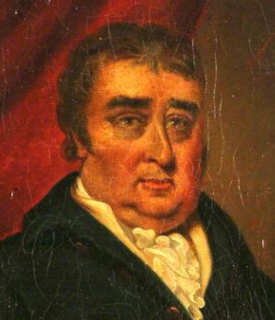
French belongs to the long-established French family of Frenchpark, County Roscommon, who are substantial landowners who also make money in the wine trade. He is the eldest son of Arthur French MP and Alicia Magenis, daughter of Richard Magenis of Dublin and sister of Richard Magenis. He marries Margaret Costello, daughter of Edmond Costello of Edmondstown, County Mayo, and has nine children, including Arthur French, 1st Baron de Freyne, John, 2nd Baron and Charles, 3rd Baron.
In 1783, French is elected a Member of Parliament (MP) for Roscommon County in the Irish House of Commons. After the Act of Union 1800 he represents Roscommon in the Parliament of the United Kingdom. He is alleged to have been offered an Earldom if he would support the union of Ireland with Great Britain but refuses the honour. Later he also refuses a Barony with no strings attached, although in time three of his sons would hold the title of Baron de Freyne. The Crown is frequently irritated by his demands for offices and favours for his brothers and sons, although such behaviour is entirely typical of an Irish politician at the time.
A critic of the policy of collective fines as a deterrent to the illicit distillation of poteen, French incurs the wrath of Chief Secretary for IrelandRobert Peel who calls him “an Abominable fellow,” but his enormous popularity in Roscommon means that he cannot be ignored. He also criticizes the continuation of martial law in Ireland.
By 1817 French is complaining of ill-health. He dies on November 24, 1820. One report at the time states that he had died “from excessive fox hunting.”
Sir William Basil Goulding, Irish cricketer, squash player, art collector and prominent businessman, is born in Dublin on November 4, 1909. He is an important art collector of contemporary art in Ireland and is renowned for his extensive collection which is dispersed posthumously. He is an adept businessman and sits on the boards of many companies.
Goulding is educated at Winchester College and Christ Church, Oxford. He inherits the family business W & HM Goulding Ltd. and succeeds his father as Chairperson in 1935. Goulding Ltd. is a well-established fertiliser manufacturer based in Dublin and Cork. The factory closes and is demolished in the mid-20th century and very little of it remains today. The land is donated to the people of Cork by Goulding in the late 1960s and is subsequently developed as an amenity park.
The Arts Act of 1951 establishes the Arts Council in response to the Bodkin Report which outlines the sad condition of the arts in Ireland. Goulding is a co-opted member of the Council from its formative years and is instrumental in acting on many of its policies.
Goulding is the founding Chairperson of the Contemporary Irish Art Society in 1962, along with Gordon Lambert, Cecil King, Stanley Mosse, James White and Michael Scott. The enthusiasm and vision of these founding members of the society is the catalyst which leads to the development of many important art collections in Ireland. The purpose of the society is to encourage a greater level of patronage of living Irish artists which, at the time, is extremely low. This is mainly achieved by raising funds to purchase artworks by living artists, which are then donated to public collections. The first purchase in 1962 is an important painting by Patrick Scott, donated to the Municipal Gallery of Modern Art (now the Hugh Lane Gallery). Over the following 12 years the society purchases 37 works for the gallery, until in 1974, Dublin Corporation starts to provide an annual purchasing fund for the gallery.
Following completion of the report ‘Design in Ireland,’ the Kilkenny Design Workshops (KDW) is set up in 1963. It endeavours to nurture native Irish crafts particularly textiles, metalwork, ceramics, glass and furniture to have a modern yet distinctly Irish sensibility. The KDW is the first State sponsored design agency in the world and is held as a model of governmental intervention in design. Goulding sits on the board of the KDW from its origination and occupies the role of Chairperson from 1977 until 1981.
A right-handed batsman and wicket-keeper, Goulding plays twice for the Ireland cricket team against the Marylebone Cricket Club (MCC) in 1934, the year in which his father is president of the Irish Cricket Union. He makes his debut in July in a two-day match, scoring seven runs in the Ireland second innings and taking one catch in the MCC first innings. The following month, he plays his only first-class match, not scoring in either inning. In addition to playing cricket, he also represents Ireland at squash, and captains Oxford University at football.
Henry’s legal career flourishes. He becomes Queen’s Counsel in 1896, a Bencher of the King’s Inns in 1898 and ultimately Father of the North-West Circuit – but his interest in politics does not diminish. In March 1905, he is a delegate at the inaugural meeting of the Ulster Unionist Council and in the 1907 North Tyrone by-election he is the Unionist candidate, losing by a mere seven votes.
On May 23, 1916, Henry is elected as an MP in the South Londonderry by-election, the first by-election to be held in Ireland after the Easter Rising, which occurred a month earlier. The rebellion has had no discernible impact on the contest.
Henry marries Violet Holmes, daughter of Hugh Holmes, a judge of the Court of Appeal in Ireland, and Olivia Moule. They have five children, including James Holmes Henry, who succeeds as second baronet. It is a mixed marriage as Violet is and remains a staunch member of the Church of Ireland. Despite their religious differences, the marriage is said to be happy.
Henry dies in Belfast on October 1, 1925, aged 61, and is buried near his native Draperstown.
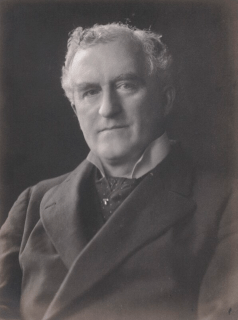
(Pictured: Sir Denis Stanislaus Henry, 1st Baronet, bromide print by Walter Stoneman, 1920, National Portrait Gallery, London)
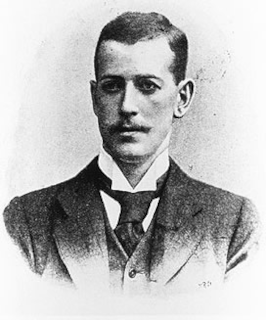
Boland is born to Patrick Boland (1840–1877), businessman, and Mary Donnelly. Following the death of his mother in 1882, he is placed with his six siblings under the guardianship of his uncle Nicholas Donnelly, auxiliary bishop of Dublin.
Boland is educated at two private Catholic schools, one Irish, the second English, and both of whose existence and evolution are influenced by John Henry Newman – the Catholic University School, Dublin, and The Oratory School, Birmingham. His secondary education at the two schools helps give him the foundation and understanding to play an influential role in the politics of Great Britain and Ireland at the beginning of the 20th century, when he is a member of the Irish Parliamentary Party which pursues constitutional Home Rule.
In 1892 Boland graduates with a BA from London University. He studies for a semester in Bonn, Germany, where he is a member of Bavaria Bonn, a student fraternity that is member of the Cartellverband. He studies law at Christ Church, Oxford, graduating with a BA in 1896 and MA in 1901. Although called to the Bar in 1897, he never practises.
Boland is the first Olympic champion in tennis for Great Britain and Ireland at the first modern Olympics, which takes place in Athens in 1896. He visits his friend Thrasyvoulos Manos in Athens during the Olympics, and Manos, a member of the organising committee, enters Boland in the tennis tournament. Boland promptly wins the singles tournament, defeating Friedrich Traun of Germany in the first round, Evangelos Rallis of Greece in the second, Konstantinos Paspatis of Greece in the semifinals, and Dionysios Kasdaglis of Greece in the final.
Boland then enters the doubles event with Traun, the German runner whom he had defeated in the first round of the singles. Together, they win the doubles event. They defeat Aristidis and Konstantinos Akratopoulos of Greece in the first round, have a bye in the semifinals, and defeat Demetrios Petrokokkinos of Greece and Dimitrios Kasdaglis in the final. When the Union Flag and the German flag are run up the flagpole to honour Boland and Traun’s victory, Boland points out to the man hoisting the flags that he is Irish, adding “It’s a gold harp on a green ground, we hope.” The officials agree to have an Irish flag prepared.
Following a visit to Kerry, Boland becomes concerned about the lack of literacy among the native population, as he also has a keen interest in the Irish language.
In 1908, Boland is appointed a member of the commission for the foundation of the National University of Ireland (NUI). From 1926 to 1947, he is General Secretary of the Catholic Truth Society. He receives a papal knighthood, becoming a Knight of St. Gregory in recognition for his work in education, and in 1950 he is awarded an honorary doctorate of Laws by the NUI.
Boland marries Eileen Moloney (1876–1937), daughter of an Australian Dr. Patrick Moloney, at SS Peter and Edward, Palace-street, Westminster, on October 22, 1902. They have one son and five daughters. His daughter Honor Crowley (née Boland) succeeds her husband, Frederick Crowley, upon his death sitting as Fianna FáilTD for South Kerry from 1945 until her death in 1966. His daughter Bridget Boland is a playwright who writes The Prisoner.
Boland dies at the age of 87 at his home in London on Saint Patrick’s Day, March 17, 1958.
Dillon is born on May 5, 1814, in the town of Ballaghaderreen, on the border of counties Mayo and Roscommon. He is a son of Anne Blake and her husband Luke Dillon (d. 1826), who had been a land agent for his cousin Patrick Dillon, 11th Earl of Roscommon. His niece is Anne Deane, who helps to raise his family after his death.
Dillon is educated at St. Patrick’s College, Maynooth, leaving after only two years there, having decided that he is not meant for the priesthood. He later studies law at Trinity College, Dublin, and in London, before being called to the Irish Bar. It is during his time at Trinity College that he first meets and befriends Thomas Davis.
The young wing of the party, of which they are key members with William Smith O’Brien and Thomas Francis Meagher, come to be known as Young Ireland and advocate the threat of force to achieve repeal of the Act of Union. This is in contrast to the committed pacifism of O’Connell’s “Old Ireland” wing. This posturing eventually leads to the Young Ireland rebellion of 1848 where a countryside devastated by the Great Famine fails to rise up and support the rebels.
According to fellow Irish nationalist, Justin McCarthy, “…it has been said of him that while he strongly discouraged the idea of armed rebellion and had no faith in the possibility of Ireland’s succeeding by any movement of insurrection, yet when Smith O’Brien risked Ireland’s chances in the open field, he cast his lot with his leader and stood by his side in Tipperary.”
After the failure of Young Ireland’s uprising, Dillon flees Ireland, escaping first to France and, eventually, to the United States, where he serves the New York Bar.
McNamara retains his seat at the 1966 general election, and at subsequent elections until the constituency is abolished for the February 1974 general election, when he transfers to the new Kingston upon Hull Central constituency. When that constituency is abolished for the 1983 election, he is re-elected for the re-created Kingston upon Hull North constituency.
During the 2005 general election campaign McNamara claims some of the policies regarding illegal travelers’ sites of the leader of the Conservative Party, Michael Howard, had a “whiff of the gas chambers” about them. Howard’s grandmother died at Auschwitz.
McNamara is known throughout his parliamentary career as a supporter of Irish nationalism and favours a United Ireland. After entering parliament, he soon becomes interested in reports of discrimination against the Catholic minority in Northern Ireland and supports the Campaign for Democracy in Ulster (CDU). He serves as a frontbench spokesman for the Labour Party, including Shadow Secretary of State for Northern Ireland under Neil Kinnock, 1987–94, an appointment that is widely criticised by Unionists.
After Tony Blair becomes Labour leader, he replaces McNamara as Northern Ireland spokesman with Mo Mowlam. In 1997, he helps persuade the newly elected Labour government to donate £5,000 (thereby matching the contribution of the Irish government) for the erection of a memorial in Liverpool to the victims of the Great Irish Famine. He also supports Republicanism in the United Kingdom and joins the All-Party Parliamentary Republic Group.
McNamara is a Roman Catholic and a Knight of the Pontifical Order of Saint Gregory the Great. He is married to Nora McNamara, and is the father of four sons and a daughter.
In 2006, McNamara receives the honorary degree of Doctor of Laws from the University of Hull in recognition of his long service in politics. He graduates with a Ph.D from the University of Liverpool in 2007 having completed a thesis on the MacBride Principles at the Institute of Irish Studies, where he gives the 2008 John Kennedy Lecture in Irish Studies, Perhaps It Will All Go Away – an Examination of the British Response to the Civil Rights Movement in Northern Ireland.
In 2017, McNamara is diagnosed with pancreatic cancer while on holiday in Spain. He dies on August 6, 2017 at Formby, England, at the age of 82.
Dillon is a member of the British House of Commons during 1880–1883 and 1885–1918. For his vigorous work in the Irish National Land League, which seeks fixed tenure, fair rents, and free sale of Irish land, he is imprisoned twice between May 1881 and May 1882. He is Parnell’s fellow inmate in Kilmainham Gaol in Dublin from October 1881. For six months in 1888 he is imprisoned for aiding William O’Brien, author of the “plan of campaign” against high rent charges by English absentee landlords in Irish farming districts.
When Parnell is named co-respondent in Captain William Henry O’Shea’s divorce suit in 1890, Dillon and O’Brien at first affirm their support of him, but they finally decide that he will thenceforth be a liability as party leader. The party then splits, the anti-Parnellite majority forming the Irish National Federation, of which Dillon serves as chairman from 1896. In 1900, however, he agrees to join a reunited party under the Parnellite John Redmond.
During the prime ministry of Arthur James Balfour (1902–1905), Dillon comes to believe that the British Conservative government intends to grant Irish reforms without independence, thereby “killing Home Rule by kindness.” In 1905 he advises Irishmen to vote for Liberal Party candidates for Parliament, and, after the Liberals had taken office that year, he supports their reform program.
Throughout World War I Dillon vehemently opposes the extension of British military conscription to Ireland, both because that measure would strengthen the agitation by the more extreme nationalist Sinn Féin party and because he never accepted the view that British imperial interests necessarily coincided with those of Ireland. After the Easter Rising in Dublin in 1916, he protests against the harsh measures that ensue and, in the House of Commons, makes a passionate speech in defense of the Irish rebels.
Upon Redmond’s death on March 6, 1918, Dillon, who had broken with him over Irish support for the British war effort, succeeds him as Irish Parliamentary Party leader. By that time, however, the party has been discredited and in the 1918 Irish general election Sinn Féin wins easily. On losing his House of Commons seat to Éamon de Valera, the future president of the Republic of Ireland, he retires from politics.
Griffith, a Roman Catholic, is born at 61 Upper Dominick Street, Dublin on March 31, 1871, of distant Welsh lineage. He is educated by the Irish Christian Brothers. He works for a time as a printer before joining the Gaelic League (Conradh na Gaeilge), which is aimed at promoting the restoration of the Irish language.
After a short spell in South Africa, Griffith founds and edits the Irish nationalist newspaper The United Irishman in 1899. In 1904, he writes The Resurrection of Hungary: A Parallel for Ireland, which advocates the withdrawal of Irish members from the Parliament of the United Kingdom and the setting up of the institutions of government at home, a policy that becomes known as Sinn Féin (ourselves). On November 28, 1905, he presents “The Sinn Féin Policy” at the first annual Convention of the National Council. The occasion is marked as the founding date of the Sinn Féin party. Although the organization is still small at the time, Griffith takes over as president of Sinn Féin in 1911.
Griffith is arrested following the Easter Rising of 1916, despite not having taken any part in it. On his release, he works to build up Sinn Féin, which wins a string of by-election victories. At the party’s Ardfheis (annual convention) in October 1917, Sinn Féin becomes an unambiguously republican party, and Griffith resigns the presidency in favour of the 1916 leader Éamon de Valera, becoming vice-president instead. Griffith is elected as a member of parliament (MP) for East Cavan in a by-election in June 1918, and is re-elected in the 1918 Irish general election, when Sinn Féin wins a huge electoral victory over the Irish Parliamentary Party and, refusing to take their seats at Westminster, set up their own constituent assembly, Dáil Éireann.
In the Dáil, Griffith serves as Minister for Home Affairs from 1919 to 1921, and Minister for Foreign Affairs from 1921 to 1922. In September 1921, he is appointed chairman of the Irish delegation to negotiate a treaty with the British government. After months of negotiations, he and the other four delegates sign the Anglo-Irish Treaty, which creates the Irish Free State, but not as a republic. This leads to a split in the Dáil. After the Treaty is narrowly approved by the Dáil, de Valera resigns as president and Griffith is elected in his place. The split leads to the Irish Civil War.
Griffith enters St. Vincent’s Nursing Home, Leeson Street, Dublin, during the first week of August 1922, following an acute attack of tonsillitis. He is confined to his room by his doctors, who had observed signs of what they thought might be a subarachnoid hemorrhage. It is difficult to keep him quiet and he resumes his daily work in the government building. When about to leave for his office shortly before 10:00 AM on August 12, 1922, he pauses to retie his shoelace and falls down unconscious. He regains consciousness but collapses again with blood coming from his mouth. Three doctors render assistance, but to no avail. Father John Lee of the Marist Fathers administers extreme unction, and Griffith expires as the priest recites the concluding prayer. The cause of death, intracerebral hemorrhage, is also reported as being due to heart failure. He dies at the age of 51, ten days before Michael Collins‘s assassination in County Cork and two months after the outbreak of the Irish Civil War. He is buried in Glasnevin Cemetery four days later.
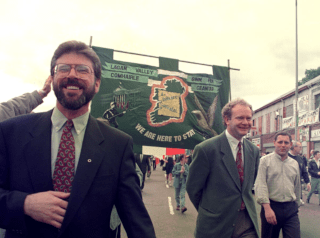
Nationalist residents of Belfast’s Lower Ormeau Road vote overwhelmingly on August 4, 2000, against allowing Orange Order parades through the flashpoint district. Results indicate that over 90% of those polled in a secret vote on the mainly nationalist lower Ormeau area of south Belfast want such parades rerouted.
The nationalist residents’ group, the Lower Ormeau Concerned Community (LOCC), which organised the ballot, says the majority of the 600 people who voted want the parades rerouted. In a statement it says it welcomes the result as “an overwhelming and democratic expression of our community’s desire to live free from sectarian harassment”.
LOCC spokesman Gerard Rice says, “We do not claim to speak for loyalist residents.” He adds that the loyal orders will now have to listen to the people of the area. “The whole point in this exercise was not to vindicate our position, but to set out clearly an informed position as to what exactly the opinion in our community is and has been for many years,” he tells BBC Radio Ulster.
“The Orange Order and other loyal institutions have said for many, many years that really people living on the Ormeau Road want parades. That they are actually a colourful event that people can enjoy. We have said that many people within our community would say parades by the loyal institutions were seen as sectarian, coat trailing exercises, the institutions were seen as anti-Catholic and sectarian organisations. Now we can actually say that 95.9% of our community believe that to be true.”
However, the Belfast County Grand Master of the Orange Order rejects the results of the poll. Dawson Baillie says the vote was unrepresentative because it did not include the staunchly loyalist Donegall Pass area and the Ballynafeigh district above the Ormeau Bridge. “We believe that it’s our right and everyone’s right to walk down a main thoroughfare. We’re not going into side streets on the right-hand side of that part of the Ormeau Road or the left-hand side. We go straight down the main thoroughfare. Our parade at any given point would take no more than three to four minutes to pass.”
Unionists question the validity of the poll as it excludes nearby loyalist areas. Dawn Purvis of the Progressive Unionist Party says the poll would not help to resolve the situation. “You don’t get people to enter into talks on the basis of no parade. You get people to enter into talks on the basis of an accommodation,” she says. “If that poll had been held to show what concerns the people of Lower Ormeau have over loyal order parades, that would have been better, that would have been a way forward, trying to address the concerns of the residents of the Lower Ormeau Road. LOCC have not been forthcoming with those concerns, so the talks haven’t moved forward.”
Reverend Martin Smyth, the Belfast SouthMP, says it had been “a stage-managed exercise” to show how well the group could conduct their business in that area and “to gather support from those who don’t want a procession down that road.”
However, Rice rejects the suggestions that it is unrepresentative because loyalist areas had been left out. Another LOCC representative, John Gormley, says they would welcome equivalent ballots from the loyalist part of the Ormeau area.
Local parish priest Father Anthony Curran says he is satisfied with the conduct of the vote. “A large number of people seem to have come out, a very broad section of the community, elderly young middle-aged, sick. They came free from fear and intimidation.”
A similar poll was last conducted in the Lower Ormeau area in 1995 by management consultants Coopers & Lybrand, when a large majority voted against allowing loyalist marches in the area.
Sir Joseph LarmorFRSFRSE, Irish and British physicist and mathematician who makes breakthroughs in the understanding of electricity, dynamics, thermodynamics, and the electron theory of matter, is born in Magheragall, County Antrim, on July 11, 1857. His most influential work is Aether and Matter, a theoretical physics book published in 1900.
In 1903 Larmor is appointed Lucasian Professor of Mathematics at Cambridge, a post he retains until his retirement in 1932. He never marries. He is knighted by King Edward VII in 1909.