In 1761, O’Brien enters the Irish House of Commons as the member for Ennis, sitting until 1768. Subsequently he successfully runs for Clare, a seat previously held by his father, holding it until 1776. He is then again elected for Ennis, but following the unseating of Hugh Dillon Massy as Member of Parliament for Clare, he returns to represent that constituency in 1778. In the election of 1783, he becomes the representative for Tuam. He is sworn of the Privy Council of Ireland in 1786. He serves for the latter constituency until 1790, when he is re-elected for Ennis. He holds this seat finally until his death on January 15, 1795.
O’Brien marries Anne French, the daughter of Robert French, in 1768 and has by her seven children, three sons and four daughters. He is succeeded in the baronetcy as well as in the constituency of Ennis by his oldest son Edward.
The Annals of the Kingdom of Ireland or the Annals of the Four Masters, chronicles of medieval Irish history, are completed on August 10, 1636. The entries span from the Deluge, dated as 2,242 years after creation to 1616 AD.
The annals are mainly a compilation of earlier annals, although there is some original work, and are one of the principal Irish language sources for Irish history up to 1616. They are compiled between 1632 and 1636 at a Franciscan friary near the Drowes River in County Leitrim, on the border with County Donegal and County Sligo. The patron of the project is Fearghal Ó Gadhra, MP, a Gaelic lord in Coolavin, County Sligo. While many of the early chapters are essentially lists of names and dates, the later chapters, dealing with events of which the authors have first-hand accounts, are much more detailed.
The chief compiler of the annals is BrotherMícheál Ó Cléirigh from Ballyshannon, who is assisted by, among others, Cú Choigcríche Ó Cléirigh, Fearfeasa Ó Maol Chonaire and Peregrine Ó Duibhgeannain. Although only one of the authors, Mícheál Ó Cléirigh, is a Franciscan friar, they become known as “The Four Friars” or in the original Irish, Na Ceithre Máistrí. The Anglicized version of this is “The Four Masters,” the name that has become associated with the annals themselves.
Due to the criticisms by Irish historian Tuileagna Ó Maol Chonaire, the text is not published during the lifetime of any of the participants. The first substantial English translation (starting at 1171 AD) is published by Owen Connellan in 1846. The Connellan translation includes the annals from the eleventh to the seventeenth centuries. The only version to have a four-colour frontispiece, it includes a large folding map showing the location of families in Ireland. This edition, neglected for over 150 years, is republished in the early twenty-first century. The original Connellan translation is followed several years later by a full translation by the historian John O’Donovan. The translation is funded by a government grant of £1,000 obtained by the notable mathematician Sir William Rowan Hamilton while he is president of the Royal Irish Academy.
The reliability and usefulness of the Annals as a historical source has sometimes been questioned on the grounds that they are limited to accounts of the births, deaths and activities of the Gaelic nobility of Ireland and often ignore wider social trends or events. On the other hand, the Annals, as one of the few prose sources in Irish from this period, also provide a valuable insight into events such as the Desmond Rebellions and the Nine Years’ War from a Gaelic Irish perspective.
The early part of this work is based upon the Lebor Gabála Érenn. Today, most scholars regard the Lebor Gabála Érenn as primarily myth rather than history. It appears to be mostly based on medieval Christian pseudo-histories, but it also incorporates some of Ireland’s native pagan mythology. Scholars believe the goal of its writers was to provide an epic history for Ireland that could compare to that of the Israelites or the Romans, and which reconciled native myth with the Christian view of history.
O’Curry is born at Doonaha, near Carrigaholt, County Clare, the son of Eoghan Ó Comhraí, a farmer, and his wife Cáit. Eoghan has spent some time as a traveling peddler and has developed an interest in Irish folklore and music. Unusual for someone of his background, he is literate and is known to possess a number of Irish manuscripts. It is likely that Eoghan is primarily responsible for his son’s education.
Having spent some years working on his father’s farm and as a school teacher, O’Curry moves to Limerick in 1824 and spends seven years working there at a psychiatric hospital. He marries Anne Broughton, daughter of John Broughton of Killaderry near Broadford, County Limerick on October 3, 1824. He is a supporter of Catholic emancipation and in 1828 writes a poem congratulating Daniel O’Connell on his election as an MP.
During this period O’Curry is establishing a reputation for his knowledge of the Irish language and Irish history, and, by 1834, is in correspondence with the antiquary John O’Donovan. He is employed, from 1835 to 1842, on O’Donovan’s recommendation, in the topographical and historical section of Ordnance Survey Ireland. O’Donovan goes on to marry O’Curry’s sister-in-law, Mary Anne Broughton, in 1840. O’Curry spends much of the remainder of his life in Dublin and earns his living by translating and copying Irish manuscripts. The catalogue of Irish manuscripts in the British Museum (1849) is compiled by him for a fee of £100. He is responsible for the transcripts of Irish manuscripts from which O’Donovan edits the Annals of the Four Masters between 1848 and 1851.
In 1851 O’Curry is elected a member of the Royal Irish Academy and, on the founding of the Catholic University of Ireland in 1854, he is appointed professor of Irish history and archaeology. He works with George Petrie on the Ancient Music of Ireland (1855). In 1852, he and O’Donovan propose the Dictionary of the Irish Language, which is eventually begun by the Royal Irish Academy in 1913 and finally completed in 1976.
O’Curry’s lectures are published by the university in 1860, and give a better knowledge of Irish medieval literature than can be obtained from any other one source. Three other volumes of lectures are published posthumously, under the title On the Manners and Customs of the Ancient Irish (1873). His voluminous transcripts, notably eight huge volumes of early Irish law, testify to his unremitting industry. The Celtic Society, of the council of which he is a member, publishes two of his translations of medieval tales.
Eugene O’Curry dies of a heart attack at his home in Dublin on July 30, 1862, and is survived by two sons and two daughters. He is buried at Glasnevin Cemetery in Dublin. O’Curry Road in the Tenters area of Dublin 8 is named in his honour.
Warren is born on March 10, 1703, in Warrenstown, County Meath, the youngest son of Michael Warren and Catherine Plunkett, née Aylmer, who was the first wife of Sir Nicholas Plunkett.
In 1716, when he is 13 years old, Warren signs on as an ordinary seaman in Dublin and he and his brother initially serve together. He rapidly rises in the ranks, becoming a Captain in 1727. His ship patrols American colonial waters to provide protection from French forces. He becomes involved in colonial politics and land speculation.
In 1744, Warren is made commodore and commands a 16-ship squadron off the Leeward Islands, capturing 24 ships in four months. In 1745, he commands a group of ships that support the Massachusetts forces in the capture of the Fortress of Louisbourg. The prize system of the time allows naval officers to profit from the capture of enemy ships, and this expedition earns Warren a fortune, a promotion to the rank of Rear Admiral of the Blue, and a knighthood.
Warren’s lands include several thousand acres on the south side of the Mohawk River west of Schenectady, New York, now known as Florida, Montgomery County, New York, roughly across from present day Amsterdam. He brings two nephews, William Johnson, eventually Sir William Johnson, and Michael Tyrrell to clear and manage the land. Tyrrell soon leaves, asking his uncle for support with a naval appointment. Tyrrell has a very distinguished naval career, rising to Admiral. He becomes sick while headed to London from the West Indies and is buried at sea. In 1741, Warren builds Warren House, a mansion overlooking the Hudson River on his 300-acre estate in Greenwich Village. He also owns property on Long Island, the van Cortland Estate in Westchester County, New York and South Carolina.
While on a visit to Ireland in 1752, Peter Warren dies suddenly in Dublin on July 29, 1752 “of a most violent fever.” The towns of Warren, Rhode Island and Warren, New Hampshire are named after him, as well as Warren Street in Lower Manhattan.
During World War II, Bing serves in the Royal Corps of Signals, attaining the rank of major. A 1943 experiment with parachutes at the GSO2 Airborne Forces Development Centre leaves him disfigured and he bears the scars for many years.
At the 1945 general election, Bing stands for Labour in Hornchurch, winning the seat. He is re-elected in 1950 and 1951, serving until 1955. He serves briefly as a junior whip in 1945-1946 but this is widely thought to have been the unintended result of confusion on the part of Clement Attlee, who confuses him for another Labour MP of a similar name.
On the backbenches, Bing is, according to his Times obituary, “the unrestrained leader of a small group of radicals, never fully trusted by their colleagues and known as ‘Bing Boys.'” He takes a particular interest in the cases of Timothy Evans and John Christie, and he supports the campaign to overturn the conviction of Evans, which is ultimately successful. He supports Communist China and takes a keen interest in Northern Ireland, the brewers’ monopoly and parliamentary procedure.
Bing also builds a practice in West Africa. He becomes close to Kwame Nkrumah, the first post-colonial president of Ghana and is appointed Ghana’s attorney-general, a post he holds until 1961. When Nkrumah is ousted in 1966, Bing is arrested and ill-treated, before being sent home some months later. His memoir of Nkrumah’s Ghana, Reap the Whirlwind, is published in 1968.
Geoffrey Henry Cecil Bing dies in London on April 24, 1977, at the age of 67.
Although a Protestant country-gentleman, O’Brien supports Catholic emancipation while remaining a supporter of British-Irish union. In 1843, in protest against the imprisonment of Daniel O’Connell, he joins O’Connell’s anti-union Repeal Association.
Three years later, O’Brien withdraws the Young Irelanders from the association. In January 1847, with Thomas Francis Meagher, he founds the Irish Confederation, although he continues to preach reconciliation until O’Connell’s death in May 1847. He is active in seeking relief from the hardships of the famine. In March 1848, he speaks out in favour of a National Guard and tries to incite a national rebellion. He is tried for sedition on May 15, 1848, but is not convicted.
On July 29, 1848, O’Brien and other Young Irelanders lead landlords and tenants in a rising in three counties, with an almost bloodless battle against police at Ballingarry, County Tipperary. In O’Brien’s subsequent trial, the jury finds him guilty of high treason. He is sentenced to be hanged, drawn, and quartered. Petitions for clemency are signed by 70,000 people in Ireland and 10,000 people in England. In Dublin on June 5, 1849, the sentences of O’Brien and other members of the Irish Confederation are commuted to transportation for life to Van Diemen’s Land (Tasmania in present-day Australia).
O’Brien attempts to escape from Maria Island off Tasmania but is betrayed by the captain of the schooner hired for the escape. He is sent to Port Arthur where he meets up with John Mitchel.
O’Brien is a founding member of the Ossianic Society, which is founded in Dublin on St. Patrick’s Day 1853, whose aim is to further the interests of the Irish language and to publish and translate literature relating to the Fianna. He writes to his son Edward from Van Diemen’s Land, urging him to learn the Irish language. He himself studies the language and uses an Irish-language Bible and presents to the Royal Irish Academy Irish-language manuscripts he has collected.
In 1854, after five years in Tasmania, O’Brien is released on the condition he never returns to Ireland. He settles in Brussels. In May 1856, he is granted an unconditional pardon and returns to Ireland that July. He contributes to the Nation newspaper but plays no further part in politics.
In 1864 he visits England and Wales, with the view of rallying his failing health, but no improvement takes place, and he dies at Bangor, in Wales on June 16, 1864.
A statue of William Smith O’Brien stands in O’Connell Street, Dublin. Sculpted in Portland limestone, it is designed by Thomas Farrell and erected in D’Olier Street, Dublin, in 1870. It is moved to its present position in 1929.
McCarthy is born in Cork, County Cork on November 22, 1830, and is educated there. He begins his career as a journalist at the age of 18 in Cork. From 1853 to 1859 he is in Liverpool, on the staff of the Northern Daily Times. In March 1855, he marries Charlotte Ailman. In 1860 he moves to London, as parliamentary reporter to the Morning Star, of which he becomes editor in 1864. He gives up his post in 1868 and, after a lecturing tour in the United States, joins the staff of The Daily News as leader-writer in 1870. In this capacity he becomes one of the most useful and respected upholders of the liberal politics of the time. He lectures again in America in 1870–71 and in 1886–87.
McCarthy is first elected to Parliament at a by-election on April 4, 1879, when he is returned unopposed as a Home Rule League MP for County Longford. He is re-elected unopposed as a Parnellite Home Ruler in 1880, and when the two-seat Longford constituency is split into two divisions under the Redistribution of Seats Act 1885, he is elected as an Irish Parliamentary Party member for the new single-seat Northern division of Longford. His sole opponent, a Conservative, wins only 6% of the votes.
At the 1886 general election, he is returned unopposed in North Longford, but also stands in Londonderry City, where he is declared the loser to the Irish Unionist Alliance candidate by the narrow margin of 1778 votes to 1781. However, the result is later overturned on petition and McCarthy opts to sit for Derry City. During the divorce controversy surrounding Charles Stewart Parnell in November 1890, the British Prime MinisterWilliam Ewart Gladstone expresses a warning, given to McCarthy as intermediary, that if Parnell retains leadership of the Irish Parliamentary Party it will mean the loss of the next election, the end of their alliance and Home Rule. When the annual party leadership election meeting is called later that month, the threat is somehow not conveyed to the members, who re-elect Parnell leader of the Party.
After a further historical meeting of the Irish Party MPs in early December, Parnell refuses to retire and the Party divides. McCarthy becomes chairman of the Anti-Parnellite group, the Irish National Federation, for a year in 1891–1892. His nationalism is of a temperate and orderly kind, and though his personal distinction singles him out for the chairmanship during the party dissensions of this period, he is in no active sense the political leader.
At the 1892 general election, McCarthy again stands both in North Longford and in Derry City. In each seat there is a two-way contest between the Anti-Parnellite McCarthy and a Unionist candidate, but the narrow Unionist victory in Derry is not overturned, and McCarthy sits for North Longford, where he wins over 93% of the votes. He is returned unopposed for North Longford in 1895 United Kingdom general election in Ireland and stands down from Parliament at the 1900 United Kingdom general election in Ireland.
It is claimed that McCarthy’s true vocation is literature. His earliest publications are novels, some of which, such as A Fair Saxon (1873), Dear Lady Disdain (1875), Miss Misanthrope (1878), and Donna Quixote (1879), attain considerable popularity. His most important work is his History of Our Own Times, which treats of the period between Queen Victoria‘s accession and her Diamond Jubilee. He begins a History of the Four Georges (1884–1901) and the latter half is written by his son, Justin Huntly McCarthy.
Justin McCarthy dies at the age of 81 in Folkestone, Kent, England on April 24, 1912.
James Henthorn Todd, biblical scholar, educator, and Irish historian, is born in Rathfarnham, a Southside suburb of Dublin, on April 23, 1805. He is noted for his efforts to place religious disagreements on a rational historical footing, for his advocacy of a liberal form of Protestantism, and for his endeavours as an educator, librarian, and scholar in Irish history.
Todd is the son of Charles Hawkes Todd, a professor of surgery, and Eliza Bentley, and is the oldest of fifteen children. Noted physician Robert Bentley Todd is among his younger brothers. His father dies a year after he receives a B.A. from Trinity College, Dublin in 1825, diminishing his prospects for success. However, he is able to remain at the college by tutoring and editing a church periodical.
Todd obtains a premium in 1829, and two years later is elected Fellow, taking deacon’s orders in the same year. From that time until 1850, when he becomes a Senior Fellow, he is among the most popular tutors in Trinity College.
Todd takes priest’s orders in 1832. He begins publishing in earnest, including papers on John Wycliffe, church history, and the religious questions of his day. He is Donnellan Lecturer in 1838 and 1839, publishing works related to the Antichrist in which he opposes the views of the more extreme of his co-religionists who apply this term to the Roman Catholicism and the Pope. In 1840 he graduates Doctor of Divinity.
In 1837 Todd is installed Treasurer at St. Patrick’s Cathedral in Dublin and becomes Precentor in 1864. His style of preaching is described as simple and lucid, and his sermons interesting. He co-founds Saint Columba’s College in 1843, a school which promotes the Irish language for those who intend to take orders, as well as promoting the principles of the Church of Ireland.
In 1849 Todd is made Regius Professor of Hebrew at Trinity, and a Senior Fellow the following year. In 1852 he is appointed Librarian, and working alongside John O’Donovan and Eugene O’Curry, he classifies and arranges the collection of manuscripts. When his office receives money, he spends it on the acquisition of manuscripts and rare books, and he deserves much credit for the library’s high ranking as one of the chief libraries of Europe.
Todd’s secular achievements are no less remarkable. In 1840 he co-founds the Irish Archaeological Society and acts as its honorary secretary. He is elected a member of the Royal Irish Academy and strives actively to acquire transcripts and accurate accounts of Irish manuscripts from foreign libraries. He is honorary secretary from 1847 to 1855, and president from 1856 to 1861. In 1860 he is given an ad eundem degree at the University of Oxford.
Todd is a notable person among notable people. His work is widely respected and cited. Among his friends and acquaintances are lawyer and poet Sir Samuel Ferguson, Conservative Member of Parliament (MP) and Roman Catholic convert Edwin Wyndham-Quin, fellow historian William Reeves, artist Sir George Petrie, and the Stokes family (physician father William, future lawyer and Celticist son Whitley, and future antiquarian daughter Margaret).
James Henthorn Todd dies at his house in Rathfarnham on June 28, 1869, and is buried in the churchyard of St. Patrick’s Cathedral.
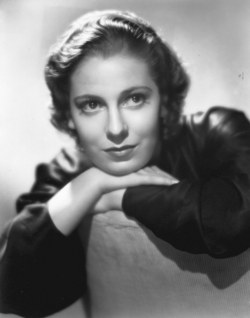
Valerie Hobson, Irish-born actress who appears in a number of films during the 1930s, 1940s and 1950s, is born Babette Valerie Louise Hobson in Larne, County Antrim, Northern Ireland on April 14, 1917. Her second husband is John Profumo, 5th Baron Profumo, a government minister who becomes the subject of a sensational sex scandal in 1963.
In 1952 she divorces her first husband, film producer Sir Anthony Havelock-Allan. In 1954, she marries Brigadier John, 5th Baron Profumo, an MP, giving up acting shortly afterwards. Baron Profumo is a prominent politician of Italian descent. Hobson’s last starring role is in the original London production of Rodgers and Hammerstein‘s musical play The King and I, which opens at the Theatre Royal, Drury Lane, on October 8, 1953. She plays Mrs. Anna Leonowens opposite Herbert Lom‘s King. The show runs for 926 performances.
After Profumo’s ministerial career ends in disgrace in 1963, following revelations he had lied to the House of Commons about his affair with Christine Keeler, Hobson stands by him. They worked together for charity for the remainder of her life, though she does miss their more public personas.
Hobson’s eldest son, Simon Anthony Clerveaux Havelock-Allan, is born in May 1944 with Down syndrome. Her middle child, Mark Havelock-Allan, is born on April 4, 1951, and becomes a judge. Her youngest child is the author David Profumo, who writes Bringing the House Down: A Family Memoir (2006) about the scandal. In it, he writes his parents told him nothing of the scandal and that he learned of it from another boy at school.
Valerie Hobson dies on November 13, 1998, at the age of 81 at a Westminster, London Hospital following a heart attack. After her death, her body is cremated in accordance with her wishes. Half her ashes are interred in the family vault in Hersham. The rest are scattered on January 1, 1999, by her sons David Profumo and Mark Havelock-Allan, near the family’s farm in Scotland.
During McGilligan’s period in opposition from 1932 to 1948 he builds up a law practice and becomes professor of constitutional and international law at University College, Dublin. When the National University of Ireland representation is transferred to Seanad Éireann in 1937, he is elected as TD for the Dublin North-West constituency.
In 1948 McGilligan is appointed Minister for Finance in the first Inter-Party Government. As Minister he undertakes some major reforms. He instigates a new approach where Government invests radically in capital projects. Colleagues however complain of his frequent absence from the Cabinet table and the difficulty of contacting him at the Department of Finance. Between 1954 and 1957 he serves as Attorney General. He retires from Dáil Éireann at the 1965 general election, having served for over 40 years.
Patrick McGilligan dies in Dublin on November 15, 1979. Despite his well-known fondness for predicting that he would die young, he reaches the age of ninety. A later Attorney General, John M. Kelly, in the preface to his definitive text, The Irish Constitution (1980), notes the remarkable number of senior judges who are former students of McGilligan and suggests that, given his own firm belief in the value of judicial review, he deserves much of the credit for the remarkable development of Irish law in this field since the early 1960s.