seamus dubhghaill

Promoting Irish Culture and History from Little Rock, Arkansas, USA


Leave a comment

Death of Abraham Colles, Professor & President of the RCSI

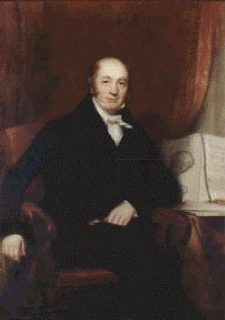
Abraham Colles, Professor of Anatomy, Surgery and Physiology at the Royal College of Surgeons in Ireland (RCSI) and the President of RCSI in 1802 and 1830, dies on November 16, 1843. A prestigious Colles Medal & Travelling Fellowship in Surgery is awarded competitively annually to an Irish surgical trainee embarking on higher specialist training abroad before returning to establish practice in Ireland.

Descended from a Worcestershire family, some of whom had sat in Parliament, Colles is born to William Colles and Mary Anne Bates of Woodbroak, County Wexford, on July 23, 1773. The family lives near Millmount, a townland near Kilkenny, County Kilkenny, where his father owns and manages his inheritance which is the extensive Black Quarry that produces the famous Kilkenny black marble. His father dies when he is 6 years old, but his mother takes over the management of the quarry and manages to give her children a good education. While at Kilkenny College, a flood destroys a local physician’s house. He finds an anatomy book belonging to the doctor in a field and returns it to him. Sensing the young man’s interest in medicine, the physician lets him keep the book.

Colles goes on to enroll in Trinity College Dublin in 1790 and is indentured to Philip Woodroffe, studying at Dr. Steevens’ Hospital, The Foundlings’ Hospital and the House of Industry hospitals. He receives the Licentiate Diploma of the Royal College of Surgeons in 1795 and goes on to study medicine at the University of Edinburgh Medical School, receiving his MD degree in 1797. Afterward, he lives in London for a short period, working with the famous surgeon Sir Astley Cooper in his dissections of the inguinal region.

Following his return to Dublin, in 1799, Colles is elected to the staff at Dr. Steevens’ Hospital where he serves for the next 42 years. In October 1803, he is appointed Surgeon to Cork-street Fever Hospital, and subsequently becomes Consulting Surgeon to the Rotunda Hospital, City of Dublin Hospital, and Victoria Lying-in Hospital. He is a well-regarded surgeon and is elected as president of the Royal College of Surgeons in Ireland (RCSI) in 1802 at the age of 28 years, subsequently also serving as president in 1830. In 1804, he is appointed Professor of Anatomy, Physiology, and Surgery at RCSI.

In 1811, Colles writes an important treatise on surgical anatomy and some terms he introduces have survived in surgical nomenclature until today. He is remembered as a skillful surgeon and for his 1814 paper On the Fracture of the Carpal Extremity of the Radius. This injury continues to be known as Colles’ fracture. This paper, describing distal radial fractures, is far ahead of its time, being published decades before X-rays come into use. He also describes the membranous layer of subcutaneous tissue of the perineum, which comes to be known as Colles’ fascia. He also extensively studies the inguinal ligament, which is sometimes called Colles’ ligament. He is regarded as the first surgeon to successfully ligate the subclavian artery.

In 1837, Colles writes “Practical observations on the venereal disease, and on the use of mercury” in which he introduces the hypothesis of maternal immunity of a syphilitic infant when the mother has not shown signs of the disease. His principal textbook is the two-volume Lectures on the theory and practice of surgery. His writings are important, though not voluminous. Some of his papers are collected and edited by his son, William Colles, and published in the Dublin Journal of Medical Science. Selections from the works of Abraham Colles, chiefly relative to the venereal disease and the use of mercury, comprise Volume XOII. of the Library of the New Sydenham Society, published in 1881. They are edited and annotated by one of the most distinguished Fellows of the RCSI, Robert McDonnell. His Lectures on Surgery are edited by Simon McCoy and published in 1850. In tribute to his distinguished career, he is awarded a baronetcy in 1839, which he refuses.

Upon Colles’s retirement as Professor of Surgery, the Members of RCSI pass a resolution which includes “We have also to assure you that it is the unanimous feeling of the College, that the exemplary and efficient manner in which you have filled this chair for thirty-two years, has been a principal cause of the success and consequent high character of the School of Surgery in this country.”

Colles dies on November 16, 1843, from gout. He is buried in Mount Jerome Cemetery, Dublin.

In 1807, Colles marries Sophia Cope. His son William follows in his footsteps, being elected to the Chair of Anatomy in the Royal College of Surgeons in Ireland in 1863. Another of his sons, Henry, marries Elizabeth Mayne, a niece of Robert James Graves. His grandson is the eminent music critic and lexicographer H. C. Colles. His granddaughter Frances marries the judge Lord Ashbourne, and her sister Anna marries his colleague Sir Edmund Thomas Bewley.


Leave a comment

Birth of Sir Maziere Brady, 1st Baronet & Lord Chancellor of Ireland

Sir Maziere Brady, 1st Baronet, PC (Ire), Irish judge, notable for his exceptionally long, though not particularly distinguished tenure as Lord Chancellor of Ireland, is born on July 20, 1796.

Brady is born on Parliament Street, Dublin, the second son of Francis Tempest Brady of Booterstown, a manufacturer of gold and silver thread, and his wife Charlotte Hodgson, daughter of William Hodgson of Castledawson, County Londonderry. He is baptised at St. Werburgh’s Church, Dublin. He is the brother of Sir Nicholas Brady, Lord Mayor of Dublin, and uncle of the eminent ecclesiastical historian William Maziere Brady.

The Bradys are an old and distinguished Munster family who are particularly associated with the town of Bandon, County Cork. Probably the most celebrated of his ancestors is the poet and psalmist Nicholas Brady (1659–1726), who collaborated with Nahum Tate, the Poet Laureate, on New Version of the Psalms of David.

Other notable forebears include Hugh Brady, the first Protestant Bishop of Meath (d. 1584), his father-in-law Robert Weston who, like Maziere serves as Lord Chancellor of Ireland, and the judge and author Luke Gernon (d. 1672), who is now best remembered for his work A Discourse of Ireland (1620), which gives a detailed and (from the English colonial point of view) not unsympathetic picture of the state of Ireland in 1620.

Brady is educated at Trinity College Dublin and takes his Bachelor of Arts degree in 1816. He enters the Middle Temple in 1816, is called to the Bar in 1819 and becomes King’s Counsel in 1835.

In politics Brady is a Liberal and supports Catholic emancipation. He sits on a commission of inquiry into Irish municipal corporations in 1833. He is appointed Solicitor-General for Ireland in 1837 and Attorney-General for Ireland the following year. In 1840 he is appointed Lord Chief Baron of the Irish Exchequer. In 1846 he is appointed Lord Chancellor of Ireland and serves in that office, with short intervals, for the next 20 years. He retires in 1866 and is made a baronet, of Hazelbrook in the County of Dublin, in 1869. His appointment ends the practice which grew after the Acts of Union 1800 of appointing only English lawyers as Lord Chancellor of Ireland. He sits on the Government Commission on Trinity College Dublin in 1851 and is nominated as Vice-Chancellor of Queen’s University Belfast in 1850. All through his life he shows a keen interest in education.

According to Elrington Ball, Brady’s Lord Chancellorship is notable for its length but for nothing else. Ball calls him “a good Chief Baron spoiled to make a bad Chancellor.” By general agreement he had been an excellent Chief Baron of the Exchequer, having a reputation for being fair-minded, courteous and approachable, but in Ball’s view the more onerous (and partly political) office of Lord Chancellor is beyond his capacity. Unlike some judges whose training had been in the common law, he never quite masters the separate code of equity. Delaney takes a somewhat more favourable view of Brady as Lord Chancellor, arguing that while his judgements do not show any great depth of learning they do show an ability to identify the central issue of any case and to apply the correct legal principle to it.

An anonymous pamphlet from 1850, which is highly critical of the Irish judiciary in general, describes Brady as being unable to keep order in his Court, and easily intimidated by counsel, especially by that formidable trio of future judges, Jonathan Christian, Francis Alexander FitzGerald, and Abraham Brewster. The author paints an unflattering picture of Brady as sitting “baffled and bewildered” in a Court where he is “a judge but not an authority.” On the other hand, Jonathan Christian, who had often clashed with Brady in Court, later praises him as “no ordinary man” despite his shortcomings as a judge. He describes him as “independent-minded, patriotic, natural and unaffected.”

Brady is a founder member of the Stephen’s Green Club and a member of the Royal Dublin Society and the Royal Irish Academy. In addition to the arts, he shows a keen interest in science, especially after his retirement. Like most judges of the time, he has both a town house in central Dublin and a place some distance from the city centre. His country house is Hazelbrook, Terenure, Dublin. He changes his town house several times, settling finally in Pembroke Street.

Brady marries firstly Elizabeth Anne Buchanan, daughter of Bever Buchanan, apothecary of Dublin, and his wife Eleanor Hodgson, in 1823 and they have five children. Elizabeth dies in 1858. In 1860, Brady marries Mary Hatchell, daughter of John Hatchell, Attorney-General for Ireland and Elizabeth Waddy, who survives him. He dies at his house in Pembroke Street on April 13, 1871. He is buried in Mount Jerome Cemetery.


Leave a comment

Birth of Ophthalmologist Arthur Jacob

Arthur Jacob, Irish ophthalmologist, is born on June 13, 1790, at Knockfin, near Maryborough, Queens County (now Portlaoise, County Laois). He is known for founding several hospitals, a medical school, and a medical journal. He contributes to science and academia through his 41-year term as Professor of Anatomy at the Royal College of Surgeons in Ireland (RCSI) and as the first Irish ocular pathologist. He is elected President of RCSI in 1837 and 1864.

Jacob is the second son of John Jacob, M.D. (1754–1827), surgeon to the Queen’s County infirmary, Maryborough, by his wife Grace (1765–1835), only child of Jerome Alley of Donoughmore. He studies medicine with his father and at Dr. Steevens’s Hospital, Kilmainham, Dublin, under Abraham Colles. Having graduated M.D. at the University of Edinburgh in 1814, he sets out on a walking tour through the United Kingdom, crossing the English Channel at Dover, and continuing his walk from Calais to Paris.

Jacob studies at Paris until Napoleon‘s return from Elba. He subsequently pursues his studies in London under Sir Benjamin Collins Brodie, Sir Astley Cooper, and Sir W. Lawrence. In 1819 he returns to Dublin and becomes demonstrator of anatomy under Dr. James Macartney at Trinity College Dublin. Here his anatomical research gains for him a reputation, and he collects a museum, which Macartney afterwards sells to the University of Cambridge.

On leaving Macartney, Jacob joins with Robert James Graves and others in founding the Park Street School of Medicine. In 1826 he is elected Professor of Anatomy and Physiology at Royal College of Surgeons in Ireland (RCSI) and holds the chair until 1869. He is elected President of RCSI in 1837 and 1864. He founds an Ophthalmic Hospital in Pitt (now Balfe) Street in 1829 and in 1832, in conjunction with Charles Benson and others, he founds the Baggot Street Hospital, Baggot Street, and later practices there after the opening of a dedicated eye ward. His younger rival, Sir William Wilde, subsequently founds the competing St. Mark’s Ophthalmic Hospital in Lincoln Place (beside Trinity College) in 1844.

In 1839, with Dr. Henry Maunsell, Jacob starts the Dublin Medical Press, a weekly journal of medical science, and edits forty-two volumes from 1839 to 1859, in order “to diffuse useful knowledge… to instil honourable principles, and foster kind feelings in the breast of the student” among other desirable aims. He also contributes to the Dublin Journal of Medical Science. He takes an active part in founding the Royal Medical Benevolent Fund Society of Ireland and the Irish Medical Association.

At the age of seventy-five Jacob retires from the active pursuit of his profession. His fame rests on his anatomical and ophthalmological discoveries.

In December 1860 a medal bearing Jacob’s likeness is struck and presented to him, and his portrait, bust, and library are later placed in the Royal College of Surgeons in Ireland. He dies at Newbarnes, Barrow-in-Furness, Cumbria, England, on September 21, 1874. He is buried at Mount Jerome Cemetery, Dublin.

In 1819 Jacob announces the discovery, which he had made in 1816, of a previously unknown membrane of the eye, in a paper in the Philosophical Transactions of the Royal Society. The membrane has been known since as membrana Jacobi and forms the retina. Apart from his discovery of the membrana Jacobi, he describes Jacob’s ulcer, and revives cataract surgery through the cornea with a curved needle, Jacob’s needle. To the Cyclopædia of Anatomy he contributes an article on the eye, and to the Cyclopædia of Practical Medicine treatises on Ophthalmia and Amaurosis.

In 1824 Jacob marries Sarah, daughter of Coote Carroll, of Ballymote, County Sligo. The marriage produces five sons. She dies on January 6, 1839.

(Pictured: Photograph of a marble bust of Arthur Jacob on the main staircase of the Royal Victoria Eye and Ear Hospital, Dublin, Ireland)


Leave a comment

Birth of Mathematician William McFadden Orr

William McFadden Orr, mathematician, is born May 2, 1866, at Ballystockart, Comber, County Down, in what is now Northern Ireland.

Orr is the eldest son of Fletcher Blakely Orr of Ballystockart, a unitarian farmer and millowner, and Elizabeth Orr, daughter of David Lowry, farmer, of Ballymacashin, County Down. He attends a local national school, spends two years at an intermediate school in Newtownards, and then attends Methodist College Belfast (MCB). He wins a Royal University of Ireland (RIU) scholarship in mathematics in 1883 and graduates in 1885 from Queen’s College Belfast, a constituent college of the RUI. He then matriculates at St. John’s College, Cambridge, where he is Senior Wrangler in 1888 and comes in first in part two of the Mathematical Tripos in 1889. Two years later he is elected to a fellowship at St. John’s, and the same year is appointed professor of applied mathematics at the Royal College of Science for Ireland in Dublin. When the Royal College is merged with University College Dublin (UCD) in October 1926, he becomes professor of pure and applied mathematics, a position he holds until his retirement in 1933.

Orr’s 1909 publication Notes on Thermodynamics for Students is seen as epitomising his style of teaching, with its emphasis on logical rigour and clear statement of underlying assumptions. Known for his generosity to staff and students who encounter difficulties, he is nonetheless a strict disciplinarian who abhors idleness and valued stoicism. He is elected Fellow of the Royal Society (FRS) in 1909 and is awarded an honorary degree of D.Sc. from Queen’s University Belfast (QUB) in 1919.

In 1892, Orr marries Elizabeth Campbell of Melbourne, Australia, whose father, Samuel Campbell, is from County Down. They live at 19 Pembroke Road, Dublin, and have three daughters. He dies at Douglas, Isle of Man on August 14, 1934, and is interred in Mount Jerome Cemetery, Dublin. He is survived by his two daughters.

(From: “Orr, William McFadden” contributed by Paul Rouse, Dictionary of Irish Biography, http://www.dib.ie)


Leave a comment

Birth of George William Russell, Writer, Poet & Nationalist

George William Russell, Irish writer, editor, critic, poet, painter and Irish nationalist, is born on April 10, 1867, in Lurgan, County Armagh, in what is now Northern Ireland. He writes with the pseudonym Æ (often written AE or A.E.). He is also a writer on mysticism, and a central figure in the group of devotees of theosophy which meets in Dublin for many years. He takes his pseudonym from a proofreader’s query about his earlier pseudonym, “AEon.”

Russell is the second son of Thomas Russell and Mary Armstrong. His father, the son of a small farmer, becomes an employee of Thomas Bell and Co., a prosperous firm of linen drapers. The family relocates to Dublin, where his father has a new offer of employment, when he is eleven years old.

Russell is educated at Rathmines School and the Metropolitan School of Art, where he begins a lifelong, if sometimes contentious, friendship with W. B. Yeats. In the 1880s, he lives at the Theosophical Society lodge at 3 Upper Ely Place, sharing rooms with Hamilton Malcolm Magee, the brother of William Kirkpatrick Magee.

Following his time at the Metropolitan School of Art, Russell becomes an accounts clerk in a drapery store but leaves in 1897 to organize agricultural cooperatives. Eventually he becomes editor of the periodicals Irish Homestead (1905–23) and The Irish Statesman (1923–30). In 1894 he publishes the first of many books of verse, Homeward: Songs by the Way, which establishes him in what is known as the Irish Literary Revival. His first volume of Collected Poems appears in 1913 and a second in 1926. He maintains a lifelong interest in theosophy, the origins of religion, and mystical experience. Candle of Vision: Autobiography of a Mystic (1918) is the best guide to his religious beliefs.

At the turn of the 20th century, Russell is considered by many to be the equal of Yeats, but he does not continue to grow and develop as Yeats does. He is prolific and versatile, but many critics find his poetry facile, vague, and monotonous, with “rather too much of the Celtic Twilight” in it.

Russell designs the famous Starry Plough flag for the Irish Citizen Army, which is unveiled on April 5, 1914, and flown during the Easter Rising in April 1916.

Russell, who had become increasingly unhappy in the Irish Free State which, according to Yeats, he called “a country given over to the Devil,” moves to England soon after his wife’s death in 1932. Despite his failing health he goes on a final lecture tour in the United States but returns home utterly exhausted. He dies of cancer in Bournemouth, England, on July 17, 1935. His body is brought back to Ireland, and he is interred in Mount Jerome Cemetery, Dublin.


2 Comments

Death of John Hewitt Jellett, Mathematician & Priest

John Hewitt Jellett, Irish mathematician whose career is spent at Trinity College Dublin (TCD), where he rises to the rank of Provost, dies in Dublin on February 19, 1888. He is also a priest in the Church of Ireland.

Jellett is born at Cashel, County Tipperary, on December 25, 1817, the son of Rev. Morgan Jellett and his wife Harriette Townsend, daughter of Hewitt Baldwin Poole of County Cork, by his wife Dorothea Morris. He is the eldest brother of Hewitt Poole Jellett, Serjeant-at-law (Ireland) and Chairman of the Quarter Sessions for County Laois, and of the Venerable Henry Jellett, Archdeacon of Cloyne. He is educated at Kilkenny College and at TCD, where he becomes a fellow in 1840.

Jellett marries his cousin on his mother’s side, Dorothea Charlotte Morris Morgan, daughter of James Morgan, on July 7, 1855. The marriage produces seven children. His son, William Morgan Jellett, is a member of the Parliament of the United Kingdom and is the father of the celebrated artist Mainie Jellett, and of Dorothea Jellett, director of the orchestra of the Gaiety Theatre, Dublin. Another son Henry Holmes Jellett is a civil engineer in British India. His daughter Harriette Mary Jellett is the wife of the noted Irish physicist George Francis FitzGerald. Another daughter Eva Jellett is the first woman to graduate with a degree in medicine from Trinity and goes on to practice as a doctor in India.

Jellett graduates B.A. in mathematics in 1837, M.A. 1843, B.D. 1866, and D.D. 1881. He is ordained a priest in 1846. In 1848 he is elected to the chair of natural philosophy at TCD, and in 1868 he receives the appointment of commissioner of Irish national education.

In 1851 Jellett is awarded the Cunningham Medal of the Royal Irish Academy for his work on the “Calculus of Variations.” The society later elects him their president, a position he holds from 1869 to 1874.

In 1870, on the death of Dr. Thomas Luby, Jellett is co-opted a Senior Fellow, and thus a member of the Board of TCD. William Ewart Gladstone‘s government in February 1881 appoints him provost of Trinity. In the same year he is awarded a Royal Medal by the Royal Society.

After the disestablishment of the Church of Ireland by the Irish Church Act 1869, Jellett takes an active part in the deliberations of the general synod and in every work calculated to advance its interests. He is an able mathematician and writes A Treatise of the Calculus of Variations (1850), and A Treatise on the Theory of Friction (1872), as well as several papers on pure and applied mathematics, articles in the Transactions of the Royal Irish Academy. He also writes some theological essays, sermons, and religious treatises, of which the principals are An Examination of some of the Moral Difficulties of the Old Testament (1867), and The Efficacy of Prayer (1878).

Jellett dies of blood poisoning at the provost’s house, TCD, on February 19, 1888, and is buried in Mount Jerome Cemetery on February 23. The funeral procession is the largest that ever left Trinity.

(Pictured: “John Hewitt Jellett,” oil on canvas by Sarah Purser)


2 Comments

Death of Mathematician Sir William Rowan Hamilton

Sir William Rowan Hamilton, Irish mathematician, Andrews Professor of Astronomy at Trinity College, Dublin, and Royal Astronomer of Ireland, who makes important contributions to classical mechanics, optics, and algebra, dies in Dublin on September 2, 1865, following a severe attack of gout.

Hamilton is born in Dublin on August 4, 1805, the fourth of nine children born to Sarah Hutton (1780–1817) and Archibald Hamilton (1778–1819). He is part of a small but well-regarded school of mathematicians associated with Trinity College, Dublin, which he enters at age eighteen. He is said to have shown immense talent at a very early age. Astronomer Bishop Dr. John Brinkley remarks of the 18-year-old Hamilton, “This young man, I do not say will be, but is, the first mathematician of his age.”

Trinity College awards him two Optimes, or off-the-chart grades. He studies both classics and mathematics and is appointed Professor of Astronomy just prior to his graduation. He then takes up residence at Dunsink Observatory where he spends the rest of his life.

Although Hamilton regards himself as a pure mathematician rather than a physicist, his work is of major importance to physics, particularly his reformulation of Newtonian mechanics, now called Hamiltonian mechanics. This work has proven central to the modern study of classical field theories such as electromagnetism, and to the development of quantum mechanics. In pure mathematics, he is best known as the inventor of quaternions.

Hamilton’s scientific career includes the study of geometrical optics, classical mechanics, adaptation of dynamic methods in optical systems, applying quaternion and vector methods to problems in mechanics and in geometry, development of theories of conjugate algebraic couple functions, solvability of polynomial equations and general quintic polynomial solvable by radicals, the analysis on Fluctuating Functions, linear operators on quaternions and proving a result for linear operators on the space of quaternions, which is a special case of the general theorem which today is known as the Cayley–Hamilton theorem. He also invents Icosian calculus, which he uses to investigate closed edge paths on a dodecahedron that visit each vertex exactly once.

Hamilton retains his faculties unimpaired to the very last, and steadily continues the task of finishing the Elements of Quaternions which occupies the last six years of his life. He dies in Dublin on September 2, 1865, following a severe attack of gout precipitated by excessive drinking and overeating. He is buried in Mount Jerome Cemetery in Dublin.


Leave a comment

Birth of George Francis FitzGerald, Academic & Physicist

Professor George Francis FitzGerald FRS FRSE, Irish academic and physicist, is born at No. 19, Lower Mount Street in Dublin on August 3, 1851. He is known for his work in electromagnetic theory and for the Lorentz–FitzGerald contraction, which becomes an integral part of Albert Einstein‘s special theory of relativity.

FitzGerald is born to the Reverend William FitzGerald and his wife Anne Frances Stoney. He is the nephew of George Johnstone Stoney, the Irish physicist who coins the term “electron.” After the particles are discovered by J. J. Thomson and Walter Kaufmann in 1896, FitzGerald is the one to propose calling them electrons. He is also the nephew of Bindon Blood Stoney, an eminent Irish engineer. His cousin is Edith Anne Stoney, a pioneer female medical physicist.

Professor of Moral Philosophy at Trinity College Dublin and vicar of St. Anne’s, Dawson Street, at the time of his son’s birth, William FitzGerald is consecrated Bishop of Cork, Cloyne and Ross in 1857 and translates to Killaloe and Clonfert in 1862. George returns to Dublin and enters TCD as a student at the age of sixteen, winning a scholarship in 1870 and graduating in 1871 in Mathematics and Experimental Science. He becomes a Fellow of Trinity in 1877 and spends the rest of his career there, serving as Erasmus Smith’s Professor of Natural and Experimental Philosophy from 1881 to 1901.

Along with Oliver Lodge, Oliver Heaviside and Heinrich Hertz, FitzGerald is a leading figure among the group of “Maxwellians” who revise, extend, clarify, and confirm James Clerk Maxwell‘s mathematical theories of the electromagnetic field during the late 1870s and the 1880s.

In 1883, following from Maxwell’s equations, FitzGerald is the first to suggest a device for producing rapidly oscillating electric currents to generate electromagnetic waves, a phenomenon which is first shown to exist experimentally by the German physicist Heinrich Hertz in 1888.

In 1883, FitzGerald is elected Fellow of the Royal Society. In 1899, he is awarded a Royal Medal for his investigations in theoretical physics. In 1900, he is made an honorary fellow of the Royal Society of Edinburgh.

FitzGerald is better known for his conjecture in his short letter to the editor of Science. “The Ether and the Earth’s Atmosphere” explains that if all moving objects were foreshortened in the direction of their motion, it would account for the curious null-results of the Michelson–Morley experiment. He bases this idea in part on the way electromagnetic forces are known to be affected by motion. In particular, he uses some equations that had been derived a short time before by his friend the electrical engineer Oliver Heaviside. The Dutch physicist Hendrik Lorentz hits on a very similar idea in 1892 and develops it more fully into Lorentz transformations, in connection with his theory of electrons.

The Lorentz–FitzGerald contraction hypothesis becomes an essential part of the Special Theory of Relativity, as Albert Einstein publishes it in 1905. He demonstrates the kinematic nature of this effect, by deriving it from the principle of relativity and the constancy of the speed of light.

FitzGerald suffers from many digestive problems for much of his shortened life. He becomes very ill with stomach problems. He dies on February 22, 1901, at his home, 7 Ely Place in Dublin, the day after an operation on a perforated ulcer. He is buried in Mount Jerome Cemetery.

A crater on the far side of the Moon is named after FitzGerald, as is a building at Trinity College Dublin.


Leave a comment

Birth of Joss Lynam, Civil Engineer & Mountaineer

Joss Lynam, Irish civil engineer who is well known as a mountaineer, hillwalker, orienteer, writer and sports administrator, is born James Perry O’Flaherty Lynam in London on June 29, 1924. He is one of Ireland’s most influential figures in outdoor activities.

Lynam is born to Irish parents Edward and Martha (née Perry), both Galway natives. He and his older sister, Biddy, are both raised in London where his father works as curator of maps in the British Museum. This is where he is first introduced to orienteering and cartography. The family frequently returns to the west coast of Ireland to holiday. Here he finds his love for mountaineering and climbs his first mountain, Knocknarea in County Sligo, with his aunt.

At 18, Lynam joins the British Army and trains as an officer. He is deployed to India in 1944 under the Corps of Royal Engineers where he spends the remainder of World War II. While there, he participates in his first of many Himalayan expeditions, climbing Kolahoi Peak. When he returns in 1947, he immediately moves to Dublin and enrolls in Trinity College Dublin, after encouragement from his parents, where he begins to study engineering. He graduates and receives his degree with Upper Second Class (2.1) Honours.

Lynam is a civil engineer by profession but devotes most of his life developing the sport of mountaineering in Ireland. He climbs extensively in Ireland, Great Britain, the Alps and in India. He is leader, or deputy leader, of expeditions to Greenland, the Andes, Kashmir, Tian Shan, Garhwal, Tibet and India, including the 1987 expedition to Changtse, that is the forerunner to the successful first Irish ascent of Mount Everest in 1993.

With his involvement in developing adventure sport in Ireland Lynam is active in promoting access and developing waymarked trails. He is involved in the creation and administration of the Federation of Mountaineering Clubs in Ireland (now Mountaineering Ireland), the Association for Adventure Sports, Bord Oiliúint Sléibhte (Irish Mountain Training Board), Tiglin (National Outdoor Training Centre), Outdoor Education Ireland, and Cospóir (now Sport Ireland) and the National Waymarked Ways Advisory Committee (part of Sport Ireland).

Lynam is a founder member of the Irish Mountaineering Club (IMC) serving as president from 1982-1984. He is also a founder member of both the Irish Orienteers and Three Rock Orienteering club. He is president of the Union Internationale des Associations d’Alpinisme‘s expeditions commission in the 1990s.

Lynam writes and edits many guide books on walking and climbing in Ireland and helps create and is editor of The Mountain Log (the journal of Mountaineering Ireland).

In 2001, Lynam is awarded an honorary degree from Trinity College Dublin in acknowledgment of his volunteer work and remarkable achievements. He celebrates his 80th birthday by climbing the Paradise Lost Route and then goes on to abseil down Winder’s Slab for his 82nd birthday, both routes in Dalkey Quarry. Both climbs are to raise funds for cancer research, as he had been undergoing chemotherapy for Hodgkin’s Disease.

As a result of a short illness, which is being treated at St. Vincent’s University Hospital Dublin, Lynam dies on the January 9, 2011, aged 86. His funeral is held in the Church of St. Therésè, Mount Merrion, Dublin and then continues to Mount Jerome Cemetery and Crematorium.

After Lynam’s death, his two daughters, Clodagh and Ruth, donate his papers to his alma mater, Trinity College Dublin. These papers cover a vast range of topics such as his life and career, family, childhood, experience of war, his involvement with different mountaineering clubs, and his many writings. The collection also contains photos and slides that he captures himself of landscapes and mountaineering, and consists of maps that are collected by him and his father. There is so much material in the collection that it takes a year for the collection to be catalogued by an archivist.

Lynam’s ashes are scattered by his daughters over the Knocknarea Mountain on the February 12, 2011, being the first mountain he climbed. The Lynam Lecture is introduced in 2011 by Mountaineering Ireland in his memory and his achievements in climbing, hillwalking and mountaineering in Ireland and around the world. Every December the Lynam Lecture is held by leading national and international mountaineers and discusses the development and future of mountaineering in Ireland. Past speakers include Ines Papert, Frank Nugent and Paddy O’Leary.


Leave a comment

Birth of Irish Painter Sir Frederic William Burton RHA

Irish painter Sir Frederic William Burton RHA is born in County Wicklow on April 8, 1816. The third son of Samuel Frederick Burton and his wife Hanna Mallett, he is taken by his parents to live in County Clare on the west coast of Ireland at the age of six. The old Burton seat is Clifden House, Corofin, County Clare, which is built around the middle of the eighteenth century. The artist’s grandparents were Major Edward William Burton, Clifden, who was High Sheriff of Clare in 1799, and his wife, Jane Blood of nearby Roxton, County Clare. In his youth he has strong sympathy with the Young Ireland movement.

Educated in Dublin, Burton is elected an associate of the Royal Hibernian Academy at the age of twenty-one and an academician two years later. In 1842 he begins to exhibit at the Royal Academy. A visit to Germany and Bavaria in 1842 is the first of a long series of trips to various parts of Europe, which give him a profound knowledge of the works of the Old Masters. From 1851 he spends seven years working as a painter in the service of Maximilian II of Bavaria.

Burton works with George Petrie on archaeological sketches and is on the council of the Royal Irish Academy and the Archaeological Society of Ireland. He is elected an associate of the Royal Society of Painters in Watercolours in 1855, and a full member in the following year. He resigns in 1870 and is reelected as an honorary member in 1886.

In 1874 Burton is appointed the third director of the National Gallery, London, in succession to Sir William Boxall RA. In June 1874, he obtains a special grant to acquire the art collection of Alexander Barker, which includes Piero della Francesca‘s Nativity and Sandro Botticelli‘s Venus and Mars. In 1876 a bequest of 94 paintings, mainly by Dutch artists but also including works by Antonio del Pollaiuolo, Dieric Bouts and Canaletto, is made by the British haberdasher Wynne Ellis. Also, in this year an extension to the Gallery by Edward Middleton Barry is completed.

During the twenty years that Burton holds this post he is responsible for many important purchases, among them Leonardo da Vinci‘s Virgin of the Rocks, Raphael‘s Ansidei Madonna, Anthony van Dyck‘s Equestrian portrait of Charles I, Hans Holbein the Younger‘s Ambassadors, and the Admiral Pulido Pareja, by Diego Velázquez (this subsequently attributed to Velázquez’s assistant Juan Bautista Martínez del Mazo). He also adds to the noted series of Early Italian pictures in the gallery. The number of acquisitions made to the collection during his period of office exceeds 500.

Burton’s best-known watercolours, The Aran Fisherman’s Drowned Child (1841) and The Meeting on Turret Stairs (1864) are in the National Gallery of Ireland. The Meeting on Turret Stairs is voted by the Irish public as Ireland’s favourite painting in 2012 from among ten works shortlisted by critics. A knighthood is conferred on him in 1884, and the degree of LL.D. of Dublin in 1889.

Burton dies in Kensington, West End of London on March 16, 1900, and is buried in Mount Jerome Cemetery, Dublin.

(Pictured: “Sir Frederic William Burton,” painting by Henry Tanworth Wells (died 1903), given to the National Portrait Gallery, London in 1913)