McNamee is arrested on August 16, 1986, at his home in Crossmaglen by the British Army and Royal Ulster Constabulary (RUC), then flown to London and charged with conspiracy to cause explosions. At his trial at the Old Bailey, he denies even having sympathy for the IRA, and no evidence is ever presented that he has any paramilitary links. Additionally, the IRA itself states that he is not a member, and never claimed him as a “prisoner of war.” However, his fingerprint is found on electronic circuits in an arms cache that is linked to the Hyde Park bombing. At his trial, he explains that he may have handled the circuits when working for a previous employer, whom he did not know had IRA connections. After five hours of deliberation by the jury, he is found guilty on all charges and sentenced to 25 years in prison.
In September 1994, McNamee and Paul Magee are among six prisoners who escape from Whitemoor Prison, shooting and wounding a prison officer as they do so, before being captured two hours later.
In 1997, McNamee’s case is examined by Channel 4‘s Trial and Error programme. He is later to be the first case referred to the Court of Appeal by the Criminal Cases Review Commission (CCRC), and his conviction is overturned on December 17, 1998, because of other, much more prominent, fingerprints on the same circuits, belonging to known IRA bomb-maker Dessie Ellis, which were not disclosed at McNamee’s original trial. Despite quashing McNamee’s conviction, the appeal judges state, “The Crown makes a strong case that the appellant [McNamee] was guilty of a conspiracy to cause explosions.” Supporters of the campaign to clear his name include the comedianJeremy Hardy.
In February 1999, McNamee reads the IRA Roll of Honour at the Burns and Moley commemoration and the following month he sits with the Caraher family during the trial of Michael Caraher and other members of the Provisional IRA South Armagh Brigadesniper team.
Spence, the sixth of seven children, is born and raised in the Shankill Road area of West Belfast in Northern Ireland, the son of William Edward Spence, a member of the Ulster Volunteers who fought in World War I, and Isabella “Bella” Hayes. The family home is 66 Joseph Street in an area of the lower Shankill known colloquially as “the Hammer.” He is educated at the Riddel School on Malvern Street and the Hemsworth Square school, finishing his education at the age of fourteen. He is also a member of the Church Lads’ Brigade, a Church of Ireland group, and the Junior Orange Order. His family has a long tradition of Orange Order membership.
Spence takes various manual jobs in the area until joining the British Army in 1957 as a member of the Royal Ulster Rifles. He rises to the rank of Provost Sergeant (battalion police). He is stationed in Cyprus and sees action fighting against the forces of Colonel Georgios Grivas. He serves until 1961 when ill-health forces him to leave. He then finds employment at the Harland & Wolff shipyard in Belfast, where he works as a stager (builder of the scaffolding in which the ships are constructed), a skilled job that commands respect among working class Protestants and ensures for him a higher status within the Shankill.
From an early age Spence is a member of the Prince Albert Temperance Loyal Orange Lodge, where fellow members include John McQuade. He is also a member of the Royal Black Institution and the Apprentice Boys of Derry. Due to his later involvement in a murder, he is expelled from the Orange Order and the Royal Black Institution. The Reverend Martin Smyth is influential in his being thrown out of the Orange Order.
Spence’s older brother Billy is a founding member of Ulster Protestant Action (UPA) in 1956, and he is also a member of the group. He is frequently involved in street fights with republicans and garners a reputation as a “hard man.” He is also associated loosely with prominent loyalists such as Ian Paisley and Desmond Boal and is advised by both men in 1959 when he launches a protest against Gerry Fitt at Belfast City Hall after Fitt had described Spence’s regiment as “murderers” over allegations that they had killed civilians in Cyprus. He, along with other Shankill Road loyalists, break from Paisley in 1965 when they side with James Kilfedder in a row that follows the latter’s campaigns in Belfast West. Paisley intimates that Kilfedder, a rival for the leadership of dissident unionism, is close to Fine Gael after learning that he had attended party meetings while a student at Trinity College Dublin (TCD). The Shankill loyalists support Kilfedder and following his election as MP send a letter to Paisley accusing him of treachery during the entire affair.
Spence claims that he is approached in 1965 by two men, one of whom was an Ulster Unionist Party MP, who tells him that the Ulster Volunteer Force is to be re-established and that he is to have responsibility for the Shankill. He is sworn in soon afterward in a ceremony held in secret near Pomeroy, County Tyrone. Because of his military experience, he is chosen as the military commander and public face of the UVF when the group is established. However, RUC Special Branch believes that his brother Billy, who keeps a much lower public profile, is the real leader of the group. Whatever the truth of this intelligence, Spence’s Shankill UVF team is made up of only around 12 men on its formation. Their base of operations is the Standard Bar, a pub on the Shankill Road frequented by Spence and his allies.
On May 7, 1966, a group of UVF men led by Spence petrol bomb a Catholic-owned pub on the Shankill Road. Fire also engulfs the house next door, killing the elderly Protestant widow, Matilda Gould (77), who lives there. On May 27, he orders four UVF men to kill an Irish Republican Army (IRA) member, Leo Martin, who lives on the Falls Road. Unable to find their target, the men drive around in search of any Catholic instead. They shoot dead John Scullion (28), a Catholic civilian, as he walks home. Spence later writes “at the time, the attitude was that if you couldn’t get an IRA man you should shoot a Taig, he’s your last resort.” On June 26, the same gang shoots dead Catholic civilian Peter Ward (18) and wounds two others as they leave a pub on Malvern Street in the lower Shankill. Two days later, the government of Northern Ireland uses the Special Powers Act to declare the UVF illegal. Shortly after, Spence and three others are arrested.
In October 1966, Spence is sentenced to life imprisonment for the murder of Ward, although he has always claimed his innocence. He is sent to Crumlin Road Prison. During its July 12, 1967, march, the Orange lodge to which he belongs stops outside the prison in tribute to him. This occurs despite him having been officially expelled from the Orange Order following his conviction. His involvement in the killings gives him legendary status among many young loyalists and he is claimed as an inspiration by the likes of Michael Stone. Tim Pat Coogan describes Spence as a “loyalist folk hero.” The murder of Ward is, however, repudiated by Paisley and condemned in his Protestant Telegraph, sealing the split between the two.
Spence appeals against his conviction and is the subject of a release petition organised by the Ulster Constitution Defence Committee, although nothing comes of either initiative. Despite the fact that control of the UVF lay with his closest ally, Samuel “Bo” McClelland, from prison he is often at odds with the group’s leadership, in particular with regards to the 1971 McGurk’s Bar bombing. Spence now argues that UVF members are soldiers and soldiers should not kill civilians, as had been the case at McGurk’s Bar. He respects some Irish republican paramilitaries, who he feels also live as soldiers, and to this end he writes a sympathetic letter to the widow of Official IRA leader Joe McCann after he is killed in 1972.
Spence is granted two days leave in early July 1972 to attend the wedding of his daughter Elizabeth to Winston Churchill “Winkie” Rea. The latter had formally asked Spence for his daughter’s hand in marriage during a prison visit. Met by two members of the Red Hand Commando upon his release, Spence is informed of the need for a restructuring within the UVF and told not to return to prison. He initially refuses and goes on to attend his daughter’s wedding. Afterward a plot is concocted where Jim Curry, a Red Hand Commando member, will drive Spence back to prison but the car is to be stopped and Spence “kidnapped.” As arranged, the car in which he is a passenger is stopped in Springmartin and he is taken away by UVF members. He remains at large for four months and during that time gives an interview to ITV‘s World in Action in which he calls for the UVF to take an increased role in the Northern Ireland conflict against the Provisional IRA. At the same time, he distances himself from any policy of random murders of Catholics. He also takes on responsibility for the restructuring, returning the UVF to the same command structure and organisational base that Edward Carson had utilised for the original UVF, with brigades, battalions, companies, platoons and sections. He also directs a significant restocking of the group’s arsenal, with guns mostly taken from the security forces. He gives his permission for UVF brigadier Billy Hanna to establish the UVF’s Mid-Ulster Brigade in Lurgan. His fugitive status earns him the short-lived nickname the “Orange Pimpernel.” He is arrested along with around thirty other men at a UVF drinking club in Brennan Street, but after giving a false name, he is released.
Spence’s time on the outside comes to an end on November 4 when he is captured by Colonel Derek Wilford of the Parachute Regiment, who identifies him by tattoos on his hands. He is sent directly to Long Kesh Detention Centre soon afterward, where he shares a cell with William “Plum” Smith, one of the Red Hand Commandos whom he had met upon his initial release and who had since been jailed for attempted murder.
Spence soon becomes the UVF commander within the Long Kesh Detention Centre. He runs his part of Long Kesh along military lines, drilling inmates and training them in weapons use while also expecting a maintenance of discipline. As the loyalist Long Kesh commander, he initially also has jurisdiction over the imprisoned members of the Ulster Defence Association (UDA), although this comes to an end in 1973 when, following a deterioration in relations between the two groups outside the prison walls, James Craig becomes the UDA’s Maze commander. By this time Spence polarises opinion within the UVF, with some members fiercely loyal to a man they see as a folk hero and others resenting his draconian leadership and increasing emphasis on politics, with one anonymous member even labelling him “a cunt in a cravat.”
Spence begins to move toward a position of using political means to advance one’s aims, and he persuades the UVF leadership to declare a temporary ceasefire in 1973. Following Merlyn Rees‘ decision to legalise the UVF in 1974, Spence encourages them to enter politics and support the establishment of the Volunteer Political Party (VPP). However, his ideas are abandoned as the UVF ceasefire falls apart that same year following the Ulster Workers’ Council strike and the Dublin and Monaghan bombings. The carnage of the latter shocks and horrifies Spence. Furthermore, the VPP suffers a heavy defeat in West Belfast in the October 1974 United Kingdom general election, when the DUP candidate, John McQuade, captures six times as many votes as the VPP’s Ken Gibson.
Spence is increasingly disillusioned with the UVF, and he imparts these views to fellow inmates at Long Kesh. According to Billy Mitchell, Spence quizzes him and others sent to Long Kesh about why they are there, seeking an ideological answer to his question. When the prisoner is unable to provide one, Spence then seeks to convince them of the wisdom of his more politicised path, something that he accomplishes with Mitchell. David Ervine and Billy Hutchinson are among the other UVF men imprisoned in the mid-1970s to become disciples of Spence. In 1977, he publicly condemns the use of violence for political gain, on the grounds that it is counterproductive. In 1978, he leaves the UVF altogether. His brother Bobby, also a UVF member, dies in October 1980 inside the Maze, a few months after the death of their brother Billy.
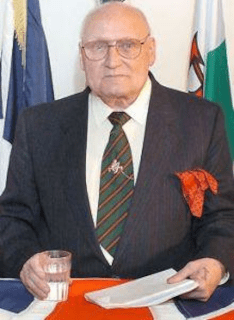
Released from prison in 1984, Spence soon becomes a leading member of the UVF-linked Progressive Unionist Party (PUP) and a central figure in the Northern Ireland peace process. He initially works solely for the PUP but eventually also sets up the Shankill Activity Centre, a government-supported scheme to provide training and leisure opportunities for unemployed youths.
Spence is entrusted by the Combined Loyalist Military Command (CLMC) to read out their October 13, 1994, statement that announces the loyalist ceasefire. Flanked by his PUP colleagues Jim McDonald and William Plum Smith, as well as Ulster Democratic Party (UDP) members Gary McMichael, John White and David Adams, he reads the statement from Fernhill, a former Cunningham family home on their former Glencairn estate in Belfast’s Glencairn area. This building had been an important training centre for members of Edward Carson’s original UVF. A few days after the announcement, he makes a trip to the United States along with the PUP’s David Ervine and Billy Hutchinson and the UDP’s McMichael, Adams and Joe English. Among their engagements is one as guests of honour of the National Committee on American Foreign Policy. He goes on to become a leading advocate for the Good Friday Agreement.
In August 2000, Spence is caught up in moves by Johnny Adair‘s “C” Company of the UDA to take control of the Shankill by forcing out the UVF and other opponents. Due to his involvement in the peace process and the eventual Good Friday Agreement, the authorities insist against his wishes to install additional security measures to the doors and windows. As a result, when Adair’s men try to force their way into Spence’s Shankill home, they only manage to push a long stick through a partially open window of the bungalow and dislodge a few of his military frames off the opposite wall. There is no other damage and other than that small disruption no one is able to gain any physical entry into the property. When Spence’s wife dies three years later, he says that C Company is responsible for her death, as the events had taken on her health.
On May 3, 2007, Spence reads out the statement by the UVF announcing that it will keep its weapons but put them beyond the reach of ordinary members. The statement also includes a warning that activities could “provoke another generation of loyalists toward armed resistance.” He does not specify what activities or what is being resisted.
Spence marries Louie Donaldson, a native of the city’s Grosvenor Road, on June 20, 1953, at Wellwood Street Mission, Sandy Row. The couple has three daughters, Elizabeth (born 1954), Sandra (1956) and Catherine (1960). Louie dies in 2003. Spence, a talented footballer in his youth with Old Lodge F.C., is a lifelong supporter of Linfield F.C.
Spence dies in a Belfast hospital at the age of 78 on September 25, 2011. He had been suffering from a long-term illness and was admitted to hospital 12 days prior to his death. He is praised by, among others, PUP leader Brian Ervine, who states that “his contribution to the peace is incalculable.” Sinn Féin‘s Gerry Kelly claims that while Spence had been central to the development of loyalist paramilitarism, “he will also be remembered as a major influence in drawing loyalism away from sectarian strife.”
However, a granddaughter of Matilda Gould, a 74-year-old Protestant widow who had died from burns sustained in the UVF’s attempted bombing of a Catholic bar next door to her home, objects to Spence being called a “peacemaker” and describes him as a “bad evil man.” The unnamed woman states, “When you go out and throw a petrol bomb through a widow’s window, you’re no peacemaker.”
Spence’s funeral service is held in St. Michael’s Church of Ireland on the Shankill Road. Notable mourners include Unionist politicians Dawn Purvis, Mike Nesbitt, Michael McGimpsey, Hugh Smyth and Brian Ervine, UVF chief John “Bunter” Graham and UDA South Belfast brigadier Jackie McDonald. In accordance with his wishes, there are no paramilitary trappings at the funeral or reference to his time in the UVF. Instead, his coffin is adorned with the beret and regimental flag of the Royal Ulster Rifles, his former regiment. He is buried in Bangor, County Down.
Following his exit from politics in 1957, having lost his Dáil seat, Finlay resumes practicing as a barrister. He successfully defends Captain James Kelly in the infamous 1970 arms trial.
In 1971, Finlay is tasked by the Fianna Fáil government with representing Ireland before the European Commission of Human Rights, when, in response to the ill treatment of detainees by security forces in Northern Ireland, they charge the British government with torture. Despite the notional recourse such prisoners would have within the British legal system, the Commission rules the complaint admissible.
During this period Finlay presides over a number of landmark cases, including Attorney General v X in 1992, when he overturns a High Court injunction preventing a pregnant teenage rape victim travelling to the UK for an abortion.
When, in the same year, Judge Liam Hamilton of the High Court, chair of the Beef Tribunal, seeks disclosure of the cabinet’s minutes for a particular meeting, Chief Justice Finlay along with the majority of the Supreme Court deny the request ruling that the concept of collective government responsibility in the Constitution takes precedence.
Finlay announces his resignation as Chief Justice of Ireland and retirement as a judge in 1994.
After his retirement, Finlay presides over a number of public inquiries.
In 1996, Finlay oversees the inquiry into the violence by English fans at the aborted 1995 friendly soccer match versus the Republic of Ireland at Lansdowne Road. His report to Bernard Allen, Minister for Sport, is critical of security arrangements on the night and recommends improvements to ticketing, seat-allocation, fan-vetting and policing arrangements. The Irish Government shares his report with the British Home Office.
After the collapse of The Irish Press group in 1995, the Minister for Enterprise and Employment, John Bruton, receives a damming report from the Competition Authority that Independent Newspapers has abused its dominant position and acted in an anti-competitive manner by purchasing a shareholding in The Irish Press. In September 1995, Bruton announces the Commission on the Newspaper Industry with an extremely wide remit to examine diversity and ownership, competitiveness, editorial freedom and standards of coverage in Irish newspapers as well as the impact of the sales of the British press in Ireland. Minister Bruton appoints 21 people to the commission and appoints Finlay chair. Due to the wide remit and huge number of submissions, the commission’s report is delayed but is eventually published at the end of July recommending widespread reforms.
Following the discovery of the BTSB anti-D scandal, in 1996, Finlay is appointed the chair and singular member of the Tribunal of Inquiry into the Blood Transfusion Service Board. The speed and efficiency with which his BTSB Tribunal conducts its business, restores confidence in the Tribunal as a mechanism of resolving great controversies in the public interest.
Finlay also sits on an Irish Rugby Football Union (IRFU) panel to adjudicate on the cases of Rugby players accused of using banned performance-enhancing substances.
Finlay is married to Alice Blayney, who predeceases him in 2012. They have five children, two of whom follow in his family’s legal tradition: his son John being a Senior Counsel and his daughter Mary Finlay Geoghegan a former judge of the High Court, Court of Appeal and Supreme Court. Whenever his work schedule allows, he escapes to County Mayo where he indulges his passion for fishing.
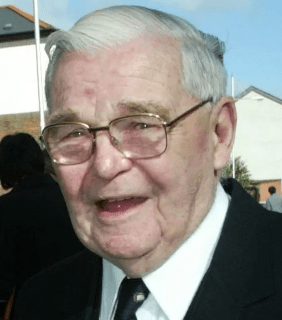
Thomas Finlay dies at the age of 95 in Irishtown, Dublin, on December 3, 2017.
Janet McNeill, prolific Irish novelist and playwright, is born on September 14, 1907, in Dublin. Author of more than 20 children’s books, as well as adult novels, plays, and two opera libretti, she is best known for her children’s comic fantasy series My Friend Specs McCann.
McNeill is born to Rev. William McNeill, a minister at Adelaide Road Presbyterian Church, and Jeannie Patterson (Hogg) McNeill. In 1913, the family moves to Birkenhead, Merseyside, England, where her father becomes minister at Trinity Road Church. She attends public school in Birkenhead and studies classics at the University of St. Andrews in St. Andrews, Scotland, completing a MA degree in 1929. While at university, she is involved in writing and acting with the College Players. In 1924, the family returns to Ireland due to her father’s failing health, and Rev. McNeill becomes the minister of a village church in Rostrevor, County Down, Northern Ireland, while Janet joins the Belfast Telegraph as a secretary.
In 1933, McNeill marries Robert Alexander, the chief engineer in the Belfast city surveyor’s department, and the couple settles in Lisburn, where they raise their four sons. One son is the zoologist Professor Robert McNeill Alexander, CBE, FRS. Though she plans to write her first novel early on, she finds it impossible to write seriously until the children grow up, saying, “It was four years before I had a baby and twenty-five before I produced the book.”
In 1946, McNeill wins a prize in a BBC competition for her play Gospel Truth. She begins writing radio dramas, which are broadcast by the BBC. She suffers an intracerebral hemorrhage in 1953. During her recovery, she begins writing novels both for adults and children, producing a large body of work between 1955 and 1964. Her popular children’s character, Specs McCann, who debuts in a 1955 book and makes several reappearances, also inspires a newspaper cartoon strip by Rowel Friers, a Belfast artist and friend of hers.
Her 1944 novel The Maiden Dinosaur is her first to be published in the United States, twenty-two years later. She also has three writing credits on television with series and plays. Several of her plays are staged at the Ulster Group Theatre.
In 1964, McNeill’s husband retires, and the couple moves to Bristol, South West England. She writes one more novel after she leaves Northern Ireland but continues to write children’s books for another decade. During this time, she writes her only children’s play, published as Switch On, Switch Off, and other plays (1968), which presents different moral themes in scenes set in “domestic and workplace settings in contemporary England.” Her children’s book The Battle of St. George Without is televised by the BBC in 1969.
In her adult fiction, McNeill focuses on the lifestyle and social mores of Belfast and Ulster in the mid-twentieth century. Her characters are primarily “menopausal, middle-aged, middle-class Protestants.” She depicts the “dreary, Ulster religiosity” of ministers and laymen alike, and the class conventions and sexual repression of middle-aged, upper-middle-class women. The theme of suppressing self-identity and goals, both by wives in deference to their husbands and parents on behalf of their children, pervades her adult novels.
McNeill has a number of health problems and dies in Bristol in October 1994.
Siobhan Maire Fahey, Irish singer and founding member of the British girl group Bananarama, who have ten top-10 hits including the U.S. number one hit single “Venus,” is born on September 10, 1958, in County Meath. She is the first Irish-born woman to have written two number one singles on the Irish charts. She later forms the musical act Shakespears Sister, who have a UK number one hit with the 1992 single “Stay.” She joins the other original members of Bananarama for a 2017 UK tour, and, in 2018, a North America and Europe tour.
Fahey is the daughter of Helen and Joseph Fahey, both from County Tipperary. She has two younger sisters, Maire (who plays Eileen in the video of the 1982 song “Come On Eileen,” a hit for Dexys Midnight Runners) and Niamh, a producer and editor. She lives in Ireland for several years before her father joins the British Army and the family moves to England, then to Germany for several years, and back to England when she is nine years old. When she is 14, she and her family move to Harpenden, Hertfordshire, and, two years later, she leaves home for London and becomes involved in the punk scene of the late 1970s.
In 1988, frustrated with the direction she feels Bananarama is heading, Fahey leaves the group and forms Shakespears Sister. Initially, she effectively is Shakespears Sister, though American singer/songwriter Marcella Detroit later becomes an official member, making the outfit a duo. Their 1992 single “Stay” spends eight weeks at number one on the UK Singles Chart and wins the 1993 Brit Award for Best British Video. At the 1993 Ivor Novello Awards, she, Detroit, and Dave Stewart receive the award for Outstanding Contemporary Song Collection. She often appears in the band’s music videos and on-stage as a vampish glam figure. After two successful albums, tensions begin to rise between Fahey and Detroit and they split up in 1993. That year, Fahey admits herself into a psychiatric unit with severe depression.
In 1996, Fahey continues as Shakespears Sister by herself and releases the single “I Can Drive.” Intended as the first single from Shakespears Sister’s third album and her first record since her split with Marcella Detroit, the single performs disappointingly (UK number 30), which prompts London Records not to release the album. Following this, she leaves the label and, after a lengthy battle, finally obtains the rights to release the album (entitled #3) independently through her own website in 2004.
Fahey briefly re-joins Bananarama in 1998 to record a cover version of ABBA‘s “Waterloo” for the Channel 4 Eurovision special A Song for Eurotrash. She reteams with Bananarama again in 2002 for a “last ever” reunion at the band’s 20th-anniversary concert at G-A-Y in London. The trio performs “Venus” and “Waterloo.”
Fahey continues to make music into the new millennium. In 2005, she independently releases The MGA Sessions, an album recorded with frequent collaborator Sophie Muller in the mid-1990s. Her most recent single under her own name, “Bad Blood,” is released on October 17, 2005.
Fahey’s track “Bitter Pill” is partially covered by the pop band The Pussycat Dolls on their 2005 debut album PCD. The verses, which were slightly altered, and the overall sound of the song are from “Bitter Pill,” but added in is the chorus of Donna Summer‘s “Hot Stuff.” The song is renamed “Hot Stuff (I Want You Back)” and a remix is included as a B-side to their hit single “Beep.”
In 2008, Fahey appears in the Chris Ward-written and directed short film What Shall We Do with the Drunken Sailor, based on the life of artist/model Nina Hamnett, self-styled “Queen of Bohemia,” with Fahey playing the role of Hamnett opposite actor Clive Arrindel, Donny Tourette, frontman with punk band Towers of London, and Honey Bane, former vocalist of the punk band Fatal Microbes.
In 2009, Fahey decides to resurrect the Shakespears Sister name and releases a new album. Entitled Songs from the Red Room, it is released on her own record label, SF Records, and includes various singles she had released under her own name in recent years. She performs her first live show in almost 15 years as Shakespears Sister in Hoxton, London, on November 20, 2009. In 2014 she joins the line-up of Dexys Midnight Runners for some shows, including at Glastonbury Festival.
In 2017, it is announced that Fahey has joined her former Bananarama bandmates for an upcoming UK tour. This is the first live tour she has done as a member of Bananarama.
In 2019, Fahey reunites with Marcella Detroit for Shakespears Sister dates, commencing with an appearance on BBC One‘s The Graham Norton Show on May 10, 2019.
Fahey marries Dave Stewart of Eurythmics in 1987; the couple divorces in 1996. They have two sons, Samuel (born November 26, 1987) and Django James (born 1991). The two brothers form a musical band called Nightmare and the Cat. As an infant, Samuel Stewart appears in early Shakespears Sister videos for “Heroine” and “You’re History.” Django Stewart is also an actor. Samuel is currently the guitarist for the American indie rock band Lo Moon.
Peters is born on July 6, 1939, in Halewood, Lancashire, England, later living at 5 Mere Avenue in Alkrington, where she goes to primary school. She moves to Ballymena (and later Belfast) at the age of eleven when her father’s job is relocated to Northern Ireland. As a teenager, her father encourages her athletic career by building her home practice facilities as birthday gifts. She qualifies as a teacher and works while training.
After Ballymena, the family moves to Portadown where she attends Portadown College. The headmaster, Donald Woodman, and the PE teacher, Kenneth McClelland, introduce her to athletics, McClelland being her first coach. She is head girl of the school in 1956.
At the 1972 Summer Olympics in Munich, competing for Great Britain and Northern Ireland, Peters wins the gold medal in the women’s pentathlon. She had finished 4th in 1964 and 9th in 1968. To win the gold medal, she narrowly beats the local favourite, West Germany’s Heide Rosendahl, by 10 points, setting a world record score. After her victory, death threats are phoned into the BBC: “Mary Peters is a Protestant and has won a medal for Britain. An attempt will be made on her life, and it will be blamed on the IRA … Her home will be going up in the near future.” But Peters insists she will return home to Belfast. She is greeted by fans and a band at the airport and paraded through the city streets but is not allowed back in her flat for three months. Turning down jobs in the United States and Australia, where her father lives, she insists on remaining in Northern Ireland.
In 1972, Peters wins the BBC Sports Personality of the Year award: “Peters, a 33-year-old secretary from Belfast, won Britain’s only athletics gold at the Munich Olympics. The pentathlon competition was decided on the final event, the 200m, and Peters claimed the title by one-tenth of a second.”
She represents Northern Ireland at every Commonwealth Games between 1958 and 1974. In these games she wins two gold medals for the pentathlon, plus a gold and silver medal for the shot put.
In May 2001, following her athletic career, Peters becomes a Trustee of The Outward Bound Trust and is Vice-President of the Northern Ireland Outward Bound Association. She is also Patron of Springhill Hospice in Rochdale, Greater Manchester.
Peters is appointed a Member of the Order of the British Empire (MBE) for services to athletics in the 1973 New Year Honours. For services to sport, she is promoted in the same Order to Commander (CBE) in the 1990 Birthday Honours and again to Dame Commander (DBE) in the 2000 Birthday Honours. In the 2015 New Year Honours, she is awarded as Member of the Order of the Companions of Honour (CH), also for services to sport and the community in Northern Ireland, and in 2017, she is made a Dame of the Order of Saint John (DStJ). She is appointed a Lady Companion of the Order of the Garter (LG) on February 27, 2019, and therefore granted the title Lady. She represents the Order at the 2023 coronation.
Northern Ireland’s premier athletics track, on the outskirts of Belfast, is named after Peters. A statue of her stands within it.
In April 2009, Peters is named the Lord Lieutenant of the City of Belfast; she retires from the post in 2014, being succeeded by Fionnuala Jay-O’Boyle. She is a Freeman of the Cities of Lisburn and Belfast.
Living in the nationalist Beechmount neighbourhood of the Falls, he stands for the Falls as a candidate for the Dock Labour Party in a city council by-election in 1956, but loses to Paddy Devlin of the Irish Labour Party, who later becomes his close ally. In 1958, he is elected to Belfast City Council as a member of the Irish Labour Party.
Many sympathetic British Members of Parliament (MPs) are present at a civil rights march in Derry on October 5, 1968, when Fitt and others are beaten by the Royal Ulster Constabulary. Fitt also supports the 1969 candidacy of Bernadette Devlin in the Mid Ulster by-election who runs as an anti-abstentionist ‘Unity‘ candidate. Devlin’s success greatly increases the authority of Fitt in the eyes of many British commentators, particularly as it produces a second voice on the floor of the British House of Commons who challenge the Unionist viewpoint at a time when Harold Wilson and other British ministers are beginning to take notice.
In August 1970, Fitt becomes the first leader of a coalition of civil rights and nationalist leaders who create the Social Democratic and Labour Party (SDLP). By this time Northern Ireland is charging headlong towards near-civil war and the majority of unionists remain hostile.
After the collapse of Stormont in 1972 and the establishment of the Northern Ireland Assembly in 1973 Fitt becomes deputy chief executive of the short-lived Power-Sharing Executive created by the Sunningdale Agreement.
Fitt becomes increasingly detached from both his own party and also becomes more outspoken in his condemnation of the Provisional Irish Republican Army. He becomes a target for republican sympathisers in 1976 when they attack his home. He becomes disillusioned with the handling of Northern Ireland by the British government. In 1979, he abstains from a crucial vote in the House of Commons which brings down the Labour government, citing the way that the government had failed to help the nationalist population and tried to form a deal with the Ulster Unionist Party.
In 1979, Fitt is replaced by John Hume as leader of the SDLP and he leaves the party altogether after he agrees to constitutional talks with British Secretary of StateHumphrey Atkins without any provision for an ‘Irish dimension’ and then sees his decision overturned by the SDLP party conference. Like Paddy Devlin before him, he claims the SDLP has ceased to be a socialist force.
In 1981, he opposes the hunger strikes in the Maze prison in Belfast. His seat in Westminster is targeted by Sinn Féin as well as by the SDLP. In June 1983, he loses his seat in Belfast West to Gerry Adams, in part due to competition from an SDLP candidate. The following month, on October 14, 1983, he is created a UK life peer as Baron Fitt, of Bell’s Hill in County Down. His Belfast home is firebombed a month later and he moves to London.
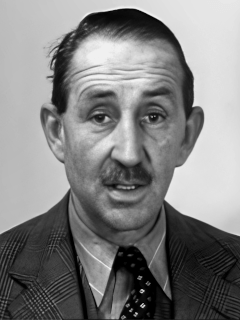
Gerry Fitt dies in London on August 26, 2005, at the age of 79, after a long history of heart disease.
Hammond is born on December 5, 1928, in Miss Kells’s nursing home on the Castlereagh Road in Belfast, the son of Leslie Hammond, a tram driver, and his wife Annie (née Lamont). His parents are not city people; his mother grew up near Ballybogy in the Ballymoney area of County Antrim, and his father, though from a family with roots in south County Londonderry, had lived in Ballymoney as a boy, and had been apprenticed to a blacksmith there. Both have a strong sense of their rural identity and maintain the Ulster Scots dialect of their childhood. They are never quite at home in the Belfast suburb of Cregagh, and in particular do not share the sectarian attitudes that are much more present in 1930s Belfast than they had been in north Antrim, one of the last strongholds of Presbyterian radicalism. Even as a boy, Hammond is interested in the old songs that his mother sang and realises that the traditions in which his parents had been nurtured are disappearing quickly in an increasingly urbanising and modernising world. When he encounters the work of Emyr Estyn Evans in the early 1940s, he is encouraged to document both rural tradition and the street life of the city, and he and a couple of friends, though still just teenagers, ride off on their bicycles to look for folklore in the hinterland of Belfast.
After primary school, Hammond wins a scholarship in 1941 to Methodist College Belfast, where he does well in examinations, and then goes to Stranmillis University College to train as a teacher. In his first job, in Harding Memorial primary school in east Belfast, he proves to be a popular, idealistic teacher, and is remembered by his pupils fifty years later as a fine singer and a teller of ghost stories, who had taken the class on memorable youth-hosteling trips to the Mourne Mountains. Youth hosteling and folklore collecting increases his awareness and understanding of the rich traditions of the whole community in the north of Ireland, and he is never constrained by political or religious barriers. His early career mirrors closely that of James Hawthorne, and their paths are to cross in later life.
Hammond is friendly with many others active in the cultural life of Northern Ireland and makes a name for himself as a song collector and eventually as an expert on all aspects of traditional singing. In 1956, he is awarded a scholarship to travel in the United States to meet the important pioneers of folk-music collecting and performance there. He records his first LP record of Ulster songs, I Am The Wee Falorie Man (1958), in the United States, and becomes friends with Pete Seeger, the Appalachian singer Jean Ritchie, with old blues singers, and notably with Liam Clancy, one of the three Clancy brothers who as a quartet with Tommy Makem are to popularise Irish folk music in the United States and elsewhere.
On returning to Belfast, Hammond takes a job in 1958 in Orangefield secondary school in the east of the city, where the highly regarded headmaster John Malone encourages new approaches to education. Among his pupils at Orangefield is George Ivan “Van” Morrison, who credits him with inspiring his interest in Irish traditional music. Hammond enjoys teaching but is increasingly drawn to folk-song performance and recording. He appears regularly on radio programmes of the BBC and Radio Éireann, and in 1964 joins the school’s department in BBC Northern Ireland. There, with colleagues like Sam Hanna Bell, James Hawthorne and others, he works on programmes such as Today and Yesterday in Northern Ireland, which for the first time introduces pupils (and many adults) to local history and to aspects of tradition. In 1968, with two friends, the poets Seamus Heaney and Michael Longley, he puts on poetry and traditional music events in schools all over the province. The Arts Council funds the Room to Rhyme project, which is immensely influential and inspiring, and is still talked about many years later by those who attended as children.
Hammond is creatively involved with hundreds of hours of broadcasting, in television as well as radio, and eventually for adults as well as children. He writes scripts, produces documentary series such as Ulster in Focus and Explorations, and brings an artistic sensibility to filming, as well as working sympathetically with traditional singers and craftspeople. Dusty Bluebells, a sensitively made film of Belfast children’s street games, wins the prestigious Golden Harp award in 1972. After he leaves the BBC to work as a freelance, and founds Flying Fox Films in 1986, he continues making documentaries on many aspects of Ulster life and heritage. His film called Steel Chest, Nail in the Boot and the Barking Dog (1986), about working in the Belfast shipyards, also wins a Golden Harp award. A companion book of the same name is published. Another book is Belfast, City of Song (1989), with Maurice Leyden. In 1979, he edits a volume of the songs of Thomas Moore. His documentary programmes include films about singers from Boho, County Fermanagh, and about the big houses of the gentry in Ireland. The Magic Fiddle (1991/2) examines the role of the instrument in the folk music of Ireland, Scandinavia, Canada, and the American south, while Another Kind of Freedom (1993) is about the experiences of a former Orangefield pupil, the Beirut hostage Brian Keenan. He also produces and directs the films Something to Write Home About (1998), Where Are You Now? (1999), and Bogland (1999), all of which explore Seamus Heaney’s home region and experiences.
The first poem in Heaney’s collection Wintering Out (1972) is entitled “For David Hammond and Michael Longley.” Their lifelong friendship leads to several other creative collaborations. In particular, after a distressing evening in 1972 when Hammond, affected by the despair and terror unleashed by Irish Republican Army (IRA) bombing of his city, is for once unable to sing, Heaney meditates on the experience in an essay and in an important poem, “The singer’s house” (subsequently included in his 1979 Field Work collection). The poem urges the singer to keep singing, to defend the values of art and friendship in a hostile time. Hammond collaborates with Dónal Lunny and other traditional musicians to bring out an LP also called The Singer’s House (1978), which includes Heaney’s poem on the album sleeve, and features some of the songs that he had made famous, such as “My Aunt Jane” and “Bonny Woodgreen,” from his vast repertoire of songs from Ulster. The album is reissued in 1980.
In 1995, Hammond is one of Heaney’s personal guests at the award of his Nobel prize in Stockholm, characteristically wearing his usual, mustard-yellow, cattle-dealer boots with evening dress. On another formal occasion, when he is awarded an honorary doctorate by Dublin City University in November 2003, he surprises the audience by standing up in his academic robes to sing “My Lagan love,” instead of giving an address. His unique, light mellow voice is an ideal vehicle for the traditional ballads which he knows so well. He records a number of records in the 1960s, including Belfast Street Songs, and publishes the book Songs of Belfast (1978). He also encourages traditional musicians like Arty McGlynn, and collaborates with them on various recording projects. He is well known for live and often impromptu performances at festivals and venues in Ireland and the United States. He also performs at the John F. Kennedy Center for the Performing Arts in Washington, D.C.
Hammond is also a notable collaborator with poets and dramatists, especially in the important Field Day Theatre Company project, of which he is a director, along with Seamus Heaney, Tom Paulin, Seamus Deane, Thomas Kilroy, and the project’s founders, Brian Friel and Stephen Rea. He supports the Field Day search for a “fifth province,” where history and community and culture can intersect, believing that to speak unthinkingly of “two traditions” is to perpetuate superficial political divisions. As he says in an interview in The Irish Times on July 4, 1998, songs can “take you out of yourself” and become bridges to unite people.
Hammond receives many honours. In 1994, he receives the Estyn Evans award for his contribution to mutual understanding, and his work is featured in several major events in his honour: in the University of North Florida (1999), in the Celtic Film Festival in Belfast (2003), and in Belfast’s Linen Hall Library (2005). A Time to Dream, a film about his life and work, is broadcast on BBC Northern Ireland in December 2008.
Hammond dies in hospital in Belfast, after a long illness, on August 25, 2008, survived by his wife Eileen (née Hambleton), whom he marries on July 19, 1954, and by their son and three daughters. His funeral in St Finnian’s church is a major cultural event, where friends sing, play and speak in his honour.
In Seamus Heaney’s last collection of poetry, Human Chain (2010), he includes a poignant farewell to Hammond. The poet imagines (or perhaps dreams) of another visit to the singer’s house, but this time “The door was open, and the house was dark.”
(From: “Hammond, David Andrew (‘Davy’)” by Linde Lunney, Dictionary of Irish Biography, http://www.dib.ie, December 2014)
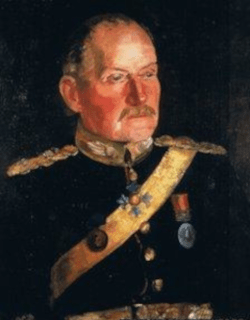
Colonel Frederick Hugh Crawford, CBE, JP, an officer in the British Army, is born in Belfast on August 21, 1861. A staunch Ulster loyalist, he is one of the lesser-known figures in Ulster Unionist history but one who is hugely influential because of his involvement in what is known as the Larne gun-running incident, when he is responsible for smuggling over 25,000 guns and ammunition into the North on the night of April 24, 1914. This makes him a hero for Northern Ireland‘s unionists.
According to the 1911 census for Ireland, Crawford is living in Marlborough Park, Belfast, with his wife of 15 years, Helen, and four of their five children: Helen Nannie, Marjorie Doreen, Ethel Bethea and Malcolm Adair Alexander. His other child, Stuart Wright Knox, is recorded as a pupil at Ballycloghan National School, Belfast. Stuart would become a lieutenant colonel in the British Army, before being invalided in 1944. Malcolm, after being a member of the Colonial Police, joins the Royal Ulster Constabulary (RUC), advancing to District Inspector. In 1931, Malcolm becomes a Justice of the Peace for Singapore.
Crawford works as an engineer for White Star Line in the 1880s, before returning from Australia in 1892. In 1894, he enlists with the Mid-Ulster Artillery regiment of the British Army, before being transferred to the Donegal Artillery, with which he serves during the Boer Wars, earning himself the rank of major.
In 1898, Crawford is appointed governor of Campbell College, Belfast. Two of his children, Stuart Wright Knox and Malcolm Adair Alexander, both attend Campbell College.
In 1911, Crawford becomes a member of the Ulster Unionist Council. On September 28, 1912, he is in charge of the 2,500 well-dressed stewards and marshals that escort Sir Edward Carson and the Ulster Unionist leadership from the Ulster Hall in central Belfast to the nearby City Hall on Donegall Square for the signing of the Ulster Covenant, which he allegedly signs in his own blood. With the formation of the Ulster Volunteers in 1913, he is made their Director of Ordnance.
With regard to Irish Home Rule, Crawford is strongly partisan and backs armed resistance to it, being contemptuous of those who use political bluffing. His advocation of armed resistance is evident when he remarks, at a meeting of the Ulster Unionist Council, that his heart “rejoiced” when he heard talk of looking into using physical force. At another meeting he even goes as far as asking some attendees to step into another room where he has fixed bayonets, rifles and cartridges laid out.
In 1910, the Ulster Unionist Council plans for the creation of an army to oppose Home Rule and approaches Crawford to act as their agent in securing weapons and ammunition. He tries several times to smuggle arms into Ulster, however, vigilant customs officials seize many of them at the docks. Despite this, the meticulously planned and audacious Larne gun-running of April 1914, devised and carried out by Crawford, is successful in bringing in enough arms to equip the Ulster Volunteer Force.
By the 1920s Crawford remains as stoic in his beliefs, remarking in a letter in 1920 that “I am ashamed to call myself an Irishman. Thank God I am not one. I am an Ulsterman, a very different breed.” In March 1920, he begins to reorganize the UVF and in May 1920 he appeals to Carson and James Craig for official government recognition. He states, “We in Ulster will not be able to hold our men in hand much longer…we will have the Protestants…killing a lot of the well-known Sinn Féin leaders and hanging half a dozen priests.” In 1921, he attempts to create an organisation intended to be a “Detective Reserve,” but called the “Ulster Brotherhood,” the aims of which are to uphold the Protestant religion and political and religious freedom, as well as use all means to “destroy and wipe out the Sinn Féin conspiracy of murder, assassination and outrage.” This organisation only lasts for a few months after failing to gain acceptance from the political authorities.
In 1921, Crawford is included in the Royal Honours List and appointed a CBE. In 1934, he writes his memoirs, titled Guns for Ulster.
Crawford dies on November 5, 1952, and is buried in the City Cemetery, Falls Road, Belfast. Upon news of his death, he is described by the then Prime Minister of Northern Ireland, Sir Basil Brooke, as being “as a fearless fighter in the historic fight to keep Ulster British.”
Brooke is born on June 9, 1888, at Colebrooke Park, his family’s neo-Classicalancestral seat on what is then the several-thousand-acre Colebrooke Estate, just outside Brookeborough, a village near Lisnaskea in County Fermanagh. He is the eldest son of Sir Arthur Douglas Brooke, 4th Baronet, whom he succeeds as 5th Baronet when his father dies in 1907. His mother is Gertrude Isabella Batson. He is a nephew of Field MarshalAlan Brooke, 1st Viscount Alanbrooke, Chief of the Imperial General Staff (CIGS) during World War II, who is only five years his senior. His sister Sheelah marries Sir Henry Mulholland, Speaker of the Stormont House of Commons and son of Lord Dunleath. He is educated for five years at St. George’s School in Pau, France, and then at Winchester College (1901–05).
Brooke is a very active Ulster Unionist Party member and ally of Edward Carson. He founds his own paramilitary group, Brooke’s Fermanagh Vigilance, from men returning from the war front in 1918. Although the umbrella Ulster Volunteers had been quiescent during the war, it is not defunct. It re-emerges strongly in 1920, subsuming groups like Brooke’s.
In 1920, having reached the rank of captain, Brooke leaves the British Army to farm the Colebrooke Estate, the family estate in west Ulster, at which point he turns toward a career in politics.
Brooke has a very long political career. When he resigns the Premiership of Northern Ireland in March 1963, he is Northern Ireland’s longest-serving prime minister, having held office for two months short of 20 years. He also establishes a United Kingdom record by holding government office continuously for 33 years.
On May 2, 1943, Brooke succeeds John M. Andrews as Prime Minister of Northern Ireland. In 1952, while Prime Minister, was raised to the peerage as Viscount Brookeborough, the title taken from the village named after the Brookes. Although a peer, he retained his seat in the House of Commons at Stormont and remained Prime Minister for another decade.
As the Northern Ireland economy begins to de-industrialise in the mid-1950s, leading to high unemployment amongst the Protestant working classes, Brooke faces increasing disenchantment amongst UUP backbenchers for what is regarded as his indifferent and ineffectual approach to mounting economic problems. As this disenchantment grows, British civil servants and some members of the UUP combine to exert discreet and ultimately effective pressure on Brooke to resign to make way for Captain Terence O’Neill, who is Minister of Finance.
Brooke is noted for his casual style toward his ministerial duties. Terence O’Neill later writes of him, “he was good company and a good raconteur, and those who met him imagined that he was relaxing away from his desk. However, they did not realise that there was no desk.”
In his retirement Brooke develops commercial interests as chairman of Carreras (Northern Ireland), a director of Devenish Trade, and president of the Northern Ireland Institute of Directors. He is also made an honorary LL.D. of Queen’s University Belfast.
From 1970 to 1973, years in which the Stormont institution comes under its greatest strain and eventually crumbles, Brooke makes only occasional forays into political life. In 1972, he appears next to William Craig MP on the balcony of Parliament Buildings at Stormont, a diminutive figure beside the leader of the Vanguard Unionist Progressive Party (VUPP) who is rallying right-wing Unionists against the Government of Northern Ireland. He opposes the Westminsterwhite paper on the future of Northern Ireland and causes some embarrassment to his son, Captain John Brooke, the UUP Chief Whip and an ally of Brian Faulkner, by speaking against the Faulkner ministry‘s proposals.
Brooke dies at his home, Colebrooke Park, on the Colebrooke Estate, on August 18, 1973. His remains are cremated at Roselawn Cemetery, East Belfast, three days later, and, in accordance with his wishes, his ashes are scattered on the demesne surrounding his beloved Colebrooke Park.