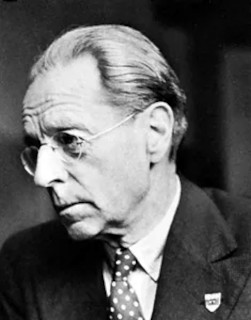
The son of a shipyard worker, McWhirter is raised in a large extended family on the Shankill Road in Belfast. He and his extended family spend the war years and then weekends and the summers at their seaside bungalow in Carnalea, now a suburb of Bangor, County Down. In 1957 he begins a “combined scholarship” studying English and Spanish at Queen’s University Belfast, and education at Stranmillis University College, Belfast. His tutor at Queen’s is the poet Laurence Lerner, and he is a classmate with the future literary critic Robert Dunbar and the poets Seamus Heaney and Seamus Deane.
McWhirter is associated with PRISM International magazine from 1968 to 2005. He is the author and editor of numerous books and the recipient of many awards. His first book of poetry, Catalan Poems, is a joint winner of the first Commonwealth Poetry Prize with Chinua Achebe‘s Beware, Soul Brother. He is made a life member of the League of Canadian Poets in 2005 and is also a member of the Writers’ Union of Canada and PEN International. In March 2007, he is named Vancouver’s inaugural Poet Laureate for a two-year term.
McWhirter currently writes full-time and lives in Vancouver with his wife. They have two children and three grandchildren.
During the 1940s, there are in effect, two Ireland teams, chosen by two rival associations — the Northern Ireland-based Irish Football Association (IFA) and the Republic of Ireland-based Football Association of Ireland (FAI). Both organisations claim jurisdiction over the whole of Ireland and select players from the whole island. As a result, several notable Irish players from this era play for both teams. The IFA XI had played England regularly since 1882, and claim their first victory, by a score of 3–0, on English soil at Ayresome Park, Middlesbrough, on February 14, 1914, but this is only the second time England and the FAI XI have met. Despite this, several members of the FAI XI had played against England several times before while representing the IFA XI. Striker Davy Walsh had previously scored three times against England.
The FAI XI plays England for the first time at Dalymount Park on September 30, 1946. A team, featuring Johnny Carey, Con Martin and Billy Walsh, are narrowly defeated 1–0 when Tom Finney scores the winner in the 82nd minute. Two days earlier, on September 28, Carey and Tom Aherne had been included in the IFA XI that had been heavily defeated 7–2 by the same England side. The next time the IFA XI play England, on November 5, 1947, their team includes six players — Carey, Martin, Billy Walsh, Peter Farrell, Davy Walsh and Tommy Eglington — who had previously played for the FAI XI. Davy Walsh scores the opening goal in a 2–2 draw at Goodison Park. Carey, Martin, Farrell and Walsh also play for the IFA XI in their 6–2 defeat by England at Windsor Park on October 10, 1948. Davy Walsh also scores both goals that day.
The early pattern of the game sees England launch wave after wave of attacks. However Tommy Godwin is in inspired form and Con Martin, Tom Aherne and Johnny Carey prove too difficult for England to get past. Carey is also effective in keeping Tom Finney quiet, while wing-halves Billy Walsh and Tommy Moroney gradually take the sting out of the English front line. Ireland takes the lead in the 33rd minute when Peter Desmond, after collecting a pass from Tommy O’Connor, bursts into the England penalty area and is brought down. Con Martin then converts the subsequent penalty kick. During the second half the wave of England attacks continues. Peter Harris hits the bar and Jesse Pye also goes close. However, Peter Farrell, playing at his club Everton’s home ground, makes victory certain in the 85th minute. O’Connor slips the ball to Farrell and as the English goalkeeper Bert Williams advances, Farrell lofts the ball into the net.
(Pictured: The Irish team which beat England 2-0 at Goodison Park in 1949. Back Row (L to R): Con Martin, Tommy Aherne, Tommy Godwin, Tommy Moroney and Willie Walsh. Seated (L to R): Peter Corr, Tommy O’Connor, Johnny Carey, Peter Desmond, Peter Farrell and Davy Walsh.)
Born in London on April 18, 1928, Dickson moves with her family to Northern Ireland at an early age and is educated at Holywood and Richmond Lodge School. After service as the Chair of the Northern Ireland Advisory Board of the Salvation Army she becomes actively involved in politics for the Ulster Unionist Party (UUP). Elected as chair of the Carrick Division Unionist Association she later becomes a member of the Newtownabbey Urban District Council, serving as Vice-Chair from 1967 to 1969.
Dickson is then elected as an Ulster Unionist politician for the Carrick constituency in the Parliament of Northern Ireland at Stormont as a supporter of Prime MinisterTerence O’Neill. After the dissolution of the Stormont Parliament, she is elected in the 1973 Assembly election for South Antrim as an Independent Unionist candidate having resigned from the Ulster Unionist Party in 1972.
After the Ulster Unionist party split in 1974 over the Sunningdale Agreement, Dickson joins the newly formed Unionist Party of Northern Ireland along with other supporters of former Northern Ireland prime minister Brian Faulkner. She retains her seat in South Antrim in the 1975 constitutional convention election. After the retirement of Brian Faulkner in 1976 she becomes leader of the Unionist Party of Northern Ireland, becoming the first woman to lead a major political party in Northern Ireland.
In 1979 Dickson contests the Belfast North constituency in the Westminster election, polling 10% of the vote, the best performance by a UPNI candidate in Northern Ireland, however her intervention is sufficient to split the moderate Unionist vote resulting in the seat being gained by the Democratic Unionist Party (DUP).
The Unionist Party of Northern Ireland disbands in 1981 after poor results in the local government elections and Dickson retires from active politics. Subsequently she is chair of the Northern Ireland Consumer Council from 1985 to 1990.
In January 1969, while a student at the New University of Ulster, she joins a civil rights march from Belfast to Derry, organised by the People’s Democracy. At Burntollet Bridge, a few miles from Derry, the march is attacked by loyalists. She is struck on the head, knocked unconscious, falls into the river, and is brought to hospital suffering from a concussion. The march is echoed in her 1994 play After Easter.
By 1972, Ahern has met his future wife, Miriam Kelly, a bank official who lives near the Aherns’ family home. They marry in St. Columba’s Church, Iona Road in 1975. They have two daughters from the marriage, Georgina and Cecelia. Georgina is the wife of Westlife member Nicky Byrne. Cecelia is a best-selling author. The Aherns separate in 1992.
Ahern is elected to the Dáil, the lower house of the Oireachtas, in 1977 as a member of the Fianna Fáil party for the newly created Dublin Finglas constituency. He is elected to the Dublin City Council in 1979, later becoming Lord Mayor of Dublin (1986–87). An assistant whip (1980–81) in the first government of Taoiseach Charles Haughey, he becomes a junior minister in Haughey’s second government (1982) and Minister for Labour in his third (1987–89) and fourth (1989–91) governments.
Ahern’s success in establishing general economic agreements with employers, unions, and farmers in 1987 and 1990 and his role in constructing the first Fianna Fáil coalition government (with the Progressive Democrats) in 1989 confirms his reputation as a skillful negotiator. He is made Minister for Finance in 1991. In the contest to choose Haughey’s successor, Ahern withdraws in favour of Albert Reynolds, and he remains Minister for Finance in each of Reynolds’s two governments (February–November 1992 and 1993–94). In November 1994, following the fall of the Fianna Fáil–Labour Party government, Reynolds resigns, and Ahern is elected party leader. He is set to become Taoiseach in a new coalition with the Labour Party, but at the eleventh-hour Labour opts to join a government with Fine Gael and Democratic Left.
Ahern forms a Fianna Fáil–Progressive Democrats minority government following elections in 1997. Credited with overseeing a thriving economy, he is reelected Taoiseach in 2002. He plays a major role in securing peace in Northern Ireland, participating in the signing of the Good Friday Agreement in 1998 and helping negotiate the return of devolution to Northern Ireland in 2007. On May 15, 2007, he becomes the first Taoiseach to address a joint session of the Parliament of the United Kingdom.
Soon afterward Ahern wins a third term as Taoiseach. He is reelected despite implications of his involvement in an influence-peddling scandal. The Tribunal of Inquiry into Certain Planning Matters & Payments, ultimately better known as the Mahon Tribunal, which is investigating alleged illegal payments by developers to politicians to influence zoning decisions in and around Dublin during the early 1990s, subsequently questions Ahern about his personal finances during his tenure as Minister for Finance. In early April 2008, as the investigation of Ahern’s involvement mounts, he announces that he will step down as Taoiseach and Leader of Fianna Fáil in May. He is succeeded in both posts by Brian Cowen. In the Mahon Tribunal’s final report, issued on March 22, 2012, it indicates that it does not believe Ahern had told the truth when questioned by the commission about alleged financial improprieties, though it does not directly accuse him of corruption. Ahern, threatened with expulsion from Fianna Fáil in the wake of the report, resigns from the party later in March while still maintaining that he had testified truthfully to the tribunal.
Ahern says in April 2018 that he is considering running for President of Ireland in 2025 as an independent candidate. That same month he walks out of an interview with DW News after being questioned on the findings of the Mahon Tribunal.
In October 2018, Ahern is appointed to chair the Bougainville Referendum Commission, which is responsible for preparing an independence referendum in Bougainville, Papua New Guinea, which takes place in December 2019.
Sinn Féin says the meeting is a hugely significant move. “This is the first time in Irish history that a republican leader and a leader of unionism have sat down together in a room on their own,” says a spokesman. “This is about normalising relations between Sinn Féin and the First Minister.”
But the two men are not expected to shake hands after Trimble says Adams is still holding arms. They are likely to discuss decommissioning terrorist weapons.
The men meet briefly on Monday, September 7, in a round-table discussion of party leaders on procedural matters of the future government of the province, the Northern Ireland Assembly.
News of Trimble’s invitation to Adams breaks the previous week after the Sinn Féin President issues a firm denunciation of violence. But Trimble is adamant that the Irish Republican Army (IRA) must hand over arms before Sinn Féin can take seats in the new government. Sinn Féin has made moves in this direction by appointing strategist Martin McGuinness as an intermediary between the international arms decommissioning body and the IRA.
The 1998 Good Friday Agreement includes a power sharing administration under British rule and an all-Ireland ministerial council to promote island-wide co-operation. London is due to hand over a large measure of home rule powers by February 1999. In the meantime a “shadow” ruling executive must up be set up and mechanisms put in place to ensure smooth implementation of all aspects of the Agreement.
Meanwhile, two rebel Ulster Unionists who ran against official candidates in the 1998 Northern Ireland Assembly election are waiting to learn if they have been expelled from the party. Party officials say it will take several days to decide the future of the two members of the new parliament, Denis Watson and Boyd Douglas, who contested the June poll on an anti-Agreement ticket.
(From: “Trimble and Adams make history,” BBC News, news.bbc.co.uk, September 10, 1998)
Martin first meets John Mitchel while attending Dr. Henderson’s private school in Newry. He receives an Arts degree at Trinity College Dublin in 1832 and proceeds to study medicine but has to abandon this in 1835 when his uncle dies, and he has to return to manage the family landholding.
In 1847 Martin is moved by the Great Famine to join Mitchel in the Repeal Association but subsequently leaves it with Mitchel. He contributes to Mitchel’s journal, United Irishman, and then following Mitchel’s arrest on May 27, 1848, he continues with his own anti-British journal, The Irish Felon, and establishes “The Felon Club.” This leads to a warrant for his arrest, and he turns himself in on July 8, 1848. He is sentenced on August 18, 1848, to ten years transportation to Van Diemen’s Land.
Martin arrives on the Elphinstone with Kevin Izod O’Doherty in Hobart, Tasmania, in November 1849. He accepts a “ticket of leave” which allows him to live in relative freedom at Bothwell, provided he promises not to escape.
While in Tasmania, Martin continues to meet in secret with his fellow exiles Kevin Izod O’Doherty, Thomas Francis Meagher, William Smith O’Brien, and John Mitchel. He and Mitchel live together before the arrival of Mitchel’s wife, Jenny. He chooses not to join Mitchel when Mitchel revokes his ticket of leave and escapes. Instead, he remains in Tasmania until he is granted a “conditional pardon” in 1854. This allows him to leave for Paris, and he returns to Ireland on being granted a full pardon in 1856.
On return to Ireland Martin becomes a national organiser for the Tenant Right League. He begins to write for The Nation in 1860. He forms the National League with others in January 1864 – it is mainly an educational organisation but Fenians disrupt its meetings. He remains in contact with Mitchel in Paris through 1866. He opposes the Fenians’ support of armed violence, yet, together with Alexander Martin Sullivan in December 1867, he heads the symbolic funeral march honouring the Manchester Martyrs as it follows the MacManus route to Glasnevin Cemetery, Dublin. He is briefly arrested for these activities, but the charges are dropped.
Martin is in the United States in December 1869 when he is nominated by Isaac Butt and his nationalists as the Irish nationalist Home Rule candidate to oppose Reginald Greville-Nugent, who is supported by the Catholic clergy, in the Longfordby-election. Greville-Nugent initially wins the vote, but the result is nullified by Judge Fitzgerald on the grounds that voters had been illegally influenced in the non-secret voting process. In the May 1870 re-run, Butt’s second candidate, Edward Robert King-Harman, like Martin a Protestant landlord, is also defeated, but this time legally.
Contradictions and factionalism are symptomatic of the struggle for influence and leadership at the time between the waning Church of Ireland and the rising Irish Catholic Church. Hence a secular Protestant land-owning, non-violent elite reformist nationalist who desires Home Rule like Martin, can find himself both sympathetic to and at odds with a militant organisation like the Fenians with their Jacobin– and American-influenced ideas of revolutionary republicanism and different social roots. Until Charles Stewart Parnell, the Isaac Butt-originated Home Rule forces could not obtain the support of the Catholic Church under the anti-Fenian CardinalPaul Cullen or manage to achieve more than short-term tactical alliances with Fenians, leading to a split and uncoordinated opposition to British rule. Protestants such as Martin and John Mitchel, with their early political roots in Young Ireland, are, whatever their political ideals, not part of the majority Catholic mainstream, which consists largely of tenants rather than landlords.
In the January 1871 by-election, Martin is elected by a margin of 2–1 to the seat of Meath in the British parliament as the first Home Rule MP, representing first Isaac Butt’s Home Government Association and from November 1873 the Home Rule League. This is unusual for a Protestant in a Catholic constituency, and is a measure of the popular esteem Martin is held in. He retains his seat in the 1874 United Kingdom general election as one of 60 Home Rule members. He is commonly known as “Honest John Martin.” In parliament he speaks strongly for Home Rule for Ireland and opposes Coercion Bills.
Martin dies in Newry, County Down, on March 29, 1875, homeless and in relative poverty, having forgiven tenant fees during preceding years of inflation and low farm prices. His parliamentary seat of County Meath is taken up by Charles Stewart Parnell.
Martin marries Henrietta Mitchel, the youngest sister of John Mitchel, on November 25, 1868, after twenty years of courtship. She shares her husband’s politics, and after his death campaigns for home rule believing this to be a continuation of the Young Ireland mandate. After the split in the party, she sides with Charles Stewart Parnell. She dies at her home in Dublin on July 11, 1913, and is buried in Newry.
Sinn Féin President Gerry Adams announces on September 5, 2017, he will seek re-election as the party president in November and then outline his own future intentions as the former political wing of the Irish Republican Army (IRA) prepares to complete a generational shift in its leadership.
Adams, Sinn Féin leader for over thirty years, will seek re-election to the one-year post at the party’s annual conference and set out his future plans at that time. “I will be allowing my name to go forward for the position of Uachtaran Shinn Féin (President of Sinn Féin),” Adams says in a speech at a meeting of the party’s lawmakers. “And if elected I will be setting out our priorities and in particular our planned process of generational change, including my own future intentions.”
“We have no ambition to be part of the system. Our ambition is to change it. That means we must be in government – North and South,” Adams says.
Reviled by many as the face of the IRA during its campaign against British rule in Northern Ireland, Adams reinvented himself as a peacemaker in the troubled region and then as a populist opposition lawmaker in the Irish Republic. Around 3,600 people were killed during Northern Ireland’s “Troubles,” three decades of sectarian bloodshed between pro-British Protestantunionists and Catholicnationalists seeking a united Ireland that was ended by the 1998 Good Friday Agreement.
Whenever Adams decides to step down, he will almost certainly hand over to a successor with no direct involvement in the decades of conflict in Northern Ireland, say political analysts, making Sinn Féin a more palatable coalition partner in the Irish Republic where it has never been in power. Deputy leader Mary Lou McDonald, who has been at the forefront of a new breed of Sinn Féin politicians transforming the left-wing party’s image, is the clear favorite to take over. Michelle O’Neill, another Sinn Féin lawmaker in her 40s, succeeded Martin McGuinness as leader in Northern Ireland shortly before the former IRA commander’s death in March 2017.
With McGuinness, Adams turned Sinn Féin into the dominant nationalist party in Northern Ireland and the third largest party south of the border. Adams said the previous month that he intended to lead the party into the next parliamentary election in the Irish republic where suspicion of Sinn Féin’s role in the Northern Ireland troubles still runs deep among the main political parties.
The far larger ruling Fine Gael and main opposition Fianna Fáil, a more natural ally, have ruled out governing with Sinn Féin but analysts say a change of leader could soften that stance. The next election is expected in the next 12 months.
(From: “Sinn Féin’s Adams to outline succession plan in November” by Padraic Halpin | Photo: Sinn Féin President Gerry Adams speaks at an event in Gormanstown, Ireland, September 5, 2017, REUTERS/Clodagh Kilcoyne)
On April 9, 1980, the unit lures the Royal Ulster Constabulary (RUC) into an ambush on Stewartstown Road, killing one constable and wounding two others. On May 2 the unit is planning another attack and has taken over a house on Antrim Road, when an eight-man patrol from the SAS arrive in plain clothes, after being alerted by the RUC. A car carrying three SAS members goes to the rear of the house, and another car carrying five SAS members arrives at the front of the house. As the SAS members at the front of the house exit their car the IRA unit opens fire with the M60 machine gun from an upstairs window, hitting Captain Herbert Westmacott in the head and shoulder, killing him instantly. He is the highest-ranking member of the SAS killed in Northern Ireland. The remaining SAS members, armed with Colt Commando automatic rifles, submachine guns and Browning pistols, return fire but are forced to withdraw. Magee is apprehended by the SAS members at the rear of the house while attempting to prepare the IRA unit’s escape in a transit van, while the other three IRA members remain inside the house. More members of the security forces are deployed to the scene, and after a brief siege the remaining members of the IRA unit surrender.
The trial of Fusco and the other members of the M60 gang begins in early May 1981, with them facing charges including three counts of murder. On June 10 Fusco and seven other prisoners, including Joe Doherty and the other members of the IRA unit, take a prison officer hostage at gunpoint in Crumlin Road Jail. After locking the officer in a cell, the eight take other officers and visiting solicitors hostage, also locking them in cells after taking their clothing. Two of the eight are wearing officer’s uniforms while a third wears clothing taken from a solicitor, and the group moves towards the first of three gates separating them from the outside world. They take the officer on duty at the gate hostage at gunpoint and force him to open the inner gate. An officer at the second gate recognises one of the prisoners and runs into an office and presses an alarm button, and the prisoners run through the second gate towards the outer gate. An officer at the outer gate tries to prevent the escape but is attacked by the prisoners, who escape onto Crumlin Road. As the prisoners are moving towards the car park where two cars are waiting, an unmarked RUC car pulls up across the street outside Crumlin Road Courthouse. The RUC officers open fire, and the prisoners returned fire before escaping in the waiting cars. Two days after the escape, Fusco is convicted in absentia and sentenced to life imprisonment with a minimum recommended term of thirty years.
Fusco escapes across the border into the Republic of Ireland before being arrested in January 1982 and is sentenced to ten years imprisonment for the escape and firearms offences under extra-jurisdictional legislation. A further three years are added to his sentence in 1986 after he attempts to escape from Portlaoise Prison, and he is released in January 1992. Upon his release, he is immediately served with extradition papers from the British government for his return to the Maze Prison in Northern Ireland to serve his sentence for the murder conviction. The extradition is granted by a District Court but Fusco appeals, and in 1995 he wins a legal victory when a judge at the High Court in Dublin rules it would be “unjust, oppressive and invidious” to order his extradition due to the time lag involved. Fusco settles in Tralee with his wife and three children until February 1998, when the Supreme Court of Ireland brings an end to the six-year legal battle by ordering his extradition, but he has already fled on bail and a warrant is issued for his arrest.
Fusco is arrested at a Garda checkpoint in Castleisland, County Kerry, on January 3, 2000. The following day he is being escorted back to Northern Ireland to be handed over to the RUC, when his handover is halted by a successful court appeal by Sinn Féin. The arrest and abortive return of Fusco undermines the Northern Ireland peace process, with Unionist politicians including Ken Maginnis criticising the extradition being halted. Republicans are critical of Fusco’s arrest, with leading Sinn Féin member Martin Ferris stating, “The Irish government should immediately move to rescind the warrant against Angelo Fusco. The action will cause great anger and resentment within the nationalist community,” and graffiti in one republican area reads “Extradite Bloody Sunday war criminals, not Fusco.” On January 6 Fusco is refused bail and remanded to prison in Castlerea, County Roscommon, to await a legal review of his extradition, prompting scuffles outside the court between police and Sinn Féin supporters.
Fusco is freed on bail on March 21 pending the outcome of his legal challenge, and in November 2000 the Irish government informs the High Court that it is no longer seeking to return him to Northern Ireland. This follows a statement from Secretary of State for Northern IrelandPeter Mandelson saying that “it is clearly anomalous to pursue the extradition of people who appear to qualify for early release under the Good Friday Agreement scheme, and who would, on making a successful application to the Sentence Review Commissioners, have little if any of their original prison sentence to serve.” After the court hearing Fusco states, “I’m relieved it’s over,” and that he will continue to live in Tralee with his family and work for Sinn Féin.
In December 2000 Fusco and three other IRA members, including two other members of the M60 gang, are granted a royal prerogative of mercy which allows them to return to Northern Ireland without fear of prosecution.
Casement is born into an Anglo-Irish family, and lives his very early childhood at Doyle’s Cottage, Lawson Terrace, Sandycove. His father, Captain Roger Casement of the (King’s Own) Regiment of Dragoons, is the son of Hugh Casement, a Belfast shipping merchant who goes bankrupt and later moves to Australia. After the family moves to England, Casement’s mother, Anne Jephson (or Jepson), of a DublinAnglican family, purportedly has him secretly baptised at the age of three as a Roman Catholic in Rhyl, Wales.
The family lives in England in genteel poverty. Casement’s mother dies when he is nine years old. His father takes the family back to County Antrim in Ireland to live near paternal relatives. His father dies when he is thirteen years old. He is educated at the Diocesan School, Ballymena (later the Ballymena Academy). He leaves school at 16 and goes to England to work as a clerk with Elder Dempster Lines, a Liverpool shipping company headed by Alfred Lewis Jones.
Casement is a British consul in Portuguese East Africa (1895–98), Angola (1898–1900), Congo Free State (1901–04), and Brazil (1906–11). He gains international fame for revealing atrocious cruelty in the exploitation of native labour by white traders in the Congo and the Putumayo River region of Peru. His Congo report, published in 1904, leads to a major reorganization of Belgian rule in the Congo in 1908, and his Putumayo report of 1912 earns him a knighthood, which is ultimately forfeited on June 29, 1916.
Ill health forces Casement to retire to Ireland in 1912. Although he comes from an Ulster Protestant family, he has always sympathized with the predominantly Roman Catholic Irish nationalists. Late in 1913 he helps form the National Volunteers, and in July 1914 he travels to New York City to seek American aid for that anti-British force. After World War I breaks out in August, he hopes that Germany might assist the Irish independence movement as a blow against Great Britain. On arriving in Berlin in November 1914, he finds that the German government is unwilling to risk an expedition to Ireland and that most Irish prisoners of war would refuse to join a brigade that he intends to recruit for service against England.
Later, Casement fails to obtain a loan of German army officers to lead the Irish rising planned for Easter 1916. In a vain effort to prevent the revolt, he sails for Ireland on April 12 in a German submarine. Put ashore near Tralee, County Kerry, he is arrested on April 24 and taken to London, where, on June 29, he is convicted of treason and sentenced to death. An appeal is dismissed, and he is hanged at London’s Pentonville Prison on August 3, 1916, despite attempts by influential Englishmen to secure a reprieve in view of his past services to the British government. During this time, diaries reputedly written by Casement and containing detailed descriptions of homosexual practices are circulated privately among British officials. After years of dispute over their authenticity, the diaries are made available to scholars by the British home secretary in July 1959. It is generally considered that the passages in question are in Casement’s handwriting.
In 1965 Casement’s remains are repatriated to Ireland. Despite the annulment, or withdrawal, of his knighthood in 1916, the 1965 UK Cabinet record of the repatriation decision refers to him as “Sir Roger Casement.”
Casement’s last wish is to be buried at Murlough Bay on the north coast of County Antrim, in present-day Northern Ireland, but Prime MinisterHarold Wilson‘s government had released the remains only on condition that they could not be brought into Northern Ireland, as “the government feared that a reburial there could provoke Catholic celebrations and Protestant reactions.”
Casement’s remains lay in state at the Garrison Church, Arbour Hill (now Arbour Hill Prison) in Dublin for five days, close to the graves of other leaders of the 1916 Easter Rising. After a state funeral, his remains are buried with full military honours in the Republican plot in Glasnevin Cemetery in Dublin, alongside other Irish republicans and nationalists. The President of Ireland, Éamon de Valera, then the last surviving leader of the Easter Rising, attends the ceremony, along with an estimated 30,000 others.