seamus dubhghaill

Promoting Irish Culture and History from Little Rock, Arkansas, USA


Leave a comment

Birth of Peadar O’Donnell, Irish Republican Politician & Writer

Peadar O’Donnell, Irish republican, socialist activist, politician, writer and one of the foremost radicals of 20th-century Ireland, is born on February 22, 1893, in Meenmore, near Dungloe, County Donegal.

O’Donnell is the youngest among six sons and three daughters of Biddy and James O’Donnell. He is greatly influenced by his upbringing in the Rosses, in northwest Donegal, one of the poorest and most remote parts of Ireland. His father, a popular local fiddler, earns a living through his smallholding, seasonal labouring in Scotland, and winter work in a local corn mill. His mother, who comes from a radical labour and nationalist political background, works in a local cooperative store. He attends Rampart national school and Roshine national school, near Burtonport, where he is a monitor for four years. In 1911 he wins a scholarship to attend St. Patrick’s College in Drumcondra, Dublin, and returns in 1913 to the Rosses, where he spends two years teaching on the islands of Inishfree. In 1915 he is appointed head of Derryhenny national school, near Dungloe, and the following year becomes principal of a national school on the island of Arranmore, where he begins to write.

O’Donnell had long been concerned by the poor conditions of the local ‘tatie-hokers’ (potato pickers) who migrate annually to Scotland. In the summer of 1918, he travels there to help organise the Scottish Farm Servants’ Union. While there he is influenced by left-wing radicals such as Willie Gallacher, later a communist Member of Parliament (MP), and Emanuel ‘Manny’ Shinwell, later Baron Shinwell. In September 1918, against a background of rising labour militancy, he leaves teaching to become a full-time organiser for the Irish Transport and General Workers’ Union (ITGWU) in the west Ulster area. The following year he organises one of Ireland’s first “soviets” when the attendants and nurses of the Monaghan District Lunatic Asylum occupy the grounds and appoint O’Donnell as governor until their demands are met.

In early 1919 O’Donnell joins the Irish Republican Army (IRA) in Monaghan, resigning from the ITGWU for full-time IRA service in late 1920. He leads the 2nd Battalion, Donegal IRA, from the summer of 1920. In December 1920 he goes “on the run” and leads a flying column in west Donegal until May 1921, when he is wounded. Regarded as insubordinate and militarily inexperienced, he is unpopular among the other senior officers of the 1st Northern Division. He, in turn, is disappointed by the lack of social radicalism among the nationalist leadership. He opposes the Anglo-Irish Treaty, is placed in command of the minority anti-treaty 1st Northern Division and is a member of the IRA executive that occupies the Four Courts in Dublin in defiance of the provisional government.

Arrested in June 1922, O’Donnell shares a prison cell with Liam Mellows and influences his radical “Notes from Mountjoy,” an important document for subsequent left-wing republicans. He spends the next two years in various prisons and internment camps. His execution is widely expected to follow those of December 8, 1922. In August 1923, he is elected as a Sinn Féin Teachta Dála (TD) for Donegal in the general election called after the end of the Irish Civil War. He goes on hunger strike for forty-one days in late 1923 and succeeds in escaping from the Curragh in March 1924. In June 1924, while on the run, he marries Lile O’Donel, a wealthy Cumann na mBan activist who had smuggled communications for republican prisoners. O’Donel, a radical and member of the Communist Party, is the daughter of Ignatius O’Donel, a prominent landowner from Mayo. They have no children but raise their nephew, Peadar Joe, as their own son after the death in New York of O’Donnell’s brother Joe.

O’Donnell begins writing seriously while in jail and remains a prolific writer, journalist, and editor until the 1960s. His first novel, Storm, set in the Irish War of Independence, is published in 1925. One of his most highly regarded books, Islanders, is published in 1928. Adrigoole, like Islanders a story of poverty and starvation in rural Ireland, is published the following year. The Knife (1930) and On the Edge of the Stream (1934) soon follow. The most significant of his later novels is probably The Big Windows (1954). Foremost among his qualities as a writer is his empathy for the people, life, and landscape of rural Ireland. But his novels have been criticised for their slow pace, excessive detail, and didactic nature. He claims his writing is incidental to his political activism. His trilogy of autobiographical non-fiction, The Gates flew Open (1932), Salud! An Irishman in Spain (1936), and There Will Be Another Day (1963), which respectively concern the Irish Civil War, his activism during the Spanish Civil War, and his role in the land annuities agitation, remain highly regarded. His other important literary achievement is with The Bell, an innovative literary and political magazine which plays a useful dissenting role in an insular and conservative period. He founds The Bell with the writer Seán Ó Faoláin in 1940 and edits it from 1946 until it ceases publication in 1954.

O’Donnell exercises an influential role in the interwar IRA, particularly through his editorship of An Phoblacht (1926–29), which he attempts to divert from militarism to socialist agitation. His ultimate aim is for a thirty-two-county socialist republic. His most successful campaign is organising small farmers against the payment of land annuities to the government in the late 1920s and early 1930s. This campaign is later adopted by Fianna Fáil and contributes to their electoral success in 1932. He is less successful in radicalising the IRA. After the failure of Saor Éire, a left-wing IRA front which provokes clerical and popular hostility against the IRA, increasing tensions between the IRA’s left-wing and the leadership lead O’Donnell, along with Frank Ryan and George Gilmore, to split from the IRA to establish the short-lived Republican Congress in 1934.

Although O’Donnell claims he was never a Communist Party member, he plays a central role in forging links between republicans and the revolutionary left both in Ireland and internationally and invariably supports the communist party line at critical junctures. After the failure of Republican Congress, he takes up the cause of the Spanish republic. His championing of unpopular causes such as communism and Spain entail a good deal of frustration. He is physically attacked at political meetings and in 1932, despite having never visited the Soviet Union, loses a high-profile libel action against the Dominican Irish Rosary, which claim he had studied in Moscow‘s Lenin College. He is banned from entering the United States for several decades, although he maintains: “My relations with all the great powers continue to be friendly.”

O’Donnell continues to support radical campaigns until his death. He is an outspoken advocate of Irish emigrants. He is prominent in the Irish Campaign for Nuclear Disarmament and serves as its president in the early 1960s. He is a leading protester against the Vietnam War and a supporter of African anti-colonial movements such as that against apartheid. In later years he is involved in the “Save the west” campaign, highlighting the problems of the west of Ireland.

After several months of ill-health following a heart attack, O’Donnell dies in Dublin, aged 93, on May 13, 1986. He leaves instructions that there are to be “no priests, no politicians and no pomp” at his funeral, and those wishes are granted. He is cremated in Glasnevin Cemetery and his ashes are buried at his wife’s home in Swinford, County Mayo. Although he once remarked that every cause he fought for was a failure, he is now regarded as one of the most influential socialist republican theorists and an important voice of dissent in twentieth-century Ireland.

(From: “O’Donnell, Peadar” by Fearghal McGarry, Dictionary of Irish Biography, http://www.dib.ie)
Leave a comment

Birth of Proinsias Mac Aonghusa, Journalist, Writer & Presenter

Proinsias Mac Aonghusa (English: Francis McGuinness), Irish journalist, writer, television presenter and campaigner, is born into an Irish-speaking household on June 23, 1933, in Salthill, Galway, County Galway. He becomes one of the most noted Irish language broadcasters and journalists of the 20th century.

Mac Aonghusa is the son of Criostóir Mac Aonghusa, a writer and Irish language activist, and Mairéad Ní Lupain, a nurse and native Irish speaker. The eldest of four siblings, he grows up speaking Irish as his first language and allegedly does not learn English until the age of eleven. His parents are left-wing Irish republicans who support Fianna Fáil and associate with the like-minded Máirtín Ó Cadhain and Peadar O’Donnell. His parents split when he is ten years of age. His mother takes his siblings away to Dublin while he and his father remain in Rosmuc, a remote village and part of the Galway Gaeltacht. As a teenager he is educated at Coláiste Iognáid (also known as St. Ignatius College), a bilingual school in Galway.

Upon leaving school, Mac Aonghusa first works as an actor at the Abbey Theatre in Dublin, performing in Irish language productions. In 1952, he becomes involved in Radio Éireann, first as an actor but later as a reader of short stories before advancing to becoming a newsreader, presenter and interviewer. As he advances his career, he works for RTÉ, UTV and BBC television from the 1960s. In 1962, he begins presenting An Fear agus An Sceal (The Man & his Story) on RTÉ television, an Irish language show which sees him interviewing a different guest of note about their life each episode. That same year he wins a Jacob’s Award for An Fear agus an Sceal, which he continues to host until 1964.

As well as attracting awards, An Fear agus an Sceal also brings controversy. Two interviews, one with Máirtín Ó Cadhain, one with Con Lehane, both criticise the measures practised by the Fianna Fáil government during World War II to suppress and imprison Irish republicans. In response, the Fianna Fáil government intervenes with RTÉ, and those episodes are not aired. This is not to be Mac Aonghusa’s only run-in with the Fianna Fáil government. After he recorded a programme in which he questioned the effectiveness of Ireland’s civil defence measures in the face of nuclear war, then Minister for Defence Kevin Boland has the episode suppressed. He once again runs afoul of the Fianna Fáil government when, after criticising the party in his anonymous weekly political gossip column in the Sunday Independent, then Minister for Agriculture Neil Blaney sees to it that the column is dropped. He is not deterred and returns anonymously as “Gulliver” in The Sunday Press and a gossip column on the back page of The Hibernia Magazine.

The latter half of Mac Aonghusa’s 1960s/70s broadcasting career is primarily associated with the Irish language current events show Féach, which he both presents and edits. He resigns from Féach in 1972 following a bitter dispute with the broadcaster and commentator Eoghan Harris.

Influenced by O’Donnell and Ó Cadhain in his youth, Mac Aonghusa also pursues left-wing republican politics as an adult. In 1958, he becomes, alongside David Thornley, Noël Browne, Owen Sheehy-Skeffington and Desmond Ryan, a member of the “1913 Club,” a group which seeks to ideologically reconcile Irish nationalism and socialism.

In 1959, Mac Aonghusa writes a series of six articles for The Irish Times in which he vehemently opposes the Fianna Fáil government’s proposal to abolish single transferable vote in Ireland in favour of first-past-the-post voting. He contends that first-past-the-post voting gives too much influence to party bosses, while proportional representation gives even small minorities representation, preventing them from feeling excluded by the state such as nationalists in Northern Ireland. In the referendum held on the matter on June 17, 1959, voters reject first past the vote by a margin of 2%. Fianna Fáil attempts to repeal proportional representation again in the late 60s, at which point Mac Aonghusa once again throws himself into the fight, leading a group called “Citizens for PR.” In the referendum of 1968, voters reject the first past the post system by over 20%. He later recalls that his defence of proportional representation his greatest achievement in politics.

In the 1960s, both Mac Aonghusa and his wife, Catherine, join the Sean Connolly branch of the Labour Party in Dublin. The branch had established a reputation as a haven for intellectuals who want a branch to themselves away from the many other Labour branches dominated by trade unionists. The branch comes to advocate for expressly socialist policies combined with on-the-ground grass-roots campaigning. Through the Sean Connolly Branch, both he and his wife begin to develop significant influence over the leader of the Labour party Brendan Corish.

In the 1965 Irish general election, Mac Aonghusa stands on behalf of the Labour party in the Louth constituency but is not elected. In 1966, he publishes a book of speeches by Corish, the speeches themselves mostly having been ghostwritten by his wife Catherine. The introduction of the book proclaims that Corish had developed a “brand of democratic republican socialism … broadened by experience and built firmly on Irish‐Ireland roots” and had rid the party of “do‐nothing backwoodsmen”, thereby becoming the “first plausible and respected Labour leader in Ireland”. It is at this same time that he is elevated to vice-chairman of the party. As vice-chair, he tries to convince Corish to stand in the 1966 Irish presidential election. When he fails to do so, he supports Fine Gael‘s Tom O’Higgins in his bid for the presidency. O’Higgins comes within 0.5% of beating the incumbent, an ageing Éamon de Valera.

It was around this same time that Mac Aonghusa becomes active in the Wolfe Tone Societies, a republican organisation linked almost directly to Sinn Féin. He suggests that republicans with “progressive views” should join the Labour party. In 1966, alongside Máirtín Ó Cadhain and other Gaeilgeoirí, he counter-protests and disrupts the Language Freedom Movement, an organisation seeking the abolition of compulsory Irish in the education system. For this, he and his allies are criticised as acting illiberally, while he maintains that those who oppose the Irish language are “slaves” unworthy of tolerance.

Mac Aonghusa’s open disdain for the conservative and trade union wings of the Labour, as well as his open embrace of republican sensibilities and tendency to make pronouncements on Labour policy without first consulting the party’s structures, bring him many internal enemies. An attempt is made to censure him for backing breakaway trade unions, but he is able to survive this. In 1966, he encourages the formation of the Young Labour League, an unofficial youth wing of the party led by Brian Og O’Higgins, son of former Sinn Féin president Brian O’Higgins. Mirroring his own position, the Youth League are Corish loyalists that openly rebel against the views of Labour’s conservative deputy leader James Tully. When the youth league begins publishing their own weekly newsletter, Labour’s administrative council condemns it after discovering material which is “violently” critical of Tully and other Labour conservatives. An ensuing investigation into the newsletter leads to Mac Aonghusa admitting that he had financed it and written some of the content, but not the anti-Tully material. After he refuses to co-operate with further investigations into the matter, he is expelled on January 12, 1967 for “activities injurious” to the party. In the aftermath, he portrays himself a left-wing martyr purged by a right-wing “Star chamber,” a tactic that garners him sympathy. Nevertheless, his expulsion is confirmed at the October 1967 party conference, despite one last appeal. His wife leaves the party alongside him.

In the aftermath of his expulsion from Labour, Mac Aonghusa expresses an interest in the social democratic wing of Fine Gael, which had been developing under Declan Costello since the mid-1960s. However, he does not join the party and instead runs as an independent candidate in the 1969 Irish general election in Dún Laoghaire–Rathdown. When he is not elected, he begins to refocus on the revival of the Irish language and with nationalist politics rather than being elected himself.

Upon the onset of the Troubles, Mac Aonghusa is initially supportive of Official Sinn Féin, however by 1972 he comes to resent them and, through the Ned Stapleton Cumann, their secret influence over RTÉ. During the Arms Crisis in 1970, he supports Charles Haughey and Neil Blaney, who stand accused of arranging to supply weapons to the Provisional IRA, in the pages of the New Statesman and other left‐wing journals. In this time period, he warns editors not to reprint his material in the Republic of Ireland as there is a de facto ban on him, and indeed, official attempts are made to block the transmission of his telexed reports.

Despite his earlier famed stark criticism of Fianna Fáil, Mac Aonghusa’s defence of Haughey leads to a friendship between the two men which results in him becoming one of Haughey’s loudest defenders throughout the rest of his career. His columns in The Sunday Press and Irish language paper Anois are accused of descending into self-parody in their stringent defences of Haughey.

During the 1970s, Mac Aonghusa writes a number of books covering significant figures in Irish republicanism. In order, he releases books on James Connolly, Patrick Pearse, Wolfe Tone and Éamon de Valera. In his work on De Valera, he emphasises what he perceives as the more radical aspects of the Fianna Fáil founder. During 1974 and 1975, he works as a United Nations Special Representative to the Southern Africa region with Seán MacBride, where they involve themselves in the South African Border War, and during which time Mac Aonghusa becomes involved in setting up a radio station in Namibia, linked to the South West Africa People’s Organisation (SWAPO) nationalist party.

In the 1980s, Haughey twice appoints Mac Aonghusa to the Arts Council as well as naming him president of Bord na Gaeilge (1989-93). This is an issue as Mac Aonghusa is already president of Conradh na Gaeilge. Being head of the main Irish language lobbying body as well as the state body responsible for the Irish language has an obvious conflict of interest. In 1991, following the announcement by Haughey that the government is to fund the creation of an Irish-language television station (launched in 1996 as Teilifís na Gaeilge), an elated Mac Aonghusa suggests that Haughey would be “remembered among the families of the Gael as long as the Gaelic nation shall survive.”

In 1992 there are calls for Mac Aonghusa to step down from Bord na Gaeilge after he pronounces that “every respectable nationalist” in West Belfast should vote for Sinn Féin’s Gerry Adams over the Social Democratic and Labour Party (SDLP) candidate Joe Hendron in the 1992 United Kingdom general election as he considers a defeat for Adams “a victory for British imperialism.” Nevertheless, he simultaneously advises voters in South Down to vote for the SDLP’s Eddie McGrady over Sinn Féin. He rails against his detractors at the Conradh na Gaeilge ardfheis that year, declaring that “The mind of the slave, of the slíomadóir, of the hireling and the vagabond is still fairly dominant in Ireland.”

As of 1995, Mac Aonghusa continues to label himself a socialist. In the foreword to the book, he writes about James Connolly that is released that year, he declares that “the abolition of capitalism is essential if the great mass of the people in all parts of the globe are to be emancipated.”

However, with the recent collapse of the Soviet Union in mind, Mac Aonghusa declares that the Stalinist regimes of Eastern Europe have not been socialist and argues that the social democracies of Scandinavia are what James Connolly had envisioned as the desired socialist society. In the same text, he accuses the Irish education system as well as Ireland’s media of obfuscating Connolly’s views on socialism and nationalism.

Mac Aonghusa battles through ill health in his final years but remains able to continue writing a number of books. His last publication, Súil Tharam (2001), comes just two years before his death in Dublin on September 28, 2003.

In 1955, Mac Aonghusa marries Catherine Ellis, a member of the Church of Ireland from Belfast. For her married name, she chooses to use “McGuinness,” the English language equivalent of Mac Aonghusa. Catherine McGuinness goes on to become a Senator and a Judge of the Circuit Court, High Court and Supreme Court over the course of her legal career. Together they have three children together.


Leave a comment

Death of Harry White, IRA Paramilitary

Harry White, an Irish republican paramilitary, dies in Dublin on April 12, 1989, following a sudden illness.

Born in Blackwater Street off Grosvenor Road in west Belfast in 1916, White is one of ten children (five sons and five daughters) of Billy White, water technician with Belfast Corporation, and his wife Kathleen (née McKane). As a boy he sings in the choir of Clonard Monastery. He plays in a céilí band as a teenager and is a lifelong aficionado of Irish music and plays the banjo and other string instruments (often smuggling guns in their cases). As a young man he is also an active member of Granuaile GAA club, playing hurling and Gaelic football.

White works as a plumber and joins the Irish Republican Army (IRA) at an early age, being imprisoned several times during the 1930s. He travels to England to take part in the IRA’s “S-Plan” bombing campaign of 1939 to 1940, then returns to Dublin to pass his bomb-making skills on to new recruits, including Brendan Behan. He then returns to England to become the IRA’s Manchester Operations Officer but, after a bomb he is working on goes off in the flat he is renting, he flees to Glasgow, then back to Ireland.

Shortly after returning to Ireland, White is arrested while giving a lecture on explosives in County Offaly and is interned at the Curragh Camp. The republican prisoners are split into two groups, one led by Pearse Kelly, and the other by Liam Leddy. White is unhappy with the situation and refuses to take sides. Shortly after his arrival, IRA Chief of Staff Seán McCool is also interned, and is concerned that the locations of many of the IRA’s arms caches are known only to him. McCool asks him to get the information to the new leadership by “signing out,” declaring that he is no longer involved with a paramilitary group. He refuses as doing so would be breaking IRA orders, but McCool persists, suggesting that he could resign from the army before signing out, thereby not contravening IRA rules. Once released, he immediately rejoins the IRA and passes on the information. He is also made IRA Quartermaster General by Chief of Staff Charlie Kerins. However, he is suspected of involvement in the killing of a police officer, Dinny O’Brien – something which he always denies – and has to go on the run.

In October 1942, White and a comrade are cornered in a house. Here the details are unclear. Tim Pat Coogan claims that White is in a house in Donnycarney in County Dublin with Maurice O’Neill (executed in Mountjoy Prison on November 12, 1942), while Danny Morrison claims that White is at a wedding reception in Cavan with Paddy Dermody. Both agree that there is a shoot-out in which one officer is killed, enabling White to escape, but he falls down a railway embankment and hides for two days before emerging, hoping that the police hunt is over. In Coogan’s version, he catches a bus to Dublin, covered in blood and mud; while, according to Morrison, he is assisted by a sympathetic soldier who helps him recover and cycles to Dublin with him. They agree that he reaches a safe house once in the capital. Morrison claims that the Donnycarney shootout occurs four months later and that White travels north, rather than returning to Dublin a second time.

On arrival in the north, White is made Officer Commanding of the IRA Northern Command. Kerins is arrested in Dublin in June 1944 and later tried for murder and hanged. White becomes the only member of the IRA leadership still free. A wanted man, he travels around until work is arranged for him by supporters in Altaghoney, County Londonderry, Northern Ireland. There, he works as a handyman and barber and sets up a dance band, also managing to acquire some explosives from a local Royal Ulster Constabulary (RUC) officer who wants rocks cleared from his field. For at least part of his time in Altaghoney, he serves as the IRA Chief of Staff.

White is finally captured and tried in October 1946 and is handed over to the Irish authorities. He is sentenced to death, but this is reduced to twelve years’ imprisonment on appeal, a defence in which his former comrade Seán MacBride is involved. He is actually released early in 1948 following a change in government which leaves Mac Bride in a ministerial post.

Following his release, White remains active in the IRA, but in a less high-profile way, as he is married and settles in Dublin. He supports the Provisional IRA following its split in 1970 and is involved in smuggling weapons across the border.

White publishes his autobiography in 1985, actually ghostwritten by Uinseann MacEoin. Entitled Harry, it attracts press attention for naming the IRA members who killed Kevin O’Higgins, names which Peadar O’Donnell separately confirms. White’s nephew, Danny Morrison, becomes a prominent Irish republican from the 1970s onward.

White dies on April 12, 1989, in Beaumont Hospital, Dublin, following a sudden illness. He is buried in the republican plot in Glasnevin Cemetery. He and his wife Kathleen, later a leading member of the National Graves Association, have a son and three daughters.


Leave a comment

Death of Frank Duff, Founder of the Legion of Mary in Dublin

Francis Michael Duff, Irish lay Catholic and author known for bringing attention to the role of the Catholic Laity during the Second Vatican Council of the Roman Catholic Church, dies in Dublin on November 7, 1980. He is also the founder of the Legion of Mary in Dublin.

Duff is born in Dublin on June 7, 1889, at 97 Phibsboro Road, the eldest of seven children of John Duff and his wife, Susan Letitia (née Freehill). The wealthy family lives in the city at St. Patrick’s Road, Drumcondra. He attends Blackrock College.

In 1908, Duff enters the Civil Service and is assigned to the Irish Land Commission. In 1913, he joins the Society of Saint Vincent de Paul and is exposed to the real poverty of Dublin. Many who live in tenement squalor are forced to attend soup kitchens for sustenance, and abject poverty, alcoholism, and prostitution are rife in parts of Dublin. He joins and soon rises through the ranks to President of the St. Patrick’s Conference at St. Nicholas of Myra Parish. Having concern for people he sees as materially and spiritually deprived, he gets the idea to picket Protestant soup kitchens as he considers they are giving aid in the form of food and free accommodation at hostels in return for not attending Catholic services. He sets up rival Catholic soup kitchens and, with his friend, Sergeant Major Joe Gabbett, discourages Catholics from patronizing Protestant soup kitchens. They succeeded in closing down two of them over the years.

Duff publishes his first pamphlet, Can we be Saints?, in 1916. In it, he expresses the conviction that all, without exception, are called to be saints, and that through Christian faith, all have the means necessary.

In 1918, a friend gifts Duff a copy of True Devotion to Mary by the seventeenth-century French cleric Louis de Montfort, which influences his views on Mary. He is additionally influenced by the writings of John Henry Newman.

Duff briefly acts as private secretary to Michael Collins, the chairman of the Provisional Government and the commander-in-chief of the National Army. In 1924, he is transferred to the Department of Finance.

On September 7, 1921, Duff is a part of a meeting alongside Fr. Michael Toher and fifteen women which becomes the nucleus of what would become the Legion of Mary. The Legion of Mary is created to organise lay Catholics to perform voluntary work. He models the organisation on Roman legions. Some of the first causes the Legion pursues is to become involved with homelessness and prostitution in Dublin. In 1922, he defies the wishes of the Archbishop of Dublin and the widespread Crypto-Calvinism, or Jansenism, within the Catholic Church in Ireland, which had created an intense hostility towards both prostitutes and other allegedly “fallen women.” Similarly, to St. Vitalis of Gaza before him, he begins an outreach to the prostitutes living in often brutal and inhuman conditions in the “kip houses” of “the Monto,” as Dublin’s red-light district, one of the largest in Europe at the time, is then called. Although middle-class Dubliners dismissively view these women as “whores,” the impoverished but devoutly Catholic residents of the Monto tenements refer to local prostitutes as “unfortunate girls,” and understand that they often turn to prostitution as a last resort. As part of his work, Duff establishes the Sancta Maria hostel, a safe house for former prostitutes who had run away from their “kip keepers.” Following the Irish War of Independence and Irish Civil War, he also persuades the first Catholic Commissioner of the Dublin Metropolitan Police, former Irish Army General W. R. E. Murphy, to launch a crackdown and, even though prostitution in the Republic of Ireland, rooted in human trafficking, still exists, the closure of the Monto’s last “Kip-Houses” is announced on March 12, 1925.

In 1927, Duff establishes the Morning Star hostel for homeless men, followed shortly by the Regina Coeli hostel for homeless women in 1930. Unlike the Magdalen Asylums, the Regina Coeli hostel reflects his view that unwed mothers should be taught how to be able to provide for and raise their children. This defies the norm of the era which holds that the children of unwed mothers should be saved from the stigma of their illegitimacy by being put up for adoption as quickly as possible.

While Duff enjoys the support of W. T. Cosgrave, Ireland’s head of government, and in May 1931 is granted an audience with Pope Pius XI, his efforts are opposed internally in the Dublin diocese. The Archbishop of Dublin Edward Joseph Byrne and his successor John Charles McQuaid seek to censor him because of his involvement with prostitutes. McQuaid also does not approve of his ecumenical efforts. In the 1930s and 1940s Duff creates the Mercier Society, a study group designed to bring together Catholics and Protestants, as well as the Pillar of Fire, a group designed to promote dialogue with Ireland’s Jewish community. In communication with Irish social dissidents Seán Ó Faoláin and Peadar O’Donnell, he suggests he is far more censored than even they are.

Duff does have some supporters amongst the Catholic hierarchy though. With the backing of Cardinal Joseph MacRory and Francis Bourne of Westminster, the Legion is able to expand rapidly and internationally. In 1928 the Legion establishes its first presidium in Scotland. In 1932 he is able to use the occasion of the Eucharistic Congress of Dublin to introduce the concept of the Legion of Mary to several visiting bishops, leading to further international growth.

Duff retires from the Civil Service in 1934 to devote all of his time to the Legion of Mary.

In July 1940, an overseas club for Afro-Asian students in Dublin is created. At that time Ireland is a popular destination for students from Asia and Africa because of its recent anti-imperial, anti-colonial history. Duff personally funds the purchase of a building for the club using funds from an inheritance. The club lasts until 1976 and facilitate many notable students, including Jaja Wachuku.

For the rest of his life, and with the help of many others, Duff guides the Legion’s worldwide extension. Today, the Legion of Mary has an estimated four million active members and 10 million auxiliary members in close to 200 countries in almost every diocese in the Catholic Church.

In 1965, Pope Paul VI invites Duff to attend the Second Vatican Council as a lay observer. When he is introduced to the assembly by the Archbishop of Liverpool, John Heenan, he receives a standing ovation.

Duff makes the promotion of devotion to the Most Sacred Heart of Jesus part of the Legion’s apostolate.

Duff dies in Dublin at the age of 91 on November 7, 1980, and is interred at Glasnevin Cemetery. In July 1996, the cause of his beatification is introduced by Cardinal Desmond Connell.


Leave a comment

Birth of Bill Gannon, IRA Volunteer & Communist Party Member

Bill Gannon, well-known militant of the Irish Republican Army (IRA) and later a leading member of the Communist Party of Ireland, is born on June 23, 1902.

Gannon fights in the Irish War of Independence. In the Irish Civil War, he takes the anti-Treaty side and is among the force which seizes the Four Courts in Dublin.

After the defeat of his side, Gannon spends a considerable time under internment together with numerous others. He is completely unreconciled to the victory of the “Free Staters,” and together with two fellow detainees, Archie Doyle and Timothy Coughlin, take part in forming a secret “vengeance grouping.” The three vow that once free of imprisonment they will take revenge on their opponents, whom they consider traitors to the Irish cause.

Most such private revenge pacts are broken up by the IRA leadership when it reorganises after 1924, but Gannon and his two fellow conspirators persist and carry through their deadly aim. The act which first makes Gannon, Doyle and Coughlin well-known is the assassination of Minister for Justice Kevin O’Higgins. On Sunday, July 10, 1927, the three surprise O’Higgins on the Booterstown Avenue side of Cross Avenue in Blackrock, County Dublin, and shoot him down.

O’Higgins is especially hated by IRA members for having ordered the executions of seventy-seven of their fellows during the Civil War, an act for which he outspokenly took responsibility and refused to express any remorse. Moreover, he was a dominant member of the Free State government, and the conspirators had good reasons to believe that his death would weaken it.

None of the three is ever apprehended or charged with the assassination, though Coughlin is killed by a police informer in 1928 under circumstances which remain controversial up to the present. Gannon and Doyle benefit from the amnesty for IRA members issued by Éamon de Valera on his accession to power in 1932, and after that date they can openly admit their part in assassinating O’Higgins without fear of being prosecuted.

By this time, Gannon has already turned to the Left and become a leading member of the Communist Party of Ireland when it is refounded in 1933. This decision is possibly influenced by Donal O’Reilly, his lifelong companion who had been with him at the Four Courts and who already joined the Communist Party in its earlier incarnation under Roddy Connolly. The radical left-wing commentator Jack Cleary approvingly mentions Gannon as among the few IRA militants who have “given up the gun in favor of working-class politics.” This is in marked contrast to Gannon’s aforementioned fellow-assassin Archie Doyle, who continues to take part in IRA armed raids well into the 1940s.

Being an Irish Communist in these years carries, however, its own risks. Gannon is mentioned as being among the defenders of Connolly House, the party’s Dublin headquarters, when it is attacked and ultimately set on fire by a right-wing mob in 1933. In subsequent years Communists continue to suffer constant harassment, often descending into outright violence.

Gannon is at present mainly remembered for his major part in organising Irish volunteers (the Connolly Column) to fight on the Republican side in the Spanish Civil War, a work undertaken in close co-operation with Frank Ryan and Peadar O’Donnell, and which comes to overshadow his earlier fame (or notoriety) in connection with the O’Higgins assassination.

Gannon dies at the age of 63 on September 12, 1965. He gets a well-attended party funeral; his coffin being draped with a red flag and the Irish Tricolor.


Leave a comment

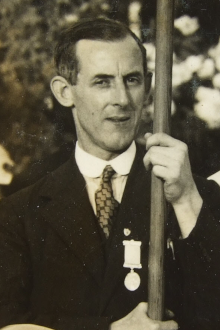
Death of Peadar O’Donnell, Irish Republican & Socialist Activist

Peadar O’Donnell, Irish republican, socialist activist, politician, writer and one of the foremost radicals of 20th-century Ireland, dies in Dublin on May 13, 1986.

O’Donnell is born on February 22, 1893, in Meenmore, near Dungloe, County Donegal, youngest among six sons and three daughters of Biddy and James O’Donnell. He is greatly influenced by his upbringing in the Rosses, in northwest Donegal, one of the poorest and most remote parts of Ireland. His father, a popular local fiddler, earns a living through his smallholding, seasonal labouring in Scotland, and winter work in a local corn mill. His mother, who comes from a radical labour and nationalist political background, works in a local cooperative store. He attends Rampart national school and Roshine national school, near Burtonport, where he is a monitor for four years. In 1911 he wins a scholarship to attend St. Patrick’s College in Drumcondra, Dublin, and returns in 1913 to the Rosses, where he spends two years teaching on the islands of Inishfree. In 1915 he is appointed head of Derryhenny national school, near Dungloe, and the following year becomes principal of a national school on the island of Arranmore, where he begins to write.

O’Donnell had long been concerned by the poor conditions of the local ‘tatie-hokers’ (potato pickers) who migrate annually to Scotland. In the summer of 1918, he travels there to help organise the Scottish Farm Servants’ Union. While there he is influenced by left-wing radicals such as Willie Gallacher, later a communist Member of Parliament (MP), and Emanuel ‘Manny’ Shinwell, later Baron Shinwell. In September 1918, against a background of rising labour militancy, he leaves teaching to become a full-time organiser for the Irish Transport and General Workers’ Union (ITGWU) in the west Ulster area. The following year he organises one of Ireland’s first “soviets” when the attendants and nurses of the Monaghan District Lunatic Asylum occupy the grounds and appoint O’Donnell as governor until their demands are met.

In early 1919 O’Donnell joins the Irish Republican Army (IRA) in Monaghan, resigning from the ITGWU for full-time IRA service in late 1920. He leads the 2nd Battalion, Donegal IRA, from the summer of 1920. In December 1920 he goes “on the run” and leads a flying column in west Donegal until May 1921, when he is wounded. Regarded as insubordinate and militarily inexperienced, he is unpopular among the other senior officers of the 1st Northern Division. He, in turn, is disappointed by the lack of social radicalism among the nationalist leadership. He opposes the Anglo-Irish Treaty, is placed in command of the minority anti-treaty 1st Northern Division and is a member of the IRA executive that occupies the Four Courts in Dublin in defiance of the provisional government.

Arrested in June 1922, O’Donnell shares a prison cell with Liam Mellows and influences his radical “Notes from Mountjoy,” an important document for subsequent left-wing republicans. He spends the next two years in various prisons and internment camps. His execution is widely expected to follow those of December 8, 1922. In August 1923, he is elected as a Sinn Féin Teachta Dála (TD) for Donegal in the general election called after the end of the Irish Civil War. He goes on hunger strike for forty-one days in late 1923 and succeeds in escaping from the Curragh in March 1924. In June 1924, while on the run, he marries Lile O’Donel, a wealthy Cumann na mBan activist who had smuggled communications for republican prisoners. O’Donel, a radical and member of the Communist Party, is the daughter of Ignatius O’Donel, a prominent landowner from Mayo. They have no children but raise their nephew, Peadar Joe, as their own son after the death in New York of O’Donnell’s brother Joe.

O’Donnell begins writing seriously while in jail and remains a prolific writer, journalist, and editor until the 1960s. His first novel, Storm, set in the Irish War of Independence, is published in 1925. One of his most highly regarded books, Islanders, is published in 1928. Adrigoole, like Islanders a story of poverty and starvation in rural Ireland, is published the following year. The Knife (1930) and On the Edge of the Stream (1934) soon follow. The most significant of his later novels is probably The Big Windows (1954). Foremost among his qualities as a writer is his empathy for the people, life, and landscape of rural Ireland. But his novels have been criticised for their slow pace, excessive detail, and didactic nature. He claims his writing is incidental to his political activism. His trilogy of autobiographical non-fiction, The Gates flew Open (1932), Salud! An Irishman in Spain (1936), and There Will Be Another Day (1963), which respectively concern the Irish Civil War, his activism during the Spanish Civil War, and his role in the land annuities agitation, remain highly regarded. His other important literary achievement is with The Bell, an innovative literary and political magazine which plays a useful dissenting role in an insular and conservative period. He founds The Bell with the writer Seán Ó Faoláin in 1940 and edits it from 1946 until it ceases publication in 1954.

O’Donnell exercises an influential role in the interwar IRA, particularly through his editorship of An Phoblacht (1926–29), which he attempts to divert from militarism to socialist agitation. His ultimate aim is for a thirty-two-county socialist republic. His most successful campaign is organising small farmers against the payment of land annuities to the government in the late 1920s and early 1930s. This campaign is later adopted by Fianna Fáil and contributes to their electoral success in 1932. He is less successful in radicalising the IRA. After the failure of Saor Éire, a left-wing IRA front which provokes clerical and popular hostility against the IRA, increasing tensions between the IRA’s left-wing and the leadership lead O’Donnell, along with Frank Ryan and George Gilmore, to split from the IRA to establish the short-lived Republican Congress in 1934.

Although O’Donnell claims he was never a Communist Party member, he plays a central role in forging links between republicans and the revolutionary left both in Ireland and internationally and invariably supports the communist party line at critical junctures. After the failure of Republican Congress, he takes up the cause of the Spanish republic. His championing of unpopular causes such as communism and Spain entail a good deal of frustration. He is physically attacked at political meetings and in 1932, despite having never visited the Soviet Union, loses a high-profile libel action against the Dominican Irish Rosary, which claim he had studied in Moscow‘s Lenin College. He is banned from entering the United States for several decades, although he maintains: “My relations with all the great powers continue to be friendly.”

O’Donnell continues to support radical campaigns until his death. He is an outspoken advocate of Irish emigrants. He is prominent in the Irish Campaign for Nuclear Disarmament and serves as its president in the early 1960s. He is a leading protester against the Vietnam War and a supporter of African anti-colonial movements such as that against apartheid. In later years he is involved in the “Save the west” campaign, highlighting the problems of the west of Ireland.

After several months of ill-health following a heart attack, O’Donnell dies in Dublin, aged 93, on May 13, 1986. He leaves instructions that there are to be “no priests, no politicians and no pomp” at his funeral, and those wishes are granted. He is cremated in Glasnevin Cemetery and his ashes are buried at his wife’s home in Swinford, County Mayo. Although he once remarked that every cause he fought for was a failure, he is now regarded as one of the most influential socialist republican theorists and an important voice of dissent in twentieth-century Ireland.

(From: “O’Donnell, Peadar” by Fearghal McGarry, Dictionary of Irish Biography, http://www.dib.ie)

Leave a comment

Death of Diarmuid O’Hegarty, Civil Servant & Revolutionary

Diarmuid O’Hegarty (Irish: Ó hÉigeartuigh), civil servant and revolutionary, dies in Dublin on March 14, 1958.

O’Hegarty is born Jeremiah Stephen Hegarty on December 26, 1892, in Lowertown, Skibbereen, County Cork, the eldest of seven children of Jeremiah Hegarty (1856–1934) and his wife Eileen (née Barry), both teachers. He is educated at the Christian Brothers school, St. Patrick’s Place, Cork, joins the Dublin civil service in 1910 and is posted to the Department of Agriculture and Technical Instruction, acquiring invaluable administrative experience as private secretary to T. P. Gill, secretary of the department.

O’Hegarty is a member of the Keating branch of the Gaelic League and the closely associated Teeling circle of the Irish Republican Brotherhood (IRB). In 1913 he becomes secretary and stage manager of a troupe of Gaelic players, Na hAisteoirí, which includes several who later become prominent revolutionaries: Piaras Béaslaí, Gearóid O’Sullivan, Fionán Lynch, and Con Collins. As second lieutenant of F Company, 1st Battalion, Dublin Brigade, Irish Volunteers, during the Easter Rising, he is in charge of barricades in Church Street, Mary Lane, Mary’s Abbey, and Jameson Distillery, an area which sees fierce fighting. Imprisoned in Knutsford (May 1-18), he is released in error and returns to his post in the civil service. On his return he is a key figure in the reorganisation of the Volunteers and IRB, becoming a member of the executive of the IRB’s supreme council along with Michael Collins and Seán Ó Murthuile. He also becomes a central figure in Kathleen Clarke‘s prisoner support group, the Irish Volunteer Dependents Fund, and when it amalgamates with the more moderate Irish National Aid Association to form the INA&VDF in August 1916, he helps to ensure that it is dominated by republicans.

O’Hegarty is very close to Michael Collins and Harry Boland and in 1918 this IRB triumvirate exercises considerable control in the nomination of Sinn Féin candidates for the 1918 Irish general election. In the same year he is dismissed from the civil service for refusing to take the oath of allegiance, but his administrative talents find ample outlet in the secretariat of the revolutionary Dáil and later in the service of the Irish Free State to such an extent that he has been called ‘the civil servant of the revolution’ and ‘the Grey Eminence of the Free State Government.’ As clerk of the First Dáil and secretary to the Dáil cabinet (1919–21), he is largely responsible for its success, organising meetings of the clandestine parliament and coordinating the work of various departments from his offices on the corner of O’Connell Street and Abbey Street and later in Middle Abbey Street. He is determined that the Dáil will demonstrate its worth by ‘functioning as any progressive government would be expected to function.’ He records the minutes and handles all correspondence of the Dáil cabinet. As the conduit through which the Dáil’s ministers communicate, his role is central to the effective operation of government on the run. The influence this gives him within the revolutionary movement is bolstered by his senior role within the IRB and the positions of military significance which he occupies. He is a member of the Volunteer Executive (Jun 1916–Nov 1921), Irish Republican Army (IRA) Director of Communications (Jul 1918–Mar 1920), and Director of Organisation (Mar 1920–Apr 1921). When convicted of illegal assembly and jailed in Mountjoy Prison (Nov 1919–Feb 1920), he immediately wields power within the prison, ordering Noel Lemass off a hunger strike.

O’Hegarty resigns his military duties in April 1921 to concentrate on his work in the Dáil secretariat and serves as secretary to the Irish delegation during the Anglo–Irish Treaty negotiations in London (Oct–Dec 1921). He is a vital voice for the Treaty within the IRB and is appointed secretary to the cabinet of the Provisional Government in 1922, participating in the unsuccessful army unification talks of May 1922. During the Irish Civil War, he is briefly seconded from his civil service post to serve as military governor of Mountjoy Prison (Jul-Aug 1922), where he threatens that prisoners who persist in leaning out of windows and talking to the public outside the prison will be shot. Peadar O’Donnell, who is a prisoner there at the time, remembers him as the focus of much “republican bitterness.” A member of the army council during the Irish Civil War, he serves as Director of Organisation (Jul–Dec 1922) and Director of Intelligence (Dec 1922–May 1923), leaving the army with the rank of lieutenant general on May 1, 1923, to resume his civil service career.

O’Hegarty is secretary to the Executive Council of the Irish Free State (1923–32) and principal private secretary to its president, W. T. Cosgrave. Again, he records the cabinet minutes and is the administrative pivot upon which government turns. He serves as secretary to numerous governmental delegations and is widely praised for his work in this role at the 1926 Imperial Conference and the 1930 Imperial Conference. In 1927 he goes to New York to represent the government at a hearing into the fate of republican funds in the United States. His career is the prime example of the influence of revolutionary veterans within the higher civil service in the early years of the state. After the change of government following the 1932 Irish general election, he is one of the very few senior civil servants who is effectively removed from his position. He is appointed to be a commissioner of public works, becoming chairman in 1949, a position he holds until his retirement in 1957. In 1939–40 he serves on the Economy Committee established by the government to advise on wartime spending, and in 1941 is a member of a tribunal of inquiry into public transport, which is principally concerned with the poor financial state of Great Southern Railways.

On April 27, 1922, with Michael Collins as his best man, O’Hegarty marries Claire Archer, daughter of Edward Archer, a post office telegraph inspector from Dublin, and Susan Archer (née Matthews). Her brother is William (Liam) Archer. They live at 9 Brendan Road, Donnybrook, Dublin.

O’Hegarty dies on March 14, 1958, in Dublin, leaving an estate of £5,441. His papers are in the University College Dublin (UCD) Archives.


Leave a comment

Birth of Michael O’Riordan, Founder of the Communist Party of Ireland

Michael O’Riordan, the founder of the Communist Party of Ireland who also fights with the Connolly Column in the International Brigades during the Spanish Civil War, is born at 37 Pope’s Quay, Cork, County Cork, on November 12, 1917.

O’Riordan is the youngest of five children. His parents come from the West Cork Gaeltacht of BallingearyGougane Barra. Despite his parents being native speakers of the Irish language, it is not until he is interned in the Curragh Camp during World War II that he learns Irish, being taught by fellow internee Máirtín Ó Cadhain, who goes on to lecture at Trinity College, Dublin.

As a teenager, O’Riordan joins the Irish nationalist youth movement, Fianna Éireann, and then the Irish Republican Army (IRA). The IRA at the time is inclined toward left-wing politics and socialism. Much of its activity concerns street fighting with the quasi-fascist Blueshirt movement and he fights Blueshirt fascism on the streets of Cork in 1933–34. He is friends with left-wing inclined republicans such as Peadar O’Donnell and Frank Ryan, and in 1934, he follows them into the Republican Congress, a short-lived socialist republican party.

O’Riordan joins the Communist Party of Ireland in 1935 while still in the IRA and works on the communist newspaper The Irish Workers’ Voice. In 1937, following the urgings of Peadar O’Donnell, several hundred Irishmen, mostly IRA or ex-IRA men, go to fight for the Spanish Republic in the Spanish Civil War with the XVth International Brigade. They are motivated in part by enmity towards the 800 or so Blueshirts, led by Eoin O’Duffy who go to Spain to fight on the “nationalist” side in the Irish Brigade. He accompanies a party led by Frank Ryan. In the Republic’s final offensive of July 25, 1938, he carries the flag of Catalonia across the River Ebro. On August 1, he is severely injured by shrapnel on the Ebro front. He is repatriated to Ireland the following month, after the International Brigades are disbanded.

In 1938 O’Riordan is offered an Irish Army commission by the Irish Free State but chooses instead to train IRA units in Cork. As a result of his IRA activities during World War II, or the Emergency as it is known in neutral Ireland, he is interned in the Curragh internment camp from 1939 until 1943 where he is Officer Commanding of the Cork Hut and partakes in Máirtín Ó Cadhain’s Gaelic League classes as well as publishing Splannc (Irish for “Spark,” named after Vladimir Lenin‘s newspaper).

In 1944 O’Riordan is founding secretary of the Liam Mellows Branch of the Labour Party and in 1945 is a founding secretary of the Cork Socialist Party, whose other notable members include Derry Kelleher, Kevin Neville and Máire Keohane-Sheehan.

O’Riordan subsequently works as a bus conductor in Cork and is active in the Irish Transport and General Workers Union (ITGWU). In 1946 he stands as a Cork Socialist Party candidate in the Cork Borough by-election and afterwards moves to Dublin where he lives in Victoria Street with his wife Kay Keohane of Clonakilty, continues to work as a bus conductor and remains active in the ITGWU.

In 1947, O’Riordan is a founding secretary of the Irish Workers’ League and general secretary thereafter, and of its successor organisation the Irish Workers’ Party from 1962–70.

In the 1960s, O’Riordan is a pivotal figure in the Dublin Housing Action Committee which agitates for clearances of Dublin’s slums and for the building of social housing. There, he befriends Fr. Austin Flannery, leading Minister for Finance and future Taoiseach Charles Haughey to dismiss Flannery as “a gullible cleric” while the Minister for Local Government, Kevin Boland, describes him as a “so-called cleric” for sharing a platform with O’Riordan.

In all O’Riordan runs for election five times, campaigning throughout for the establishment of a socialist republic in Ireland but given Ireland’s Catholic conservatism and fear of communism, he does so without success. He does, however, receive playwright Sean O’Casey‘s endorsement in 1951.

O’Riordan’s participation in the Spanish Civil War is always an important part of his political identity. In 1966 he attends the International Brigades’ Reunion in Berlin and is instrumental in having Frank Ryan’s remains repatriated from Germany to Ireland in 1979.

O’Riordan is a member of the Irish Chile Solidarity Committee and attends the 1st Party Congress of the Communist Party of Cuba in 1984. He also campaigns on behalf of the Birmingham Six and attends their Appeal trial in 1990. He serves as General Secretary of the Communist Party of Ireland (1970–83) and as National Chairman of the party (1983–88). He publishes many articles under the auspices of the CPI.

O’Riordan’s last major public outing comes in 2005 at the re-dedication of the memorial outside Dublin’s Liberty Hall to the Irish veterans of the Spanish Civil War. He and other veterans are received by President of Ireland Mary McAleese. He is also presented with Cuba’s Medal of Friendship by the Cuban Consul Teresita Trujillo to Ireland on behalf of Cuban President Fidel Castro.

In 1969, according to Soviet dissident Vasili Mitrokhin, O’Riordan is approached by IRA leaders Cathal Goulding and Seamus Costello with a view to obtaining guns from the Soviet KGB to defend Irish republican areas of Belfast during the communal violence that marks the outbreak of the Troubles. Mitrokhin alleges that O’Riordan then contacts the Kremlin, but the consignment of arms does not reach Ireland until 1972. The operation is known as Operation Splash. The IRA splits in the meantime between the Provisional IRA and the Official IRA and it is the latter faction who receives the Soviet arms. Mitrokhin’s allegations are repeated in Boris Yeltsin‘s autobiography.

O’Riordan’s book, Connolly Column – The Story of the Irishmen who fought for the Spanish Republic 1936–1939, is published in 1979 and deals with the Irish volunteers of the International Brigade who fought in support of the Spanish Republic against Francisco Franco in the Spanish Civil War (1936–1939). An updated version of the book is reprinted in 2005 and is launched by the Lord Mayor of Dublin, Cllr. Michael Conaghan at a book launch at SIPTU headquarters, Liberty Hall. The book is the inspiration for Irish singer-songwriter Christy Moore‘s famous song “Viva la Quinta Brigada.”

In 1991, O’Riordan’s wife dies at the age of 81 at their home. He continues to live in their family home before moving to Glasnevin in 2000 to be close to his son Manus who lives nearby. He lives there until falling ill in November 2005 and is taken to the Mater Hospital. His health rapidly deteriorates, and he quickly develops Alzheimer’s disease. Soon afterwards he is moved to St. Mary’s Hospital in the Phoenix Park where he spends the final few months of his life, before his death at the age of 88 on May 18, 2006.

O’Riordan’s funeral at Glasnevin Crematorium is attended by over a thousand mourners. Following a wake the previous night at Finglas Road, hundreds turn up outside the house of his son Manus and traffic grounds to a halt as family, friends and comrades – many of whom are waving the red flag of the Communist Party of Ireland – escort O’Riordan to Glasnevin Cemetery. A secular ceremony takes place led by Manus O’Riordan, Head of Research at SIPTU, with contributions from O’Riordan’s family, Communist Party general secretary Eugene McCartan and IBMT representative Pauline Frasier.

The funeral congregation includes politicians such as Labour Party leader Pat Rabbitte, his predecessor Ruairi Quinn, party front-bencher Joan Burton, Sinn Féin TD Seán Crowe and councillor Larry O’Toole, ex-Workers’ Party leader Tomás Mac Giolla and former Fianna Fáil MEP Niall Andrews. Also in attendance are union leaders Jack O’Connor (SIPTU), Mick O’Reilly (ITGWU) and David Begg (ICTU). Actors Patrick Bergin, Jer O’Leary, singer Ronnie Drew, artist Robert Ballagh, and newsreader Anne Doyle are also among the mourners. Tributes are paid by President of Ireland Mary McAleese, Taoiseach Bertie Ahern, Sinn Féin leader Gerry Adams and Labour Party TDs Ruairi Quinn and Michael D. Higgins.


Leave a comment

Birth of Frank Ryan, Politician, Journalist & Paramilitary Activist

Frank Ryan, politician, journalist, intelligence agent and paramilitary activist, is born in the townland of Bottomstown, Elton, County Limerick, on September 11, 1902. A fascinating, somewhat mythical figure, he lives during turbulent times when Ireland finally disposes of tyrannical British rule in Ireland and becomes an icon for socialist republicans in Europe during the 1930s and 40s.

Ryan’s parents, Vere Foster Ryan and Annie Slattery, are National School teachers at Bottomstown with a taste for Irish traditional music, and they live in a house full of books. He attends St. Colman’s College, Fermoy. From then on, he is devoted to the restoration of the Irish language. He studies Celtic Studies at University College Dublin (UCD), where he is a member of the Irish Republican Army (IRA) training corps. He serves as a flying column member during the murderous Irish War of Independence (1919-21), thereby interrupting his studies. He leaves UCD before graduating to join the IRA’s East Limerick Brigade in 1922.

Ryan fights on the Anti-Treaty side in the Irish Civil War (1922-23) and is wounded and interned. In November 1923 he is released and returns to UCD. He secures his degree in Celtic Studies and further secures the editorship of An Phoblacht (The Republic), the newspaper of the anti-Treaty Irish Republican Army (IRA).

The split in the Irish independence party, Sinn Féin, results in regular fist fights between pro and anti-Treaty forces. Cumann na nGaedhael, the pro-Treaty political party in government, recruits the Army Comrades Association (Blueshirts) under former Garda Commissioner Eoin O’Duffy to protect their members from anti-Treaty IRA protesters at annual Armistice Day and Wolfe Tone commemorations. Ryan is a forceful orator at these events and is frequently arrested and beaten up by the Gardai. The fractious politics results in Dáil members Sean Hales and Kevin O’Higgins being shot dead in public.

Ryan resigns from the IRA and founds the Republican Congress with Peadar O’Donnell and George Gilmore. Worker’s strikes unite Northern Protestant and Southern Catholic workers protesting against low wages and long hours.

The outbreak of the Spanish Civil War (1936-39) inspires Ryan to lead the first contingent of Irish volunteers to support the Popular Front government of Republican Spain. A brave and inspiring leader, he serves with Italian and German Republican divisions. He is seriously wounded at the Battle of Jarama in February 1937. Following recuperation in Ireland, he is appointed adjutant to republican General José Miaja. During the Aragon Offensive he is captured with 150 of his men in April 1938 and sentenced to death. Irish President, Éamon de Valera, intervenes with General Francisco Franco and Ryan’s sentence is commuted to thirty years. His health suffers severely in Burgos Prison, Spain during his two-year incarceration.

Franco refuses to release Ryan because he is considered his most dangerous prisoner. In August 1940 he is transferred to Berlin, where he is re-united with IRA Chief of Staff Seán Russell. An attempt to return both men to Ireland by U-boat ends with Russell dying from a perforated ulcer. Ryan voluntarily returns to Germany where he serves as the unofficial IRA ambassador for German intelligence. Irishman Francis Stuart, son-in-law of Maud Gonne, who writes some of William Joyce’s propaganda, takes good care of Ryan until his untimely death at a hospital in Loschwitz in Dresden on June 10, 1944.

Ryan’s funeral in Dresden is attended by Elizabeth Clissmann, wife of Helmut Clissmann, and Francis Stuart. Clissmann eventually forwards details of Ryan’s fate to Leopold Kerney in Madrid. According to Stuart and Clissmann, the cause of death is pleurisy and pneumonia.

In 1963, historian Enno Stephan locates Ryan’s grave in Dresden. Three volunteers of the International Brigades, Frank Edwards, Peter O’Connor and Michael O’Riordan travel to East Germany as a guard of honour to repatriate Ryan’s remains in 1979. On June 21, 1979, his remains arrive in Whitefriar Street Carmelite Church, his local church when he lived in Dublin. The church is packed with all shades of Republican and left-wing opinion, as well as those from his past such as the Stuarts, the Clissmanns, Peadar O’Donnell, George Gilmore, and ex-comrades and sympathizers from all over the world. The cortège on its way to Glasnevin Cemetery halts at the GPO in memory of the dead of the 1916 Easter Rising. His coffin is borne to the grave in Glasnevin Cemetery by Irish veterans of the Spanish Civil War, Frank Edwards, Peter O’Connor, Michael O’Riordan and Terry Flanagan. Con Lehane delivers the funeral oration while a piper plays “Limerick’s Lamentation.” He is buried next to Éamonn Mac Thomáis.

Ryan leads a vicarious life in pursuit of human rights, socialism and republicanism. His life story remains more colourful than fiction.