Lyons is a lecturer in history at the University of Hull and then at Trinity College Dublin. He becomes the founding Professor of Modern History at the University of Kent in 1964, serving also as Master of Eliot College from 1969 to 1972.
Lyons principal works include Ireland Since the Famine, the standard university textbook for Irish history from the mid-19th to late-20th century, which The Times calls “the definitive work of modern Irish history” and a biography of Charles Stewart Parnell.
Lyons is critical of Cecil Woodham-Smith‘s much-acclaimed history of the Great Irish Famine and has generally been considered among the “revisionist” historians who reconsiders the role of the British state in events like the Famine.
Lyons marries Jennifer Ann Stuart McAlister in 1954, and has two sons, one of whom, Nicholas, is a former Lord Mayor of London.
On September 15, 1983, Lyons is nominated, unopposed, as chancellor of Queen’s University Belfast (QUB). But less than a week later he is dead, succumbing in Dublin on September 21 to acute pancreatitis, which had struck him in mid-August. He had begun to write the first draft of his W. B. Yeats biography (having accumulated a great archive of material) only a few weeks before. His ashes are buried beside Trinity College chapel.
Muldoon, the eldest of three children, is born on June 20, 1951, on a farm in County Armagh, Northern Ireland, outside The Moy, near the boundary with County Tyrone. His father works as a farmer (among other jobs) and his mother is a school mistress. In 2001, Muldoon says of the Moy:
“It’s a beautiful part of the world. It’s still the place that’s ‘burned into the retina,’ and although I haven’t been back there since I left for university 30 years ago, it’s the place I consider to be my home. We were a fairly non-political household; my parents were nationalists, of course, but it was not something, as I recall, that was a major area of discussion. But there were patrols; an army presence; movements of troops; and a sectarian divide. And that particular area was a nationalist enclave, while next door was the parish where the Orange Order was founded; we’d hear the drums on summer evenings. But I think my mother, in particular, may have tried to shelter us from it all. Besides, we didn’t really socialise a great deal. We were ‘blow-ins’ – arrivistes – new to the area, and didn’t have a lot of connections.”
Talking of his home life, Muldoon continues, “I’m astonished to think that, apart from some Catholic Truth Society pamphlets, some books on saints, there were, essentially, no books in the house, except one set, the Junior World Encyclopedia, which I certainly read again and again. People would say, I suppose that it might account for my interest in a wide range of arcane bits of information. At some level, I was self-educated.” He is a “Troubles poet” from the beginning.
In 1969, Muldoon reads English at Queen’s University Belfast (QUB), where he meets Seamus Heaney and becomes close to the Belfast Group of poets which include Michael Longley, Ciaran Carson, Medbh McGuckian and Frank Ormsby. He says of the experience, “I think it was fairly significant, certainly to me. It was exciting. But then I was 19, 20 years old, and at university, so everything was exciting, really.” He is not a strong student at QUB. He recalls, “I had stopped. Really, I should have dropped out. I’d basically lost interest halfway through. Not because there weren’t great people teaching me, but I’d stopped going to lectures, and rather than doing the decent thing, I just hung around.” During his time at QUB, his first collection New Weather (1973) is published by Faber & Faber. He meets his first wife, fellow student Anne-Marie Conway, and they are married after their graduation in 1973. The marriage breaks up in 1977.
For thirteen years (1973–86), Muldoon works as an arts producer for the BBC in Belfast. In this time, which sees the most bitter period of the Troubles, he published the collections Why Brownlee Left (1980) and Quoof (1983). After leaving the BBC, he teaches English and Creative Writing at the University of East Anglia and at Gonville and Caius College and Fitzwilliam College, Cambridge, where his students include Lee Hall (Billy Elliot) and Giles Foden (The Last King of Scotland). In 1987, he emigrates to the United States, where he teaches in the creative writing program at Princeton University. He is Professor of Poetry at Oxford University for the five-year term 1999–2004, and is an Honorary Fellow of Hertford College, Oxford.
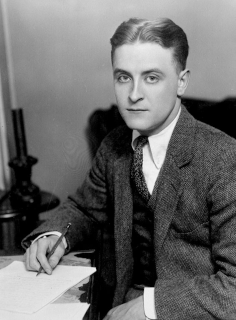
Fitzgerald is born into an Irish Catholicmiddle-class family on September 24, 1896, in Saint Paul, Minnesota. His mother, Mary McQuillan Fitzgerald, is of Irish descent and his father, Edward Fitzgerald, has Irish and English ancestry. He is best known for his novels depicting the flamboyance and excess of the Jazz Age, a term he popularized. During his lifetime, he publishes four novels, four collections of short stories, and 164 short stories. Although he achieves temporary popular success and fortune in the 1920s, he receives critical acclaim only after his death and is now widely regarded as one of the greatest American writers of the 20th century.
Fitzgerald is raised primarily in New York. He attends Princeton University but owing to a failed relationship with socialite Ginevra King and a preoccupation with writing, he drops out in 1917 to join the United States Army. While stationed in Alabama, he romances Zelda Sayre, a Southern debutante who belongs to Montgomery‘s exclusive country-club set. Although she rejects Fitzgerald initially, because of his lack of financial prospects, she agrees to marry him after he publishes the commercially successful This Side of Paradise (1920). The novel becomes a cultural sensation and cements his reputation as one of the eminent writers of the decade.
Fitzgerald’s second novel, The Beautiful and Damned (1922), propels him further into the cultural elite. To maintain his affluent lifestyle, he writes numerous stories for popular magazines such as The Saturday Evening Post, Collier’s: The National Weekly, and Esquire. During this period, he frequents Europe, where he befriends modernist writers and artists of the “Lost Generation” expatriate community, including Ernest Hemingway. His third novel, The Great Gatsby (1925), receives generally favorable reviews but is a commercial failure, selling fewer than 23,000 copies in its first year. Despite its lackluster debut, The Great Gatsby is now widely praised, with some labeling it the “Great American Novel.” Following the deterioration of his wife’s mental health and her placement in a mental institute for schizophrenia, he completes his final novel, Tender Is the Night (1934).
Struggling financially because of the declining popularity of his works amid the Great Depression, Fitzgerald turns to Hollywood, writing and revising screenplays. While living in Hollywood, he cohabits with columnist Sheilah Graham, his final companion before his death. After a long struggle with alcoholism, he attains sobriety only to die of a heart attack on December 21, 1940, at the age of 44. His friend Edmund Wilson completes and publishes an unfinished fifth novel, The Last Tycoon (1941), after Fitzgerald’s death.
At the time of his death, the Roman Catholic Church denies the family’s request that Fitzgerald, a non-practicing Catholic, be buried in the family plot in the Catholic St. Mary’s Cemetery in Rockville, Maryland. He is buried instead with a simple Protestant service at Rockville Union Cemetery. When Zelda Fitzgerald dies in a fire at the Highland Mental Hospital in 1948, she is originally buried next to him at Rockville Union. In 1975, Fitzgerald’s daughter, Scottie, successfully petitions to have the earlier decision revisited, and her parents’ remains are moved to the family plot in St. Mary’s Cemetery.
Initially trained as an organist and composer, he turns to musicology in the early 1950s, first specialising in English and Irish music of the Middle Ages and increasingly turning to ethnomusicological subjects in the course of his career. His Music in Medieval Britain (1958) is still a standard work on the subject, and Time, Place and Music (1973) is a key textbook on ethnomusicology.
Harrison is born in Dublin on September 29, 1905, the second son of Alfred Francis Harrison and Florence May (née Nash). He becomes a chorister at St. Patrick’s Cathedral, Dublin in 1912 and is educated at the cathedral grammar school and Mountjoy School. A competent organist, he is deputy organist at St. Patrick’s from 1925 to 1928. In 1920, he also begins musical studies at the Royal Irish Academy of Music, where he studies with John Francis Larchet (composition), George Hewson (organ) and Michele Esposito (piano). In 1926, he graduates Bachelor of Music at Trinity College Dublin and is awarded a doctorate (MusD) in 1929 for a musical setting of Psalm 19. He then works in Kilkenny for one year, serving as organist at St. Canice’s Cathedral and music teacher at Kilkenny College.
In 1930, Harrison emigrates to Canada to become organist at Westminster Presbyterian Church in New Glasgow, Nova Scotia. In 1933, he studies briefly with Marcel Dupré in France but returns to Canada in 1934 to become organist at Knox Presbyterian Church in Ottawa. In 1935, he takes a position as organist and choirmaster at St. George’s Cathedral in Kingston, Ontario, as well as taking up the newly created post of “resident musician” at Queen’s University at Kingston. His duties include giving lectures, running a choir and an orchestra, and conducting concerts himself. His course in the history and appreciation of music is the first music course to be given for full credit at Queen’s. He resigns from St. George’s in 1941 to become assistant professor of music at Queen’s in 1942. During his years in Canada he still pursues the idea of remaining a performing musician and composer, winning three national composition competitions: for Winter’s Poem (1931), Baroque Suite (1943) and Night Hymns on Lake Nipigon (1945).
In 1951, Harrison takes the degrees of Master of Arts (M.A.) and Doctor of Music (DMus) at Jesus College, Oxford, and becomes lecturer (1952), senior lecturer (1956), and reader in the history of music (1962–1970) there. In 1965, he is elected Fellow the British Academy and Senior Research Fellow at Oxford. From 1970 to 1980, he is Professor of Ethnomusicology at the University of Amsterdam in the Netherlands, retiring to part-time teaching in 1976.
Harrison also holds Visiting Professorships in musicology at Yale University (1958–1959), Princeton University (spring 1961 and 1968–1969), and Dartmouth College (winter 1968 and spring 1972). He also briefly returns to Queen’s University at Kingston as Queen’s Quest Visiting Professor in the fall of 1980 and is Visiting Andrew W. Mellon Professor of Music at the University of Pittsburgh for the calendar year 1981.
Harrison’s honorary titles also include Doctor of Laws at Queen’s University, Kingston (1974), Corresponding Member of the American Musicological Society (1981), and Vice President and Chairman of the Plainsong and Medieval Music Society (1985). At Queen’s also, the new Harrison-LeCaine Hall (1974) is partly named in his honour.
Harrison dies in Canterbury, England on December 29, 1987.
In 1989, Harry White appreciates Harrison as “an Irish musicologist of international standing and of seminal influence, whose scholarly achievement, astonishingly, encompassed virtually the complete scope of the discipline which he espoused.” David F. L. Chadd writes of him “He was above all things an explorer, tirelessly curious and boyishly delighted in the pursuit of knowledge, experience and ideas, and totally heedless of artificially imposed constraints and boundaries.”
Since 2004, the Society for Musicology in Ireland (SMI) awards a bi-annual Irish Research Council Harrison Medal in his honour to distinguished international musicologists.
Remaining active during the interwar years, Dill serves as chief assistant to the commandant of the Staff College (1919–22) before commanding the Welsh Border Brigade, TA (1922–23), and 2nd Infantry Brigade at Aldershot (1923–26). In late 1926, he is appointed army instructor at the newly established Imperial Defence College. A period in India follows as general staff officer of the Western Command (1929–31), based at Quetta. On return to England, he is promoted to major general and made commandant of the Staff College. Appointments as commander of the British forces in Palestine and Transjordan (1936–37) and the Aldershot Command (1937–39) follow. During this period, he shows a remarkable ability to both train and inspire those under his command. Most of his colleagues expect him to become the new chief of the Imperial General Staff and are surprised when Major General Lord Gort, junior to Dill in both rank and seniority, is appointed to the post.
At the outbreak of World War II Dill commands I CorpsBritish Expeditionary Force (BEF) in France and is made a full general. In April 1940, he is made vice-CIGS and in May takes over as CIGS. His initial period in office is not a happy one, and he has to inform the public of setbacks in both Norway and France. His workload is enormous, and after the evacuation at Dunkirk in late May he devotes himself to preparing the defences of Britain against invasion. He clashes with Winston Churchill throughout 1941, advocating a more cautious and realistic approach to the situations in North Africa, Greece, and Crete.
The workload begins to affect his health adversely, and in November 1941 it is announced that he will resign as CIGS on reaching the age of 60 and serve as governor-designate of Bombay with the rank of field marshal. He seeks to be more actively involved in the war effort, however, and in December 1941 he visits the United States with Churchill, remaining there as head of the British joint staff mission in Washington, D.C. He plays a significant role in promoting Anglo–American military cooperation and attends the Casablanca, Quebec, and Tehran conferences.
Dill first marries (1907) Ada Maud Le Mottée, daughter of Col. William Le Mottée of the 18th Regiment. Their son, Major John de Guerin Dill, serves as an artillery officer throughout World War II. In October 1941, Dill marries Nancy Isabelle Charrington, widow of Brigadier Denis Walter Furlong. Dill’s honours include a GCB (1942), an honorary degree from Princeton University (1944), the Howland Memorial Prize of Yale University (1944), and a posthumous Distinguished Service Medal (DSM) from the United States government. There are portraits of him in Cheltenham College and the Imperial War Museum, and a statue in Washington, D.C.
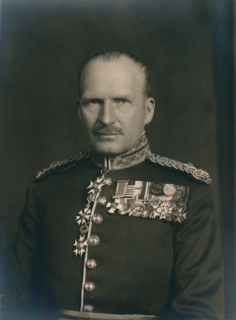
(From: “Dill, Sir John Greer” by David Murphy, Dictionary of Irish Biography, http://www.dib.ie, October 2009 | Pictured: Sir John Greer Dill, bromide print, 1932, by Walter Stoneman, National Portrait Gallery, London)
Synge attends St. Andrew’s College, Dublin and in 1915 enters Trinity College Dublin (TCD). He is elected a Foundation Scholar his first year, which is unusual as it is normally won by more advanced students. While an undergraduate at TCD, he spots a non-trivial error in Analytical Dynamics of Particles and Rigid Bodies, a textbook by E. T. Whittaker, who had recently taught there, and notifies Whittaker of the error. In 1919 he is awarded a BA in Mathematics and Experimental Physics, and also a gold medal for outstanding merit. In 1922 he is awarded an MA, and in 1926 a Sc.D., the latter upon submission of his published papers up to then.
In 1918, Synge marries Elizabeth Eleanor Mabel Allen. She is also a student at TCD, first of mathematics, then of history, but family finances forced her to leave without graduating. Their daughters Margaret (Pegeen), Cathleen and Isabel are born in 1921, 1923 and 1930 respectively. The middle girl grows up to become the distinguished Canadian mathematician Cathleen Synge Morawetz.
Synge is appointed to the position of lecturer at Trinity College, and then accepts a position at the University of Toronto in 1920, where he is an assistant professor of mathematics until 1925. There he attends lectures by Ludwik Silberstein on the theory of relativity, stimulating him to contribute “A system of space-time co-ordinates,” a letter in Nature in 1921.
Synge returns to Trinity College Dublin, in 1925, where he is elected to a fellowship and is appointed the University Professor of Natural Philosophy (later to be known as “physics”). He is a member of the American Mathematical Society and the London Mathematical Society. He is treasurer of the Royal Irish Academy in 1929. He goes back to Toronto in 1930, where he is appointed Professor of Applied Mathematics and becomes Head of the Department of Applied Mathematics. In 1940, he supervises three Chinese students, Guo Yonghuai, Qian Weichang and Chia-Chiao Lin, who later become leading applied mathematicians in China and the United States.
Synge returns to Ireland in 1948, accepting the position of Senior Professor in the School of Theoretical Physics at the Dublin Institute for Advanced Studies. This school had been set up in 1940, and had several outstanding members, including Erwin Schrödinger, a contributor to quantum mechanics, who is also a Senior Professor.
Synge is one of the first physicists to seriously study the interior of a black hole, and his early work is cited by both Martin David Kruskal and George Szekeres in their independent discoveries of the true structure of the Schwarzschild black hole. Synge’s later derivation of the Szekeres-Kruskal metric solution, which is motivated by a desire to avoid “using ‘bad’ coordinates to obtain ‘good’ coordinates,” has been generally under-appreciated in the literature, but is adopted by Chandrasekhar in his black hole monograph.
In pure mathematics, Synge is perhaps best known for Synge’s theorem, which concerns the topology of closed orientable Riemannian manifold of positive sectional curvature. When such a space is even-dimensional and orientable, the theorem says it must be simply connected. In odd dimensions, it instead says that such a space is necessarily orientable.
Synge also creates the game of Vish in which players compete to find circularity (vicious circles) in dictionary definitions.
Synge retires in 1972. He receives many honours for his works. He is elected as a fellow of the Royal Society of London in 1943. He is elected as a fellow of the Royal Society of Canada, and in 1943 is the first recipient of the society’s Henry Marshall Tory Medal, as one of the first mathematicians working in Canada to be internationally recognised for his research in mathematics. In 1954 he is elected an honorary fellow of Trinity College Dublin. He is president of the Royal Irish Academy from 1961 until 1964. The Royal Society of Canada establishes the John L. Synge Award in his honour in 1986.
Synge dies on March 30, 1995, in Dublin, exactly one week after his ninety-eighth birthday.
Godley is the eldest son of Rev. James Godley, rector of Carrigallen, County Leitrim, and Eliza Frances Godley (née La Touche). After attending Tilney Basset’s preparatory school in Dublin, he goes to Harrow College and Balliol College, Oxford, graduating BA in 1878. At Oxford he becomes known for his classical scholarship and wins several prizes, including the Craven scholarship and the Gaisford Prize for Greek Verse. In 1879 he is appointed assistant classical master at Bradfield College. He returns to Oxford in 1883 as tutor and fellow of Magdalen College (1883–1912). Serving as deputy public orator of Oxford (1904–06), he is elected public orator in 1910, a post he holds until his death.
Godley also enjoys renown as a writer of satiric verse and prose, beginning his literary career as a contributor to The Oxford Magazine in 1883. In 1890 he becomes its editor, and two years later publishes his first book of poems, Verses to Order (1892). Later publications include Lyra Frivola (1899), Second Strings (1902) and The Casual Ward (1912). His work is very popular and two volumes, Reliquiae (1926) and Fifty Poems (1927), are published posthumously. He also publishes numerous works of serious scholarship including Socrates and Athenian Society in His Day (1896) and Oxford in the Eighteenth Century (1908). Noted as a translator of Herodotus, Tacitus, and Horace, he serves as joint-editor of The Classical Review (1910–20). He also edits and publishes volumes of the poetry of Thomas Moore and Winthrop Mackworth Praed.
Active in political life, Godley serves as an alderman on Oxford City Council. During the Second Boer War (1899–1901) he organises volunteer forces, commanding a battalion of the 4th Oxfordshire Light Infantry (1900–05). He serves in this capacity again during World War I and is lieutenant-colonel of the Oxfordshire Volunteer Corps (1916–19). A staunch unionist, during the Home Rule Crisis, he supports the formation of the Ulster Volunteer Force (UVF) and writes some political verse, notably The Arrest, which is popular among unionists. A pioneer in the sport of mountaineering, he is a founding member of the Alpine Club and a committee member (1908–11). He is also a member of the governing body of Harrow School. Towards the end of his career he is awarded honorary doctorates from Princeton (1913) and Oxford (1919).
In 1925 Godley goes on a tour of the Levant and contracts a fever which ultimately leads to his death on June 27, 1925, at his Oxford home, 27 Norham Road. He is buried at Wolvercote Cemetery.
Carr spends the majority of her childhood in Pallas Lake, County Offaly, adjacent to the town of Tullamore. Her father, Hugh Carr, is a playwright and studies music under Frederick May, while her mother, Maura Eibhlín Breathnach, is the principal of the local school and writes poetry in Irish. It is said that “there were a lot of literary rivalries.” As a child, she and her siblings build a theater in their shed.
Mitchel is born to James Mitchel, a New York City fire marshal, and Mary Purroy who works as a schoolteacher until her marriage. His father is Irish, and Presbyterian in faith, the son of the famous Irish nationalistJohn Mitchel, and a veteran of the Confederate States Army. Two of his uncles were killed fighting for the Confederacy. His maternal grandfather, Venezuelan-born Juan Bautista Purroy, was that country’s consul in New York, which makes Mitchel the first Mayor of New York City of Latino descent. His great-grandfather, José Joaquin de Purroy, was a lawyer from Spain who settled in Venezuela. He graduates from a Catholic secondary school at Fordham Preparatory School in the late 1890s. He obtains his bachelor’s degree from Columbia College in 1899 and graduates from New York Law School in 1902 with honors. He then pursues a career as a private attorney.
In December 1906, Mitchel’s career takes flight when he is hired by family friend and New York City corporation counsel William B. Ellison to investigate the office of John F. Ahearn, borough president of Manhattan, for incompetence, waste and inefficiency. As a result, Ahearn is dismissed as borough president of Manhattan. He begins his career as assistant corporation counsel and then becomes a member of the Commissioners of Accounts, from which he investigates city departments. He gains results and recognition for his thorough and professional investigations into various city departments and high-ranking officials. Along with the help of Henry Bruère and other staff members of the Bureau of Municipal Research, he turns the insignificant Commissioners of Accounts into an administration of importance.
The young Mitchel’s reputation as a reformer garners him the support of the anti-Tammany forces. In 1909, he is elected president of the New York City Board of Aldermen, an organization similar to the current New York City Council. As president of the Board of Aldermen, he is able to enact fiscal reforms. He cuts waste and improves accounting practices. Also, he unsuccessfully fights for a municipal-owned transit system and the city sees him vote against allowing the Interborough Rapid Transit and the Brooklyn Rapid Transit companies permission to extend their existing subway and elevated lines. For a six-week period in 1910 after current Mayor William J. Gaynor is injured by a bullet wound, he serves as acting mayor. His biggest accomplishment during his short tenure is the act of neutrality during a garment industry strike.
As the mayoral election approaches in 1913, the Citizens Municipal Committee of 107 sets out to find a candidate that will give New York “a non-partisan, efficient and progressive government.” They are assisted in this endeavor by the Fusion Executive Committee, led by Joseph M. Price of the City Club of New York. After nine ballots, Mitchel is nominated as a candidate for mayor. During his campaign, he focuses on making City Hall a place of decency and honesty. He also focuses on business as he promises New Yorkers that he will modernize the administrative and financial machinery and the processes of city government.
At the age of 34, Mitchel is elected mayor on the Republican Party slate as he wins an overwhelming victory, defeating Democratic candidate Edward E. McCall by 121,000 votes, thus becoming the second youngest mayor of New York City. He is often referred to as “The Boy Mayor of New York.”
Mitchel’s administration introduces widespread reforms, particularly in the Police Department, which has long been highly corrupt, and which is cleaned up by Mitchel’s Police CommissionerArthur H. Woods. Woods is able to break up gangs and in his first year in office and he arrests more than 200 criminals. Woods also launches an attack on robbery, prostitution, pickpocketing and gambling. Woods ultimately transforms the police department into a crime-fighting machine. Mitchel aims to get rid of corruption wherever he sees it. His administration sets out to restructure and modernize New York City and its government. He is able to expand the city’s regulatory activities, runs the police department more honestly and efficiently and, much like in 1910, he maintains impartiality during garment and transportation workers strikes in 1916.
At 1:30 p.m. on April 17, 1914, Michael P. Mahoney fires a gun at the mayor as Mitchel is getting in his car to go to lunch. The bullet ricochets off a pedestrian and hits Frank Lyon Polk, New York City’s corporation counsel, in the chin.
Mitchel’s early popularity is soon diminished due to his fiscal policies and vision of education. He is heavily criticized for combining vocational and academic courses. He begins to trim the size of the Board of Education and attempts to control teachers’ salaries.
Mitchel advocates universal military training to prepare for war. In a speech at Princeton University on March 1, 1917, he describes universal military training as “the [only] truly democratic solution to the problem of preparedness on land.” His universal military training alienates New Yorkers and is not popular. Many feel he focuses too much on military patriotism and is indifferent to politics. This soon leads to a loss of support for his re-election bid in 1917.
Mitchel runs again for mayor in the highly charged wartime election of 1917. His re-election bid takes a hit as many New Yorkers feel he is socializing with the social elite, focuses too much on the economy and efficiency and his concern on military preparedness. He narrowly loses the Republican primary to William M. Bennett after a contentious recount but then runs for re-election as a pro-war Fusion candidate.
Mitchel’s main campaign theme is patriotism, with a media campaign that denounces Germans, Irish, and Jews as unpatriotic sympathizers with the enemy cause. He runs against Republican Bennett, antiwar SocialistMorris Hillquit, and the Tammany Hall Democrat John F. Hylan. Hylan ridicules and denounces Mitchel’s upper-class reform as an affront to democracy and to the voters. He wins by a landslide without taking a clear position on the war. Mitchel barely beats Hillquit for second place.
After failing to get re-elected, Mitchel joins the Air Service as a flying cadet, completing training in San Diego and obtaining the rank of major. On the morning of July 6, 1918, when returning from a short military training flight to Gerstner Field, near Lake Charles, Louisiana, his plane suddenly goes into a nosedive, causing him to fall from his plane due to an unfastened seatbelt. He plummets 500 feet to his death, his body landing in a marsh about a half mile south of the field.
Francis Scott Key Fitzgerald, American novelist, essayist, short story and screenwriter, is born into an Irish Catholic family on September 24, 1896, in Saint Paul, Minnesota. He is best known for his novels depicting the flamboyance and excess of the Jazz Age, a term he popularized. During his lifetime, he publishes four novels, four collections of short stories, and 164 short stories. Although he achieves temporary popular success and fortune in the 1920s, he receives critical acclaim only after his death and is now widely regarded as one of the greatest American writers of the 20th century.
The son of middle-class Irish Catholics Edward and Mary McQuillan Fitzgerald, Fitzgerald is raised primarily in New York. He attends Princeton University but owing to a failed relationship with socialite Ginevra King and a preoccupation with writing, he drops out in 1917 to join the United States Army. While stationed in Alabama, he romances Zelda Sayre, a Southern debutante who belongs to Montgomery‘s exclusive country-club set. Although she rejects Fitzgerald initially, because of his lack of financial prospects, she agrees to marry him after he publishes the commercially successful This Side of Paradise (1920). The novel becomes a cultural sensation and cements his reputation as one of the eminent writers of the decade.
Fitzgerald’s second novel, The Beautiful and Damned (1922), propels him further into the cultural elite. To maintain his affluent lifestyle, he writes numerous stories for popular magazines such as The Saturday Evening Post, Collier’s: The National Weekly, and Esquire. During this period, he frequents Europe, where he befriends modernist writers and artists of the “Lost Generation” expatriate community, including Ernest Hemingway. His third novel, The Great Gatsby (1925), receives generally favorable reviews but is a commercial failure, selling fewer than 23,000 copies in its first year. Despite its lackluster debut, The Great Gatsby is now widely praised, with some labeling it the “Great American Novel.” Following the deterioration of his wife’s mental health and her placement in a mental institute for schizophrenia, he completes his final novel, Tender Is the Night (1934).
Struggling financially because of the declining popularity of his works amid the Great Depression, Fitzgerald turns to Hollywood, writing and revising screenplays. While living in Hollywood, he cohabits with columnist Sheilah Graham, his final companion before his death. After a long struggle with alcoholism, he attains sobriety only to die of a heart attack on December 21, 1940, at the age of 44. His friend Edmund Wilson completes and publishes an unfinished fifth novel, The Last Tycoon (1941), after Fitzgerald’s death.
At the time of his death, the Roman Catholic Church denies the family’s request that Fitzgerald, a non-practicing Catholic, be buried in the family plot in the Catholic St. Mary’s Cemetery in Rockville, Maryland. He is buried instead with a simple Protestant service at Rockville Union Cemetery. When Zelda Fitzgerald dies in a fire at the Highland Mental Hospital in 1948, she is originally buried next to him at Rockville Union. In 1975, Fitzgerald’s daughter Scottie successfully petitions to have the earlier decision revisited, and her parents’ remains are moved to the family plot in Saint Mary’s.




 seamus dubhghaill