seamus dubhghaill

Promoting Irish Culture and History from Little Rock, Arkansas, USA


Leave a comment

Birth of Charles O’Conor, Writer & Antiquarian

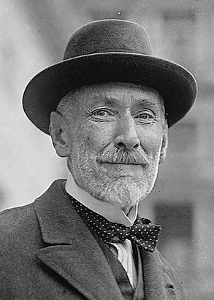
charles-o-conor-of-belanagareCharles O’Conor, Irish writer and antiquarian who is enormously influential as a protagonist for the preservation of Irish culture and history in the eighteenth century, is born on January 1, 1710 in Killintrany, County Sligo. He combines an encyclopaedic knowledge of Irish manuscripts and Gaelic culture in demolishing many specious theories and suppositions concerning Irish history.

O’Conor is born into a cadet branch of the land-owning family of O’Conor Don and is sent for his education to Father Walter Skelton’s school in Dublin. He grows up in an environment that celebrates Gaelic culture and heritage. He begins collecting and studying ancient manuscripts at an early age.

His marriage brings him financial stability so that he can devote himself to his writing, but he is widowed in 1750, within a year of his father’s death. When his eldest son Denis marries in 1760, he gives up the residence at Bellanagare to him and moves into a small cottage that he had built on the estate. He devotes the remainder of his life to the collection and study of Irish manuscripts, to the publication of dissertations, and especially to the cause of Irish and Catholic emancipation.

O’Conor is well known in Ireland from his youth as a civil-tongued, but adamant, advocate of Gaelic culture and history. He garners fame outside Ireland through his Dissertations on the ancient history of Ireland (1753), which is generally well received. When Samuel Johnson is made aware of it, he is moved to write a letter to O’Conor in 1755, complimenting the book, complimenting the Irish people, and urging O’Conor to write on the topic of Celtic languages.

The book is less well received in some Scottish circles, where there exists a movement to write Celtic history based upon Scottish origins. When James Macpherson publishes a spurious story in 1761 about having found an ancient Gaelic (and Scottish) cycle of poems by a certain “Ossian“, among the critics who rejects it as false is O’Conor, as an inclusion in the 1766 rewrite of his 1753 work. While the issue was laid to public rest by others, notably Samuel Johnson, the issue is laid to intellectual rest by O’Conor in 1775, with the publication of his Dissertation on the origin and antiquities of the antient Scots. The fact that the issue occurs provides O’Conor the opportunity to establish Ireland as the source of Gaelic culture in the minds of the non-Irish general public.

O’Conor’s later life is that of the respected dean of Irish historians. He continues to write as always in favour of ideas that he favours and are consistent with the historical record, and against any and all ideas that are inconsistent with the historical record, including those of other Irish historians. Such is his esteemed reputation that even those whom he challenges would include his challenges in the next edition of their own books. He continues to collect, study, and annotate Irish manuscripts. Upon his death in Bellanagare, County Roscommon on July 1, 1791, his collection becomes the first part of the Annals of the Four Masters at the Stowe Library. In 1883 these are returned to the Royal Irish Academy library.

His unfinished History of Ireland, that Johnson had encouraged in 1777, is destroyed on his instructions at his death.
Leave a comment

The Execution of Tom Williams, IRA Volunteer

File source: http://en.wikipedia.org/wiki/File:Vol._Tom_Williams.jpg

Thomas Joseph Williams, a volunteer in C Company, 2nd Battalion of the Belfast Brigade in the Irish Republican Army (IRA), is hanged in the Crumlin Road Gaol on September 2, 1942, for his involvement in the killing of Royal Ulster Constabulary (RUC) police officer Patrick Murphy during the Northern campaign.

Williams is born in the Beechmount area of Belfast on May 12, 1923. He is the third child in a family of six. After the death of his mother, he and his brother go to live with their grandmother at 46 Bombay Street in the Clonard area of Belfast. The Williams family has to leave the small Catholic enclave in the Shore Road area of Belfast after their house is attacked and burned.

As a child, Williams suffers from asthma and as a result is often very ill. He attends St. Gall’s Primary School but leaves at an early age to obtain work, which at the time is difficult due to discrimination. His work therefore consists of labouring and as a delivery boy.

As soon as Williams is old enough, he joins Na Fianna Éireann, the republican Scout Organisation founded by Constance Markievicz in 1909, becoming a member of the Con Colbert slua in the Clonard area. Alfie Hannaway, a friend of Williams, is his OC in Na Fianna, and assigns him to the rank of Quartermaster for the company. He takes his role in Na Fianna very seriously and all who came to know him are struck by his dedication and maturity, even at this early age.

At the age of 17, Williams is old enough to become a volunteer and joins C Company of the IRA in the Clonard area where he lives. Due to his “dedication and his remarkable ability” he is appointed to the role of Adjutant of C Company.

At Easter 1942 the government of Northern Ireland bans all parades to commemorate the anniversary of the Easter Rising. An IRA unit of six men and two women stage a diversionary action against the RUC to allow three parades to take place in West Belfast, but in this clash a RUC officer is killed, and the six IRA men are captured. The RUC officer, Constable Patrick Murphy, a father of nine children, from the Falls Road area of Belfast, is one of a minority of Catholics serving in the RUC.

There is debate over the years about who actually fired the fatal shot. The six IRA members are convicted and sentenced to death for murder under the law of common purpose. Five have their sentences commuted. The sentence of Williams, who acknowledges that he is the leader of the IRA unit involved and takes full responsibility for the actions of his men, is not commuted.

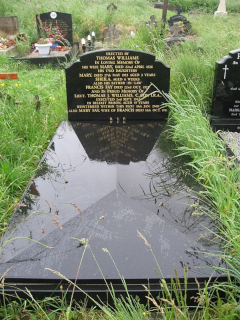
Williams is hanged in Crumlin Road Gaol in Belfast on the morning of September 2, 1942. The executioner is the official English hangman Thomas Pierrepoint, assisted by his nephew Albert Pierrepoint. Afterwards Williams’ body is interred in unhallowed ground in an unmarked grave within the grounds of the prison. His remains are only released in January 2000 after the closure of the prison in 1996 and a lengthy campaign by the National Graves Association, Belfast.

Williams’s funeral is held on January 19, 2000, and is attended by thousands, with burial at Milltown Cemetery. Joe Cahill, Williams’s cell mate, and John Oliver, sentenced to death with Williams but later reprieved, as well as Madge McConville, who had been arrested with Williams, Greta McGlone, Billy McKee, Eddie Keenan and perhaps least known, Nell Morgan, Williams’s girlfriend at the time of his death, are all present. Six senior Sinn Féin members including Gerry Adams are also present in St. Paul’s Church on the Lower Falls Road for the Mass.

Williams is remembered in a ballad Tom Williams. Various recordings have been made, most notably by the Flying Column and Éire Óg, who preamble their version with the story of the campaign to release his body. The now disbanded, Volunteer Tom Williams Republican Flute Band from Glasgow, Scotland is named in his memory as is the Tom Williams Camogie Club in Belfast.

(Pictured: Tom Williams’ headstone at Milltown Cemetery after being reinterred)


Leave a comment

Birth of Elizabeth Hamilton, Poet & Novelist

LEAD Technologies Inc. V1.01

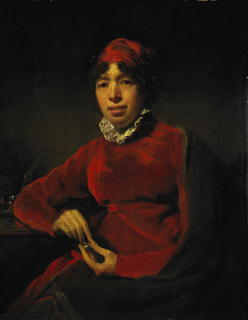
Elizabeth Hamilton, essayist, poet, satirist and novelist, is born in Belfast on July 25, 1756, though the date is often given as 1758.

Hamilton is born to Charles Hamilton (d.1759), a Scottish merchant, and his wife Katherine Mackay (d.1767). She lives most of her life in Scotland, moving there in 1762 to live with a Mrs. Marshall, her paternal aunt, near Stirling and spending much of her later life in Edinburgh.

Hamilton’s first literary efforts are directed in supporting her brother Charles in his orientalist and linguistic studies. After his death in 1792 she continues to publish orientalist scholarship, as well as historical, educationalist and theoretical works. She writes The Cottagers of Glenburnie (1808), a tale which has much popularity in the day, and perhaps has some effect in the improvement of certain aspects of humble domestic life in Scotland. She also writes the anti-Jacobin novel Memoirs of Modern Philosophers (1800), and the satirical Translation of the Letters of a Hindoo Rajah in 1796, a work in the tradition of Montesquieu and Oliver Goldsmith. Her most important pedagogical works are Letters on Education (1801), Letters on the Elementary Principles of Education (1801), Letters addressed to the Daughter of a Nobleman, on the Formation of Religious and Moral Principle (1806), and Hints addressed to the Patrons and Directors of Schools (1815).

Elizabeth Hamilton dies in Harrogate, North Yorkshire, England on July 23, 1816, following a short illness.

(Pictured: Portrait of Elizabeth Hamilton, 1812, by Sir Henry Raeburn)


Leave a comment

Birth of Alfred Harmsworth, Newspaper Publisher

alfred-harmsworth

Alfred Charles William Harmsworth, Viscount Northcliffe, one of the most successful newspaper publishers in the history of the British press and a founder of popular modern journalism, is born on July 15, 1865 in Chapelizod, near Dublin.

After an impoverished childhood and a few attempts at making a quick fortune, young Harmsworth embarks on freelance journalism as a contributor to popular papers, rises to editorial positions, and starts a paper called Answers to Correspondents. After some difficulty in securing financial backing, he begins publication, soon shortening the name to Answers. As the paper gains public favour, he is joined by his brother Harold, whose financial ability and capacity for attracting advertising, combined with Alfred’s genius for sensing the public taste, make it a success. Answers is followed by many other inexpensive popular periodicals, chief among them Comic Cuts and Forget-Me-Not, for the new reading public of women. These form the basis for what becomes Amalgamated Press, the largest periodical-publishing empire in the world.

In 1894 Harmsworth enters the newspaper field, purchasing the nearly bankrupt London Evening News and transforming it into a popular newspaper with brief news reports, a daily story, and a column for women. Within a year circulation grows to 160,000 copies, and profits are substantial. Conceiving the idea of a chain of halfpenny morning papers in the provinces, he purchases two papers in Glasgow, Scotland, and merges them into the Glasgow Daily Record. He then decides to experiment with a popular national daily in London. The Daily Mail, first published on May 4, 1896, is a sensational success. Announced as “the penny newspaper for one halfpenny” and “the busy man’s daily journal,” it is exactly suited to the new reading public. All news stories and feature articles are kept short, and articles of interest to women, political and social gossip, and a serial story are made regular features. With its first issue, the Daily Mail establishes a world record in daily newspaper circulation, a lead it never loses during Harmsworth’s lifetime.

Next Harmsworth purchases the Weekly Dispatch when it is nearly bankrupt and transforms it into the Sunday Dispatch, the biggest-selling Sunday newspaper in the country. In 1903 he founds the Daily Mirror, which successfully exploits a new market as a picture paper, with a circulation rivaling that of the Daily Mail. He saves The Observer from extinction in 1905, the year in which he is made Baron Northcliffe. In 1908 he reaches the pinnacle of his career by securing control of The Times, which he transforms from a 19th-century relic into a modern newspaper.

Northcliffe’s contributions to the British effort in World War I begin with his early exposure in the Daily Mail of the British army’s shell shortage. His criticisms of Lord Kitchener arouse intense resentment in some quarters, but he also presses for the creation of a separate Ministry of Munitions and for the formation in 1915 of a wartime coalition government. For his service as head of the British war mission in the United States in 1917, he is created a viscount. He acts as the British government’s director of propaganda aimed at Germany and other enemy countries in 1918. By this time Northcliffe’s press empire appears to hold such power over public opinion that he tries unsuccessfully to influence the composition of Prime Minister David Lloyd George’s cabinet. Always unpredictable, he becomes the victim of a megalomania that damages his judgment and leads to the breakdown that precedes his death.

Harmsworth’s health declines during 1921 due mainly to a streptococcal infection. He goes on a world tour to revive himself, but it fails to do so. He dies of endocarditis in a hut on the roof of his London house on August 14, 1922, leaving three months’ pay to each of his six thousand employees. The viscountcy, barony, and baronetcy of Northcliffe become extinct upon his death. His body is buried at East Finchley Cemetery in North London.

Northcliffe’s success as a publisher rests on his instinctive understanding of the new reading public that had been created by compulsory education. Though he wants political power, the effect of his newspapers upon public affairs is generally considered to have been smaller than he believed. His influence lay rather in changing the direction of much of the press away from its traditional informative and interpretative role to that of the commercial exploiter and entertainer of mass publics.


1 Comment

Edward the Bruce Appointed High King of Ireland

grave-of-king-edward-de-bruce

Edward Bruce of Scotland is crowned High King of Ireland at Dundalk on May 2, 1316. He is the younger brother of Robert the Bruce, King of Scotland. He is also sometimes known as Edward de Brus or Edward the Bruce.

Edward is the second of five sons of Robert de Brus, 6th Lord of Annandale and Marjorie, Countess of Carrick. His date of birth, believed to be around 1280, is unknown but King Robert is obviously the firstborn. He has eleven siblings, of whom nine survive childhood. One of his older sisters, Lady Christina Bruce, also plays an active role in the wars of independence against England.

By 1307 Edward fights alongside Robert throughout his struggle for the Scottish throne and accompanies him during his flight from Scotland and subsequent guerilla campaign against the English. The three younger Bruce brothers Nigel, Thomas, and Alexander are all captured and executed by the English during this period. Some time between 1309 and 1313, Edward is created Earl of Carrick, a title previously held by his maternal grandfather Niall of Carrick, his mother and his elder brother.

As the Scots become more dominant, Edward commands a number of successful sieges of English-held castles across the country. By November 1313 he commands the siege of the last remaining English outpost in Scotland, Stirling Castle. Without Robert’s knowledge, he makes a deal with the English Constable of the castle that should an English army not arrive to relieve it by June 24, 1314, the castle will surrender, so making an aggressive siege unnecessary. Robert is deeply unhappy, but has little choice but to confront the English army sent by Edward II to relieve Stirling in June 1314. The armies meet at the Battle of Bannockburn, and the result is a decisive victory for the Scots which leaves Robert in fairly unopposed control of Scotland.

Robert decides to open a second front against the English and dispatches an army of 6,000 men under the command of Edward to Ireland. The aim is to challenge English dominance of the British Isles by drawing together Scottish and Irish interests. Scottish and Irish forces are initially successful in defeating the English and on May 2, 1316 Edward is appointed High King of Ireland.

A famine in 1317 proves a setback to Edward and greatly reduces his popularity. This allowed time for an English army under John de Bermingham to be assembled. The English army meets the Scots-Irish army under King Edward Bruce at the Battle of Faughart on October 14, 1318. The Scots-Irish army is badly defeated by de Bermingham’s forces. Edward is killed, his body being quartered and sent to various towns in Ireland, and his head being delivered to King Edward II.

Edward Bruce is the last High King of Ireland.

(Pictured: Grave of King Edward De Bruce, located in Faughart Cemetery)


Leave a comment

Death of Joe Heaney, Traditional Irish Singer

joe-heaney

Joe Heaney, traditional Irish singer also known as Joe Éinniú or Seosamh Ó hÉanaí, dies in Seattle, Washington on May 1, 1984. He spends most of his adult life abroad, living in England, Scotland and New York City, in the course of which he records hundreds of songs.

Heaney is born Carna, a remote village in the Irish-speaking district of Connemara, County Galway, along the west coast of Ireland on October 15, 1919. He starts singing at the age of five, but his shyness keeps him from singing in public until he is 20. He learns English at school in Carna. When he is 16 years old, he wins a scholarship to attend school in Dublin. While there he wins first and second prizes at a national singing competition. Most of his repertoire, estimated to exceed 500 songs, is learned while growing up in Carna.

In 1949, Heaney goes to London where he works on building sites and becomes involved in the folk-music scene. He records for the Topic Records and Gael Linn Records labels. He is married for six years until his wife dies of tuberculosis.

Heaney is recorded by Pádraic Ó Raghallaigh for Raidió Teilifís Éireann, and by Peter Kennedy for the BBC in 1959. The BBC recordings are assembled on a BBC LP, not commercially issued, as BBC LP 22570.

Heaney comes to the United States in 1965 at the invitation of the Newport Folk Festival. After singing at Newport, he decides to move to America and settles in New York City. From 1982 until 1984, Heaney is an artist-in-residence at the University of Washington in Seattle after previously having taught at Wesleyan University in Middletown, Connecticut.

Joe Heaney dies of emphysema in Seattle on May 1, 1984. The Joe Heaney Collection of the University of Washington Ethnomusicology Archives is established after his death. The Féile Chomórtha Joe Éinniú (Joe Heaney Commemorative Festival) is held every year in Carna. An Irish-language biography of him has been written by Liam Mac Con Iomaire, and a biography that discusses his work in the larger context of Ireland and the United States was published in 2011 by Sean Williams and Lillis Ó Laoire.


Leave a comment

Birth of Denis Devlin, Poet & Diplomat

denis-devlin

Denis Devlin, poet, translator, and career diplomat, is born in Greenock, Scotland of Irish parents on April 15, 1908. Along with Samuel Beckett and Brian Coffey, he is one of the generation of Irish modernist poets to emerge at the end of the 1920s.

Devlin and his family return to live in Dublin in 1918. He studies at Belvedere College and, from 1926, as a seminarian for the Roman Catholic priesthood at Clonliffe College. As part of his studies he attends a degree course in modern languages at University College Dublin (UCD), where he meets and befriends Brian Coffey. Together they publish a joint collection, Poems, in 1930.

In 1927, Devlin abandons the priesthood and leaves Clonliffe. He graduates with his BA from UCD in 1930 and spends that summer on the Blasket Islands to improve his spoken Irish. Between 1930 and 1933, he studies literature at the University of Munich and the Sorbonne in Paris, meeting, amongst others, Beckett and Thomas MacGreevy. He then returns to UCD to complete his MA thesis on Michel de Montaigne.

Devlin joins the Irish Diplomatic Service in 1935 and spends a number of years in Rome, New York and Washington, D.C.. During this time he meets the French poet Saint-John Perse, and the Americans Allen Tate and Robert Penn Warren. He goes on to publish a translation of Exile and Other Poems by Saint-John Perse, and Tate and Warren edit his posthumous Selected Poems.

Since his death on August 21, 1959, there have been two Collected Poems published; the first in 1964 is edited by Coffey and the second in 1989 by J.C.C. Mays.

Devlin’s personal papers are held in University College Dublin Archives. His niece goes on to become writer Denyse Woods.


Leave a comment

Death of Sir Horace Curzon Plunkett

Sir Horace Curzon Plunkett, Anglo-Irish agricultural reformer, pioneer of agricultural cooperatives, Unionist Member of Parliament (MP), supporter of Home Rule, Irish Senator and author, dies in Weybridge, Surrey, England on March 26, 1932.

Plunkett, the third son of Admiral the 16th Baron of Dunsany, of Dunsany Castle, Dunsany, near Dunshaughlin, County Meath, and the Honourable Anne Constance Dutton, daughter of John Dutton, 2nd Baron Sherborne, is born on October 24, 1854. He is educated at Eton College and University College, Oxford, of which he becomes an honorary fellow in 1909.

Threatened by lung trouble in 1879, Plunkett goes to the United States and spends ten years as a cattle rancher in the Bighorn Mountains of Wyoming. He returns to Ireland in 1889 and devotes himself to the agricultural cooperative movement, first organizing creameries and then, in 1894, the Irish Agricultural Organisation Society, a forerunner of similar societies in England, Wales, and Scotland. A moderate Unionist member of Parliament for South County Dublin from 1892 to 1900, he becomes vice president (1899–1907) of the new Department of Agriculture and Technical Instruction for Ireland, which he has been instrumental in creating.

Plunkett’s later experience convinces him of the need for the independence of an Ireland without partition inside the Commonwealth, and he fights strongly for this goal, as chairman of the Irish Convention (1917–18) and, in 1919, as founder of the Irish Dominion League and of the Plunkett Foundation for Cooperative Studies, an agricultural research and information centre. He is appointed to the first Senate of the Irish Free State (1922–23). His house in Dublin is bombed and burned during in the Irish Civil War and he lives in England thereafter. In 1924 the Plunkett Foundation also moves to England. In 1924 he presides over a conference in London on agricultural co-operation in the British Commonwealth and in 1925 he visits South Africa to help the movement there.

Plunkett is made a Fellow of the Royal Society in 1902 and Knight Commander of the Royal Victorian Order in 1903. His writings include Ireland in the New Century (1904) and The Rural Life Problem of the United States (1910).

Sir Horace Plunkett dies at Weybridge, Surrey, England on March 26, 1932.


Leave a comment

Birth of Marie Dolores Eliza Rosanna Gilbert, Dancer & Actress

lola-montez

Marie Dolores Eliza Rosanna Gilbert, Countess of Landsfeld, Irish dancer and actress better known by the stage name Lola Montez, is born in Grange, County Sligo, on February 17, 1821. She becomes famous as a “Spanish dancer,” courtesan, and mistress of King Ludwig I of Bavaria, who makes her Countess of Landsfeld. She uses her influence to institute liberal reforms. At the start of the German revolutions of 1848-1849, she is forced to flee. She proceeds to the United States via Switzerland, France, and London, returning to her work as an entertainer and lecturer.

Gilbert’s family makes their residence at King House in Boyle, County Roscommon, until early 1823, when they journey to Liverpool, thence departing for India on March 14. Gilbert spends much of her childhood in India but is educated in Scotland and England. At age 19 she elopes with Lieutenant Thomas James. The couple separates five years later, and, in 1843, Gilbert launches a career as a dancer. Her London debut in June 1843 as “Lola Montez, the Spanish dancer” is disrupted when she is recognized as Mrs. James. The fiasco would probably have ended the career of anyone less beautiful and determined, but Gilbert receives additional dancing engagements throughout Europe. During her travels she reputedly forms liaisons with Franz Liszt and Alexandre Dumas, among many others.

Late in 1846, Gilbert dances in Munich and Ludwig I of Bavaria is so struck by her beauty that he offers her a castle. She accepts, becomes Baroness Rosenthal and Countess of Lansfeld, and remains as his mistress. Under Gilbert’s influence, Louis inaugurates liberal and anti-Jesuit governmental policies, but his infatuation with her helps to bring about the collapse of his regime in the revolution of 1848. In March of that year Ludwig abdicates in favour of his son. Gilbert flees to London, where in 1849 she marries Lieutenant George Heald, although she has never been divorced from James. Heald later leaves her.

From 1851 to 1853 Gilbert performs in the United States. Her third marriage, to Patrick P. Hull of San Francisco in 1853, ends in divorce soon after she moves to Grass Valley, California. There, among other amusements, she coaches young Lotta Crabtree in singing and dancing. She settles in New York City after an unsuccessful tour of Australia in 1855–1856 and gathers a following as a lecturer on such topics as fashion, gallantry, and beautiful women. An apparently genuine religious conversion leads her to take up various personal philanthropies.

Gilbert publishes Anecdotes of Love; Being a True Account of the Most Remarkable Events Connected with the History of Love; in All Ages and among All Nations (1858), The Arts of Beauty, or, Secrets of a Lady’s Toilet with Hints to Gentlemen on the Art of Fascination (1858), and Lectures of Lola Montez, Including Her Autobiography (1858). The international notoriety of her heyday persists long after her death and inspires numerous literary and balletic allusions.

Gilbert spends her last days in rescue work among women. By November 1859 she is showing the tertiary effects of syphilis, and her body begins to waste away. She dies at the age of 39 on January 17, 1861. She is buried in Green-Wood Cemetery in Brooklyn, New York.


Leave a comment

Death of Queen Victoria

queen-victoria

Queen Victoria dies at Osborne House, Isle of Wight on January 22, 1901, ending an era in which most of her British subjects know no other monarch.

With a reign of 63 years, seven months and two days, she is the longest-reigning British monarch and the longest-reigning queen regnant in world history until her great-great-granddaughter Elizabeth II surpasses her on September 9, 2015. She restores dignity to the English monarchy and ensures its survival as a ceremonial political institution. Edward VII accedes to the throne upon her death.

Born on May 24, 1819, in Kensington Palace, London, Victoria comes to the throne after the death of her uncle, King William IV, in 1837. As a young woman ascending to the throne, her future husband describes her “as one whose extreme obstinacy was constantly at war with her good nature.” Her first prime minister, William Lamb, 2nd Viscount Melbourne, becomes her close friend and adviser, and she succeeds in blocking his replacement by Tory leader Sir Robert Peel in 1839. Two years later, however, an election results in a Tory majority in the House of Commons, and she is compelled to accept Peel as prime minister. Never again does she interfere so directly in the politics of democratic Britain.

In 1839, her first cousin Albert, a German prince, comes to visit the English court at Windsor, and Victoria proposes to him five days after his arrival. Prince Albert accepts, and they are married in February 1840. He soon becomes the dominant influence in her life and serves as her private secretary. Among his greatest achievements as Prince Consort is his organization of The Great Exhibition of 1851, the first world’s fair, in the Crystal Palace in London. He also steers her support away from the Whigs to the conservative Tories. She later is a vocal supporter of Benjamin Disraeli, leader of the Conservative Party.

Victoria and Albert build royal residences at Osborne House on the Isle of Wight and at Balmoral Castle in Scotland and become increasingly detached from London. They have nine children, including Victoria, later the empress of Germany, and the Prince of Wales, later King Edward VII. In 1861, Albert dies, and Victoria’s grief is such that she does not appear in public for three years. She never entirely gets over the loss and, until the end of her life, has her maids nightly lay out Albert’s clothes for the next day and in the morning replace the water in the basin in his room.

Disraeli coaxes Victoria out of seclusion, and she is impressed by his efforts to strengthen and expand the British Empire. In 1876, he has her made “empress of India,” a title which pleases her and makes her a symbol of imperial unity. During the last few decades of her life, her popularity, which had suffered during her long public absence, increases greatly. She never embraces the social and technological advances of the 19th century but accepts the changes and works hard to fulfill her ceremonial duties as head of state.

Following a custom she maintains throughout her widowhood, Victoria spends the Christmas of 1900 at Osborne House on the Isle of Wight. Rheumatism in her legs has rendered her lame and her eyesight is clouded by cataracts. Through early January, she feels weak and unwell, and by mid-January she is drowsy, dazed and confused. She dies in the early evening of Tuesday, January 22, 1901, at the age of 81. Her son and successor King Edward VII, and her eldest grandson, Emperor Wilhelm II of Germany, are at her deathbed. Her favourite pet Pomeranian, Turi, is laid upon her deathbed as a last request.

Victoria’s funeral is held on Saturday, February 2, in St. George’s Chapel, Windsor Castle, and after two days of lying-in-state, she is interred beside Prince Albert in Frogmore Mausoleum at Windsor Great Park. When she dies, she has 37 surviving great-grandchildren, and their marriages with other monarchies give her the name “grandmother of Europe.”