seamus dubhghaill

Promoting Irish Culture and History from Little Rock, Arkansas, USA


Leave a comment

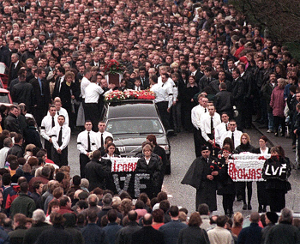
Funeral of Loyalist Billy Wright

billy-wright-funeral

Thousands of Ulster loyalists pack the streets of Portadown, County Armagh, on December 30, 1997, for the funeral of Loyalist Volunteer Force (LVF) commander William Stephen “Billy” Wright.

Wright, born in Wolverhampton, England on July 7, 1960, is a prominent Ulster loyalist paramilitary during the ethno-nationalist conflict in Northern Ireland known as The Troubles. He joins the Ulster Volunteer Force (UVF) in 1975 and becomes commander of its Mid-Ulster Brigade in the early 1990s, taking over from Robin “The Jackal” Jackson. According to the Royal Ulster Constabulary, Wright is involved in the sectarian killings of up to 20 Catholics, although he is never convicted for any. It is alleged that Wright, like his predecessor, serves as a double agent of the British security forces.

Wright attracts considerable media attention at the Drumcree standoff, where he supports the Orange Order‘s desire to march its traditional route through the Catholic/Irish nationalist area of Portadown. In 1994, the UVF and other paramilitary groups call ceasefires. However, in July 1996, Wright’s unit breaks the ceasefire and carries out a number of attacks, including a sectarian killing. For this, Wright and his Portadown unit of the Mid-Ulster Brigade are stood down by the UVF leadership. He is expelled from the UVF and threatened with execution if he does not leave Northern Ireland. Wright ignores the threats and, along with many of his followers, defiantly forms the breakaway Loyalist Volunteer Force (LVF).

In March 1997 Wright is sent to the HM Maze Prison for having threatened the life of a woman. While imprisoned, Wright continues to direct the LVF’s activities. On December 27 of that year, he is assassinated at the prison by Irish National Liberation Army (INLA) prisoners as he is led out to a van for a visit with his girlfriend. The LVF carries out a wave of sectarian attacks in retaliation.

Owing to his uncompromising stance as an upholder of Ulster loyalism and opposition to the Northern Ireland peace process, Wright is regarded as a cult hero, cultural icon, and martyr figure by hardline loyalists. His image adorns murals in loyalist housing estates and many of his devotees have tattoos bearing his likeness.

Wright’s funeral procession moves at a snail’s pace on a grey and windy day. Groups of mourners take turns carrying the coffin. Women carry a wreath that simply says “Billy.” Twenty men with tight haircuts and white shirts with black armbands flank the cortège. There is heavy security. Troops stand guard on bridges and Royal Ulster Constabulary (RUC) Land Rovers prowl the housing estates. A spotter plane flies overhead. A lone piper plays “Abide with Me” before a banner bearing the letters “LVF.”

Wright is buried at Seagoe Cemetery, Portadown, Northern Ireland.


2 Comments

The Balmoral Furniture Company Bombing

balmoral-furniture-showroom-bombing

The Balmoral Furniture Company bombing, a paramilitary attack, takes place on December 11, 1971, in Belfast, Northern Ireland. The bomb explodes without warning outside a furniture showroom on the Shankill Road in a predominantly unionist area, killing four civilians, two of them babies.

At 12:25 PM on December 11, 1971, when the Shankill Road is packed with Saturday shoppers, a green car pulls up outside the Balmoral Furniture Company at the corner of Carlow Street and Shankill Road. The shop is locally known as “Moffat’s” although Balmoral Furniture Company is its official name. One of the occupants gets out of the car and leaves a box containing a bomb on the step outside the front door. The person gets back into the car, and it speeds away. The bomb explodes moments later, bringing down most of the building on top of those inside the shop and on passersby outside.

Four people are killed as a result of the massive blast, including two babies, Tracey Munn (age 2 years) and Colin Nichol (age 17 months), who both die instantly when part of the wall crashes down upon the pram they are sharing. Two employees working inside the shop are also killed, Hugh Bruce (age 70 years) and Harold King (age 29 years). Unlike the other three victims, who are Protestant, King is a Catholic. Bruce, a former soldier and a Corps of Commissionaires member, is the shop’s doorman and is nearest to the bomb when it explodes. Nineteen people are injured in the bombing, including Tracey’s mother. The building, which was built in the Victorian era, has load-bearing walls supporting upper floors on joists. It is unable to withstand the blast and collapses, adding to the devastation and injury count.

The bombing causes bedlam in the crowded street. Hundreds of people rush to the scene where they form human chains to help the British Army and Royal Ulster Constabulary (RUC) free those trapped beneath the rubble by digging with their bare hands. Peter Taylor describes the scene as “reminiscent of the London Blitz” in World War II.

It is widely believed that the bombing is carried out by members of the Provisional Irish Republican Army (IRA) in retaliation for the McGurk’s bar bombing one week earlier, which killed 15 Catholic civilians. The Ulster Volunteer Force (UVF) had carried out the McGurk’s bombing.

The Balmoral Furniture Company bombing is one of the catalysts that spark the series of tit-for-tat bombings and shootings by loyalists, republicans and the security forces that make the 1970s the bloodiest decade in the 30-year history of The Troubles.

(Pictured: Fireman is shown removing the body of one of the victims of the bombing at the Balmoral Furniture Showroom, December 11, 1971)


Leave a comment

Death of Frederick Hugh Crawford, Ulster Loyalist

Colonel Frederick Hugh Crawford, staunch Ulster loyalist and officer in the British Army, dies on November 5, 1952. He is most notable for organising the Larne gun-running which secures guns and ammunition for the Ulster Volunteers in 1914, making him a hero for Northern Ireland‘s unionists.

Crawford is born in Belfast on August 21, 1861, into a Methodist family of Ulster Scots roots. He attends Methodist College Belfast and University College London.

Crawford works as an engineer for White Star Line in the 1880s, before returning from Australia in 1892. In 1894 he enlists with the Mid Ulster Artillery regiment of the British Army, before being transferred to the Donegal Artillery, with which he serves during the Boer Wars, earning himself the rank of major.

In 1898, Crawford is appointed governor of Campbell College in Belfast. In 1911 he becomes a member of the Ulster Unionist Council. On September 28, 1912, he is in charge of the 2,500 well-dressed stewards and marshals that escort Edward Carson and the Ulster unionist leadership from the Ulster Hall in Belfast to the City Hall for the signing of the Ulster Covenant, which he is alleged to sign in his own blood. With the formation of the Ulster Volunteers in 1913, he is made their Director of Ordnance.

In World War I Crawford is officer commanding of the Royal Army Service Corps and is awarded the Royal Humane Society‘s Bronze Medal for saving life. He also becomes a Justice of the Peace for Belfast.

Crawford in regard to Irish Home Rule is strongly partisan and backs armed resistance in opposing it, being contemptuous of those who use political bluffing. In 1910 the Ulster Unionist Council plans for the creation of an army to oppose Home Rule, and approaches Crawford to act as their agent in securing weapons and ammunition. He tries several times to smuggle arms into Ulster, however vigilant customs officials seize many of them at the docks. Despite this, the meticulously planned and audacious Larne gun-running of April 1914, devised and carried out by Crawford, is successful in bringing in enough arms to equip the Ulster Volunteers.

By the 1920s Crawford remains as stoic in his belief’s remarking in a letter in 1920 that “I am ashamed to call myself an Irishman. Thank God I am not one. I am an Ulsterman, a very different breed.” In 1921 he attempts to create an organisation called the Ulster Brotherhood, the aims of which are to uphold the Protestant religion, political and religious freedom as well as use by all means to “destroy and wipe out the Sinn Féin conspiracy of murder, assassination and outrage.” However, this organisation only lasts completely unofficially for a few months after failing to gain acceptance with the political authorities. Also, in 1921 he is included in the Royal Honours List and granted a CBE. In 1934 he writes his memoirs, entitled Guns for Ulster.

Frederick Hugh Crawford dies November 5, 1952, and is buried in the City Cemetery, Falls Road, Belfast. Upon news of his death, he is described by the then Prime Minister of Northern Ireland, Sir Basil Brooke, as being “as a fearless fighter in the historic fight to keep Ulster British.”

(Pictured: Colonel Crawford is shown second from the left in this loyalist mural in East Belfast’s Ballymacarrett Road)


Leave a comment

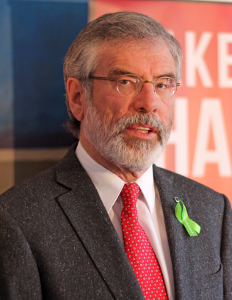
Birth of Sinn Féin President Gerry Adams

Gerard “Gerry” Adams, Irish republican politician who is the president of the Sinn Féin political party and a Teachta Dála (TD) for Louth since the 2011 general election, is born in Belfast, Northern Ireland, on October 6, 1948.

Adams attends St. Finian’s Primary School on the Falls Road, where he is taught by La Salle brothers. Having passed the eleven-plus exam in 1960, he attends St. Mary’s Christian Brothers Grammar School. He leaves St. Mary’s with six O-levels and becomes a barman. He is increasingly involved in the Irish republican movement, joining Sinn Féin and Fianna Éireann in 1964, after being radicalised by the Divis Street riots during that year’s general election campaign.

In the late 1960s, a civil rights campaign develops in Northern Ireland. Adams is an active supporter and joins the Northern Ireland Civil Rights Association in 1967. However, the civil rights movement is met with violence from loyalist counterdemonstrations and the Royal Ulster Constabulary. In August 1969, Northern Ireland cities like Belfast and Derry erupt in major rioting.

During the 1981 hunger strike, which sees the emergence of Sinn Féin as a political force, Adams plays an important policy-making role. In 1983, he is elected president of Sinn Féin and becomes the first Sinn Féin MP elected to the British House of Commons since Philip Clarke and Tom Mitchell in the mid-1950s. From 1983 to 1992 and from 1997 to 2011, he is an abstentionist Member of Parliament (MP) of the British Parliament for the Belfast West constituency.

Adams has been the president of Sinn Féin since 1983. Since that time the party has become the third-largest party in the Republic of Ireland, the second-largest political party in Northern Ireland and the largest Irish nationalist party in that region. In 1984, Adams is seriously wounded in an assassination attempt by several gunmen from the Ulster Defence Association (UDA), including John Gregg. From the late 1980s onwards, Adams is an important figure in the Northern Ireland peace process, initially following contact by the then-Social Democratic and Labour Party (SDLP) leader John Hume and then subsequently with the Irish and British governments.

In 1986, Sinn Féin, under Adams, changes its traditional policy of abstentionism towards the Oireachtas, the parliament of the Republic of Ireland, and later takes seats in the power-sharing Northern Ireland Assembly. In 2005, the Provisional Irish Republican Army (IRA) states that its armed campaign is over and that it is exclusively committed to democratic politics.

In 2014, Adams is held for four days by the Police Service of Northern Ireland for questioning in connection with the abduction and murder of Jean McConville in 1972. He is freed without charge and a file is sent to the Public Prosecution Service for Northern Ireland, which later states there is insufficient evidence to charge him.

In September 2017, Adams says Sinn Féin will begin a “planned process of generational change” after its November ardfheis and will allow his name to go forward for a one-year term as Uachtaran Shinn Fein (President Sinn Fein).


Leave a comment

Death of the Quinn Brothers in Ballymoney

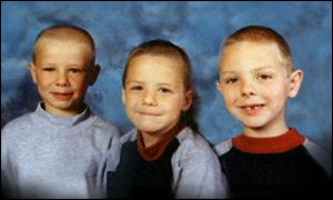
Three brothers, Jason, Richard and Mark Quinn, are killed by the Ulster Volunteer Force (UVF) in a firebomb attack on their home in Ballymoney, County Antrim, Northern Ireland on July 12, 1998. The crime is committed towards the end of the three-decade period known as “The Troubles.”

The Quinn family, consisting of mother Chrissie and sons Richard, Mark and Jason, live in the Carnany estate in the predominantly Protestant town of Ballymoney. The family is of a mixed religious background. Mother Chrissie is Roman Catholic from a mixed background and the boys’ father Jim Dillon is Catholic. After separating from her estranged husband, Chrissie rears the boys as Protestant “to avoid the hassle.” Chrissie lives with her Protestant partner Raymond Craig in Carnany which is predominately Protestant, reflecting the religious make-up of Ballymoney itself. The boys, aged 9, 10 and 11, attend a local state school and on the evening before their deaths had been helping to build the estate’s Eleventh Night loyalist bonfire. A fourth brother, Lee, is staying with his grandmother in Rasharkin at the time of the attack.

The killings take place at the height of the stand-off over the Orange Order march at Drumcree, which creates a tense atmosphere in various towns across Northern Ireland. In the weeks leading up to the fatal attack, the children’s mother expresses fear that she is not welcome in the area and that there is a possibility the family home might be attacked by loyalists. The Ballymoney Times reports a story the week of the deaths, stating that a resident of the Carnany estate had called in and was concerned about tension in the area adding something serious might happen “unless Catholic residents were left alone.”

The attack occurs at approximately 4:30 in the morning as the inhabitants of the house sleep. A car containing members of the Ulster Volunteer Force (UVF), a loyalist paramilitary organisation, arrive at the house and throw a petrol bomb through a window at the rear of the house. The petrol bomb is made from a whiskey bottle. The sounds of the boys’ shouting awake their mother, who finds her bedroom full of smoke. Chrissie Quinn, Raymond Craig and family friend Christina Archibald escape the resulting fire with minor injuries. Chrissie believes the boys have escaped the fire as she is unable to locate them in the dense smoke before she jumps to safety from a first-floor window. Two of the brother’s bodies are found in their mother’s bedroom and the other in another bedroom. Chrissie is taken to the hospital and released the next day after receiving minor injuries and shock in the attack.

One man, Garfield Gilmour, is found guilty of murdering the three brothers fifteen months later and is sentenced to life imprisonment after admitting that he had driven three other men to the house to commit the fatal petrol-bombing. Although Gilmour names the three alleged killers, they are never charged due to a lack of concrete evidence. Gilmour’s conviction for murder is reduced to manslaughter on appeal on June 5, 2000, and he is released six years later. Nine days after his release, his life sentence is replaced by a fixed prison sentence of 14 years.

(Pictured: The Quinn brothers. Left to right: Jason, Mark, Richard)


2 Comments

The Ramble Inn Attack

The Ramble Inn attack is a mass shooting that takes place at a rural pub on July 2, 1976, near Antrim, County Antrim, Northern Ireland. It is believed to have been carried out by the Ulster Volunteer Force (UVF), a loyalist paramilitary organisation. Six civilians, five Protestants and one Catholic, are killed in the attack and three others are wounded.

The mid-1970s is one of the deadliest periods of the Troubles. From February 1975 until February 1976, the Provisional Irish Republican Army (IRA) and British Government observe a truce. This, however, marks a rise in sectarian tit-for-tat killings. Ulster loyalist paramilitaries, fearing they are about to be forsaken by the British Government and forced into a united Ireland, increase their attacks on Irish Catholics and nationalists. Under orders not to engage British forces, some IRA units concentrate on tackling the loyalists. The fall-off of regular operations causes serious problems of internal discipline and some IRA members also engage in revenge attacks. The tit-for-tat killings continue after the truce ends. On June 5, 1976, the UVF shoots dead three Catholics and two Protestants in an attack on the Chlorane Bar. This is claimed as revenge for the killing of two Protestants in a pub earlier that day.

On June 25, 1976, gunmen open fire inside a Protestant-owned pub in Templepatrick, County Antrim. Three Protestant civilians die. The attack is claimed by the “Republican Action Force“, which is believed to be a cover name used by some members of the IRA.

The Ramble Inn lies just outside Antrim, on the main A26 Antrim to Ballymena dual carriageway, near the village of Kells. The pub is owned by Catholics but in a rural area of County Antrim which is mostly Protestant. Most of its customers are Protestants from the surrounding area.

On the night of Friday July 2, 1976, a three-man UVF unit consisting of a driver and two gunmen steal a car from a couple parked in nearby Tardree Forest. The couple are gagged and bound before the men make off in the car. At about 11:00 PM, just before closing time, two masked gunmen in boilersuits enter the pub and open fire with machine guns, hitting nine people. Three die at the scene and a further three die later. The victims are Frank Scott (75), Ernest Moore (40), James McCallion (35), Joseph Ellis (27) and James Francey (50), all Protestants, and Oliver Woulahan (20), a Catholic.

On July 3 at 12:30 PM, an anonymous caller to the News Letter claims the attack is in retaliation for the earlier attack in Templepatrick. It is widely believed that the UVF are responsible for the Ramble Inn attack. In the weeks that follow, a number of people are interviewed by police in relation to the shooting but are subsequently released without charge. To date, no one has been convicted of the attack.

In 2012 the Historical Enquiries Team (HET), a body which has been set up in Northern Ireland to re-investigate unsolved murders of the Troubles, meets with the family of James McCallion to deliver their findings. The probe concludes that the then Northern Ireland police force, the Royal Ulster Constabulary (RUC), had conducted a thorough investigation and the detectives working on the case did their best to bring the killers to justice.


Leave a comment

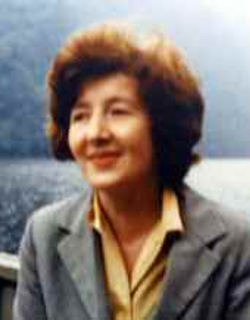
Birth of Mary McAleese, 8th President of Ireland

Mary Patricia McAleese, Irish Independent politician who serves as the 8th President of Ireland from November 1997 to November 2011, is born in Belfast, Northern Ireland on June 27, 1951. She is the second female president and is first elected in 1997 succeeding Mary Robinson, making McAleese the world’s first woman to succeed another as president. She is re-elected unopposed for a second term in office in 2004 and is the first President of Ireland to have come from either Northern Ireland or Ulster.

Born Mary Patricia Leneghan, McAleese is the eldest of nine children in a Roman Catholic family. Her family is forced to leave the area by loyalists when The Troubles break out. Educated at St. Dominic’s High School, she also spends some time when younger with the Poor Clares, Queen’s University Belfast, from which she graduates in 1973, and Trinity College, Dublin. She is called to the Bar of Northern Ireland in 1974 and remains a member of the Bar Council of Ireland. She opposes abortion and divorce.

In 1975, McAleese is appointed Professor of Criminal Law, Criminology and Penology at Trinity College, Dublin and in 1987, she returns to her Alma Mater, Queen’s, to become Director of the Institute of Professional Legal Studies. In 1994, she becomes the first female Pro-Vice-Chancellor of Queen’s University. She works as a barrister and also works as a journalist with RTÉ.

McAleese uses her time in office to address issues concerning justice, social equality, social inclusion, anti-sectarianism and reconciliation. She describes the theme of her Presidency as “Building Bridges.” This bridge-building materialises in her attempts to reach out to the unionist community in Northern Ireland. These steps include celebrating The Twelfth at Áras an Uachtaráin and she even incurs criticism from some of the Irish Catholic hierarchy by taking communion in a Church of Ireland cathedral in Dublin. Despite being a practising Roman Catholic, she holds liberal views regarding homosexuality and women priests. She is a member of the Council of Women World Leaders and is ranked the 64th most powerful woman in the world by Forbes. In spite of some minor controversies, McAleese remains popular, and her Presidency is regarded as successful.

McAleese receives awards and honorary doctorates throughout her career. On May 3, 2007, she is awarded The American Ireland Fund Humanitarian Award. On October 31, 2007, she is awarded an honorary Doctor of Laws from the University of Otago, New Zealand. On May 19, 2009, she becomes the third living person to be awarded the freedom of Kilkenny, succeeding Brian Cody and Séamus Pattison. The ceremony, at which she is presented with two hurleys, takes place at Kilkenny Castle. On May 24, 2009, she is awarded an honorary Doctor of Laws from Mount Holyoke College in South Hadley, Massachusetts. On May 22, 2010, she is awarded an honorary Doctor of Law from Fordham University, in the Bronx, New York City, where she delivers the commencement speech to the class of 2010. On November 8, she is awarded an honorary doctorate at University of Massachusetts Lowell in Lowell, Massachusetts.

On June 8, 2013, a ceremony is held to rename a bridge on the M1 motorway near Drogheda as the Mary McAleese Boyne Valley Bridge to honour McAleese’s contribution to the Northern Ireland peace process.


Leave a comment

The Remembrance Day Bombing

remembrance-day-bombing

The Remembrance Day bombing, also known as the Enniskillen bombing or Poppy Day massacre, takes place on November 8, 1987, in Enniskillen, County Fermanagh, Northern Ireland. A Provisional Irish Republican Army (IRA) bomb explodes near the town’s war memorial during a Remembrance Sunday ceremony, which is being held to commemorate British military war dead. Eleven people, many of them old age pensioners, are killed and 63 are injured.

The bomb explodes as a parade of Ulster Defence Regiment (UDR) soldiers is making its way to the memorial and as people wait for the ceremony to begin. It blows out the wall of the Reading Rooms, where many of the victims are standing, burying them under rubble and hurling masonry towards the gathered crowd. Bystanders rush to free those trapped in the rubble.

Eleven people, all Protestant, are killed by the Provisional IRA that day, including three married couples. The dead are Wesley and Bertha Armstrong, Kitchener and Jessie Johnston, William and Agnes Mullan, John Megaw, Georgina Quinton, Marie Wilson, Samuel Gault, and Edward Armstrong. Armstrong is a serving Royal Ulster Constabulary (RUC) officer and Gault has recently left the force. Gordon Wilson, whose daughter Marie dies in the blast and who is himself injured, goes on to become a peace campaigner and member of Seanad Éireann. The twelfth fatality, Ronnie Hill, dies after spending 13 years in a coma. Sixty-three people are injured, including thirteen children. Ulster Unionist politicians Sam Foster and Jim Dixon are among the crowd. Dixon receives extensive head injuries but recovers. A local businessman captures the immediate aftermath of the bombing on video camera. His footage, showing the effects of the bombing, is broadcast on international television.

A few hours after the blast, the IRA calls a radio station and says it has abandoned a 150-pound bomb in Tullyhommon, twenty miles away, after it failed to detonate. That morning, a Remembrance Sunday parade, which includes many members of the Boys’ and Girls’ Brigades, has unwittingly gathered near the Tullyhommon bomb. Soldiers and RUC officers were also there, and the IRA says it attempted to trigger the bomb when soldiers were standing beside it. The bomb is defused by security forces and is found to have a command wire leading to a “firing point” across the border.

The IRA apologises, saying it had made a mistake and that the target had been the UDR soldiers who were parading to the memorial. The bombing leads to an outcry among politicians in the Republic of Ireland and the United Kingdom. British Prime Minister Margaret Thatcher says, “It’s really desecrating the dead and a blot on mankind.” The Secretary of State for Northern Ireland, Tom King, denounces the “outrage” in the House of Commons, as does the Irish Minister for Foreign Affairs, Brian Lenihan, in Dáil Éireann. Seanad Éireann Senator Maurice Manning speaks of people’s “total revulsion.” It also facilitates the passing of the Extradition Act, which makes it easier to extradite IRA suspects from the Republic of Ireland to the United Kingdom.

The bombing is seen by many Northern Irish Protestants as an attack on them, and loyalist paramilitaries ″retaliate″ with attacks on Catholic civilians. The day after the bombing, five Catholic teenagers are wounded in a shooting in Belfast, and a Protestant teenager is killed by the Ulster Defence Association after being mistaken for a Catholic. In the week after the bombing, there are fourteen gun and bomb attacks on Catholics in Belfast.

The Remembrance Day bombing has been described as a turning point in the Troubles and an incident that shook the IRA “to its core.”


Leave a comment

Assassination of Máire Drumm, VP of Sinn Féin

maire-drumm

Máire Drumm, vice president of Sinn Féin and a commander in Cumann na mBan, is shot dead on October 28, 1976, by Ulster loyalists dressed as doctors while recovering from an eye operation in Belfast‘s Mater Hospital.

Drumm is born in Newry, County Down to a staunchly Irish republican family. Drumm’s mother has been active in the Irish War of Independence and the Irish Civil War. Drumm grows up in the village of Killean, County Armagh, where she plays camogie. She is active in the republican movement after meeting her husband, a republican prisoner. She begins to speak at many rallies and protest meetings and is soon elected as Vice President of Sinn Fein. She becomes involved in the Northern Ireland Civil Rights Association in the 1960s and works to rehouse Catholics forced from their homes by loyalist intimidation.

Drumm is jailed twice for seditious speeches. After she is released from HM Prison Armagh, raids on her house by the security forces escalate. She is widely demonised in the British media and is already a target for assassination when she is admitted to Belfast’s Mater Hospital for eye treatment in October 1976.

While recovering from the operation, Drumm is shot at point blank range in a joint operation by the Ulster Volunteer Force and the Ulster Defence Association who are able to enter and leave the hospital undisturbed. No one has ever been convicted of her murder.

Drumm’s speeches and quotations can be found on murals across Northern Ireland, including:

“The only people worthy of freedom are those who are prepared to go out and fight for it every day, and die if necessary.”

“We must take no steps backward, our steps must be onward, for if we don’t, the martyrs that died for you, for me, for this country will haunt us forever.”


Leave a comment

Bloody Friday in Belfast

bloody-friday-1972

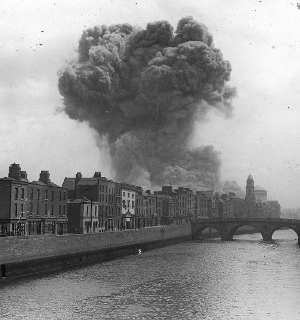
At least twenty Provisional Irish Republican Army (IRA) bombs explode in Belfast on July 21, 1972, during the Troubles in what has become known as “Bloody Friday.” Most of the bombs are car bombs and most target infrastructure, especially the transport network. Nine people are killed, including two British soldiers and five civilians, while 130 are injured.

In late June and early July 1972, a British government delegation led by William Whitelaw holds secret talks with the Provisional IRA leadership. As part of the talks, the IRA agrees to a temporary ceasefire beginning on June 26. The IRA leaders seek a peace settlement that includes a British withdrawal from Northern Ireland by 1975 and the release of republican prisoners. However, the British refuse and the talks break down. The ceasefire comes to an end on July 9.

Bloody Friday is the IRA’s response to the breakdown of the talks. According to the IRA’s Chief of Staff, Seán Mac Stíofáin, the main goal of the bombing operation is to wreak financial harm. It is a “message to the British government that the IRA could and would make a commercial desert of the city unless its demands were met.” Some also see it as a reprisal for Bloody Sunday in Derry six months earlier. The attack is carried out by the IRA’s Belfast Brigade and the main organiser is Brendan Hughes, the brigade’s Officer Commanding.

The bombings occur during an 80-minute period on the afternoon of Friday, July 21. At least 24 bombs are planted. At least 20 explode and the rest fail to detonate or are defused. At the height of the bombing, the middle of Belfast “resembled a city under artillery fire; clouds of suffocating smoke enveloped buildings as one explosion followed another, almost drowning out the hysterical screams of panicked shoppers.” According to The Guardian, “for much of the afternoon, Belfast was reduced to near total chaos and panic. Thousands streamed out of the stricken city…and huge traffic jams built up. All bus services were cancelled, and on some roads, hitchhikers frantically trying to get away lined the pavements.”

Nine people are killed and 130 are injured, some of them horrifically mutilated. Of those injured, 77 are women and children. All of the deaths are caused by two of the bombs – at Oxford Street bus depot and at Cavehill Road. The Oxford Street bomb kills two British soldiers and four Ulsterbus employees. One employee is a Royal Ulster Constabulary (RUC) reservist, one is an Ulster loyalist paramilitary, and the other two are civilians. The Cavehill Road bomb kills three civilians.

The IRA’s Belfast Brigade claims responsibility for the bombings and says that it had given warnings to the security forces before the bombs exploded. It says that the Public Protection Agency, the Samaritans and the press “were informed of bomb positions at least 30 minutes to one hour before each explosion.” Mac Stíofáin says, “It required only one man with a loud hailer to clear each target area in no time” and alleged that the warnings for the two bombs that claim lives are deliberately ignored by the British for “strategic policy reasons.”