seamus dubhghaill

Promoting Irish Culture and History from Little Rock, Arkansas, USA


Leave a comment

Death of Albert Morrow, Illustrator, Poster Designer & Cartoonist

Albert George Morrow, Irish illustrator, poster designer and cartoonist, dies at his home in West Sussex, England, on October 26, 1927.

Morrow is born on April 26, 1863, in Comber, County Down, the second son of George Morrow, a painter and decorator from Clifton Street in west Belfast. Of his seven brothers, four, GeorgeJack, Edwin, and Norman, are also illustrators and all but one are artists. He is a keen ornithologist in his youth. In later life he is a keen walker and paints landscapes for leisure.

Morrow is educated at the Belfast Model School and latterly at the Belfast Government School of Art between 1878 and 1881.

While studying under T. M. Lindsay at the Government School of Art in 1880, Morrow is awarded a £10 prize for drawing from the eminent publishers Cassell, Petter and Galpin. In 1881, while still learning his trade, he paints a mural of Belfast for the Working Men’s Institute in Rosemary Street, where his father is chairman. Later in that same year he exhibits a watercolour sketch of a standing figure entitled Meditative at the gallery of Rodman & Company, Belfast.

Morrow then wins a three-year scholarship worth £52 per year which he takes to the National Art Training School at South Kensington in 1882, where he begins a lifelong friendship with the British sculptor Albert Toft. In 1883, while still attending South Kensington, he joins the staff of The English Illustrated Magazine in preparation for the launch of the first edition. Two of his works are published in the Sunday at Home magazine in September of the same year.

J. Comyns Carr, first editor of The English Illustrated Magazine, commissions Morrow to complete a series on English industry when he has yet to complete his studies at South Kensington.

In 1890, Morrow begins illustrating for Bits and Good Words. He exhibits nine works at the Royal Academy of Arts between 1890 and 1904, all of which are watercolours, and another in 1917, and an offering in chalk at the 159th Exhibition, in the year of his death.

Morrow becomes a member of the Belfast Art Society in 1895, exhibiting with them in the same year. In 1896, a Morrow print is published in Volume 2 of the limited-edition print-collection Les Maîtres de l’Affiche selected by “Father of the Poster” Jules Chéret. In the same year he shows a watercolour of a Gurkha at the Earls Court in the Empire of India and Ceylon exhibition. In 1900, he exhibits with two Ulster artists, Hugh Thomson and Arthur David McCormick, at the Linen Hall Library in Belfast, who along with Morrow had contributed to the early success of The English Illustrated Magazine.

Morrow is one of the founders of the Ulster Arts Club in November 1902 along with five of his brothers, an organisation that has a nonsectarian interest in Celtic ideas, language and aesthetics. In November 1903, he exhibits at the first annual exhibition of the Club when he shows alongside John LaveryHans Iten, James Stoupe and F. W. Hull. He exhibits The Itinerant Musician, a watercolour that he had previously shown at the Royal Academy in 1902. Honorary membership is conferred upon him the following year. Three years later he is honoured with a solo exhibition of sketches and posters in conjunction with the Ulster Arts Club, at the Belfast Municipal Gallery.

In 1908, Morrow joins his brothers in an exhibition at 15 D’Olier Street, Dublin, an address which is later registered to the family business in 1913. Among his contributions to the family exhibition is his painting of Brandon ThomasThe Clarionette Player, which had previously been exhibited at the Royal Academy, and a poster entitled Irving in Dante.

In 1917, Morrow joins his brother George and 150 artists and writers, in petitioning the British Prime Minister David Lloyd George to find a way of enacting the unsigned codicil to Hugh Lane’s will and establish a gallery to house Lane’s art collection in Dublin. Among the 32 notable artists who sign this petition are Jack B. Yeats, Sir William Orpen, Sir John Lavery, and Augustus John.

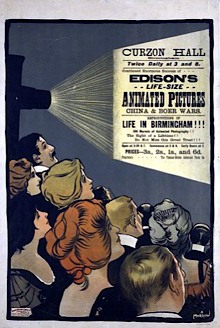
Morrow illustrates books for children and adults, but he is best known for the hundreds of posters he designs for the theatre, with the bulk of his commissions coming from just one lithographical printer, David Allen and Sons. As a cartoonist he draws for children’s annuals, and contributes three cartoons to Punch in 1923, 1925 and posthumously in 1931.

Morrow dies at his home in West Hoathly, West Sussex, on October 26, 1927, at the age of 64. He is survived by his wife and two children. His headstone in the local churchyard at All Saints Church, Highbrook is designed by his friend, the sculptor and architect, Albert Toft.

Morrow’s works can be found in many public and private collections such as the Victoria and Albert MuseumMusée des Arts Décoratifs and the British Museum.

(Pictured: Colour lithograph poster by Albert Morrow advertising a cinematic showing at the Curzon Hall, Birmingham, c. 1902)

Leave a comment

Birth of Dairine Vanston, Landscape Artist

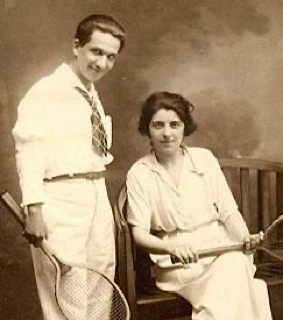
Dairine (Doreen) Vanston, Irish landscape artist who works in a Cubist style, is born in Dublin on October 19, 1903.

Vanston is the daughter of solicitor John S. B. Vanston, and sculptor Lilla Vanston (née Coffey). She attends Alexandra College, going on to study at Goldsmiths College, London under Roger Bissière. She then goes to Paris to the Académie Ranson, being sent there following the advice of Paul Henry. While in Paris she meets Guillermo Padilla, a Costa Rican law student at the University of Paris. They marry in 1926 and she takes the name Vanston de Padilla. The couple lives for a time in Italy, before moving to San José, Costa Rica. The marriage breaks down in the early 1930s, at which point she returns to Paris with her son and studies with André Lhote. She is living in France at the outbreak of World War II with Jankel Adler, but is able to escape to London in 1940, and later to Dublin.

Vanston’s time in Paris leaves a lasting impression on her work, including use of primary colours and a strong Cubist influence. She belongs to what critic Brian Fallon calls the “Franco-Irish generation of painters who looked to Paris,” along with Mainie JellettEvie Hone, and Norah McGuinness. Her time spent living in Costa Rica in the late 1920s and early 1930s imbues her work with tropical and highly toned colours. In Dublin in 1935, she exhibits 17 paintings, largely Costa Rican landscapes, at Daniel Egan’s gallery on St. Stephen’s Green. This is the closest thing to a solo show she would mount, with this show also featuring Grace HenryCecil Ffrench Salkeld, and Edward Gribbon.

Meeting the English artist Basil Rakoczi, who is also living in Dublin during World War II, leads Vanston to become associated with The White Stag group. In November 1941, she exhibits for the first time at a group show with 24 other artists, including Patrick Scott. One work that is shown at this exhibition is the painting Keel dance hall, which demonstrates that she spends time in the west of Ireland. The most important event staged by the group is the Exhibition of subjective art, which takes place at 6 Lower Baggot St. in January 1944. The Dublin Magazine notes her work at this show as the most effective of the experimental vanguard. This work, Dying animal, is a Cubist work with semi-representation forms rendered in bold colours. In 1945, her work is featured in a White Stag exhibition in London of young Irish painters at the Arcade gallery, Old Bond Street.

In 1947, Vanston spends almost a year in Costa Rica where she paints primarily in watercolours. Apart from this period, she lives and works in Dublin, living at 3 Mount Street Crescent near St. Stephen’s Church. At the inaugural Irish Exhibition of Living Art in 1943, she exhibits five works. At the first Exhibition of Independent Artists in 1960, of which she is a founder, she exhibits three landscapes and a work entitled War. She largely exhibits with the Independent Artists, the Irish Exhibition of Living Art, and the Oireachtas na Gaeilge, and does not exhibit with the Royal Hibernian Academy. Later in life, she exhibits with the Figurative Image exhibitions in Dublin, and is amongst the first painters chosen for Aosdána. A number of her works are featured in the 1987 exhibition, Irish women artists, from the eighteenth century to the present arranged by the National Gallery of Ireland and The Douglas Hyde Gallery.

Vanston dies on July 12, 1988, in a nursing home in Enniskerry, County Wicklow. Her work is greatly admired, but has received little by way of critical attention, which may have been to do with her slow rate of output. A number of her works have proved difficult to trace. She was a private person, even refusing to cooperate with the Taylor Galleries in the 1980s when they wanted to mount a retrospective of her work. The National Self-Portrait Collection in Limerick holds a work by Vanston.

(Pictured: Dairine Vanston with Guillermo Padilla in Paris)


Leave a comment

Death of Artist Samuel McCloy

Samuel McCloy, Irish artist who trains at Belfast School of Design and later at Somerset House, dies in Balham, South London, on October 4, 1904. He exhibits widely in group shows across the British Isles and is known for his watercolours, genre paintings, still life and landscapes. He is also a commercial designer, illustrator, and an educator who is for a time Master at Waterford School of Art.

Born on March 13, 1831, in Lisburn, County Antrim, McCloy is the youngest of five children, born to Peter McCloy, a painter, and his wife Martha Phelan. He studies at the School of Design in Belfast from 1850 to 1851 while serving an apprenticeship in engraving, with J and T Smyth. He then spende a year at the Central School, Somerset House in London before being appointed Master at the Waterford School of Art around 1853, when he also becomes a visiting instructor to several other institutions. In the spring of 1865 he marries his student, the Waterford artist Ellen Lucy Harris, the fourth daughter of a banker named Richard Harris. The dismembered corpse of McCloy’s mother is recovered from the River Suir in September of the same year. She had been missing since the previous November.

Between 1873 and 1891 McCloy shows nine works at the Royal Society of British Artists. Upon his return to Belfast around 1874, he works freelance designing greetings cards for Marcus Ward & Co., and in creating damask designs for linen manufacturers. He illustrates Lucy Sale-Barker‘s Sunny Childhood, published by Routledge in 1887, and he is for a time employed by The Illustrated London News.

McCloy shows just once at the Royal Academy of Arts with a work entitled The Haunt of Meditation in 1859. He exhibits infrequently at the Royal Hibernian Academy between 1862 and 1882, where he displays sixteen works in that time. He displays eleven works in the 1876 Industrial Exhibition at Belfast’s Ulster Hall. In 1880, he shows at Rodman and Company in London where the writer in the Belfast Telegraph indicates that McCloy is becoming a popular artist and is receiving extensive patronage.

Following his relocation to London in 1881, McCloy contributes works to numerous regional exhibitions, including the spring exhibition of the Derby Sketching Club in 1883, Nottingham Castle Museum’s autumn exhibition of 1888, and at Exeter‘s Eland Art Gallery in 1892. He exhibits with the Royal Scottish Academy in 1882 and with the Royal Institute of Painters in Water Colours in 1887. He is also a member of the Belfast Art Society, an antecedent to the Royal Ulster Academy.

After a year-long illness that prevents him from working, McCloy dies in Balham, South London, on October 4, 1904. He is survived by his wife, Ellen, and nine daughters. The Lisburn Museum in his hometown offers a belated retrospective of his work in 1981 to mark the one-hundred fiftieth anniversary of his birth. The exhibition is the first known solo display of McCloy’s work and consists of 58 works. The catalogue for this show is written by Eileen Black and funded by the Arts Council of Northern Ireland.

McCloy’s work can be seen in many public collections including the Ulster Museum, the Victoria and Albert MuseumAmgueddfa Cymru – Museum Wales, the National Gallery of Ireland, and in the Irish Linen Centre and Lisburn Museum.


Leave a comment

Birth of Mildred Anne Butler, Animal & Genre Painter

Mildred Anne Butler, Irish artist who works in watercolour and oil of landscape, genre and animal subjects, is born on January 11, 1858, in Kilmurry, a Georgian house near Thomastown, County Kilkenny.

The youngest daughter of Captain Henry Butler, a grandson of the Edmund Butler, 11th Viscount Mountgarret, and Clara Butler (née Taylor) of the Newarke, Leicester, England. Her father is himself an enthusiastic painter, known for his publication South African sketches: illustrative of the wildlife of a hunter on the frontier of Cape Colony (1841). Her early artistic efforts are mainly copies of romantic subjects, but the influence of the London artist Paul Jacob Naftel, with whom she begins corresponding in the early 1880s, proves to be crucial to her artistic development. Studies with William Frank Calderon, an expert in animal painting, are also significant. She subsequently spends the summers of 1894 and 1895 in Newlyn, Cornwall, England, with the Irish artist Norman Garstin, who introduces her to contemporary French painting.

In 1885, Butler makes her first visit to the continent, traveling through France, Switzerland, and Italy. From 1905 to 1914 she travels regularly to Europe, most particularly Aix-les-Bains and Wiesbaden, during which time she produces genre views of French and German villages. After 1914 her life at the family home is interrupted only by visits to London exhibitions. She is best known for her paintings of Kilmurry and its environs, many of which display an interest in botany. Much of her work is dominated by detailed representations of animals and birds, often drawn from photographs and stuffed specimens.

Butler’s career as an exhibitor begins in 1882 with the Irish Fine Arts Society, later known as the Water Colour Society of Ireland (WCSI), with which she has a long association. She exhibits regularly with the society from 1892 onward and is a member of its committee for many years. She is also closely associated with the Dudley Museum and Art Gallery in London. Her work is first shown there in 1888, and on this evidence, she is elected to their society. The purchase by the Chantrey bequest for the Tate Gallery of The Morning Bath for £50 in 1896 is a high point in her career. The first painting by a woman to be selected by the council, its purchase is followed by almost consistently good press reviews for her work. The Athenaeum of May 5, 1897, writes: “The young lady knows how to look at her subjects with the eyes of a well-trained artist.”

Butler also comes to the attention of the American artistic press. She contributes to the portfolio of drawings given by the Society of Lady Artists to Princess May on her marriage to the Duke of York in 1893, while in 1922 her work is included in the portfolio presented to Princess Mary on her marriage. Her patrons include Queen Alexandra, and the grand duke of Hesse, who purchases two of her paintings after she is invited to exhibit in Hesse Darmstadt in 1911. In 1914 she is made a member of the Union Internationale des Beaux Arts, and in 1921 her paintings are shown in Japan. She regularly exhibits with the Belfast Ramblers, the Royal Ulster Academy, the Royal Academy of Arts (RA), the Royal Hibernian Academy (RHA), the Society of Lady Artists, and the Royal Watercolour Society, of which she is made an associate member in 1896, and a full member in 1937.

In her later years, severe rheumatism prevents Butler from painting. She has a keen interest in music. She survives all five of her siblings, and inherits Kilmurry, where she dies on October 11, 1941. She is buried at Thomastown, County Kilkenny. Her paintings are represented in the collections of the National Gallery of Ireland, Dublin City Gallery the Hugh Lane, the Ulster Museum, and the Tate, London.

(From: “Butler, Mildred Anne” by Frances Clarke, Dictionary of Irish Biography, http://www.dib.ie, October 2009)


Leave a comment

Death of Rose Maynard Barton, Watercolour Artist

Rose Maynard Barton RWS, Anglo-Irish artist, dies on October 10, 1929, at her house at 79 Park Mansions, Knightsbridge, London. A watercolourist, she paints landscape, street scenes, gardens, child portraiture and illustrations of the townscape of Britain and Ireland.

Barton exhibits with a number of different painting societies, most notably the Water Colour Society of Ireland (WCSI), the Royal Academy of Arts (RA), the Royal Hibernian Academy (RHA), the Society of Women Artists (SWA) and the Royal Watercolour Society (RWS). She becomes a full member of the RWS in 1911.

Barton is born in Dublin on April 21, 1856. Her father is a lawyer from Rochestown, County Tipperary, and her mother’s family is from County Galway. Educated privately, she is a liberal in social affairs. Her interests include horse racing. She is cousins with sisters Eva Henrietta and Letitia Marion Hamilton. She begins exhibiting her broad-wash watercolour paintings with the Water Colour Society of Ireland (WCSI) in 1872. She and her sister Emily visit Brussels in 1875, where they receive drawing tuition in drawing and fine art painting under the French artist Henri Gervex. There, along with her close friend Mildred Anne Butler, she begins to study figure painting and figure drawing.

In 1879, Barton joins the local committee of the Irish Fine Art Society. Afterward she trains at Paul Jacob Naftel‘s art studio in London. She, like Butler, studies under Naftel. In 1882, she exhibits her painting Dead Game, at the Royal Hibernian Academy (RHA). In 1884, she exhibits at the Royal Academy of Arts (RA). Later, she shows at the Japanese Gallery, the Dudley Museum and Art Gallery and the Grosvenor Gallery in London. In 1893, she becomes an associate member of the Society of Painters in Water Colours, attaining full membership in 1911.

Barton’s watercolours and townscapes become well known in both Dublin and London. This is helped by her illustrations in books of both cities including Picturesque Dublin, Old and New by Francis Farmer and her own book Familiar London.

Barton’s paintings can be found in public collections of Irish painting in both Ireland and Britain, including the National Gallery of Ireland and Dublin City Gallery The Hugh Lane in Dublin, and the Ulster Museum in Belfast.

(Pictured: “A rest in rotten row” – 1892 watercolour by Rose Maynard Barton. The painting shows a nurse and child resting on Rotten Row, Hyde Park, London.)


Leave a comment

Birth of Letitia Marion Hamilton, Landscape Artist

Letitia Marion Hamilton, Irish landscape artist and Olympic bronze medalist, is born on July 30, 1878, in Hamwood House, County Meath.

Hamilton is the daughter of Charles Robert Hamilton and Louisa Caroline Elizabeth Brooke. She attends Alexandra College. She and her sister Eva are great-granddaughters of the artist Marianne-Caroline Hamilton, and cousins of watercolourist Rose Maynard Barton. The sisters’ father can only afford one dowry, so the sisters remain unmarried, with their artistic careers helping to support the household. Both she and her sister study at the Dublin Metropolitan School of Art under William Orpen. She studies enameling there also, winning a silver medal in 1912 by both the School and the Board of Education National Commission. Her work shows elements of Art Nouveau, foreshadowing her later modernist leanings. She also studies in Belgium with Frank Brangwyn and the Slade School of Fine Art.

Hamilton first exhibits in 1902 and goes go on to become a prolific painter of the Irish countryside, exhibiting more than 200 paintings at the Royal Hibernian Academy (RHA). Both sisters travel widely in Europe, with Letitia being influenced by modern European artistic trends of the early 20th-century. She is internationally exhibited, Royal Academy of Arts, Burlington Gallery and Kensington Art Gallery in London, in Scotland, and Paris. Her exposure to impressionism comes from studying with Anne St. John Partridge in France. Her style matures in the 1920s. That year, she is one of the founding members of the Society of Dublin Painters, along with Paul Henry, Grace Henry, Mary Swanzy, and Jack Butler Yeats. It is around this time that she changes her signature from MH (May Hamilton) to LMH, reflecting her full name. She works on small oil sketches, which later develop into finished works. Her style is rapid, with loose, fluid brush strokes. In the early 1920s, she travels to Venice, painting on a gondola studio loaned to her by artist and friend Ada Longfield. The works from this trip are considered among her best, with her exploring light effects, pastel shades, and strong outlines. She later employs these elements into her works on Irish landscapes.

Hamilton becomes a member of the Royal Hibernian Academy in 1943. In 1948, she becomes the last person to win a bronze medal at the art competitions at the London Olympic Games. She serves as president of the Society of Dublin Painters in the late 1950s. Despite her failing eyesight later in life, she continues to paint, mounting her final exhibition in 1963, a year before her death at the age of 86 in Dublin on August 11, 1964. She is also a committee member of the Water Colour Society of Ireland.

Examples of Hamilton’s work are held in a number of collections, including Hugh Lane Gallery, Limerick City Gallery of Art, Crawford Art Gallery, Ulster Museum, National Gallery of Ireland, and Waterford Art Gallery. Her painting Canal Scene in Venice attains the highest price for a Hamilton work in 2004, which sells at Sotheby’s in London, for £33,600.

(Pictured: “Slieve Donard, Co. Down” by Letitia Marion Hamilton, oil on canvas, signed with monogram lower left)


Leave a comment

Death of David Kelly, Film & Television Actor

David Kelly, Irish actor who has regular roles in several film and television works from the 1950s onwards, dies on February 12, 2012, in Goatstown, Dublin, following a short illness. One of the most recognisable voices and faces of Irish stage and screen, he is known for his roles as Rashers Tierney in Strumpet City, Cousin Enda in Me Mammy, the builder Mr. O’Reilly in Fawlty Towers, Albert Riddle in Robin’s Nest, and Grandpa Joe in the film Charlie and the Chocolate Factory (2005). Another notable role is as Michael O’Sullivan in Waking Ned.

Kelly is born on July 11, 1929, in Dublin, and educated at Dublin’s Synge Street CBS Christian Brothers school. He begins acting at the age of eight at the city’s Gaiety Theatre, encouraged by a teacher at school. He also performs with the Rathmines and Rathgar Musical Society and goes on to train at the Abbey School of Acting. As a backup career, he additionally trains as a draughtsman and calligrapher, and also learns watercolour painting. He appears onstage in the original production of Brendan Behan‘s The Quare Fellow, and gains his first major career attention in Samuel Beckett‘s Krapp’s Last Tape at Dublin’s Abbey Theatre in 1959. By then he has made his screen debut in a small part in director John Pomeroy’s 1958 film noir Dublin Nightmare.

One of Kelly’s first television appearances is on RTÉ in O’Dea’s Your Man (1964) in which he plays the part of Ignatius opposite Jimmy O’Dea. He goes on to become a familiar face on British television with the BBC comedy Me Mammy, opposite Milo O’Shea and Anna Manahan. He goes on to often-memorable guest roles on such series as Oh, Father! and Never Mind the Quality, Feel the Width, and particularly during the 1970s with a long-running role as the one-armed dishwasher Albert Riddle in the Man About the House spin-off Robin’s Nest. He also has a regular long running role alongside Bruce Forsyth in both series of the comedy Slinger’s Day from 1986 to 1987, and, in 1991, he appears in the first series of the BBC sitcom 2point4 Children as the cafe-owner Paddy.

Kelly gains some of his greatest recognition in 1975, playing inept builder Mr. O’Reilly on the second episode of Fawlty Towers (“The Builders”).

Kelly is in the voice cast of The Light Princess, a partly animated, hour-long family fantasy that airs on the BBC in 1978.

In Ireland, Kelly may be most famous for his portrayal of the character “Rashers” Tierney in the 1980 RTÉ miniseries Strumpet City, which stars Peter O’Toole, Cyril Cusack and Peter Ustinov. He goes on to have starring roles in television shows such as Emmerdale Farm in the 1980s and Glenroe in the 1990s, as well as playing the grandfather in Mike Newell‘s film Into the West (1992).

Following his appearance as Michael O’Sullivan in the 1998 film Waking Ned, Kelly plays roles in such films as Tim Burton‘s Charlie and the Chocolate Factory (2005), in which he plays Grandpa Joe, and Agent Cody Banks 2: Destination London (2004). He plays title character Frank Kovak in the mystery film The Kovak Box, in a rare villainous role. In 2007, he appears in Stardust, which features Robert De Niro and Michelle Pfeiffer, and which is also his final film. He also does extensive radio work, including a guest appearance on the BBC Radio 4 series Baldi.

Kelly is married to actress Laurie Morton, who survives him, along with children David and Miriam. He dies at age 82 after a short illness on February 12, 2012. The Irish Times refers to him as the “grand old man of Irish acting.” A Catholic funeral mass takes place on February 16, 2012, at the Church of the Miraculous Medal, in his hometown of Dublin. He is cremated at Mount Jerome Cemetery and Crematorium.

Kelly wins a 1991 Helen Hayes Award for Outstanding Supporting Performer, Non-Resident Production, for a Kennedy Center revival of The Playboy of the Western World. As well, he earns a Screen Actors Guild Awards nomination for the 1998 film Waking Ned. In 2005, he wins the Irish Film & Television Academy‘s Lifetime Achievement Award, in addition to earning a nomination for Best Supporting Actor for the film Charlie and the Chocolate Factory.


Leave a comment

Last Sketch by Jack B. Yeats Sells at Auction

The last sketch by artist Jack B. Yeats, drawn while he lay dying in a Dublin nursing home, sells at auction in London on February 8, 2011, for £5,760. Roundabout Ponies far exceeds its estimate of £1,500- £2,000 at the inaugural Irish Sale at Bonhams, the New Bond Street fine art auctioneers.

The pen-and-ink drawing on writing paper, which measures just over 5 inches by 4 inches, is sold by a family who had inherited it from the matron of the Portobello Nursing Home. The artist had presented the sketch to Teresa O’Sullivan, with whom he had become friendly, two days before he died on March 28, 1957.

Bonhams says the picture had attracted considerable interest because it was the last work done by Yeats and described it as “a little gem [which] exhibits the unique artistic vitality he had right to the end.”

The sketch is bought by an unnamed “private London buyer.” The auction is the first test of the international demand for Irish art in 2011 and the overall results are disappointing. Among the unsold works are the two highest-priced paintings: The Cat Among the Stars, an oil-on-board, also by Jack B. Yeats, and Image of Francis Bacon No. 18, a watercolour by Louis le Brocquy.

Commenting afterwards, Penny Day, the County Laois-born head of Irish Art at Bonhams, says, “We have made a start in the toughest time imaginable and have had mixed results, but I am pretty confident we will be able to sell all the pictures that did not sell in the auction with post-sale deals.”

(From: “Jack B Yeats’ deathbed sketch sells for three times it estimate” by Michael Parsons, The Irish Times, February 10, 2011)


Leave a comment

Birth of Val Doonican, Pop & Easy Listening Singer

Michael Valentine Doonican, singer of traditional pop, easy listening, and novelty songs, who is noted for his warm and relaxed style, is born in Waterford, County Waterford on February 3, 1927.

Doonican is the youngest of eight children of Agnes (née Kavanagh) and John Doonican. He is from a musical family and plays in his school band from the age of six. His father dies in 1941, so he has to leave De La Salle College Waterford to get factory jobs fabricating steel and making orange and grapefruit boxes. He begins to perform in his hometown, often with his friend Bruce Clarke, and they have their first professional engagement as a duo in 1947. He appears in a summer season at Courtown, County Wexford. He is soon featured on Irish radio, sometimes with Clarke, and appears in Waterford’s first-ever television broadcast.

In 1951 Doonican moves to England to join the Four Ramblers, who tour and perform on BBC Radio shows broadcast from factories, and on the Riders of the Range serials. He also begins performing at United States Air Force bases. The Ramblers support Anthony Newley on tour and, recognising Doonican’s talent and potential as a solo act, persuades him to leave the singing group and go solo. He is auditioned for radio as a solo act and appears on the radio show Variety Bandbox. Soon he has his own radio show and is performing in concerts and cabaret. In the late 1950s, he becomes one of the artists managed by Eve Taylor, the self-described “Queen Bee of Show Business,” who remains his manager until her death.

After seeing Doonican in cabaret in London in 1963, impresario Val Parnell books him to appear on Sunday Night at the Palladium. As a result of his performance, Bill Cotton, then Assistant Head of Light Entertainment at BBC Television, offers Doonican his own regular show. The TV shows are produced by Yvonne Littlewood and run for over 20 years. The shows feature his relaxed crooner style, sitting in a rocking chair wearing cardigans or jumpers, sometimes performing comedic Irish songs as well as easy listening and country material on which he accompanies himself on acoustic guitar. Being variety shows, his TV programmes give a number of other performers, such as Dave Allen, early exposure. Regular guests include Bernard Cribbins, Bob Todd, the Norman Maen Dancers, the Mike Sammes Singers, and the Kenny Woodman Orchestra. At its height The Val Doonican Show, which features both American and British acts, has 20 million viewers. In the United States, The Val Doonican Show airs on ABC on Saturday evenings from June 5 to August 14, 1971.

The Palladium performance also kick-starts Doonican’s recording career. Between 1964 and 1973 he is rarely out of the UK Singles Chart. The album Val Doonican Rocks, But Gently reaches Number 1 in the UK Albums Chart in December 1967 and knocks The BeatlesSgt. Pepper’s Lonely Hearts Club Band off the top of the chart. The 1966 single release “Elusive Butterfly” reaches a UK chart peak of #5 and #3 in Ireland. In all, he records over 50 albums. After a time with Philips Records in the 1970s he also records for RCA Records. He also sings the theme song to the film Ring of Bright Water.

Behind the scenes, Doonican is described as “a perfectionist who knew his limitations but always aimed to be ‘the best Val Doonican possible.'” He is sometimes compared to American singer Perry Como, though he claims his main influence is Bing Crosby. He appears on Royal Variety Performance three times. On December 31, 1976, he performs his hit song “What Would I Be” on BBC One‘s A Jubilee of Music, celebrating British pop music for Queen Elizabeth II‘s impending Silver Jubilee.

Doonican wins the BBC Television Personality of the Year award in 1966. He is the subject of This Is Your Life in 1970. Eamonn Andrews meets him at the 18th green of the South Herts Golf Club as Doonican plays a round of golf. He writes two volumes of autobiography, The Special Years (1980) and Walking Tall (1985).

Doonican officially retires in 1990 but is still performing in 2009. He has a second home in Spain and is a keen golfer and a talented watercolour painter. Another hobby he enjoys is cooking. In June 2011, he is recognised by the Mayor of Waterford bestowing on him “The Freedom of the City.”

Doonican dies at a nursing home in Buckinghamshire at the age of 88 on July 1, 2015.


Leave a comment

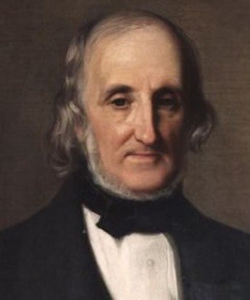
Death of George Petrie, Painter & Musician

george-petrie

George Petrie, Irish painter, musician, antiquary and archaeologist of the Victorian era dies on January 17, 1866.

Petrie is born and grows up in Dublin, living at 21 Great Charles Street, just off Mountjoy Square. He is the son of the portrait and miniature painter James Petrie, a native of Aberdeen, Scotland, who had settled in Dublin. He is interested in art from an early age. He is sent to the Royal Dublin Society‘s schools, being educated as an artist, where he wins the silver medal in 1805 at the age of fourteen.

After an abortive trip to England in the company of Francis Danby and James Arthur O’Connor, both of whom are close friends of his, he returns to Ireland where he works mostly producing sketches for engravings for travel books including among others, George Newenham Wright‘s guides to Killarney, Wicklow and Dublin, Thomas Cromwell‘s Excursions through Ireland, and James Norris Brewer‘s Beauties of Ireland.

In the late 1820s and 1830s, Petrie significantly revitalises the Royal Irish Academy‘s antiquities committee. He is responsible for their acquisition of many important Irish manuscripts, including an autograph copy of the Annals of the Four Masters, as well as examples of insular metalwork, including the Cross of Cong. His writings on early Irish archaeology and architecture are of great significance, especially his essay on the Round Towers of Ireland, which appear in his 1845 book titled The Ecclesiastical Architecture of Ireland. He is often called “the father of Irish archaeology.” His survey of the tombs at Carrowmore still informs study of the site today.

From 1833 to 1843 Petrie is employed by Thomas Frederick Colby and Thomas Larcom as head of the Topographical Department of the Irish Ordnance Survey. Amongst his staff are John O’Donovan, one of Ireland’s greatest ever scholars, and Eugene O’Curry. A prizewinning essay submitted to the Royal Irish Academy in 1834 on Irish military architecture is never published, but his seminal essay On the History and Antiquities of Tara Hill is published by the Academy in 1839. During this period Petrie is himself the editor of two popular antiquarian magazines, the Dublin Penny Journal and, later, the Irish Penny Journal.

Another major contribution of Petrie’s to Irish culture is the collection of Irish traditional airs and melodies which he records. William Stokes’s contemporary biography includes detailed accounts of Petrie’s working methods in his collecting of traditional music: “The song having been given, O’Curry wrote the Irish words, when Petrie’s work began. The singer recommenced, stopping at a signal from him at every two or three bars of the melody to permit the writing of the notes, and often repeating the passage until it was correctly taken down …”

As an artist, Petrie’s favourite medium is watercolour which, due to the prejudices of the age, is considered inferior to oil painting. Nonetheless, he can be considered as one of the finest Irish Romantic painters of his era. Some of his best work is in the collections of the National Gallery of Ireland, such as his watercolour painting Gougane Barra Lake with the Hermitage of St. Finbarr, County Cork (1831).

Petrie is awarded the Royal Irish Academy’s prestigious Cunningham Medal three times: firstly in 1831 for his essay on the round towers, secondly in 1834 for the now lost essay on Irish military architecture, and thirdly in 1839 for his essay on the antiquities of Tara Hill.

The closing years of Petrie’s life are devoted to the publication of a portion of his collection of Irish music. He dies at the age of 77 at Rathmines, Dublin, on January 17, 1866. He is buried in Mount Jerome Cemetery.