seamus dubhghaill

Promoting Irish Culture and History from Little Rock, Arkansas, USA


Leave a comment

Death of Theobald Walter, the First Chief Butler of Ireland

Theobald Walter, sometimes Theobald FitzWalter, Theobald Butler, or Theobald Walter le Boteler, the first Chief Butler of Ireland, dies on February 4, 1206, at Arklow Castle at Wicklow, in present day County Wicklow. He also holds the office of Chief Butler of England and is the High Sheriff of Lancashire for 1194. He is the first to use the surname Butler of the Butler family of Ireland. He is involved in the Irish campaigns of King Henry II of England and John of England. His eldest brother, Hubert Walter, becomes the Archbishop of Canterbury and justiciar and Lord Chancellor of England.

Walter is born in Norfolk, England, in 1165, the son of Hervey Walter and his wife, Matilda de Valoignes, who is one of the daughters of Theobald de Valoignes. Their children were Theobald, Hubert, Bartholomew, Roger, and Hamon. He and his brother Hubert are brought up by their uncle Ranulf de Glanvill, the great justiciar of Henry II of England who had married his mother’s sister Bertha.

On April 25, 1185, Prince John, in his new capacity as Lord of Ireland, lands at Waterford and around this time grants the hereditary office of butler of Ireland to Walter, whereby he and his successors are to attend the Kings of England at their coronation, and on that day present them with the first cup of wine. His father had been the hereditary holder of the office of butler of England. Sometime after, King Henry II of England grants him the prisage of wines, to enable him and his heirs, the better to support the dignity of that office. By this grant, he has two barrels of wine out of every ship, which breaks bulk in any trading port of Ireland, and is loaded with 20 tons of that commodity, and one ton from 9 to 20. He accompanies John on his progress through Munster and Leinster. At this time, he is also granted a large section of the north-eastern part of the Kingdom of Limerick. The grant of five and a half cantreds is bounded by:

“…the borough of Killaloe and the half cantred of Trucheked Maleth in which it lay, and the cantreds of Elykarval, Elyochgardi, Euermond, Aros and Wedene, and Woedeneoccadelon and Wodeneoidernan.”

These are the modern baronies of Tullough (in County Clare), Clonlisk and Ballybritt (in County Offaly), Eliogarty, Ormond Upper, Ormond Lower, Owney and Arra (in County Tipperary), Owneybeg, Clanwilliam and Coonagh (in County Limerick).

Walter is active in the war that takes place when Rory O’Connor attempts to regain his throne after retiring to the monastery of Cong (present day County Mayo), as his men are involved in the death of Donal Mor McCarthy during a parley in 1185 near Cork. In 1194, he supports his brother during Hubert’s actions against Prince John, with him receiving the surrender of John’s supporters in Lancaster. He is rewarded with the office of sheriff of Lancaster, which he holds until Christmas of 1198. He is again sheriff after John takes the throne in 1199.

In early 1200, however, John deprives Walter of all his offices and lands because of his irregularities as sheriff. His lands are not restored until January 1202. A manuscript in the National Library of Ireland points to William de Braose, 4th Lord of Bramber, as the agent of his restoration:

“Grant by William de Braosa, (senior) to Theobald Walter (le Botiller) the burgh of Kildelon (Killaloe) … the cantred of Elykaruel (the baronies of Clonlisk and Ballybrit, County Offaly), Eliogarty, Ormond, Ara and Oioney, etc. 1201.”

“Elykaruel” refers to the Gaelic túath of “Ely O’Carroll”, which straddles the southern part of County Offaly and the northern part of Tipperary (at Ikerrin). The other cantreds named are probably the modern baronies of Eliogarty, Ormond Upper, Ormond Lower and Owney and Arra in County Tipperary.

Walter founds the Abbey of Woney, of which nothing now remains, in the townland of Abington, near the modern village of Murroe in County Limerick around 1200. He also founds the Cockersand Abbey in Lancaster, Abbey of Nenagh in County Tipperary, and a monastic house at Arklow in County Wicklow.

Walter marries Maud le Vavasour (1176–1226), heiress of Robert le Vavasour, a baron of Yorkshire. John Lodge in the Peerage of Ireland in 1789 gives the year as 1189, but on no apparent authority, as no other author follows him on this. Their children are Theobald le Botiller, 2nd Chief Butler of Ireland, and Maud (1192–1244), who marries three times yet only has two surviving children, Ralph and Marie.

Walter dies on February 4, 1206, at Arklow Castle, County Wicklow, and is buried at Wotheney Abbey.


Leave a comment

Storm Frank Causes Widespread Flooding

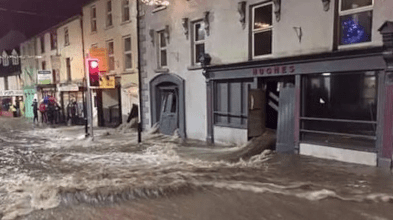
Clean-up operations are underway around Ireland on Wednesday, December 30, 2015, in the wake of Storm Frank, which causes widespread flooding following its landfall in western areas on Tuesday, December 29. Thousands of households and businesses are left without electricity in many areas of the country.

A Met Éireann status orange wind warning is lifted at 2:00 p.m. on Wednesday although the forecasts caution that severe winds of 65-80 km/h and gusts of up 130 km/h are still expected. While the heaviest rainfall from the storm falls overnight, many rivers and lakes have yet to peak meaning further flooding is possible.

According to an ESB Networks spokesman, 7,500 homes are without power in the afternoon, down from the overnight total of 13,000. He says repair crews are working to restore power to those cut off. The biggest single outage overnight is around Bandon and Fermoy in County Cork where 4,000 homes are without power, although it has been restored to almost all homes by the afternoon of December 30.

At 2:00 p.m. on Wednesday, the worst affected areas are County Wicklow with 1,200 houses without power, Macroom in County Cork where 600 are without power and Athlone where 500 homes are cut off. Around 500 homes in Naas, County Kildare, are without power as are 350 houses in Skerries in north County Dublin. It is hoped that power will be restored to all customers by the evening.

County Cork appears to be the worst affected by the storm where 60 mms (almost three inches) of rain falls since the morning of December 29. The threat of further flooding in Cork remains as the ESB increases the flow of water through the Inniscarra Dam to 250 cumecs (cubic metres per second) between 9:00 a.m. and midday which leads to increased flooding downstream. This is higher than the level of flow (180 cumecs) the previous and between December 6 and 12 along the River Lee following Storm Desmond.

Cork County manager Tim Lucey says there has been “extensive flooding” across a range of areas, but that Midleton and Bandon are worst hit with some 90 properties affected in each of the towns. He tells RTÉ Radio that one positive is the fact flood defences in Mallow and Fermoy have done their job. He notes that some five feet of water has built up behind a flood barrier in Mallow and this indicates the damage that could have been done to the town.

South Galway bears the brunt of flooding in the west, with river gauges expected to rise further over the coming days. Overnight rainfall is not as heavy as anticipated in the west, but several properties succumb to the waters. Up to 30 families in the south Galway area are forced to stay with relatives, with several being accommodated in hotels by Galway County Council, as floodwaters cut off access routes to their homes.

In Mayo, the area around the Neale remains underwater and a number of minor roads and thousands of acres of farmland are also affected. With rain continuing to fall across the west, conditions are expected to remain critical over the next few days.

The N11 between Rosslare and Dublin, the N25 from Cork to Waterford, the N71 between Cork and Killarney and the N4 between Dublin and Sligo all have diversions in place. The N25 is closed overnight between Killeagh and Castlemartyr in County Cork due to flooding. The N71 Cork/Bandon Road is also closed overnight at the viaduct due to flooding. There is severe flooding on the N40 South Ring Rd. at J6 Kinsale, particularly on the westbound off-ramp. The N11 Dublin/Wexford Road is impassable through Enniscorthy and also at Kyle’s Cross near Oylegate. The N4 is closed eastbound at Ballynafid in County Westmeath due to flooding. There are also several road closures in Kerry, Waterford and Tipperary.

Midleton is also hit by severe flooding as water levels in the Owenacurra River rise dramatically with up to 30 families having to be evacuated from their homes. Macroom in mid-Cork is also flooded for the first time during the year. Bandon is put on red alert by Cork County Council’s early warning system. Traders and residents are told to take all measures necessary to protect their property and stock. Locals stay up all night preparing the town for the latest round of flooding. Nevertheless, some 20 businesses in Bandon are flooded for the second time in a month after waters start to come up shores and gutters in the town as water levels in the River Bandon rise overnight.

The River Slaney burst its banks in Enniscorthy, County Wexford, causing widespread flooding in the town. Several cars have to be abandoned. High tide in Enniscorthy occurs around 10:30 a.m. on December 30.

Limerick City Council and Limerick County Council say there has been no significant flooding in the county as a result of overnight rainfall but that water levels along the lower River Shannon continue to increase. Water levels on the river rise by some 11cm at Castleconnell and Montpelier.

The ESB says the flow of water through Parteen Weir, which regulates water flow through Ardnacrusha power plant, will remain at 440 (cubic metres per second) on December 30 and that the situation will be reviewed again the following day. “The levels in Lough Derg may reach 2009 levels in the coming days and, as a result, the flow through Parteen Weir may increase to 2009 levels (up to 500 cumecs) in the coming days,” it says.

Clare County Council says water levels on the lower River Shannon at Springfield, Clonlara, have increased by 5-10cm in the last 24 hours and are some 20cm below a peak level recorded on December 13th. It says the Mulkear River in County Limerick, which enters the River Shannon south of Annacotty, is currently in flood and is contributing to increased water levels at Springfield. Council staff are assisted by the Fire Service and Defence Forces at Springfield in their pumping operations and transporting residents of some 12 homes isolated by floodwaters.

Fianna Fáil urges Taoiseach Enda Kenny to call an emergency Cabinet meeting to address the fallout from the storm. The party’s environment spokesman, Barry Cowen, says many communities felt neglected as further significant damage was inflicted on homes and businesses by the rainfall and winds brought by Storm Frank. “The scenes that we are witnessing in communities impacted by the latest storm are truly heart-breaking,” he says. “People feel neglected by the Government. It’s astonishing that the Taoiseach has decided not to interrupt his Christmas holidays in light of the devastation caused by Storm Frank.”

The Government’s National Coordination Group on Severe Weather meets in Dublin on December 30. Sinn Féin MEP Liadh Ní Riada says the Government has displayed “ineptitude in preparing flood defences” and that “more hollow promises” from the Coalition are no substitute for action. “The risk of flooding is increasing and will continue to increase. People across this island need to know that our political leaders have a plan to prevent this happening in the future,” she says.

(From: “Storm Frank causes floods, closes roads and cuts power to thousands” by Ronan McGreevy, Th Irish Times, http://www.irishtimes.com, December 30, 2015 | Pictured: Water flows through buildings and down the street in Graignamanagh, Co Kilkenny on Tuesday night by Paul B via Twitter)


1 Comment

Death of George Beresford, 1st Marquess of Waterford

George de la Poer Beresford, 1st Marquess of Waterford, KP, PC (Ire), an Irish politician, known as George Beresford, 2nd Earl of Tyrone from 1763 to 1789, dies on December 3, 1800.

Beresford is the eldest surviving son of Marcus Beresford, 1st Earl of Tyrone, and his wife, Lady Catherine Power, suo jure Baroness de la Poer. Among his siblings are John Beresford, who marries Countess Anne Constantin de Ligondes, and William Beresford, 1st Baron Decies, who marries Elizabeth FitzGibbon, sister of John FitzGibbon, 1st Earl of Clare.

Beresford’s mother is the only daughter of James Power, 3rd Earl of Tyrone (who is also the 8th Baron Power) and the former Anne Rickard, eldest daughter and co-heiress of Andrew Rickard, of Dangan-Spidoge. His father is the only son of Sir Tristram Beresford, 3rd Baronet, and his wife Nichola Sophia Hamilton, youngest daughter of Hugh Hamilton, 1st Viscount of Glenawly.

Beresford is educated at Kilkenny College and Trinity College Dublin.

From 1757 to 1760, Beresford is a Member of the Irish House of Commons for County Waterford from 1757 to 1760, and for Coleraine from 1761 until 1763, when he inherits his father’s earldom, enters the Irish House of Lords and is admitted to the Privy Council of Ireland.

Beresford is Governor of Waterford from 1766 and Custos Rotulorum of County Waterford from 1769 to 1800, during which time he is made a Knight of St. Patrick, created Baron Tyrone in the Peerage of Great Britain in 1786, and elevated as a marquess in 1789.

On April 19, 1769, Beresford marries Elizabeth Monck, the daughter of Henry Monck, of Charleville, and the former Lady Isabella Bentinck, second daughter of Henry Bentinck, 1st Duke of Portland. Elizabeth is also the cousin of Charles Monck, 1st Viscount Monck. Together, they are the parents of eight children:

Beresford also has two illegitimate sons, William Carr Beresford, 1st Viscount Beresford, and Sir John Beresford, 1st Baronet.

Beresford dies on December 3, 1800, and his titles pass to his eldest surviving legitimate son, Henry.

(Pictured: George Beresford, First Marquess of Waterford, oil on canvas by Gilbert Stuart (1755-1828))


Leave a comment

Oliver Cromwell Abandons the First Siege of Waterford

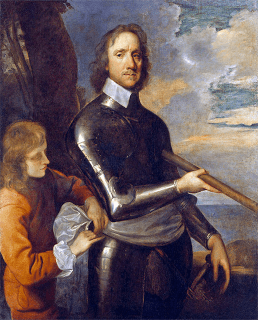
Oliver Cromwell abandons the First Siege of Waterford on December 2, 1649, and goes into winter quarters at Dungarvan. Waterford is besieged twice during 1649 and 1650 during the Cromwellian conquest of Ireland. The town is held by Confederate Ireland, also referred to as the Irish Catholic Confederation, under General Richard Farrell and English Royalist troops under General Thomas Preston. It is besieged by English Parliamentarians under Cromwell, Michael Jones and Henry Ireton.

Waterford is a Catholic city and like most other towns in southeast Ireland, the populace has supported the Confederate Catholic cause since the Irish Rebellion of 1641. Late in 1641, Protestant refugees, displaced by the insurgents, begin to arrive in the town, creating tension among the Catholic townspeople. The city’s mayor wants to protect the refugees, but the recorder and several of the aldermen on the city council want to strip them of their property and let in the rebels, who arrive outside the walls in early 1642. At first, the Mayor’s faction is successful in refusing to admit rebel forces, but by March 1642, the faction in the municipal government sympathetic to the rebellion prevails. The Protestants in Waterford are expelled, in most cases put on ships to England, sometimes after having their property looted by the city mob. In 1645, Confederate troops under Thomas Preston besiege and capture nearby Duncannon from its English garrison, thus removing the threat to shipping coming to and from Waterford.

Waterford’s political community is noted for its intransigent Catholic politics. In 1646, a synod of Catholic Bishops, based in Waterford, excommunicate any Catholic who supports a treaty between the Confederates and English Royalists, which does not allow for the free practice of the Catholic religion. The Confederates finally agree to a treaty with Charles I of England in 1648, in order to join forces with the Royalists against their common enemy, the English Parliament, which is both anti-Catholic and hostile to the King. The Parliamentarians land a major expeditionary force in Ireland at Dublin, under Cromwell in August 1649.

The English Parliamentarian New Model Army arrives to besiege Waterford in October 1649. One of the stated aims of Cromwell’s invasion of Ireland is to punish the Irish for the mistreatment of Protestants in 1641. Given Waterford’s history of partisan Catholic politics, this provokes great fear amongst the townspeople. This fear is accentuated by the fate of Drogheda and nearby Wexford which had recently been taken and sacked by Cromwell’s forces and their garrisons massacred.

Waterford is very important strategically in the war in Ireland. Its port allows for the importation of arms and supplies from continental Europe and its geographical position commands the entrance of the rivers Suir and Barrow.

Before besieging Waterford, Cromwell has to take the surrounding garrisons held by Royalist and Confederate troops in order to secure his lines of communication and supply. Duncannon, whose fort commands the sea passage into Waterford, is besieged by Parliamentarians under Ireton from October 15 to November 5. However, due to a stubborn defence, the garrison there under Edward Wogan holds out. This means that heavy siege artillery cannot be brought up to Waterford by sea.

New Ross surrenders to Cromwell on October 19 and Carrick-on-Suir is taken on November 19. A counterattack on Carrick by Irish troops from Ulster under a Major Geoghegan is repulsed on November 24, leaving 500 of the Ulstermen dead.

Having isolated Waterford from the east and north, Cromwell arrives before the city on November 24. However, Waterford still has access to reinforcements from the west and up to 3,000 Irish soldiers from the Confederate’s Ulster Army under Richard O’Farrell are fed into the city in the course of a week. O’Farrell, having been a successful officer in the Spanish Army, is highly trained and experienced in siege warfare from battles in Flanders. Cromwell has come up against a superior minded soldier and commander. The weather is extremely cold and wet, and the Parliamentarian troops suffer heavily from disease. Out of 6,500 English Parliamentarian soldiers who besiege Waterford in 1649, only 3,000 or so are still fit by the time the siege is called off. Added to this, Cromwell is able to make little headway in taking the city. The capture of a fort at Passage East enables him to bring up siege guns by sea, but the wet weather means that it is all but impossible to transport them close enough to Waterford’s walls to use them. Farrell proves tactically superior in defending Waterford and repels Cromwell’s attempts. Eventually Cromwell has to call off the siege on December 2 and go into winter quarters at Dungarvan. Among his casualties is his commander Michael Jones, who dies of disease.


Leave a comment

Birth of Irish Playwright Jimmy Murphy

Irish playwright Jimmy Murphy is born to Irish parents in Salford, Lancashire, England, on September 30, 1962. He is a former writer-in-residence at the National University of Ireland, Maynooth (2000–01), a member of the Abbey Theatre’s Honorary Advisory Council, a recipient of three bursaries in literature from the Arts Council (Irish: An Chomhairle Ealaíon) and is elected a member of Aosdána in 2004.

When Murphy is six, his family returns to Dublin, settling in the South inner-city district of Islandbridge. He first goes to school in nearby Inchicore, attending the Oblate Fathers’ primary school there, then moves to Ballyfermot, a working-class heartland of suburban Dublin, in his teens. There, he attends secondary school at St. John’s De La Salle College. After failing the Irish Intermediate Certificate he leaves school to pursue an apprenticeship in painting and decorating, taking his Junior and Senior Irish Trade Certificates, and the City and Guilds of London exams at the Dublin Institute of Technology, Bolton Street.

Murphy’s stage plays include Brothers of the Brush (Dublin, The Peacock, Dublin Theatre Festival 1993), which is awarded best new Irish play; A Picture of Paradise (The Peacock, 1997); The Muesli Belt (Dublin, The Abbey Theatre, 2000); Aceldama (1998); The Kings of the Kilburn High Road (Waterford, Red Kettle Theatre Company, 2000); The Castlecomer Jukebox (Red Kettle, 2004); and What’s Left of The Flag (Theatre Upstairs at The Plough, 2010), nominated for The Irish Times Best New Play Award. His last play, with an all-female cast, The Hen Night Epiphany, premieres at the Focus Theatre, Dublin, in September 2011 and is published by Oberon Books. It has recently been translated into Hebrew.

Plays for radio include Mandarin Lime (BBC Radio 4, 1995), Peel’s Brimstone (BBC Radio 4, 1995), and The Jangle of the Keys (BBC Radio 4 1997). His awards include the Stewart Parker Trust Award in 1994. The play The Kings of the Kilburn High Road is adapted by Tommy Collins as the Irish language film Kings, and is selected as Ireland’s entry for best foreign-language film for the Academy Awards by the Irish Film & Television Academy.

Three of Murphy’s plays have been presented at the Acting Irish International Theatre Festival: Brothers of the Brush (2001 Festival, presented by the Tara Players of Winnipeg), The Kings of the Kilburn High Road (2005 Festival, first North American production, presented by the Irish Players of Rochester), and The Muesli Belt (2008 Festival, presented by the Toronto Irish Players).

A one act play, Perfida, premieres at Theatre Upstairs in July 2012. In October 2012, The Muesli Belt receives its United States premiere at the Banshee Theater, Burbank, California, and in 2013 The Hen Night Epiphany receives its U.S. premiere at the Wade James Theater, Edmonds, Washington. In June 2013 a new production of Perfidia is staged by Red Kettle Theatre Company at their new theatre in Waterford. In May 2017 his second Verabtim piece for the Abbey, looking at police corruption, A Whisper Anywhere Else, is produced at the Peacock theatre. His first Verbatim play for the Abbey, Of This Brave Time, commissioned to commemorate the 1916 Easter Rising, tours the United Kingdom in 2016 and later returns to the Peacock stage for a short run. A new full length play, The Cartographer’s Pen, commissioned to mark the centenary of the drawing of the Irish border, opens at the Town Hall Theatre, Cavan, in May 2022.

Murphy is currently living in Dublin.


Leave a comment

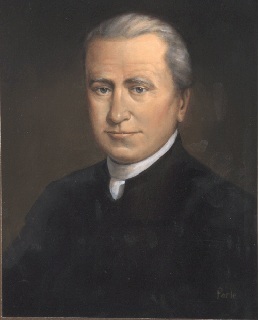
Death of Edmund Ignatius Rice, Missionary & Educationalist

Edmund Ignatius Rice, Catholic missionary and educationalist, dies on August 29, 1844, at Mount Sion, Waterford, County Waterford, after living in a near-comatose state for more than two years.

Rice is born on June 1, 1766, at Westcourt, Callan, County Kilkenny, the fourth of seven sons of Robert Rice, a farmer, and his wife, Margaret Tierney. His education begins at a local hedge school. He subsequently transfers to a school in Kilkenny before being apprenticed in 1779 to his uncle, a prosperous merchant at Waterford. He amasses a fortune in the lucrative provisioning trade of the city, and in 1785 he marries Mary Elliott, the daughter of a local tanner. Their only child, Mary, has intellectual disabilities and Rice suffers additional heartbreak with the death of his wife in 1789 following an accident, possibly by a fever that set in afterwards.

The death of his wife clearly affects Rice’s life. While he continues in trade and is an active member of the Catholic committee in the city, his priorities are radically changed. From this point he becomes increasingly involved in pious and charitable pursuits. He assists in the foundation of the Trinitarian Orphan Society in 1793 and the Society for the Relief of Distressed Roomkeepers in 1794. He joins religious confraternities and devotes considerable attention to the plight of prisoners. His endeavours become more focused in 1797 when, in response to a controversial pastoral of Bishop Thomas Hussey of Waterford and Lismore, he embraces the cause of Catholic education. In 1802, he establishes a religious community of laymen who set out to do for the neglected poor boys of Waterford what Nano Nagle had done for poor girls in Cork. His community is the genesis of both the Presentation Brothers and the Irish Congregation of Christian Brothers. Rice’s “monks” follow a variation of the Presentation rule, and his school curriculum is a pragmatic combination of best practice of the time overlaid by an uncompromisingly Catholic emphasis. By the time of his death in 1844, the Christian Brothers run forty-three schools, including six in England.

Rice is pivotal in the revival of Irish Catholicism following the severe dislocation of the penal era. Among the urban poor the Brothers make a landmark contribution in widening the social base of the institutional church. Through their teaching and catechetical instruction, they introduce the poor to the new forms of devotion which become the hallmark of nineteenth-century Catholicism. This effort brings a previously marginalised class within the ranks of the institutional church, which in time becomes the backbone of the emerging Catholic Ireland. The Brothers also play a determined role in the Catholic response to the proselytising efforts of the protestant Second Reformation in the country. Rice’s Brothers assist in the moulding of a distinctively Catholic urban working class, by promoting literacy alongside piety and instilling in their pupils the middle-class virtues of personal discipline, hard work, and sobriety.

Rice collaborates closely with other Catholic leaders of his age. His congregation is central to the success of Theobald Mathew‘s temperance movement. In 1828, at the height of the emancipation campaign, he invites Daniel O’Connell to lay the foundation stone of the Brothers’ model school at North Richmond Street, Dublin. This “monster meeting” attracts an attendance of 100,000, before which O’Connell hails Rice as the “patriarch of the monks of the west.” During the Repeal campaign, too, the Brothers frequently host the Liberator. Reflecting on their efforts, O’Connell declares that “education to be suited to this country must be Catholic and Irish in its tone, having as its motto Faith and Fatherland.”

Rice’s uncompromising adherence to these principles is not without difficulty. It leads to a predictably acrimonious relationship with the secular national board and his eventual withdrawal of the Brothers’ schools from the system in 1836. Rejection of the national board imposes serious financial burdens on the Christian Brothers which are relieved only by the bounties provided by the Intermediate Education Act (1878). Withdrawal also serves to alienate many friends and benefactors, including Daniel Murray, Archbishop of Dublin, who is a commissioner of national education. But the bishops gradually adopt Rice’s stance. After 1838 they become increasingly hostile to the national board, and the Brothers’ schools, with their acclaimed textbooks, are recognised as a bulwark against non-denominational education. For similar reasons, the Brothers become closely associated with Irish nationalism. In 1892, the MP William O’Brien observes that “the Christian Brothers system was regarded in Ireland as the really national system.”

The 1830s bring a rapid deterioration in Rice’s health. Financial difficulties frustrate his plans, and the plight of the three Dublin foundations is particularly acute. Rice resigns as superior general of his congregation in 1838, but fraught relations with his successor, Br. Michael Paul Riordan, blights his later years.

From this time on, Rice spends an increasing proportion of his time at Mount Sion and the adjoining school, showing a continued interest in the pupils and their teachers. He also takes a short walk each day on the slope of Mount Sion, but his increasingly painful arthritis leads the community superior, Joseph Murphy, to purchase a wheelchair for his benefit. At Christmas time in 1841, his health takes a turn for the worse and even though expectations of his imminent death do not turn out to be justified, he is increasingly confined to his room.

After living in a near-comatose state for more than two years and in the constant care of a nurse since May 1842, Rice dies on August 29, 1844, at Mount Sion, Waterford, where his remains lie in a casket to this day. Large crowds fill the streets around his house in Dublin to honour him. He is beatified by Pope John Paul II in 1996.

(From: “Rice, Edmund Ignatius” by Dáire Keogh, Dictionary of Irish Biography, http://www.dib.ie, October 2009)


Leave a comment

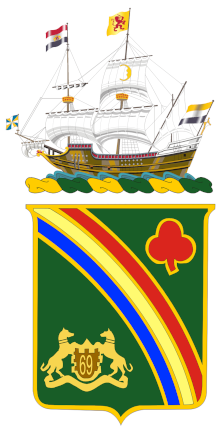
Irish 69th New York Infantry Regiment Fights at the First Battle of Bull Run

On July 21, 1861, at the First Battle of Bull Run, the first major engagement of the American Civil War, the Irish 69th New York Infantry Regiment fights under the green flag of Erin and the Stars and Stripes for the first time. The unit is in a brigade commanded by Col. William Tecumseh Sherman, whose name is now one of the most well-known of the war. He is not, however, well loved by the 69th New York.

The battle, called the Battle of First Manassas by the Confederate State Army, is fought in Prince William County, Virginia, just north of the city of Manassas and about thirty miles west-southwest of Washington, D.C. The Union Army is slow in positioning themselves, allowing Confederate reinforcements time to arrive by rail. Each side has about 18,000 poorly trained and poorly led troops. The Union army suffers an ignominious defeat that day, but the 69th is among a handful of Union regiments that perform well during the battle. Held in reserve at first, the 69th soon advances and routs the 4th Alabama. But when the brigade meets stiffer opposition, Sherman attacks with one regiment at a time, wasting his numbers. The battle is followed by a disorganized post-battle retreat of the Union forces.

Just months after the start of the war at Fort Sumter, the northern public clamors for a march against the Confederate capital of Richmond, Virginia, which is expected to bring an early end to the Confederacy. Yielding to political pressure, Brigadier General Irvin McDowell leads his unseasoned Union Army across Bull Run against the equally inexperienced Confederate Army of Brigadier General P. G. T. Beauregard, whose forces are camped near Manassas Junction. McDowell’s ambitious plan for a surprise flank attack on the Confederate left is poorly executed; nevertheless, the Confederates, who had been planning to attack the Union left flank, find themselves at an initial disadvantage.

Confederate reinforcements under Brigadier General Joseph E. Johnston arrive from the Shenandoah Valley by railroad, and the course of the battle quickly changes. A brigade of Virginians under a relatively unknown brigadier general from the Virginia Military Institute, Thomas J. Jackson, stands its ground, which results in Jackson receiving his famous nickname, “Stonewall.” The Confederates launch a strong counterattack, and as the Union troops begin withdrawing under fire, many panic and the retreat turns into a rout. McDowell’s men frantically run without order in the direction of Washington, D.C.

One of the last regiments off the field, the 69th loses 38 men that day, the first being Capt. James Haggerty from Donegal, and 59 wounded. Ninety-five are sent to Confederate prison camps, including its Sligo-born colonel, Michael Corcoran. One of the last men off the field is Waterford‘s Thomas Francis Meagher, captain of Company K, who eventually swims the last yards to safety across Bull Run creek. It is a rough beginning, but the regiment has begun a storied history that soon earns them the sobriquet “Fighting 69th.”

Both armies are sobered by the fierce fighting and the many casualties and realize that the war is going to be much longer and bloodier than anticipated. The First Battle of Bull Run highlights many of the problems and deficiencies that are typical of the first year of the war. Units are committed piecemeal, attacks are frontal, infantry fails to protect exposed artillery, tactical intelligence is minimal, and neither commander is able to employ his whole force effectively. McDowell, with 35,000 men, can commit only about 18,000, and the combined Confederate forces, with about 32,000 men, also commit 18,000.


Leave a comment

Death of Thomas Francis Meagher

Thomas Francis Meagher, Irish nationalist and leader of the Young Irelanders in the Rebellion of 1848, drowns on July 1, 1867, after falling overboard from the steamboat G. A. Thompson into the Missouri River.

Meagher is born on August 3, 1823, at Waterford, County Waterford, in what is now the Granville Hotel on the Quay. He is educated at Roman Catholic boarding schools. When he is eleven, his family sends him to the Jesuits at Clongowes Wood College in County Kildare. It is at Clongowes that he develops his skill of oratory, becoming at age 15 the youngest medalist of the Debating Society. After six years, he leaves Ireland for the first time, to study in Lancashire, England, at Stonyhurst College, also a Jesuit institution. He returns to Ireland in 1843, with undecided plans for a career in the Austrian army, a tradition among a number of Irish families.

Meagher becomes a member of the Young Ireland Party in 1845 and in 1847 is one of the founders of the Irish Confederation, dedicated to Irish independence. In 1848 he is involved, along with William Smith O’Brien, in an abortive attempt to mount an insurrection against English rule. Arrested for high treason, he is condemned to death, but his sentence is commuted to life imprisonment in Van Diemen’s Land, now Tasmania.

Meagher escapes in 1852 and makes his way to the United States. After a speaking tour of U.S. cities, he settles in New York City, studies law and is admitted to the bar in 1855. He soon becomes a leader of the Irish in New York and, from 1856, edits the Irish News.

At the outbreak of the American Civil War, Meagher becomes a captain of New York volunteers and fights at the First Battle of Bull Run in July 1861. He then organizes the Irish Brigade, and in February 1862 is elevated to the rank of brigadier general. After his brigade is decimated at the Battle of Chancellorsville in May 1863, he resigns his commission, however in December he returns to command the military district of Etowah, with headquarters at Chattanooga, Tennessee.

At the close of the war, Meagher is appointed secretary of Montana Territory where, in the absence of a territorial governor, he serves as acting governor.

In the summer of 1867, Meagher travels to Fort Benton, Montana, to receive a shipment of guns and ammunition sent by General William Tecumseh Sherman for use by the Montana Militia. On the way to Fort Benton, the Missouri River terminus for steamboat travel, he falls ill and stops for six days to recuperate. When he reaches Fort Benton, he is reportedly still ill.

Sometime in the early evening of July 1, 1867, Meagher falls overboard from the steamboat G. A. Thompson, into the Missouri River. His body is never recovered. Some believe his death to be suspicious and many theories circulate about his death. Early theories included a claim that he was murdered by a Confederate soldier from the war, or by Native Americans. In 1913 a man claims to have carried out the murder of Meagher for the price of $8,000 but then recants. In the same vein, American journalist and novelist Timothy Egan, who publishes a biography of Meagher in 2016, claims Meagher may have been murdered by Montana political enemies or powerful and still active vigilantes. On the frontier men are quick to kill rather than adjudicate. A similar theory shown on Death Valley Days (1960) has him survive the assassination attempt because his aide had been mistakenly murdered when he accepted one of his trademark cigars, and Meagher uses his apparent death as leverage over his political opponents.


Leave a comment

Death of Brendan Bowyer, Royal Showband Frontman

Brendan Bowyer, Irish singer best known for fronting the Royal Showband and The Big Eight and who has five number one hits in Ireland, dies in Las Vegas, Nevada, on May 28, 2020.

Born in Waterford, County Waterford on October 12, 1938, Bowyer is renowned for having The Beatles open for the Royal Showband at a concert on April 2, 1962 at the Pavilion Theatre, Liverpool, England, some six months before the release of The Beatles debut single “Love Me Do” in October 1962. He is regarded as one of the first headlining Elvis impersonators. Elvis Presley himself is a big fan of Bowyer’s performances and often attends his concerts in the Stardust Resort and Casino in Las Vegas during the 1970s.

Bowyer begins his career with the Royal Showband in 1957. His ability to tailor American rock and roll music to the tastes of Irish audiences, and his athletic, spirited on-stage performances make him a popular vocalist of the 1960s Irish showband era. On September 6, 1963, he and the Royal Showband become the first Irish artists to top the Irish Singles Chart, with the hit “Kiss Me Quick,” which stays at the number one position for seven weeks. They return to the top position later that year with “No More,” and repeat the feat in 1964 with “Bless You.”

Bowyer takes part in the 1965 Irish National Song Contest for a chance to represent Ireland at the Eurovision Song Contest in Naples with the song “Suddenly in Love,” but can only manage fifth place. The Royal Showband’s greatest success is to come in 1965 with “The Hucklebuck,” which spends a further seven weeks at the top of the Irish Singles Chart, and is a hit in Australia, but fails to appear in the UK Singles Chart. “Don’t Lose Your Hucklebuck Shoes” returns the band to the number one position later in 1965.

In the summer of 1971, Bowyer, along with singer Tom Dunphy, leave the Royal Showband and form the Big Eight Showband. The band spends the summers playing the ballroom circuit in Ireland but also spends six months of the year in Las Vegas. Within a short time, the band makes the decision to relocate to Las Vegas permanently. He is based in Las Vegas from then on, though he makes frequent trips back to Ireland. In 1977 he makes a brief return to the Irish charts with his tribute, “Thank You Elvis.”

Having enjoyed a semi-retirement phase, Bowyer returns to the spotlight, touring Ireland each year, some for months on end, with his daughter Aisling Bowyer, and a six-piece band. They perform his showband era hits, dance numbers, nationalist songs, modern contemporary songs and concert hits.

A covers album, Follow On, is released in 2001, where Bowyer performs some of the most popular Irish songs, such as “Summer in Dublin,” “What’s Another Year,” “Past the Point of Rescue,” and “I Don’t Like Mondays.”

In 2005, Bowyer and Aisling headline the entertainment list for the Tall Ships Festival in Waterford, performing in the open air to an estimated crowd of 12,000. In 2015, Bowyer is the star of the “Ireland’s Showbands – Do You Come Here Often?” concert series.

Bowyer dies at the age of 81 in Las Vegas, Nevada on May 28, 2020.


Leave a comment

Birth of Eleanor Charlotte Butler, Recluse of Llangollen

Eleanor Charlotte Butler, recluse of Llangollen, is born in Cambrai, France, on May 11, 1739.

Butler is the youngest daughter of Walter Butler of Garryricken, County Tipperary, and his wife, Ellen (née Morres), of Latargh, County Tipperary. Her family are members of the old Catholic gentry, and her father is the sole lineal representative of James Butler, 2nd Duke of Ormonde. In 1740 her family returns to the Garryricken estate, where she spends part of her childhood. She is educated by the English Benedictine nuns of the convent of Our Lady of Consolation in Cambrai, where her Jacobite grand-aunt is a pensioner. Reared in the liberal and anti-clerical environment at Cambrai, she is open about her opposition to Irish Catholicism. She is also well read in literature.

By the time Butler returns to Ireland, her brother John had claimed the family titles and was recognised as 16th Earl of Ormond. Though he never uses the title, his sisters are recognised as the daughters of an earl. As the family is impoverished, and she is not disposed to marriage, a decade is passed in unhappiness. Then, in 1768, the thirteen-year-old Sarah Ponsonby arrives in Kilkenny to attend a local school. Following her visit to the Butler home at Kilkenny Castle, and despite the difference in age, the two form an immediate friendship and corresponded secretly, having discovered their mutual interest in the arts and Rousseau‘s ideal of pastoral retirement.

Ponsonby, upon finishing school, is sent to live with relatives at nearby Woodstock Estate, and there is subject to the uninvited attention of a middle-aged guardian. Butler is discontented with her life and the prospects of her family’s wish to send her back to Cambrai, so the two plan to leave their difficulties behind and settle in England. In their first attempt to flee in March 1778, they leave for Waterford disguised as men and wielding pistols, but their families manage to catch up with them. Butler is then sent to the home of her brother-in-law, Thomas ‘Monarch’ Kavanagh of Borris, County Carlow, but makes a second, successful attempt and runs away to find Ponsonby at Woodstock Estate. Her persistence wins out when both families finally capitulate and accepted their plans to live together.

Butler and Ponsonby set out for Wales in May 1778 and, after an extensive tour of Wales and Shropshire, eventually settle in Llangollen Vale, where they rent a cottage which is renamed Plas Newydd. They are accompanied by Mary Carryll, a former servant of the Woodstock household, who remains in their service until her death in 1809. Having made a deliberate decision to retire from the world, they spend the greater part of their days corresponding with friends, reading, building up a large library and making alterations to Plas Newydd, which takes on a fashionable Gothic look. Their garden, landscaped under their direction, becomes a popular attraction for visitors. Butler meticulously records their daily routine in a series of journals, some of which are now lost.

Their seclusion, eccentricities, semi-masculine dress and short-cropped powdered hair gain them notoriety, and it becomes fashionable to call on them. Their numerous and illustrious visitors include Hester Lynch Piozzi, Charles and Erasmus Darwin, Sir Walter Scott, Sir Arthur Wellesley, the Duke of Gloucester and Josiah Wedgwood. In 1792 they entertain Stéphanie Caroline Anne Syms, later that year to become the wife of Lord Edward FitzGerald, and her mother, Madame de Genlis. Following the arrest of Edward FitzGerald in 1798, Stéphanie and her suite flee to London and on May 27 pass through Llangollen, where the events in Dublin are already known. On hearing that she is staying in the local inn, Butler and Ponsonby invite her to call in. However, when she wishes to stay for the day, their apprehension of Jacobinism leads them to persuade her “principally for her own sake and a little for [our] own to proceed as fast and as incognito as possible for London.”

Both Anna Seward and William Wordsworth, who stay at Plas Newydd, write poems celebrating their friendship, and Lord Byron sends them a copy of The Corsair. Owing to her support of the Bourbons, Butler is sent the Croix St. Louis, which she wears about her neck. Though generally considered a hospitable couple, Seward, who is a good friend, admits that the “incessant homage” they received could make Butler “haughty and imperious,” while Lady Lonsdale thinks her “very clever, very odd.” Their celebrity does have its drawbacks: an article in the General Evening Post of July 24, 1790, entitled “Extraordinary female affection,” suggests indirectly that their relationship is unnatural. Butler is particularly angered by this publicity and appeals to Edmund Burke for legal advice. Their retirement is also continually dogged by financial difficulties. They live mainly off their respective allowances and Butler’s royal pension (granted through the influence of Lady Frances Douglas), but spend beyond their means and are often in debt. To add to their problems, Butler receives no mention in her father’s will. However, the Gothic eccentricities of their cottage, which they succeed over time in purchasing, and garden attract even the interest of Queen Charlotte.

Though it is claimed that neither woman spends a night away from Plas Newydd, in January 1786 they stay with their friends, the Barretts of Oswestry, and that September they visit Sir Henry Bridgeman of Weston Park, near Staffordshire. In June 1797 they take their only holiday, at the coastal resort of Barmouth. Despite their isolation they are well informed about international events and society gossip. The Irish serjeant-at-law Charles Kendal Bushe recalls how they gave him all the news of Dublin, London, Cheltenham, and Paris.

In later years Butler’s eyesight deteriorates, preventing her from keeping her journal. She is secretly painted as an old woman with Ponsonby by Lady Mary Leighton and sketched by Lady Henrietta Delamere. A distinctive, anonymous silhouette shows the two generously proportioned women in traditional riding habits (National Portrait Gallery, London). Butler dies on June 2, 1829, and is buried alongside Carryll at Llangollen church. Sarah Ponsonby is subsequently buried with them.

(From: “Butler, Lady (Charlotte) Eleanor” by Frances Clarke, Dictionary of Irish Biography, http://www.dib.ie)