seamus dubhghaill

Promoting Irish Culture and History from Little Rock, Arkansas, USA


Leave a comment

The 1921 Drumcondra Ambush

tolka-bridge-drumcondra

An encounter between eight young Irish Republican Army (IRA) volunteers and a large body of the Black and Tans takes place at Tolka Bridge in Drumcondra on January 21, 1921 during the Irish War of Independence.

On Friday, January 21, 1921, eight men from the 1st Battalion IRA, set out to stage an ambush at Binn’s Bridge on Lower Drumcondra Road. The plan is to attack a Royal Irish Constabulary (RIC) patrol which uses the road to travel from their base at Gormanston, County Meath, near Drogheda.

Led by Lieutenant Francis “Frank” Flood (19), Michael Francis ‘Mick’ Magee (24) Patrick Doyle (29), Thomas Bryan (24), Bernard ‘Bertie’ Ryan (21) and Dermott O’Sullivan (17) set off at 8:30 AM for Binn’s Bridge. They are to ambush RIC Auxiliaries (Black and Tans) travelling into Dublin from Gormanston. However, the Auxiliaries do not arrive. The witness statement of Harry Colley, former Adjutant, IRA Dublin Brigade 1920-21, says “they had actually been sent to carry out the ambush at Binn’s Bridge, but for some reason of their own, when they reached the position, moved up beyond Tolka Bridge, to Clonturk Park.” According to Dermott O’Sullivan, the only survivor, when it appears that the Black and Tans will not be coming their way, the party leaves the Binn’s Bridge site and heads to Tolka Bridge in Drumcondra.

However, the police receive a tip-off from Sergeant Singleton of the Dublin Metropolitan Police (DMP). It is also said, that as the British army unit is approaching the bridge over the River Tolka in Drumcondra, they are warned by a man by the name Robert Pike from Tolka Cottages.

The ambushers commence an attack upon two lorries of RIC constables, who return fire until the vehicles are able to accelerate out of range. Then the Black and Tans arrive in motor lorries and an armored car at the rear of their position to cut off their escape. Some volunteers manage to dash across fields to safety but others are arrested as they attempted to seek refuge in houses in the vicinity. All of the prisoners are found in possession of revolvers and ammunition, and Frank Flood is also found to have a grenade in his pocket.

In an attempt to escape the Auxiliaries, Michael Magee and Séan Burke run across a field of garden allotments in Clonturk Park. The Auxiliaries shoot Magee, mortally wounding him in the legs and lower torso. Magee is captured but soon dies of his wounds.

So at the end of the day, of the eight men involved in the action at Drumcondra, two men, Burke and Dunne, escape the scene. The five remaining, Frank Flood, Thomas Bryan, Bernard Ryan, Patrick Doyle and Dermot O’Sullivan are captured and Magee dies of his wounds. The captives are tried by a court-martial that lasts two days. All of the accused are convicted of High Treason and sentenced to death.

On March 14, 1921, all of the men, save Dermot O’Sullivan, are hanged at Mountjoy Prison. Citing his age of only 17 years, the British commute O’Sullivan’s sentence to life in prison. He is released from Portland Gaol at the end of August 1921.
Leave a comment

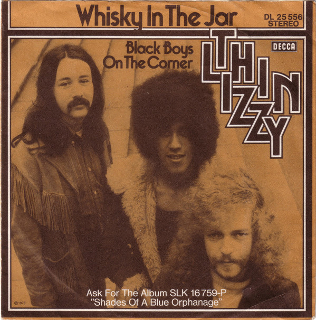
Thin Lizzy’s “Whiskey in the Jar” Charts in UK

whiskey-in-the-jar

Whiskey in the Jar” by Thin Lizzy enters the UK charts on January 20, 1973.

“Whiskey in the Jar” is the tale of a highwayman or footpad who, after robbing a military or government official, is betrayed by a woman. Whether she is his wife or sweetheart is not made clear. Various versions of the song take place in County Kerry, Kilmoganny, Cork, Sligo, and other locales throughout Ireland. It is also sometimes placed in the American South, in various places among the Ozarks or Appalachians, possibly due to Irish settlement in these places. Names in the song change, and the official can be a Captain or a Colonel, called Farrell or Pepper among other names. The protagonist’s wife or lover is sometimes called Molly, Jenny, Emzy, or Ginny among various other names. The details of the betrayal are also different, being either betraying him to the person he robbed and replacing his ammunition with sand or water, or not, resulting in his killing the person.

The song’s exact origins are unknown. The song first gains wide exposure when the Irish folk band The Dubliners perform it internationally as a signature song and record it on three albums in the 1960s. In the United States, the song is popularized by The Highwaymen, who record it on their 1962 album Encore. Building on their success, the Irish rock band Thin Lizzy hits the Irish and British pop charts with the song in 1973. In 1990 The Dubliners re-record the song with The Pogues with a faster rocky version charting at No.4 in Ireland and No.63 in the UK. The American metal band Metallica brings it to a wider rock audience in 1998 by playing a version very similar to that of Thin Lizzy’s, though with a heavier sound, winning a Grammy Award for the song in 2000 for Best Hard Rock Performance.

Thin Lizzy’s 1972 single stays at the top of the Irish charts for 17 weeks, and the British release stays in the top 30 for 12 weeks, peaking at No. 6, in 1973. This version has since been covered by U2, Pulp (first released on a 1996 various artist compilation album Childline and later on deluxe edition of Different Class in 2006), Smokie, Metallica (Garage Inc. 1998, which wins a Grammy), Belle and Sebastian (The Blues Are Still Blue EP 2006), Gary Moore (2006), Nicky Moore (Top Musicians Play Thin Lizzy 2008), Simple Minds (Searching for the Lost Boys 2009), and Israeli musician Izhar Ashdot. The song is also on the Grateful Dead live compilation So Many Roads (1965-1995) disc five.


Leave a comment

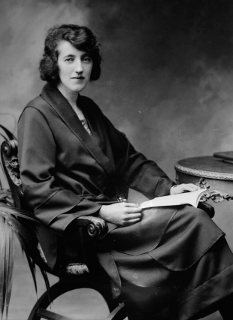
Death of Teresa Deevy, Playwright & Writer

teresa-deevy

Teresa Deevy, deaf Irish playwright, short story writer, and writer for radio, dies in Waterford, County Waterford on January 19, 1963.

Deevy is born on January 21, 1894, in Waterford. She is the youngest of 13 siblings, all girls. Her mother is Mary Feehan Deevy and her father is Edward Deevy who passes away when she is two years old.

Deevy attends the Ursuline Convent in Waterford and in 1913, at the age of 19, she enrolls in University College Dublin, to become a teacher. However, that same year, she becomes deaf through Ménière’s disease and has to relocate to University College Cork so she can receive treatment in the Cork Ear, Eye, and Throat Hospital, while also being closer to the family home. In 1914 she goes to London to learn lip reading and returns to Ireland in 1919. She starts writing plays and contributing articles and stories to the press around 1919.

Deevy’s return to Ireland takes place during the Irish War of Independence and this heavily influences her writing and ideology as she is heavily involved in the nationalistic cause. She heavily admires Constance Markievicz and joins Cumann na mBan, an Irish women’s Republican group and auxiliary to the Irish Volunteers.

In 1930 Deevy has her first production at the Abbey Theatre, Reapers. Many more follow in rapid succession, such as In Search of Valour, Temporal Powers, The King of Spain’s Daughter and Katie Roche, the play she is perhaps best known for. Her works are generally very well received with some of them winning competitions, becoming headline performances, or being revived numerous times. After a number of plays staged in the Abbey, her relationship with the theater sours over the rejection of her play, Wife to James Whelan in 1937.

After Deevy stops writing plays for the Abbey, she mainly concentrates on radio, a remarkable feat considering she had already become deaf before radio had become a popular medium in Ireland in the mid-to-late 1920s. She has a prolific output for twenty years on Raidio Éireann and on the BBC.

Deevy is elected to the prestigious Irish Academy of Letters in 1954, as a recognition to her contribution to the Irish theater. Her sister, Nell, with whom she had lived in Dublin, dies in the same year, so she returns to Waterford. She becomes a familiar figure in Waterford as she cycles around the city on her “High Nelly” bike.

When Deevy’s health begins to fail she is eventually admitted to the Maypark Nursing Home in Waterford. She dies there on January 19, 1963, at the age of 68, two days before her birthday.


Leave a comment

Birth of Lionel Cranfield Sackville, Lord Lieutenant of Ireland

lionel-cranfield-sackville

Lionel Cranfield Sackville, 1st Duke of Dorset, English political leader and Lord Lieutenant of Ireland, is born in Dorset, United Kingdom on January 18, 1688.

Sackville is the son of Charles Sackville, 6th Earl of Dorset and 1st Earl of Middlesex, and the former Lady Mary Compton, younger daughter of James Compton, 3rd Earl of Northampton. Styled Lord Buckhurst from birth, he succeeds his father as 7th Earl of Dorset and 2nd Earl of Middlesex in 1706 and is created Duke of Dorset in 1720.

Perhaps because he had been on a previous diplomatic mission to Hanover, Sackville is chosen to inform George I of his accession to the Crown in August 1714. George I initially favours him and numerous offices and honours are given to him: Privy Councillor, Knight of the Garter, Groom of the Stool, Lord Steward, Governor of Dover Castle and Lord Warden of the Cinque Ports. At George I’s coronation he carries the sceptre. At the coronation of George II, he is Lord High Steward and carries St. Edward’s Crown. He quarrels with the King in 1717 and is told his services are no longer required, but he is made a Duke three years later.

Sackville serves twice as Lord Lieutenant of Ireland, from 1731 to 1737 and again from 1751 to 1755. In 1739, at the foundation of the Foundling Hospital, he is one of that charity’s original governors. His first term as Lord Lieutenant is uneventful. His second takes place at a time of acute political tension between the two main factions in the Irish Government, one led by Henry Boyle, the Speaker of the Irish House of Commons, the other by George Stone, the Anglican Archbishop of Armagh. Sackville, now heavily influenced by his son George Sackville, makes the mistake of openly backing the archbishop. He is unable to oust Boyle from power and is accused of being the archbishop’s tool. He becomes extremely unpopular, leading to his eventual recall.

Sackville’s last years are uneventful, apart from a riot in 1757 caused by the passage of the Militia Act to raise an army for the Seven Years’ War, in which he narrowly escapes injury. He dies at Knole, a country house in west Kent, on October 9, 1765, and is buried at Withyham in East Sussex.

(Pictured: Oil on canvas Portrait of Lionel Sackville, 1st Duke of Dorset (1688-1765) by Godfrey Kneller (1646-1723), 1719, currently displayed at Commonwealth Secretariat, Marlborough House, London)


Leave a comment

Birth of Anne Brontë, Poet & Novelist

anne-bronte

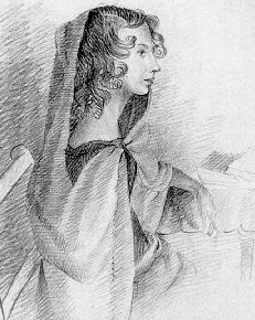
Anne Brontë, English poet and novelist, is born on January 17, 1820, in Thornton, West Riding of Yorkshire, England. She is the sister of Charlotte and Emily Brontë and author of Agnes Grey, A Novel (1847) and The Tenant of Wildfell Hall (1848).

Brontë is the youngest of six children of Patrick Brontë, a poor Irish clergyman in the Church of England, and Marie Brontë. She lives most of her life with her family at the parish of Haworth on the Yorkshire moors and is taught in the family’s Haworth home and at Roe Head School. With her sister Emily, she invents the imaginary kingdom of Gondal, about which they write verse and prose, the latter now lost, from the early 1830s until 1845.

Brontë takes a position as governess briefly in 1839 and then again for four years, 1841–45, with the Robinsons, the family of a clergyman, at Thorpe Green, near York. There her irresponsible brother, Branwell, joins her in 1843, intending to serve as a tutor. Anne returns home in 1845 and is followed shortly by her brother, who has been dismissed, charged with making love to his employer’s wife.

In 1846 Brontë contributes 21 poems to Poems by Currer, Ellis and Acton Bell, a joint work with her sisters Charlotte and Emily. Her first novel, Agnes Grey, is published together with Emily’s Wuthering Heights in three volumes, of which Agnes Grey is the third, in December 1847. The reception to these volumes, associated in the public mind with the immense popularity of Charlotte’s Jane Eyre (October 1847), lead to quick publication of Anne’s second novel, again as Acton Bell, The Tenant of Wildfell Hall, published in three volumes in June 1848. It sells well.

Emily’s death in December 1848 deeply affects Brontë and her grief undermines her physical health. Over Christmas, she comes down with influenza. Her symptoms intensify and her father sends for a Leeds physician in early January. The doctor diagnoses her condition as consumption (tuberculosis) and intimates that it is quite advanced, leaving little hope of recovery. Anne meets the news with characteristic determination and self-control.

In February 1849, Brontë seems somewhat better and decides to make a return visit to Scarborough in the hope that the change of location and fresh sea air might initiate a recovery. On May 24, 1849, she sets off for Scarborough with Charlotte and Ellen Nussey. However, it is clear that Anne has little strength left.

On Sunday, May 27, Brontë asks Charlotte whether it would be easier if she returned home to die instead of remaining in Scarborough. A doctor, consulted the next day, indicates that death is close. Conscious and calm, she dies in the afternoon of Monday, May 28, 1849, at the age of 29. She is buried in Scarborough in St. Mary’s churchyard, beneath the castle walls, overlooking the bay.

Her novel Agnes Grey, probably begun at Thorpe Green, records with limpidity and some humour the life of a governess. George Moore calls it “simple and beautiful as a muslin dress.” The Tenant of Wildfell Hall presents an unsoftened picture of the debauchery and degradation of the heroine’s first husband and sets against it the Arminian belief, opposed to Calvinist predestination, that no soul shall be ultimately lost. Her outspokenness raised some scandal, and Charlotte deplored the subject as morbid and out of keeping with her sister’s nature, but the vigorous writing indicates that Brontë found in it not only a moral obligation but also an opportunity of artistic development.

(Pictured: A sketch of Anne Brontë by sister Charlotte, circa 1834)


Leave a comment

Birth of Thomas Clarke Luby, Irish Revolutionary

thomas-clarke-luby

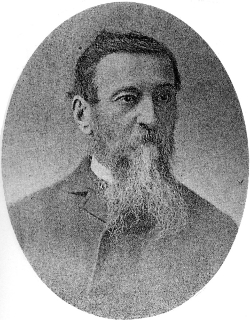
Thomas Clarke Luby, Irish revolutionary, author, journalist and one of the founding members of the Irish Republican Brotherhood, is born in Dublin on January 16, 1822.

Luby is the son of a Church of Ireland clergyman from Templemore, County Tipperary, his mother being a Catholic. He is educated at Trinity College Dublin where he studies law and puts in the necessary number of terms in London and Dublin where he acquires a reputation as a scholar and takes his degree. He goes on to teach at the college for a time.

Luby supports the Repeal Association and contributes to The Nation newspaper. After the breach with Daniel O’Connell, he joins the Young Irelanders in the Irish Confederation. He is deeply influenced by James Fintan Lalor at this time. Following the suppression of the Young Ireland Rebellion of 1848, he with Lalor and Philip Gray attempt to revive the fighting in 1849 as members of the secret Irish Democratic Association. This, however, ends in failure.

In 1851 Luby travels to France, where he hopes to join the French Foreign Legion to learn infantry tactics but finds the recruiting temporarily suspended. From France he goes to Australia for a year before returning to Ireland. From the end of 1855 he edits the Tribune newspaper founded by John E. Pigot who had been a member of The Nation group. During this time, he remains in touch with the small group of ’49 men including Philip Gray and attempts to start a new revolutionary movement. Luby’s views on social issues grow more conservative after 1848 which he makes clear to James Stephens whom he meets in 1856.

In the autumn of 1857 Owen Considine arrives with a message signed by four Irish exiles in the United States, two of whom are John O’Mahony and Michael Doheny. The message conveys the confidence they have in Stephens and asks him to establish an organisation in Ireland to win national independence. Considine also carries a private letter from O’Mahony to Stephens which is a warning, and which is overlooked by Luby and Stephens at the time. Both believe that there is a strong organisation behind the letter, only later to find it is rather a number of loosely linked groups. On December 23 Stephens dispatches Joseph Denieffe to America with his reply which is disguised as a business letter dated and addressed from Paris. In his reply, Stephen’s outlines his conditions and his requirements from the organisation in America.

On March 17, 1858, Denieffe arrives in Dublin with the acceptance of Stephens’s terms by the New York Committee and the eighty pounds. On that very evening the Irish Republican Brotherhood is established in Peter Langan’s timberyard in Lombard Street.

In mid-1863 Stephens informs his colleagues he wishes to start a newspaper, with financial aid from O’Mahony and the Fenian Brotherhood in America. The offices are established at 12 Parliament Street, almost at the gates of Dublin Castle. The first issue of the Irish People appears on November 28, 1863. The staff of the paper along with Luby are Charles J. Kickham and Denis Dowling Mulcahy as the editorial staff. Jeremiah O’Donovan Rossa and James O’Connor have charge of the business office, with John Haltigan being the printer. John O’Leary is brought from London to take charge in the role of Editor.

On July 15, 1865, American-made plans for a rising in Ireland are discovered. Superintendent Daniel Ryan, head of the G Division of the Dublin Metropolitan Police at Dublin Castle, has an informer within the offices of the Irish People who supplies him with an “action this year” message on its way to the IRB unit in Tipperary. With this information, Ryan raids the offices of the Irish People on Thursday, September 15, followed by the arrests of Luby, O’Leary and O’Donovan Rossa. Kickham is caught after a month on the run. Stephens is also caught with the support of Fenian prison warders. The last number of the paper is dated September 16, 1865.

After his arrest and the suppression of the Irish People, Luby is sentenced to twenty years of penal servitude. He is released in January 1871 but is compelled to remain away from Ireland until the expiration of his sentence.

Upon his release Luby goes first to the Continent and later settles in New York City. He lectures all over the country for years and writes for a number of Irish newspapers on political topics. At the memorial meeting on the death of John Mitchel, he delivers the principal address in Madison Square Garden.

Thomas Clarke Luby dies at 109½ Oak Street, Jersey City, New Jersey of paralysis, on November 29, 1901, and is buried in a grave shared with his wife in Bayview Cemetery in Jersey City. His epitaph reads: “Thomas Clarke Luby 1822–1901 He devoted his life to love of Ireland and quest of truth.”


Leave a comment

Birth of Thomas Crofton Croker

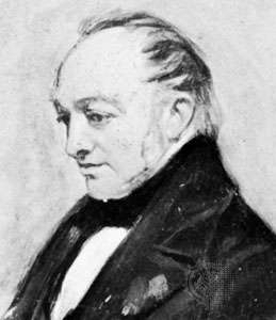
thomas-crofton-crokerThomas Crofton Croker, antiquarian and folklorist, is born on January 15, 1798 in Cork, County Cork. His collections of songs and legends form a storehouse for writers of the Irish Literary Revival.

The son of an army major, Croker has little school education but does read widely while working in merchant trade. For some years Croker holds a position in the Admiralty, where his distant relative, John Wilson Croker, is his superior.

Croker devotes himself largely to the collection of ancient Irish poetry and Irish folklore. He assists in founding the Percy Society and the Camden Society. He and his wife’s testimonies about funereal customs, particularly the tradition of keening the deceased are among the earliest and most significant contributions to the understanding of the Irish language lament and the accompanying traditions. The first part of his Fairy Legends and Traditions of the South of Ireland is published in 1825. It grows to six editions and is translated into German by the Brothers Grimm (Irische Elfenmärchen, 1826). Parts two and three follow in 1828, the latter including Croker’s translation of the long Grimm preface to part one.

Croker publishes Legends of the Lakes: Or, Sayings and Doings at Killarney in 1829, in which he features discussions of the music of his friend, the Irish piper James Gandsey.

Thomas Crofton Croker dies on August 8, 1854 and is buried in Brompton Cemetery, London.


Leave a comment

Death of Alan Rickman, Actor & Director

alan-rickman

Alan Sidney Patrick Rickman, English actor and director, dies in London on January 14, 2016.

Rickman is born into a working-class family of Irish and Welsh descent in Hammersmith, London, on February 21, 1946. Rickman attends Derwentwater Primary School in Acton, and then Latymer Upper School in London through the Direct Grant system, where he becomes involved in drama. After leaving Latymer, he attends Chelsea College of Art and Design and then the Royal College of Art. After graduation, Rickman and several friends open a graphic design studio called Graphiti, but after three years of successful business, he decides that he is going to pursue acting professionally. He writes to request an audition with the Royal Academy of Dramatic Art (RADA), which he attends from 1972 until 1974.

Upon leaving the Royal Academy of Dramatic Art, Rickman becomes a member of the Royal Shakespeare Company, performing in modern and classical theatre productions. His first big television role comes in 1982, but his big break is as the Vicomte de Valmont in the stage production of Les Liaisons Dangereuses in 1985, for which he is nominated for a Tony Award.

Rickman’s first film role is as the German terrorist leader Hans Gruber in Die Hard (1988). His other film roles include the Sheriff of Nottingham in Robin Hood: Prince of Thieves (1991), for which he receives the BAFTA Award for Best Actor in a Supporting Role, Elliott Marston in Quigley Down Under (1990), Jamie in Truly, Madly, Deeply (1990), P.L. O’Hara in An Awfully Big Adventure (1995), Colonel Brandon in Sense and Sensibility (1995), Éamon de Valera in Neil Jordan‘s Michael Collins (1996), Alexander Dane in Galaxy Quest (1999), Harry in Love Actually (2003) and Judge Turpin in the film adaptation of Stephen Sondheim‘s musical of Sweeney Todd: The Demon Barber of Fleet Street (2007). He gains further notice for his film performances as Severus Snape in the Harry Potter series. He also stars in television films, playing the title character in Rasputin: Dark Servant of Destiny (1996), which wins him a Golden Globe Award, an Emmy Award and a Screen Actors Guild Award, and Dr. Alfred Blalock in the Emmy-winning Something the Lord Made (2004). His final film roles are as Lieutenant General Frank Benson in the thriller Eye in the Sky (2015), and the voice of Absolem, the caterpillar in Alice Through the Looking Glass (2016).

In August 2015, Rickman suffers a minor stroke, which leads to the diagnosis of pancreatic cancer. He reveals the fact that he has terminal cancer to only his closest confidants. He dies of pancreatic cancer on January 14, 2016, at the age of 69. His remains are cremated on February 3, 2016, in the West London Crematorium in Kensal Green. His ashes are given to his wife, Rima Horton. His final two films, Eye in the Sky and Alice Through the Looking Glass, are dedicated to his memory.


Leave a comment

Birth of Herbert Brenon, Director, Actor & Screenwriter

herbert-brenon

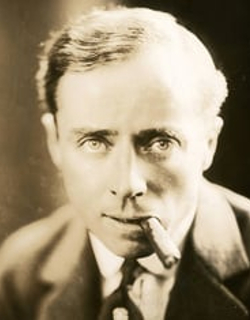
Herbert Brenon, Irish film director, actor and screenwriter during the era of silent movies through the 1930s, is born Alexander Herbert Reginald St. John Brenon on January 13, 1880.

Brenon is born at 25 Crosthwaite Park, in Kingstown (now Dún Laoghaire, County Dublin) to journalist, poet, and politician Edward St. John Brenon and Francis Harries.

In 1882, the family moves to London, where Brenon is educated at St. Paul’s School and at King’s College London. He starts out as a stagehand in New York City and by 1909 he operates a small picture theatre in Pennsylvania. Before becoming a director, he performs in vaudeville acts with his wife, Helen Oberg.

In 1911 Brenon is hired as a writer by Carl Laemmle, directing his first short the following year. Signed by William Fox in 1915, he graduates to feature films. With Paramount Pictures from 1923, he directs several spectacular productions with British themes, including the silent version of Beau Geste (1926). He regards sound pictures with a measure of apprehension.

Some of his more noteworthy films are the first movie adaptations of Peter Pan (1924) and the aforementioned Beau Geste (1926), Sorrell and Son (1927) for which he is nominated for the Academy Award for Best Director in the 1st Academy Awards, Laugh, Clown, Laugh (1928) with Lon Chaney, and The Flying Squad (1940), his last.

Brenon returns to Great Britain in 1934, but his career is well on the decline, and he retires in 1940.

Herbert Brenon dies in Los Angeles, California on June 21, 1958, and is interred in a private mausoleum at Woodlawn Cemetery, Bronx, New York.


Leave a comment

Birth of Novelist Jennifer Johnston

jennifer-johnston

Jennifer Prudence Johnston, Irish novelist whose works deal with political and cultural tensions in Ireland with an emphasis on the problems of the Anglo-Irish people, is born in Dublin on January 12, 1930. Rich in dialogue, Johnston’s novels often concern interpersonal relationships and the difficult transition from childhood to adulthood.

Johnston is born to Irish actress and director Shelah Richards, and Irish playwright Denis Johnston. A cousin of actress and film star Geraldine Fitzgerald, via Fitzgerald’s mother, Edith (née Richards), she is educated at Trinity College Dublin. Other cousins include the actresses Tara Fitzgerald and Susan Fitzgerald.

Born into the Church of Ireland, many of Johnston’s novels deal with the fading of the Protestant Anglo-Irish ascendancy in the 20th century.

Johnston’s first published book, The Captains and the Kings (1972), is actually written after The Gates (1973). Both novels feature the Anglo-Irish setting of a decaying manor house. Johnston’s third novel, How Many Miles to Babylon? (1974), concerns the complex and tragic friendship of two young men who are sentenced to death during World War I. Shadows on Our Skin (1977) and The Railway Station Man (1984) focus on violence in Northern Ireland, and The Old Jest (1979 and filmed as The Dawning, 1988) and Fool’s Sanctuary (1987) are set during the emergence of modern Ireland in the 1920s. The protagonist of The Christmas Tree (1981) attempts to salvage her troubled life before it is cut short by leukemia.

Johnston’s other novels include The Invisible Worm (1991), The Illusionist (1995), Two Moons (1998), This Is Not a Novel (2002), and Foolish Mortals (2007). She also writes short stories and plays, such as Three Monologues: Twinkletoes, Mustn’t Forget High Noon, Christine (1995) and The Desert Lullaby: A Play in Two Acts (1996).

Johnston marries a fellow student at Trinity College, Ian Smyth in 1951. She is a mother of four and currently lives near Dublin. She is also a member of Aosdána.