McLachlan is the featured composer in the RTÉ National Symphony Orchestra‘s “Horizons” series in 2003 and 2008. He also represents Ireland at international festivals, including the ISCM World Music Days in Slovenia in 2003 and Croatia in 2005. In 2006, his work Grand Action is commissioned as a test-piece for the AXA Dublin International Piano Competition.
McLachlan’s musical aesthetic is largely shaped by a desire to impart a sense of narrative and expectation to his music without recourse to pastiche rhetorical devices. A critic writes of a recording of McLachlan’s piano piece Nine: “The style of each little piece sends one’s imagination and musical memory reeling, some of them evoking French Impressionism, some jazzy in feel, some reminiscent of the miniatures for piano of Webern, and none of them in any way, shape or form derivative.” Much of his music is structured in contrasting and suddenly changing block-like sections of homogeneous material. The material within these sections is propelled by a rigorous focus on subtle rhythmic and melodic permutations, which result in both surface opacity and gradually increasing tension.
Dalton is born to Irish American parents James F. and Katharine L. Dalton. The family moves back to Ireland when he is two years old. He grows up in a middle-class Catholic background in Drumcondra in North Dublin and lives at No. 8 Upper St. Columba’s Road. He is educated by the Christian Brothers at O’Connell School in North Richmond Street. He joins the nationalist militia, the Irish Volunteers, in 1913 and the following year, though only fifteen, is involved in the smuggling of arms into Ireland.
Dalton joins the British Army in 1915 for the duration of the Great War. His decision is not that unusual among Irish Volunteers, as over 20,000 of the National Volunteers join the British New Army on the urgings of Nationalist leader John Redmond. His father, however, disagrees with his son’s decision. He initially joins the 7th battalion of the Royal Dublin Fusiliers (RDF) as a temporary 2nd Lieutenant. By 1916 he is attached to the 9th Battalion, RDF, 16th (Irish) Division under Major-General William Hickie, which contains many Irish nationalist recruits.
During the Battle of the Somme in September 1916, Dalton is involved in bloody fighting during the Battle of Ginchy, in which over 4,000 Irishmen are killed or wounded. He is awarded the Military Cross for his conduct in the battle. Afterwards he is transferred to the 6th Battalion, Leinster Regiment, and sent to Thessaloniki then Palestine, where he commands a company and then supervises a sniper school in el-ʻArīsh. In 1918 he is re-deployed again to France, and in July promoted to captain, serving as an instructor.
On demobilisation in April 1919, Dalton returns to Ireland. There, finding that his younger brother Charlie had joined the IRA, he himself follows suit. He later comments on the apparent contradiction of fighting both with and against the British Army by saying that he had fought for Ireland with the British and fought for Ireland against them.
Dalton follows Collins in accepting the Anglo-Irish Treaty in 1922 and is one of the first officers, a Major General, in the new National Army established by the Irish Provisional Government of the Irish Free State. The Treaty is opposed by much of the IRA and Civil War between pro and anti-treaty factions eventually results.
Dalton is in command of troops assaulting the Four Courts in the Battle of Dublin which marks the start of the war in June 1922. At Collins’ instigation he, as Military liaison officer with the British during the truce, takes control of the two 18 pounder guns from the British that are trained on the buildings. He becomes commander of the Free State Army under Richard Mulcahy‘s direction. He is behind the Irish Free State offensive of July–August 1922 that dislodges the Anti-Treaty fighters from the towns of Munster. He proposes seaborne landings to take the Anti-Treaty positions from the rear and he commands one such naval landing that takes Cork in early August. In spite of firm loyalty to the National Army, he is critical of the Free State’s failure to follow up its victory, allowing the Anti-Treaty IRA to regroup resuming the guerrilla warfare started in 1919.
On August 22, 1922, he accompanies Collins in convoy, touring rural west Cork. The convoy is ambushed near Béal na Bláth and Collins is killed in the firefight. He had advised Collins to drive on, but Collins, who is not an experienced combat veteran, insists on stopping to fight.
Dalton is married shortly afterwards, on October 9, 1922, to Alice Shannon in Cork’s Imperial Hotel. By December 1922 he has resigned his command in the Army. He does not agree with the execution of republican prisoners that mark the latter stages of the Civil War. After briefly working as clerk of the Irish Senate, Seanad Éireann, he leaves the job to work in the movie industry.
Dalton dies in his daughter Nuala’s house in Dublin on March 4, 1978, his 80th birthday, never having seen the film that Cathal O’Shannon of RTÉ had made on his life. During the making of the film, they visit the battlefields in France, Kilworth Camp in Cork, Béal Na Bláth, and other places that Dalton had not visited since his earlier years. He wishes to be buried as near as possible to his friend Michael Collins in Glasnevin Cemetery in Dublin and is buried there in March 1978 after a military funeral. None of the ruling Fianna Fáil government ministers or TDs attend.
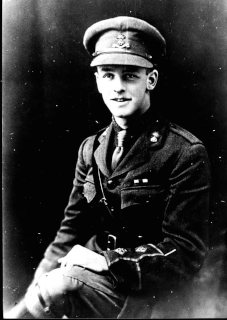
(Pictured: Dalton photographed in lieutenant’s uniform, Royal Dublin Fusiliers, taken circa. 1914-1918)
Aidan Higgins, Irish writer of short stories, travel pieces, radio drama and novels, is born on March 3, 1927, in Celbridge, County Kildare. Among his published works are Langrishe, Go Down (1966), Balcony of Europe (1972) and the biographical Dog Days (1998). His writing is characterised by non-conventional foreign settings and a stream of consciousness narrative mode. Most of his early fiction is autobiographical – “like slug trails, all the fiction happened.”
Higgins attends local schools and Clongowes Wood College, a private boarding school. In the early 1950s he works in Dublin as a copywriter for the Domas Advertising Agency. He then moves to London and works in light industry for about two years. He marries Jill Damaris Anders in London on November 25, 1955. From 1960, he sojourns in southern Spain, South Africa, Berlin and Rhodesia. In 1960 and 1961 he works as scriptwriter for Filmlets, an advertising firm in Johannesburg. These journeys provide material for much of his later work, including his three autobiographies, Donkey’s Years (1996), Dog Days (1998) and The Whole Hog (2000).
His upbringing in a landedCatholic family provides material for Higgins first novel, Langrishe, Go Down (1966). The novel is set in the 1930s in a run-down “big house” in County Kildare, inhabited by the last members of the Langrishe family, three spinster sisters, Catholics, living in not-so-genteel poverty in a once-grand setting. One sister, Imogen, has an affair with a German intellectual, Otto Beck, which transgresses the moral code of the time, bringing her a brief experience of happiness. Otto’s intellectual pursuits contrast with the moribund cultural life of mid-20th century Ireland. The book is awarded the James Tait Black Memorial Prize for fiction and is later adapted as a BBC Television film by British playwright Harold Pinter, in association with RTÉ. Langrishe, Go Down also receives the Irish Academy of Letters Award.
Higgins second major novel is Balcony of Europe, taking its name from a feature of the Spanish fishing village, Nerja Andalusia, where it is set. The novel is carefully crafted, and rich in embedded literary references, using Spanish and Irish settings and various languages, including Spanish and some German, in its account of the daily life in the beaches and bars of Nerja of a largely expatriate community. The protagonist, an artist called Dan Ruttle, is obsessed with his friend’s young American wife, Charlotte, and by the contrast between his life among a cosmopolitan artistic community in the Mediterranean, and his Irish origins. The book is re-edited in collaboration with Neil Murphy and published by Dalkey Archive Press in 2010, with the Irish material cut and the affair between Dan Ruttle and Charlotte foregrounded.
Higgins later novels include widely acclaimed Bornholm Night Ferry and Lions of the Grunwald. Various writings have been collected and reprinted by the Dalkey Archive Press, including his three-volume autobiography, A Bestiary, and a collection of fiction, Flotsam and Jetsam, both of which demonstrate his wide erudition and his experience of life and travel in South Africa, Germany and London which gives his writing a largely cosmopolitan feel, utilising a range of European languages in turns of phrase.
Higgins lives in Kinsale, County Cork, from 1986 with the writer and journalist Alannah Hopkin. They are married in Dublin in November 1997. He is a founder member of Irish artists’ association Aosdána. He dies on December 27, 2015, in Kinsale.
Dillon is the eldest of five children of Sir James Charles Mathew and Elizabeth Blackmore Mathew. Her family is related to the Butler family, but she does not visit Ireland until 1886. Living in Queen’s Gate Gardens, Kensington, London, she is educated at home. From a young age she attends the ladies’ gallery of the House of Commons, while mixing a busy social life with charitable works.
Dillon begins keeping a diary in 1879, which she continues to write until her death. Her ancestor, Mary Mathew, is also a diarist and keeps the diary for the discipline of the daily activity. She soon begins to write for the love of it, and some have surmised she wrote with the intention her diaries would be read by others. She attends lectures in Old English and literature at King’s College, London from late 1882 to 1884, and begins to learn Irish in 1893.
Dillon’s father supports land reform in Ireland, chairs the evicted tenants commission in 1892, and is a huge influence on her politics. She makes her first political reference on February 25, 1883, when she notes the arrest of the Invincibles, and she then regularly comments on land reform. She travels to Ireland for the first time in August 1886, staying in Killiney, County Dublin. In October 1886, she meets John Dillon and begins to follow the Plan of Campaign so that she can discuss it with him during his visits to the Mathew house in London.
During this time, John Dillon is deeply immersed in politics and is imprisoned on a number of occasions. Being a careful follower of Irish politics, she becomes an anti-Parnellite. She confronts John Dillon in autumn 1895 about their relationship, saying that they can no longer meet as they had become the subject of gossip. He proposes within two weeks, and they are married on November 21, 1895, in Brompton Oratory. They are busy and often apart, with Dillon spending time in a warm climate due to his ill health. She tries to accompany him when she can, but the couple’s large family makes that difficult. They have one daughter and five sons, John Dillon (1896-1970), Anne Elizabeth Dillon (born October 29, 1897), Theobald Wolfe Tone (1898-1946), Myles, James, and Brian.
Finances are strained until John’s uncle Charles bequeaths him his house, 2 North Great George’s Street, Dublin in 1898, and a business in Ballaghaderreen, County Mayo is bequeathed him by a cousin, Anne Deane, in 1905. Dillon runs the business successfully, while also carrying out duties as a politician’s wife such as opening the Belfast ladies’ branch of the United Irish League in June 1905. Her busy life results in her neglecting her diary.
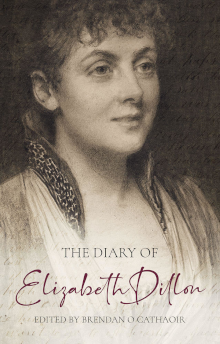
Dillon dies on May 14, 1907, in Dublin, having given birth to a stillborn daughter that morning. Pneumonia is given as the cause of death, but it could have been medical incompetence. She is buried in the family vault in Glasnevin Cemetery. Her husband writes of her death in June 1907, A short narrative of the illness and death of my dearest love. Trinity College Dublin holds her diary and correspondence. Her diaries, edited by Brendan Ó Cathaoir, are published in 2019.
O’Neill becomes Republic of Ireland manager in 2013 and leads them to qualification for the 2016 UEFA European Football Championship for the third time in the nation’s history, beating the reigning world champions, Germany, in the process. He leaves the role with assistant Roy Keane by “mutual agreement” in November 2018. He is appointed as Nottingham Forest manager on January 15, 2019. He guides the club to a ninth-place finish in the Championship. However, he is sacked as manager on June 28, 2019, after reportedly falling out with some of the senior first team players.
In 2002, Norwich supporters voted O’Neill into the club’s Hall of Fame. He is awarded an OBE for services to sport in 2004. He is awarded the Nottingham Lifetime Achievement Award on November 3, 2013 for his services to football and achievements with Nottingham Forest.
In the early 1970s, after the onset of the Troubles, the Provisional IRA launches a campaign aimed at forcing the British to withdraw from Northern Ireland.
The IRA, particularly its South Armagh Brigade, has repeatedly attacked the British Army and RUC with home-made mortars, but with limited success. Between 1973 and early 1978 a total of 71 mortar attacks are recorded, but none cause direct British Army or RUC deaths. There are only two deadly mortar attacks before 1985. The first is on March 19, 1979, when Private Peter Woolmore of the Queen’s Regiment is killed in a mortar attack on Newtownhamilton British Army base. The second is on November 12, 1983, when a RUC officer is killed and several hurt in a mortar attack on Carrickmore RUC base.
The attack is jointly planned by members of the South Armagh Brigade and an IRA unit in Newry. The homemade mortar launcher, dubbed the ‘Mark 10,’ is bolted onto the back of a Fordlorry that had been hijacked in Crossmaglen.
Shortly after 6:30 PM on February 28, nine shells are launched from the lorry, which had been parked on Monaghan Street, about 250 yards from the base. At least one 50-lb. shell lands on a portacabin containing a canteen, where many officers are having their evening tea break. Nine police officers are killed and 37 people are hurt, including 25 civilian police employees, the highest death toll inflicted on the RUC in its history. The nine dead officers range in age from 19 to 41, seven male and two female, seven Protestants and two Catholics. Another shell hits the observation tower, while the rest land inside and outside the perimeter of the base.
The day is dubbed “Bloody Thursday” by the British press. British prime ministerMargaret Thatcher calls the attack “barbaric,” while Ireland’s Taoiseach, Garret FitzGerald, says it is “cruel and cynical,” and pledges the help of the Irish security forces to catch those responsible. Although not involved in the attack, Newry IRA member Eamon Collins is arrested shortly afterwards and interrogated. After five days of questioning, Collins breaks under interrogation and turns supergrass, leading to more than a dozen arrests of other IRA members. The attack prompts calls from unionist politicians to “increase security,” and the British government launches a multi-million pound programme of construction to protect bases from similar attacks. This involves installing reinforced roofs and building blast-deflecting walls around the base of buildings.
After the successful attack in Newry, the IRA carries out a further nine mortar attacks in 1985. On September 4, an RUC training centre in Enniskillen is attacked. Thirty cadets narrowly escape death due to poor intelligence-gathering by the IRA unit responsible. The cadets are expected to be in bed sleeping, but are instead eating breakfast when the bombs land. In November 1986, the IRA launches another attack on the RUC base in Newry, but the bombs fall short of their target and land on houses. A four-year-old Catholic girl is badly wounded and another 38 people are hurt, prompting the IRA to admit that “this incident left us open to justified criticism.”
Beginning in the 1990s, operations at the Corry Square base are progressively shifted to a new facility on the outskirts of Newry. The base is closed in 2002, and a park occupies the site today.
(Pictured: Destroyed cars and remains of the Newry RUC Corry Square police Station in Catherine Street taken the day after the attack by the Provisional IRA using homemade mortar bombs)
Bullock is born on May 17, 1865 at Inisherk, County Fermanagh just outside the County Cavan border near Belturbet, in what is now Northern Ireland. His father, Thomas Bullock, is a strict man who has eleven children and drives several to emigration because of his stern demeanour. Thomas Bullock works on the Crom Castle estate which runs along the Cavan/Fermanagh border and has both Catholic and Protestant workers. Protestant workers have the prime jobs and are employed as craftsmen and supervisors while Catholics work in the outer area of the estate at unskilled jobs. Folk memories of the Battle of Newtownbutler in 1689 remain long in the memory in the area where up to 1,500 Jacobite troops are hacked down or drowned in Upper Lough Erne when pursued by the Williamite cavalry. Many of the Williamite army is drawn from the local Protestant population.
Bullock is educated at Crom estate primary school run by the Church of Ireland and Farra School near Bunbrosna, County Westmeath. He fails the entrance exams at the University of Dublin. He tries his hand at farming but finds he is not suited. He moves to London in 1883 and becomes a Civil Service clerk. He takes to journalism to supplement his salary and publishes his first book of stories, The Awkward squads, in 1893. His stories are centered on Irish Catholic and Protestant small farmers and labourers and their struggles and tensions. He marries Emma Mitchell in 1899 and they have a son and daughter.
Bullock is well respected in literary circles but his books are never successful enough for him to become a full time writer. He says that the English are not interested in Irish stories and that there is no reading public in Ireland. He dislikes Orangesectarianism and is ambivalent to Irish nationalism. His novel The Red Leaguers looks at sectarianism conflict and Robert Thorne examines the lives of London clerks which is a popular theme at the time. His last and best novel The Loughsiders is published in 1924 and is the story of a conniving smallholder based on William Shakespeare’s Richard III.
Bullock’s wife dies in 1922. He spends the final years of his life in Sutton, Surrey and dies there on February 27, 1935.
Bullock’s daughter presents his literary papers, including two unpublished novels, two plays, numerous short stories and essays, and some correspondence to the Queen’s University Belfast library in the 1960s. A portrait of Bullock by Dermod O’Brien, RHA, is also at Queen’s University Belfast. His correspondence with Sir Horace Plunkett is in the archives of the Plunkett Foundation, Long Hanborough Business Park, Woodstock, Oxfordshire. Enniskillen public library has a collection of cuttings on Bullock, including some photocopied letters.
Yeats spends her first three years between Ballylee, County Galway, and Oxford before her family moves to 82 Merrion Square, Dublin in 1922. She is very sick as a child and spends three years in two different hospitals, St. Margaret’s Hall, 50 Mespil Road, and Nightingale Hall, Morehampton Road, Dublin. She then goes to the Pension Henriette, a boarding school in Villars-sur-Bex, Switzerland from 1928–30. In 1923 her Aunt Elizabeth “Lolly” gives her brush drawing lessons which aid her in winning first prize in the Royal Dublin Society (RDS) National Art competition for children under eight years old in 1925 and 1926.
Yeats trains in the Royal Hibernian Academy school from 1933 to 1936 and works as a stage designer with the Abbey Theatre in Dublin. In 1936, at the age of 16, she is hired by the Abbey Theatre as assistant to Tanya Moiseiwitsch. She studies for four months at the School of Theatrical Design in Paris with Paul Colin in 1937. At 18, she begins her costume career on sets with Ria Mooney‘s company. At the Abbey, she designs the sets and costumes for revivals of W.B. Yeats’ plays The Resurrection and On Baile’s Strand (1938).
In 1938 Yeats designs the first production of W.B. Yeats’ play Purgatory. The designs for Purgatory are her most successful achievement. Purgatory is the last play that W.B Yeats sees on stage, and when it is performed it is a full house. When working on Purgatory, Hugh Hunt wants to have a moon on the back cloth of the production, but she refuses. “If she does not win, she is going to say that she doesn’t wish to have her name on the programme as a designer of the setting.” This could be the main reason why her name is not on many productions that she worked on. She also designs the first play of her uncle Jack Yeats to receive professional production, Harlequin’s Positions.
In 1939 Yeats is promoted to head of design at the Abbey until her departure in May 1941. In 1939 it is commented that her designs are “getting arty” and not in keeping with style of the Abbey. One of her last designs is her father’s last play, The Death of Cuchulain, for the Lyric Theatre on the Abbey stage in 1949. She designs and stage-manages for the Peacock Theatre, the Cork Opera House, the Olympia Theatre, the Gaiety Theatre, the Lyric Theatre, the Abbey Theatre and the Players Theatre.
Among the work Yeats is credited with in the Abbey Theatre, she also works on five productions in the Peacock Theatre with the Theatre Company: Alarm Among the Clerks (1937), The Phoenix (1937), Harlequin’s Positions (1939), The Wild Cat (1940), and Cavaliero (The Life of a Hawk) (1948).
Yeats chooses to move towards painting full-time beginning a brief study at the Dublin Metropolitan School of Art in 1941. She experiments with watercolour and wax. She has a touching naive expressionist style and is interested in representing domestic humanity. She designs many of the covers for the books of Irish language publisher Sáirséal agus Dill over a twenty-year period from 1958. She does illustrations for books by Denis Devlin, Thomas Kinsella and Louis MacNeice, and works with many young designers, such as Louis le Brocquy.
Yeats dies at the age of 82 on July 4, 2001, and is buried in Shanganagh Cemetery, south Dublin.
The Royal Hibernian Academy holds a retrospective of her work in 1995, as does the National Gallery of Ireland in 2002. She donates her collection of Jack B. Yeats’ sketch books to the National Gallery of Ireland, leading to the creation of the Yeats Museum within the Gallery. Her brother, Michael, in turn, donates her sketchbooks to the Museum.
(Pictured: “Coole Park,” oil on board by Anne Butler Yeats, Duke Street Gallery, Dublin)
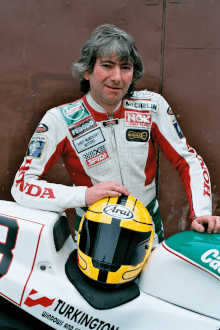
Dunlop marries on September 22, 1972 at the Ballymoney register office. He is the proprietor of a pub in Ballymoney and is highly superstitious, always wearing a red T-shirt and his yellow crash helmet when racing. He is presented with the Freedom of the Borough by Ballymoney Council in 1993.
Dunlop helps orphans in the Balkans, driving a van loaded with supplies to orphanages in Romania, Albania and Bosnia-Herzegovina before the annual racing season begins. In 1996, he receives an OBE for his humanitarian work.
On the night of May 23, 1985, Dunlop is traveling from Northern Ireland to the Isle of Man for the annual TT races by sea, onboard the Tornamona, a former fishing boat. The vessel departs from Strangford, County Down with Dunlop, other riders, racing bikes and equipment onboard. Strong currents into Strangford Lough push the Tornamona onto St. Patrick’s Rock where her rudder breaks off in a crevice. The boat sinks and all 13 passengers and crew are rescued by the PortaferryLifeboat. The bikes are later recovered by divers.
In 1986, Dunlop wins a fifth consecutive TT Formula One world title. Initially based on one race at the Isle of Man TT after the loss of World Championship status from 1977-onwards and organised by the Auto-Cycle Union, the title is eventually expanded to take in more rounds in other countries.
Dunlop is awarded the MBE in 1986 for his services to the sport. He is featured in three documentary films regarding his career: V Four Victory (1983), Joey – The Man Who Conquered the TT (2013) and Road (2014).
Dunlop wins his third hat trick at the Isle of Man TT in 2000 and sets his fastest lap on the course of 123.87 mph in the Senior race, in which he finishes third.
Dunlop dies in Tallinn, Estonia, on July 2, 2000 while leading a 125cc race on the Pirita-Kose-Kloostrimetsa Circuit. He appears to lose control of his bike in the wet conditions and dies instantly on impact with trees. As a mark of respect, the Estonian government’s official website is replaced with a tribute to Dunlop within hours of his death. Northern Ireland television carries live coverage of his funeral. Fifty thousand mourners, including bikers from all parts of Britain and Ireland and people from all backgrounds in Northern Ireland, attend the funeral procession to Garryduff Presbyterian church and his burial in the adjoining graveyard.
Following Dunlop’s death, the Leisure Centre in his hometown of Ballymoney is renamed from the Riada Centre to the Joey Dunlop Leisure Centre. Also, a memorial statue is erected in his hometown. The Joey Dunlop Foundation is initiated, a charity that provides appropriate accommodation for disabled visitors to the Isle of Man. In 2001, the Joey Dunlop Memorial Garden is established in the Dunlop family’s hometown, and in 2010 the tribute is extended to include the Robert Dunlop Memorial Garden to honour Joey’s late brother, Robert Dunlop.
The most successful overall rider at the annual TT races is awarded the “Joey Dunlop Cup.” On the Isle of Man, a statue of Dunlop astride a Honda overlooks the Bungalow Bend at Snaefell and the 26th Milestone area of the TT course is named “Joey’s.” A memorial stone is installed at the crash site in Tallinn as well. Irish publishers the O’Brien Press produces a full-colour pictorial tribute to Dunlop following his death. Northern Ireland band Therapy? records a song in memory of Dunlop called “Joey.” It appears on the album Shameless, released in 2001.
On January 30, 2015, Dunlop is voted Northern Ireland’s greatest sports star by readers of the Belfast Telegraph newspaper. In 2016 he is voted through Motorcycle News as the fifth greatest motorcycling icon ever, behind Valentino Rossi.
Downey’s offbeat reports of the 1994 FIFA World Cup for The Irish News are subsequently compiled for his first book, Just One Big Party. He spends six years as a BBC news producer in Derry and Belfast, before joining the Derry News as editor in 2001. During his period as editor (2001–2004), the Derry News wins two Newspaper Society awards for Fastest Circulation Growth in the United Kingdom.
Since 2004, Downey has published six comic novels set in the criminal underbelly of post-ceasefire Ireland. His books have been described as “a superb blend of comedy, political dirty tricks, grisly murder and bizarre twists.”
A former deputy-president of the Union of Students in Ireland, Downey is one of the organisers of a student occupation of government offices in Dublin on Budget Day 1988 in protest against education cutbacks.
In 2006, Downey helps establish the new Northern Ireland literary review Verbal and edits the publication for its first six issues.
A lifelong political anorak, in 2007, Downey works as an election pundit for TV3 (Ireland), alongside the Irish comedian Brendan O’Carroll. In 2010, he wins a contest to predict the winners of Northern Ireland’s 18 Westminster constituencies, missing out on just one, Naomi Long, who surprisingly beat First MinisterPeter Robinson in Belfast East. He donates his prize, a framed Ian Knox cartoon, to Long by way of apology.
Downey’s 2010 comedy-thriller The American Envoy is the first novel issued by an Irish publishing house as a Kindlee-book, simultaneously with its paperback release.
In June 2011, Downey is appointed Director of Media for Culture Company 2013, the body tasked with delivering Derry’s UK City of Culture year.
Downey is married to Una McNally, and they have two children.






 seamus dubhghaill