seamus dubhghaill

Promoting Irish Culture and History from Little Rock, Arkansas, USA


Leave a comment

Birth of Gaelic Footballer Mick O’Connell

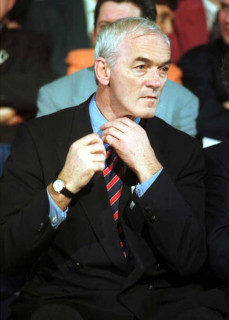
Michael “Mick” O’Connell, retired Gaelic footballer, is born on Valentia Island, County Kerry, on January 4, 1937. His league and championship career with the Kerry senior team spans nineteen seasons from 1956 to 1974. He is widely regarded as one of the greatest players in the history of the game.

O’Connell is raised in a family that has no real link to Gaelic football. His father is a fisherman who also works on the family’s small farm on the island. From an early age O’Connell shows his footballing talent and “inimitable signs of excellence.” He excels at the game in his youth and also at Cahersiveen CBS.

O’Connell begins his club football career with neighbouring Waterville. When a football club, Valentia Young Islanders, is founded on Valentia Island, as per GAA rules he switches allegiance to his local parish team. He wins three Kerry Senior Football Championship medals with the South Kerry divisional side.

O’Connell’s career with Kerry begins in 1955 when he lines out in the Munster Minor Championship. Kerry loses the replayed Munster final to Tipperary.

O’Connell quickly joins the Kerry senior football team, making his debut in 1956 against Tipperary in the Munster Championship. He later lines out in the Munster final against Cork, but loses out in a replay. In 1958 he wins the first of eight consecutive Munster Senior Football Championship titles, however, Kerry suffers a shocking defeat by Derry in the All-Ireland semi-final. In 1959 he is captain when Kerry wins the National Football League. He later guides his native-county to another Munster title, however, he has to retire due to injury in Kerry’s All-Ireland victory over Galway.

Following a second National League victory in 1961, O’Connell captures his second All-Ireland medal in 1962 when Kerry defeats Roscommon in the final. A third National League victory quickly follows at the start of 1963. After two All-Ireland defeats by Galway in 1964 and 1965 Kerry surrenders their provincial crown to Cork in 1966 and 1967. He wins a ninth Munster title in 1968, however, Kerry loses out to Down in the All-Ireland final. This defeat is followed by a great year of success in 1969 as he adds a fourth National League medal to his collection before winning a tenth Munster title. He later wins a third All-Ireland medal following a victory over Offaly.

In 1970 O’Connell enters the third decade of his inter-county football career, winning an eleventh Munster title in the process. A fourth All-Ireland medal quickly follows after a victory over Meath in the first 80-minute All-Ireland final. He claims two more National league medals in 1971 and 1972, before winning his twelfth and final provincial medal in 1972. That year Offaly later defeats Kerry in O’Connell’s last All-Ireland final appearance. In spite of this loss he is still presented with an GAA GPA All Star award. He retires from inter-county football in 1973.

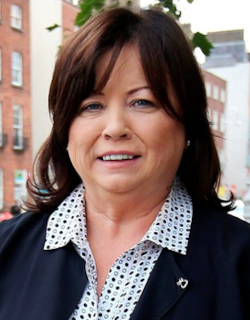
In 1972 O’Connell marries his wife Rosaleen. They have three children, Máire, Mícheál and Diarmuid. Mícheál marries Emma, daughter of then President of Ireland Mary McAleese in December 2009.

In retirement from playing O’Connell publishes his autobiography, A Kerry Footballer, in 1974. Ten years later in 1984, the GAA’s centenary year, his reputation as one of the all-time greats is recognised when he is named in the midfield position on the GAA Football Team of the Century. In 2000 he is also named on the associations Football Team of the Millennium.


Leave a comment

Death of Michael Butler Yeats, Barrister & Politician

Michael Butler Yeats, barrister, Fianna Fáil politician and only son of the poet William Butler Yeats, dies on January 3, 2007, in Dún Laoghaire, County Dublin. He serves two periods as a member of Seanad Éireann.

Yeats is born on August 22, 1921, in Thame, Oxfordshire, England to W. B. Yeats, who also served in the Seanad, and his mother, Georgie Hyde-Lees. His sister Anne Yeats is a painter and designer, as is his uncle Jack Butler Yeats. He is educated at Trinity College, Dublin and is an officer in the College Historical Society. He unsuccessfully stands for election to Dáil Éireann at the 1948 Irish general election and the 1951 Irish general election for the Dublin South-East constituency.

Following the 1951 election, Yeats is nominated to the 7th Seanad by the Taoiseach Éamon de Valera. He stands at the subsequent 1954 Irish general election for the 8th Seanad but is not elected.

From 1961 to 1980 Yeats is a member of Seanad Éireann. In 1961 he is elected to the 10th Seanad by the Labour Panel. In 1965 he is nominated by the Taoiseach Seán Lemass to the 11th Seanad. In 1969 he is elected to the 12th Seanad by the Cultural and Educational Panel where he serves as Cathaoirleach (chair) until 1973. He is re-elected to the 13th Seanad in 1973. In 1977, he is nominated by the Taoiseach Jack Lynch to the 14th Seanad. He resigns from the Seanad on March 12, 1980.

While a senator, Yeats serves as a Member of the European Parliament from 1973 to 1979, being appointed to Ireland’s first, second and third delegations. He stands at the first direct elections in 1979 for the Dublin constituency but is not elected.

Yeats is married to Gráinne Ni hEigeartaigh, a singer and Irish harpist. They have four children: daughters Caitríona (a concert harpist), Siobhán (a patents professional) and Síle (a broadcaster with RTÉ who also dies in 2007), and a son, Pádraig (an engineer).

Yeats dies on January 3, 2007, in St. Michael’s Hospital in Dún Laoghaire. His funeral service takes place in St. Patrick’s Church, Harbour Road, Dalkey, on January 8, 2007, followed by burial in Shanganagh Cemetery.


Leave a comment

Death of Margaret Emmeline Dobbs, Scholar & Playwright

Margaret Emmeline Dobbs, Irish scholar and playwright best known for her work to preserve the Irish language, dies in Cushendall, County Antrim, Northern Ireland on January 2, 1962.

Dobbs is born in County Antrim on November 19, 1871 to barrister Conway Edward Dobbs who is Justice of the Peace for County Antrim, High Sheriff for Carrickfergus in 1875 and High Sheriff for County Louth in 1882. Her mother is Sarah Mulholland, daughter of St. Clair Kelvin Mulholland of Eglantine, County Down. The family spends time living in Dublin where Dobbs is born. She attempts to learn Irish, however, when her father dies in 1898 her mother moves the family back to Glenariff.

Dobbs is interested in learning Irish and finds it easier to learn in County Donegal where it is still spoken. Her first teacher is Hugh Flaitile. She attends the Irish College at Cloughaneely in the Donegal Gaeltacht. She brings the idea of promoting the language to the Glens of Antrim and her circle of friends. She is one of the small number of Protestant women interested in the Gaelic revival.

The year 1904 sees the “Great Feis” in Antrim and Dobbs is a founder member of the Feis na nGleann committee and later a tireless literary secretary. In 1946, the Feis committee decides to honour her by presenting her with an illuminated address. It can be seen today at Portnagolan House with its stained glass windows commemorating a great Irishwoman. During her speech she says, “Ireland is a closed book to those who do not know her language. No one can know Ireland properly until one knows the language. Her treasures are hidden as a book unopened. Open the book and learn to love your language.”

Dobbs writes seven plays, published by Dundalgan Press in 1920, though only three are actually performed. The Doctor and Mrs. McAuley wins the Warden trophy for one-act plays at the Belfast festival in 1913. Her plays, however, are generally not a success and after 1920 she never writes another. She continues to work on historical and archaeological studies and her articles are published in the Ulster Journal of Archaeology, in a German magazine for Celtic studies, in the French Revue Celtique and in the Irish magazine Ériu.

Roger Casement is a good friend and although Dobbs never makes her political opinions known she contributes to his defence costs when he is accused of treason. Although her political views are not clearly known, Dobbs has been a member of the Gaelic League and in the executive of Cumann na mBan.

Dobbs dies at her home, Portnagolan House, Cushendall, on January 2, 1962.


Leave a comment

Death of Michael Dwyer, Journalist & Film Critic

Michael Dwyer, journalist and film critic who writes for The Irish Times for more than 20 years, dies following a lengthy illness on January 1, 2010. He previously fills this role for the Sunday Tribune, The Sunday Press and the magazine In Dublin.

Born on May 2, 1951, Dwyer is originally from Saint John’s Park in Tralee, County Kerry. His mother, Mary, outlives him. He has two sisters, Anne and Maria. As a young man in the early 1970s he takes part in the Tralee Film Society, for which he provides notes to The Kerryman. At this time, he is employed by the County Library in Tralee. He begins working for In Dublin followed by the Sunday Tribune and The Sunday Press.

Dwyer first travels to the Cannes Film Festival in 1982 and attends every one until 2009, months before his death. In 1985, he co-founds the Dublin Film Festival and directs it until the mid-1990s. In 2002, he co-founds the Dublin International Film Festival, of which he is the chairman. In later life he serves on the board of the Irish Museum of Modern Art.

In the 1990s, Dwyer presents the film show Freeze Frame for public service broadcaster RTÉ. The show results from a friendship he had formed with Alan Gilsenan and Martin Mahon of Yellow Asylum Films. He is also known for his appearances on the radio shows Morning Ireland and The Marian Finucane Show. The editor of The Irish Times, Geraldine Kennedy, speaking after Dwyer’s death, says he was an “enthusiastic advocate” of both national and international cinema and had once said he was “one of those lucky people in life who was able to pursue his interests and call them work.”

Dwyer becomes unwell following a trip to the Cannes Film Festival in May 2009. He takes a break from writing for The Irish Times, returning in December 2009 to contribute his first, and what is to be his last ever, piece in six months to weekly entertainment supplement The Ticket. The article is a review of cinema in 2009 and of the 2000s, and in his contribution, he references the ill health which had haunted him for much of the previous year and which had prevented him from viewing any cinema releases between June and September.

Dwyer dies at the age of 58 on January 1, 2010. His partner of 24 years, Brian Jennings, survives him. Irish Minister for Arts, Sport and Tourism Martin Cullen says Dwyer was “the most singular, significant influence on cinema in Ireland for more than three decades.” President of the Labour Party Michael D. Higgins says his work was “incalculable […] he was an activist in promoting a knowledge and appreciation of film in all its forms.” Ireland’s former Director of Film Classification at the Irish Film Classification Office John Kelleher says it was “a huge loss for the world of Irish film.” There are tributes from Gabriel Byrne, Daniel Day-Lewis, Brendan Gleeson, Jonathan Rhys Meyers, Cillian Murphy and Jim Sheridan. The Irish Times publishes tribute pieces on his life.

A ceremony takes place at the Church of the Holy Name in Ranelagh where Dwyer lived. The event is attended by notable politicians, journalists, artists, actors, writers and musicians. RTÉ newsreader Aengus Mac Grianna, a colleague of Jennings, reads a tribute to Dwyer. Daniel Day-Lewis gives a very special tribute at the church service to his dear friend of over 20 years, calling for the Jameson International Dublin Film Festival to be renamed in Dwyer’s honour.

Dwyer is cremated after the funeral on January 5, 2010.


Leave a comment

Birth of Edward Hand, Soldier, Physician & Politician

Edward Hand, Irish soldier, physician, and politician who serves in the Continental Army during the American Revolutionary War, is born in Clyduff, King’s County (now County Offaly) on December 31, 1744. He rises to the rank of general and later is a member of several Pennsylvania governmental bodies.

Hand, the son of John Hand, is baptised in Shinrone. Among his immediate neighbours are the Kearney family, ancestors of United States President Barack Obama. He is a descendant of either the families of Mag Fhlaithimh (of south Ulaidh and Mide) or Ó Flaithimhín (of the Síol Muireadaigh) who, through mistranslation became Lavin or Hand.

Hand earns a medical certificate from Trinity College, Dublin. In 1767, he enlists as a Surgeon’s Mate in the 18th (Royal Irish) Regiment of Foot. On May 20, 1767, he sails with the regiment from Cobh, County Cork, arriving at Philadelphia on July 11, 1767. In 1772, he is commissioned an ensign. He marches with the regiment to Fort Pitt, on the forks of the Ohio River, returning to Philadelphia in 1774, where he resigns his commission.

In 1774, Hand moves to Lancaster, Pennsylvania, where he practices medicine. On March 13, 1775, he marries Catherine Ewing. Lancaster is the region of some of the earliest Irish and Scotch-Irish settlements in Pennsylvania. As a people, they are well known for their anti-English and revolutionary convictions. He is active in forming the Lancaster County Associators, a colonial militia. He is a 32nd degree Freemason, belonging to the Montgomery Military Lodge number 14.

Hand enters the Continental Army in 1775 as a lieutenant colonel in the 1st Pennsylvania Regiment under Colonel William Thompson. He is promoted to colonel in 1776 and placed in command of the 1st Continental, then designated the 1st Pennsylvania. Promoted to brigadier general in March 1777, he serves as the commander of Fort Pitt, fighting British loyalists and their Indian allies. He is recalled, after over two years at Fort Pitt, to serve as a brigade commander in Major General La Fayette‘s division.

In 1778, Hand attacks the Lenape, killing Captain Pipe‘s mother, brother, and a few of his children during a military campaign. Failing to distinguish among the Native American groups, he had attacked the neutral Lenape while trying to reduce the Indian threat to settlers in the Ohio Country, because other tribes, such as the Shawnee, had allied with the British.

After a few months, he is appointed Adjutant General of the Continental Army and serves during the Siege of Yorktown in that capacity. In recognition of his long and distinguished service, he is promoted by brevet to major general in September 1783. He resigns from the Army in November 1783.

Hand returns to Lancaster and resumes the practice of medicine. A Federalist, he is also active in civil affairs. Beginning in 1785, he owns and operates Rock Ford plantation, a 177-acre farm on the banks of the Conestoga River, one mile south of Lancaster, Pennsylvania. The Georgian brick mansion remains today, and the farm is a historic site open to the public.

Hand dies from typhoid fever, dysentery or pneumonia at Rock Ford on September 3, 1802, although medical records are unclear with some sources stating he died of cholera. There is no evidence Lancaster County suffered from a cholera epidemic in 1802. He is buried in St. James’s Episcopal Cemetery in Lancaster, the same church where he had served as a deacon.


Leave a comment

Birth of John Todhunter, Poet & Playwright

John Todhunter, Irish poet and playwright who wrote seven volumes of poetry and several plays, is born in Dublin on December 30, 1839.

Todhunter is the eldest son of Thomas Harvey Todhunter, a Quaker merchant of English origin. He is educated at Quaker schools, including Bootham School in York and in Mountmellick, County Laois. He starts work at his father’s offices in Dublin and London before continuing on to attend Trinity College, Dublin, where he studies medicine. While at Trinity, he wins the Vice-Chancellor’s prize for English Verse 1864, 1865 and 1866, and the Gold Medal of the Philosophical Society 1866 for an essay. He also clerks for William Stokes while studying. He receives his Bachelor of Medicine in 1867 and his Doctor of Medicine degree in 1871.

In 1870, one year prior to receiving his Doctor of Medicine, Todhunter becomes a Professor of English Literature at Alexandra College, Dublin. Four years later, he resigns from that position and travels to Egypt and several places in Europe. He marries Dora L. Digby in 1879. In 1881, he finally settles in London, where his home in Bedford Park, Chiswick is located in a small community of writers and artists, including William Butler Yeats. Informal “symposia” are held at his house about once a fortnight, when friends gather at his fireside to discuss poetry and philosophy. He is involved in the founding of the Irish Literary Society there.

Todhunter’s first volume is a collection of narrative and lyrical poems entitled Laurella (1876). Grace, tenderness, and melody mark these poems. In later years he does much stronger work under the influence of ancient Celtic literature, to the study of which he is led by the memorable rendering of the Cú Chulainn legend published in 1878 by Standish O’Grady. The Banshee and Other Poems (1888) and The Irish Bardic Tales (1896) contain the best of his work in poetry.

Three of Todhunter’s plays have been acted with success. One of them, The Black Cat (1893), produced by the Independent Theatre Society, a private club formed to forestall censorship by the Lord Chamberlain’s Office, is a factor in the revival of the literary drama. However, it only receives one performance, on December 8, 1893, at the Opera Comique. His translation of Heinrich Heine‘s Buch der Lieder is perhaps the best complete English version of a work than which none more irresistibly attracts or more cruelly eludes the art of the translator. He is also author of a few brief prose works, including “The Life of Patrick Sarsfield, Earl of Lucan” and “A Study of Shelley.”

Todhunter dies on October 25, 1916, at his residence in Bedford Park.


Leave a comment

Founding of the Society for the Preservation of the Irish Language

The Society for the Preservation of the Irish Language (Irish: Cumann Buan-Choimeádta na Gaeilge), a cultural organisation which is part of the Gaelic revival of the period, is formed in Dublin on December 29, 1876.

Present at the initial meeting are Charles Dawson, High Sheriff of Limerick City, Timothy Daniel Sullivan, editor of The Nation, and Bryan O’Looney. Writing in 1937, Douglas Hyde also remembers himself, George Sigerson, Thomas O’Neill Russell, J. J. McSweeney of the Royal Irish Academy, and future MP James O’Connor as being present. Its patron is John MacHale, Archbishop of Tuam, its first president is Lord Francis Conyngham, and its first vice-presidents include Isaac Butt and Charles Owen O’Conor.

Unlike similar organisations of the time, which are antiquarian in nature, the SPIL aims at protecting the status of the Irish language, which is threatened with extinction at the time. Its mission statement says that it is “possible and desirable to preserve the Irish Language in those parts of the Country where it is spoken, with a view to its further extension and cultivation.” Hyde writes that the formation of the society can truly be said to be the first attempt made to recruit the common people to the cause of the Irish language. The society succeeds in having Irish included on the curriculum of primary and secondary schools and third-level colleges in 1878.

The membership of the SPIL includes Protestant Ascendancy figures such as John Vesey, 4th Viscount de Vesci, and Colonel W. E. A. Macdonnell. Horace Plunkett represents the Society at the 1901 Pan-Celtic Congress in Dublin. It takes a conciliatory approach to the British government and civil service in pursuing its aims, in contrast to the later Gaelic League, which is anti-British in character.


Leave a comment

Birth of Marmaduke Coghill, Member of Parliament

Marmaduke Coghill, member of Parliament for University of Dublin, judge of the prerogative court and Chancellor of the Exchequer of Ireland, is born in Dublin on December 28, 1673.

Coghill is the son of John Coghill of Knaresborough, North Yorkshire, judge of the prerogative court and one of the masters in chancery. His mother is the daughter of Tobias Cramer, of Ballyfoyle, County Kilkenny. Two elder sisters and a younger brother, James, survive infancy. He spends his childhood in Dublin.

Coghill occupies a prominent place in the life of Dublin, and is remarkable for his early display of ability. At the age of fourteen he enters the University of Dublin, graduating at the age of eighteen as a Bachelor of Laws. At the age of nineteen he is returned to Parliament and at the age of 26 he becomes judge of the prerogative court.

In Parliament, from 1692 to 1713 Coghill is a representative of the borough of Armagh, and from 1713 until his death in 1739, a representative of the University of Dublin. He is politically close to William Conolly, speaker of the Irish House of Commons, who dies in 1729. Upon Conolly’s death he succeeds him as a commissioner of the revenue. Over the following years he plays a prominent role in parliament, particularly on financial matters. He also builds up a close relationship with John Perceval, the British Prime Minister‘s chief advisor on Irish affairs.

Coghill becomes Chancellor of the Exchequer in 1735 and is regarded as an honest and able supporter of Irish interests. Outside parliament he is very active on boards, commissions and trusts, takes a hand in the building of Dr. Steevens’ Hospital and is pro-vice-chancellor of Trinity College Dublin. He lives in Belvedere House, now in the grounds of St. Patrick’s College, Dublin. He suffers from gout for a large part of his life.

From his father, Coghill, who never married, had inherited a lease from the Corporation of lands in Clonturk, where he erects a house which is afterwards known as Drumcondra House. He moves into Drumcondra House and lives there with his unmarried sister Mary until his death in 1738. He is buried in the family vault in St. Andrew’s Church, Dublin.

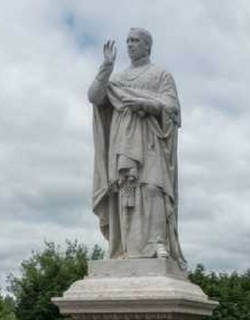
Upon Coghill’s death Mary is left, for her lifetime, his lands in the barony of Coolock, rents from his properties in Clonturk, all his household goods, and his coach, chariot and horses. In 1743, she erects the parish church of Clonturk, now Drumcondra Church, and places in it a statue of her brother by the Dutch sculptor Peter Scheemakers.


Leave a comment

Death of Edmund Mortimer, 3rd Earl of March

Edmund Mortimer, 3rd Earl of March and jure uxoris Earl of Ulster, is killed at Cork on December 27, 1381. His sudden death leaves the colony without effective leadership and prompts a military crisis.

Mortimer, the son of Roger Mortimer, 2nd Earl of March, by his wife Philippa, daughter of William Montagu, 1st Earl of Salisbury and Catherine Grandison, is born on February 1, 1352. An infant at the death of his father, as a ward of the crown he is placed by Edward III of England under the care of William of Wykeham and Richard FitzAlan, 3rd Earl of Arundel. The position of the young earl, powerful on account of his possessions and hereditary influence in the Welsh marches, is rendered still more important by his marriage on August 24, 1369 at the age of 17 to the 14-year-old Philippa, the only child of the late Lionel of Antwerp, 1st Duke of Clarence, the second son of Edward III.

Lionel’s late wife, Elizabeth, had been daughter and heiress of William Donn de Burgh, 3rd Earl of Ulster, and Lionel had himself been created Earl of Ulster before his marriage. Mortimer inherits the title Earl of Ulster on Lionel’s death. Therefore, the Earl of March not only represents one of the chief Anglo-Norman lordships in Ireland in right of his wife Philippa, but Philippa’s line is also the second most senior line of descent in the succession to the crown, after Edward the Black Prince and his son, King Richard II of England. John of Gaunt, younger brother of Prince Edward, had become the 1st Duke of Lancaster and thus the source of the House of Lancaster‘s claim to the throne.

This marriage has, therefore, far-reaching consequences in English history, ultimately giving rise to the claim of the House of York to the crown of England contested in the Wars of the Roses between the Yorks and the Lancasters; Edward IV being descended from the second adult son of Edward III as great-great-grandson of Philippa, countess of March, and in the male line from Edmund of Langley, 1st Duke of York and the fourth adult son of Edward III. Mortimer’s son, Roger Mortimer, 4th Earl of March, becomes heir presumptive to the English crown during the reign of Richard II.

Mortimer, now styled Earl of March and Ulster, becomes Earl Marshal of England in 1369, and is employed in various diplomatic missions during the following years. He is a member of the committee appointed by the Peers to confer with the Commons in 1373, the first instance of such a joint conference since the institution of representative parliaments on the question of granting supplies for John of Gaunt’s war in France.

Mortimer participates in the opposition to Edward III and the court party, which grows in strength towards the end of the reign, taking the popular side and being prominent in the Good Parliament of 1376 among the lords who support the Prince of Wales and oppose the Court Party and John of Gaunt. The Speaker of the House of Commons in this parliament is Mortimer’s steward, Peter de la Mare, who firmly withstands John of Gaunt in stating the grievances of the Commons, in supporting the impeachment of several high court officials, and in procuring the banishment of the king’s mistress, Alice Perrers. Mortimer is a member of the administrative council appointed by the same parliament after the death of Edward, the Black Prince, to attend the king and advise him in all public affairs.

Following the end of the Good Parliament its acts are reversed by John of Gaunt, Mortimer’s steward is jailed, and he himself is ordered to inspect Calais and other remote royal castles as part of his duty as Marshal of England. He instead chooses to resign the post.

On the accession of Richard II in 1377, Mortimer becomes a member of the standing council of government; though as husband of the heir-presumptive to the crown he wisely refrains from claiming any actual administrative office. The richest and most powerful person in the realm is, however, the king’s uncle John of Gaunt, whose jealousy leads Mortimer to accept the office of Lord Lieutenant of Ireland in 1379. He succeeds in asserting his authority in eastern Ulster, but fails to subdue the O’Neill dynasty farther west. Proceeding to Munster to put down the turbulent southern chieftains, he is killed at Cork on December 27, 1381. He is buried in Wigmore Abbey, of which he had been a benefactor, and where his wife Philippa is also interred.

(Pictured: Coat of Arms of the House of Mortimer)


Leave a comment

Death of James Stephens, Novelist & Poet

James Stephens, Irish novelist and poet, dies in London, England on December 26, 1950, Saint Stephen’s Day.

Stephens’ birth is somewhat shrouded in mystery. He claims to have been born on the same day and same year as James Joyce, February 2, 1882, whereas he is in fact probably the same James Stephens who is on record as being born at the Rotunda Hospital in Dublin, on February 9, 1880, the son of Francis Stephens of 5 Thomas’s Court, Dublin, a vanman and a messenger for a stationer’s office, and his wife, Charlotte Collins. His father dies when he is two years old and, when he was six years old, his mother remarries. He is committed to the Meath Protestant Industrial School for boys in Blackrock for begging on the streets, where he spends much of the rest of his childhood. He attends school with his adoptive brothers Thomas and Richard Collins before graduating as a solicitor‘s clerk. They compete and win several athletic competitions despite James’ tiny 4’10” stature. He is known affectionately as “Tiny Tim.” He is much enthralled by the tales of military valour of his adoptive family and would have become a soldier except for his height.

By the early 1900s Stephens is increasingly inclined to socialism and the Irish language and by 1912 is a dedicated Irish Republican. He is a close friend of the 1916 leader Thomas MacDonagh, who is then editor of The Irish Review and deputy headmaster in St. Enda’s School, the radical bilingual Montessori school run by Patrick Pearse and later manager of the Irish Theatre. He spends much time with MacDonagh in 1911. His growing nationalism brings a schism with his adoptive family, but probably wins him his job as registrar in the National Gallery of Ireland, where he works between 1915 and 1925, having previously had an ill-paid job with the Mecredy firm of solicitors.

Stephens produces many retellings of Irish myths. His retellings are marked by a rare combination of humour and lyricism, with Deirdre and Irish Fairy Tales especially often praised. He also writes several original novels, including The Crock of Gold, Etched in Moonlight and Demi-Gods, based loosely on Irish wonder tales. The Crock of Gold in particular has achieved enduring popularity and has often been reprinted.

Stephens begins his career as a poet under the tutelage of poet and painter Æ (George William Russell). His first book of poems, Insurrections, is published in 1909. His last book, Kings and the Moon (1938), is also a volume of verse. His influential account of the 1916 Easter Rising, Insurrection in Dublin, describes the effect of the deaths by execution of his friend Thomas MacDonagh and others as being “like watching blood oozing from under a door.”

Stephens later lives between Paris, London and Dublin. During the 1930s he is a friend of James Joyce, and they wrongly believe that they share a birthday. Joyce, who is concerned about his ability to finish what later becomes Finnegans Wake, proposes that Stephens assist him, with the authorship credited to JJ & S (for “Jameses Joyce & Stephens”, but also a pun on the popular Jameson Irish Whiskey, made by John Jameson & Sons). The plan is never implemented, as Joyce is able to complete the work on his own.

During the last decade of his life Stephens finds a new audience through a series of broadcasts on the BBC.