seamus dubhghaill

Promoting Irish Culture and History from Little Rock, Arkansas, USA


Leave a comment

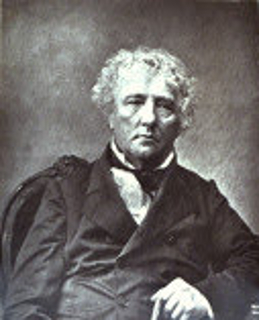
Birth of Thomas Cleeve, Businessman & High Sheriff of Limerick City

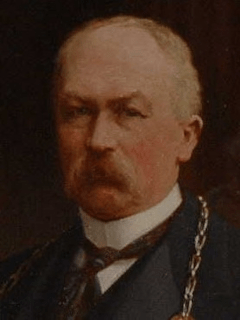
Sir Thomas Henry Cleeve, a Canadian-born businessman, domiciled in Ireland, is born in Cleveland, Quebec, Canada, on June 5, 1844. He is elected High Sheriff of Limerick City on three occasions.

Cleeve is the eldest son of Edward Elmes Cleeve, an English immigrant, and Sophia Journeaux, whose family came from Ireland.

In 1860, Cleeve travels to Ireland to stay with his mother’s relatives who run an agricultural machinery business in Limerick known as J.P. Evans & Company. He decides to remain in Ireland and eventually assumes control of the business.

Cleeve marries Phoebe Agnes Dann in 1874 and they have five children. The author and broadcaster Brian Cleeve is his grand nephew.

In 1883, Cleeve starts a new enterprise, the Condensed Milk Company of Ireland, in conjunction with two local businessmen. The company manufactures dairy products, such as condensed milk, butter, cheese and confectionery. Its headquarters are located in Limerick city, on the northern bank of the River Shannon. The business expands over the next 20 years to become the largest of its type in the United Kingdom.

Cleeve is also senior partner in the Cleeve Canning and Cold Storage Company based in British Columbia. He is also the President of Limerick Chamber in 1908-09.

In 1899, Cleeve is voted onto the Limerick City Council. That same year, his fellow councillors elect him as High Sheriff of Limerick City, the Queen’s representative in the city. He holds the position again in 1907 and 1908.

In 1900, following a visit to Ireland by Queen Victoria, Cleeve receives a knighthood from the Lord Lieutenant.

In December 1908, Cleeve is taken ill at a public function. Despite undergoing surgery, he dies of peritonitis on December 19, 1908, at the age of 64. According to contemporary newspaper reports his funeral is one of the largest seen in Limerick city, with crowds lining the streets up to an hour before the cortège passes. He is buried in the churchyard of St. Mary’s Cathedral in the city.


Leave a comment

Birth of Evelyn Gleeson, Designer & Co-founder of Dun Emer Press

Evelyn Gleeson, English embroidery, carpet, and tapestry designer, is born on May 15, 1855, in Knutsford, Cheshire, England. Along with Elizabeth and Lily Yeats, she establishes the Dun Emer Press.

Gleeson is the daughter of Irish-born Edward Moloney Gleeson, a medical doctor, and Harriet (née Simpson), from Bolton, Lancashire. Her father has a practice in Knutsford but on a trip to Ireland he is struck by the poverty and unemployment and, with the advice of his brother-in-law, a textile manufacturer in Lancashire, he founds the Athlone Woollen Mills in 1859, investing all his money in the project. The family moves to Athlone in 1863, but Gleeson is educated in England, where she trains as a teacher. She later studies portraiture in London at the Atelier Ludovici from 1890–92. She goes on to study design with Alexander Millar, a follower of William Morris, who believes she has an exceptional aptitude for colour-blending. Many of her designs are bought by the exclusive Templeton Carpets of Glasgow.

Gleeson takes a keen interest in Irish affairs and, as a member of the Gaelic League and the Irish Literary Society, mixes with the Yeats family and the Irish artistic circle in London and is inspired by the Gaelic revival in art and literature. She is also involved in the suffrage movement and is chairwoman of the Pioneer Club, a women’s club in London. In 1900, an opportunity arises to make a practical contribution to the Irish renaissance and the emancipation of Irish women. She is suffering from ill-health, but her friend Augustine Henry, botanist and linguist, suggests she move away from the London smog to Ireland and open a craft centre with his financial assistance. She seizes the opportunity and discusses her plans with her friends the Yeats sisters, Elizabeth and Lily, who are talented craftswomen and have direct contact with William Morris and his followers. They have no money to contribute to the venture but are enthusiastic and can offer their skills and provide contacts. She seeks advice from W. B. and Jack Yeats, from Henry, who loans her £500, and from her cousin, T. P. Gill, secretary of the Department of Agriculture and Technical Instruction.

During the summer of 1902 Gleeson finds a suitable house in Dundrum, County Dublin, ten minutes from the railway station. The house, originally called Runnymede, is renamed Dun Emer, after the wife of Cú-Chulainn, renowned for her craft skills. The printing press arrives in November 1902, and soon three craft industries are in operation. Lily Yeats runs the embroidery section, since she had trained with Morris’s daughter May. Elizabeth Yeats operates the press, having learned printing at the Women’s Printing Society in London. Gleeson manages the weaving and tapestry and looks after the financial affairs of the industries. W. B. Yeats acts as literary adviser, an arrangement that often causes friction, and Gleeson’s sister, Constance McCormack, is also involved.

Local girls are employed and trained, and the industries seek to use the best of Irish materials to make beautiful, high-quality, lasting products of original design. Church patronage accounts for most of their orders and, in 1902–03, Loughrea cathedral commissions twenty-four embroidered banners portraying Irish saints. They also make vestments, traditional dresses, drapes, cushions and other items, all beautifully crafted and mostly employing Celtic design. The first book published is In the Seven Woods (1903), by W. B. Yeats, cased in full Irish linen.

Gleeson is in demand as an adjudicator in craft competitions around the country and at Feis na nGleann in 1904 she praises the workmanship of the entries but is critical of the lack of teaching in design. She gives lectures and tries to raise the status of craftwork from household occupation to competitive industry. There are tensions with the Yeats sisters, who complain that she is bad-tempered and arrogant. In truth she had taken on too much of a financial burden, even with the support of grants, and she is anxious to repay her debt to Augustine Henry, which he is prepared to forego. The sisters snub her and omit her name in an interview about Dun Emer in the magazine House Beautiful. Millar, her design teacher in London, likens the omission to Hamlet without the prince. In 1904, it is decided to split the industries on a cooperative basis: Dun Emer Guild Ltd. under Gleeson and Dun Emer Industries Ltd. under the Yeats sisters.

Work continues, and the guild and industries exhibit separately at the Royal Dublin Society (RDS) and other craft competitions. In 1907, the National Museum of Ireland commissions a copy of a Flemish tapestry. It takes far longer than anticipated to complete, but the result is beautiful and is exhibited at the Arts and Crafts Society of Ireland in 1910. The guild wins a silver medal at the Milan International exhibition in 1906. The guild and industries both show work at the New York exhibition of 1908. The guild alone shows work in Boston. By now cooperation has turned to rivalry, and there is a final split as the Yeats sisters leave, taking the printing press with them to their house in Churchtown, Dublin. Gleeson writes off a debt of £185 owed to her, on condition that they do not use the name Dun Emer.

The business thrives at Dundrum, with her niece Katherine (Kitty) MacCormack and Augustine Henry’s niece, May Kerley, assisting with design. Later they move the workshops to Hardwicke Street, Dublin. In 1909, Gleeson becomes one of the first members of the Guild of Irish Art Workers and is made master in 1917. The Irish Women Workers’ Union commissions a banner from her about 1919, and, among numerous other notable successes, a Dun Emer carpet is presented to Pope Pius XI in 1932, the year of the Eucharistic Congress of Dublin.

Gleeson dies at the age of 89 at Dun Emer on February 20, 1944, with Kitty carrying on the Guild after her death. The final home of Dun Emer is a shop on Harcourt Street, Dublin, which finally closes in 1964.

(From: “Gleeson, Evelyn” by Ruth Devine, Dictionary of Irish Biography, http://www.dib.ie, October 2009)


Leave a comment

Birth of Gordon Lambert, Businessman, Senator & Art Collector

Charles Gordon Lambert, Irish businessman, senator and art collector, is born on April 9, 1919, in the family home at Highfield Road, Rathmines, Dublin, the youngest of four sons of Robert James Hamilton Lambert, a veterinarian and renowned cricketer, and his wife Nora (née Mitchell). His eldest brother, Noel Hamilton “Ham” Lambert, is a versatile sportsman and noted veterinary practitioner.

Lambert is educated at Sandford Park School, Dublin, and at Rossall School, Lancashire. He is steered by his mother toward a career in accountancy for which he prepares by studying commerce at Trinity College Dublin (TCD). Graduating in 1940, he joins the accounting firm Stokes Brothers and Pim, qualifying Associate Chartered Accountant in 1943. In 1944, after auditing biscuit manufacturers W. & R. Jacob and Co. Ltd, one of Ireland’s largest and most prestigious industrial companies, he is offered and accepts a £300 a year job at Jacob’s as assistant accountant.

In 1953, Lambert becomes Jacob’s chief accountant as the management grooms him for an executive career. During 1948–56, Jacob’s suffers from profit and price controls, lack of capital investment and complacency brought about by the absence of competition. The entry of Boland’s Bakery into the Irish biscuit market in 1957 is exploited by Lambert who urges the alarmed board, which has long regarded advertising as vulgar, to market its products more vigorously. This assertiveness yields his advancement to the position of commercial manager in 1958. A year later he becomes the first non-member of the Bewley and Jacob families to be appointed to the board.

Between 1959 and 1970, biscuit consumption in Ireland doubles for which Lambert can claim much credit. Recognising that the advent of self-service stores means that manufacturers can no longer rely on retailers to sell their products, he pioneers advanced promotional techniques in Ireland, particularly the use of marketing surveys and of mass advertising in newspapers, on radio and on the emerging medium of television. To further accord with retailers’ preferences, Jacob’s drives the widespread packaging of biscuits in airtight packets rather than tins, and also introduces a striking red flash logo for its packets. His interest in contemporary art enables him to contribute directly to Jacob’s packaging designs.

Lambert is appointed to the board of the Electricity Supply Board (ESB) in 1964, a position he holds until 1977, and serves as president of the National Agricultural and Industrial Development Association (NAIDA) in 1964–65, spearheading a “Buy Irish” campaign. His involvement with NAIDA dates to the mid-1950s and leads to his friendship with Jack Lynch, Minister for Industry and Commerce. This relationship and his admiration for Seán Lemass incline him toward Fianna Fáil. He also believes the party is the one most likely to deliver economic growth.

In 1977, Lambert is appointed to Seanad Éireann by Taoiseach Jack Lynch. He sits as an independent but assures Lynch he will broadly support the government. Dismayed by Ireland’s economic uncompetitiveness, he uses this platform to bemoan the state’s financial profligacy and failure to control inflation, and the indifference of Irish politicians towards the business community, contending that Irish industrialists suffer and need to learn from the expert lobbying of the indigenous agricultural sector and of large multi-national companies based in Ireland. He also articulates his social liberalism, desire for peaceful reconciliation in Northern Ireland and support for cultural and environmental causes. But his commitment to the Seanad wanes as he grasps its irrelevance. When Lynch resigns in December 1979, Lambert joins the Fianna Fáil party in a futile bid to preserve his political influence.

Following Jacob’s takeover of Boland’s Bakery in 1966, Lambert becomes joint managing director of a new entity, Irish Biscuits Ltd, the manufacturing and trading company for the Boland’s and Jacob’s biscuits operations. W. & R. Jacob and Co. Ltd becomes a holding company. In 1968, he becomes the sole managing director. From 1977 he begins withdrawing from the active administration of the company, relinquishing his managing directorship in 1979 to become chairman.

Initially, Lambert views art as a hobby but he comes to see it as a calling, drawing inspiration from Sir William Basil Goulding, his predecessor as Ireland’s leading collector and advocate of modern art. From the late 1970s he serves as head of the Contemporary Irish Art Society (CIAS) and on the Arts Council of Northern Ireland, the advisory committee of the Dublin Municipal Gallery, the board of the National Gallery of Ireland, the editorial board of the Irish Arts Review and the international council of the Museum of Modern Art (MoMA) in New York City.

The Irish Museum of Modern Art (IMMA) opens in 1991 and receives through the medium of the Gordon Lambert Trust some 212 works, which form the centerpiece of its collection. Thereafter Lambert gifts another 100 works to IMMA. He sits on IMMA’s board from 1991, and the west wing of the museum is named after him in 1999.

Despite being diagnosed with Parkinson’s disease in 1988, Lambert remains relatively active and plays golf into his 80s. In 1999 he receives an honorary LLD from TCD. From 1997, he relies increasingly on Anthony Lyons, an acquaintance of longstanding, to care for him. His last years are overshadowed by the collapse in autumn 2002 of his close but complex relationship with his family. Thereafter he shuns his relations and changes his will, granting Lyons a substantial portion of his estate while curtailing the amount to be received by his family. He dies in a Dublin hospital on January 27, 2005. Relatives challenge his final will in the High Court in 2009 but it is upheld.

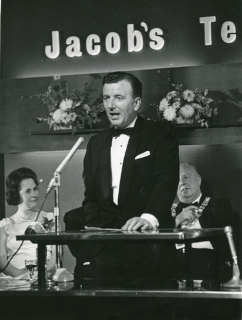
(Pictured: Photograph of director of Jacob’s Biscuits, Gordon Lambert, speaking from a podium at the first Jacob’s Television Awards. The Lord Mayor of Dublin, James O’Keefe, is sitting behind Lambert. The awards ceremony takes place at the Bishop Street factory, Dublin.)


Leave a comment

Guinness Registers Harp as Official Symbol

On April 5, 1862, Guinness formally registers the harp as its official symbol, long before Ireland even has its own government.

The first Guinness labels featuring the now-iconic harp are printed in August of that year according to Guinness’s Brewery in the Irish Economy 1759 – 1876 by Patrick Lynch and John Vaizey.

The harp, which serves as the emblem of Guinness, is based on a famous 14th-century Irish harp known as the “O’Neill harp” or “Brian Boru’s harp,” which is now preserved in the Library of Trinity College Dublin. The harp is also the official national emblem of the Republic of Ireland and can be found on the Republic’s coinage that was phased out when the Euro currency was introduced. The harp symbol is also featured on Irish flags during the 1916 Easter Rising.

However, there is a difference between the Irish government harp and the Guinness harp. As Guinness had trademarked the harp symbol in 1876, the Irish Free State Government of 1922 has to reverse the official government harp so that it can be differentiated from the trademarked Guinness harp. As such, the Guinness Harp always appears with its straight edge (the sound board) to the left, and the government harp is always shown with its straight edge to the right.

It is because of the harp trademark that the Guinness company names its first lager Harp in 1960.

The harp is one of three elements that make up the Guinness brand livery. The other two elements are the word “Guinness” and Arthur Guinness’s famous signature. There have been a number of changes to the design of the harp device over the years including a reduction in the number of strings shown. The current harp is introduced in 2005 when a new brand livery is launched.

The famous Downhill Harp, dating back to 1702, is purchased by Guinness in 1963 to ensure its continued preservation and is on display in the advertising gallery in Guinness Storehouse. The Downhill Harp is made in 1702 by Cormac O’Kelly of Ballinascreen and played in the 18th century by the harpist Donnchadh Ó hAmhsaigh, known in English as Denis Hampsey, Denis Hampson or Denis Hempson. Ó hAmhsaigh plays in the traditional style, plucking the strings with his long fingernails. At age 97, he is the oldest harpist at the Belfast Harp Festival in July 1792, although he is perhaps most famous for his concert for Prince Charles Edward Stuart, or ‘Bonnie Prince Charlie’, in 1745.

The harp bears the inscription:

In the time of Noah I was green,
Since his flood I had not been seen,
Until Seventeen hundred and two I was found By Cormac O’Kelly underground:
He raised me up to that degree
That Queen of Musick you may call me.

(From: “When Guinness trademarked symbol of the harp,” IrishCentral, http://www.irishcentral.com, April 5, 2022)


Leave a comment

Birth of Feargal Quinn, Businessman, Politician & TV Personality

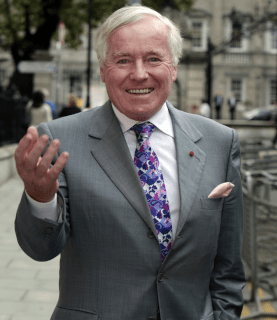
Feargal Quinn, Irish businessman, politician and television personality, is born in Dublin on November 27, 1936. He is the founder of the Superquinn supermarket chain and serves as a Senator in Seanad Éireann representing the National University of Ireland constituency from 1993 to 2016.

Quinn’s father, Eamonn, founds a grocery brand and later the Red Island resort in Skerries, Dublin. He is a first cousin of Labour Party politician Ruairi Quinn and of Lochlann Quinn, former chairman of Allied Irish Banks (AIB). He is educated at Newbridge College and is a commerce graduate of University College Dublin (UCD). He builds a career in business and later takes on a range of public service roles.

Quinn founds the national supermarket chain Superquinn (originally Quinn’s Supermarkets), of which he remains non-executive president for some years after his family sells out their interest in August 2005 for over €400 million. Superquinn is known for its focus on customer service and pioneers a number of innovations, including Ireland’s first supermarket loyalty card in 1993, SuperClub. It also introduces self-scanning of goods by customers in a number of its outlets. Superquinn becomes the first supermarket in the world to guarantee the absolute traceability of all its beef from pasture to plate, using DNA TraceBack, a system developed at Trinity College, Dublin by IdentiGEN.

Quinn becomes the chairman of the Interim Board for Posts and serves as chairman of its successor An Post (the Irish postal administration) until 1989. He also serves on several other public authorities and boards. From 1993 to 1998, he chairs the steering committee which oversees the development of the Leaving Certificate Applied. In 2006, he is appointed an Adjunct Professor in Marketing at National University of Ireland Galway. He is also chairman of Springboard Ireland.

Quinn is a former President of EuroCommerce, the Brussels-based organisation which represents the retail, wholesale and international trade sectors in Europe. He also serves on the board of directors of CIES, the Food Business Forum based in Paris, as well as the American-based Food Marketing Institute.

In 2009, Quinn works with independent shops and helps them to revamp, modernise and stave off stiff competition from multi-national retailers. It airs as RTÉ‘s six-part television series, Feargal Quinn’s Retail Therapy. A second series airs in 2011, and a third series airs in 2012. In 2011, he fronts RTÉ’s Local Heroes campaign in Drogheda, County Louth, which is an assembled team of experts to kick-start the local economy. It airs as RTÉ One‘s six-part television series, Local Heroes – A Town Fights Back.

Quinn is first elected as a senator in 1993 from the National University of Ireland constituency and is re-elected in 1997, 2002, 2007 and 2011. He is a member of the Joint Oireachtas Committee on European Affairs, the Joint Committee on Finance and Public Service and is an Oireachtas member of the National Economic and Social Forum, along with the Joint Committee on Jobs and Innovation.

Quinn is one of the co-founders and is a driving force behind Democracy Matters – a civil society group that is formed to oppose the Government’s plans to abolish Seanad Éireann. In May 2013, with Senators Katherine Zappone and Mary Ann O’Brien, he introduces the Seanad Bill 2013 to reform the system of electing the elected members of Seanad Éireann (as provided for in Article 18.10 of the Constitution of Ireland) through a one-person, one vote franchise. The Seanad Bill 2013 succeeds in being passed at Second Stage in the Seanad. During the Seanad abolition referendum campaign, the Bill demonstrates to the electorate, in a very palpable way, that reform of the Seanad is achievable if they vote for its retention. In a referendum held in October 2013 on the Abolition of Seanad Éireann, the people vote to retain the Seanad by 51.7%.

In 2014, Quinn reveals that since being first elected to Seanad Éireann, he has donated his entire salary to charity and in more recent years he has refused to accept any salary. In March 2015, he opposes the Marriage Equality bill in the Seanad, and votes ‘No’ in the referendum. He serves as Chairman of the Independent Alliance. He does not contest the 2016 Seanad election.

Quinn is the recipient of five honorary doctorates from education institutions, including NUI Galway in 2006, a papal knighthood along with a fellowship and the French Ordre National du Mérite. He shares with Oprah Winfrey the 2006 “Listener of the Year” award of the International Listening Association.

Quinn dies peacefully at his home in Howth, County Dublin, on April 24, 2019, following a short illness. His funeral Mass takes place at St. Fintan’s Church in Sutton, north County Dublin. In attendance is President Michael D. Higgins, a representative for Taoiseach Leo Varadkar, Minister for Children Katherine Zappone, Senator Michael McDowell, and a host of other current and former politicians, business figures, and past colleagues of the “Superquinn family.” Fittingly, the coffin is carried from the church to the tune of Frank Sinatra’s “My Way.”


Leave a comment

Death of Harry Ferguson, Mechanic & Inventor

Henry George “Harry” Ferguson, a British mechanic and inventor who is noted for his role in the development of the modern agricultural tractor and its three-point linkage system, for being the first person in Ireland to build and fly his own aeroplane, and for developing the first four-wheel drive Formula One car, the Ferguson P99, dies in Stow-on-the-Wold, Gloucestershire, England, on October 25, 1960. Today his name lives on in the name of the Massey Ferguson company.

Ferguson is born on November 4, 1884, at Growell, near Dromore, County Down, in what is now Northern Ireland, the son of a farmer. In 1902, he goes to work with his brother, Joe, in his bicycle and car repair business. While working there as a mechanic, he develops an interest in aviation, visiting airshows abroad. In 1904, he begins to race motorcycles.

In the 1900s Ferguson becomes fascinated with the newly emerging technology of powered human flight and particularly with the exploits of the Wright brothers, the American aviation pioneers who made the first plane flight in 1903 at Kill Devil Hills, North Carolina.

The first person to accomplish powered flight in the UK is Alliot Verdon Roe in June 1908, who also flies an aeroplane of his own design, but this has not yet been achieved in Ireland. Ferguson begins to develop a keen interest in the mechanics of flying and travels to several air shows, including exhibitions in 1909 at Blackpool and Rheims where he takes notes of the design of early aircraft. He convinces his brother that they should attempt to build an aircraft at their Belfast workshop and, working from his notes, they work on the design of a plane, the Ferguson monoplane.

After making many changes and improvements, they transport their new aircraft by towing it behind a car through the streets of Belfast up to Hillsborough Park to make their first attempt at flight. They are at first thwarted by propeller trouble but continue to make technical alterations to the plane. After a delay of nearly a week caused by bad weather, the Ferguson monoplane finally takes off from Hillsborough on December 31, 1909. Ferguson becomes the first Irishman to fly and the first Irishman to build and fly his own aeroplane.

After falling out with his brother over the safety and future of aviation, Ferguson decides to go it alone, and in 1911 founds a company selling Maxwell, Star and Vauxhall cars and Overtime Tractors. He sees at first hand the weakness of having tractor and plough as separate articulated units, and in 1917 he devises a plough that can be rigidly attached to a Ford Model T car — the Eros, which becomes a limited success, competing with the Fordson Model F.

In 1917 Ferguson meets Charles E. Sorensen while Sorensen is in England scouting production sites for the Fordson tractor. They discuss methods of hitching the implement to the tractor to make them a unit. In 1920 and 1921 he demonstrates early versions of his three-point linkage on Fordson tractors at Cork and at Dearborn, Michigan. He and Henry Ford discuss putting the Ferguson system of hitch and implements onto Fordson tractors at the factory, but no deal is struck. At the time the hitch is mechanical. Ferguson and his team of longtime colleagues, including Willie Sands and Archie Greer, soon develop a hydraulic version, which is patented in 1926. After one or two false starts, he eventually founds the Ferguson-Sherman Inc., with Eber and George Sherman.

The new enterprise manufactures the Ferguson plough, incorporating the patented “Duplex” hitch system mainly intended for the Fordson “F” tractor. Following several more years of development, Ferguson’s new hydraulic version of the three-point linkage is first seen on his prototype “Ferguson Black” or ‘Irish tractor’ as he calls it, now in the Science Museum, South Kensington, London. A production version of the “Black” is introduced in May 1936, made at one of the David Brown Engineering Ltd. factories in Huddersfield, West Yorkshire, and designated Ferguson Model A tractor.

Ferguson’s interests are merged with those of David Brown junior to create the Ferguson-Brown Company.

In October 1938, Ferguson demonstrates his latest tractor to Henry Ford at Dearborn, and they make the famous “handshake agreement.” He takes with him his latest patents covering future improvements to the Ferguson tractor and it is these that lead to the Ford-Ferguson 9N introduction to the world on June 29, 1939.

Henry Ford II, Ford’s grandson, ends the handshake agreement on June 30, 1947, following unsuccessful negotiations with Ferguson, but continues to produce a tractor, the 8N, incorporating Ferguson’s inventions, the patents on almost all of which have not yet expired, and Ferguson is left without a tractor to sell in North America. His reaction is a lawsuit demanding compensation for damage to his business and for Ford’s illegal use of his designs. The case is settled out of court in April 1952 for just over $9 million. The court case costs him about half of that and a great deal of stress and ill health.

By 1952, most of the important Ferguson patents have expired, and this allows Henry Ford II to claim that the case had not restricted Ford’s activities too much. It follows that all the world’s other tractor manufacturers can also use Ferguson’s inventions, which they do. A year later Ferguson merges with Massey-Harris Limited to become Massey-Harris-Ferguson Co., later Massey Ferguson.

Ferguson dies at his home at Stow-on-the-Wold on October 25, 1960, as the result of a barbiturate overdose. The inquest is unable to conclude whether his death had been accidental or not.

A blue plaque commemorating Ferguson is mounted on the Ulster Bank building in Donegall Square, Belfast, the former site of his showroom. A granite memorial has been erected to Ferguson’s pioneering flight on the North Promenade, Newcastle, County Down, and a full-scale replica of the Ferguson monoplane and an early Ferguson tractor and plough can be seen at the Ulster Folk and Transport Museum at Cultra.


Leave a comment

Death of Edward Cecil Guinness, 1st Earl of Iveagh

Edward Cecil Guinness, 1st Earl of Iveagh, Irish businessman and philanthropist, dies at his London home in Grosvenor Place on October 7, 1927

Guinness is born on November 10, 1847 at St. Anne’s, Clontarf, County Dublin, the youngest of three sons of Sir Benjamin Lee Guinness, brewer, of Dublin, and Elizabeth, third daughter of Edward Guinness of Dublin. He is not sent to public school but is taught at home by a private tutor before entering Trinity College Dublin, where he takes his degree in 1870. His father dies in 1868, leaving him a share in the brewery, and he takes over management of the business with his brother Arthur, who in 1876 sells his shares, making Edward sole proprietor.

Guinness is also prominent in municipal life, holding the offices of Sheriff of Dublin City in 1876 and High Sheriff of the County of Dublin in 1885, the year in which he is created a baronet. He is a brilliantly effective businessman, with close attention to detail and a focus solely on the brewery, to the extent of remaining independent from the rest of the brewing trade. In 1888 he bluntly tells the Country Brewers’ Association, “I have always declined to identify myself with any trade question, or to take any side in a controversy on the liquor question, and to this I must adhere.” In 1886 Guinness is floated as a public company, a superbly successful venture with applications for shares exceeding £100 million, and Edward remains as chairman until 1890, although his formal retirement in that year brings little reduction in his involvement with the company, and he continues to make the final decision on many minor matters as well as all major questions of policy.

Socially innovative, with a concern for the welfare of employees, from as early as 1870 Guinness establishes a free dispensary for his workforce and makes provisions for pension and other allowances – acts of social reform that are remarkable for the time. To mark his retirement in 1890 he places in trust £250,000 to be expended in the erection of working-class housing in London and Dublin. Both funds are administered from London until 1903, when the Dublin fund is amalgamated by the Iveagh Trust act with other schemes carried out in Dublin by Edward, who had been raised to the peerage of the United Kingdom in 1891 as Baron Iveagh of Iveagh, County Down. The funds, which increase considerably from the original amount, are thereafter managed entirely in Dublin as a separate undertaking under the name of the Iveagh Trust, still in existence in the early twenty-first century.

As one of the pioneers of the voluntary housing movement Guinness is essentially carrying on the tradition of “merchant prince and city father” established by his father and shared by his brother. Wealthy, ambitious, and resolutely unionist, he gives generous financial support to the Irish Unionist Alliance, and is also public-spirited, religious, and devoted to duty. Acknowledging that the Iveagh Trust is essentially ameliorative, he believes that major social change will only be achieved if numerous other wealthy people follow his example. He insists that gifts of money from the fund are permissible only to assist individuals to improve their condition “without placing them in the position of being the recipients of a bounty.” Numerous other philanthropic donations follow, including another £250,000 for slum clearance in the Bull Alley district of Dublin; various contributions to Dublin hospitals, particularly in 1903 and 1911 on the occasion of royal visits; and in 1907 the opening of the Iveagh Markets, situated in the Francis Street and Patrick Street areas of Dublin, are made possible with his financial backing. Generous contributions are also made to Trinity College Dublin, of which he is elected chancellor in 1908, and he donates land in Iveagh Gardens to University College Dublin (UCD).

In 1905 Guinness is raised to a viscountcy and in September 1909 the nationalist corporation of Dublin presents him with an address of thanks for his many gifts, and even discusses the possibility of offering him the lord mayoralty of the city, which he declines owing to his political affiliations. By this time he lives chiefly in England, having bought Elveden Hall in Suffolk, where he frequently entertains royalty. He also purchases Lord Kensington’s London estate and makes many donations to medical research societies in England, and in conjunction with Sir Ernest Cassel he founds the London Radium Institute, as well as donates £250,000 to the Laster Institute of Tropical Medicine for the endowment of bacteriological research.

In 1919 Guinness is elevated to an earldom and in 1925 purchases the remainder of the Kenwood estate to the north of Hampstead Heath and arranges for it to become public property, ensuring the estate will not be sold for building purposes, and also bequeaths to the nation a valuable collection of art for use in the gallery at the same location. As well as being elected a fellow of the Royal Society, he is awarded honorary doctorates from the University of Dublin and the University of Aberdeen.

In 1873, Guinness marries his third cousin Adelaide Maud, nicknamed “Dodo.” She is descended from the banking line of Guinnesses, and is the daughter of Richard Samuel Guinness, barrister and MP, and his wife Katherine, a daughter of Sir Charles Jenkinson. They have three sons, the eldest of whom, Rupert Edward Cecil Lee, succeeds his father as 2nd Earl of Iveagh.

Guinness dies at his London home in Grosvenor Place on October 7, 1927, and is buried at Elveden, Suffolk. He leaves an estate valued at £11 million.


Leave a comment

Death of Charles Bianconi, Italo-Irish Entrepreneur

Charles Bianconi, Italo-Irish passenger car entrepreneur, dies on September 22, 1875, at Longfield House, Boherlahan, County Tipperary. Sometimes described as the “man who put Ireland on wheels,” he develops a network of horse-drawn coaches that become Ireland’s “first regular public transport” system.

Bianconi is born Carlo Bianconi in Tregolo, Costa Masnaga, Italy on September 24, 1786. He moves from an area poised to fall to Napoleon and travels to Ireland in 1802, by way of England, just four years after the Irish Rebellion of 1798. At the time, British fear of continental invasion results in an acute sense of insecurity and additional restrictions on the admission of foreigners. He is christened Carlo but anglicises his name to Charles when he arrives in Ireland.

Bianconi works as an engraver and printseller in Dublin, near Essex Street, under his sponsor, Andrea Faroni, when he is sixteen. In 1806 he sets up an engraving and print shop in Carrick-on-Suir, County Tipperary, moving to Clonmel in 1815.

Bianconi eventually becomes famous for his innovations in transport and is twice elected mayor of Clonmel.

Bianconi is the founder of public transportation in Ireland, at a time preceding railways. He establishes regular horse-drawn carriage services on various routes from about 1815 onward. These are known as “Bianconi coaches” and the first service, Clonmel to Cahir, takes five to eight hours by boat but only two hours by Bianconi’s carriage. Travel on one of his carriages cost one penny farthing a mile.

Bianconi also establishes a series of inns, the Bianconi Inns, some of which still exist in Piltown, County Kilkenny and Killorglin, County Kerry.

In 1832 Bianconi marries Eliza Hayes, the daughter of a wealthy Dublin stockbroker. They have three children – Charles Thomas Bianconi, Catherine Henrietta Bianconi and Mary Anne Bianconi, who marries Morgan John O’Connell and is the mother of his grandson John O’Connell Bianconi.

Bianconi’s transport services continue into the 1850s and later, by which time there are a number of railway services in the country. The Bianconi coaches continue to be well-patronised, by offering connections from various termini, one of the first and few examples of an integrated transport system in Ireland. By 1865 Bianconi’s annual income was about £35,000.

Charles Bianconi dies on September 22, 1875, at Longfield House, Boherlahan, County Tipperary. Having donated land to the parish of Boherlahan for the construction of a parish church, he wishes to be buried on the Church grounds. He, and his family, are buried in a side chapel, separate from the parish church in Boherlahan, approximately five miles from Cashel, County Tipperary.


1 Comment

Death of Joseph McGrath, Politician & Businessman

Joseph McGrath, Irish politician and businessman, dies in Ballsbridge, Dublin, on March 26, 1966. He is a Sinn Féin and later a Cumann na nGaedheal Teachta Dála (TD) for various constituencies: Dublin St James’s (1918–1921), Dublin North-West (1921–1923) and Mayo North (1923–1924), and develops widespread business interests.

McGrath is born in Dublin on August 12, 1888. By 1916 he is working with his brother George at Craig Gardiner & Co., a firm of accountants in Dawson Street, Dublin. He works with Michael Collins, a part-time fellow clerk and the two strike up a friendship. In his spare time he works as secretary for the Volunteer Dependents’ Fund.

McGrath soon joins the Irish Republican Brotherhood. He fights in Marrowbone Lane in the 1916 Easter Rising. He is arrested after the rising, and jailed in Wormwood Scrubs and Brixton prisons in England. In the 1918 Irish general election, he is elected as Sinn Féin TD for the Dublin St. James’s constituency, later sitting in the First Dáil. He is also a member of the Irish Republican Army (IRA), and successfully organises many bank robberies during the Irish War of Independence (1919–1921), where a small percentage of the proceeds is retained as a reward by him and his fellow-soldiers. During this time he is interred briefly at Abercorn Barracks but escapes by dressing in army uniform and walking out of the gate with soldiers going on leave. He is eventually recaptured and spends time in jail in Belfast.

In October 1921 McGrath travels with the Irish Treaty delegation to London as one of Michael Collins’ personal staff. When the Provisional Government of Ireland is set up in January 1922, he is appointed Minister for Labour. In the Irish Civil War of 1922–1923, he takes the pro-Treaty side and is made Director of Intelligence, replacing Liam Tobin. In a strongly worded letter, written in red ink, he warns Collins not to take his last, ill-fated trip to County Cork.

McGrath is later put in charge of the police Intelligence service of the new Irish Free State, the Criminal Investigation Department (CID). It is modelled on the London Metropolitan Police department of the same name, but is accused of the torture and killing of a number of republican (anti-Treaty) prisoners during the civil war. It is disbanded at the war’s end with the official reason given that it is unnecessary for a police force in peacetime. He goes on to serve as Minister for Labour in the Second Dáil and the Provisional Government of Ireland. He also serves in the 1st and 2nd Executive Councils holding the Industry and Commerce portfolio.

In September 1922 McGrath uses strikebreakers to oppose a strike by Trade Unionists in the Post Office service, despite having threatened to resign in the previous March of the same year when the government threatened to use British strikebreakers.

In December 1922 McGrath is a reluctant supporter of the government’s decision to execute four high profile IRA prisoners: Liam Mellows, Dick Barrett, Rory O’Connor, and Joe McKelvey.

McGrath resigns from office in April 1924 because of dissatisfaction with the government’s attitude to the Army Mutiny officers and as he says himself, “government by a clique and by the officialdom of the old regime.” By this he means that former IRA fighters are being overlooked and that the Republican goals on all Ireland has been sidelined. He and eight other TDs, who had resigned from Cumann na nGaedheal, resign their seats in the Dáil and form a new political party, the National Party. However, the new party does not contest the subsequent by-elections for their old seats. Instead, Cumann na nGaedheal wins seven of the seats and Sinn Féin wins the other two.

In 1927, McGrath takes a libel case against the publishers of The Real Ireland by poet Cyril Bretherton, a book that claims he is responsible for the abduction and murder of Noel Lemass, the brother of Seán Lemass, in June 1923 during the civil war, as well as a subsequent coverup. He wins the court case. During the 1930s, he and Seán Lemass reconcile and regularly play poker together.

Following his political career, McGrath goes on to become involved in the building trade. In 1925 he becomes labour adviser to Siemens-Schuckert, German contractors for the Shannon hydroelectric scheme near Limerick. He founds the Irish Hospitals’ Sweepstake in 1930, and the success of its sweepstakes makes him an extremely wealthy man. He has other extensive and successful business interests always investing in Ireland and becomes Ireland’s best-known racehorse owner and breeder, winning The Derby with Arctic Prince in 1951.

McGrath dies at his home, Cabinteely House, in Ballsbridge, Dublin on March 26, 1966. Cabinteely House is donated to the state in 1986 and the land is developed as a public park. His son, Patrick W. McGrath, inherits many of his father’s business interests, and also serves as Fine Gael Senator from 1973 to 1977.

(Pictured: Screenshot of a film of Irish politician Joseph McGrath shot in 1922)


Leave a comment

Birth of Sir William Basil Goulding, Art Collector, Businessman & Cricketer

Sir William Basil Goulding, Irish cricketer, squash player, art collector and prominent businessman, is born in Dublin on November 4, 1909. He is an important art collector of contemporary art in Ireland and is renowned for his extensive collection which is dispersed posthumously. He is an adept businessman and sits on the boards of many companies.

Goulding is educated at Winchester College and Christ Church, Oxford. He inherits the family business W & HM Goulding Ltd. and succeeds his father as Chairperson in 1935. Goulding Ltd. is a well-established fertiliser manufacturer based in Dublin and Cork. The factory closes and is demolished in the mid-20th century and very little of it remains today. The land is donated to the people of Cork by Goulding in the late 1960s and is subsequently developed as an amenity park.

In 1939 Goulding marries Valerie Hamilton Monckton, daughter of Sir Walter Monckton, a lawyer, the UK Attorney General during the Edward VIII abdication crisis, and later a Member of Parliament (MP) for Bristol West. She is an Irish campaigner for disabled people, founder of the Central Remedial Clinic and senator. Together, they have three sons, Hamilton, Timothy and Lingard. The family lives in Enniskerry, County Wicklow, where he has the significant ‘Goulding Summer House’ built by Scott Tallon Walker architects.

During World War II, Goulding is commissioned as a pilot officer in the Royal Air Force. By the end of 1942 he has reached the rank of wing commander.

The Arts Act of 1951 establishes the Arts Council in response to the Bodkin Report which outlines the sad condition of the arts in Ireland. Goulding is a co-opted member of the Council from its formative years and is instrumental in acting on many of its policies.

Goulding is the founding Chairperson of the Contemporary Irish Art Society in 1962, along with Gordon Lambert, Cecil King, Stanley Mosse, James White and Michael Scott. The enthusiasm and vision of these founding members of the society is the catalyst which leads to the development of many important art collections in Ireland. The purpose of the society is to encourage a greater level of patronage of living Irish artists which, at the time, is extremely low. This is mainly achieved by raising funds to purchase artworks by living artists, which are then donated to public collections. The first purchase in 1962 is an important painting by Patrick Scott, donated to the Municipal Gallery of Modern Art (now the Hugh Lane Gallery). Over the following 12 years the society purchases 37 works for the gallery, until in 1974, Dublin Corporation starts to provide an annual purchasing fund for the gallery.

Following completion of the report ‘Design in Ireland,’ the Kilkenny Design Workshops (KDW) is set up in 1963. It endeavours to nurture native Irish crafts particularly textiles, metalwork, ceramics, glass and furniture to have a modern yet distinctly Irish sensibility. The KDW is the first State sponsored design agency in the world and is held as a model of governmental intervention in design. Goulding sits on the board of the KDW from its origination and occupies the role of Chairperson from 1977 until 1981.

A right-handed batsman and wicket-keeper, Goulding plays twice for the Ireland cricket team against the Marylebone Cricket Club (MCC) in 1934, the year in which his father is president of the Irish Cricket Union. He makes his debut in July in a two-day match, scoring seven runs in the Ireland second innings and taking one catch in the MCC first innings. The following month, he plays his only first-class match, not scoring in either inning. In addition to playing cricket, he also represents Ireland at squash, and captains Oxford University at football.

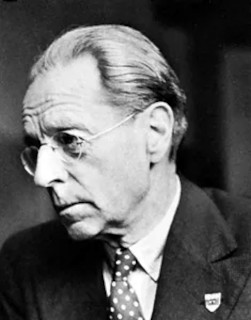
(Photo: Basil Goulding from Tim Goulding’s website, http://www.timgoulding.com)