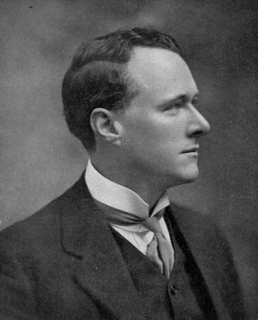
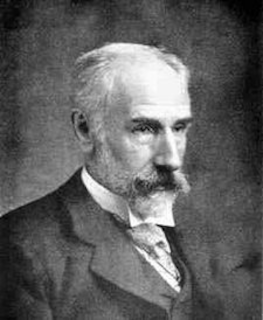
O’Higgins is described at his removal as a great Christian gentleman whose secular activities were outstanding both to his country and to Europe.
The chief mourners in St. Patrick’s Church are joined by the President of Ireland, Mary McAleese, and many representatives of the judiciary and politics. The mourners are led by his widow Terry, his children Tom, Geraldine, Michael, Barry, Kevin, Derval and Shane, his thirty grandchildren, his brother Michael and sister Rosaleen.
The parish priest, Father Maurice O’Moore, tells many hundreds in the congregation that O’Higgins and his wife had been regular worshippers at the church.
“Tom was a man of deep faith and his demeanour at prayer was an inspiration to me personally and to parishioners. I think of him this evening as a man of faith, as a man of prayer and a great Christian gentleman. His secular activities through his legal expertise were outstanding both to his country and to Europe,” he says.
Father O’Moore adds that many tributes had been paid to O’Higgins in the media, and everybody can be proud of the contribution he made as an Irishman through his religious faith, his sincerity and love of his country.
Father Bruce Bradley SJ, a friend of the family, gives a reading from the Gospel.
Also attending is Harry Hill SC, retired master of the High Court, Feargus Flood, chairman of the Flood Tribunal, as well many Supreme Court and High Court judges and barristers. The director-general of the Law Society, Ken Murphy, is also present, as are many solicitors.
The world of politics is well represented, particularly by members of the Fine Gael party, for which O’Higgins was a Teachta Dála (TD) and minister in the 1940s and 1950s.
Two former taoisigh, Garret FitzGerald and Liam Cosgrave, attend. Also present is the leader of the Fine Gael party, Enda Kenny, and Tom Hayes, chairman of the Parliamentary Party, as well as many party TDs and former deputies.
(From: “A great Christian gentleman’ whose secular activities served State, Europe,” by Christine Newman, The Irish Times, http://www.irishtimes.com, February 27, 2003)
A series of riots in Dublin on February 25, 2006, is precipitated by a proposed march down O’Connell Street of a unionist demonstration. The disturbances begin when members of the Garda Síochána attempt to disperse a group of counterdemonstrators blocking the route of the proposed march. The situation escalates as local youths join forces with the counterdemonstrators.
The march of this group in Dublin is viewed as provocative by some Irish nationalists and many Irish republicans, particularly in the context of an Orange Order march. The Orange Order is accused of being a sectarian organisation known for its anti-Catholicism. The right to march is supported by the main Irish political parties and the march is authorised by the Garda Síochána. Love Ulster had organised a similar rally in Belfast in October 2005.
At previous FAIR rallies, a picture of an Ulster Volunteer Force (UVF) member who was allegedly involved in the murder of 26 people in Dublin in the 1974 Dublin and Monaghan bombings, and who was himself killed by the Provisional Irish Republican Army in 1976, had been displayed. An organiser of the Love Ulster demonstration tells a republican newspaper that he cannot guarantee that images of the murder suspect will not be displayed during the demonstration.
Sinn Féin, an Irish republican political party, does not organise a protest and says that the march should be allowed to go ahead, calling for republicans to ignore the march. Republican Sinn Féin, a splinter political party no longer affiliated with Sinn Féin, has an organised presence.
Their protest blocks the northeastern junction of O’Connell Street and Parnell Street. The small Republican Sinn Féin group (and some activists from the Irish Republican Socialist Party) are joined by several hundred local youths. Before the violence breaks out, they chant republican chants. Several thousand bystanders are also on the scene but take no part in the subsequent rioting. When the marchers form up at the top of Parnell Square and their bands begin to play in anticipation of the start of the march, gardaí attempt to disperse the protest at around 12:45 p.m. At this point, scuffles break out between protesters and Gardaí.
After the failure of the initial garda effort to disperse the protesters, the violence escalates. The Garda Public Order Unit is deployed, and stones and metal railings are thrown at gardaí by protesters, as are fireworks, bricks, crude petrol bombs, and other missiles. As the rioting continues, the ranks of the rioters are swelled by many local teenagers who had not taken part in the initial protest. Several barricades are constructed from building materials on the street to impede the march and the Gardaí. The march is due to start at 12:30 p.m., but as the violence goes on the gardaí decide against trying to escort the marchers through O’Connell Street. At about 1:30 p.m. the assembled marchers return to the coaches that had brought them to Dublin from Northern Ireland. The three coaches are then driven to Leinster House, where a small parade is carried out, and a letter is handed to Irish Minister for Justice, Michael McDowell. They are then escorted out of the city. One of the coaches is attacked by stone throwers on the way home.
Violence continues sporadically on O’Connell Street for another hour or so. The Gardaí, advancing from the northern end of the street gradually push the rioters back southward. The most sustained violence takes place around the General Post Office building, where the rioters initially sit down in protest and then, after several of them have been batoned, regroup behind burning barricades and throw rocks, paving slabs and one or possibly two petrol bombs at Gardaí. Several Gardaí, protesters and a number of journalists from RTÉ and TV3 are injured.
While the standoff on O’Connell Street is still going on, several hundred rioters follow the Unionist coaches to the Nassau Street area where they set a number of cars on fire and damage several businesses. Further skirmishes break out around the River Liffey at O’Connell Bridge, Aston Quay, Fleet Street and Temple Bar, as the Gardaí retake O’Connell street, before the rioters disperse.
Having dispersed the rioters, the gardaí then closes O’Connell Street to facilitate a cleanup of the scene by building workers. Media reports estimate the cost of the cleanup job at €50,000, and Dublin Chamber of Commerce places loss of earnings for businesses in the city due to the riots at €10,000,000.
Estimates for the number of unionist marchers before the event are predicted to be over 1,000. However, only eight coach loads turn up in Dublin, indicating a far smaller number, possibly 300 to 400. Estimates for the number of counterdemonstrators vary between 300 and 7,000. The number is made much more difficult to determine by the presence of the several thousand bystanders at the scene who do not take part. Most of the rioters appear to be local youths, though some who brandished leaflets and other political literature are clearly political activists.
A total of 14 people, including six gardaí and a small number of journalists and photographers, are hospitalised as a result of the rioting. A further 41 people are arrested, according to RTÉ news. As of February 27, 2006, thirteen have been charged. Twenty-six people are convicted in January 2009 for their part in the disturbances and given sentences of up to five years. Two are described as “alcoholics.” One of them and a teenage boy are “homeless.” Three are not Irish – a Georgian, a Romanian and a Moldovan are convicted of looting shops on O’Connell Street. Two have travelled from County Offaly, one from County Galway and one from County Donegal for the riot. All the rest come from Dublin.
(Pictured: The Public Order Unit on O’Connell Street during the 2006 Dublin Riots)
O’Hare is born in St. Louis, Missouri on March 13, 1914, the son of Edward Joseph O’Hare and Selma Anna (née Lauth). He is of Irish and German descent. When his parents divorce in 1927, he and his sisters, Patricia and Marilyn, stay with their mother in St. Louis while their father moves to Chicago. His father is a lawyer who works closely with Al Capone before turning against him and helping convict Capone of tax evasion.
On Sunday evening, January 11, 1942, as O’Hare and other VF-3 officers eat dinner in the wardroom, the USS Saratoga is damaged by a Japanese torpedo while patrolling southwest of Hawaii. She spends five months in repair on the west coast, so VF-3 squadron transfers to the USS Lexington on January 31.
At 15:42 on February 20, 1942, a jagged vee signal draws the attention of the USS Lexington‘s radar operator. The contact is then lost but reappears at 16:25 forty-seven miles west. O’Hare is one of several pilots launched to intercept nine Japanese Mitsubishi G4M “Betty” bombers from the 4th Kōkūtai‘s 2nd Chutai. His squadmates shoot down eight bombers but he and his wingman, Marion “Duff” Dufilho, are held back in the event of a second attack.
At 16:49, the USS Lexington‘s radar picks up a second formation of “Bettys” from the 4th Kōkūtai’s 1st Chutai, only 12 miles out, on the disengaged side of the task force. With the majority of VF-3 still chasing the 2nd Chutai, only O’Hare and Dufilho are available to intercept.
O’Hare’s initial maneuver is a high-side diving attack from the formation’s starboard side employing deflection shooting. He manages to hit the outside Betty’s right engine and wing fuel tanks. When the stricken aircraft abruptly lurches to starboard, he switches to the next plane up the line. The plane catches fire, but the crew manages to extinguish the flames with a fire-extinguisher. This plane catches up with the group before bomb release.
With two “Bettys” out of formation, O’Hare begins his second firing pass, this time from the port side. His first target is the outside plane. His bullets damage the right engine and left fuel tank, forcing the pilot to dump his bombs and abort his mission. O’Hare then targets another plane which becomes his first definite kill.
As O’Hare begins his third firing pass, again from the port side, the remaining “Bettys” are nearing their bomb release point. He shoots down another plane, leaving the lead plane exposed. His concentrated fire causes the plane’s port engine nacelle to break free from its mountings and fall from the plane. The resulting explosion leaves a gaping hole in the left wing, and the plane falls out of formation.
Shortly afterward, O’Hare makes a fourth firing pass, likely against the plane that had caught fire during his initial pass but runs out of ammunition. Frustrated, he pulls away to allow the ships to fire their anti-aircraft guns. The four surviving bombers drop their ordnance, but all their 250 kg bombs miss. O’Hare believes he has shot down six bombers and damaged a seventh. Captain Frederick C. Sherman later reduces this to five, as four of the reported nine bombers are still overhead when he pulls off.
In fact, O’Hare destroys only three “Bettys.” One of the planes, however, is not yet finished. The command pilot regains enough control to level his damaged plane and attempts to crash it into USS Lexington. He misses and crashes into the water near the carrier at 17:12. Another three “Bettys” are damaged by O’Hare’s attacks. Two safely land at Vunakanau Airfield at 19:50, while the third becomes lost in a storm and eventually ditches at Simpson Harbour at 20:10.
On March 26, O’Hare is greeted at Pearl Harbor by a horde of reporters and radio announcers. Credited with shooting down five bombers, he becomes a flying ace, is selected for promotion to lieutenant commander, and becomes the first naval aviator to receive the Medal of Honor. With PresidentFranklin D. Roosevelt looking on, his wife Rita places the Medal around his neck. After receiving the Medal of Honor, he is described as “modest, inarticulate, humorous, terribly nice and more than a little embarrassed by the whole thing.”
O’Hare receives further decorations later in 1943 for actions in battles near Minamitorishima in August and subsequent missions near Wake Island in October.
O’Hare’s final action takes place on the night of November 26, 1943, while he is leading the U.S. Navy’s first-ever nighttime fighter attack launched from an aircraft carrier. During this encounter with a group of Japanese torpedo bombers, his Grumman F6F Hellcat is shot down. A radio message is sent out, but there is no response. The aircraft is never found. He is declared dead a year later, his widow Rita receiving her husband’s posthumous decorations, a Purple Heart and the Navy Cross on November 26, 1944. On January 27, 1945, the U.S. Navy names a Gearing-class destroyer, USS O’Hare (DD-889), in his honor.
On September 19, 1949, the Chicago-area Orchard Depot Airport is renamed O’Hare International Airport, six years after O’Hare perished. A Grumman F4F Wildcat, in a livery identical to the aircraft flown by O’Hare, is on display in Terminal 2. The display is formally opened on the seventy-fifth anniversary of his Medal of Honor flight.
(Pictured: Lieutenant Edward H. “Butch” O’Hare, USN, circa April-May 1942, official U.S. Navy photograph, now in the collections of the National Archives)
Fagan is born in Belfast on May 18, 1873, the eldest of the five children of Sir James Fagan, a surgeon at the Belfast Royal Hospital and an inspector of Irish reformatories, and Mary Catherine Fagan (née Hughes). He attends Clongowes Wood College near Clane, County Kildare and then moves to England. Initially interested in a career in the church, he begins studying law at Trinity College, Oxford in 1892 but leaves in 1893 without a degree. He works for a time in the Indian Civil Service but abandons this career for the stage.
Fagan begins his career as an actor with the company of Sir Frank Benson for two years, then joining, from 1895 to 1899, the company of Herbert Beerbohm Tree at Her Majesty’s Theatre. There he appears in Katherine and Petruchio, A Man’s Shadow, Julius Caesar, The Musketeers and Carnac Sahib. He starts writing plays in 1899, with The Rebels, for the time forsaking acting. In 1913, he returns to the stage touring as the Rt. Hon. Denzil Trevena in his own play, The Earth. He next writes The Fourth of August (1914) and Doctor O’Toole (1917). In 1917 he produces his first play, his own adaptation of the Eugène Brieux play Damaged Goods at St. Martin’s Theatre. He next produces The Wonder Tales and The Little Brother at the Ambassadors Theatre in London.
Fagan is persuaded by Jane Ellis, the actress who with Alfred Ballard founds the Oxford Playhouse “Red Barn” in 1923, to be its first manager. His first production at the Oxford Playhouse is a restaging of Shaw’s Heartbreak House and numbered Shaw among the audience. He produces The Cherry Orchard, at various theatres, to favourable reviews, popularising Anton Chekhov in Britain. From November 16, 1925, with Dennis Eadie, he presents Juno and the Paycock at the Royalty Theatre, thus bringing Seán O’Casey to the attention of London’s theatre-going public. O’Casey’s The Ploughand the Stars follows the next year.
Fagan receives little support from the University of Oxford or the play-going public and resigns in 1929. His successor is Stanford Holme, who broadens its appeal and, despite the straitened times, makes it financially viable. In 1929, he is a director of the Festival Theatre, Cambridge, where his friend Terence Gray is director. He also produces many works for the Irish Players.
Beginning in the 1920s, several of Fagan’s plays are adapted for film. He moves to Hollywood in 1929 for the filming by Paramount Pictures of his play The Wheel as The Wheel of Life. Other film work includes his co-adaptation of the screenplay for the 1932 film Smilin’ Through, and he co-writes Paramount’s Forgotten Commandments the same year. His play Bella Donna is filmed four times, including posthumously in 1946, and a 1936 film, The Improper Duchess is based on his 1931 play of the same name.
James Bernard Fagan dies in Hollywood, California, on February 17, 1933, at the age of 59 of a heart attack following a bout of influenza.
Edgeworth is born on February 8, 1845, at Edgeworthstown, County Longford, the fifth of six sons of Francis Beaufort Edgeworth and his Spanish wife Rosa Florentina Eroles, daughter of exiled Catalan general Antonio Eroles. He is a grandson of Richard Lovell Edgeworth. His father dies when he is two years old, followed by his aunt Maria Edgeworth two years later. He is educated at home by tutors until he enters Trinity College Dublin (TCD) at the age of seventeen. Leaving to become a scholar at Magdalen Hall, he then proceeds to Balliol College, Oxford, where he takes a first-class degree in literae humaniores. After studying law at the Inner Temple, he is called to the bar in 1877, but never practises, choosing instead to lecture in logic at King’s College, London, where in 1888 he is appointed Professor of Political Economy, and in 1890 Tooke Professor of Economic Science and Statistics.
In 1891, Edgeworth becomes Drummond Professor of Political Economy at Oxford and is elected a fellow of All Souls College, Oxford, where he resides principally for the remainder of his career. In the same year he is appointed the founding editor of The Economic Journal and is credited with its success by the economist (and later joint editor) John Maynard Keynes. He writes seven small books and numerous articles and reviews but does not develop a systematic approach to economics. Thus, he never produces a treatise, once informing Keynes that it is for the same reason he never married – large-scale enterprises do not appeal to him. Instead, he applies a highly abstract, mathematical approach to economics, a methodology that is not helped by a difficult writing style. Although his work is sometimes controversial, he makes many original contributions to economics and statistics, which are still recognised. For example, in his own lifetime he is the finest exponent of what he himself calls “mathematical psychics,” the application of quasi-mathematical methods to the social sciences. His career, however, never quite fulfills its promise.
In 1911, Edgeworth inherits the Edgeworthstown estate, and shortly afterward becomes president of the Royal Economic Society (1912–14) and Fellow of the British Academy. Ahead of his time in many areas, he argues against the inequality of men’s and women’s wages. He has an eccentric character and is, according to Keynes, a difficult mixture of reserve, pride, kindness, modesty, courtesy, and stubbornness. His friend and fellow economist Alfred Marshall once says, “Francis is a charming fellow, but you must be careful with Ysidro.” He is never particularly happy, and dies a bachelor, although Keynes admits that it is not from want of susceptibility to women.
Edgeworth resigns his chair in 1922 and is appointed emeritus professor. In 1925, his essays are published in three volumes as his Collected Economic Papers, and for the first time his reputation is properly established throughout the world. He dies at Oxford on February 13, 1926.
(From: “Edgeworth, Francis Ysidro” by Patrick M. Geoghegan, Dictionary of Irish Biography, http://www.dib.ie, October 2009)
Hardebeck is born on December 10, 1869, in Clerkenwell, London, to a German father and Welsh mother. He loses his sight when he is a baby. He attends the Royal Normal School for the Blind in London (1880–92) where, under his teacher Frederick Corder, a professor from the Royal Academy of Music, he shows a marked aptitude for music.
In 1893, at the age of twenty-four, Hardebeck moves to Belfast, where he opens a music store, but the venture fails, and he becomes the organist of a small parish in the city, the Holy Family Church, Wellington Place. He enters an anthem, O God of My Salvation, for contralto and chorus, for the 1897 Dublin Feis Ceoil and wins. On this occasion he hears folk song arrangements of Charles Villiers Stanford and others for the first time. At the 1901 Feis Ceoil, he again wins a prize, this time for a large cantata, The Red Hand of Ulster. In 1914, his wife, Mary Reavy, dies.
In 1919, Hardebeck becomes the director of the music school in Cork and becomes the first professor of Irish music at University College Cork (UCC) in 1922. Ill-suited for administrative tasks, he relinquishes the post after one year and returns to Belfast, which after the Irish Civil War has become the capital of Northern Ireland. In 1932, he finally settles in Dublin, where he works for An Gúm, the Irish government publisher, as arranger of Irish traditional songs for piano and choirs, many of which become teaching material at schools in the nascent Republic of Ireland. He also teaches Irish and traditional music in the Dublin Municipal School of Music for two years. On many occasions he acts as adjudicator in singing and musical competitions across Ireland.
Despite Hardebeck’s mixed German/Welsh/English background, the events of the 1913 Dublin lock-out, the outbreak of World War I, and the 1916 Easter Rising radicalise him, turning him into an Irish nationalist. He is quoted as saying, “I believe in God, Beethoven and Patrick Pearse.” He studies the Irish language and collects folk songs from around the country, making some unique arrangements that bridge the gap between traditional and art song.
At home in Dublin, Hardebeck plays his excellent arrangements of Irish melodies on a Schiedmayerharmonium. The instrument has a “percussion” stop, which he uses to great effect. He also owns a Knauss piano but plays the harmonium by choice. He is quite an authority on plainchant. The noted Irish harpsichord maker Cathal Gannon is a close friend of his for many years. Hardebeck teaches him how to appreciate the structure of the classical symphony and concerto and passes on his enthusiasm and love of Irish melodies.
Following Hardebeck’s death at his home, 14 St. Vincent Street, Berkeley Road, Dublin, on February 10, 1945, a Radio Éireann-sponsored symphony concert, held in the Capitol Theatre in Dublin, begins with a sympathetic performance of his orchestral variations upon Seoithín Seó. A state funeral is held in Saint Joseph’s Church, Berkeley Road, Dublin. The church is packed; various government ministers, the Lord Mayor and representatives of PresidentDouglas Hyde and of Éamon de Valera are there. Hardebeck’s own Kyrie and Agnus Dei are performed at the Requiem Mass. He is interred in Glasnevin Cemetery, where a Benedictus is chanted by the clergy present. A vote of sympathy is issued by the Irish National League of the Blind to Hardebeck’s widow and relatives, in which the hope is expressed “that the nation as a whole would not be unmindful of the important contribution which the late Dr. Hardebeck had made to Irish culture, music and art.”
Unfortunately, very little attention has been given to Hardebeck, who is one of the instigators in the revival of Irish music. Indeed, he is largely forgotten after his death. This is possibly due to his mixed origins and place of birth. His arrangement for orchestra of The Lark in the Clear Air is a fine piece of music, but he is content to sell it to the music publishers Boosey & Hawkes for just six guineas.
In June 2013, a plaque to Hardebeck’s memory is installed at Holy Family Church, Belfast.
(Pictured: “Carl Hardebeck (1869-1945),” oil on canvas, National Museums NI)
O’Hanlon enters his first electoral contest when he is the Fianna Fáil candidate in the 1973 Monaghan by-election caused by the election of Erskine Childers to the Presidency. He is unsuccessful on this occasion but is eventually elected at the 1977 Irish general election for the Cavan–Monaghan constituency. He is one of a handful of new Fianna Fáil deputies who are elected in that landslide victory for the party and, as a new TD, he remains on the backbenches. Two years later he becomes a member of Monaghan County Council, serving on that authority until 1987.
When Fianna Fáil returns to power after a short-lived Fine Gael–Labour Party government in 1982, O’Hanlon is once again overlooked for ministerial promotion. An extensive cabinet reshuffle toward the end of the year sees him become Minister of State for Social Welfare Claims. His tenure is short-lived as the government falls a few weeks later and Fianna Fáil are out of power.
In early 1983, Charles Haughey announces a new front bench, and O’Hanlon is promoted to the position of spokesperson on Health and Social Welfare.
Following the 1987 Irish general election, Fianna Fáil are back in power, albeit with a minority government, and O’Hanlon becomes Minister for Health. Immediately after taking office, he is confronted with several controversial issues, including the resolution of a radiographers’ dispute and the formation of an HIV/AIDS awareness campaign. While Fianna Fáil campaigns on a platform of not introducing any public spending cuts, the party commits a complete U-turn once in government. The savage cuts about healthcare earn O’Hanlon the nickname “Dr. Death.” Despite earning this reputation, he also introduces a law to curb smoking in public places.
In 1991, O’Hanlon becomes Minister for the Environment following Albert Reynolds‘ failed leadership challenge against Charles Haughey.
When Reynolds eventually comes to power in 1992, O’Hanlon is one of several high-profile members of the cabinet who lose their ministerial positions.
In 1995, O’Hanlon becomes chair of the Fianna Fáil parliamentary party before being elected Leas-Cheann Comhairle (deputy chair) of Dáil Éireann in 1997. Following the 2002 Irish general election, he becomes Ceann Comhairle of Dáil Éireann. In this position, he is required to remain neutral and, as such, he is no longer classed as a representative of any political party. He is an active chair of the Dáil. However, on occasion, he is criticised, most notably by Labour’s Pat Rabbitte, for allegedly stifling debate and being overly protective of the government. Following the 2007 Irish general election, he is succeeded as Ceann Comhairle by John O’Donoghue. He is the vice-chair of the Joint Oireachtas Committee on Foreign Affairs.
Two of O’Hanlon’s children have served as local politicians in Cavan-Monaghan. A son Shane is a former member of Monaghan County Council and a daughter Fiona O’Hea serves one term on Cootehill Town Council. The Sinn Féin TD Caoimhghín Ó Caoláin is also a relation of O’Hanlon. He is also the father of actor and comedian Ardal O’Hanlon.
Doyle is born on May 17, 1923, in Dundrum, Dublin, to Michael and Eileen Doyle (née Lawlor), one of seven children. In 1945, at the age of 22, he builds a pub and leisure complex called the County Club in Churchtown, Dublin. Following the success of this venture, he moves into the hotel business.
The first hotel that Doyle develops is the South County Hotel in Stillorgan, now called the Stillorgan Park Hotel, which opens in 1964. He officially registers his hotel company as P. V. Doyle Hotels Limited on September 4, 1969.
Doyle marries Margaret Ellen Briody, a nurse, in Ballynarry Church, Kilnaleck, County Cavan in 1947. They have five children together: sons Michael, David and daughters Anne, Eileen and Bernie.
Pattison serves as Mayor of Kilkenny on three occasions: 1967, 1976 and 1992. He becomes an MEP for Leinster in 1981, to replace Liam Kavanagh who becomes Minister for Labour following the 1981 Irish general election. He resigns as an MEP in 1983, following his appointment as Minister of State at the Department of Social Welfare, a position in which he serves until Labour leaves the government in January 1987.
Pattison is unanimously elected Ceann Comhairle of Dáil Éireann on June 26, 1997, serving for the 28th Dáil. When the 29th Dáil assembles following the 2002 Irish general election he is succeeded by Rory O’Hanlon but is appointed as Leas-Cheann Comhairle (deputy chairperson) for the 29th Dáil.
In September 2005, Pattison announces he will retire at the 2007 Irish general election, and his nephew Eoin Pattison unsuccessfully seeks the nomination. Labour county councillor Michael O’Brien is selected in February 2006 to contest the seat but is unsuccessful in the 2007 Irish general election.
When Pattison retires from politics at the 2007 election, he has served in Dáil Éireann for 45 years and 7 months, making him the fifth-longest serving TD ever, and the longest-ever-serving Labour Party TD. He is the longest-serving sitting TD from 1995 to 2007 and has the informal title of Father of the Dáil.
Pattison dies at the age of 81 from Parkinson’s disease at his home in Kilkenny on February 4, 2018.
Walsh is born in the townland of Rathroon, near Bandon, County Cork, on February 20, 1880. His family comes from a farming background, “working a substantial holding of medium but well-cultivated land.” Until the age of fifteen, he attends a local school in Bandon, but by his own account “as far as learning went, I may as well have been at home.” Together with his school friend P. S. O’Hegarty, he passes the Civil Service exams for the Postal service. He later works locally as a clerk in the Post Office. Like O’Hegarty, he spends three years in London at King’s College, studying for the Secretary’s Office “a syllabus (which) differed little from the Indian Civil Service.” While O’Hegarty succeeds in his studies, Walsh does not, and returns to Cork where a friend, Sir Edward Fitzgerald, arranges work for him on the Entertainments Committee of the Cork International Exhibition.
Walsh is active in the GAA, promoting Gaelic games in many areas, but particularly in Cork city and county. His interest in organised sports has a strong political dimension.
“I happened to be one of those who realised the potentialities of the GAA as a training ground for Physical Force. Contamination with the alien and all his works was taboo. I gathered around me a force of youthful enthusiasts from the University, Civil Service and Business. With this intensely organised instrument, war was declared on foreign games which were made to feel the shock so heavily that one by one, Soccer and Rugby Clubs began to disappear.”
Walsh participates in the Easter Rising in 1916 in the General Post Office (GPO). He claims he is responsible for mobilising 20 members of the Hibernian Rifles and takes them to the GPO. However, Rifles commandant John J. Scollan contradicts this account. He is promoted from Rifleman to Vice-Commandant of the Hibernian Rifles in 1915.
Walsh is arrested following the general surrender and sentenced to death after a court-martial at Richmond Barracks. This is almost immediately commuted to life imprisonment, but he is released the following year under a general amnesty.
In later 1917 Walsh is arrested and imprisoned after making a speech declaring “the only way to address John Bull is through the barrel of a rifle.”
Walsh is elected as a Sinn FéinMember of Parliament (MP) in the 1918 United Kingdom general election for the Cork City constituency. As a member of the First Dáil he is arrested for partaking in an illegal government. He is released in 1921 and supports the Anglo-Irish Treaty and goes on to become a founding member of the new political party, Cumann na nGaedheal. He serves as Postmaster General from 1922 until 1924 and joins the cabinet of W. T. Cosgrave between 1924 and 1927, after the office is reconstituted as the Department of Posts and Telegraphs. He is elected at every election for the Cork Borough constituency until 1927 when he retires from government.
In August 1922 Walsh is part of a government committee which is intended to consider what the Irish Free State’s policy towards north-east Ulster will be.
During World War II, known at the time in Ireland as “the Emergency,” Walsh’s connections with fascism, including his association with Ailtirí na hAiséirghe, bring him to the attention of the Directorate of Military Intelligence, the Intelligence branch of the Irish Army. Their request to the Minister for Justice, Gerald Boland, to place a tap on Walsh’s phone is, however, refused. He is closely associated with Irish-based pro-Nazi initiatives through his association with Ailtirí na hAiséirghe, frequently expressing his views with anti-semitic rhetoric.
After leaving politics Walsh founds a bus company which operates with great success between the city centre and south Dublin. When private bus services are bought out by the Dublin Tramway Co., he invests his profits in other Irish companies including Clondalkin Paper Mills, Solus Teoranta and Benbulben Barytes. He is also a director of Killeen and Newbrook Paper Mills, timber exporters Dinan Dowds, the Moore Clothing Co., and Fancy Goods. In 1937 he is elected president of the Federation of Irish Manufacturers, having previously held the vice-presidency. His businesses benefit greatly from the protectionist measures introduced by Fianna Fáil after 1932. Nonetheless, he complains that not enough has been done to make capital available to native entrepreneurs, and that “alien” interests are allowed too much scope to penetrate the Irish market.
In 1944 Walsh publishes a short memoir, Recollections of a Rebel. In his later years he suffers from deteriorating health, leading to his resignation from the presidency of the Federation of Irish Manufacturers in 1946. He dies in Dublin on February 3, 1948. He is buried in St. Finbarr’s Cemetery, Cork, County Cork.
On April 24, 2016, a plaque commemorating Walsh is unveiled in Kilbrittain, County Cork.