seamus dubhghaill

Promoting Irish Culture and History from Little Rock, Arkansas, USA


1 Comment

Birth of Nancy Wynne-Jones, Welsh & Irish Landscape Artist

Nancy Wynne-Jones HRHA, Welsh and Irish artist, is born Mary Esperance Wynne-Jones on December 10, 1922, in Penmaenucha, Dolgellau, Wales.

Wynne-Jones is born to landowner Charles Llewellyn Wynne-Jones and Sybil Mary Gella Scott. The family spends half the year in Wales and half the year in Thornhill, Stalbridge, Dorset, England. She has two brothers, Andrew and Ronald (“Polly”), both of whom die in Africa during World War II.

Wynne-Jones is educated at home. Her skill in art leads to her getting lessons in Sherborne from a children’s book illustrator. Her music is encouraged by the family doctor, and she begins to compose and study the violin, receiving lessons in Bournemouth with the first violinist of the symphony orchestra and continues in Aberystwyth after the start of World War II. She goes on to study the violin and composition at the Royal Academy of Music, London (1940–43). While in London she also serves as a Voluntary Aid Detachment nurse until 1943 and later as a draughtswoman at the Ordnance Survey.

After the war Wynne-Jones purchases and manages a bookshop on the King’s Road in Chelsea, but it is not a financial success. She returns to painting, studying at the Heatherley School of Fine Art, London (1951-52) and the Chelsea School of Art (1952–55). She travels extensively through Portugal and Italy painting landscapes. An interest in completing landscapes in an abstract manner leads her to study with Peter Lanyon in St. Ives, Cornwall.

Wynne-Jones begins study in Cornwall in 1957 and remains there for fifteen years. Her first public exhibition is in a group show (1957) at the Pasmore Edwards Gallery, Newlyn. Other group shows are Jefferson Place Gallery, Washington, D.C., (1959), and in Falmouth, Cornwall (1960). Her solo exhibitions are at the New Vision Centre, London (1962 and 1965), Florence (1963) and Dolgellau (1964). From the 1960s through the 1990s she exhibits in Great Britain, Italy, Belgium, Germany, Ireland, Spain, Holland, South Africa, and the United States.

In 1962 Wynne-Jones purchases Trevaylor House near Penzance and provides accommodation for other artists including renowned Irish painter Tony O’Malley, sculptor Conor Fallon, and English poet and writer W. S. ‘Sydney’ Graham. In the 1970s she exhibits in Ireland at the Project Arts Centre, Dublin (1970) and at the Emmet Gallery, Dublin (1975 and 1977). During the 1980s she exhibits at the Lincoln and Hendricks galleries in Dublin before joining the Taylor Galleries, run by John and Patrick Taylor. She is elected honorary member of the Royal Hibernian Academy (RHA) in 1994 and becomes a member of Aosdána in 1996. Originally an abstract artist, her contact with the Irish countryside slowly transforms her work to that of a landscape artist, albeit with an influence of abstraction attached to it. She becomes well known in Irish art circles as an eminent Irish landscape artist.

Wynne-Jones is involved with artist Derek Middleton before moving to Cornwall. There she becomes romantically involved with Graham who is in an open marriage, however it is the death of her mentor Peter Lanyon that devastates her. She meets the sculptor Conor Fallon through their mutual friend Tony O’Malley. Fallon had arrived in Cornwall ostensibly to meet Lanyon. They marry in 1966. Their honeymoon in Provence is immortalised in expressionist paintings done by Wynne-Jones. The couple adopts a boy and a girl, siblings, John and Bridget. In 1972 she moves with her family to Kinsale, County Cork. It is in this area that a number of her paintings are created. She moves to Ballard House, near Rathdrum, County Wicklow in 1987. There she paints the mountain visible from her home.

Wynne-Jones dies at the age of 83 on November 9, 2006. She is buried in Ballinatone (Church of Ireland), Rathdrum.

(Pictured: “Klein Constantia with Table Mountain” by Nancy Wynne-Jones, acrylic on paper, 16 1/2″ x 23″)
Leave a comment

Birth of Katherine Zappone, American-Irish Independent Politician

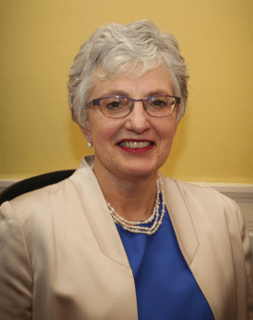
Katherine Zappone, American Irish independent politician who serves as Minister for Children and Youth Affairs from May 2016 to June 2020, is born in Seattle, Washington, on November 25, 1953. She is a Teachta Dála (TD) for the Dublin South-West constituency from 2016 to 2020. She previously served as a Senator from 2011 to 2016, after being nominated by the Taoiseach, Enda Kenny.

Zappone is educated at Boston College (PhD), the Catholic University of America (MA) and University College Dublin (MBA). She becomes an Irish citizen in 1995. She and her wife, Ann Louise Gilligan, found An Cosán which supports individuals and communities to actively engage in the process of social change through transformative education. In Zappone and Gilligan v. Revenue Commissioners (2006), they unsuccessfully seek recognition in the High Court, for their Canadian marriage in Ireland. Zappone is a member of the Irish Human Rights Commission, chief executive of the National Women’s Council of Ireland, and a lecturer in the fields of ethics, theology, and education at Trinity College, Dublin. Though they are already married in Canada, she proposes to Gilligan on air as the positive result in the same-sex marriage referendum becomes known. Gilligan dies in June 2017.

Zappone is nominated by Taoiseach Enda Kenny to the 24th Seanad in 2011, having been recommended by Eamon Gilmore, the then leader of Fine Gael‘s coalition partners, the Labour Party. With her Seanad nomination, she becomes the first openly lesbian member of the Oireachtas and the first member in a recognised same-sex relationship.

Zappone is elected to the Dáil for the Dublin South-West constituency at the 2016 Irish general election, becoming the first openly lesbian TD and, by her own reckoning, the world’s 32nd lesbian to be elected to a national parliament. In May 2016, after a delay in government formation, due to prolonged talks, she becomes Ireland’s first openly lesbian government Minister and the first Minister to have been openly gay at the time of appointment to cabinet, when Taoiseach Enda Kenny appoints her as the Minister for Children and Youth Affairs. She loses her seat at the February 2020 Irish general election and continues to serve as a minister until June 2020 on the election of a new government.

Following the loss of her seat at the 2020 Irish general election, Zappone moves back to Seattle to work as a full-time volunteer for Joe Biden’s presidential campaign in the 2020 United States presidential election, then to New York.

In July 2021, it is announced that Zappone is to be appointed to the newly created position of Special Envoy to the UN for Freedom of Opinion and Expression. It subsequently emerges that the proposed appointment had not been flagged in advance of the Cabinet meeting where it was proposed by Minister Simon Coveney, raising the concerns of the Taoiseach, Micheál Martin. However, he does not block the appointment, attracting criticism from within government, the opposition and the public, with Sinn Féin describing the appointment as “cronyism.”

In the following days it is reported that Zappone had lobbied for the creation of an appointment to the part-time position, which was not openly advertised or subject to a competition. Further controversy arises when it is reported that shortly prior to the announcement of her appointment, she had hosted a party for 50 guests, including politicians such as Leo Varadkar, at the Merrion Hotel, while the COVID-19 pandemic in the Republic of Ireland was ongoing. Comparisons are made between the party and the Oireachtas Golf Society scandal from earlier in the pandemic. On August 4, 2021, she announces that she will not take up the envoy role, saying “While I am honoured to have been appointed by the Government to be the Special Envoy on Freedom of Opinion and Expression, it is clear that criticism of the appointment process has impacted the legitimacy of the role itself. It is my conviction that a Special Envoy role can only be of real value to Ireland and to the global community if the appointment is acceptable to all parties.”

In September 2021, Zappone is invited to appear before the Oireachtas Committee on Foreign Affairs and Defence, but chooses not to attend. As a U.S. citizen and resident, the committee has no power to compel her attendance.


Leave a comment

Birth of Grace Kelly, Award Winning Actress & Princess of Monaco

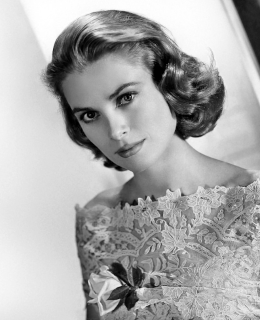
Grace Patricia Kelly, an American Academy Award winning actress, is born into an affluent Catholic family of half Irish and half German descent in Philadelphia, Pennsylvania, on November 12, 1929. After starring in several significant films in the early to mid-1950s, she becomes Princess of Monaco by marrying Prince Rainier III in April 1956.

Kelly’s father, Irish American John B. Kelly, Sr., wins three Olympic gold medals for sculling, and owns a successful brickwork contracting company that is well known on the East Coast. As Democratic nominee in the 1935 election for Mayor of Philadelphia, he loses by the closest margin in the city’s history. In later years he serves on the Fairmount Park Commission and, during World War II, is appointed by President Franklin D. Roosevelt as National Director of Physical Fitness. Her mother, Margaret Majer, has German parents. She teaches physical education at the University of Pennsylvania and is the first woman to coach women’s athletics at Penn. She also models for a time in her youth. After marrying John Kelly in 1924, she focuses on being a housewife until her four children are of school age, following which she begins actively participating in various civic organizations.

Kelly receives her elementary education in the parish of Saint Bridget’s in East Falls. While attending Ravenhill Academy, a reputable Catholic girls’ school, she models fashions at local charity events with her mother and sisters. In 1942, at the age of 12, she plays the lead in Don’t Feed the Animals, a play produced by the Old Academy Players also in East Falls. In May 1947, she graduates from Stevens School, a socially prominent private institution in nearby Chestnut Hill, where she participates in drama and dance programs. Owing to her low mathematics scores, she is rejected by Bennington College in July 1947. Despite her parents’ initial disapproval, she decides to pursue her dreams of becoming an actress.

After graduating from the American Academy of Dramatic Arts in 1949, Kelly begins appearing in New York City theatrical productions and over 40 live drama productions broadcast in early 1950s Golden Age of Television. She gains stardom from her performance in John Ford‘s adventure-romance Mogambo (1953), for which she is nominated for an Academy Award for Best Supporting Actress. She wins the Academy Award for Best Actress for her performance in the drama The Country Girl (1954). Other notable works include the western High Noon (1952), the romance-comedy High Society (1956), and three consecutive Alfred Hitchcock suspense thrillers: Dial M for Murder (1954), Rear Window (1954), and To Catch a Thief (1955). She works with some of the most prominent leading men of the era, including Gary Cooper, Clark Gable, Ray Milland, James Stewart, Bing Crosby, William Holden, Cary Grant, Alec Guinness, and Frank Sinatra.

Kelly retires from acting at age 26 to marry Rainier and begins her duties as Princess of Monaco. Hitchcock hopes that she will appear in more of his films which require an “icy blonde” lead actress, but he is unable to coax her out of retirement. The Prince and Princess have three children: Princess Caroline, Prince Albert, and Princess Stéphanie. Princess Grace retains her link to America by her dual U.S. and Monégasque citizenship. Her charity work focuses on young children and the arts, establishing the Princess Grace Foundation-USA to support local artisans in 1964. Her organization for children’s rights, World Association of Children;s Friends (AMADE), gains consultive status within UNICEF and UNESCO. Her final film contribution is in 1977 to documentary The Children of Theatre Street directed by Robert Dornhelm, where she serves as the narrator. The documentary is nominated for an Academy Award for Best Documentary Feature.

On September 13, 1982, Princess Grace suffers a small stroke while driving back to Monaco from her country home in Roc Agel. As a result, she loses control of her 1971 Rover P6 3500 and drives off the steep, winding road and down the 120-foot mountainside. Her teenage daughter Stéphanie, who is in the passenger seat, tries but fails to regain control of the car. The Princess is taken to the Monaco Hospital (later named the Princess Grace Hospital Centre) with injuries to the brain and thorax and a fractured femur. She dies the following night at 10:55 PM after Rainier decides to turn off her life support. Stéphanie suffers a slight concussion and a hairline fracture of a cervical vertebra and is unable to attend her mother’s funeral.

Princess Grace’s funeral is held at the Cathedral of Our Lady Immaculate in Monaco-Ville, on September 18, 1982. After a Requiem Mass, she is buried in the Grimaldi family vault. Over 400 people attend, including Cary Grant, Nancy Reagan, Danielle Mitterrand, the Princess of Wales, and Empress Farah of Iran.

Rainier, who does not remarry, is buried alongside her after his death in 2005.


Leave a comment

Death of Tom Clancy of the Irish Folk Group The Clancy Brothers

Thomas Joseph Clancy, a member of the Irish folk group the Clancy Brothers, dies in Cork, County Cork, on November 7, 1990. He has the most powerful voice of the brothers and has previously been an actor in numerous stage productions, appearing with Orson Welles in King Lear. He also performs often on television and occasionally in the movies.

Clancy is born on October 29, 1924, one of eleven children born to Johanna McGrath and Bob Clancy in Carrick-on-Suir, County Tipperary. After being apprenticed as a baker, he follows his older brother Patrick “Paddy” Clancy into the Royal Air Force (RAF) in 1943 during World War II, despite both having been members of the Irish Republican Army. In the RAF, he works as a radio operator on bombing runs over Germany.

Discharged from the RAF at the end of the war, Clancy tours with a British repertory company. In 1947 he and his brother Paddy emigrate to Canada. They then move to New York where he meets his first wife and his oldest daughter is born in 1950. They then soon move to Cleveland, Ohio, to live with relatives. He works for a while as a repertory actor at the Cleveland Play House, before returning temporarily to Ireland. While in Ireland, Clancy works for the Shakespeareana Internationale company run by English actor and manager Geoffrey Kendal. After Paddy sends him extra money, he returns to the United States. The brothers plan to move to California, but their car breaks down. They decide to try New York City instead and find work as actors, both on and off Broadway.

In 1956 their brother Liam Clancy joins them, accompanied by his friend Tommy Makem. Liam and Tommy begin singing together, and in 1959 are joined by the older Clancy brothers as The Clancy Brothers and Tommy Makem. The group performs together until Liam leaves in 1976. Makem had left in 1969 to be replaced for a brief time by Bobby Clancy and later Louis Killen.

Clancy continues singing with The Clancy Brothers until 1976, when the group is disbanded. The group reforms in 1977 with a new line-up. Clancy performs with his brothers Paddy and Bobby and their nephew Robbie O’Connell until his death. He also performs with Paddy, Liam, and Tommy Makem during their reunion tour from 1984 to 1985.

Clancy takes the lead vocals on many of the group’s songs, such as “The Rising of the Moon,” “The Moonshiner,” “Haul Away Joe,” “Red Haired Mary,” “The Barnyards of Delgaty,” “Carrickfergus,” “I Once Loved a Lass,” “The Bold Fenian Men,” among others.

Clancy continues to act during his singing career, appearing in the movies The Killer Elite (1975) and Swashbuckler (1976). He also appears on episodes of Little House on the Prairie, Starsky and Hutch, and The Incredible Hulk, among others. He acts in several TV movies as well.

After an absence of fifteen years, Clancy returns to Broadway in May 1974 in Eugene O’Neill‘s A Moon for the Misbegotten. The Irish Times reviews his performance of Phil Hogan: “In ‘Moon’ he deftly measures up to the formidable company in which he finds himself – a wily, sly rogue with a whimsical humour and a genuine concern for his daughter.” The play is a hit and wins three Tony Awards.

Clancy dies from stomach cancer at the age of 66 on November 7, 1990 at Mercy University Hospital in Cork, County Cork. He is survived by his wife Joan and their three daughters, Rayleen, Blawneen and Rosie. Prior to his marriage to Joan, he has children, Eileen and Thomas, with Yvonne Marcus, in Cleveland, Ohio. He also has a daughter, Cait, with his second wife Laine, in the mid-1950s.

Clancy’s last recording is made in 1988 with Robbie O’Connell, Bobby Clancy, and Paddy Clancy at Saint Anselm College in Goffstown, New Hampshire. Unfortunately, the recording is marred by unevenly mixed instruments and voices. After his death, Liam returns to the Clancy Brothers to fill in his place.


Leave a comment

Birth of David Whyte, Anglo-Irish Poet

David Whyte, Anglo-Irish poet, is born in Mirfield, West Yorkshire, England on November 2, 1955. He has said that all of his poetry and philosophy are based on “the conversational nature of reality.” His book The Heart Aroused: Poetry and the Preservation of the Soul in Corporate America (1994) topped the best-seller charts in the United States.

Whyte’s mother is from Waterford, County Waterford, and his father is a Yorkshireman. He attributes his poetic interest to both the songs and the poetry of his mother’s Irish heritage and to the landscape of West Yorkshire. He grows up in West Yorkshire and comments that he had “a Wordsworthian childhood,” in the fields and woods and on the moors. He has a degree in marine zoology from Bangor University, a public university in Bangor, Gwynedd, Wales.

During his twenties, Whyte works as a naturalist and lives in the Galápagos Islands, where he experiences a near drowning on the southern shore of Hood Island. He leads anthropological and natural history expeditions in the Andes, the Amazon and the Himalayas.

Whyte moves to the United States in 1981 and begins a career as a poet and speaker in 1986. From 1987, he begins taking his poetry and philosophy to larger audiences, including consulting and lecturing on organisational leadership models in the United States and UK exploring the role of creativity in business. He has worked with companies such as Boeing, AT&T, NASA, Toyota, the Royal Air Force and the Arthur Andersen accountancy group.

Work and vocation, and “Conversational Leadership” are the subjects of several of Whyte’s prose books, including Crossing the Unknown Sea: Work as Pilgrimage of Identity, The Three Marriages: Reimagining Work, Self and Relationship, and The Heart Aroused: Poetry and the Preservation of The Soul in Corporate America which tops the business best seller lists, selling 155,000 copies.

Whyte has written ten volumes of poetry and four books of prose. Pilgrim, published in May 2012, is based on the human need to travel, “From here to there.” The House of Belonging looks at the same human need for home. He describes his collection Everything Is Waiting For You (2003) as arising from the grief at the loss of his mother. His latest book is Consolations: The Solace, Nourishment and Underlying Meaning of Everyday Words, an attempt to ‘rehabilitate’ many everyday words we often use only in pejorative or unimaginative ways. He has also written for newspapers, including The Huffington Post and The Observer. He leads group poetry and walking journeys regularly in Ireland, England and Italy.

Whyte has an honorary degree from Neumann College, Pennsylvania, and from Royal Roads University, British Columbia, and is Associate Fellow of both Templeton College, Oxford, and the Saïd Business School, Oxford.

Whyte has spent a portion of every year for the last twenty-five years in County Clare. Over the years and over a number of volumes of poetry he has built a cycle of poems that evoke many of the ancient pilgrimage sites of The Burren mountains of North Clare and of Connemara.

Whyte runs the “Many Rivers” organisation and “Invitas: The Institute for Conversational Leadership,” which he founds in 2014. He has lived in Seattle and on Whidbey Island and currently lives in the U.S. Pacific Northwest. He holds U.S., British and Irish citizenship. He is married to Gayle Karen Young, former Chief Talent and Culture Officer of the Wikimedia Foundation. He has a son, Brendan, from his first marriage to Autumn Preble and a daughter, Charlotte, from his second marriage to Leslie Cotter. He has practised Zen and was a regular rock climber. He is a close friend of the late Irish poet John O’Donohue.


Leave a comment

Record Number of Participants Take Part in the 2017 Dublin Marathon

A record 20,000 people take part in the Dublin Marathon on October 29, 2017, making it the fifth largest marathon in Europe. The first Dublin Marathon takes place in 1980 with just over 2,000 runners participating.

The Dublin Marathon is an annual 26.2 mile (42.2 km) road marathon in Dublin held on the last Sunday in October. Prior to 2016, the race takes place on the last Monday in October, which is a public holiday in Ireland. In October 2015, it is announced that from 2016 the marathon will be held on Sunday rather than the October Bank Holiday Monday to attract more overseas runners. Held each year since 1980, the marathon has a record 22,500 registrants for the 2019 race, including over 5,000 entrants from outside Ireland.

The race is founded in 1980 by a group led by Noel Carroll, who persuades the Business Houses Athletic Association (BHAA) to take up the idea. In the first year, 2,100 take part, of whom 1,420 finish. Dick Hooper of Raheny club Raheny Shamrock Athletic Club claims first place, in a time of 2:16:14. The women’s winner is Carey May who finishes in 2:42:11. That year’s runner-up is Neil Cusack, who returns in 1981 to post a winning time of 2:13:59.

Jerry Kiernan‘s 1982 time of 2:13:45 is a long-standing men’s course record. This is finally improved upon by Lezan Kipkosgei Kimutai over twenty years later in 2004, but Russian runner Aleksey Sokolov twice breaks the record with consecutive wins in 2006 and 2007, running 2:11:39 and 2:09:07 respectively. Moses Kangogo Kibet becomes the first man under 2:09 in Dublin with his win in 2:08:58. The current men’s record is 2:08:06 set by Othmane El Goumri in 2019.

Moira O’Neill is the first woman under two hours and forty minutes with her win of 2:37:06 in 1988 and home athlete Christine Kennedy improves this with a run of 2:35:56 three years later. Kenyan Ruth Kutol‘s win in 2:27:22 in 2003 is the first sub-2:30 time and Russian Tatyana Aryasova breaks this record in 2010 with her current women’s record of 2:26:13.

The participation level of the race has followed an upward trend: by 1988 the number of participants increases to 8,700 – up from 4,000 the previous year. It is not until 2000 that the 1988 participation record is finally broken when 8,900 take part. An increasing number of people take part every year in the late 2000s, with 11,000 at the 2007 edition. Entry levels have since increased significantly year-on-year with 19,500 completing the 2016 event.

In 2001 the marathon becomes part of the Dublin Race Series, which includes pre-marathon events of 5 miles, 10 kilometres, 10 miles and half marathon distance over the preceding months, run in the Phoenix Park and Swords, Dublin.

The 2020 and 2021 editions of the race are canceled due to the coronavirus pandemic, with all entries made valid for the following year and all registrants given the option of obtaining a full refund.


Leave a comment

Birth of English Playwright John Arden

John Arden, English playwright, is born in Barnsley, South Yorkshire, England, on October 26, 1930. At the time of his death he is lauded as “one of the most significant British playwrights of the late 1950s and early 60s.”

Arden is the son of the manager of a glass factory. He is educated at Sedbergh School in Cumbria, King’s College, Cambridge and the Edinburgh College of Art, where he studies architecture. He first gains critical attention for the radio play The Life of Man in 1956 shortly after finishing his studies.

Arden is initially associated with the English Stage Company at the Royal Court Theatre in London. His 1959 play, Serjeant Musgrave’s Dance, in which four army deserters arrive in a northern mining town to exact retribution for an act of colonial violence, is considered to be his best. His work is influenced by Bertolt Brecht and epic theatre as in Left-Handed Liberty (1965, on the anniversary of Magna Carta). Other plays include Live Like Pigs, The Workhouse Donkey, and Armstrong’s Last Goodnight, the last of which is performed at the 1963 Chichester Festival by the Royal National Theatre after it was rejected by the Royal Court.

Arden’s 1978 radio play Pearl is considered in a Guardian survey to be one of the best plays in that medium. He also writes several novels, including Silence Among the Weapons, which is shortlisted for the Booker Prize in 1982, and Books of Bale, about the Protestant apologist John Bale. He is a member of the Royal Society of Literature.

With his wife and co-writer Margaretta D’Arcy, Arden pickets the Royal Shakespeare Company (RSC) premiere of his Arthurian play The Island of the Mighty, because they believe the production to be pro-imperialist. They write several plays together which are highly critical of British presence in Ireland, where he and D’Arcy live from 1971 onward.

In 1961, Arden is a founder member of the anti-nuclear Committee of 100, and he also chairs the pacifist weekly Peace News. In Ireland, he is for a while a member of Official Sinn Féin. He is an advocate of civil liberties, and opposes anti-terror legislation, as demonstrated in his 2007 radio play The Scam.

Arden is elected to Aosdána in 2011 before dying in Galway, County Galway on March 28, 2012. He is waked in a wicker casket.

(Pictured: Photograph of John Arden in 1966, credit to Sam Falk/The New York Times)


Leave a comment

Irish Businessman Ben Dunne Kidnapped by the IRA

Ben Dunne, an Irish businessman, is kidnapped by the Provisional Irish Republican Army (IRA) on October 16, 1981. Former director of his family firm, Dunnes Stores, one of the largest chains of department stores in Ireland, he now owns a chain of fitness centres established by his company Barkisland Developments Limited.

Dunne is born in Cork, County Cork on March 3, 1949 to Nora Maloney and Ben Dunne, a business man who founded Dunnes Stores. He is the last of six children.

In 1981, he is kidnapped by the IRA and held for seven days. He is released unharmed after his friend and fellow businessman, Patrick Gallagher, pays his £1 million ransom.

In 1992, Dunne is arrested for cocaine possession and soliciting while on a golf holiday in Florida. His arrest triggers the end of his leadership of Dunnes Stores, as family turmoil leads to control falling to his sister Margaret Heffernan and the company paying IR£100 million for his share of the business.

Dunne is again embroiled in scandal in the mid-1990s when it emerges he had given large amounts of money to a number of Irish politicians, mainly from the Fianna Fáil party including the then Taoiseach, Charles Haughey. He also gave money to Michael Lowry of Fine Gael. Justice Brian McCracken, sole member of The McCracken Tribunal which is established by the Irish Government in 1997, finds that Dunne knowingly assisted Lowry in evading his tax obligations. On March 22, 2011, the Moriarty Tribunal concludes of Ben Dunne’s dealings with Michael Lowry that “What was contemplated and attempted on the part of Mr. Dunne and Mr. Lowry was profoundly corrupt to a degree that was nothing short of breathtaking.” The report refers to its finding Lowry sought to influence a rent review of a building part-owned by Dunne.

Dunne now owns a chain of fitness centres called Ben Dunne Gyms located in Dublin and Liverpool, which he personally promotes on radio, using recent Irish advertising legislation which allows direct comparisons to named competitors. He was working on a new health club, to open in Dún Laoghaire in Dublin, but abandons the project due to complaints from local residents.

In April 2005 Dunne pays £3,000,000 for a 21-acre site in Motspur Park, New Malden (South London), former home of BBC Football Club and other BBC sports facilities. His intent is to apply for planning permission to build a leisure and fitness centre, but he does not do so. Instead, in February 2008, his company Barkisland Developments Limited submits a planning application to the Kingston upon Thames London Borough Council for change of use of the sports ground to a cemetery. The application to change the former BBC Sports Ground into a cemetery is withdrawn on October 3, 2008 after it had become clear that planning permission was likely to be refused. Objections are lodged by many local residents, sports clubs, Sport England and the Mayor of London.


Leave a comment

The 1923 Mountjoy Prison Hunger Strike

On October 13, 1923, following the end of the Irish Civil War, Michael Kilroy, O/C of the Irish Republican Army (IRA) prisoners in Mountjoy Prison, announces a mass hunger strike by 300 prisoners. It soon spreads to other jails and within days 7,033 republicans are on hunger strike.

On the same day, the prisoners in Kilmainham Gaol go on hunger strike, and Ernie O’Malley writes eloquently of it in his book on the Civil War, The Singing Flame. He notes that “practically all volunteered; some were exempted, including myself, but I refused this concession.”

Previously, the Irish Free State government had passed a motion outlawing the release of prisoners on hunger strike. Dan Downey had died in the Curragh on June 10, and Joseph Witty, only 19 years old, also died in the Curragh on September 2. However, because of the large numbers of Republicans on strike, at the end of October the Government sends a delegation to Newbridge Camp to speak with IRA leaders there.

It soon becomes apparent that they are not there to negotiate the strikers’ demands, but rather to give the prisoners the Government’s message: “we are not going to force-feed you, but if you die we won’t waste coffins on you; you will be put in orange boxes and you will be buried in unconsecrated ground.”

O’Malley writes, “Any action was good, it seemed, and everyone was more cheerful when the hunger strike began. We listened to the tales of men who had undergone previous strikes and we, who were novices, wondered what it would be like. We laughed and talked, but in the privacy of our cells, some, like myself, must have thought what fools we were, and have doubted our tenacity and strength of will. I looked into the future of hunger and I quailed.”

All negotiations to curtail the strike are abandoned and the strike goes forward. Poorly planned, within weeks many are going off strike, but by the end of October, there are still 5,000 on strike. O’Malley does not know what effect the strike will have, but he feels he cannot ‘let the side down.’ “Hunger striking was an unknown quantity for me. I did not approve of it. I was frankly afraid, but I could not see boys of sixteen and eighteen take their chance whilst I could eat and be excused. Now, even though one thought one’s death could be of use, there was no passive acceptance. It was a challenge, a fight, and again resistance was built up……The mind would suffer more than the body. The struggle in the end would be between body and spirit.”

On November 20, Denis “Denny” Barry dies in the Newbridge Camp, and Andrew Sullivan dies in Mountjoy on November 22.

When Barry dies, the Bishop of Cork, Daniel Cohalan, refuses to let his body lie in a Cork church. When Terence MacSwiney died on hunger strike in 1921, Bishop Cohalan had written in The Cork Examiner, “I ask the favour of a little space to welcome home to the city he laboured for so zealously the hallowed remains of Lord Mayor Terence MacSwiney. For the moment, it might appear that he has died in defeat. Was Robert Emmet’s death in vain? Did Pearse and the other martyrs for the cause of Irish freedom die in vain? We bow in respect before his heroic sacrifice. We pray the Lord may have mercy on his soul.”

At the death of Denis Barry two years later, the very same Bishop Cohalan writes, “Republicanism in Ireland for the last twelve months has been a wicked and insidious attack on the Church and on the souls of the faithful committed to the Church by the law of the Catholic Church.” Denis Barry is not afforded a Catholic burial.

With the deaths of Barry and Sullivan drawing no positive response or concessions from the Free State government, the IRA command orders the strikes ended on November 23.

O’Malley writes that the strike ended with no promises of release, “we had been defeated again.” While the strike itself fails to win releases, it does begin a slow start of a programme of release of prisoners, the State being worried about the political impact of more deaths, though some prisoners remain in jail until as late as 1932.

O’Malley, writing of Tom Derrig who is in Mountjoy, relates that one of the strikers there, on the last day of the strike, had asked a doctor, “What day of the strike is this?” The doctor replies, “The forty-first.” The striker says, “Be cripes! We bate Christ by a day!”

(From: Stair na hÉireann | History of Ireland, http://www.stairnaheireann.net)


2 Comments

Founding of the Celtic League, American Branch

The Celtic League, American Branch (CLAB) is founded in New York City on October 11, 1974.

The Celtic League is a pan-Celtic organisation, founded in 1961, that aims to promote modern Celtic identity and culture in Ireland, Scotland, Wales, Brittany, Cornwall and the Isle of Man – referred to as the Celtic nations. It places particular emphasis on promoting the Celtic languages of those nations. It also advocates further self-governance in the Celtic nations and ultimately for each nation to be an independent state in its own right. The Celtic League is an accredited non-governmental organization (NGO) with roster consultative status to the United Nations Economic and Social Council (ECOSOC).

The present Celtic League grows out of various other pan-Celtic organisations, particularly the Celtic Congress, but with a more political emphasis. Previously, Hugh MacDiarmid and others had suggested something along the same lines.

The Celtic League is started at the 1961 National Eisteddfod of Wales, which is held at Rhosllannerchrugog near Wrexham in northeast Wales. Two of the founding members are Gwynfor Evans and J. E. Jones, who are respectively president and secretary-general of the Welsh nationalist political party Plaid Cymru at the time. Interest is expressed by Scottish parties, and also by Breton nationalists.

There are six main, national branches of the Celtic League in the six Celtic countries, generally known by the Celtic language names of their countries: Ireland is known as Éire, Scotland as Alba, Wales as Cymru, Brittany as Breizh, Cornwall as Kernow and the Isle of Man as Mannin or Mann.

The Celtic League, American Branch (CLAB) is one of various diaspora branches, all of whom play little part in the annual general meetings. American author and linguist Alexei Kondratiev serves as president of the Celtic League, American branch. The CLAB prints its own quarterly newsletter, Six Nations, One Soul, which provides news of branch activities and events within the Celtic communities in the United States, publishes letters from members, and reviews books and recordings of Celtic interest. CLAB publishes at least six issues of a larger semi-annual magazine, Keltoi: A Pan-Celtic Review, from 2006 to 2008. CLAB also produces a wall calendar each year, with art from members, appropriate quotations, and anniversaries. Publication ceases with the 2008 issue.