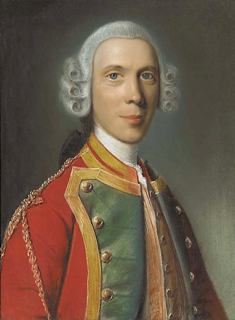
Eyre is born around 1720, the second son of Colonel Samuel Eyre of Eyreville, County Galway, a descendant of Colonel John Eyre, who accompanies General Ludlow to Ireland in 1651 and acquires large estates in County Galway, including the Manor of Eyrecourt.
Eyre is that rare man whose military and engineering training occurs entirely in the Americas before he assumes the significant office of Surveyor General of Ireland in 1752. In 1738, he joins the regiment of James Oglethorpe, the founder of the Province of Georgia, and sails to the colony. As a cadet in Oglethorpe’s Regiment, he is sent to the colony’s interior as an agent to the Cherokee Indians. He rises from the rank of cadet to be sub-engineer for Georgia and the Province of South Carolina and in 1740 he is commissioned an ensign. He learns engineering from Major William Cook, the Regiment’s Engineer, and he marries Cook’s daughter Anne, who has accompanied her father to Georgia. The date of the wedding is not documented, but occurs by 1743, by which date both Eyre and Cook have returned to London. In the last two years of his tour of duty, Eyre serves also as the Sub-engineer for South Carolina and Georgia.
In 1744, Eyre is commissioned a lieutenant and joins Trelawney’s Regiment of Foot, headed by Edward Trelawney, Governor of Jamaica. He serves in Jamaica and at Roatán (Rattan) and is in charge of Roatán’s defences until 1748, when the Treaty of Aix-la-Chapelle ends the War of the Austrian Succession and returns the island to Spain. He is promoted to captain in 1748. For the four years after his departure from Roatán and before his resignation from Trelawney’s Regiment, little is known about his activities until he retires from active duty in 1752.
On August 31, 1752, Eyre is appointed Surveyor General of Ireland, having purchased the office from Arthur Jones-Nevill. Joseph Jarratt works as his deputy in this role. He undertakes works at the Royal Barracks in Dublin, but the condition of the barracks is criticised by the Commissioners of the Ordnance for Ireland. As Surveyor General, he is also involved in harbour works at Dún Laoghaire, and is responsible for the rebuilding of the State Apartments at Dublin Castle. In 1763, the office of Surveyor General is abolished, and he is transferred to the new post of Chief Engineer of the Ordnance.
Eyre resigns his commission in 1766 and becomes member of the Irish House of Commons for Thomastown (1761-68) and Fore (1768-1772). He dies on February 22, 1772, from an apoplectic fit brought on by the sudden death of a much loved daughter, at Parliament House, Dublin, while attending a session of the House.
On February 13, 1782, the Irish Brigade of France plays a significant role in the capture of Saint Kitts during the American Revolutionary War. The brigade, commanded by Arthur Dillon, is part of the French forces that besiege the British stronghold of Brimstone Hill. The siege lasts for 31 days, and after a fierce battle, the British forces surrender.
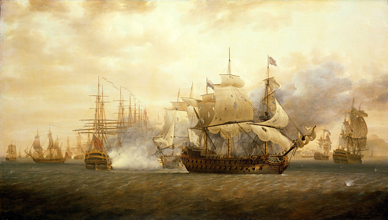
When Hood returns to the West Indies in late 1781 after the Battle of the Chesapeake, he is for a time in independent command owing to Admiral George Rodney‘s absence in England. The French admiral, François Joseph Paul de Grasse, attacks the British islands of Saint Kitts and Nevis with 7,000 troops and 50 warships, including the 110-gun Ville de Paris. He starts by besieging the British fortress on Brimstone Hill on January 11, 1782. Hoping to salvage the situation, Hood makes for Saint Kitts by departing Antigua on January 22 with twenty-two ships of the line, compared to de Grasse’s thirty-six.
The British fleet on January 24 consists of twenty-two sail of the line, and is close off the southeast end of Nevis. They run into and capture the French 16-gun cutter Espion, which carries a large amount of ammunition for the besieging French forces at Brimstone Hill.
At daybreak on January 25, the French fleet is discovered having stood to the southward of Basseterre, consisting of a 110-gun ship, 28 two-decked ships, and two frigates. Hood stands toward the French fleet with the apparent intention of bringing on action, and effectively draws the French fleet off the land. As soon as Hood effects this maneuver, he is aided by a favorable change in wind and is able to guide his fleet within the anchorage of Basseterre, which the French admiral has just quit. Hood orders his fleet in an L-formation and then orders his fleet to lay anchor. De Grasse makes three distinct attacks upon the British fleet on January 26 but is repulsed.
The Pluton, commanded by François Hector d’Albert de Rions, leads the French line, “receiving the crashing broadside of ship after ship until the splintered planking flew from her off side and her rigging hung in a tangled mass.” Chauvent goes on to describe the battle as “…a sulphurous hell, with cannon vomiting forth flame and death.” The entire battle lasts from 7:00 a.m. to 6:30 p.m., with the major action in the afternoon.
Damage on both sides is heavy, though the French suffer higher casualties. However, Hood is unable to stop the French and can only observe the land action. After the successful French siege of Brimstone Hill fortress, Saint Kitts and Nevis surrender on February 12. Hood leaves on February 14 and joins forces with the recently arrived Admiral George Rodney.
The capture of Saint Kitts marks a pivotal moment in the war, as it is the last major military action of the Irish Brigade of France. The regiment’s efforts are crucial in the French victory, and their legacy is remembered for their contributions to the fight for liberty.
In 1791, after the French Revolution, the Brigade’s close ties to the monarchy of France causes the leaders of the new Republic to disband the famous unit. Dillon, whose family and regiment sacrifice so much for France during its 100-years service, later dies on the Revolutionary government’s guillotine.
(Pictured: “The Battle of Frigate Bay, 26 January 1782,” oil on canvas painting by Nicholas Pocock, 1784, current location Royal Museums Greenwich)
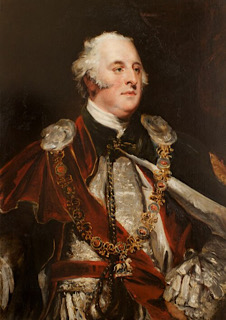
In 1786, Pratt’s father is created Earl Camden, at which point he becomes known by one of his father’s subsidiary titles as Viscount Bayham.
In 1793, Pratt is sworn of the Privy Council. In 1794 he succeeds his father as 2nd Earl Camden, and the following year he is appointed Lord Lieutenant of Ireland by Pitt.
Pratt resigns from office in June 1798, to be replaced with Charles Cornwallis, 1st Marquess Cornwallis, who oversees the military defeat of the rebellion. In 1804, Pratt becomes Secretary of State for War and the Colonies under Pitt, and in 1805 Lord President of the Council, an office he retains until 1806. He is again Lord President from 1807 to 1812, after which date he remains for some time in the cabinet without office. In 1812 he is created Earl of Brecknock and Marquess Camden.
The enforced resignation from the Cabinet of Robert Stewart, Viscount Castlereagh, the stepson of his sister Frances (Lady Londonderry), to whom he has always been personally close, in September 1809, leads to a series of bitter family quarrels, when it becomes clear that Pratt has known for months of the plan to dismiss Stewart, but has given him no warning. Stewart himself regards Pratt as “a weak friend,” not an enemy, and they are eventually reconciled. Other members of the Stewart family, however, never forgive Pratt for what they regard as his disloyalty.
Pratt marries Frances, daughter of William Molesworth, in 1785. She dies at Bayham Abbey, Sussex, in July 1829. He survives her by eleven years and dies at Seal, Kent, on October 8, 1840, aged 81. He is succeeded by his only son, George.
Congreve is born on January 24, 1670, at Bardsley, West Yorkshire, England, the son of William Congreve, an army officer, and Mary Browning of Doncaster. In 1674, his father gains a commission as lieutenant in the army in Ireland, and moves with his family to the garrison port of Youghal, County Cork, where they remain until 1678. After a brief period at Carrickfergus, they move in 1681 to Kilkenny, where his father is assigned to the Duke of Ormond‘s regiment. This service entitles Congreve to a free education at the renowned Kilkenny College, where Jonathan Swift is also a student, and where he receives an excellent schooling in classics. He forms a lasting friendship with another pupil, Joseph Kelly, a lawyer and MP for Doneraile (1705–13), with whom he later maintains a lengthy correspondence. In April 1686, he enters Trinity College Dublin (TCD) as a classical scholar and, again like Swift, is taught by St. George Ashe. It seems likely that his degree is disrupted by the political upheaval of 1688 as the college is forced to close in 1689 and his BA is not recorded.
At this point, Congreve leaves Ireland and spends the spring and summer of 1689 with relatives in Staffordshire. He subsequently moves to London, and in March 1691 enters the Middle Temple. He is not assiduous in his legal studies, preferring to socialise with intellectuals and writers, notably John Dryden, to pursue literary projects. In 1692, under the pseudonym “Cleophil,” he published Incognita, or, Love and Duty Reconciled, a romantic novella reputedly written while he is a student in Dublin. He also contributes some verse to Charles Gildon‘s Miscellany (1692), as well as two translations from Homer and three odes to Dryden’s Examen poeticum (1693). Dryden evidently thinks highly of the young writer, and with his advice and approbation Congreve’s first play, The Old Batchelor, is recommended by the Irish playwright Thomas Southerne to Thomas Davenant, manager of the Theatre Royal, Drury Lane. A fast-paced and witty comedy, concerning amorous appetites, The Old Batchelor is accepted and opens on March 9, 1693, to popular acclaim, enjoying an unusually long run of fourteen nights. Among the cast are Thomas Doggett, still relatively unknown, as Fondlewife, and a young English actress and singer, Anne Bracegirdle as Amarinta, with whom Congreve falls in love and begins a prolonged relationship. The play is dedicated to his friend Charles Boyle, eldest son of Richard Boyle, 1st Earl of Burlington, whose estates Congreve’s father had begun to manage in 1690.
After this early success, Congreve is dismayed by the poor reception of his next play, a domestic comedy with dark undertones entitled The Double Dealer, which is staged in December 1693 and criticised as immoral and unflattering in its representation of women. Its popularity improves somewhat when Mary II, Queen of England, soon after its undistinguished debut, commands a performance. When the queen dies the following year, Congreve eulogises her in The Mourning Muse of Alexis, a Pastoral. Regarded by contemporaries as his finest literary work, it is rewarded by a gift of £100 from King William III. Production of his next play is delayed by the revolt of the Drury Lane actors against the management of Christopher Rich. Congreve supports the actors and their petition to the Lord Chamberlain to reopen the theatre at Lincoln’s Inn Fields. When their request is granted, the renovated theatre opens on April 30, 1695, with Congreve’s enduring romantic comedy Love for Love, and the playwright being made a shareholder in the new company. A characteristically witty and well-plotted comedy, the production of Love for Love is particularly notable for Doggett’s sparkling performance as Sailor Ben. Congreve’s dramatic success also brings political advancement, as he receives his first government appointment as commissioner for hackney coaches.
Congreve returns to Ireland for most of 1696, where, with Southerne, he receives an MA from TCD, and probably visits his parents, then living at Lismore Castle, County Waterford. He also begins work on a tragedy entitled The Mourning Bride, which becomes an instant hit at Lincoln’s Inn Fields when it is first performed in February 1697 and running for thirteen nights. Despite his considerable success and popularity, he is deeply disconcerted by Jeremy Collier‘s aggressively anti-theatrical pamphlet, Short View of the Immorality and Profaneness of the English Stage (1698), which targets John Vanbrugh, Dryden, and Congreve. He is stung into a response, publishing Amendments of Mr. Collier’s False and Imperfect Citations (1698), which eloquently defends his dramatic methodology, but is rendered less effective by an emotional and ill-judged tone. His theatrical acumen seems to be at odds with the times, for in the dedication to his next play, The Way of the World, he observes that “little of it was prepar’d for that general taste which seems now to be predominant in the pallats of our audience.” Nevertheless, he is still bitterly disappointed by the disparaging response to its first performance on March 12, 1700. Dryden, however, realises the merit of the play, which is now recognised as Congreve’s masterpiece and a landmark in the dramatic tradition of the comedy of manners.
Disheartened, Congreve abandons play-writing, but he maintains his theatrical connections and embarks upon several collateral projects, producing a libretto for The Judgement of Paris (1701), and collaborating with Vanbrugh and the poet William Walsh on a translation of Molière‘s Monsieur de Pourceaugnac, staged as Squire Trelooby at the Lincoln’s Inn Fields theatre in 1704. Less successfully, he makes an ill-advised investment with Vanbrugh in a new theatre and opera house in the Haymarket, from which he withdraws with financial losses in 1705. His opera libretto Semele, written for the opening of the new theatre, is not performed until 1744, when it is scored by George Frideric Handel, though John Eccles writes a score in 1707 which remains unperformed until 1972. In the early 1700s his relationship with Anne Bracegirdle falters, though they remain lifelong friends.
In 1710, Congreve publishes The Works of Mr. William Congreve in three volumes. He continues throughout his life to write poetry, ballads, essays, and other miscellaneous pieces. He remains active and influential in literary and theatrical circles, often assisting young writers such as Charles Hopkins, son of Ezekiel Hopkins, Bishop of Derry, and Alexander Pope, who dedicates to him The Iliad (1715). Financially, however, he becomes increasingly dependent upon various minor government posts. He belongs for many years to the celebrated Kit-Cat Club, alongside such prominent writers, wits, and whigs as Richard Boyle, 2nd Earl of Cork, Richard Steele, Joseph Addison, Walsh, and Vanbrugh. Through the good offices of his friend Jonathan Swift, he retains his government position as Commissioner of Wines during the Tory administration of 1710–14. His party loyalty is rewarded in 1714 when he receives a lucrative government appointment as Secretary of the island of Jamaica. His personal life also improves around this time, as a friendship with Lady Henrietta Godolphin develops into a love affair that lasts for the rest of his life. They have one daughter, Mary (1723–64).
Congreve suffers for much of his life from gout and failing eyesight. These afflictions worsen with age, though friends remark that his cheerful temper survived unaffected. He is involved in a coach accident in September 1728, and dies January 19, 1729, at his home in Surrey Street, likely from a related injury. He names Francis Godolphin, 2nd Earl of Godolphin, his lover’s husband, as his executor, and bequeaths almost his entire estate to Henrietta, thereby discreetly leaving his property to his daughter. He is buried in Poet’s Corner, Westminster Abbey, on January 26.
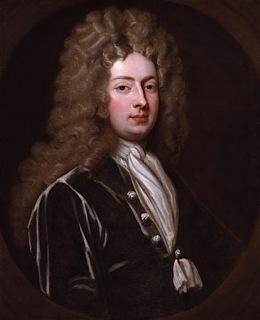
(From: “Congreve, William” by Sinéad Sturgeon, Dictionary of Irish Biography, http://www.dib.ie, October 2009; Pictured: Portrait of William Congreve (1709) by Sir Godfrey Kneller)
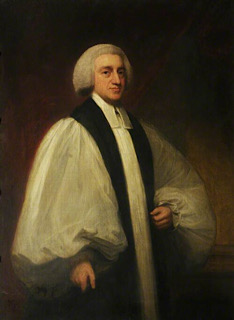
Agar is known to have held particularly marked Calvinistic positions. He serves as Dean of Kilmore from 1765 to 1768, and then as Bishop of Cloyne until 1779.
In 1794, Agar is raised to the Peerage of Ireland as Baron Somerton. In 1801, he is translated to become Archbishop of Dublin and is created Viscount Somerton. In 1806, he is further honoured when he is made Earl of Normanton. These titles are all in the Peerage of Ireland. He remains as Archbishop of Dublin until his death in 1809, and from the beginning of 1801 onward, sits in the House of Lords as one of the twenty-eight original Irish representative peer, following the Acts of Union 1800 which unites Ireland and Great Britain.
Agar dies on July 14, 1809, aged 72, and is succeeded in his secular titles by his son Welbore Ellis Agar. He is buried in the north transept of Westminster Abbey. His widow Jane, Countess of Normanton, is buried alongside him following her death in 1826. His tomb dates from 1815 and is created by John Bacon.
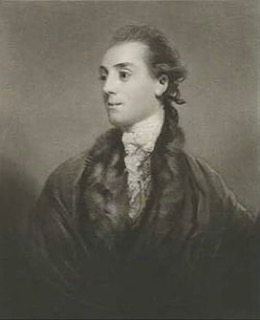
Luttrell was a captain in the Royal Navy but retires in 1789. He is returned to Parliament for Stockbridge in 1774, a seat he holds until 1775, and again between 1780 and 1785. Between 1785 and 1826 he is a commissioner of HM Customs and Excise. He succeeds his elder brother to the earldom in 1821. This is an Irish peerage and does not entitle him to an automatic seat in the House of Lords.
In 1766, Lord Carhampton marries the Honorable Elizabeth Olmius (1742-97), daughter of John Olmius, 1st Baron Waltham. In 1787, out of respect after the death of his father-in-law, he assumes by Royal Licence the additional surname of “Olmius.” In 1798, he sells the Olmius family seat of Newhall to the founding nuns of New Hall School. There are three children from his first marriage (however only his daughter survives to adulthood):
Lady Frances Maria Luttrell (b. 1768), married Sir Simeon Stuart, 4th Baronet
James Luttrell (d. 1772)
John Luttrell (d. 1769)
Lord Carhampton marries secondly Maria Morgan, daughter of John Morgan, in 1798. They have one child:
Lady Maria Anne Luttrell (1799–1857), married Lieutenant-Colonel Hardress Robert Saunderson
Shackleton is the daughter of Richard Shackleton (1726–92) by his second wife, Elizabeth Carleton (1726–66), and granddaughter of Abraham Shackleton, schoolmaster of Edmund Burke. Her parents are Quakers. She keeps a personal diary for most of her life, beginning at the age of eleven and writing in it almost daily. There 55 extant volumes of her diaries in the National Library of Ireland.
Shackleton is educated, and her literary studies are aided by Aldborough Wrightson, a man who had been educated at Ballitore school and had returned to die there. In 1784, she travels to London with her father and pays several visits to Burke’s town house, where she meets Sir Joshua Reynolds and George Crabbe. She also goes to Beaconsfield, and on her return writes a poem in praise of the place and its owner, which is acknowledged by Burke on December 13, 1784, in a long letter. On her way home she visits, at Selby, North Yorkshire, some primitive Quakers whom she describes in her journal.
On January 6, 1791, Shackleton marries William Leadbeater, a former pupil of her father and a descendent of the Huguenot Le Batre and Gilliard families. He becomes a prosperous farmer and landowner in Ballitore. She spends many years working in the village post office and also works as a bonnet-maker and a herbal healer for the village. The couple lives in Ballitore and have six children. Their daughter Jane dies at a young age from injuries sustained after an accident with a wax taper. Another daughter, Lydia, is a friend and possible patron of the poet and novelist Gerald Griffin.
On her father’s death in 1792, Leadbeater receives a letter of consolation from Burke. Besides receiving letters from Burke, she corresponds with, among others, Maria Edgeworth, George Crabbe, and Melesina Trench. On May 28, 1797, Burke writes one of his last letters to her.
Leadbeater describes in detail the effects of the Irish Rebellion of 1798 on the lives of her family and neighbours in Ballitore. She is in Carlow on Christmas Day 1796 attending a Quaker meeting when the news arrives that the French fleet has been seen off Bantry. She describes the troops marching out of the town and the ensuing confusion in Carlow and Ballitore.
Leadbeater’s first literary work, Extracts and Original Anecdotes for the Improvement of Youth, is published anonymously in 1794 in Dublin. It contains an account of the history of Quakerism and several poems on secular and religious subjects.
In 1808, Leadbeater publishes Poems with a metrical version of her husband’s prose translation of Maffeo Vegio‘s Thirteenth Book of the Æneid. She next publishes in 1811 Cottage Dialogues among the Irish Peasantry, of which four editions, with some alterations and additions, appear by 1813. In 1813, she tries to instruct the rich on a similar plan in The Landlord’s Friend. Intended as a sequel to Cottage Dialogues, in which persons of quality are made to discourse on such topics as beggars, spinning-wheels, and Sunday in the village, Tales for Cottagers, which she brings out in 1814 in conjunction with Elizabeth Shackleton, is a return to the original design. The tales illustrate perseverance, temper, economy, and are followed by a moral play, Honesty is the Best Policy.
In 1822, Leadbeater concludes this series with Cottage Biography, being a Collection of Lives of the Irish Peasantry. The lives are those of real persons, and contain some interesting passages, especially in the life of James Dunn, a pilgrim to Lough Derg. Many traits of Irish country life appear in these books, and they preserve several of the idioms of the English-speaking inhabitants of the Pale. Memoirs and Letters of Richard and Elizabeth Shackleton … compiled by their Daughter is also issued in 1822. Her Biographical Notices of Members of the Society of Friends who were resident in Ireland appears in 1823, and is a summary of their spiritual lives, with a scanty narrative of events. Her last work is The Pedlars, a Tale, published in 1824.
Leadbeater’s best known work, the Annals of Ballitore, is not printed until 1862, when it is brought out with the general title of The Leadbeater Papers (2 vols.) by Richard Davis Webb, a printer who wants to preserve a description on rural Irish life. It tells of the inhabitants and events of Ballitore from 1766 to 1823, and few books give a better idea of the character and feelings of Irish cottagers, of the premonitory signs of the rebellion of 1798, and the Rebellion itself. The second volume includes unpublished letters of Burke and the correspondence with Mrs. Richard Trench and with Crabbe.
Leadbeater dies at Ballitore on June 27, 1826, and is buried in the Quaker burial-ground there.
In the mid-1750s, Fitzsimons’s family immigrates to Philadelphia, Pennsylvania, where his father dies soon thereafter. He has enough education that he begins work as a clerk in a mercantile house. He marries Catherine Meade on November 23, 1761, and forms a business partnership with her brother George. Their firm, which specializes in the West Indies trade, operates successfully for over 41 years.
The firm is soon hit by the new revenue measures created to help support the finances of the British Empire, including the much reviled Stamp Act of 1765. Concerned with these ideas, Fitzsimons becomes active in the Irish merchant community in Philadelphia. He is a founding member of the Friendly Sons of St. Patrick in 1771 and later, in 1774, a steering committee organized to protest the Coercive Acts.
When Pennsylvania begins mobilizing and organizing a militia to fight the British, Fitzsimons is soon involved. He serves as captain of a company of home guards under the command of Colonel John Caldwalader. Initially his company serves as part of the soldiers who man posts along the New Jersey coast. His unit later serves as part of the reserve at the Battle of Trenton in 1776. Later in the war, he serves on the Pennsylvania Council of Safety and heads a board to oversee the newly formed Pennsylvania Navy.
Fitzsimons enters active politics as a delegate to the Continental Congress in 1782 and 1783. He is a member of the Pennsylvania House of Representatives from 1786 until 1795. He is also a delegate to the U.S. Constitutional Convention in 1787. Although not a leading member of that convention, he supports a strong national government, the end of slavery, the United States Congress‘s powers to impose a tariff on imports and exports, the granting the House of Representatives, and power in equal to the United States Senate in making treaties. He is one of only two Catholic signers of the Constitution of the United States, the other being Daniel Carroll of Maryland.
After the Constitution is established, Fitzsimons serves in the first three sessions of the House of Representatives as a Federalist, where he favors protective tariffs and a strong navy, co-drafting the Naval Act of 1794 authorizing the original six frigates of the United States Navy. He fails to win re-election in 1794. This is partially attributed to public opinion turning against the Federalist Party over the forceful suppression of the Whiskey Rebellion. Although he never holds elective office again, he serves in 1798 as head of the committee of merchants overseeing the subscription-loan to build a warship at private expense for use in the Quasi-War.
In 1796, Fitzsimons, along with James Innes of Virginia, is appointed by President John Adams to serve as one of two American members on the five-man debt commission charged under Article VI of the Jay Treaty with examining the claims of British subjects unable to collect debts incurred by Americans prior to the American Revolution. Fitzsimons, Innes and Samuel Sitgreaves, who replaces Innes upon the latter’s death, become annoyed with the arguments used by their British counterparts to inflate the claims total. Fitzsimons and Sitgreaves angrily and permanently secede from the board in July 1799. The claims are eventually disposed of by a lump-sum payment, agreed upon by United States Minister to BritainRufus King with British Foreign SecretaryRobert Banks Jenkinson and approved by PresidentThomas Jefferson and the Senate in 1802.
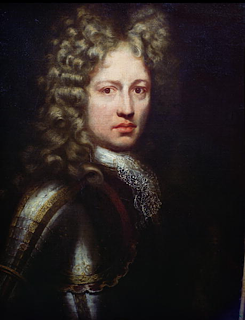
There are few surviving records of Sarsfield’s early life, although it is generally agreed he is brought up on the family estates at Tully. While some biographies claim he is educated at a French military college, there is no evidence for this.
Sarsfield fights at Entzheim, Turckheim and Altenheim. He and Hamilton are standing next to Turenne when he is killed by a chance shot at Salzbach in July 1675. He remains in France until the war ends in 1678, then returns to London to join a new regiment being recruited by Thomas Dongan, 2nd Earl of Limerick. However, the Popish Plot then results in Sarsfield and other Catholics being barred from serving in the military.
This leaves Sarsfield short of money, and he becomes involved in an expensive legal campaign to regain Lucan Manor from the heirs of his brother William, who dies in 1675. This ultimately proves unsuccessful amid allegations of forged documents, and in 1681 he returns to London, where he makes two separate attempts to abduct an heiress and is lucky to escape prosecution. When Charles’s Catholic brother James becomes king in 1685, Sarsfield rejoins the army and fights in the decisive Battle of Sedgemoor, which ends the Monmouth Rebellion. James is keen to promote Catholics, whom he views as more loyal, and by 1688 Sarsfield is colonel of a cavalry unit.
After Richard Talbot, 1st Earl of Tyrconnell, is appointed Lord Deputy of Ireland in 1687, he begins creating a Catholic-dominated Irish army and political establishment. Aware of preparations for invasion by his nephew and son-in-law William of Orange, James sends Sarsfield to Dublin in September to persuade Tyrconnell to provide him with Irish troops. This proves unsuccessful, and in November James is deposed by the Glorious Revolution. Sarsfield takes part in the Wincanton Skirmish, one of the few military actions during the invasion. He remains in England until January when he is allowed to join James in France.
Accompanied by French troops and English exiles, James lands in Ireland in March 1689, beginning the Williamite War in Ireland. Sarsfield is promoted brigadier, elected to the 1689 Irish Parliament for County Dublin, and commands cavalry units in the campaign in Ulster and Connacht. When an Irish brigade is sent to France in October, French ambassador Jean-Antoine de Mesmes proposes Sarsfield as its commander. He notes that while “not…of noble birth […], (he) has distinguished himself by his ability, and (his) reputation in this kingdom is greater than that of any man I know […] He is brave, but above all has a sense of honour and integrity in all that he does”.
James rejects this, stating that although unquestionably brave, Sarsfield is “very scantily supplied with brains.” His role at the Battle of the Boyne is peripheral, although the battle is less decisive than often assumed, Jacobite losses being around 2,000 from a force of 25,000. James returns to France, leaving Tyrconnell in control. He is the leader of the “Peace Party,” who want to negotiate a settlement preserving Catholic rights to land and public office. Sarsfield heads the “War Party,” who feel they can gain more by fighting on. It includes the Luttrell brothers, Nicholas Purcell and English Catholic William Dorrington, a former colleague from Monmouth’s Regiment.
The position of the War Party is strengthened by the Declaration of Finglas, which offers the rank and file amnesty but excludes senior officers. French victories in the Low Countries briefly increases hopes of a Stuart restoration, and the Jacobites establish a defensive line along the River Shannon. Sarsfield cements his reputation with an attack on the Williamite artillery train at Ballyneety, widely credited with forcing them to abandon the first siege of Limerick. The Jacobites also retain Athlone, offset by the loss of Kinsale and Cork, which make resupply from France extremely difficult.
With Tyrconnell absent in France, Sarsfield takes control and in December 1690, arrests several leaders of the peace faction. He then bypasses James by asking Louis XIV directly for French support, and requesting the removal of Tyrconnell and the army commander James FitzJames, 1st Duke of Berwick, James’ illegitimate son. The latter, who later describes Sarsfield as “a man […] without sense”, albeit “very good-natured,” leaves Limerick for France in February.
Tyrconnell returns in January 1691, carrying letters from James making Sarsfield Earl of Lucan, an attempt to placate an “increasingly influential and troublesome figure.” A large French convoy arrives at Limerick in May, along with Charles Chalmot de Saint-Ruhe, appointed military commander in an attempt to end the conflict between the factions. Saint-Ruhr and 7,000 others die at Aughrim in July 1691, reputedly the bloodiest battle ever on Irish soil. Sarsfield’s role is unclear: one account claims he quarrels with Saint-Ruhe and is sent to the rear with the cavalry reserves.
The remnants of the Jacobite army regroup at Limerick. Tyrconnell dies of a stroke in August, and in October, Sarsfield negotiates terms of surrender. He is criticised for this, having constantly attacked Tyrconnell for advocating the same thing, while it is suggested the Williamite army is weaker than he judged. However, the collapse of the Shannon line and surrender of Galway and Sligo leaves him little option. Without French supplies, the military position is hopeless, and defections mean his army is dissolving.
The military articles of the Treaty of Limerick preserve the Jacobite army by allowing its remaining troops to enter French service. About 19,000 officers and men, including Sarsfield, choose to leave in what is known as the Flight of the Wild Geese. Sarsfield’s handling of the civil articles is less successful. Most of its protections are ignored by the new regime, although Sarsfield possibly views it as temporary, hoping to resume the war.
On arrival in France, Sarsfield becomes Major-General in the army of exiles, an appointment James makes with great reluctance. In addition to other acts of perceived insubordination, Sarsfield allegedly tells William’s negotiators at Limerick “change but kings with us, and we will fight it over again.” After the planned invasion of England is abandoned in 1692, the exiles become part of the French army, and Sarsfield a French maréchal de camp.
Sarsfield fights at Steenkerque in August 1692, and is fatally wounded at the Battle of Landen in 1693, dying at Huy on August 21, 1693. Despite several searches, no grave or burial record has been found, although a plaque at St. Martin’s Church, Huy, has been set up in commemoration and an announcement in 2023 states that, pending exhumation and identification, his remains have been located. Like much else, his reputed last words, “Oh that this had been shed for Ireland!” are apocryphal.
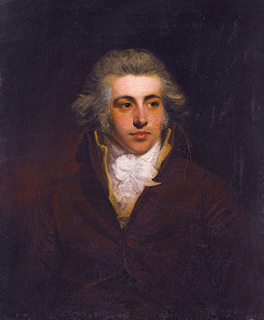
FitzGerald marries Charlotte Boyle Walsingham in London on August 3, 1791. Together they live at Boyle Farm, Thames Ditton. In 1806, his wife succeeds to the Baron de Ros, the premier baron in the Peerage of England, as 20th Baroness de Ros. The family then takes the surname FitzGerald-de Ros. The couple has 13 children in 21 years, of which nine survive to adulthood.



 seamus dubhghaill