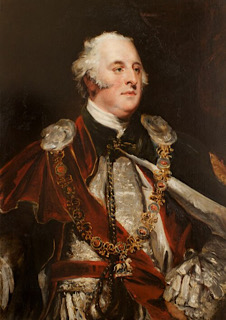
The United Irish rebels, under Fr. John Murphy’s command, have been encamped on land belonging to a Mr. Donovan at the foot of Carrigrew Hill on June 2 and 3. This small respite from hostilities and marching affords the rebels some rest and time to re-group from previous skirmishes. Some of the rebels take leave to visit their families during these two days before re-joining the camp in advance of their move north toward Gorey.
On the morning of the June 4, Lieutenant-General Loftus and Lieutenant-Colonel Walpole march out of Gorey with 1,200 men with the intention of attacking the rebel encampment at Carrigrew Hill. Loftus leads his 600 men out the Ballycanew road to attack the camp from the east while Walpole heads due south via Clough to attack the camp on its northern side.
Having received advanced warnings of the British plans, the poorly equipped rebel army of 10,000 to 12,000 men sets out from Carrigrew Hill and marches through Ballyoughter on to Tubberneering. Their aim is to defeat the Crown forces in Gorey and release rebel prisoners that have been captured and imprisoned there.
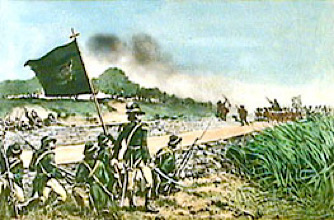
On approaching Tubberneering, a vanguard of rebels is warned by a scouting party returning from Clough that the British forces are heading their way. The vanguard sets up an ambush with musketeers on top of the rock at Tubberneering and pikemen laying in wait inside the ditch along the road south of Cain bridge.
The battle is an ambush of a British force of 400 men under Lieutenant-Colonel Walpole, containing one troop of regular cavalry (the 4th Royal Irish Dragoon Guards) and militia and yeomanry auxiliaries. They are ambushed in a narrow defile by United Irish rebels, led by Fr. John Murphy. Walpole and one hundred men are killed, while the rest throw away their weapons and uniforms and flee. The regular dragoons make an attempt to fight back but are in a bad place for cavalry so they withdraw. This defeat allows three cannon to be captured which are subsequently used against British troops at the Battle of Arklow. The rebels are unable to take Arklow however. The day after the engagement at Tubberneering, the United Irishmen attempt to take New Ross in the south of County Wexford but are repulsed at a heavy cost.
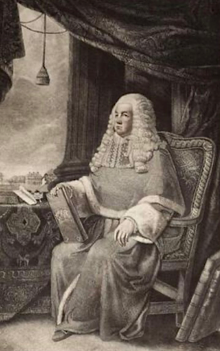
Yelverton is the eldest son of Francis Yelverton of Kanturk, County Cork, and Elizabeth Barry, daughter of Jonas Barry of Kilbrin (now Ballyclogh, County Cork). His father dies when he is only ten. His mother reaches a great age, dying only a year before her son. He goes to school in Charleville and Midleton College, and attends Trinity College Dublin, where he takes a degree of Bachelor of Arts in 1757 and of Bachelor of Laws in 1761. His family lacks wealth and social position and he is for some years an assistant master under Andrew Buck in the Hibernian Academy. This menial occupation is later a source of great embarrassment to him, as his enemies love to ridicule him as “Buck’s usher.”
In 1761, Yelverton marries Mary Nugent, daughter of William Nugent of Clonlost, County Westmeath, and his wife Ursula Aglionby, a lady of some fortune, and is thus enabled to read for the Irish Bar, entering the Middle Temple. He is called to the Bar in 1764. Despite his lack of family connections, his success in his profession is rapid, due to his legal ability, charm and remarkable eloquence, and he takes silk eight years afterward.
Yelverton is elected to the Irish House of Commons as member for Donegal Borough from 1774 to 1776. In the latter year, he is elected for both Belfast and Carrickfergus. He chooses to sit for the latter constituency and represents Carrickfergus until 1784. Although few examples of his oratory survive, all contemporaries agree on his eloquence, which gives him a dominant position in the Commons. He also serves as Recorder of Carrickfergus from 1778 until his death. This is not a Crown appointment as the Recorder is elected by a vote of the entire town corporation.
Yelverton gives his support to Henry Grattan and the Whigs during the greater part of his parliamentary career. He is a strong supporter of the demand for an independent Irish Parliament, but later changes his stance.
Yelverton plays a crucial role in the reforms which are collectively called the Irish Constitution of 1782. In particular he sponsors the Act 21 and 22 of George III, An Act to regulate the manner of passing bills and to prevent delays in summoning of Parliaments – which is popularly known as “Yelverton’s Act.” This radically modifies Poynings’ Law of 1495 by which all legislation to be passed by the Irish Parliament has to be drafted by the Privy Council of Ireland, then sent to the English privy council for approval. Under Yelverton’s Act, the role of the Irish Privy Council is abolished and legislation is commenced in the normal way in the Irish Parliament, which for the last 17 years of its existence enjoys a wide measure of independence.
In his latter days, Yelverton becomes identified with the court party and votes for the Act of Union 1800, for which his viscounty is a reward. For this he is never forgiven by many of his former friends. Sir Jonah Barrington, who continues to regard Yelverton with affection and respect, regrets that this action should have destroyed his reputation forever, but he argues that such a mistake of judgment is understandable in a man who lacks worldly wisdom, and despite his many good qualities, does not have a strong moral sense.
Yelverton becomes Attorney-General for Ireland in 1782, and is elevated to the bench as Lord Chief Baron of the Irish Exchequer in 1783. He is created Baron Yelverton in 1795, and in 1800 Viscount Avonmore in the Peerage of Ireland. As Chief Baron, he leads the opposition to the proposal to increase the number of judges in each of the courts of common law from three to four, on the practical ground that four-judge courts often divide evenly and thus cannot reach an effective decision. Despite this common-sense view, the new judges are eventually appointed.
In 1797, Yelverton attains a degree of infamy for presiding over what is widely regarded as a “show trial” which leads to the execution of the United Irishman, William Orr, although he is said to have shed tears when passing the death sentence on Orr. Orr is charged with administering the United Irish oath to a soldier called Hugh Wheatly. This had recently become a capital offence. In fact, it is generally believed that another man, William McKeever, administered the oath. Wheatly, who is the principal witness for the prosecution, later confesses that he had perjured himself, but despite a superb defence by John Philpot Curran, Orr is found guilty and hanged. Yelverton may have formed an early impression of Orr’s guilt and acted on it – even his admirers admitted that as a judge he lacks impartiality.
Peter Finnerty, a journalist, is later convicted of seditious libel for publishing an attack on Yelverton over his conduct of Orr’s trial and this does nothing to enhance the judge’s reputation.
Yelverton dies on August 19, 1805, at his mansion, Fortfield House, Terenure, County Dublin, which he had built at great expense around 1785. He is buried nearby in Rathfarnham.
The Battle of Naas is one of the early confrontations in the 1798 Irish Rebellion, which aims to end British rule in Ireland. On the night of May 23, 1798, a large group of rebels, primarily composed of United Irishmen, mobilize in County Kildare, preparing to attack the garrison in Naas, which is considered one of the strongest military positions in the area.
At approximately 2:30 a.m. on May 24, the rebels, led by Michael Reynolds, launches their assault from multiple directions. They initially achieved some success, pushing the garrison back to a barricade near the jail. However, the defenders, numbering around 250 men and equipped with artillery, manage to regroup and repel the attack.
The battle lasts about an hour, during which the rebels face heavy resistance. Ultimately, they are forced to retreat, suffering significant casualties—around 135 rebels are killed, while government forces lose about 25 men. The aftermath sees many rebels arrested, and the military pursues the fleeing insurgents, leading to further casualties among the retreating forces.
In a contemporary development, skeletal remains believed to be linked to the 1798 Rebellion are discovered in Naas in late September 2025. This site, known as Gallows Glen, is associated with executions during the rebellion, and the discovery sparks interest in the historical significance of the battle and its aftermath.
The Battle of Naas is a pivotal moment in the 1798 Rebellion, illustrating the fierce resistance of the rebels against British rule. The recent archaeological findings further highlight the ongoing historical interest in this event and its impact on Irish history. The battle remains a significant part of the narrative surrounding the struggle for Irish independence.
Troy receives his early education at Liffey Street, Dublin. At the age of sixteen he joins the Dominican Order and proceeds to their house of San Clemente at Rome. Historian Edward D’Alton notes that he is “amenable to discipline, diligent in his studies, and talented.” He makes rapid progress, and while still a student is appointed to give lectures in philosophy. Subsequently, he teaches theology and canon law, and finally becomes prior/rector of the convent in 1772.
When Thomas Burke, the Bishop of Ossory, dies in 1776, the priests of the diocese recommend one of their number, Father Molloy, to Rome for the vacant see, and the recommendation is endorsed by many of the Irish bishops. But Troy, who is held in high esteem at Rome, has already been appointed Bishop of Ossory. He is consecrated at Leuven in June 1777 by the nuncio to Flanders, Archbishop (later Cardinal) Ignazio Busca.
Troy arrives at Kilkenny in August 1777 and for the next nine years he Labour a hard for the spiritual interests of his diocese. Maddened by excessive rents and tithes, and harried by grinding tithe-proctors, farmers have banded themselves together in a secret society called the “Whiteboys,” so called from the white smocks the members wear in their nightly raids. They attack landlords, bailiffs, agents, and tithe-proctors, and often commit fearful outrages. Bishop Troy frequently and sternly denounces them, declaring any who join the secret society to be excommunicated. He has no sympathy with oppression, but he had lived long in Rome, and does not fully appreciate the extent of misery in which the poor Catholic masses live.
Troy is ready to condemn all violent efforts for reform, and has no hesitation in denouncing not only all secret societies in Ireland, but also “our American fellow-subjects, seduced by specious notions of liberty.” This makes him unpopular. He is zealous in correcting abuses in his diocese and in promoting education. So well is this recognized at Rome that in 1781, in consequence of some serious troubles which have arisen between the primate and his clergy, Troy is appointed Administrator of Armagh. He holds this office until 1782.
Upon the death of Archbishop John Carpenter of Dublin in 1786, Troy is appointed to succeed him. At Dublin, as at Ossory, he shows his zeal for religion, his sympathy with authority, and his distrust of popular movements, especially when violent means are employed. Though his circular, issued on March 15, 1792, disavowing the authority of any ecclesiastical power to absolve subjects from their allegiance, is believed to influence the concession in that year of the relaxations embodied in Langrishe’s Act, and the extension of the franchise to Roman Catholics in 1793, he declines to associate himself with John Keogh and other Catholic reformers in their demands for further relief.
In early 1798, the French Directory conquers Rome, and establishes the Roman Republic. Its ally in Ireland, the Society of United Irishmen, starts a rebellion in May 1798. Troy issues a sentence of excommunication against all those of his flock who decide to join the rebellion. In a pastoral read in all the churches, he speaks of the clerical organisers of the rebellion as “vile prevaricators and apostates from religion, loyalty, honour, and decorum, degrading their sacred character, and the most criminal and detestable of rebellious and seditious culprits.” Hus action at this time appears to endanger his life. But the influence he has acquired with the government enables him to moderate the repressive measures taken by the authorities. Believing that Catholic emancipation can never be conceded by the Irish parliament, he is one of the most determined supporters of the Union.
In 1799, Troy agrees to accept the veto of government on the appointment of bishops in Ireland, and even when the other bishops, feeling they have been tricked by Pitt and Castlereagh, repudiate the veto, he continues to favour it. However, in 1809, he recommends Daniel Murray be appointed his coadjutor. Murray is an uncompromising opponent of the veto, and while Troy’s coadjutor, makes trips in 1814 and 1815 to Rome concerning the controversy.
In April 1815, Archbishop Troy lays the foundation of St. Mary’s Pro-Cathedral in Marlborough Street, Dublin, but does not live to see it completed. He dies in Dublin on May 11, 1823, at the age of eighty-four. He dies very poor, leaving scarce sufficient to pay for his burial, and is interred in the unfinished St. Mary’s Pro-Cathedral.
In the administration of his diocese and in his private life, Troy is eminently zealous, pious, and charitable. Although his cordial relations with the government expose him to many suspicions and accusations, there is no ground for questioning the integrity of his motives and conduct, which are inspired by his views of the interest of his church. His distrust of revolutionary tendencies in civil affairs is fully aligned with the policy of the Vatican throughout his career. John D’Alton speaks of Troy as “a truly learned and zealous pastor, … a lover and promoter of the most pure Christian morality, vigilant in the discharge of his duty, and devotedly solicitous not only for the spiritual good of those consigned to his charge, but also for the public quiet of the state.”
Hamilton Rowan lives there with his mother and sister for much of his early life. He is admitted to Queens’ College, Cambridge in 1768, but is expelled from the college and rusticated for an attempt to throw a tutor into the River Cam. He is sent for a period in 1769 to Warrington Academy.
Hamilton Rowan travels throughout the 1770s and 1780s, visiting parts of Europe, the Americas, and North Africa. In 1781, he marries Sarah Dawson in Paris, France. The couple has ten children. He is the godfather of the Irish mathematician William Rowan Hamilton.
Hamilton Rowan returns to Ireland in his thirties, in 1784, to live at Rathcoffey near Clane in County Kildare. He becomes a celebrity and, despite his wealth and privilege, a strong advocate for Irish liberty. That same year he joins the KillyleaghVolunteers, a militia group later associated with radical reform. He first gains public attention by championing the cause of fourteen-year-old Mary Neal in 1788. Neal had been lured into a Dublin brothel and then assaulted by Henry Luttrell, 2nd Earl of Carhampton. Hamilton Rowan publicly denounces Luttrell and publishes a pamphlet A Brief Investigation of the Sufferings of John, Anne, and Mary Neal in the same year. An imposing figure at more than six feet tall, his notoriety grows when he enters a Dublin dining club threatening several of Mary Neal’s detractors, with his massive Newfoundland at his side and a shillelagh in hand. The incident wins him public applause and celebrity as a champion of the poor.
In 1790 Hamilton Rowan joins the Northern Whig Club, and by October has become a founding member of the Dublin Society of United Irishmen, working alongside famous radicals such as William Drennan and Theobald Wolfe Tone. He is arrested in 1792 for seditious libel when caught handing out “An Address to the Volunteers of Ireland,” a piece of United Irish propaganda. Unknown to him, from 1791 Dublin Castle has a spy in the Dublin Society, Thomas Collins, whose activity is never discovered. From February 1793, Britain and Ireland join the War of the First Coalition against France, and the United Irish movement is outlawed in 1794.
Hamilton Rowan’s reputation for radicalism and bluster grow during this time when he leaves Ireland to confront the Lord Advocate of Scotland about negative comments made in respect to his character and that of members of the Society of United Irishmen. As a prominent member of the Irish gentry, he is an important figure in the United Irishmen and becomes the contact for the Scottish radical societies as a result of his visit. Upon his return to Dublin, he is charged and is found guilty of seditious libel, even though he is excellently defended by the famous John Philpot Curran. He is sentenced to two years imprisonment, receives a fine of £500, and is forced to pay two assurities for good behaviour of £1,000 each. In January 1794, he retires to his apartments in Dublin’s Newgate Prison.
In the years following, Hamilton Rowan spends time in exile in France, the United States and Germany. He is allowed to return to Ireland in 1806. He returns to the ancestral home of Killyleagh Castle, County Down, receiving a hero’s welcome. While he agrees to be a model citizen under the conditions of his return to Ireland, he remains active in politics and retains his youthful radicalism. Following his last public appearance at a meeting in the Rotunda in Dublin on January 20, 1829, he is lifted up by a mob and paraded through the streets.
Hamilton Rowan dies at the age of 84 in his home on November 1, 1834. He is buried in the vaults of St. Mary’s Church, Dublin.
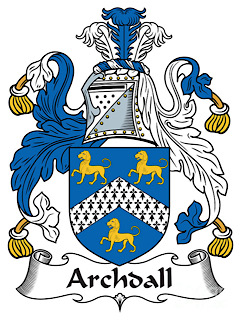
Archdall is educated by Dr. Keenane, and enters Trinity College Dublin (TCD) in 1739. He graduates with a Bachelor of Arts (BA) in 1744 and a Master of Arts (MA) in 1747, and is ordained in the Church of Ireland. He is curate of Howth from 1750 to 1753, and of Kilgobbin and Taney, also in Dublin, from 1753 to 1758, rector of Nathlash in the diocese of Cloyne from 1749 to 1758, and from 1756 domestic chaplain to Richard Pococke, Bishop of Ossory. In 1761 Pococke gives Archdall the livings of Agharney and Attanagh in Ossory which he holds until 1786, when he becomes rector of Slane in the Diocese of Meath. He is also prebendary of Cloneamary from 1762 to 1764 and of Mayne from 1764 to 1772, both in Ossory.
Archdall is interested, almost from his student days, in ancient history and antiquities, and for forty years he gathers material for a work similar to an earlier compilation, William Dugdale‘s Monasticon Anglicanum. He intends to publish two or more large folio volumes, but after Pococke’s death has no sponsor and has to pay for its publication himself causing him to cut back the scale of the project. Monasticon Hibernicum appears in 1786 as a quarto volume, though still of over 800 pages. Archdall attempts encyclopaedic coverage of the history of Ireland’s pre-reformation monasteries and abbeys. The work is ground-breaking and ambitious, though marred by mistakes and inadequacies. He receives help from friends, including scholars such as Pococke and Edward Ledwich, and with them and others is a founder member of the Royal Irish Academy (RIA) in 1786.
In 1789, Archdall publishes his second important work, a new edition of ThePeerageof Ireland by John Lodge. Lodge’s original work in four volumes is expanded by Archdall into seven octavos, adding a good deal of material from his own research to update the genealogies, as well as incorporating manuscript additions unpublished by the original author. These had been left in a cipher or in a private form of shorthand which could not be decoded by any contemporary expert in Dublin, and Archdall is just about to abandon the attempt to read them when his second wife works on it and discovers the key.
Archdall’s first wife, Sarah Colles or Collis, whom he marries in Dublin on July 30, 1747, is said to have been a relative of Thomas Prior, though she may also – or instead – have been connected in some way to Pococke. The bishop is known to have educated Christopher Colles (1739–1816), who becomes an important engineer and entrepreneur in the United States. They have two sons and a daughter, the elder son dying young. Sarah dies on May 28, 1782. Archdall marries his second wife, Abigail Young, on November 25, 1782.
Archdall’s works are still of interest to historians and genealogists, and surviving copies are valuable collectors’ items. In an apologia in his preface to the Peerage he notes, “I have left that inaccurate which could not be exact, and that imperfect which cannot be completed.” He dies suddenly on August 6, 1791, and is buried in Slane churchyard.
(From: “Archdall, Mervyn” by Linde Lunney, Dictionary of Irish Biography, http://www.dib.ie, October 2009)
Hamilton enters Trinity College Dublin on November 17, 1742, at the age of 13 with Thomas McDonnell as his tutor. He graduates Bachelor of Arts (BA) in 1747 and Trinity Master of Arts (MA Dubl) in 1750. He takes the competitive examination for a vacant fellowship of the college in 1750, but the position is secured instead by his friend Richard Murray, who is a few years older. Two fellowships become vacant the following year and Hamilton is elected to one of them at the age of 22. He is appointed Erasmus Smith’s Professor of Natural and Experimental Philosophy at Trinity College Dublin in 1759 and that same year graduates Bachelor of Divinity (BD). He is elected a Fellow of the Royal Society on February 19, 1761, and graduates Doctor of Divinity (DD) in 1762.
Trinity College presents him to the rectory of Kilmacrennan in the diocese of Raphoe, County Donegal, in 1764. This is a small benefice in the gift of the college, for which he resigns his fellowship. He retains the Erasmus Smith’s chair, however, being succeeded in that by Thomas Wilson in 1769. He resigns from Kilmacrenan in 1767 and becomes vicar of St. Ann’s Church in Dublin.
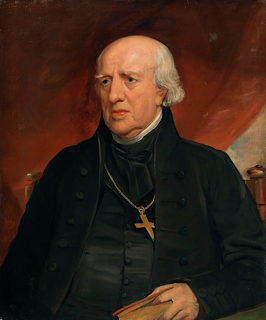
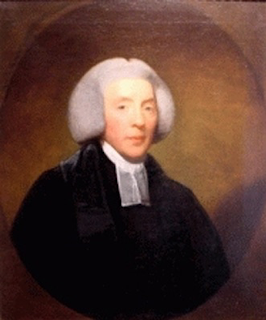
Hamilton then becomes Dean of Armagh, the chief resident cleric of St. Patrick’s Cathedral in Armagh, County Armagh, from April 1768 to 1796. Finding the existing dean’s house inconvenient and poorly situated, he has a new one built in a better location just off Portadown Road, now known as Dean’s Hill. The house, of three stories and a semi-basement, is built in 1772–74. The house is later sold by the church and the present owners provide bed and breakfast accommodation in it. While dean he also acts as treasurer for the infirmary or county hospital, he establishes Sunday schools in the districts of the parish, and he founds a charitable loan for poor tradesmen. He is also instrumental in planning a piped water supply for the town, which is later put into effect. He is one of the 38 original members of the Royal Irish Academy when it is founded in 1785. Gilbert Stuart paints his portrait in about 1790 (pictured above).
Hamilton is promoted to Bishop of Clonfert and Kilmacduagh on January 20, 1796, without seeking it. On January 24, 1799, he is translated to Ossory, where he is bishop until 1805. He dies of a fever at Kilkenny, County Kilkenny, on December 1, 1805. He is buried in the graveyard of St. Canice’s Cathedral at Kilkenny, and there is a memorial to him inside the cathedral.
Hamilton writes a mathematical treatise on conic sections called De Sectionibus Conicis: Tractatus Geometricus, published in 1758. In this book he “was the first to deduce the properties of the conic section from the properties of the cone, by demonstrations which were general, unencumbered by lemmas, and proceeding in a more natural and perspicuous order,” according to writer James Wills in 1847. The work is acclaimed for its lucidity and Leonhard Euler describes it as a perfect book. It is “soon adopted in all the British universities” and is translated from Latin into English as A Geometrical Treatise of the Conic Sections in 1773.
Hamilton also writes Philosophical Essays on Vapours (1767), Four Introductory Lectures on Natural Philosophy (1774), and An Essay on the Existence and Attributes of the Supreme Being (1784). His principal works are collected and republished, with a memoir, as The Works of the Right Rev. Hugh Hamilton by his eldest son, Alexander Hamilton, in two volumes in 1809.
Hamilton marries Isabella, daughter of Hans Widman Wood of Rosmead, County Westmeath, in 1772. Isabella’s mother Frances is the twin sister of Edward King, 1st Earl of Kingston. They have five sons and two daughters. They are Alexander, who was a barrister; Frances; Hans, who is rector of Knocktopher, County Kilkenny, and associated with the Carrickshock incident of 1831; Isabella; Henry; George, who is a biblical scholar; and Hugh, who marries Elizabeth Staples, a daughter of John Staples, a Member of Parliament. The younger Hugh is the great-grandfather of Clive Staples Lewis, better known as C. S. Lewis. Bishop Hugh Hamilton is a great-great-great-grandfather of the mathematicians John Lighton Synge and his brother Edward Hutchinson Synge. Dodgson Hamilton Madden, the High Court judge and noted scholar, is Hamilton’s great-grandson.
(Pictured: “Hugh Hamilton,” oil on canvas by Gilbert Stuart)
Eyre is born around 1720, the second son of Colonel Samuel Eyre of Eyreville, County Galway, a descendant of Colonel John Eyre, who accompanies General Ludlow to Ireland in 1651 and acquires large estates in County Galway, including the Manor of Eyrecourt.
Eyre is that rare man whose military and engineering training occurs entirely in the Americas before he assumes the significant office of Surveyor General of Ireland in 1752. In 1738, he joins the regiment of James Oglethorpe, the founder of the Province of Georgia, and sails to the colony. As a cadet in Oglethorpe’s Regiment, he is sent to the colony’s interior as an agent to the Cherokee Indians. He rises from the rank of cadet to be sub-engineer for Georgia and the Province of South Carolina and in 1740 he is commissioned an ensign. He learns engineering from Major William Cook, the Regiment’s Engineer, and he marries Cook’s daughter Anne, who has accompanied her father to Georgia. The date of the wedding is not documented, but occurs by 1743, by which date both Eyre and Cook have returned to London. In the last two years of his tour of duty, Eyre serves also as the Sub-engineer for South Carolina and Georgia.
In 1744, Eyre is commissioned a lieutenant and joins Trelawney’s Regiment of Foot, headed by Edward Trelawney, Governor of Jamaica. He serves in Jamaica and at Roatán (Rattan) and is in charge of Roatán’s defences until 1748, when the Treaty of Aix-la-Chapelle ends the War of the Austrian Succession and returns the island to Spain. He is promoted to captain in 1748. For the four years after his departure from Roatán and before his resignation from Trelawney’s Regiment, little is known about his activities until he retires from active duty in 1752.
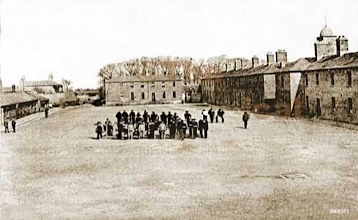
On August 31, 1752, Eyre is appointed Surveyor General of Ireland, having purchased the office from Arthur Jones-Nevill. Joseph Jarratt works as his deputy in this role. He undertakes works at the Royal Barracks in Dublin, but the condition of the barracks is criticised by the Commissioners of the Ordnance for Ireland. As Surveyor General, he is also involved in harbour works at Dún Laoghaire, and is responsible for the rebuilding of the State Apartments at Dublin Castle. In 1763, the office of Surveyor General is abolished, and he is transferred to the new post of Chief Engineer of the Ordnance.
Eyre resigns his commission in 1766 and becomes member of the Irish House of Commons for Thomastown (1761-68) and Fore (1768-1772). He dies on February 22, 1772, from an apoplectic fit brought on by the sudden death of a much loved daughter, at Parliament House, Dublin, while attending a session of the House.
On February 13, 1782, the Irish Brigade of France plays a significant role in the capture of Saint Kitts during the American Revolutionary War. The brigade, commanded by Arthur Dillon, is part of the French forces that besiege the British stronghold of Brimstone Hill. The siege lasts for 31 days, and after a fierce battle, the British forces surrender.
When Hood returns to the West Indies in late 1781 after the Battle of the Chesapeake, he is for a time in independent command owing to Admiral George Rodney‘s absence in England. The French admiral, François Joseph Paul de Grasse, attacks the British islands of Saint Kitts and Nevis with 7,000 troops and 50 warships, including the 110-gun Ville de Paris. He starts by besieging the British fortress on Brimstone Hill on January 11, 1782. Hoping to salvage the situation, Hood makes for Saint Kitts by departing Antigua on January 22 with twenty-two ships of the line, compared to de Grasse’s thirty-six.
The British fleet on January 24 consists of twenty-two sail of the line, and is close off the southeast end of Nevis. They run into and capture the French 16-gun cutter Espion, which carries a large amount of ammunition for the besieging French forces at Brimstone Hill.
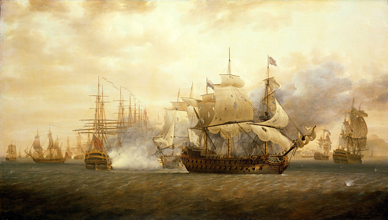
At daybreak on January 25, the French fleet is discovered having stood to the southward of Basseterre, consisting of a 110-gun ship, 28 two-decked ships, and two frigates. Hood stands toward the French fleet with the apparent intention of bringing on action, and effectively draws the French fleet off the land. As soon as Hood effects this maneuver, he is aided by a favorable change in wind and is able to guide his fleet within the anchorage of Basseterre, which the French admiral has just quit. Hood orders his fleet in an L-formation and then orders his fleet to lay anchor. De Grasse makes three distinct attacks upon the British fleet on January 26 but is repulsed.
The Pluton, commanded by François Hector d’Albert de Rions, leads the French line, “receiving the crashing broadside of ship after ship until the splintered planking flew from her off side and her rigging hung in a tangled mass.” Chauvent goes on to describe the battle as “…a sulphurous hell, with cannon vomiting forth flame and death.” The entire battle lasts from 7:00 a.m. to 6:30 p.m., with the major action in the afternoon.
Damage on both sides is heavy, though the French suffer higher casualties. However, Hood is unable to stop the French and can only observe the land action. After the successful French siege of Brimstone Hill fortress, Saint Kitts and Nevis surrender on February 12. Hood leaves on February 14 and joins forces with the recently arrived Admiral George Rodney.
The capture of Saint Kitts marks a pivotal moment in the war, as it is the last major military action of the Irish Brigade of France. The regiment’s efforts are crucial in the French victory, and their legacy is remembered for their contributions to the fight for liberty.
In 1791, after the French Revolution, the Brigade’s close ties to the monarchy of France causes the leaders of the new Republic to disband the famous unit. Dillon, whose family and regiment sacrifice so much for France during its 100-years service, later dies on the Revolutionary government’s guillotine.
(Pictured: “The Battle of Frigate Bay, 26 January 1782,” oil on canvas painting by Nicholas Pocock, 1784, current location Royal Museums Greenwich)
In 1786, Pratt’s father is created Earl Camden, at which point he becomes known by one of his father’s subsidiary titles as Viscount Bayham.
In 1793, Pratt is sworn of the Privy Council. In 1794 he succeeds his father as 2nd Earl Camden, and the following year he is appointed Lord Lieutenant of Ireland by Pitt.
Pratt resigns from office in June 1798, to be replaced with Charles Cornwallis, 1st Marquess Cornwallis, who oversees the military defeat of the rebellion. In 1804, Pratt becomes Secretary of State for War and the Colonies under Pitt, and in 1805 Lord President of the Council, an office he retains until 1806. He is again Lord President from 1807 to 1812, after which date he remains for some time in the cabinet without office. In 1812 he is created Earl of Brecknock and Marquess Camden.
The enforced resignation from the Cabinet of Robert Stewart, Viscount Castlereagh, the stepson of his sister Frances (Lady Londonderry), to whom he has always been personally close, in September 1809, leads to a series of bitter family quarrels, when it becomes clear that Pratt has known for months of the plan to dismiss Stewart, but has given him no warning. Stewart himself regards Pratt as “a weak friend,” not an enemy, and they are eventually reconciled. Other members of the Stewart family, however, never forgive Pratt for what they regard as his disloyalty.
Pratt marries Frances, daughter of William Molesworth, in 1785. She dies at Bayham Abbey, Sussex, in July 1829. He survives her by eleven years and dies at Seal, Kent, on October 8, 1840, aged 81. He is succeeded by his only son, George.